

Consumer Insights
Uncover trends and behaviors shaping consumer choices today
Procurement Insights
Optimize your sourcing strategy with key market data
Industry Stats
Stay ahead with the latest trends and market analysis.
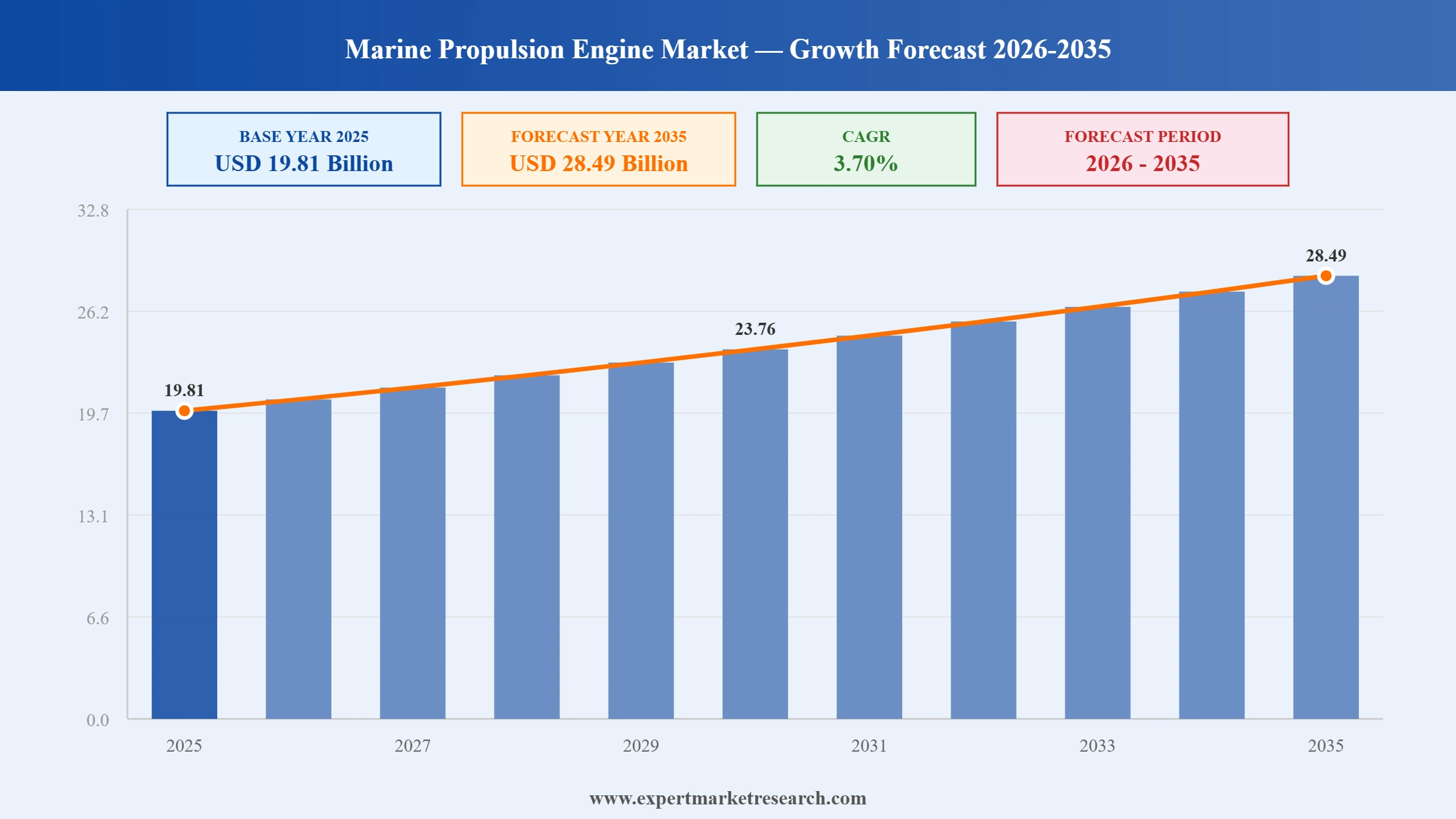
The global marine propulsion engine market attained a value of USD 19.81 Billion in 2025 and is projected to expand at a CAGR of 3.70% through 2035. The market is further expected to reach USD 28.49 Billion by 2035. Rising global seaborne trade, tightening international emissions regulations, and growing adoption of alternative and low carbon fuels are encouraging established marine engine manufacturers to launch new product platforms, secure major fleet orders, and pursue joint development initiatives across diesel, natural gas, and gas turbine propulsion categories worldwide.
The marine propulsion engine market encompasses diesel, natural gas, gas turbine, and other propulsion systems that generate thrust for vessel movement across passenger ships, cargo and container ships, defence vessels, and offshore applications. Demand continues to be shaped by rising seaborne trade, tightening emissions regulations, and growing alternative fuel adoption, with diesel accounting for the largest fuel type share given its established infrastructure and proven reliability across commercial shipping fleets.
Established engine manufacturers across the marine propulsion engine market are increasingly enhancing dual fuel engine performance to deliver deeper emissions reductions ahead of tightening international maritime regulations, reflecting the sector's accelerating shift toward alternative fuel propulsion worldwide. In May 2025, Wartsila announced that its four-stroke ammonia engine now delivers a 90 percent reduction in greenhouse gas emissions, with first customer deliveries scheduled to begin from 2026 onwards across global fleets.
Established engine manufacturers and equipment suppliers are increasingly directing product development toward multi fuel flexibility and cross industry collaboration, moving away from single fuel platforms to secure long term relevance as shipowners navigate an uncertain regulatory and fuel availability landscape. Companies are pursuing parallel investment across ammonia, methanol, and LNG technologies rather than betting on a single decarbonisation pathway, while strengthening partnerships between engine builders, turbocharger manufacturers, and shipyards to accelerate commercial deployment timelines across newbuild and retrofit vessel segments.
Read more about this report - REQUEST FREE SAMPLE COPY IN PDF
| Global Marine Propulsion Engine Market Report Summary | Description | Value |
| Base Year | USD Billion | 2025 |
| Historical Period | USD Billion | 2019-2025 |
| Forecast Period | USD Billion | 2026-2035 |
| Market Size 2025 | USD Billion | 19.81 |
| Market Size 2035 | USD Billion | 28.49 |
| CAGR 2019-2025 | Percentage | XX% |
| CAGR 2026-2035 | Percentage | 3.70% |
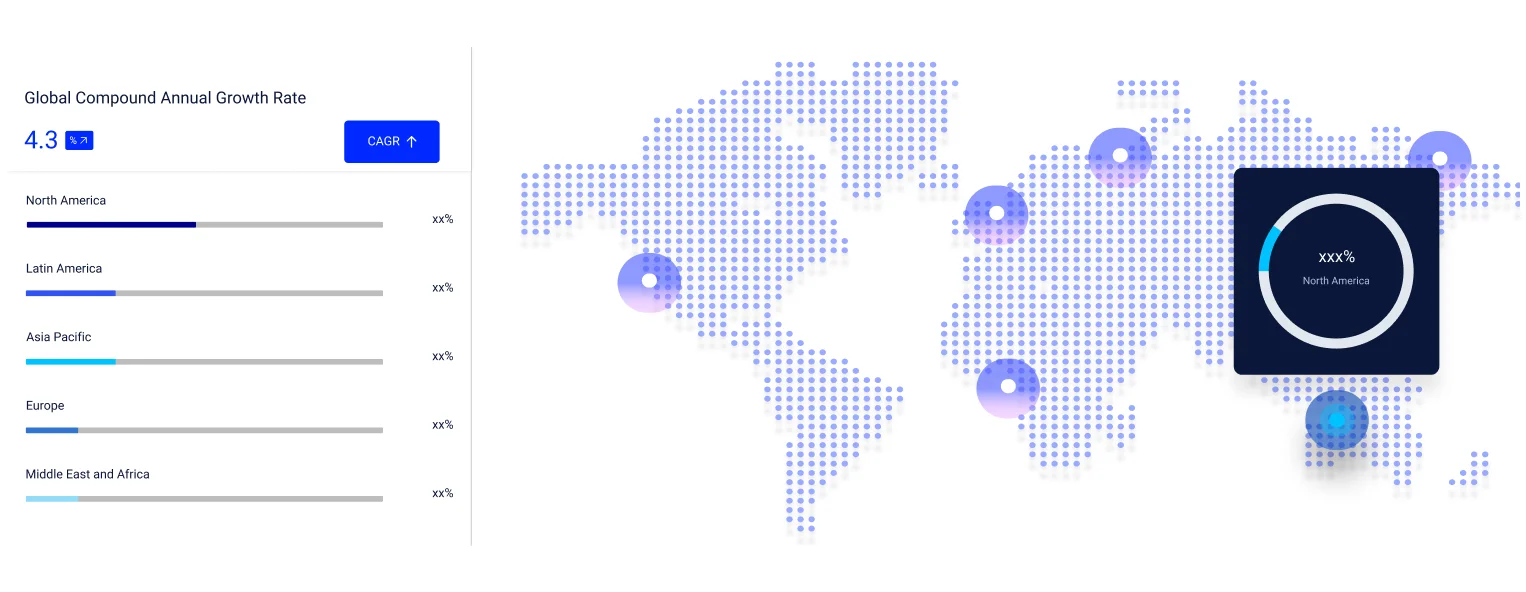
| CAGR 2026-2035 - Market by Region | Asia Pacific | 4.3% |
| CAGR 2026-2035 - Market by Country | India | 4.9% |
| CAGR 2026-2035 - Market by Country | China | 4.1% |
| CAGR 2026-2035 - Market by Fuel Type | Diesel | 4.2% |
| CAGR 2026-2035 - Market by Application | Cargo or Container Ship | 4.5% |
| Market Share by Country 2025 | France | 3.1% |
Caterpillar announced new alcohol-based fuel conversion solutions for its MaK engine range, including a dual fuel conversion enabling M32 and M43 engines to operate on up to 95 percent methanol or ethanol and a fuel blending conversion lowering greenhouse gas emissions. Companies across the marine propulsion engine market can leverage retrofit conversion kits to help existing vessel operators meet FuelEU Maritime regulations without requiring full engine replacement.
Volvo Penta revealed its new D13 IPS Hybrid yacht propulsion system, a fully integrated helm to propeller platform combining diesel engines, electric motors, batteries, and energy management into a single package, with market launch planned for later in 2026. Companies across the marine propulsion engine market can leverage fully integrated hybrid propulsion packages to simplify installation and operation for yacht builders while reducing onboard noise and vibration.
WinGD completed Type Approval Testing and Factory Acceptance Testing of its ammonia fuelled X52DF-A-1.0 two-stroke marine engine at HD Hyundai Heavy Industries' Engine and Machinery facility in South Korea, witnessed by classification society Lloyd's Register and other bodies. Companies across the marine propulsion engine market can leverage completed classification testing milestones to demonstrate commercial readiness of alternative fuel engine platforms to prospective shipowners across global markets.
GE Aerospace secured orders to supply eight LM2500 marine gas turbine engines for the United States Navy's next two Flight III Arleigh Burke class guided missile destroyers, extending its engine supply to all active ships in the class. Companies can leverage decades long naval propulsion track records to secure continued fleet orders as navies pursue expanded shipbuilding programmes.
Established engine builders across the marine propulsion engine market are increasingly completing test bench milestones for pure alternative fuel engines, rather than limiting alternative fuel adoption to dual fuel configurations alone, to demonstrate technology leadership ahead of broader industry adoption. This is helping manufacturers validate combustion, turbocharging, and control system redesigns required for single fuel operation. In October 2025, Rolls-Royce successfully tested the world's first high speed marine engine powered exclusively by methanol on its test bench in Friedrichshafen, Germany.
Established shipping and engine technology consortiums across the marine propulsion engine market are increasingly conducting full scale onboard trials to validate emissions reduction technology under real operating conditions, rather than relying on laboratory testing alone before commercial implementation. This is helping consortiums demonstrate methane slip reduction performance that exceeds initial project targets ahead of wider fleet rollout. In October 2025, Mitsui O.S.K. Lines, Kanadevia Corporation, and Yanmar Power Solutions announced a 98 percent methane slip reduction rate in onboard trials aboard an LNG fuelled vessel.
Established ammonia engine developers across the marine propulsion engine market are increasingly moving from laboratory and combustion testing toward commercial vessel delivery, rather than remaining in extended development phases, as shipowners seek confirmed decarbonisation pathways for newbuild fleets. This is helping developers demonstrate real world tank to wake emissions reductions ahead of wider fleet adoption. In July 2025, WinGD delivered and installed its X-DF-A engine on an EXMAR LPG carrier, marking the first ammonia fuelled marine two stroke installation on a vessel.
Established engine manufacturers across the marine propulsion engine market are increasingly securing classification society approvals for retrofittable alternative fuel engines, rather than requiring full engine replacement, to offer vessel operators a more cost-effective decarbonisation pathway. This is helping manufacturers extend alternative fuel adoption across existing fleet installations rather than newbuild vessels alone. In March 2025, Cummins announced Approval in Principle from DNV for its methanol ready QSK60 IMO II and IMO III engines, available in power ratings from 2000 to 2700 horsepower.
Established two-stroke engine developers are increasingly achieving full engine load operation on ammonia fuel, rather than limiting testing to partial load conditions, as competition intensifies to reach commercial market readiness first. This is helping developers demonstrate operational reliability across the complete performance range required for commercial vessel deployment. In January 2025, MAN Energy Solutions became the first to run a two-stroke engine at 100 percent load on ammonia fuel, having begun full scale testing in November 2024.
The Expert Market Research's report titled “Global Marine Propulsion Engine Market Report and Forecast 2026-2035” offers a detailed analysis of the market based on the following segments:
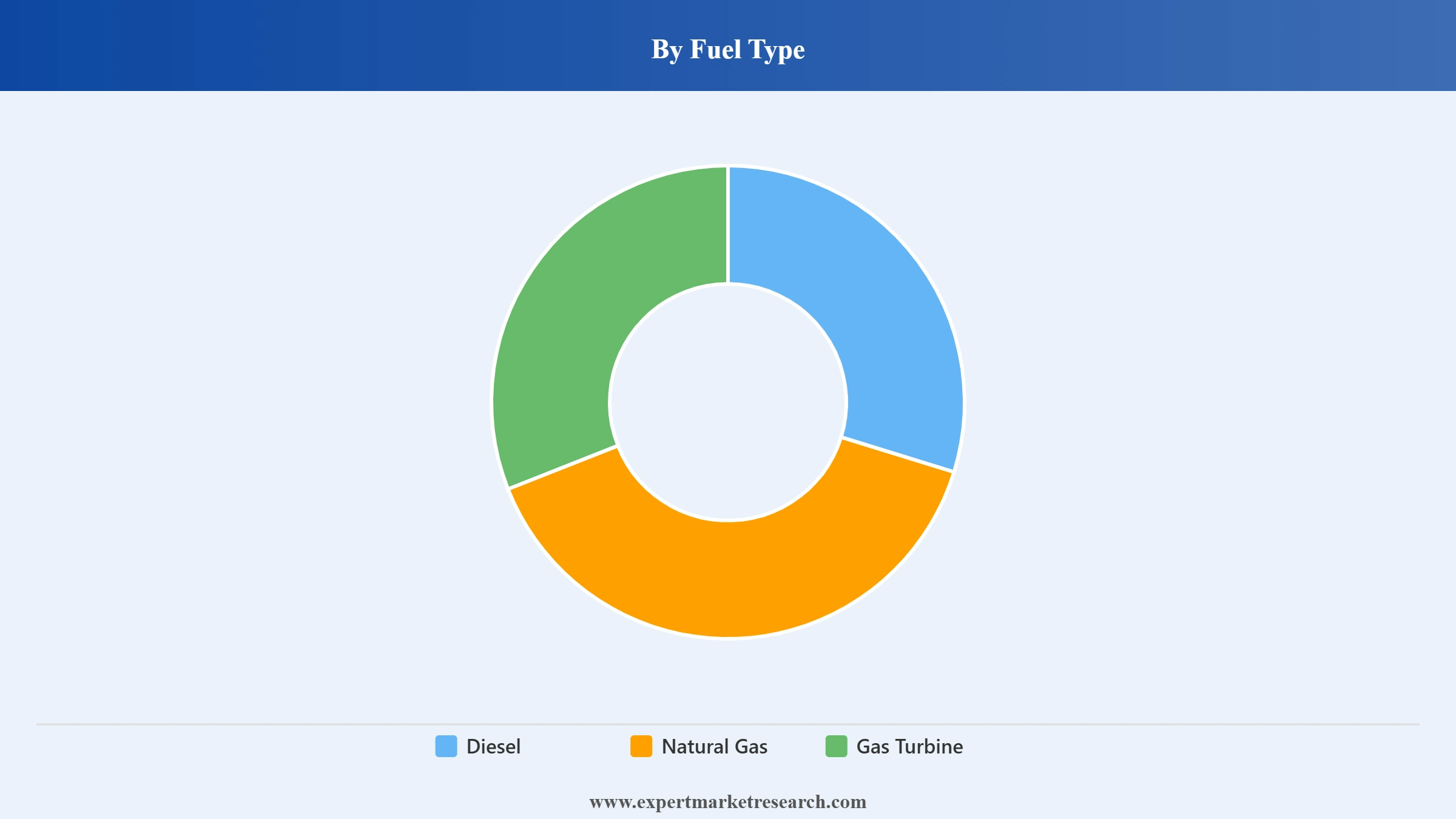
Market Breakup by Fuel Type
Key Insight: Diesel accounts for the largest fuel type share of the marine propulsion engine market, supported by established bunkering infrastructure and proven reliability across commercial shipping fleets worldwide. Natural gas is growing quickly as shipowners seek compliant, lower emission fuel alternatives, illustrated by Wartsila's March 2025 order to supply three 25DF dual fuel engines featuring NextDF technology for a new LNG bunkering vessel built for Spanish operator Ibaizabal, while gas turbines continue to serve high speed naval and specialised vessel applications requiring compact, power dense propulsion systems.
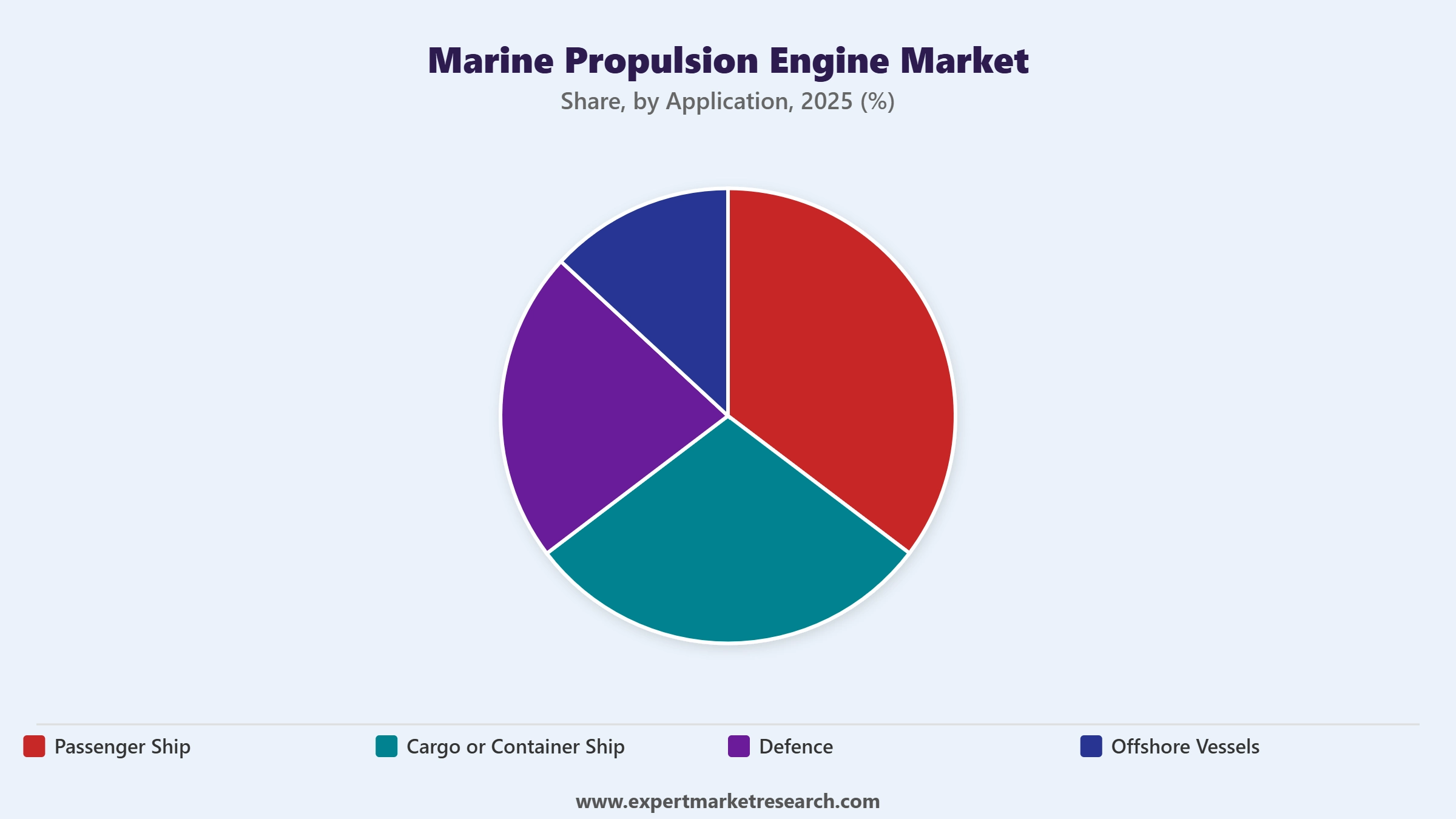
Market Breakup by Application
Key Insight: Cargo and container ships account for the largest application share of the marine propulsion engine market, driven by sustained global seaborne trade volumes and expanding commercial fleet renewal programmes. Defence is registering steady demand, illustrated by Kongsberg Maritime's May 2026 contract with Austal USA to supply Promas propulsion systems for four United States Coast Guard Offshore Patrol Cutters, while passenger ships continue to represent a significant demand category, illustrated by Fincantieri and Viking's April 2025 announcement of the world's first hydrogen powered cruise ship, and offshore vessels remain supported by energy sector activity.
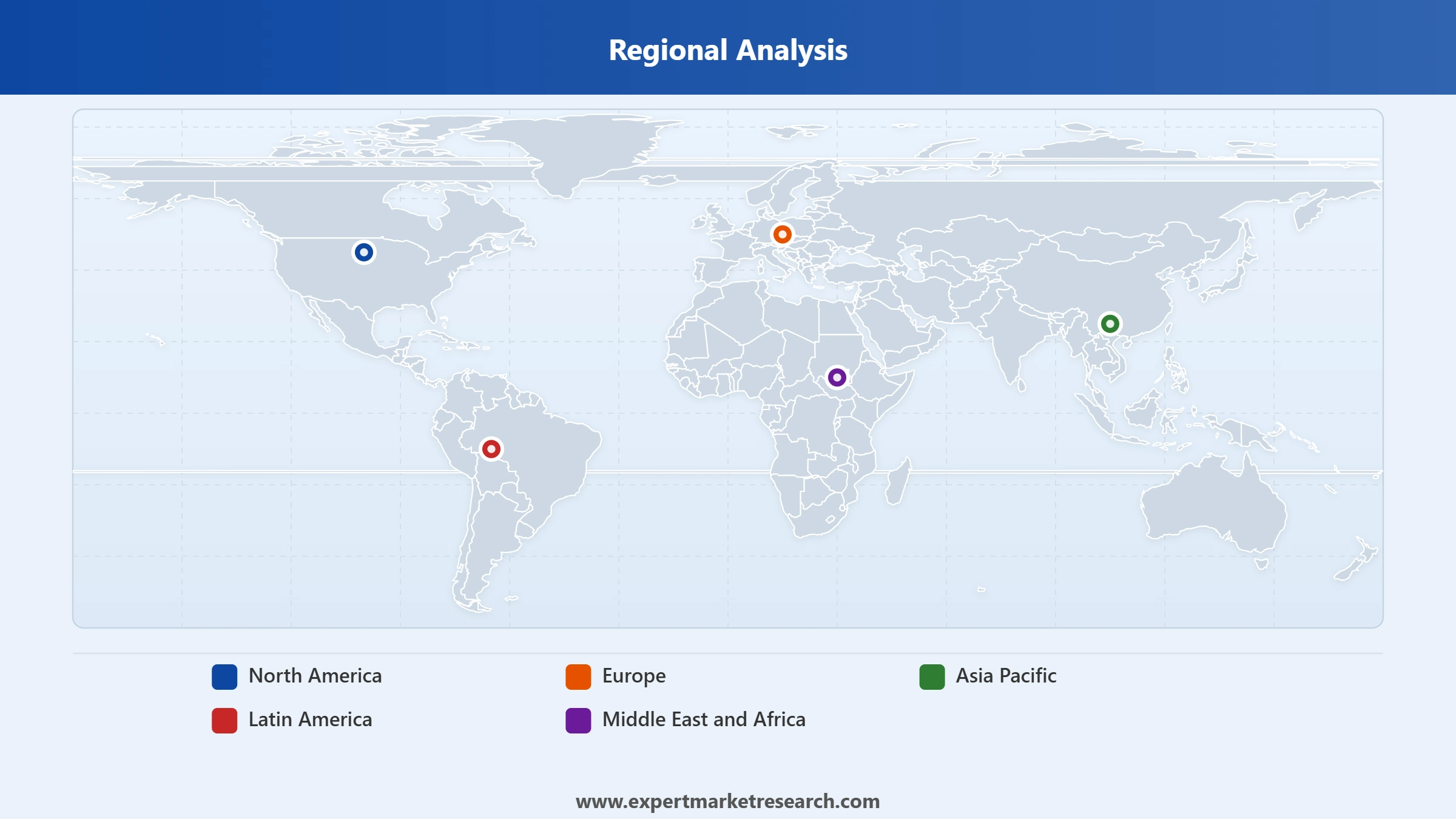
Market Breakup by Region
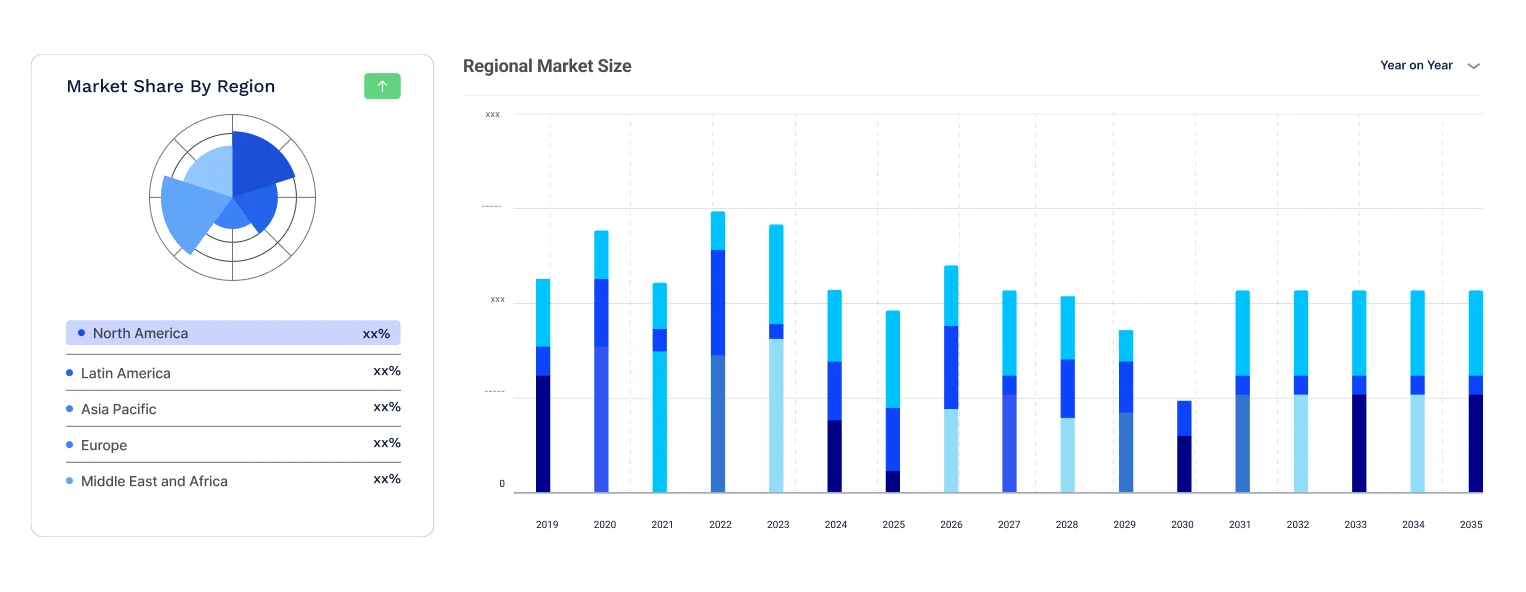
Key Insight: Asia Pacific leads the marine propulsion engine market, supported by a concentration of major shipbuilding facilities and sustained newbuild order activity across China and South Korea. North America is registering the fastest growth as expanding naval shipbuilding programmes and offshore energy activity drive demand for advanced propulsion systems. Europe, Latin America, and the Middle East and Africa remain significant markets supported by established maritime industries and offshore energy sector activity.
Read more about this report - REQUEST FREE SAMPLE COPY IN PDF
By fuel type, diesel dominates the market through established bunkering infrastructure and proven reliability
Diesel accounts for the largest fuel type share of the marine propulsion engine market, supported by established bunkering infrastructure and proven reliability across commercial shipping fleets that have relied on diesel propulsion for decades of continuous operation worldwide. In April 2025, MAN Energy Solutions secured orders for eight ME-GI dual fuel engines across two Korean shipyards to power four Ultra Large Container Ship vessels for an undisclosed Asian shipowner and fleet operator.
Read more about this report - REQUEST FREE SAMPLE COPY IN PDF
Natural gas is growing quickly as shipowners seek compliant, lower emission fuel alternatives ahead of tightening international maritime emissions regulations affecting newbuild vessel specifications worldwide and beyond. Established engine manufacturers and technology consortiums continue to develop methane slip reduction technology for LNG fuelled propulsion systems, addressing a key criticism of LNG as a transitional marine fuel option across the global shipping industry.
By application, cargo and container ships dominate the market through sustained global seaborne trade volumes
Cargo and container ships account for the largest application share of the marine propulsion engine market, driven by sustained global seaborne trade volumes and expanding commercial fleet renewal programmes among major shipping lines worldwide and beyond. Established engine manufacturers maintain extensive commercial propulsion product ranges to serve this consistent, high volume demand base across container, bulk, and tanker vessel categories and applications.
Read more about this report - REQUEST FREE SAMPLE COPY IN PDF
Defence applications continue to register steady demand as navies pursue expanded shipbuilding programmes requiring reliable, power dense propulsion systems for surface combatant fleets built around proven gas turbine and diesel platforms worldwide and beyond. In June 2025, the German Bundestag's Budget Committee approved procurement of a fifth and sixth F126 frigate for the German Navy, extending an existing shipbuilding programme with established propulsion engine suppliers and technology partners internationally.
Asia Pacific dominates the market through concentrated shipbuilding capacity and sustained newbuild order activity
Asia Pacific leads the marine propulsion engine market, supported by a concentration of major shipbuilding facilities and sustained newbuild order activity across China and South Korea serving global commercial fleet demand worldwide and beyond. In November 2025, HD Hyundai secured a 1.46-billion-dollar order for eight ultra large dual fuel container ships from HMM, its largest container ship order volume in eighteen years and decades.
Read more about this report - REQUEST FREE SAMPLE COPY IN PDF
North America is registering the fastest growth as expanding naval shipbuilding programmes and offshore energy activity drive demand for advanced propulsion systems. In April 2026, Fincantieri Marinette Marine secured a 30-million-dollar United States Navy contract to begin construction preparation for the first four Medium Landing Ship vessels under a new naval acquisition framework. Europe, Latin America, and the Middle East and Africa remain significant markets supported by established maritime industries and offshore energy sector activity.
The global marine propulsion engine companies are becoming increasingly competitive as major marine propulsion engine companies invest in alternative fuel technology, emissions reduction innovation, and expanded naval and commercial fleet order capacity to differentiate their portfolios. Companies are prioritising ammonia, methanol, and LNG dual fuel engine development, multi classification society approvals, and strengthened turbocharger compatibility to appeal to shipowners navigating tightening environmental regulations.
Major marine propulsion engine market players are also focusing on defence sector fleet renewal programmes and cross licensor equipment compatibility to strengthen order pipelines across commercial and naval segments. Strategic emphasis on decarbonisation technology and long-term lifecycle service agreements is allowing established companies to capture growing demand across cargo, passenger, defence, and offshore vessel applications.
Founded in 1904 and headquartered in London, United Kingdom, Rolls-Royce is a global leader in power and propulsion solutions across aerospace, defence, energy, and marine sectors, supplying engines for naval vessels and commercial ships worldwide. The company's Power Systems division operates through its mtu brand, serving customers across more than 180 countries.
Founded in 1834 and headquartered in Helsinki, Finland, Wartsila is a global leader in power, propulsion, and lifecycle solutions for the marine and energy markets, offering engines capable of transitioning to low and zero carbon fuels. The company is listed on the Nasdaq Helsinki exchange and operates manufacturing facilities across multiple continents.
Founded in 1972 and headquartered in Seoul, South Korea, HD Hyundai is one of the world's largest shipbuilding and marine engine manufacturing groups, supplying propulsion systems for commercial vessels across global shipping fleets. The group operates through multiple subsidiaries spanning shipbuilding, engine machinery, and offshore construction.
Founded in 1892 and headquartered in Boston, Massachusetts, United States, General Electric's aerospace business supplies LM2500 marine gas turbines that serve as the most widely used naval propulsion system globally across multiple allied fleets. The company operates as an independent aerospace focused entity following its 2024 corporate restructuring.
Other key players in the market include AB Volvo, Mitsubishi Heavy Industries Ltd., Societe Internationale des Moteurs Baudouin, Caterpillar Inc., Cummins Inc, and Daihatsu Diesel Mfg.Co.,Ltd., among others.
*Please note that this is only a partial list; the complete list of key players is available in the full report. Additionally, the list of key players can be customized to better suit your needs.*
Unlock the latest insights with our marine propulsion engine market trends 2026 report. Discover regional growth patterns, fuel type and application economics, and key industry players. Stay ahead of competition with trusted data and expert analysis. Download your free sample report today and drive informed decisions in the market.


Upto 15% Off
USD
$2499 $2249
$3999 $3599
$4999 $4249
$5999 $5099


*While we strive to always give you current and accurate information, the numbers depicted on the website are indicative and may differ from the actual numbers in the main report. At Expert Market Research, we aim to bring you the latest insights and trends in the market. Using our analyses and forecasts, stakeholders can understand the market dynamics, navigate challenges, and capitalize on opportunities to make data-driven strategic decisions.*
In 2025, the market reached an approximate value of USD 19.81 Billion.
The market is projected to grow at a CAGR of 3.70% between 2026 and 2035.
The market is estimated to witness a healthy growth in the forecast period of 2026-2035 to reach USD 28.49 Billion by 2035.
The major market drivers include rising industrialisation and globalisation and increasing investments by various navies to strengthen their defence capabilities.
The key trends fuelling the growth of the market include increasing investments towards the improvement of inland waterway transportation and rising initiatives to reduce carbon dioxide emissions.
The major regions in the market are North America, Europe, the Asia Pacific, Latin America, and the Middle East and Africa.
The applications include passenger ship, cargo or container ship, defence, and offshore vessels, among others.
The key players in the market include Rolls-Royce plc, AB Volvo, HD Hyundai Co Ltd., Mitsubishi Heavy Industries Ltd., Societe Internationale des Moteurs Baudouin, Wartsila Corporation, Caterpillar Inc., Cummins Inc, General Electric Company, and Daihatsu Diesel Mfg.Co.,Ltd., among others.
Asia Pacific dominates the market, supported by a concentration of major shipbuilding facilities and sustained newbuild order activity.
Diesel holds the largest fuel type share, supported by established bunkering infrastructure and proven reliability across commercial shipping fleets.
Explore our key highlights of the report and gain a concise overview of key findings, trends, and actionable insights that will empower your strategic decisions.
| REPORT FEATURES | DETAILS |
| Base Year | 2025 |
| Historical Period | 2019-2025 |
| Forecast Period | 2026-2035 |
| Scope of the Report |
Historical and Forecast Trends, Industry Drivers and Constraints, Historical and Forecast Market Analysis by Segment:
|
| Breakup by Fuel Type |
|
| Breakup by Application |
|
| Breakup by Region |
|
| Market Dynamics |
|
| Competitive Landscape |
|
| Companies Covered |
|
Datasheet
One User
USD 2,499
USD 2,249
tax inclusive*
Single User License
One User
USD 3,999
USD 3,599
tax inclusive*
Five User License
Five User
USD 4,999
USD 4,249
tax inclusive*
Corporate License
Unlimited Users
USD 5,999
USD 5,099
tax inclusive*
*Please note that the prices mentioned below are starting prices for each bundle type. Kindly contact our team for further details.*
Flash Bundle
Small Business Bundle
Growth Bundle
Enterprise Bundle
*Please note that the prices mentioned below are starting prices for each bundle type. Kindly contact our team for further details.*
Flash Bundle
Number of Reports: 3
20%
tax inclusive*
Small Business Bundle
Number of Reports: 5
25%
tax inclusive*
Growth Bundle
Number of Reports: 8
30%
tax inclusive*
Enterprise Bundle
Number of Reports: 10
35%
tax inclusive*
How To Order

Select License Type
Choose the right license for your needs and access rights.

Click on ‘Buy Now’
Add the report to your cart with one click and proceed to register.

Select Mode of Payment
Choose a payment option for a secure checkout. You will be redirected accordingly.
Strategic Solutions for Informed Decision-Making
Gain insights to stay ahead and seize opportunities.

Get insights & trends for a competitive edge.

Track prices with detailed trend reports.

Analyse trade data for supply chain insights.

Leverage cost reports for smart savings

Enhance supply chain with partnerships.

Connect For More Information
Our expert team of analysts will offer full support and resolve any queries regarding the report, before and after the purchase.
Our expert team of analysts will offer full support and resolve any queries regarding the report, before and after the purchase.
We employ meticulous research methods, blending advanced analytics and expert insights to deliver accurate, actionable industry intelligence, staying ahead of competitors.
Our skilled analysts offer unparalleled competitive advantage with detailed insights on current and emerging markets, ensuring your strategic edge.
We offer an in-depth yet simplified presentation of industry insights and analysis to meet your specific requirements effectively.




