Consumer Insights
Uncover trends and behaviors shaping consumer choices today
Procurement Insights
Optimize your sourcing strategy with key market data
Industry Stats
Stay ahead with the latest trends and market analysis.
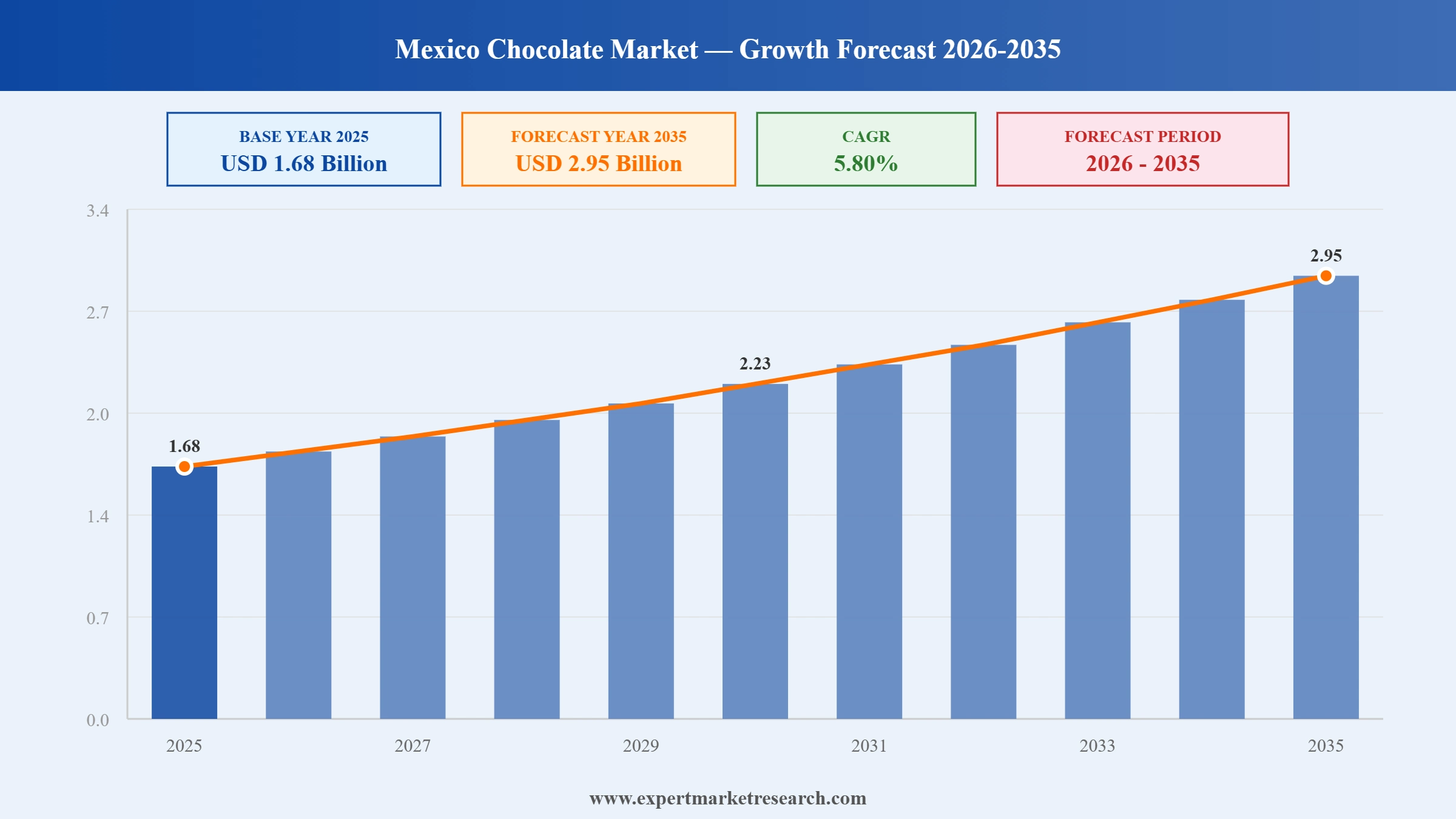
The Mexico chocolate market attained a value of USD 1.68 Billion in 2025 and is projected to expand at a CAGR of 5.80% through 2035. The market is further expected to achieve USD 2.95 Billion by 2035. The need for gifts, season-related events, and tourist-based retailing is driving suppliers to create premium offerings, flavor variants, and customization of packaging aimed at business-to-business customers during particular periods.
Two key aspects are contributing to commercial demand in the Mexico chocolate market. The availability of an elaborate network of convenience stores and neighborhood shops in Mexico gives suppliers access to impulse shoppers, thus necessitating the creation of small and inexpensive packages. On the other hand, tourism, gift-giving events, and food service needs drive companies to offer premium assortments, baking chocolates, and couverture products for hotels, cafes, and pastry makers.
Moreover, the March 2025 release of Chocobakery by Nestlé marks the direction towards texture-oriented high-end chocolate innovations, reshaping the Mexico chocolate market dynamics. The new product line comprises Choco Trio, Choco Cookies and Choco Biscuit products, with the Choco Trio launched in flavors such as peanut, cookies-and-cream and chocolate. Nestlé considers the line as one of the six bets for growth in 2025, with estimated annual revenue of more than CHF 200 million on a global scale.
In addition, the Mexico chocolate market also features investments in local manufacturing and agricultural sourcing. Nestlé declared in January 2025 a USD 1 billion investment strategy for Mexico, 2025-2027, which involves expanding production lines at plants located in Veracruz, Guanajuato, Querétaro and State of Mexico regions. Further, in June 2025, Mexico introduced affordable Chocolate Bienestar products using 50% cocoa, supporting small farmers through direct procurement and fair-trade distribution.
Read more about this report - REQUEST FREE SAMPLE COPY IN PDF
Grupo Lala introduced a re-usable cup named “VacOso” along with the Chocolate Abuelita from Nestlé for the promotion of Day of the Dead in Mexico. Producers can create a seasonal partnership with the dairy products, by merging the traditional drinks made out of chocolate with the re-usable products, accelerating the Mexico chocolate market value.
Planet A Foods announced the launch of the Cocoa Booster, which is a single-ingredient cocoa substitute to save on cost and boost fiber content. Mexican chocolate manufacturers can therefore look into the reduction of cocoa ingredients and formulations.
Ethel M Chocolates announced their 2026 holiday range that will include limited-edition assortments, seasonal flavors, luxurious packaging, and gifting experiences. Companies in the Mexico chocolate market can develop premium seasonal chocolate assortments, customized gift boxes, and limited-edition flavors for meeting festive gifting needs.
TURIN introduced MAGNO in three flavors, combining creamy chocolate, crunchy fillings, and gift-ready packaging to strengthen its premium confectionery portfolio in Mexico. Hence, manufacturers can capitalize on growing demand for premium and indulgent confectionery by introducing multi-flavor collections, innovative textures, and attractive gift-oriented packaging.
The production of chocolates is evolving from the traditional bars through the introduction of chocolates that have been mixed with other foods like biscuits, wafers, nuts, among others. The Choco Trio of Nestle, for example, comes in three flavors including peanut, cookies and cream, and chocolate is an indication of the shift of chocolates into the tablet. On the other hand, in July 2025, Mexico released Chocolate del Bienestar which includes 50% cacao chocolate bar with 160.77 metric tons sourced from 1,803 small farmers using the Sembrando Vida program. Mexican chocolate producers can enhance collaboration with small farmers for procuring cacao directly.
The Mexico chocolate market observes an increasing need to secure traceable cacao from the country owing to the distinctiveness and resilience associated with such sources. According to Mexico's Ministry of Agriculture and Rural Development (AGRICULTURA), nearly 36,000 Sembrando Vida farmers cultivate cacao across 29,696 hectares nationwide. In 2025, these farmers harvested 4,149 tons of cacao while advancing initiatives to process beans, establish local chocolate brands and strengthen direct marketing channels. Moreover, in June 2024, Ferrero expanded farmer support, promoting sustainable cacao cultivation, agricultural training, productivity improvements, and long-term rural livelihoods.
Local manufacturing investment is allowing the chocolate suppliers to be more responsive, meet regional demands and enhance their exporting efforts. As per reports, Nestlé has planned to invest significantly for 2025-2027 in Mexico through the expansion of production line facilities in Veracruz, Guanajuato, Querétaro, and State of Mexico, in addition to establishing a new distribution facility. Although the investment spans multiple food categories beyond chocolate, its substantial scale presents significant opportunities for ingredient manufacturers and packaging suppliers catering to the broader food processing industry. As per the Mexico chocolate market analysis, in 2024, the country exported USD 965 million of Cocoa & cocoa preparations, making it the 23rd largest exporter of Cocoa & cocoa preparations (out of 200) in the world.
The government-sponsored commercialization process is providing an opportunity in the Mexico chocolate market for smaller-scale producers of cacao beans to shift from selling their beans to producing branded chocolates. In May 2023, Tlali’pani introduced premium chocolates produced by Mexican women entrepreneurs, partnering with artisan families to preserve traditional craftsmanship and strengthen local livelihoods. Moreover, in October 2026, Quintana Roo promoted regional chocolate through hotels, airports and tourist retailers, strengthening local cacao sourcing and gastronomic tourism.
Nutrition policies are pushing manufacturers in the Mexico chocolate market to reconsider the recipes, packing, and communications strategy, especially for those products targeting younger customers. The policies on foods provided in schools in Mexico, which were released in the Official Gazette in October 2024, limit the sale and promotion of processed foods that do not meet certain nutritional criteria in schools. Considering the consumption limitation, in December 2025, Nestlé Professional introduced a creamy KitKat chocolate beverage for vending machines, targeting offices, universities, hotels, and convenience stores.
The Expert Market Research's report titled “Mexico Chocolate Market Report and Forecast 2026-2035” offers a detailed analysis of the market based on the following segments:
Market Breakup by Type
Key Insight: The Mexico chocolate market observes a wide range of types of chocolate, which include milk chocolate, dark chocolate, white chocolate and many others that serve to meet various consumer tastes. While milk chocolate enjoys the advantage of familiarity and affordability, dark chocolate appeals to those who appreciate the taste of cocoa and its place of origin. White chocolate serves to satisfy the demand for creamy candies, baking, and coating. In April 2024, Nestlé introduced 90% cocoa dark chocolate, expanding its sustainably sourced, Rainforest Alliance-certified confectionery portfolio.
Market Breakup by Product Type
Key Insight: As per the Mexico chocolate market report, there is a clear distinction in purpose between pure chocolate and compound chocolate used in the country's confectionery and food manufacturing sector. Pure chocolate enjoys the advantages of familiar cocoa components, direct consumption application, and gift purposes. On the other hand, compound chocolate caters to industrial manufacturers that require coating, bakery fillers and easy processability. Both have their own application areas in confectionery, molded confections, desserts and seasonal goods.
Market Breakup by Distribution Channel
Key Insight: The distribution system for chocolate in Mexico comprises of supermarket and hypermarket, convenience stores, online stores, as well as other forms of distribution. Supermarket and hypermarket distribution channels have access to a wide range of assortment, organized promotion and centralized purchasing, boosting the Mexico chocolate market value. On the other hand, convenience store distribution channels rely on impulse buying due to their accessibility and small packaging sizes. The online distribution channel is used to cater to specialty goods, gift items, and geographical diversity among customers.
Market Breakup by Region
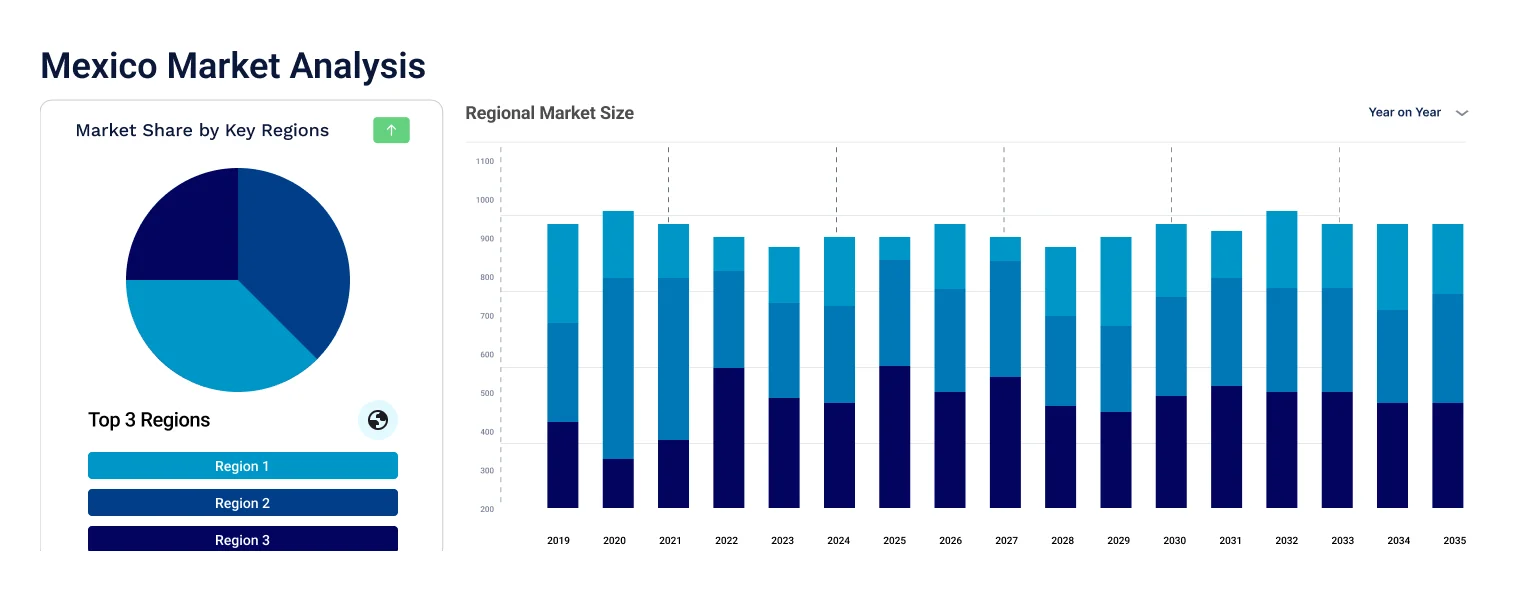
Key Insight: Demand dynamics in the Mexico chocolate market cover Baja California, Northern Mexico, the Bajío, Central Mexico, the Pacific Coast, and the Yucatan Peninsula. The market is influenced by variations in population, industry, tourism, and distribution systems. Demand for chocolate in Baja California is driven by the cross-border business and the advanced retail network while that of Northern Mexico is supported by the urban population and industrial growth. Manufacturing activities and growth in food service support the demand for the product in the Bajío region.
Read more about this report - REQUEST FREE SAMPLE COPY IN PDF
By type, milk chocolate registers the largest share of the market due to its familiar taste, affordability and broad consumer appeal
Milk chocolate continues to dominate the Mexico chocolate market, given its creamy flavor, balanced cocoa content, and affordable cost. Milk chocolates are available in the market in various forms such as bar, countline, seasonals, and multipacks that make large scale production possible. Its flexibility allows chocolatiers to offer milk chocolate with caramel, nuts, wafers, or cookies. In May 2025, Helados Holanda introduced a creamy, chocolate-flavored Mini Milk ice pop, expanding its family-oriented frozen dessert portfolio in Mexico.
Dark chocolate is also being recognized increasingly by high-end consumers seeking more cocoa content, flavor variations, and those that can be related to the geographical location of their cacao source. The Mexican cacao offers manufacturers with an opportunity to develop products based on specific fermentation methods and unique flavors.
Pure chocolate accounts for the largest share of the market due to established consumption preferences and recognizable cocoa formulations
Pure chocolate continues to lead the overall growth in the Mexico chocolate market, through the established preferences for cocoa-based confectionery among consumers and its application in tablets, bars, pralines and holiday gifts. Chocolate varieties are differentiated by cocoa percentage, geographic origin, flavor components, and texture variety. The fact that pure chocolate can be consumed directly and used as an item of gift makes it suitable for commercial markets. In July 2025, Mexico introduced three affordable chocolate formats using locally sourced cacao, supporting small farmers through direct procurement and nationwide distribution.
Compound chocolate is becoming increasingly popular across the Mexico chocolate market scope, powered by baking houses, confectionery firms, ice cream makers and the food service industry because of its convenience in terms of being commercially more efficient to use. The formula of compound chocolate made with vegetable fat instead of cocoa butter ensures that it is easy to handle and helps in cost management by commercial purchasers.
By distribution channel, supermarkets and hypermarkets observe notable growth in the market due to extensive product assortments and established retail networks
Supermarkets and hypermarkets continue to the Mexico chocolate market revenue, owing to their extensive assortment, promotions and procurement networks. They allow producers to reach out to the general confectionery market, as well as high-end chocolate assortments and seasonal items targeting various customer segments. Retailers also offer an opportunity for brand promotion with the aid of confectionery sections, displays and packs.
The growth of online shopping is making e-commerce an increasingly relevant sales platform for producers of chocolate products, especially imported, premium and specialty chocolates. This is due to the improvements in digital marketing and the use of retailer mobile applications, thereby propelling the Mexico chocolate market growth. E-commerce makes it easier for manufacturers to reach out to customers with regional cacao products and gift packs without relying entirely on physical retail listings. E-commerce also allows the gathering of consumer reviews about flavors, packaging, and promotions. In April 2026, Tiendanube reported 331% revenue growth, 612% higher units sold, and a 74% increase in average purchase value.
Central Mexico secures the leading market position due to population concentration and extensive distribution infrastructure
The Central Mexico chocolate market holds dominance owing to the vast number of consumers and the existing infrastructure. The availability of large consumer markets in Mexico City and the industrial support in Querétaro encourages the distribution of large quantities of chocolates and confectioneries. There is also a chance for manufacturers to develop commercial relations due to the abundance of supermarkets, wholesalers, bakers, hotels, and other food service establishments. In September 2026, Mars reported 50% growth in TURIN stores over three years, reaching 60 specialized chocolate boutiques across 10 Mexican cities.
The Yucatan Peninsula appears to be a promising region in terms of confectionery products since there are several factors that help promote it as a regional chocolate market in Mexico. Among such factors are tourism growth, the presence of many hotels and resorts, and the historical value of the area in terms of producing cacao. There are opportunities for manufacturers to work with regional cacao producers and chocolatiers to create unique products.
There are strong foreign competitors, presence of confectionery brands, and investments in product differentiation in the industry. Mexico chocolate market players are emphasizing development of premium chocolates, texture innovations, regional sourcing of cacao, and affordable products.
Producers are looking into sourcing domestic cacao, improving their manufacturing capacities, and partnerships for sustainable procurement to meet their supply needs. There are growth opportunities in dark chocolate, origin-specific chocolate, compound chocolate, and customized gifting assortments. In addition, Mexico chocolate companies are developing alliances with supermarkets, convenience stores, and online retailers to enhance the availability of products. Packaging innovations, portioned products, and flavor innovations are helping them meet shifting consumer demands amidst the rising cost of ingredients and logistics.
Founded in 1911, Mars, Incorporated is headquartered in McLean, Virginia, United States. The company serves the chocolate market in Mexico with popular brands such as Snickers and M&M's. The company’s business model includes flavors, easy-to-consume products, variety, and retail availability of products. The company is also building upon brand recognition for increasing engagement in the confectionery market.
Founded in 2012, Mondelez International is headquartered in Chicago, Illinois, United States. The company engages in the chocolate market with brands such as Cadbury, Milka, and Toblerone. It offers a variety of snacks and premium chocolates and unique flavors in its product line.
Ferrero International was founded in 1946 and is located in Italy. This company addresses the needs of the Mexican people through its brands such as Ferrero Rocher, Kinder and Nutella. The manufacturer’s plant in San José Iturbide, Guanajuato manufactures Kinder Sorpresa, Kinder Délice, Kinder Chocolate, and Nutella.
Founded in 1866 and having its headquarters in Vevey, Switzerland, Nestlé S.A. supplies chocolate products such as KitKat, Carlos V, Crunch and Abuelita to Mexican people. Nestlé S.A.’s strategy is based on innovations in products, sourcing of the cocoa locally and extension of manufacturing plants.
Other key players in the market include The Hershey Company, Grupo Arcor, August Storck KG, Chocolatera Ibarra, S.A.P.I. de C.V., and Grupo NUTRESA, among others.
*Please note that this is only a partial list; the complete list of key players is available in the full report. Additionally, the list of key players can be customized to better suit your needs.*
Unlock the latest insights with our Mexico chocolate market trends 2026 report. Discover regional growth patterns, consumer preferences, and key industry players. Stay ahead of competition with trusted data and expert analysis. Download your free sample report today and drive informed decisions in the market.


Upto 15% Off
USD
$2499 $2249
$3999 $3599
$4999 $4249
$5999 $5099


*While we strive to always give you current and accurate information, the numbers depicted on the website are indicative and may differ from the actual numbers in the main report. At Expert Market Research, we aim to bring you the latest insights and trends in the market. Using our analyses and forecasts, stakeholders can understand the market dynamics, navigate challenges, and capitalize on opportunities to make data-driven strategic decisions.*
In 2025, the market reached an approximate value of USD 1.68 Billion.
The market is projected to grow at a CAGR of 5.80% between 2026 and 2035.
The market is estimated to witness a healthy growth in the forecast period of 2026-2035 to reach USD 2.95 Billion by 2035.
The market is being driven by the growing demand for sugar-and gluten-free, organic, and vegan chocolates in a variety of baked goods, confections, and western desserts, among other products.
Key trends aiding the market expansion include growing popularity of chocolate as a token of appreciation, increasing sales of nut-infused chocolates, and a shift in consumer preferences away from traditional sweet indulgences.
Regions considered in the market are Baja California, Northern Mexico, The Bajío, Central Mexico, Pacific Coast, and Yucatan Peninsula.
Based on distribution channel, the market segmentations include supermarkets and hypermarkets, convenience stores, and online stores, among others.
Dark chocolate, milk chocolate, white chocolate, and others are considered in the report.
The key players in the market include Mars, Incorporated, Mondelez International, Inc., Ferrero International S.A., Nestlé S.A., The Hershey Company, Grupo Arcor, August Storck KG, Chocolatera Ibarra, S.A.P.I. de C.V., and Grupo NUTRESA, among others.
Companies are facing fluctuating cocoa prices, inconsistent domestic bean quality, rising packaging costs, regulatory restrictions on school sales, intense price competition and increasing requirements for sustainable sourcing.
Stakeholders are strengthening domestic cacao partnerships, developing premium and affordable product portfolios, improving processing efficiency, introducing recyclable packaging and expanding omnichannel distribution to capture emerging opportunities.
Explore our key highlights of the report and gain a concise overview of key findings, trends, and actionable insights that will empower your strategic decisions.
| REPORT FEATURES | DETAILS |
| Base Year | 2025 |
| Historical Period | 2019-2025 |
| Forecast Period | 2026-2035 |
| Scope of the Report |
Historical and Forecast Trends, Industry Drivers and Constraints, Historical and Forecast Market Analysis by Segment:
|
| Breakup by Type |
|
| Breakup by Product Type |
|
| Breakup by Distribution Channel |
|
| Breakup by Region |
|
| Market Dynamics |
|
| Competitive Landscape |
|
| Companies Covered |
|
Datasheet
One User
USD 2,499
USD 2,249
tax inclusive*
Single User License
One User
USD 3,999
USD 3,599
tax inclusive*
Five User License
Five User
USD 4,999
USD 4,249
tax inclusive*
Corporate License
Unlimited Users
USD 5,999
USD 5,099
tax inclusive*
*Please note that the prices mentioned below are starting prices for each bundle type. Kindly contact our team for further details.*
Flash Bundle
Small Business Bundle
Growth Bundle
Enterprise Bundle
*Please note that the prices mentioned below are starting prices for each bundle type. Kindly contact our team for further details.*
Flash Bundle
Number of Reports: 3
20%
tax inclusive*
Small Business Bundle
Number of Reports: 5
25%
tax inclusive*
Growth Bundle
Number of Reports: 8
30%
tax inclusive*
Enterprise Bundle
Number of Reports: 10
35%
tax inclusive*
How To Order

Select License Type
Choose the right license for your needs and access rights.

Click on ‘Buy Now’
Add the report to your cart with one click and proceed to register.

Select Mode of Payment
Choose a payment option for a secure checkout. You will be redirected accordingly.
Strategic Solutions for Informed Decision-Making
Gain insights to stay ahead and seize opportunities.
Get insights & trends for a competitive edge.
Track prices with detailed trend reports.
Analyse trade data for supply chain insights.

Leverage cost reports for smart savings
Enhance supply chain with partnerships.

Connect For More Information
Our expert team of analysts will offer full support and resolve any queries regarding the report, before and after the purchase.
Our expert team of analysts will offer full support and resolve any queries regarding the report, before and after the purchase.
We employ meticulous research methods, blending advanced analytics and expert insights to deliver accurate, actionable industry intelligence, staying ahead of competitors.
Our skilled analysts offer unparalleled competitive advantage with detailed insights on current and emerging markets, ensuring your strategic edge.
We offer an in-depth yet simplified presentation of industry insights and analysis to meet your specific requirements effectively.