

Consumer Insights
Uncover trends and behaviors shaping consumer choices today
Procurement Insights
Optimize your sourcing strategy with key market data
Industry Stats
Stay ahead with the latest trends and market analysis.
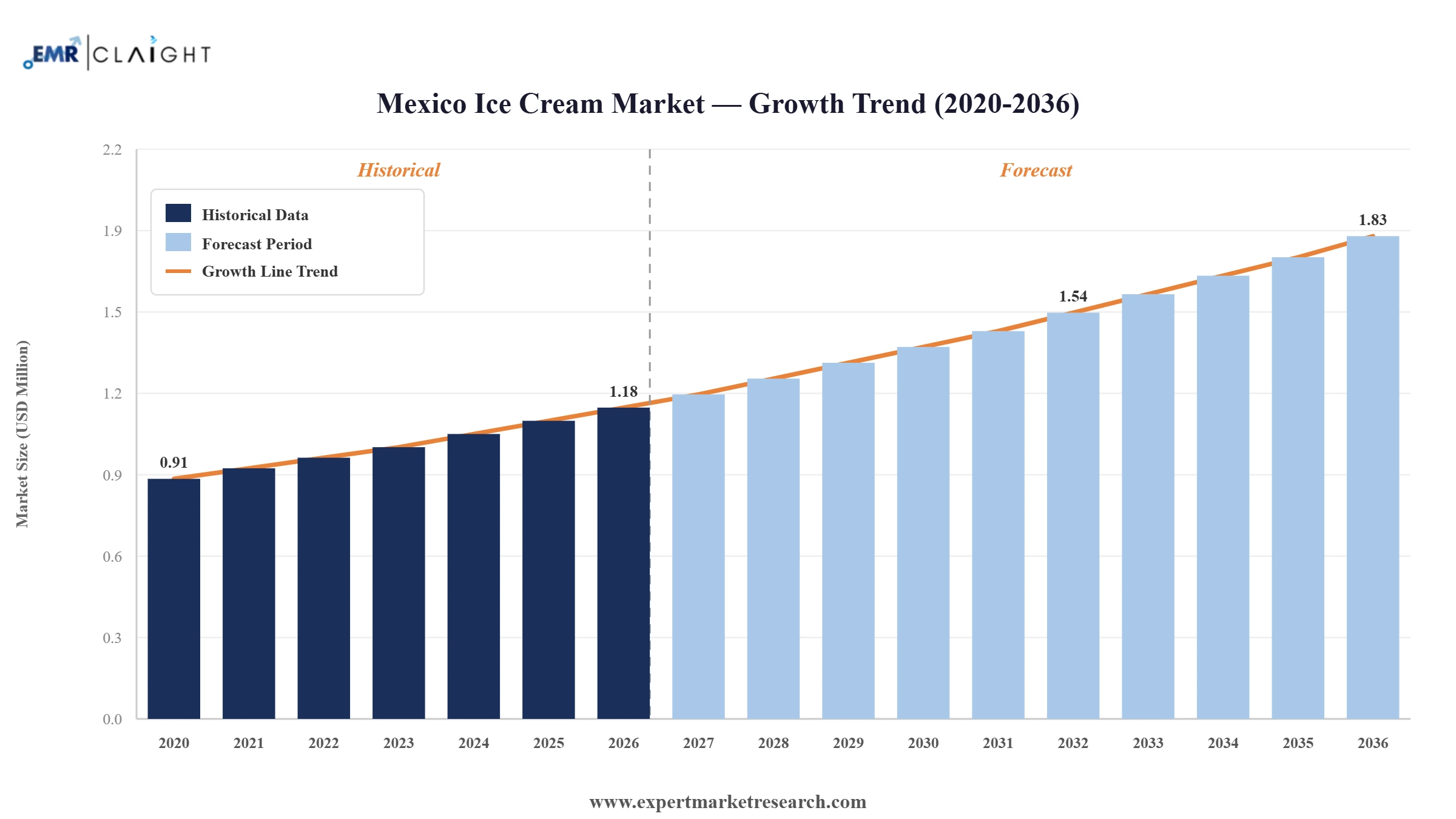
The Mexico ice cream market attained a value of USD 1.13 Million in 2025 and is projected to expand at a CAGR of 4.50% through 2035. The market is further expected to achieve USD 1.75 Million by 2035. The growing consumer desire for indulgence is prompting brands to blend traditional Mexican flavors with complex textures, ingredients, coatings, and servings.
Innovation in product form is proving to be a pragmatic growth factor in the Mexico ice cream market. There is an increasing trend amongst the brands of incorporating local tastes in the new forms that are offering texture and inclusion in the premium range of the product. In February 2024, Magnum announced the launch the Magnum Euphoria brand in Mexico, which consists of vanilla ice cream, coffee flavored ice cream, milk chocolate and vanilla cookie pieces, based on the preference of coffee by consumers in the country.
Another aspect of the Mexico ice cream market is innovation in distribution. In October 2025, Wells introduced Nutella Ice Cream and Kinder Bueno Frozen Dessert in pints and cones, targeting premium growth across the United States retail and convenience channels. In 2024, Mexico imported 27.5 million kilograms of ice cream and other edible ice products, with United State being the source for 25.7 million kilograms of the total import.
Consumption driven by convenience is facilitating the rise of single-serve portions amid increased distribution within convenience stores, supermarkets, foodservice locations, and digitally powered grocery channels. On the other hand, more stringent front-of-pack label rules are compelling brands in the Mexico ice cream market to reformulate and communicate about their products clearly. The NOM-051 system mandates the disclosure of key nutrition information on prepackaged foods.
Read more about this report - REQUEST FREE SAMPLE COPY IN PDF
Melona gained Soriana listing through Binggrae, which brought Korean ice cream into Mexico through mainstream retail distribution channels via localization strategy. It is possible for ice cream manufacturers to collaborate with major retailers and local distributors to bring differentiating international flavors to Mexico.
The Döhler manufacturing facility was opened in Mexico for manufacturing of natural ingredients, flavors, and integrated solutions, allowing for increased responsiveness to local customers. Companies in the Mexico ice cream market can create local manufacturing and technical support infrastructure to cater to increasing demand for natural ice cream products.
A strategic alliance was formed by Froneri and Grupo Herdez, leveraging international expertise in ice cream and local market knowledge. International ice cream producers may form alliances locally to speed up distribution and strengthen their portfolios of brands and market-specific execution.
Tropicale Foods launched a range of frozen novelties inspired by Mexican culture, called the Dulce de Leche, Churro and Cookies & Cream paletas. Premium frozen desserts inspired by Mexican tastes and flavors could be developed by companies in the Mexico ice cream market.
Ice cream brands are taking a step further from classic flavor extensions to create ice creams with multi-textured, filled, coated, and culturally resonant flavor combinations. Magnum Euphoria is an example in this context, offering a Mexican blend of coffee, vanilla, chocolate and cookie flavors. Nestlé, on the other hand, blended coffee and vanilla in its Nescafé Cappuccino frozen pop, which contains coffee within its coating. In April 2025, Braum’s introduced Mexican-inspired ice cream flavors and sundaes for Cinco de Mayo, featuring churro, tres leches, and cajeta-inspired offerings. Such developments in the Mexico ice cream industry create an opportunity for B2B providers of inclusions, compound coatings, coffee ingredients, cookie pieces and texture stabilizers suitable for storage under frozen conditions.
Not only are convenience stores becoming more important from the logistics point of view, but they also serve as controlled test fields for innovation, redefining the Mexico ice cream market dynamics. On the other hand, in October 2025, Magnum partnered with NotCo to use AI for faster product formulation, developing new ice cream formats, and nutritional profiles. As a result, suppliers of packaging, freezer-friendly merchandizing and cold chain logistics can take part in innovation commercialization.
Regulatory requirements are also shaping ice cream manufacturers’ formulations, packaging and communication in Mexico. NOM-051 sets requirements for commercial and sanitary labeling of prepackaged foods, including front-of-pack communication on key nutritional components. COFEPRIS also stresses restrictions for products that feature warning seals, limiting the use of certain children's characters and promotional materials, thereby strengthening demand in the Mexico ice cream market. This results in increased consideration by manufacturers of the levels of sugar, saturated fats and sodium during development processes and also redesigns of packs in order to communicate product attributes more effectively. In July 2026, Pladis reformulated products to address growing demand for lower-HFSS options, while increasing protein and fiber content across its portfolio.
The line between confectionery and frozen desserts is becoming commercially relevant in the Mexico ice cream market as companies replicate experiences of chocolate, cookies and candies in frozen formats. In March 2025, Nestlé launched Choco Trio in Mexico, introducing Peanut, Cookies and Cream, and Chocolate variants within its expanding Chocobakery portfolio. Arcor’s ice cream division leverages established confectionery brands in popsicles, cups, cones, coated ice cream, frozen bonbons and desserts and introduces about 10 new ice cream products each year. This type of cross category development allows companies to generate profit through leveraging brand equity in new categories, while suppliers could benefit from increasing demand for inclusions, biscuits, fillings, and coatings.
The high volume of ice cream that Mexico imports demonstrates ongoing involvement in international trade involving frozen foods and creates an opportunity for local manufactures to compete by manufacturing locally with shorter and more targeted supply chains. Leveraging this trend in the Mexico ice cream market, in July 2026, Ferrero Mexico announced an USD 86 million investment to double production capacity by 2032, supporting long-term market expansion. Thus, local manufacturers need to concentrate on mitigating their exposure to logistics and creating products based on Mexican tastes.
The Expert Market Research's report titled “Mexico Ice Cream Market Report and Forecast 2026-2035” offers a detailed analysis of the market based on the following segments:
Market Breakup by Flavor
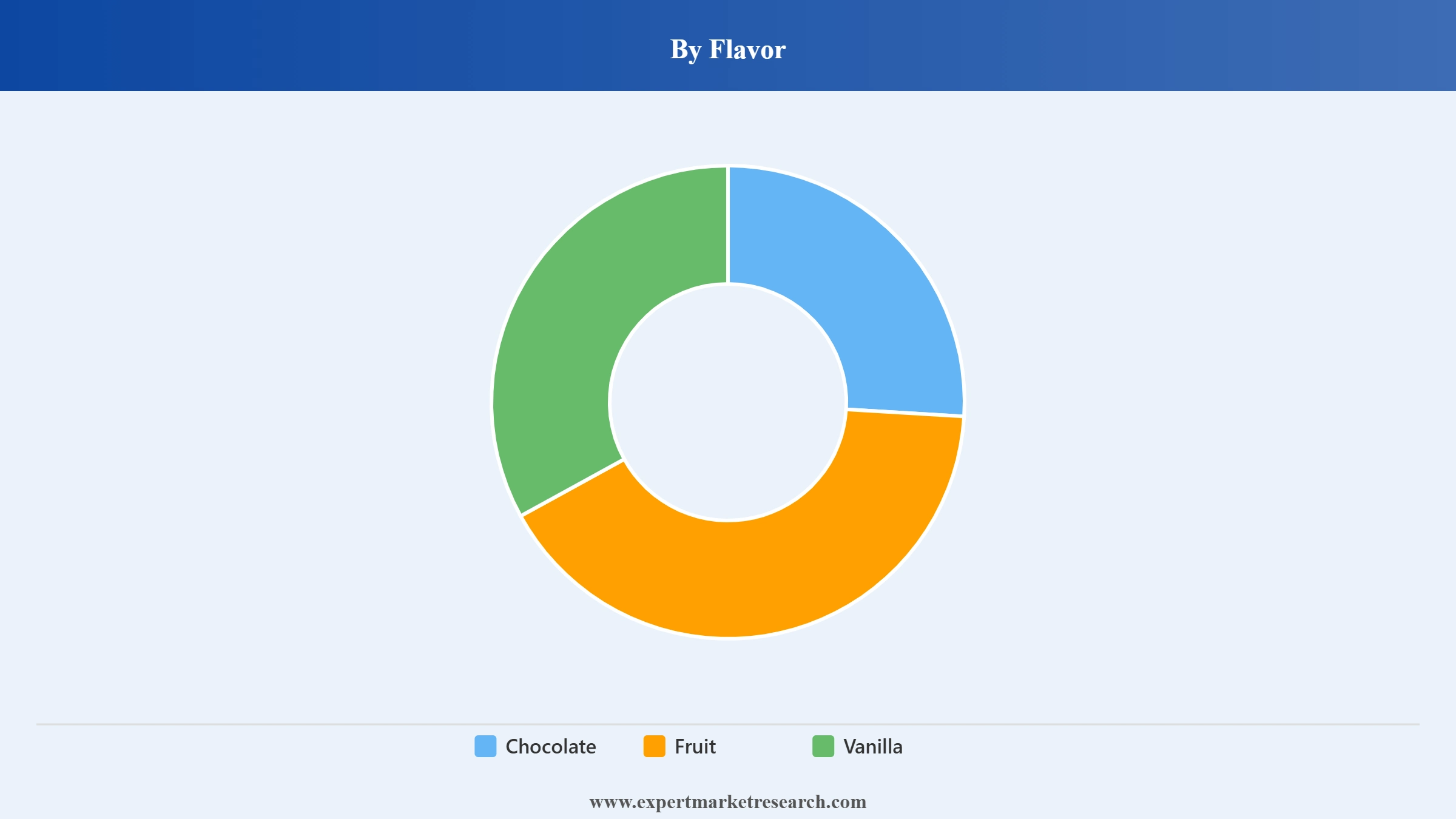
Key Insight: Different functions of innovation exist in each flavor in the Mexico ice cream market. Chocolate is used to indulge with the help of coatings, fillings, and confectionary inspired mixes. Fruit offers opportunities for creating brighter, seasonal, and regional adaptations. In February 2026, Dole Whip expanded retail formats and launched Tropical Guava Passion, alongside pineapple and mango dairy-free frozen treats. Vanilla is an essential base in formulations as it goes well with coffee, cookies, chocolate, fruit, and bakery inclusions. In the “others” category, artisans and industries can innovate with such flavorings as coffee, caramel, nuts and regional mixes.
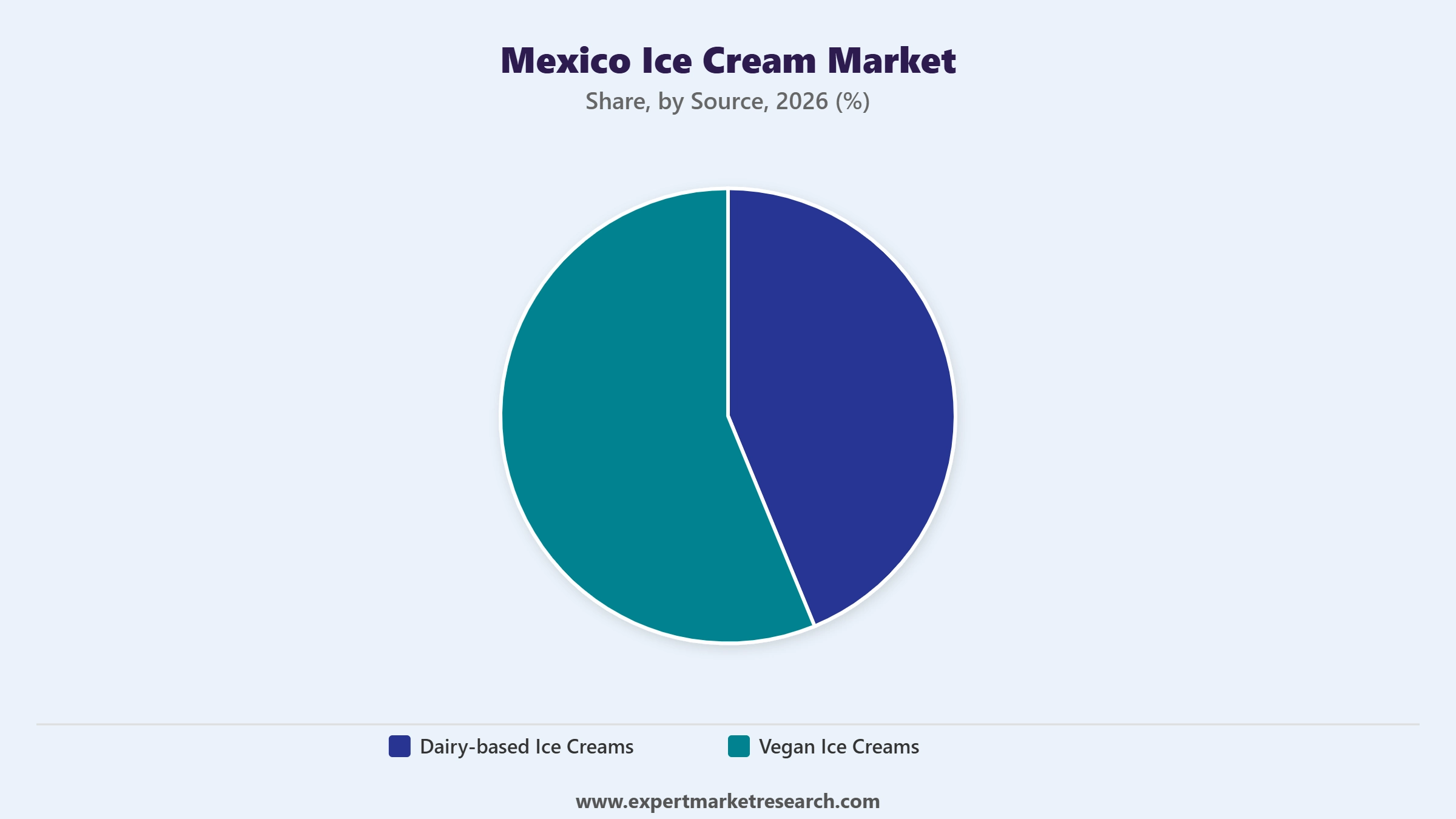
Market Breakup by Source
Key Insight: Dairy-based ice creams continue to play an important role in the Mexico ice cream market because of the ability to effectively blend its creamy properties with indulgent flavors, inclusions, and coatings. Development opportunities are opening up for vegan ice cream due to the use of bases based on plants and fats substitutes. Hence, the two types of ice creams solve different technological tasks, as dairy ice cream allows for scaling, sensory familiarity, and existing process systems, whereas vegan ice creams stimulate the development of new ingredients and formulas.
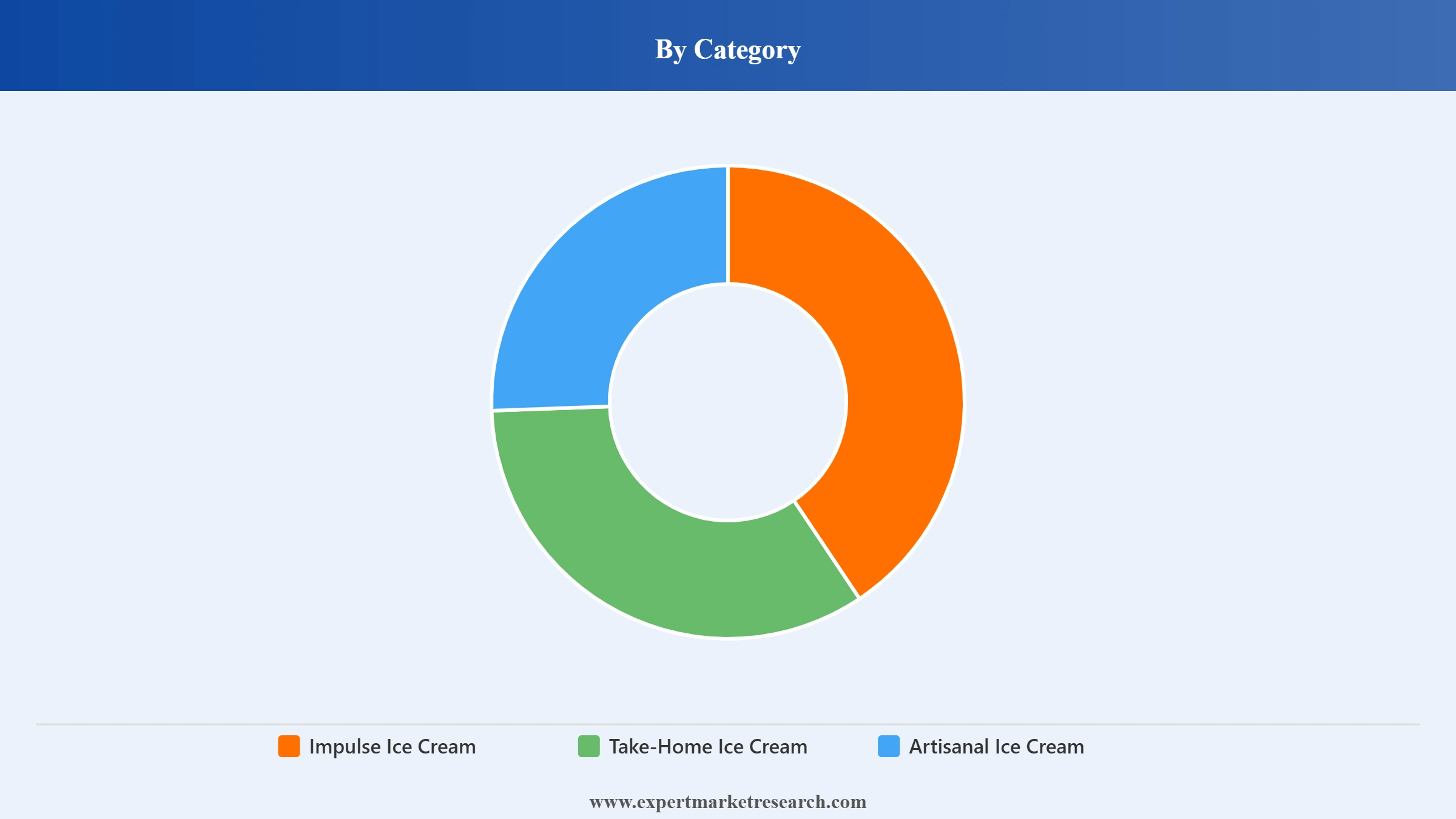
Market Breakup by Category
Key Insight: The impulse ice cream product line relies on convenience, portability, and good freezer merchandising, while the take home ice cream is driven by consumption within households and bigger pack sizes. The artisanal ice creams distinguish themselves through local flavors, quality ingredients, and limited manufacturing quantities. This trend in the Mexico ice cream market implies that each of these product categories requires its own approach in business, where the impulse category is characterized by fast, visible and portion-controlled products, while the take home ice cream category should be efficient in terms of packaging, storage space, and diversity of flavors.
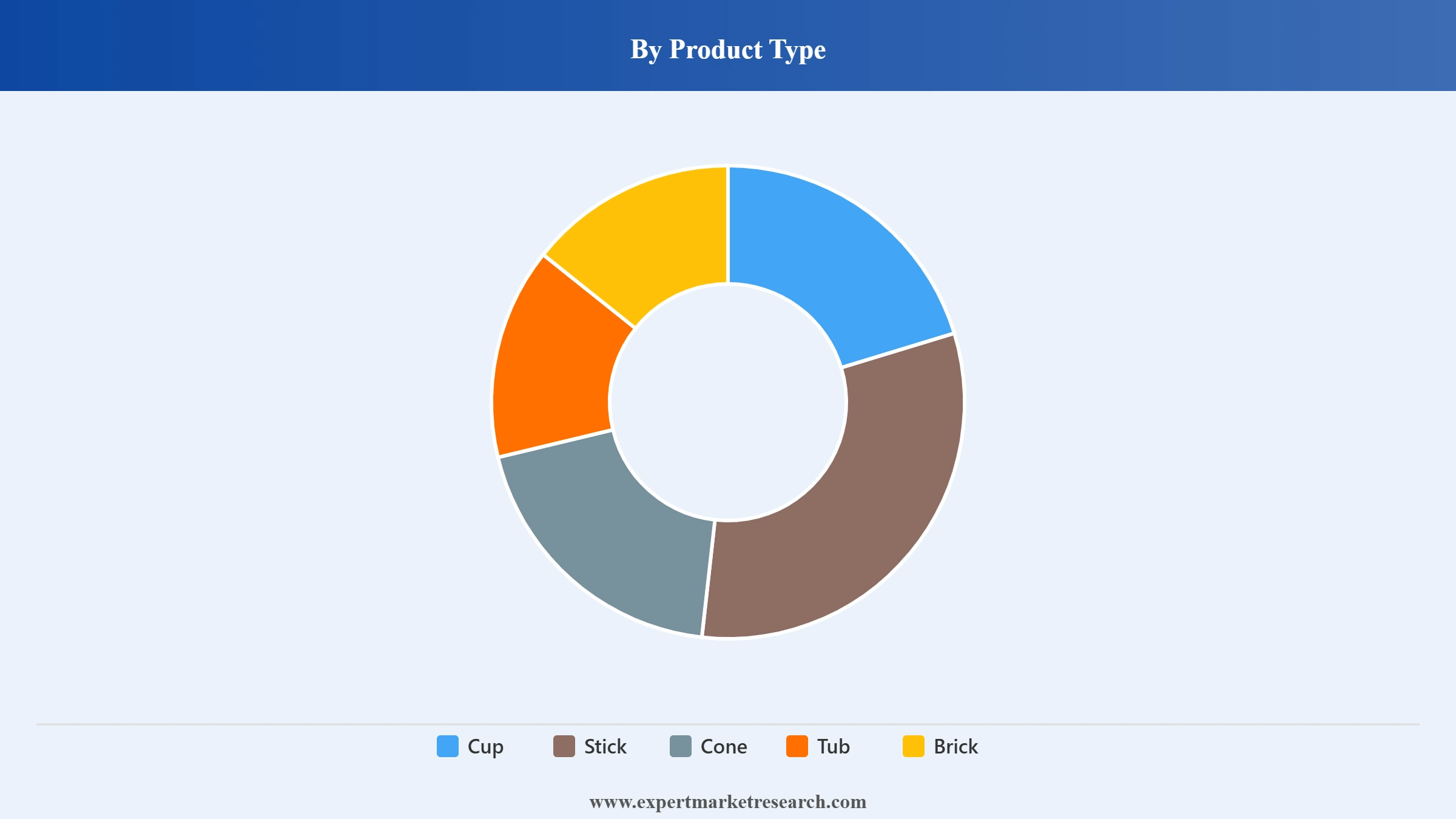
Market Breakup by Product Type
Key Insight: As per the Mexico ice cream market report, cups offer a flexible portion design as well as compatibility with different flavor systems. Sticks offer high-end impulse innovation opportunities via coating and filling as well as layering. Cones are becoming relevant as they offer the combination of frozen dessert and bakery textures while tubs are ideal for household consumption as well as multi-person occasions. Bricks can be used to meet value offerings as well as food service needs where large blocks are useful for portioning. Other formats can be used for special concepts such as novelties and frozen desserts.
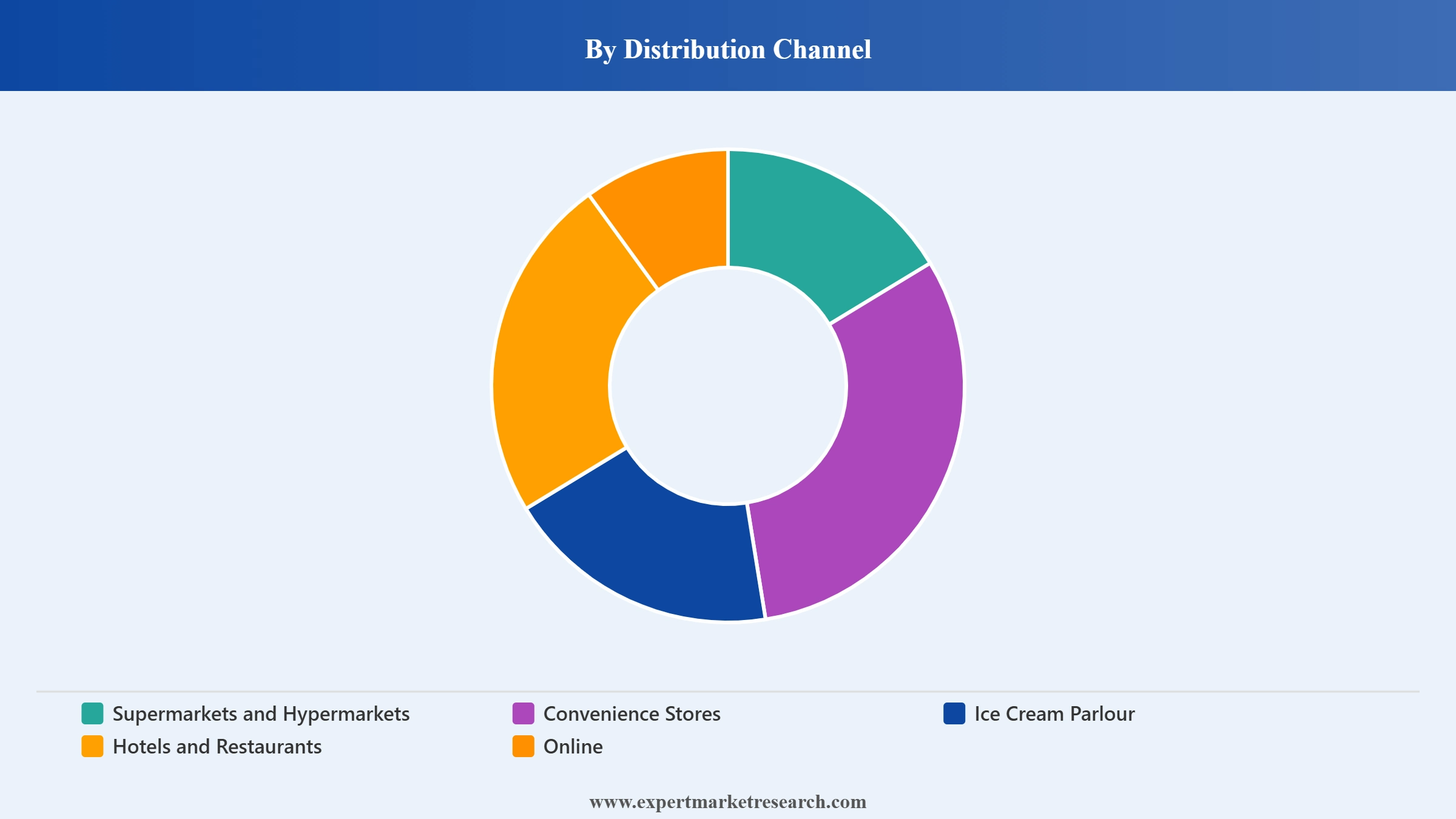
Market Breakup by Distribution Channel
Key Insight: Supermarkets and hypermarkets provide support for assortment range, household packages, and premium range visibility. Convenience stores give more importance to instant consumption, thereby offering an ideal setting for new product experimentation. Ice cream parlors give emphasis to personalization and experience of consumption, whereas hotels and restaurants provide chances for bulk packaging and specific food service formulations. The online channel requires better logistics and packaging protection in frozen form, while other channels also include specialty retail and institutional routes. Therefore, manufacturers in the Mexico ice cream market must have pack size, price structure, freezer strategy, and logistics model based on each channel rather than using one single method.
Market Breakup by Region
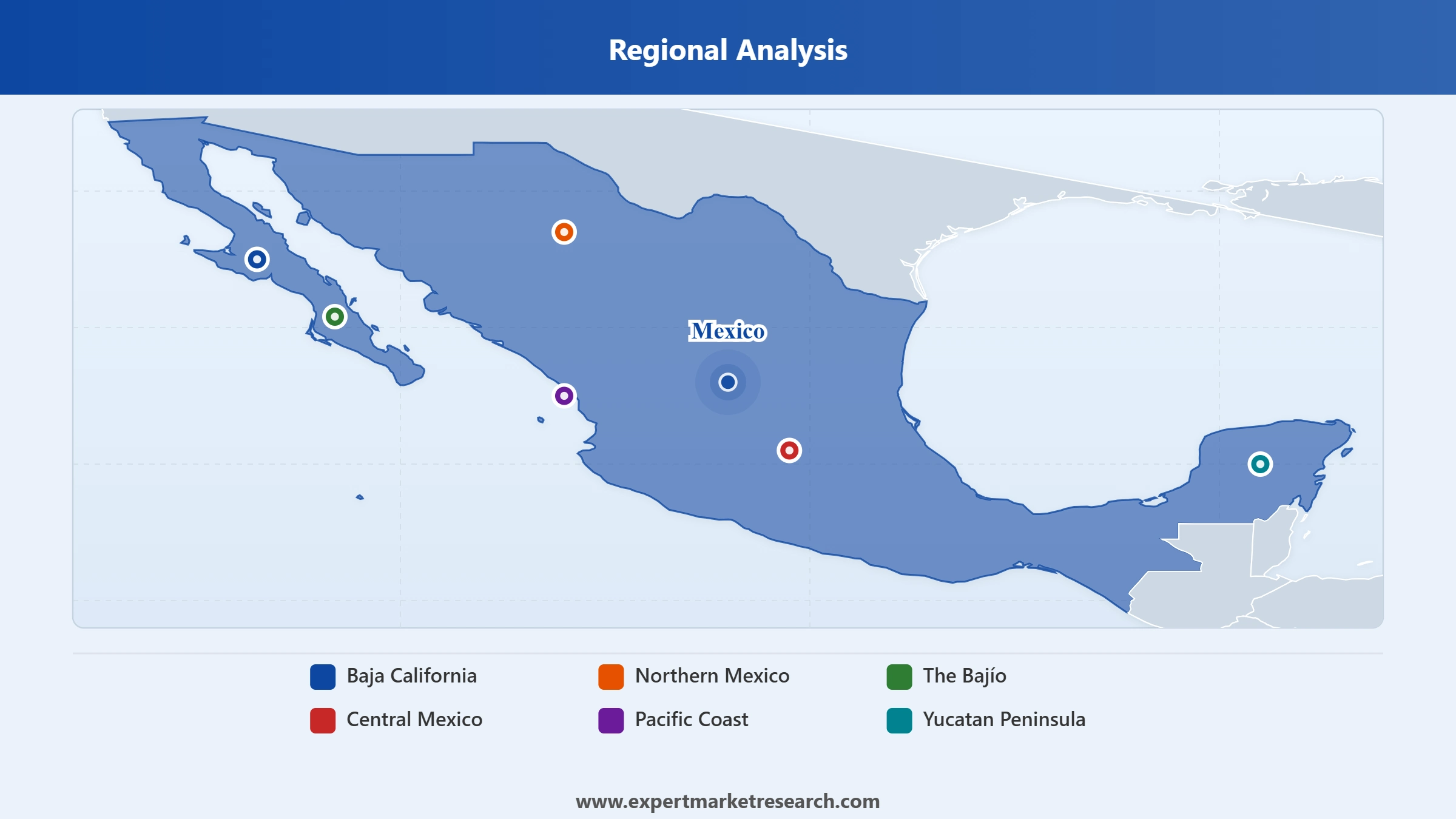
Key Insight: The Central Mexico ice cream market enjoys the advantages of dense urban demand and sophisticated retail distribution, while Baja California offers prospects associated with cross-border trade and western urban markets. The North Mexico region enjoys the advantages of industry, big cities, and proximity to the United States. Bajío gives rise to prospects of expanding urban and commercial demand, whereas the Pacific Coast market witnesses prospects via tourism and food service. Finally, Yucatan Peninsula offers prospects driven by hospitality-related demand and local flavor development.
Read more about this report - REQUEST FREE SAMPLE COPY IN PDF
By flavor, chocolate represents the dominant segment, supported by strong confectionery associations and premium coating applications
Chocolate remains a popular flavor platform in the Mexico ice cream market due to its ability to carry the same taste to coated sticks, cones, cups, tubs, and luxury multi-packs. Commercial viability comes from the ability to combine chocolate with cookie bits, caramel, nuts, coffee, and other inclusions. Arcor’s portfolio shows how chocolate allows confectionery brands such as Cofler, Bon o Bon, Águila, and Rocklets to have frozen equivalents. Chocolate also opens up opportunities for layered products, premium coatings, and co-branding while offering retailers the opportunity to develop recognizable flavor platforms. In May 2026, Ferrero revived Wonka through a Netflix partnership, leveraging entertainment-driven branding to renew consumer interest in confectionery products.
Read more about this report - REQUEST FREE SAMPLE COPY IN PDF
Flavored ice cream is emerging as one of the product development themes for producers looking for less calorie-rich varieties and more seasonal flavors. The country offers an opportunity to incorporate local flavors into sorbets, dairy-based, bar and multiple flavor versions of their product range. Combining fruit flavors with cream, chocolate, and spicy flavors can help in creating unique products without developing completely new flavor platforms.
Dairy-based ice cream occupies a significant market share through established formulation capabilities, broad availability and compatibility with indulgent flavor systems
Dairy-based ice creams continue to boost the Mexico ice cream market value since they provide for creamy textures, traditional tastes and a wide range of product archetypes. This kind of ice cream is produced for various formats such as tubs, cones, cups, sticks and foodservice products with the inclusion of chocolate, fruits, coffee, and bakery items. The existing ecosystem for such a supply chain makes it ideal for high volume manufacturing and cold chain supply. In October 2024, GoodPop expanded its frozen treats portfolio with organic dairy bars, complementing its award-winning non-dairy lineup for broader consumer appeal.
Read more about this report - REQUEST FREE SAMPLE COPY IN PDF
The vegan ice cream is getting much product development attention from manufacturers who are shifting from traditional dairy ice cream platforms. These bases could incorporate coconut, oat, almond, and any other plant sources in order to provide a special texture and taste profile, stimulating growth in the Mexico ice cream market. In addition, this type of ice cream opens up a number of possibilities to launch products that will have particular nutritional and dietary position, provided that the formulations meet Mexican regulations. In April 2025, Oppo Brothers launched vegan ice cream sticks with high fruit content, combining refreshing sorbet flavors with creamy textures and fewer calories.
By category, impulse ice cream dominates the market through immediate-consumption formats, strong freezer visibility and convenience-oriented purchasing occasions
Impulse ice cream continues to be commercially relevant since sticks, cones, and cups can serve immediate consumption needs from convenience stores to supermarkets, foodservice outlets, and outdoors settings. There are new developments within the Mexico ice cream market by way of coating, fillings, layering effects and confectionery combinations. Premium impulse ice cream innovations seen with Magnum in Mexico illustrate how complex product structures can allow differentiation. In March 2026, Huber & Holly entered the impulse ice cream segment, launching Cones & Candies with premium flavors across quick-commerce platforms.
Read more about this report - REQUEST FREE SAMPLE COPY IN PDF
Artisanal ice cream allows manufacturers and operators to create differentiation through local flavor inspirations, small batch production, and premium ingredients. Artisanal concepts based on regional fruits, Mexican chocolate, coffee, nuts and desserts can be created and small production batches tested for consumer interest. The category also opens up Mexico ice cream market opportunities for ingredient suppliers providing fruit bases, inclusions, natural flavors and premium toppings.
By product type, cups are experiencing growth in the market as they provide portion control, merchandising flexibility and broad flavor compatibility
Cup formats offer manufacturers a flexible packaging option for creating both mass and premium offerings, accelerating demand in the Mexico ice cream market. It enables single portion sizes, layering, inclusions and seasonality in flavor profiles while enabling a simple freezing display. Cups also offer the opportunity for brands to communicate flavor and ingredient information through small packaging. In food manufacturing, cups can be used in formulations including dairy, plant-based, and artisan without altering the overall eating experience. In April 2026, Herdez transferred full control of its Mexico ice cream business to Froneri, strengthening Froneri’s local operations and portfolio.
Read more about this report - REQUEST FREE SAMPLE COPY IN PDF
There is a lot of innovative development going on in the space of stick ice creams because of the small form factor that allows for more visually differentiated coatings, fillings and toppings. Recently launched sticks in the Mexico ice cream market showcase the possibilities of combining frozen centers with chocolate coatings, cookie pieces and coffee-flavored filling. Manufacturers have the possibility of developing premium products without having to increase the portion size.
Supermarkets and hypermarkets dominate the market through assortment depth, freezer capacity, and household-oriented purchasing
With the provision of abundant freezer capacity and multi-format display facilities, supermarkets and hypermarkets offer manufacturers a key Mexico ice cream market opportunity to expand their portfolios from economy tubs to premium sticks and multipack offerings. Additionally, promotional activities and seasonal displays can help to generate more footfall at the freezer level. For manufacturers, such a channel is a good source of insight on performance within different price levels and formats. It also allows reaching out to more consumers in terms of take-home products, family packs and premium innovations that require more shelf presence than the usual formats.
Read more about this report - REQUEST FREE SAMPLE COPY IN PDF
Convenience stores are being used as launching platforms for single-serving products and impulse products. For example, in August 2024, OXXO expanded from Mexico into Texas and New Mexico, extending its Mexican convenience-store format and creating new retail channels for frozen products. Such a strategy allows testing a new product proposition using limited distribution channels. In this channel, smaller formats, recognized brands, and occasions of impulse purchase are preferred. Consequently, the Mexico ice cream market observes a need for products that have freezer-ready packaging and can handle frequent temperature fluctuations.
Central Mexico clocks in the dominant market share owing to concentrated urban demand, retail infrastructure and a dense network of commercial consumption points
The Central Mexico ice cream market provides manufacturers with high concentrations of urban consumers, retail stores, convenience stores and foodservice operators. The region of Mexico City and its adjacent business zones allows manufacturers to introduce their premium products, limited editions and channel-specific introductions before regional expansion. High density distribution networks may also help minimize logistics challenges for frozen products. It is possible for manufacturers to understand consumer reactions to their product at various price points and format levels.
Read more about this report - REQUEST FREE SAMPLE COPY IN PDF
The Yucatan Peninsula provides opportunities in the Mexico ice cream market related to tourism, hospitality and foodservice industries, where ice cream may be introduced into desserts, resort menus, convenience purchases and premium offerings. Manufacturers may modify their products to fit regional preferences, while developing smaller sizes of their products suitable for a higher temperature environment and areas of tourism. Suppliers may help with this market through introducing better cold chain equipment, insulated packaging, and formulations that will result in a consistent texture of the product.
The competition in the market is currently based on product architecture, channel execution, and refreshing existing brands without making the manufacturing process too complicated. There are many opportunities for Mexico ice cream companies to focus on premium coatings, coffee-based flavors, candy partnerships, plant-based ingredients, local recipes and unique single serve packs. Other possibilities include cold chain improvement, freezer placement, packaging, and channel exclusives.
The competition also involves products imported into the country, and the largest supplier of these was the United States. Mexico ice cream market players that have good brand equity combined with quick product testing and flexible production and distribution will be able to react better to changing retail demands.
Started in 1951, Grupo Arcor was formed in Argentina, with the company evolving from confectionery to a food group with diversification. Grupo Arcor's ice cream business converts confectionery equity into frozen foods like popsicles, cups, cones, chocolates, frozen bonbons, and desserts. The company claims to introduce about ten new ice cream products per year.
Created under the 1930 agreement between Margarine Unie and Lever Brothers, Unilever has been operating famous ice cream brands such as Magnum, while being headquartered in the United Kingdom.
Nestlé was founded in the year 1866. It has headquarters in Vevey, Switzerland. The cross-category innovation that the company's ice cream business is adopting in Mexico is seen in the launch of Nescafé Cappuccino frozen pop by OXXO in 2024. This involves connecting the company's coffee brand equity with the frozen dessert category and offering targeted retail launch.
Headquartered in Le Mars, Iowa, United States, and established in 1913, Wells Enterprises is one of the leading ice cream makers in the United States. Some of the products offered by this company include Blue Bunny, Bomb Pop, and Halo Top ice creams.
Other key players in the market include MontHelado SA, Ben & Jerry's Homemade, Inc., General Mills, Inc., Grido Ice Cream Factory, Colombina SA., and Sorvetes Jundia Industria e Comercio LTDA, among others.
*Please note that this is only a partial list; the complete list of key players is available in the full report. Additionally, the list of key players can be customized to better suit your needs.*
Unlock the latest insights with our Mexico ice cream market trends 2026 report. Discover regional growth patterns, consumer preferences, and key industry players. Stay ahead of competition with trusted data and expert analysis. Download your free sample report today and drive informed decisions in the market.


Upto 15% Off
USD
$2499 $2249
$3999 $3599
$4999 $4249
$5999 $5099


*While we strive to always give you current and accurate information, the numbers depicted on the website are indicative and may differ from the actual numbers in the main report. At Expert Market Research, we aim to bring you the latest insights and trends in the market. Using our analyses and forecasts, stakeholders can understand the market dynamics, navigate challenges, and capitalize on opportunities to make data-driven strategic decisions.*
In 2025, the market reached an approximate value of USD 1.13 Million.
The market is projected to grow at a CAGR of 4.50% between 2026 and 2035.
The market is assessed to witness a healthy growth in the forecast period to reach around USD 1.75 Million in 2035.
The different flavours of ice cream are chocolate, fruit, and vanilla, among others.
The different product types considered in the market report are cup, stick, cone, tub, and brick, among others.
The different sources of ice cream considered in the market report are dairy-based ice cream and vegan ice cream.
The major regions in the market include Baja California, Northern Mexico, The Bajío, Central Mexico, Pacific Coast, and Yucatan Peninsula.
The key players in the market include Grupo Arcor, Unilever Plc, Nestlé SA, Wells Enterprises, Inc, MontHelado SA, Ben & Jerry's Homemade, Inc., General Mills, Inc., Grido Ice Cream Factory, Colombina SA., and Sorvetes Jundia Industria e Comercio LTDA, among others.
Companies face seasonal demand swings, cold-chain costs, ingredient-price volatility, stringent labeling requirements, freezer-space competition, import pressure and the technical difficulty of maintaining texture during distribution.
Manufacturers are developing localized flavors, optimizing cold-chain networks, expanding convenience formats, testing exclusive launches, improving formulations and strengthening supplier partnerships across Mexico.
Explore our key highlights of the report and gain a concise overview of key findings, trends, and actionable insights that will empower your strategic decisions.
| REPORT FEATURES | DETAILS |
| Base Year | 2025 |
| Historical Period | 2019-2025 |
| Forecast Period | 2026-2035 |
| Scope of the Report |
Historical and Forecast Trends, Industry Drivers and Constraints, Historical and Forecast Market Analysis by Segment:
|
| Breakup by Flavor |
|
| Breakup by Source |
|
| Breakup by Category |
|
| Breakup by Product Type |
|
| Breakup by Distribution Channel |
|
| Breakup by Region |
|
| Market Dynamics |
|
| Competitive Landscape |
|
| Companies Covered |
|
Datasheet
One User
USD 2,499
USD 2,249
tax inclusive*
Single User License
One User
USD 3,999
USD 3,599
tax inclusive*
Five User License
Five User
USD 4,999
USD 4,249
tax inclusive*
Corporate License
Unlimited Users
USD 5,999
USD 5,099
tax inclusive*
*Please note that the prices mentioned below are starting prices for each bundle type. Kindly contact our team for further details.*
Flash Bundle
Small Business Bundle
Growth Bundle
Enterprise Bundle
*Please note that the prices mentioned below are starting prices for each bundle type. Kindly contact our team for further details.*
Flash Bundle
Number of Reports: 3
20%
tax inclusive*
Small Business Bundle
Number of Reports: 5
25%
tax inclusive*
Growth Bundle
Number of Reports: 8
30%
tax inclusive*
Enterprise Bundle
Number of Reports: 10
35%
tax inclusive*
How To Order

Select License Type
Choose the right license for your needs and access rights.

Click on ‘Buy Now’
Add the report to your cart with one click and proceed to register.

Select Mode of Payment
Choose a payment option for a secure checkout. You will be redirected accordingly.
Strategic Solutions for Informed Decision-Making
Gain insights to stay ahead and seize opportunities.

Get insights & trends for a competitive edge.

Track prices with detailed trend reports.

Analyse trade data for supply chain insights.

Leverage cost reports for smart savings

Enhance supply chain with partnerships.

Connect For More Information
Our expert team of analysts will offer full support and resolve any queries regarding the report, before and after the purchase.
Our expert team of analysts will offer full support and resolve any queries regarding the report, before and after the purchase.
We employ meticulous research methods, blending advanced analytics and expert insights to deliver accurate, actionable industry intelligence, staying ahead of competitors.
Our skilled analysts offer unparalleled competitive advantage with detailed insights on current and emerging markets, ensuring your strategic edge.
We offer an in-depth yet simplified presentation of industry insights and analysis to meet your specific requirements effectively.




