

Consumer Insights
Uncover trends and behaviors shaping consumer choices today
Procurement Insights
Optimize your sourcing strategy with key market data
Industry Stats
Stay ahead with the latest trends and market analysis.
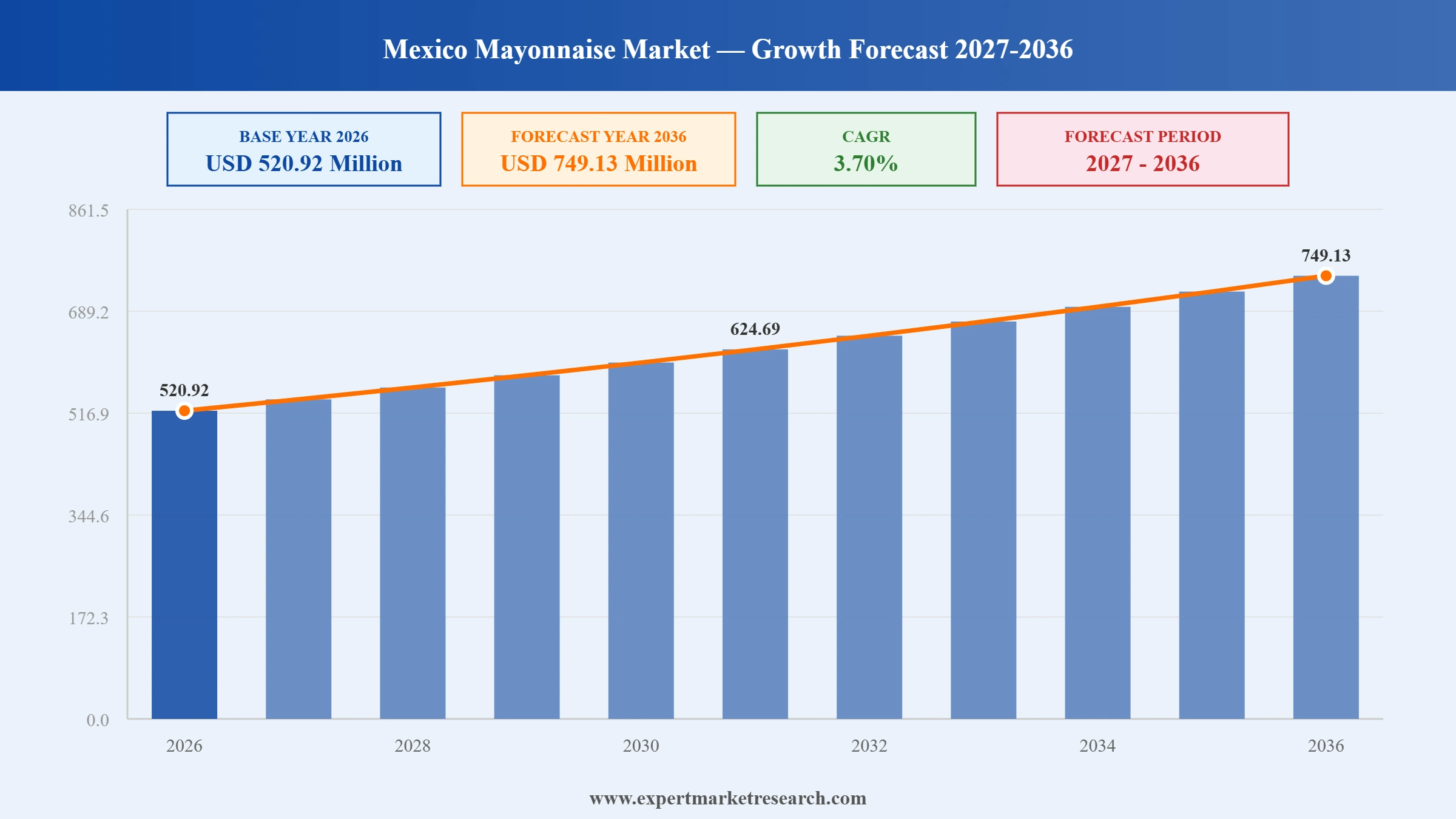
The Mexico mayonnaise market attained a value of USD 502.33 Million in 2025 and is projected to expand at a CAGR of 3.70% through 2035. The market is further expected to achieve USD 722.40 Million by 2035. South The expansion of Mexico's foodservice infrastructure is creating additional institutional demand for mayonnaise in standardized, high-volume formats. Data México recorded 740,231 restaurant and eating-place establishments in May 2026, with the State of Mexico, Mexico City, and Jalisco accounting for the largest numbers of establishments. This structure supports demand from restaurant chains, independent restaurants, caterers, and prepared-food operators seeking consistent flavor and application performance.
The expansion of Mexico's foodservice infrastructure is creating additional institutional demand for mayonnaise in standardized, high-volume formats. Data México recorded 740,231 restaurant and eating-place establishments in May 2026, with the State of Mexico, Mexico City, and Jalisco accounting for the largest numbers of establishments. This structure supports demand from restaurant chains, independent restaurants, caterers, and prepared-food operators seeking consistent flavor and application performance, thereby boosting the Mexico mayonnaise market value.
Mexican mayonnaise innovation seems to be increasingly focussed on a blend of nutritional reformulations and unique flavors. Kewpie’s 2026 reformulation of Kewpie Half represents an example of such innovation, as the product still has 50 percent less calories than the regular mayonnaise, but uses egg yolk formulation for greater richness and umami flavors. Producers experiment with different flavor ideas influenced by global cuisine, including sweet chili, mala, truffle, aioli, and sriracha. Such developments provide opportunities to address consumers seeking lighter products without removing mayonnaise from familiar meal occasions. For manufacturers operating in Mexico, combining calorie-conscious formulations with distinctive flavours can create new premium and application-specific SKUs. This approach also enables companies to differentiate through formulation technology, sensory characteristics, and usage versatility rather than competing primarily through price.
Volatility in input costs remains a restraint for mayonnaise manufacturers because production depends on several cost-sensitive ingredients and packaging materials. Vegetable oils are particularly important because they constitute a major component of mayonnaise formulations, while eggs, vinegar, packaging resin, glass, and transportation add further exposure to commodity and logistics fluctuations. Changes in oilseed prices can therefore affect formulation costs and manufacturers’ margins, particularly when retail competition limits the ability to immediately pass higher costs to consumers. Packaging expenses can create additional pressure as brands offer multiple bottle and pouch formats across retail and foodservice channels. Manufacturers may need to use procurement contracts, reformulation, pack-size adjustments, and supply-chain optimisation to manage these pressures while maintaining product quality and competitive pricing, thereby boosting the Mexico mayonnaise market developments.
Read more about this report - REQUEST FREE SAMPLE COPY IN PDF
Kewpie announced a major reformulation of its Kewpie Half mayonnaise-type product, with the foodservice version launched on February 6 and the retail version on February 19. The reformulated product retains 50% fewer calories than Kewpie Mayonnaise while changing to an egg-yolk-based formulation to improve richness and umami. The foodservice range includes 1,050 g, 5 kg, 8 g, and 10 g formats, providing options for professional kitchens. The development demonstrates Kewpie’s focus on combining nutritional positioning with functional performance across retail and foodservice applications.
McCormick completed the acquisition of an additional 25% ownership interest in McCormick de Mexico, increasing its stake to 75%. The company paid $750 million for the additional interest, previously jointly held with Grupo Herdez. McCormick stated that the transaction strengthens its position in the Mexican market and provides a platform for further expansion across Latin America. McCormick de Mexico has operated as a joint venture since 1947 and has a portfolio spanning mayonnaise, spices, marmalades, mustard, hot sauce, and tea.
Kewpie launched Kewpie Mahon Sauce for professional foodservice customers, drawing inspiration from the traditional Mahon sauce associated with the origins of mayonnaise. The product combines olive oil, lemon, and garlic flavours and was developed using Kewpie’s technology to provide a smooth, handmade-style texture. It is supplied in 1 kg packs with 10 units per case and is intended for restaurants and bakeries. The launch formed part of Kewpie’s 100th-anniversary activities and demonstrates the company’s strategy of extending mayonnaise-related innovation into specialised foodservice sauces.
Kewpie launched a limited-edition “Taste the World” mayonnaise-type range to commemorate the 100th anniversary of Kewpie Mayonnaise. The six flavours were introduced in three stages from February through June and included rich BBQ sauce, sweet chilli, mala, truffle, aioli, and sriracha profiles. The initiative combined Kewpie’s established mayonnaise base with internationally recognised flavour concepts, providing consumers with differentiated taste options. The development illustrates how mayonnaise manufacturers can use flavour crossovers and limited-edition launches to stimulate product discovery and broaden consumption occasions.
Foodservice suppliers can differentiate through application-specific formats rather than competing solely on retail bottles. Kewpie’s February 2025 launch of Mayon Sauce (Mahon Sauce) for professional use illustrates this approach, with the company explicitly targeting foodservice and developing recommended menu applications around the product. This indicates scope for manufacturers to develop mayonnaise systems tailored to professional kitchens, including sauces designed for grilled foods and prepared dishes. For B2B suppliers, such products can strengthen account-level differentiation by addressing preparation requirements, menu consistency, and culinary positioning rather than relying only on consumer-facing branding.
Flavour development can be narrowed toward specific Mexican food occasions rather than broad novelty. McCormick describes its Mexico-made mayonnaise with lime as suitable for tacos, elotes, burritos, tortas, potato salad, sandwiches, and burgers, demonstrating how a formulation can be positioned around identifiable consumption occasions. This creates opportunities for suppliers to build application-led SKUs for particular dishes, restaurant concepts, and prepared-food categories. Rather than introducing flavours without a clear use case, manufacturers can connect formulation development with menu applications, helping distributors and foodservice buyers select products according to the dishes they serve.
Retailers can use category-level pricing and store-performance information to refine mayonnaise distribution and promotional decisions. INEGI’s consumer-price database separately tracks “Mayonesa y mostaza” within its condiments classification, providing an official reference point for monitoring price movements in this specific category. For manufacturers, this creates scope to adjust pack architecture, promotional timing, and regional pricing using an official consumer-price benchmark rather than relying only on broad food inflation indicators. The approach can be particularly useful when assessing whether volume opportunities are coming from distribution expansion, price positioning, or changes in consumer purchasing behaviour, thereby boosting the Mexico mayonnaise market dynamics and trends.
Health-oriented innovation is creating opportunities to reduce calorie content while maintaining mayonnaise-based applications. Kewpie’s 2025 product-development activity included multiple mayonnaise-type formulations, including internationally inspired flavours such as sweet chilli, mala, truffle, aioli, and sriracha, demonstrating that reformulation and flavour diversification can occur simultaneously. For Mexican suppliers, the relevant opportunity is to develop nutrition-conscious products without limiting them to specialist health channels. Reduced-calorie or reformulated mayonnaise can instead be positioned for everyday sandwiches, salads, snacks, and prepared foods, allowing manufacturers to preserve familiar usage occasions while addressing changing nutritional expectations.
Mexico can serve as an operational base for manufacturers seeking broader participation across the Americas, particularly when local infrastructure supports neighbouring-market expansion. Kewpie’s 2025 overseas-growth strategy specifically identified Mexico alongside Canada and the United States while outlining plans to expand sales areas and channels across the Americas. This highlights an opportunity for condiment companies to use Mexico not only as a domestic sales market but also as part of a wider regional supply and distribution strategy. Manufacturers with local production, established distributor relationships, and adaptable formulations can therefore develop scalable platforms for serving multiple American markets.
The Expert Market Research’s report titled "Mexico Mayonnaise Market Report and Forecast 2026-2035” offers a detailed analysis of the market based on the following segments:
Market Breakup by Type
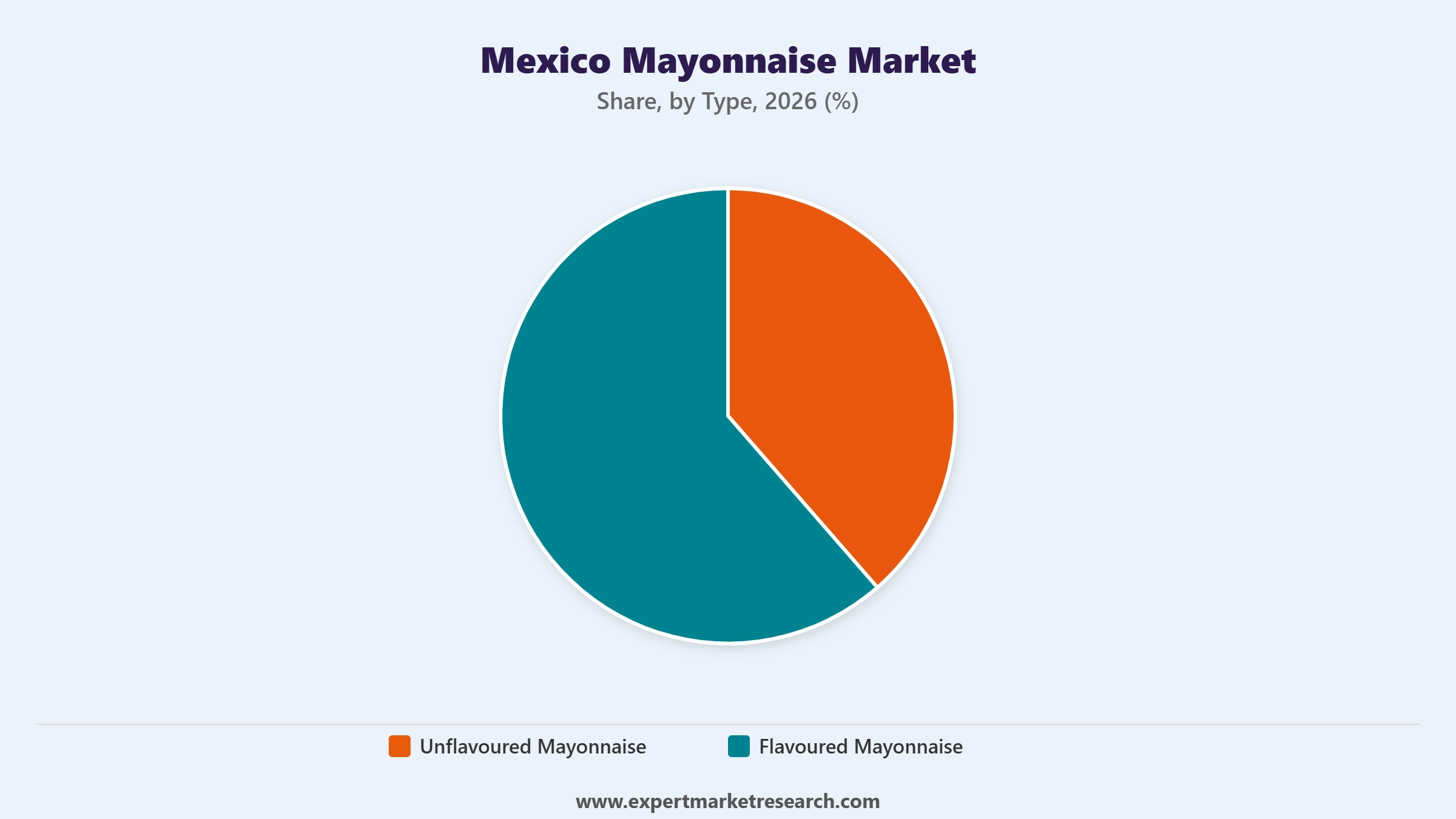
Key Insight: Mexico's mayonnaise type landscape is moving toward coexistence between conventional unflavored products and differentiated flavored formulations. Unflavored mayonnaise remains essential for household consumption, food manufacturing, sandwiches, salads, and foodservice preparation because it functions as a base ingredient across multiple recipes. Flavored mayonnaise, meanwhile, allows producers to capture incremental value through localized taste profiles. McCormick Mexico's portfolio illustrates this diversification through lime, chipotle, guacamole, and habanero variants alongside lighter products. The commercial implication is that manufacturers can maintain volume through mainstream formulations while using flavored SKUs to increase shelf differentiation, encourage trial, and support menu-specific applications.
Market Breakup by End Use
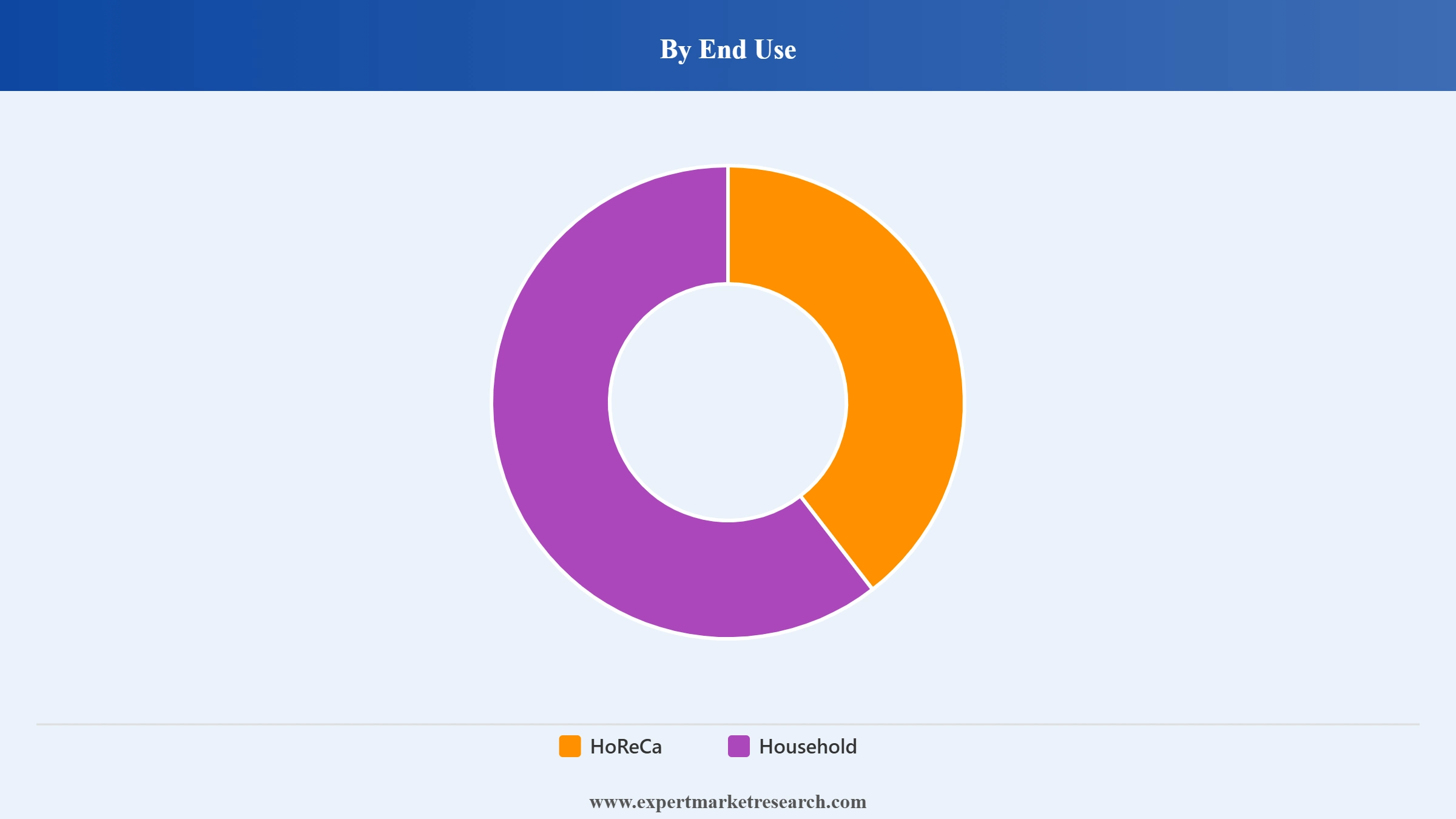
Key Insight: Household and HoReCa demand serve different procurement requirements and together create a diversified demand base. Household sales favor consumer-facing pack sizes, squeezability, recognizable brands, and flavor variety, while HoReCa buyers place greater emphasis on yield, consistency, food safety, pack economics, and product performance during preparation. Mexico's foodservice infrastructure provides an important B2B foundation: Data México recorded 805,179 accommodation and food-service economic units in May 2026. Suppliers can therefore segment production and commercial strategies around retail packs for households and larger-format or application-specific products for professional kitchens, thus driving the demand in the Mexico mayonnaise market.
Market Breakup by Distribution Channel
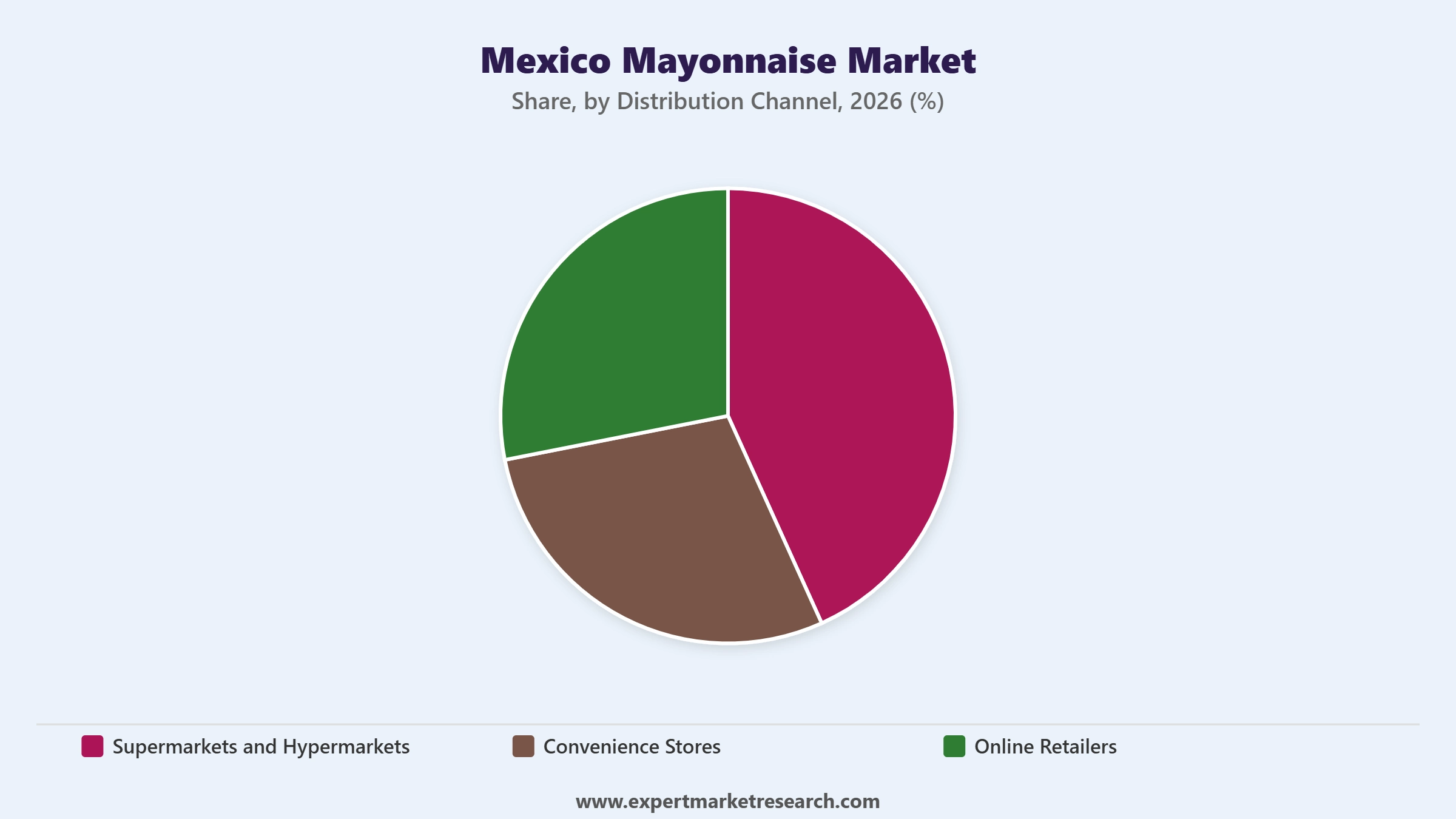
Key Insight: Supermarkets and hypermarkets, convenience stores, online retailers, and other channels provide complementary routes for mayonnaise distribution. Modern grocery formats offer shelf visibility and multiple SKU options, convenience outlets address immediate consumption and smaller baskets, while online channels enable assortment expansion without requiring equivalent physical shelf space. ANTAD's July 2026 figures showed total-store sales growth of 3.4% year-on-year, highlighting continued commercial activity among organized retailers. For manufacturers, an omnichannel strategy can reduce dependence on individual formats and enable differentiated pack sizes across retail environments.
Market Breakup by Region
Key Insight: The regional market structure reflects differences in population concentration, foodservice activity, tourism, retail infrastructure, and industrial development. Central Mexico benefits from the dense commercial ecosystem surrounding Mexico City and the State of Mexico, while Northern Mexico and Baja California offer opportunities linked to manufacturing, border commerce, and urban consumption. The Bajio combines industrial activity with expanding urban centers, while the Pacific Coast and Yucatan Peninsula provide foodservice opportunities associated with tourism and hospitality. Data México identifies Mexico City and the State of Mexico among the country's largest restaurant and eating-place concentrations, providing a useful proxy for regional condiment demand.
Read more about this report - REQUEST FREE SAMPLE COPY IN PDF
By type, unflavored mayonnaise is anticipated to dominate due to broad multi-application utility
Unflavored mayonnaise is positioned as the dominant type because its neutral taste supports extensive use across household cooking, foodservice preparation, sandwiches, salads, sauces, and processed foods. Its versatility also makes it suitable for bulk procurement by commercial buyers seeking a consistent base that can be customized with additional ingredients. Mexico’s large foodservice ecosystem further supports demand, with 740,231 restaurant and eating-place establishments recorded in May 2026. The broad application base therefore provides manufacturers with recurring demand across multiple consumption channels. Such developments will thus boost Mexico mayonnaise market trends in the long run.
Read more about this report - REQUEST FREE SAMPLE COPY IN PDF
Flavored mayonnaise is gaining traction as manufacturers respond to Mexican consumers’ interest in stronger and more distinctive taste profiles. Company portfolios in Mexico increasingly include variants incorporating ingredients such as chipotle, habanero, lime, and guacamole-inspired flavours, demonstrating the scope for localisation. Flavoured formulations also allow brands to target specific eating occasions, including burgers, sandwiches, snacks, grilled foods, and street-food-inspired dishes. This provides manufacturers with opportunities to differentiate products through taste, premium positioning, and limited-edition or application-specific variants rather than relying solely on conventional mayonnaise.
By end use, household demand is anticipated to dominate due to broad recurring consumption
Household use remains the dominant end-use segment because mayonnaise is a repeat-purchase condiment that can be used across sandwiches, salads, snacks, prepared foods, and home cooking. The breadth of consumer-facing portfolios demonstrates continued investment in household applications. McCormick Mexico maintains separate mayonnaise and mayonnaise-dressing products across conventional, light, and flavored formulations, providing multiple points of entry for household buyers, thus boosting the Mexico mayonnaise market revenues.
Read more about this report - REQUEST FREE SAMPLE COPY IN PDF
HoReCa has strong expansion potential because professional kitchens increasingly require standardized ingredients that can be used across high-volume menu applications. Mexico recorded 220 billion Mexican pesos in accommodation and food-services GDP during Q1 2026, up 2.31% from the same quarter of the previous year. This creates opportunities for foodservice-specific mayonnaise packs and formulations.
By distribution channel, supermarkets and hypermarkets are anticipated to dominate through broad grocery reach
Supermarkets and hypermarkets are positioned as the dominant distribution channel because they provide manufacturers with extensive shelf space, broad product visibility, promotional opportunities, and multiple pack-size options. Mexico’s organized retail sector also has substantial commercial scale. ANTAD reported MXN 1.675 trillion in total sales in 2025, with supermarkets accounting for 36% of the association’s sales mix. The format enables mayonnaise brands to reach consumers during routine grocery purchases while supporting price promotions, brand comparisons, and cross-merchandising with bread, meats, salads, and other complementary food products.
Read more about this report - REQUEST FREE SAMPLE COPY IN PDF
Online retailers have strong growth potential as digital purchasing gives mayonnaise brands additional space to showcase product variants, pack sizes, and premium offerings beyond physical shelf constraints. E-commerce also enables manufacturers to communicate detailed product information, ingredients, usage suggestions, and promotional offers directly to shoppers. Unilever identified digital commerce as a strategic growth priority in its 2025 Annual Report, highlighting the increasing importance of digital channels within consumer-goods distribution. For mayonnaise suppliers, online platforms can also support multipack purchases and convenient repeat ordering.
By region, Central Mexico is anticipated to dominate through dense retail and foodservice infrastructure
Central Mexico represents the principal commercial concentration for mayonnaise suppliers because of its population density, retail depth, and restaurant ecosystem. The State of Mexico and Mexico City recorded 89,408 and 55,753 restaurant and eating-place establishments, respectively, in May 2026. Jalisco, another major market within the broader central-western commercial corridor, recorded 48,957 establishments. These clusters provide manufacturers with opportunities to build distributor networks, secure foodservice accounts, and test differentiated products before expanding nationally. Organized retail also provides an important route into the region, supported by positive ANTAD total-store sales growth during most months of 2026, thereby directly boosting the Mexico mayonnaise market regional growth.
Northern Mexico and Baja California offer opportunities linked to urbanization, cross-border commerce, manufacturing employment, and proximity to US supply chains. The Bajio provides another strategically relevant area because industrial cities create concentrated commercial demand. Meanwhile, the Pacific Coast and Yucatan Peninsula have distinctive foodservice opportunities associated with tourism. Quintana Roo recorded one of the highest workforce concentrations in Mexico's accommodation and food-services sector, according to Data México. For suppliers, this creates scope for hospitality-specific packaging and products designed for high-volume preparation. The regional opportunity is therefore not uniform: Central Mexico favors scale and distribution density, Northern markets support cross-border and urban demand, and tourism-heavy regions offer specialized HoReCa opportunities.
Mexico mayonnaise market players are increasingly aiming to differentiate their mayonnaise portfolios through flavour innovation, healthier formulations, premium positioning, and localised product development. Traditional mayonnaise remains important, but brands are expanding into variants featuring lime, chipotle, habanero, guacamole-inspired flavours, and other profiles aligned with Mexican eating habits. Health-oriented positioning is also gaining importance, with companies introducing light, reduced-fat, clean-label, and preservative-conscious formulations. Packaging and pack-size diversification further support differentiation, allowing brands to address households, convenience-led consumption, restaurants, and institutional foodservice. These strategies enable manufacturers to create distinctive propositions beyond basic mayonnaise based on taste, functionality, and perceived quality.
Established Mexico mayonnaise companies are also seeking a USP through brand heritage, product consistency, premium ingredients, and stronger channel presence. International players leverage established global brands and food-quality credentials, while regional operations focus on understanding local consumption occasions and flavour preferences. Foodservice-specific mayonnaise formats, convenient squeeze packaging, and products designed for sandwiches, snacks, and prepared foods provide additional differentiation. Increasing digital engagement and e-commerce availability are further helping brands communicate product attributes and reach younger, convenience-oriented consumers.
Established in 1889, McCormick & Company is headquartered in Hunt Valley, Maryland, United States. In Mexico, the company offers an extensive mayonnaise portfolio under the McCormick brand, including Mayonesa con Jugo de Limón, Aderezo de Mayonesa Light, Aderezo de Mayonesa con Chipotle, Aderezo de Mayonesa sabor Guacamole, Aderezo de Mayonesa con Chile Habanero, and mayonnaise for tortas and sandwiches. Its Mexican portfolio combines the traditional creamy mayonnaise profile with lime and locally relevant spicy flavours.
Established in 1929 through the combination of the Margarine Union and Lever Brothers, Unilever has its central head office in London, United Kingdom. In Mexico, its Hellmann’s portfolio includes Hellmann’s Mayonesa Real, Mayonesa Espesa, and Mayonesa con Jugo de Limón, alongside several mayonnaise-based dressings. The company also offers large-format foodservice products, including 1.9 L, 3.8 L, and 13 kg packs, designed for restaurants and professional food preparation.
Established in 1919, Kewpie Corporation is headquartered in Shibuya, Tokyo, Japan. Its flagship KEWPIE Mayonnaise, launched in 1925, is an egg-yolk-based mayonnaise known for its rich flavour and creamy texture. Kewpie’s international portfolio includes standard KEWPIE Mayonnaise, KEWPIE Mayonnaise 210, and KEWPIE Mayonnaise Mild Gluten Free for export markets. However, Kewpie’s official global product information does not specifically list Mexico among the countries with a dedicated locally sold mayonnaise portfolio.
Formed in 2015 through the merger of Kraft Foods Group and H.J. Heinz Company, Kraft Heinz is co-headquartered in Pittsburgh, Pennsylvania, and the Chicago area, United States. In Mexico, Heinz offers Mayonesa Clásica Heinz and Mayonesa Limón Heinz, with the latter available in multiple pack sizes. The Mexican range focuses on creamy mayonnaise and lemon-flavoured mayonnaise; the lemon variant is described as having a thick, spreadable consistency and no artificial colours.
Other key players in the market include Chosen Foods LLC, Dr. August Oetker KG, and Conservas La Costeña S.A. de C.V., among others.
*Please note that this is only a partial list; the complete list of key players is available in the full report. Additionally, the list of key players can be customized to better suit your needs.*
Explore the Mexico mayonnaise market forecast 2026-2035 to understand evolving product preferences, distribution strategies, foodservice opportunities, regional demand, and competitive developments. Download the sample report to review the research framework, market segmentation, company profiles, and strategic insights supporting the Mexico mayonnaise market size, industry outlook, and Mexico mayonnaise market trends 2026.


Upto 15% Off
USD
$2499 $2249
$3999 $3599
$4999 $4249
$5999 $5099


*While we strive to always give you current and accurate information, the numbers depicted on the website are indicative and may differ from the actual numbers in the main report. At Expert Market Research, we aim to bring you the latest insights and trends in the market. Using our analyses and forecasts, stakeholders can understand the market dynamics, navigate challenges, and capitalize on opportunities to make data-driven strategic decisions.*
In 2025, the market reached an approximate value of USD 502.33 Million.
The market is projected to grow at a CAGR of 3.70% between 2026 and 2035.
The market is assessed to witness a healthy growth in the forecast period to reach around USD 722.40 Million in 2035.
The different types of mayonnaises in the market include unflavoured mayonnaise and flavoured mayonnaise.
The major end uses of mayonnaise include HoReCa and household.
The different distribution channels of mayonnaise in the market include supermarkets and hypermarkets, convenience stores, and online retailers, among others.
The different regions covered in the market report are Baja California, Northern Mexico, The Bajio, Central Mexico, Pacific Coast, and Yucatan Peninsula.
Key players in the market are McCormick & Company Inc., Unilever Plc, Kewpie Corporation, Kraft Heinz Co., Chosen Foods LLC, Dr. August Oetker KG, and Conservas La Costeña S.A. de C.V., among others.
Key challenges in the Mexico mayonnaise market include fluctuating raw material costs, changing consumer preferences toward healthier products, intense competition among brands, price sensitivity, regulatory requirements, supply-chain disruptions, and growing demand for low-fat, organic, clean-label, and preservative-free mayonnaise options.
Key strategies driving the Mexico mayonnaise market include product diversification, clean-label and healthier formulations, competitive pricing, expansion through supermarkets and convenience stores, stronger foodservice partnerships, localised flavours, digital marketing, e-commerce distribution, and packaging innovation to attract evolving consumer preferences.
Explore our key highlights of the report and gain a concise overview of key findings, trends, and actionable insights that will empower your strategic decisions.
| REPORT FEATURES | DETAILS |
| Base Year | 2025 |
| Historical Period | 2019-2025 |
| Forecast Period | 2026-2035 |
| Scope of the Report |
Historical and Forecast Trends, Industry Drivers and Constraints, Historical and Forecast Market Analysis by Segment:
|
| Breakup by Type |
|
| Breakup by End Use |
|
| Breakup by Distribution Channel |
|
| Breakup by Region |
|
| Market Dynamics |
|
| Competitive Landscape |
|
| Companies Covered |
|
Datasheet
One User
USD 2,499
USD 2,249
tax inclusive*
Single User License
One User
USD 3,999
USD 3,599
tax inclusive*
Five User License
Five User
USD 4,999
USD 4,249
tax inclusive*
Corporate License
Unlimited Users
USD 5,999
USD 5,099
tax inclusive*
*Please note that the prices mentioned below are starting prices for each bundle type. Kindly contact our team for further details.*
Flash Bundle
Small Business Bundle
Growth Bundle
Enterprise Bundle
*Please note that the prices mentioned below are starting prices for each bundle type. Kindly contact our team for further details.*
Flash Bundle
Number of Reports: 3
20%
tax inclusive*
Small Business Bundle
Number of Reports: 5
25%
tax inclusive*
Growth Bundle
Number of Reports: 8
30%
tax inclusive*
Enterprise Bundle
Number of Reports: 10
35%
tax inclusive*
How To Order

Select License Type
Choose the right license for your needs and access rights.

Click on ‘Buy Now’
Add the report to your cart with one click and proceed to register.

Select Mode of Payment
Choose a payment option for a secure checkout. You will be redirected accordingly.
Strategic Solutions for Informed Decision-Making
Gain insights to stay ahead and seize opportunities.

Get insights & trends for a competitive edge.

Track prices with detailed trend reports.

Analyse trade data for supply chain insights.

Leverage cost reports for smart savings

Enhance supply chain with partnerships.

Connect For More Information
Our expert team of analysts will offer full support and resolve any queries regarding the report, before and after the purchase.
Our expert team of analysts will offer full support and resolve any queries regarding the report, before and after the purchase.
We employ meticulous research methods, blending advanced analytics and expert insights to deliver accurate, actionable industry intelligence, staying ahead of competitors.
Our skilled analysts offer unparalleled competitive advantage with detailed insights on current and emerging markets, ensuring your strategic edge.
We offer an in-depth yet simplified presentation of industry insights and analysis to meet your specific requirements effectively.




