

Consumer Insights
Uncover trends and behaviors shaping consumer choices today
Procurement Insights
Optimize your sourcing strategy with key market data
Industry Stats
Stay ahead with the latest trends and market analysis.
The Middle East and Africa cybersecurity market attained a value of USD 2.49 Billion in 2025. The market is expected to grow at a CAGR of 7.90% during the forecast period of 2026-2035. By 2035, the market is expected to reach USD 5.33 Billion.
Digital transformation and the rapid development of smart cities are accelerating the cybersecurity market share in the Middle East and Africa. Saudi Arabia and the United Arab Emirates (UAE) are placing billions of dollars into smart infrastructure projects to create interconnected ecosystems that incorporate IoT, AI, and cloud systems across public services, transport, and utilities. In April 2023, the government of Saudi Arabia announced a pipeline of 200 projects in 17 sectors through public-private partnerships. The created ecosystems are also producing tremendous attack surfaces by interconnecting once-safe environments, providing ample motivation for the region governments to invest in cybersecurity.
Governments in the MEA region are enforcing robust cybersecurity regulations. The UAE has introduced laws, such as the Personal Data Protection Law (PDPL), while South Africa enforces the Protection of Personal Information Act (POPIA). Additionally, regional initiatives aim to harmonize cybersecurity and data privacy standards across member states. In February 2025, the UAE Cybersecurity Council announced a comprehensive five-year National Cybersecurity Strategy, reflecting the nation's commitment to cybersecurity. These regulations mandate stricter data handling, breach notification, and compliance requirements, pushing organizations to adopt stronger security measures.
The Trend Micro Cybersecurity Report - 2022 identified 110 million cyber threats in KSA that prompted the deployment of security solutions, thus, boosting the Middle East and Africa cybersecurity market growth.
Anti-Phishing Working Group emphasises the financial sector, notably banks in Africa, as the main target of phishing attacks, intensifying the demand for cybersecurity.
The head of the UAE's Cybersecurity Council stated that more than 71 million cyberattack attempts were blocked during the first three quarters of 2023.
Compound Annual Growth Rate
7.9%
Value in USD Billion
2026-2035
Merlin Ventures closed an oversubscribed inaugural USD 75 million fund to fast-track the growth of Israeli cybersecurity startups. Managed from Tel Aviv and Tysons Corner, this investment supports seedstage firms with AI enabled security, United States government market access, compliance guidance, and the new “Genesis” accelerator program.
INE Security partnered with RedTeam Hacker Academy through an MoU to accelerate its expansion in the Middle East and Africa. This collaboration enhanced cybersecurity training and certification offerings, strengthening the region’s talent pipeline and addressing the growing demand for skilled professionals in the evolving cybersecurity landscape.
Israeli AI-powered cybersecurity startup Dream Security secured a USD 100 million Series B round led by Bain Capital Ventures, elevating its valuation to USD 1.1 billion. This collaboration is supporting regional startups and stimulate knowledge transfer, helping to build local cybersecurity talent and expertise.
Rising cybercrime, especially ransomware and data breaches is adding to the Middle East and Africa cybersecurity market revenue. According to the UAE Cybersecurity Council, the ransomware attacks across the country surged 32% year-over-year in 2024. High-profile incidents targeting banks, oil companies, and government agencies have exposed critical vulnerabilities and financial risks. In response, organizations across sectors are ramping up investments in threat detection, endpoint protection, and incident response solutions.
Artificial intelligence (AI) and machine learning (ML) are rapidly adopted for real time analytics, threat detection, and proactive defence to boost cybersecurity in the MEA region. AI/ML systems predict and neutralize sophisticated threats and ransomware before they cause damage. In May 2024, Defendis launched its AI-powered cybersecurity platform at GITEX Africa 2024, helping resource-limited organizations detect and stop cyber threats. This approach is crucial for MEA organizations facing rapidly evolving cyber risks, helping reduce response times, enhance accuracy, and strengthen overall security posture across diverse industries.
The rising collaborations between governments and firms with global cyber leaders and host major events to showcase solutions, and build ecosystems is impacting the MEA cybersecurity market outlook. For instance, in August 2023, the UAE government and Mastercard signed an MoU to establish a Global Center for Advanced AI and Cyber Technology in Dubai. These partnerships foster the sharing of critical threat intelligence, enabling faster detection and response to emerging cyber risks, supporting MEA’s digital growth and security.
Expanding cloud adoption is driving investments in cloud-native and hybrid cloud cybersecurity solutions in the Middle East and Africa region. As more organizations migrate to cloud platforms to support digital transformation, the demand for advanced security tools is growing. In August 2023, Amazon invested USD 7.2 billion in Israel for launching a new AWS cloud region to enhance digital infrastructure and services. This trend reflects a broader shift toward agile, scalable security that matches the speed and flexibility of modern cloud deployments.
Rapid 5G rollout along with the surge in attack surfaces are boosting the cybersecurity demand forecast in the MEA. As per Ericsson, 5G is likely to constitute 61% of total connections across Middle East and North Africa in 2030. While this enables faster connectivity and supports innovations, it also increases the number of connected devices and endpoints, further broadening the attack surface for cyber threats. As a result, organizations and governments are investing more in robust cybersecurity solutions to protect these growing networks.
The EMR’s report titled “Middle East and Africa Cybersecurity Market Report and Forecast 2026-2035” offers a detailed analysis of the market based on the following segments:
Market Breakup by Component
Key Insight: The solution segment drives the Middle East and Africa cybersecurity market revenue, driven by rising digital transformation and escalating cyber threats. Governments and enterprises invest heavily in integrated security platforms to safeguard critical infrastructure and financial sectors. The adoption of AI-powered solutions and post-quantum cryptography is rapidly increasing. As per Cisco, almost all organizations in the United Arab Emirates deployed AI-powered cybersecurity solutions in 2025, with 96% using AI for threat intelligence. This reflects the strong demand for cutting-edge, tailored cybersecurity solutions in the region.
Market Breakup by Solution
Key Insight: Threat intelligence and response management is largely contributing to the MEA cybersecurity market revenue due to escalating cyberattacks targeting critical infrastructure and government sectors. This segment focuses on real-time detection, analysis, and mitigation of threats using AI and machine learning. In May 2025, iZOOlogic launched its enhanced Cyber Threat Intelligence suite at GISEC Global 2025 in Dubai for serving over 45 enterprise clients. These proactive capabilities help organizations anticipate attacks, reduce incident response times, and improve overall cyber resilience.
Market Breakup by Service
Key Insight: Managed services is dominating the Middle East and Africa cybersecurity market, due to the overwhelming complexity that organizations face with bursting cyber threats. There are organizations and governments who outsource their security operations to managed service providers to have 24/7 managed monitoring, threat efforts, and incident response efforts in reach. In August 2024, Barracuda Networks announced that it would assist managed service providers in the Middle East in order to enhance the security capabilities of channel organizations in the market region. The managed services segment enables organizations to reduce operational need while improving the security posture and is a critical component to sustaining cybersecurity resilience across vast and varied industries.
Market Breakup by Deployment
Key Insight: The cloud segment is gaining traction in the Middle East and Africa cybersecurity market, driven by rapid digital transformation in governments and enterprises along with surged adoption of cloud services. In October 2024, UAE's e& partnered with AWS in a USD 1 billion deal to accelerate cloud adoption to focus on cybersecurity, AI, and digital transformation in the Middle East. Organizations in the region prefer cloud-based security solutions for their scalability, flexibility, and cost-efficiency. Additionally, the rise in remote work has pushed firms to secure cloud environments against sophisticated cyber threats, further expanding the segment share in MEA.
Market Breakup by End Use
Key Insight: The government segment is influencing the MEA cybersecurity market outlook due to increasing digital transformation and stringent regulations around data privacy and national security. Governments invest heavily in advanced cybersecurity solutions to protect critical infrastructure from cyberattacks, including energy grids and public services. In September 2024, the National Cybersecurity Authority (NCA) launched the second phase of its CyberIC program for strengthening the Kingdom of Saudi Arabia’s cybersecurity capabilities. Additionally, countries are establishing national cybersecurity strategies and agencies to enhance cyber resilience, making government spending a major driver of cybersecurity adoption in the region.
Market Breakup by Region
Key Insight: Saudi Arabia cybersecurity market is fuelled by Vision 2030 and aggressive digital transformation initiatives. For instance, in March 2024, Saudi Arabia launched the Digital Transformation Index, a national initiative to accelerate the pace of digitalization. The NCA drives strict regulatory frameworks and public-private partnerships. With major investments and international collaborations, the Kingdom focuses on protecting its energy, finance, and defence sectors. Mega projects and smart cities further accelerate demand for advanced cyber infrastructure, making Saudi Arabia the most dominant cybersecurity hub in the MEA region.
Rising Demand for Cybersecurity Services in Middle East and Africa
The cybersecurity services segment is growing rapidly in the Middle East and Africa cybersecurity industry driven by lack of skilled professionals and the growing complexity of cyber threats. Firms are offering advisory and managed detection services based on regional compliance and regional operational challenges. Training and workforce development services are also providing solutions to the critical talent gap by collaborating on the upskilling of local professionals. For example, in October 2024, Qatar's National Cyber Security Agency rolled out an enhanced National Cyber Training Program, designed to boost Qatar’s cyber capabilities.
Identity and Access & Data Loss Prevention Management to Gain Traction in the MEA
Identity and access management (IAM) is critical in the Middle East and Africa, driven by increased cloud adoption and remote workforce needs. IAM solutions ensure only authorized users access sensitive data and systems, preventing unauthorized breaches. Governments are also implementing strict IAM frameworks aligned with zero-trust models. In April 2025, the United Arab Emirates replaced physical Emirates ID cards with a biometric digital ID system utilizing facial recognition technology, adding to the segment growth.
Data loss prevention (DLP) management is gaining traction in the MEA cybersecurity market, driven primarily by increased regulatory pressures and data privacy issues arising with consumers and businesses. Financial institutions in South Africa use DLP tools to comply with data protection regulations while also safeguarding sensitive consumer information, particularly in the wake of data breaches and privacy violations at even the biggest banks and FIs in the country. The increase in mobile devices and cloud storage in the region is driving organizations to enact proper DLP management and governance frameworks - particularly in key sectors like banking, healthcare, and telecommunications.
Professional Cybersecurity Services to Witness Preference in the MEA
Professional cybersecurity services, including consulting, risk assessment, and implementation support, are gaining popularity in the Middle East and Africa cybersecurity market. These services guide organizations in developing tailored security strategies, ensuring regulatory compliance, and managing complex projects. In March 2025, ICS established a regional headquarters in Dubai to deliver its human centered cybersecurity services across the MEA region. Professional services also play a critical role in helping enterprises design robust defenses and optimize their cybersecurity investments amid the evolving digital landscapes and regulatory frameworks.
Surging On-premises Cybersecurity Deployment in the Middle East and Africa
The on-premises segment in the MEA cybersecurity market is rapidly growing. Many traditional enterprises, especially in countries with strict data sovereignty laws continue to rely on on-premises cybersecurity solutions to maintain full control over their data. Critical infrastructure sectors, such as government, defense, and energy also prefer on-premises deployment for enhanced security and compliance reasons. On-premises also remains relevant for organizations prioritizing data residency and internal security governance. Led by these benefits, in October 2023, OPSWAT participated in GITEX Global 2023, highlighting its end-to-end IT/OT security solutions that can be deployed on-premises.
Intense Cybersecurity Adoption in MEA’s BFSI & IT and Telecommunication
The BFSI segment is a key player in the Middle East and Africa cybersecurity market landscape due to the sensitivity of financial data and growing digitization of financial services. Banks and insurance companies face constant threats including fraud, ransomware, and phishing attacks, driving innovations. In March 2023, Emirates NBD partnered with Plug and Play Abu Dhabi to seek fintech advances for enhancing risk management and cybersecurity in the Middle East. Regulatory bodies are also mandating robust cybersecurity frameworks, making BFSI one of the highest spenders on cybersecurity solutions to ensure compliance and protect customer trust.
The IT and telecom sector holds a significant share in the MEA cybersecurity market, driven by the massive data flows and critical communication infrastructure. Telecom operators including Etisalat and MTN invest extensively in cybersecurity to protect network integrity and customer privacy. With the rollout of 5G and IoT expansion, securing network endpoints and managing threats like DDoS attacks are vital. The sector also plays a key role in providing cybersecurity services to other industries, further amplifying its market dominance in MEA.
United Arab Emirates & Israel to Lead Cybersecurity Adoption in the MEA
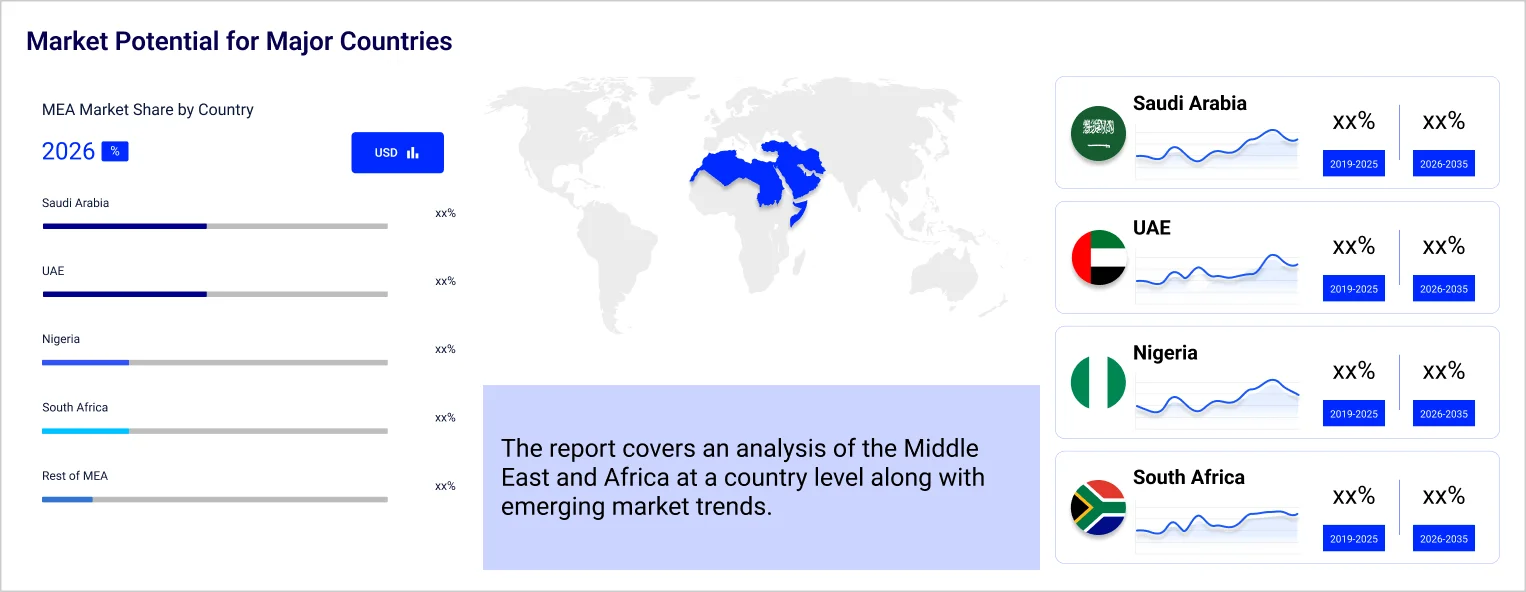
The United Arab Emirates (UAE) is a strong force in the Middle East and Africa cybersecurity industry. Driven by initiatives, such as the UAE Cybersecurity Council and the Dubai Cyber Security Strategy, the country has positioned itself as a regional digital leader. Major banks deploy AI-based threat detection, while government agencies enforce national data protection laws. The UAE also attracts global tech firms and regularly hosts cybersecurity events at GITEX Global. This blend of government support and private innovation keeps UAE highly competitive in the region.
Israel has emerged as a global cybersecurity powerhouse, due to its size. Known as the “Cyber Nation,” Israel exports cutting-edge cybersecurity technologies and hosts over 400 cybersecurity companies. The Israel National Cyber Directorate coordinates national strategy, and the country invests heavily in cyber military capabilities through Unit 8200. Israel also supports global partnerships, offering cyber threat intelligence and startup collaboration. For instance, in March 2022, Israel and the United States formalized new cybersecurity collaboration deals to enhance threat intelligence sharing, strengthen defenses, and accelerate joint R&D innovation. The influence on cybersecurity innovation across MEA is further substantial, making it a regional leader in expertise and technology.
Key players in the Middle East and Africa cybersecurity market are deploying strategies for addressing rising digital threats, increasing regional investments, and building local partnerships. The localization of services is helping in establishing regional data centres and tailoring solutions to comply with local regulations and cultural contexts. Cybersecurity firms are prioritizing strategic partnerships with governments, telecom operators, and financial institutions to strengthen national cyber defences. Emphasis on education and workforce development is driving players to invest in training programs and cybersecurity academies to bridge the skills gap.
Companies are also leveraging AI, machine learning, and cloud-based security platforms to offer scalable and proactive threat detection. Acquisitions and mergers are common, enabling firms to expand portfolios and market presence rapidly. Additionally, managed security services are gaining traction, offering SMEs affordable, outsourced protection. Cybersecurity vendors in the MEA region increasingly participate in public-private initiatives and international collaborations to enhance threat intelligence sharing. These strategic approaches aim to secure critical infrastructure, build trust in digital transformation, and capitalize on the region's growing demand for cybersecurity.
Founded in 1984 and headquartered in San Jose, the United States, Cisco Systems is renowned for its networking solutions and plays a pivotal role in developing internet infrastructure. Cisco has pioneered innovations in routing, switching, and cybersecurity, and its SecureX platform integrates security across networks, endpoints, and the cloud.
Established in 1984, Dell Technologies is headquartered in Texas in the United States and has advanced in cybersecurity through Secureworks and integrated data protection services. Dell’s innovations include scalable cyber recovery vaults and zero-trust architectures, helping organizations manage threats while enhancing digital transformation efforts.
IBM, founded in 1911 and headquartered in Armonk, the United States, has been a technology leader for over a century. The firm has significantly advanced cybersecurity through IBM Security and innovations like QRadar for threat detection and Cloud Pak for Security. IBM also invests heavily in AI-driven and quantum-safe cybersecurity research.
Broadcom Inc., headquartered in San Jose, the United States, was reestablished in 2016 after the merger with Avago Technologies and is known for its enterprise software and semiconductors. Broadcom has made strategic strides in cybersecurity via its acquisition of Symantec’s enterprise security business integrating AI for advanced threat protection solutions.
*Please note that this is only a partial list; the complete list of key players is available in the full report. Additionally, the list of key players can be customized to better suit your needs.*
Other players in the Middle East and Africa cybersecurity market are CIPHER, Microsoft Corporation, Amazon Web Services, Inc., Oracle Corporation, Accenture Plc, and Qualys, Inc. among others.
Gain a strategic edge in the Middle East and Africa cybersecurity market trends 2026 with Expert Market Research’s in-depth report. Discover emerging technologies, market dynamics, and competitive intelligence shaping the future of cybersecurity in the region. Download your free sample report today and make informed business decisions with confidence!
Argentina Cybersecurity Market
Global Industrial Cybersecurity Market
Germany AI in Cybersecurity Market
Asia Pacific AI in Cybersecurity Market
Europe AI in Cybersecurity Market


Upto 15% Off
USD
$2499 $2249
$3999 $3599
$4999 $4249
$5999 $5099


*While we strive to always give you current and accurate information, the numbers depicted on the website are indicative and may differ from the actual numbers in the main report. At Expert Market Research, we aim to bring you the latest insights and trends in the market. Using our analyses and forecasts, stakeholders can understand the market dynamics, navigate challenges, and capitalize on opportunities to make data-driven strategic decisions.*
In 2025, the market reached an approximate value of USD 2.49 Billion.
The market is projected to grow at a CAGR of 7.90% between 2026 and 2035.
The revenue generated from the market is expected to reach USD 5.33 Billion in 2035.
Key strategies driving the market include include government-led digital transformation, strict data protection regulations, rising cloud adoption, public-private cybersecurity partnerships, and increased investment in AI-driven threat detection. Additionally, expanding smart city projects and a growing fintech ecosystem are accelerating demand for advanced cybersecurity infrastructure and services.
Based on the solution, the cybersecurity market is divided into threat intelligence and response management, identity and access management, data loss prevention management, security and vulnerability management, unified threat management, and enterprise risk and compliance.
The key players in the market report include Cisco Systems Inc., Dell Technologies, IBM Corporation, Broadcom Inc., CIPHER, Microsoft Corporation, Amazon Web Services, Inc., Oracle Corporation, Accenture Plc, and Qualys, Inc. among others.
Based on these elements’ the cybersecurity market is divided into managed services and professional services.
The different deployment types in the market include cloud and on-premises.
The different end-uses are aerospace and defence, BFSI, healthcare, manufacturing, retail, government, IT and telecommunication and others.
Managed services is dominating the market, driven by the increasing complexity of cyber threats.
Explore our key highlights of the report and gain a concise overview of key findings, trends, and actionable insights that will empower your strategic decisions.
| REPORT FEATURES | DETAILS |
| Base Year | 2025 |
| Historical Period | 2019-2025 |
| Forecast Period | 2026-2035 |
| Scope of the Report |
Historical and Forecast Trends, Industry Drivers and Constraints, Historical and Forecast Market Analysis by Segment:
|
| Breakup by Component |
|
| Breakup by Solution |
|
| Breakup by Service |
|
| Breakup by Deployment |
|
| Breakup by End Use |
|
| Breakup by Region |
|
| Market Dynamics |
|
| Competitive Landscape |
|
| Companies Covered |
|
| Report Price and Purchase Option | Explore our purchase options that are best suited to your resources and industry needs. |
| Delivery Format | Delivered as an attached PDF and Excel through email, with an option of receiving an editable PPT, according to the purchase option. |
Datasheet
One User
USD 2,499
USD 2,249
tax inclusive*
Single User License
One User
USD 3,999
USD 3,599
tax inclusive*
Five User License
Five User
USD 4,999
USD 4,249
tax inclusive*
Corporate License
Unlimited Users
USD 5,999
USD 5,099
tax inclusive*
*Please note that the prices mentioned below are starting prices for each bundle type. Kindly contact our team for further details.*
Flash Bundle
Small Business Bundle
Growth Bundle
Enterprise Bundle
*Please note that the prices mentioned below are starting prices for each bundle type. Kindly contact our team for further details.*
Flash Bundle
Number of Reports: 3
20%
tax inclusive*
Small Business Bundle
Number of Reports: 5
25%
tax inclusive*
Growth Bundle
Number of Reports: 8
30%
tax inclusive*
Enterprise Bundle
Number of Reports: 10
35%
tax inclusive*
How To Order

Select License Type
Choose the right license for your needs and access rights.

Click on ‘Buy Now’
Add the report to your cart with one click and proceed to register.

Select Mode of Payment
Choose a payment option for a secure checkout. You will be redirected accordingly.
Strategic Solutions for Informed Decision-Making
Gain insights to stay ahead and seize opportunities.

Get insights & trends for a competitive edge.

Track prices with detailed trend reports.

Analyse trade data for supply chain insights.

Leverage cost reports for smart savings

Enhance supply chain with partnerships.

Connect For More Information
Our expert team of analysts will offer full support and resolve any queries regarding the report, before and after the purchase.
Our expert team of analysts will offer full support and resolve any queries regarding the report, before and after the purchase.
We employ meticulous research methods, blending advanced analytics and expert insights to deliver accurate, actionable industry intelligence, staying ahead of competitors.
Our skilled analysts offer unparalleled competitive advantage with detailed insights on current and emerging markets, ensuring your strategic edge.
We offer an in-depth yet simplified presentation of industry insights and analysis to meet your specific requirements effectively.




