

Consumer Insights
Uncover trends and behaviors shaping consumer choices today
Procurement Insights
Optimize your sourcing strategy with key market data
Industry Stats
Stay ahead with the latest trends and market analysis.
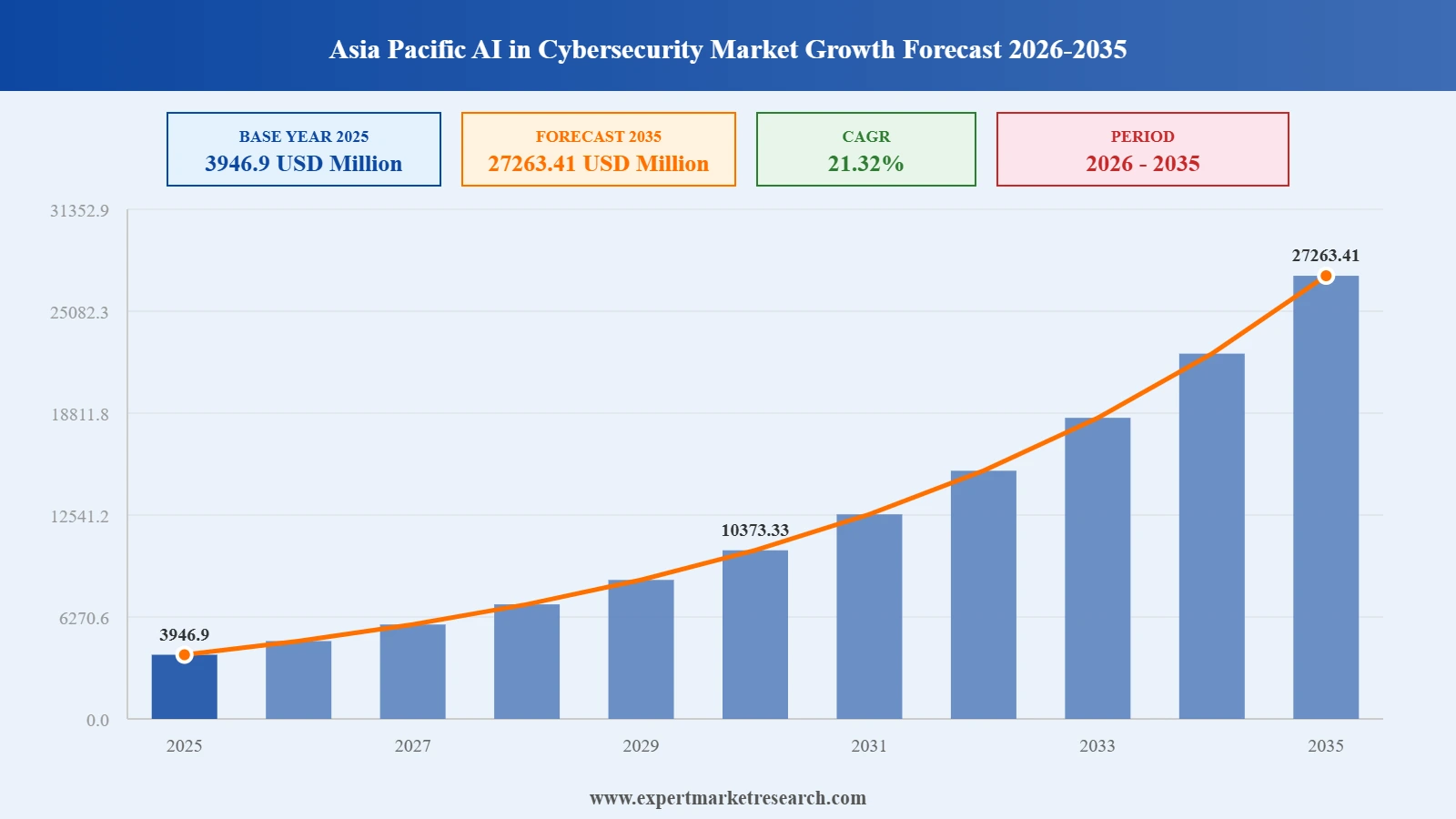
The Asia Pacific AI in cybersecurity market attained a value of USD 3946.90 Million in 2025 and is projected to expand at a CAGR of 21.32% through 2035. The market is further expected to achieve USD 27263.41 Million by 2035. The growing use of generative AI solutions within the finance industry, telecom and public sectors is driving the need for monitoring, automated responses, and securing of models within a hybrid environment.
More adoption of AI within enterprises is leading to the need for tools that enable securing models, applications, and data from the point of development to the point of deployment. Leading Asia Pacific AI in cybersecurity market players, at the same time, are enhancing their cloud capabilities for detection and automated response to sophisticated attacks within a hybrid environment. Financial organizations are looking for identity and threat detection services, while telecom companies are seeking protection for 5G and edge environments.
The Asia Pacific AI in cybersecurity market is transitioning from the experimental phase to the integrated phase as vendors focus on mitigating both AI and cybersecurity risks. In April 2025, Palo Alto Networks launched Prisma AIRS which protects AI applications, agents, models, and data with features such as model scanning, automated red teaming, posture management, and runtime protection.This development highlights growing demand for end-to-end AI security solutions that address vulnerabilities across the entire AI lifecycle, from development and deployment to real-time operations.
Companies in the Asia Pacific AI in cybersecurity market are increasingly focusing on providing cybersecurity to AI rather than adding AI as an AI detection layer. Palo Alto Networks closed its acquisition of Protect AI in July 2025 with the addition of AI application and model security capabilities into the company's products. Moreover, Proofpoint is also expanding its Singapore footprint by hiring engineers, salespeople, and an AI research and development team. It has positioned Singapore as the center of innovation of AI-driven cybersecurity. This reflects that vendors are aiming at partner ecosystems and enterprise AI governance in APAC.
Read more about this report - REQUEST FREE SAMPLE COPY IN PDF
Anthropic’s expansion into Sydney strengthened its operations across the Asia-Pacific region, while supporting efforts to deploy AI solutions across the financial, healthcare, energy, and deep-tech industries. Firms could design AI-specific security and compliance products to support enterprise AI usage, boosting growth in the Asia Pacific AI in cybersecurity market.
Exein secured USD 270 million at a valuation of USD 1.7 billion to improve security for physically implemented AI systems such as robots, drones, vehicles, and machines. APAC-based cybersecurity firms can design embedded, runtime, and autonomous security products for connected devices.
HMAX Cyber was introduced by Hitachi, integrating cutting-edge artificial intelligence with IT and OT cybersecurity knowledge to deliver vulnerability management, monitoring, and fast recovery. Companies in the Asia Pacific AI in cybersecurity market may provide an all-in-one artificial intelligence platform for cybersecurity which will cover vulnerability detection, monitoring, incident response, and operational recovery.
Visa improved its Vulnerability Agentic Harness and its cybersecurity advisory services in order to assist organizations with vulnerability detection and rapid validation of remediation. Cybersecurity firms could develop agentic tools for vulnerability management which would automate threat detection and remediation.
Threat detection powered by AI is one of the major investment areas as organizations are able to detect sophisticated attacks within cloud, endpoint, identity, and network environments, boosting the overall Asia Pacific AI in cybersecurity market value. In June 2026, the Cyber Security Agency of Singapore stated that agentic AI could automate major processes of the cyber kill chain, reducing the duration of attacks from days to mere hours. It is motivating vendors to introduce automatic detection, behavioral analytics, and response functions. The November 2025 CIDeX drill conducted in Singapore also included simulated AI-powered cyberattacks on all 11 critical infrastructure sectors, involving more than 250 participants from 35 organizations. On the other hand, in September 2026, Okta expanded identity governance and access security, adding controls for AI agents, non-human identities, permissions, and automated access monitoring.
Providers of security solutions are moving beyond cybersecurity to cover protection of data, models, and applications that are used within the enterprise's AI deployment, boosting growth in the Asia Pacific AI in cybersecurity market. In July 2026, Australia’s cyber agency released guidance helping government, critical infrastructure and large enterprises defend against AI-enabled attacks, strengthening organizational preparedness through practical security controls and risk-management measures. In September 2026, Rubrik launched Code Guardian, expanding AI-powered code security while strengthening its collaboration with Anthropic to protect software development workflows.
AI-focused standards are being integrated by governments into their cybersecurity standardization efforts, which is pushing vendors to develop AI-related products that fit into existing assurance frameworks. For instance, Singapore’s Cyber Security Agency introduced in April 2025 an update to its Cyber Essentials and Cyber Trust Marks, which includes AI security, cloud security and OT security, widening the Asia Pacific AI in cybersecurity market scope. Such programs create strong business incentives for providers dealing with AI governance, assessment, testing, and protection services. In September 2026, CIS and OpenAI launched an AI cyber defense pilot to strengthen critical infrastructure and government cybersecurity capabilities.
Operators of critical infrastructure in the Asia Pacific region are becoming more interested in AI security for OT environments, which drives demand for solutions that complement cyber monitoring capabilities, redefining the overall Asia Pacific AI in cybersecurity market dynamics. Singapore’s Cyber5G testbed was established in November 2025 to assist with threat modeling and cyber training for telecommunications sector. Australia is releasing principles on secure integration of AI into OT systems, emphasizing risks of process-model drift and safety-process bypasses. In September 2026, Delinea joined Anthropic’s initiative to test identity security for AI agents, addressing access controls, permissions, and risks from autonomous systems.
The rise of autonomous agents is enabling the creation of a new product category aimed at governing how AI systems interact with applications, data, identities, and enterprise infrastructure. Singapore introduced an AI Agents Sandbox, which was the first in the world, together with Google and its governmental departments, in August 2025 to assess computer-use agents and comprehend cybersecurity and privacy challenges of agentic AI. Aligning with such trends in the Asia Pacific AI in cybersecurity market, in September 2026, SignOff launched an enterprise agentic AI intelligence platform, helping organizations automate workflows, analyze data, and improve decision-making across operations.
The Expert Market Research's report titled “Asia Pacific AI in Cybersecurity Market Report and Forecast 2026-2035” offers a detailed analysis of the market based on the following segments:
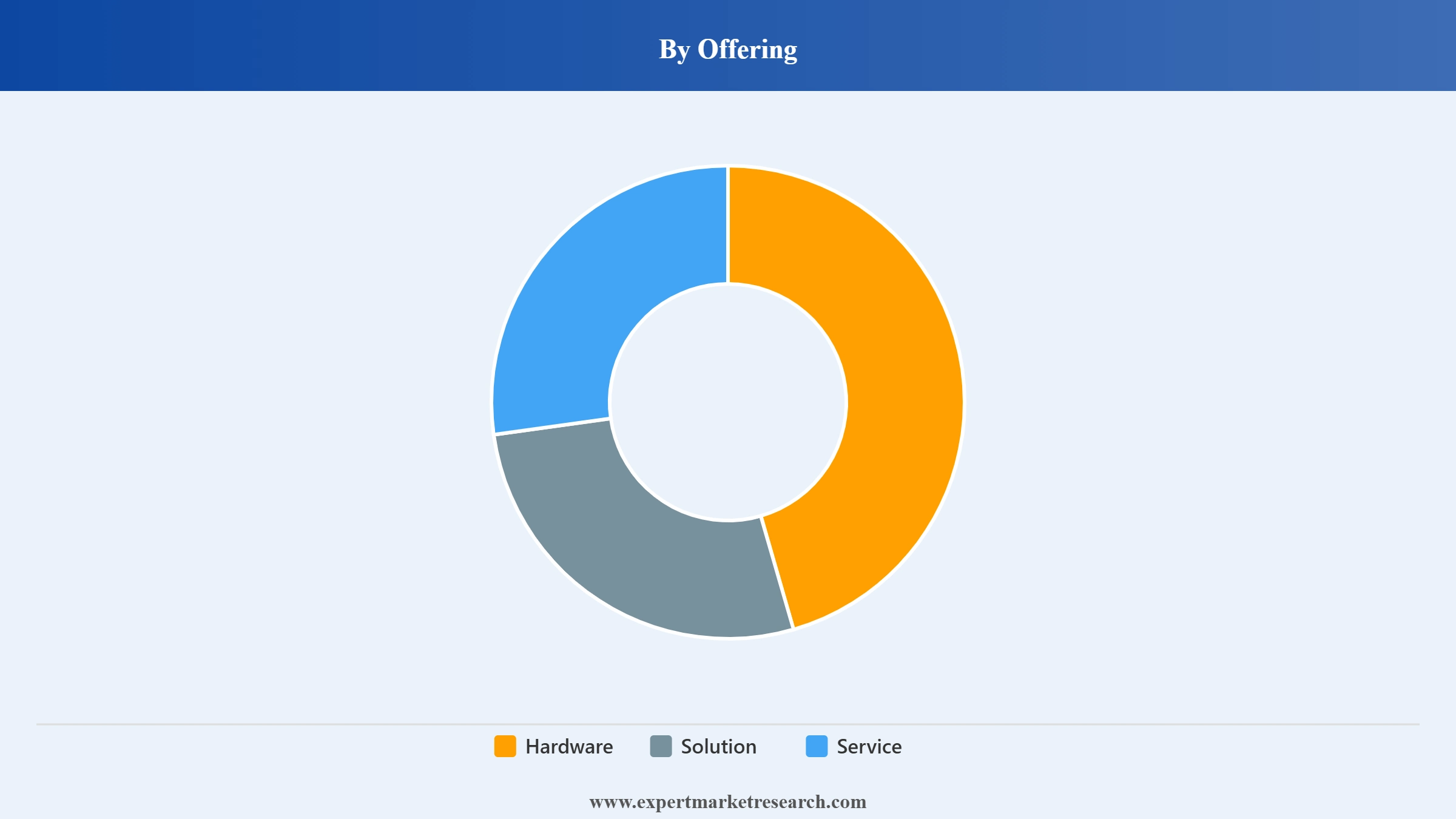
Market Breakup by Offering
Key Insight: Hardware plays an important role where companies require specific security appliances, accelerated computing, and threat analysis at the edges. Solutions are securing more shares in the Asia Pacific AI in cybersecurity market since companies are looking for an integrated platform with AI that can detect, analyze, and respond to attacks from different angles. Services are becoming popular as businesses require implementation, customization, management services, threat hunting, and AI in security consulting. Service companies aim to secure regular security engagements with continuous optimization due to skill gaps. In September 2026, Yarix announced its APAC expansion, strengthening cybersecurity services and partnerships to address growing regional demand for advanced threat protection.
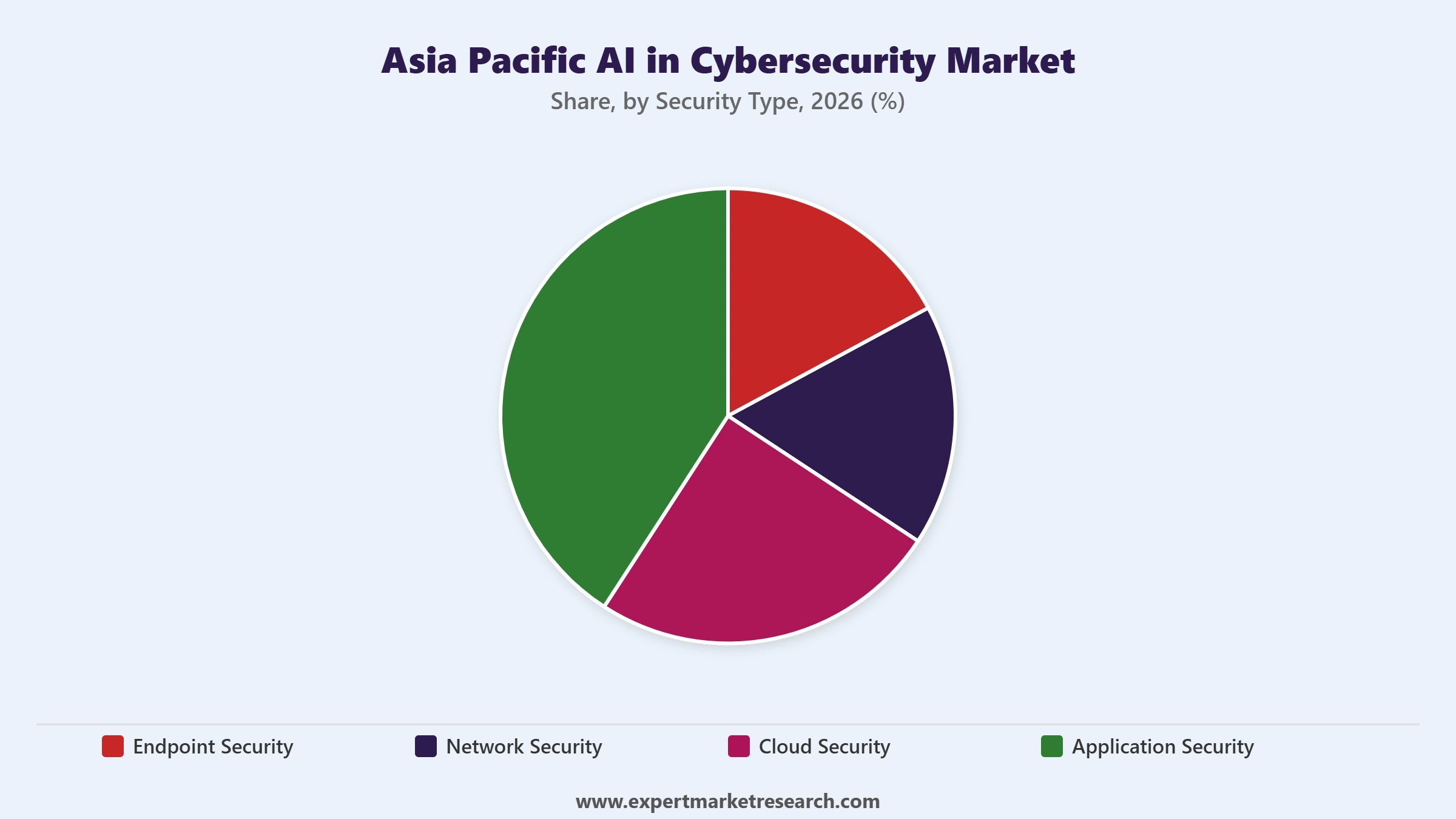
Market Breakup by Security Type
Key Insight: As per the Asia Pacific AI in cybersecurity market report, endpoint security is becoming important as devices are getting connected as a consequence of which behavioral analysis is used to spot malicious activities and credentials not covered by traditional signatures. In September 2026, Wipro and CrowdStrike launched CISO Command Center, integrating AI-driven insights to streamline enterprise cybersecurity operations and decision-making. Network security remains crucial due to the need for visibility throughout the interconnected IT landscape and fast detection of lateral movement attacks. The security of cloud is becoming relevant due to growing workloads, complexities of multi-clouds, and security of AI environments functioning beyond the classic perimeter. Application security involves the discovery of vulnerabilities, coding issues, misuse of APIs, and application security threats of AI environment.
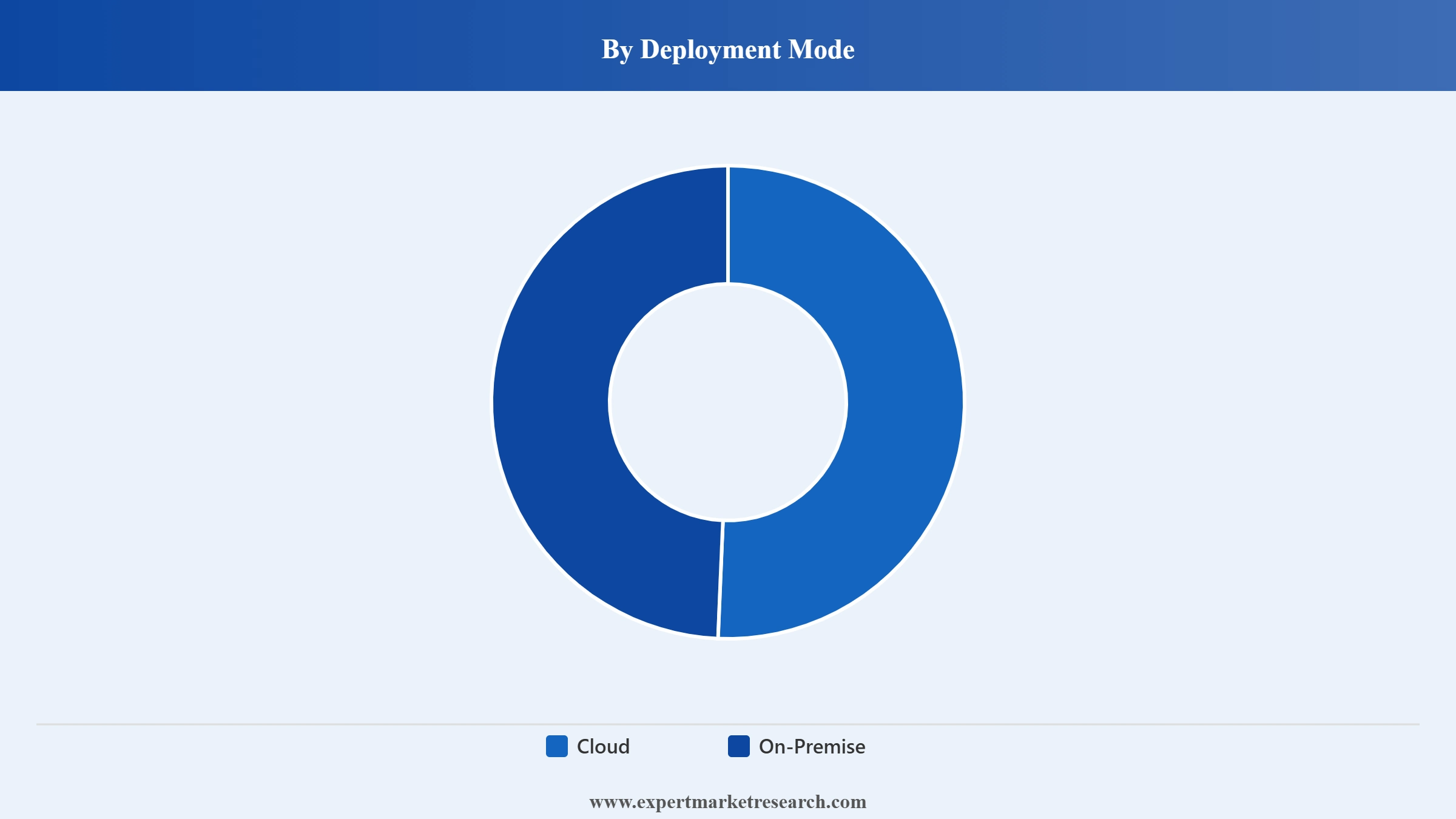
Market Breakup by Deployment Mode
Key Insight: As per the Asia Pacific AI in cybersecurity market report, cloud deployment is enabled by scalable infrastructure, centralized management of security, quick deployment, and easy access to always evolving AI. The need for on-premise deployment continues to persist for businesses requiring better control over their security data, infrastructure, and environment. Hence, the cloud service providers as well as cybersecurity firms are focusing on integrating with the hybrid infrastructure and not just the public cloud architecture alone. The on-premise service providers are highlighting localized processing, custom controls, and compatibility with the legacy systems.
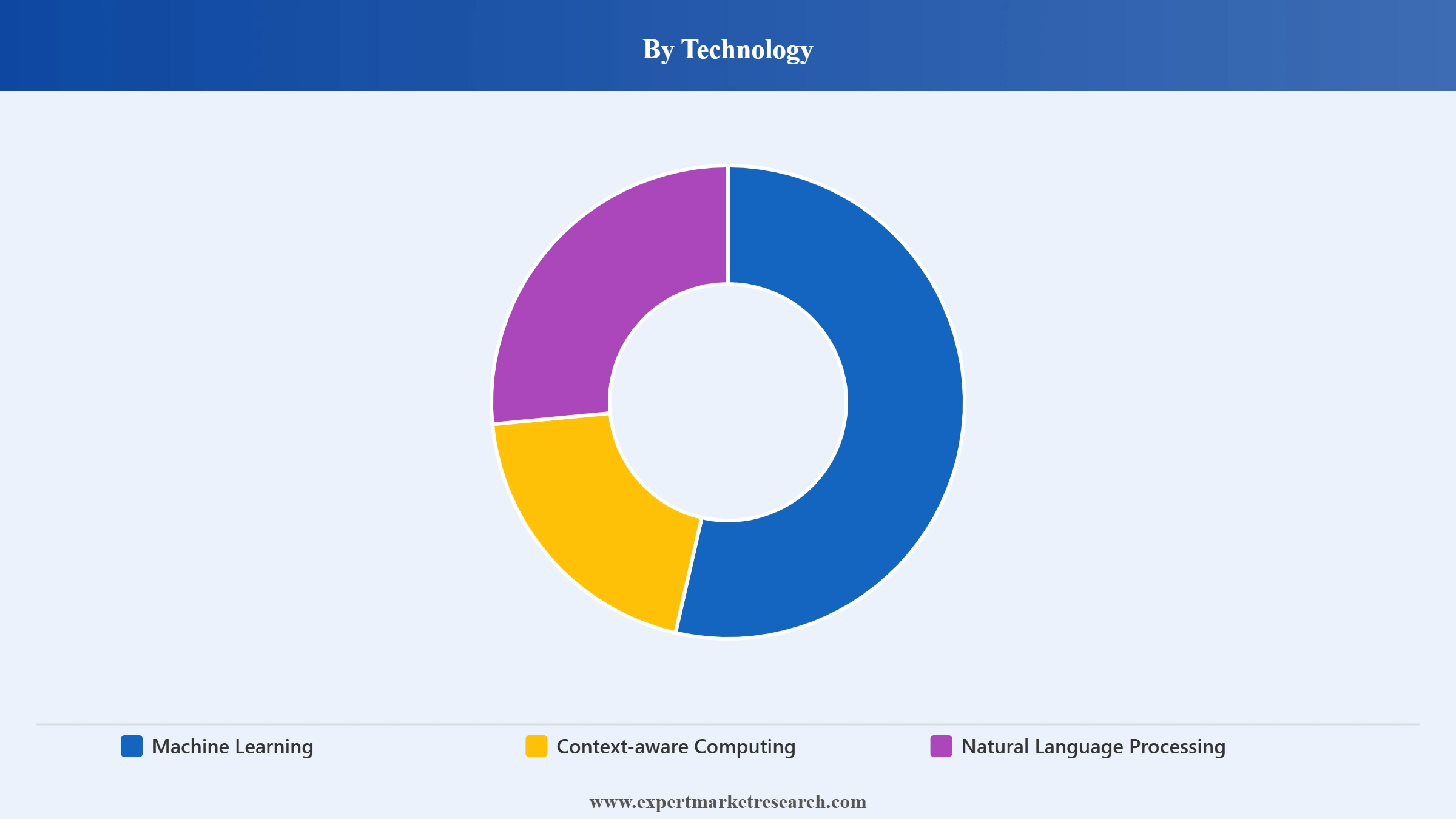
Market Breakup by Technology
Key Insight: Machine learning continues playing a key role in the Asia Pacific AI in cybersecurity market growth due to its ability to provide behavioral analytics, prediction, detection of anomalies and classification of incidents within large volumes of data sets. Context-aware computing enhances these functions by analyzing user behavior, device state, location, application activity, and other environmental factors prior to deciding if the incident is suspicious. Natural language processing is evolving via the use of security copilots, automated investigations, phishing detection, and conversational interfaces, making difficult security processes easier.
Market Breakup by Industrial Vertical
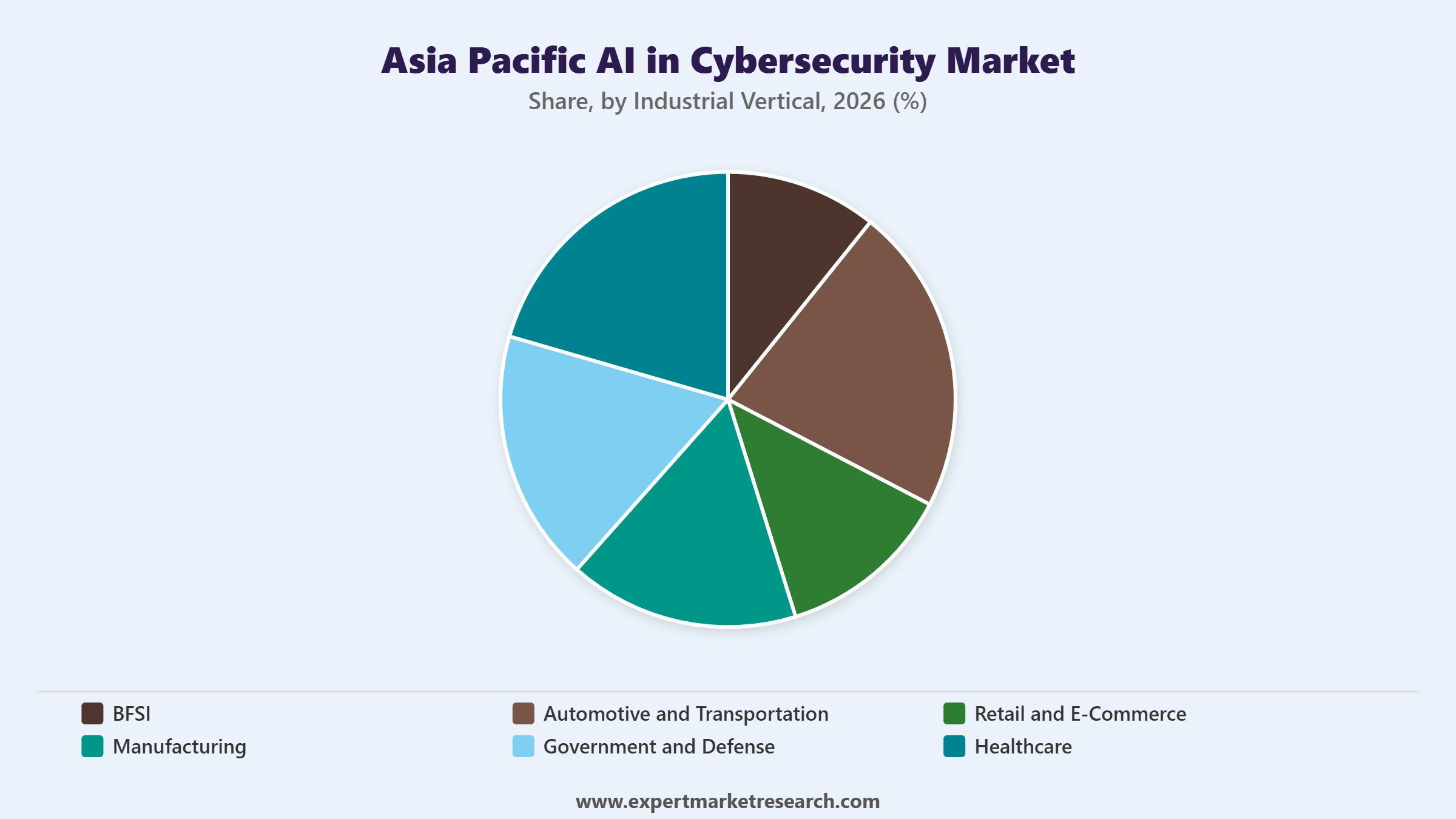
Key Insight: The BFSI sector largely supports the Asia Pacific AI in cybersecurity market growth through the requirement of fraud prevention, identity protection, transaction protection, and compliance-driven surveillance. The automotive and transportation industries require the security of their connected cars, mobility services, logistics, and even software-defined infrastructure. Retail and e-commerce businesses need AI security to guarantee protection of payments, accounts, detection of frauds, and protection of consumer data. The manufacturing industry is implementing AI security solutions for the protection of connected factories, industrial networks, intellectual properties, and operations technology. Governments and defense organizations focus on critical systems and infrastructure along with advanced threat detection.
Market Breakup by Country
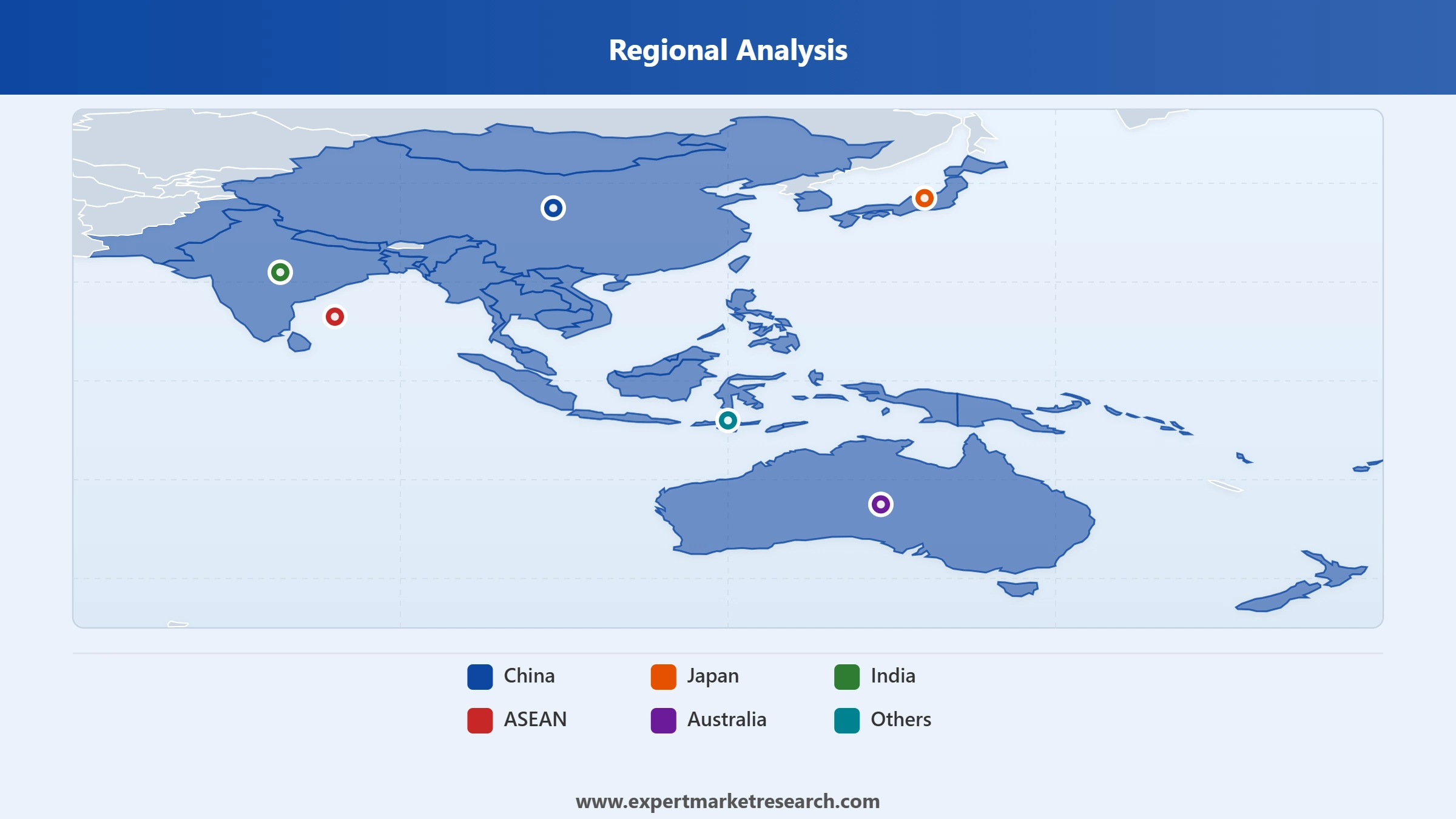
Key Insight: Regional dynamics in the Asia Pacific AI in cybersecurity market indicates that China’s extensive digital infrastructure, AI adoption, and evolving cybersecurity needs are driving demand across technology, manufacturing, telecommunications, financial services, and government. The need for Japan’s well-established infrastructure to support enterprises requires AI security, especially within manufacturing, financial, and critical infrastructures. India is led by digitalization, adoption of cloud technologies, digital payment systems, and growth in enterprise AI deployment. The ASEAN markets are evolving because of digital economy growth, telecommunications investments, and growing concerns about cyber resilience within Singapore and other emerging tech-hubs.
Read more about this report - REQUEST FREE SAMPLE COPY IN PDF
The solution segment registers the largest share of the market due to integrated AI threat detection
AI cybersecurity solutions make up the majority of the Asia Pacific AI in cybersecurity market share as many enterprises are becoming increasingly aware of their need for a comprehensive platform that can detect anomalies, correlate threats, and automate incident responses. Suppliers are focused on building security operations platforms through AI solutions that include machine learning, behavioral analysis, identity monitoring, and threat investigation, all of which are included in one environment. In September 2026, Thales unveiled HexaForce, an AI-powered cybersecurity platform designed to strengthen threat detection, analysis, response, and organizational resilience.
Read more about this report - REQUEST FREE SAMPLE COPY IN PDF
Services are growing exponentially across the Asia Pacific AI in cybersecurity market scope since organizations need specialized skills to install, configure, and manage the more sophisticated AI-enabled security environments. Managed security suppliers are building AI-enabled monitoring, threat hunting, security assessments, and incident response services for those organizations that do not have enough internal cybersecurity capacity. The consulting suppliers are focusing on AI governance, model risk assessment, red-team testing, and compliance programs.
Network security accounts for the largest share of the market due to AI-driven detection of complex network threats
The most prevalent type of security is network security as companies seek to secure themselves against advanced attacks that occur on interlinked corporate, cloud, and hybrid networks, accelerating the Asia Pacific AI in cybersecurity market expansion. Network platforms powered by AI are capable of analyzing patterns in the network traffic, recognizing deviations in behavior, and identifying various clues that can reveal unknown threats. The development of capabilities in behavioral analytics, automated classification of threats, analysis of encrypted traffic, and network detection and response is being undertaken by vendors. In May 2025, Check Point launched an AI-powered cybersecurity platform in Singapore, integrating autonomous prevention, detection and response capabilities for enterprises.
Read more about this report - REQUEST FREE SAMPLE COPY IN PDF
Rapid growth in cloud security is being currently observed as companies move applications, databases, and AI-powered workloads into public, private, and hybrid clouds. The use of AI-powered solutions for cloud security continues to become increasingly prevalent with tools that can identify cloud misconfigurations, unusual activity, exposed workloads, and threats within complex cloud estates. Machine learning technology combined with cloud posture management, workload protection, identity analytics, and data security capabilities is being developed by Asia Pacific AI in cybersecurity market players.
By deployment mode, cloud secures the dominant market share due to scalable AI security deployment across distributed enterprise environments
Cloud deployment commands the largest share in the Asia Pacific AI in cybersecurity market as enterprises want to get scalable AI cybersecurity capacities without substantial investments into their own infrastructure. With the help of the cloud platforms, enterprises may use the up-to-date threat intelligence, machine learning algorithms, analytics, and automation capabilities that can be applied to geographically distributed operations. Vendors tend to promote subscription services for security platforms that can be easily integrated with cloud applications and SOC. In July 2026, Hitachi partnered with OpenAI and Google Cloud to advance physical AI security, protecting autonomous systems and critical infrastructure.
Read more about this report - REQUEST FREE SAMPLE COPY IN PDF
On-premises deployment is another popular option among enterprises dealing with highly sensitive information, critical infrastructure, or workloads which require certain data residency. Asia Pacific AI in cybersecurity market companies develop software products allowing conducting advanced behavioral analytics and automatic detections while keeping security data inside enterprise premises. Financial organizations, government entities, defense contractors, and industrial enterprises prefer this architectural approach as external data processing may lead to increased security risks.
Machine learning technology dominates the market due to continuous behavioral threat detection and predictive analytics
Machine learning technologies continue to dominate the Asia Pacific AI in cybersecurity market as vendors rely on machine learning to analyze abnormal behavior, classify security threats, find security threats, and prioritize security alerts. ML algorithms help security vendors work with large amounts of security telemetry data across end points, networks, identities, and applications. In addition, they can find relations that would be difficult to see with the help of rule-based analysis. Vendors develop adaptive models to learn from the new behavior of cyber criminals and enterprise environments. In February 2026, Rockwell Automation opened an APAC Security Operations Center in Singapore, strengthening industrial cybersecurity monitoring and incident response capabilities.
Read more about this report - REQUEST FREE SAMPLE COPY IN PDF
Natural language processing is observing exponential growth in the Asia Pacific AI in cybersecurity market as vendors add generative AI assistants to security operations. The security analysts can ask questions in the form of a conversation, investigate incidents with the help of natural-language prompts, create summaries about threat intelligence, and create suggestions for incident responses with the help of NLP. Security vendors also use NLP for phishing detection, email security, security documentation, and incident reporting. In July 2025, NCS launched an SGD 130 million AI transformation initiative across Asia Pacific, accelerating internationalization and AI-driven enterprise capabilities.
By industry vertical, the BFSI category registers the largest share due to escalating fraud risks and protection of high-value financial data
BFSI continues to be the dominant industry vertical in the Asia Pacific AI in cybersecurity market since banks, insurance companies, and financial tech companies have financial information that requires securing, as well as systems that are interconnected digitally. AI cybersecurity solutions are also deployed in fraud detection, behavior analysis, identity protection, transaction monitoring, and automated threat response. In addition, financial institutions are exploring AI-specific controls in view of increasing interactions between their employees and clients with generative AI apps. In April 2025, Synechron launched AI solutions for financial services, enhancing cybersecurity through automated threat detection, risk monitoring, and intelligent response capabilities.
Read more about this report - REQUEST FREE SAMPLE COPY IN PDF
The healthcare sector becomes one of the rapidly growing applications in the Asia Pacific AI in cybersecurity market as hospitals, medical networks, pharma, and digital health become more reliant on interconnected systems with sensitive data. The vendors develop capabilities to secure medical devices, cloud apps, identities, and clinical data from attacks. Behavior monitoring solutions become important in healthcare because they allow differentiating between clinical behavior and any malicious use of accounts and medical devices. At the same time, vendors are aiming to develop security solutions to protect AI-assisted diagnostics and healthcare apps since there might be safety issues in case of any unauthorized access.
Read more about this report - REQUEST FREE SAMPLE COPY IN PDF
China accounts for the largest share of the market due to extensive AI deployment and large-scale cybersecurity investments
China leads the Asia Pacific AI in cybersecurity market owing to high enterprise digitization, high level of AI developments, and cybersecurity requirements in technology-centric industry verticals. Financial services, telecommunications, manufacturing and public sector organizations are building up their security capabilities using AI, cloud technologies, industrial control systems, and big data. Domestic technology firms are developing AI-based threat detection and security operation capabilities and intelligent risk management while there is an increasing need for localization of security products in accordance with the country-specific data and cybersecurity policies.
India is quickly becoming one of the fast-growing countries in the Asia Pacific AI in cybersecurity market since cloud migration, digital payment, AI adoption, and overall technology advancement are gaining momentum in enterprises. Increasing demand for automated threat detection and security analytics to process vast digital environments is being observed in financial services, telecommunications, IT services, manufacturing and government organizations. AI-powered security operations, identity protection, fraud detection and managed security services offerings are being pursued by vendors. In July 2026, India and Australia launched a technology partnership targeting AI, cybersecurity and critical supply chains, strengthening bilateral digital resilience.
Competition in the market is increasing, with Asia Pacific AI in cybersecurity companies focusing on autonomous security operations, AI model security, threat intelligence, and cybersecurity controls for interconnected enterprise environments. Investments in technology solutions that can lower the burden on analysts and boost accuracy and speed in detecting and responding to threats are growing. There are also opportunities in agentic security operations, AI-based vulnerability assessments, deepfake detection, attack surface monitoring, and AI workload security.
The BFSI, government, telecoms, health care, and critical infrastructure sectors that require localized compliance and data control regulations are also targeted by Asia Pacific AI in cybersecurity market players. Other avenues to the market are partnerships with cloud service providers, telecommunication firms, and governmental cybersecurity initiatives. Competitive advantage is being established through contextual intelligence and autonomy in decision making rather than AI-assisted threat detection and alerts. Innovations like the on-device AI security framework from Samsung, the Agentic SOC solution from Ensign, and the AI-powered Nexus from CloudSEK illustrate the trend among vendors towards proactive security.
Samsung Corporation was founded in 1969 and headquartered in Suwon, South Korea. It is improving AI cybersecurity in its Knox system. The company offers Knox Enhanced Encrypted Protection to secure personalized Galaxy AI functionalities and enhanced Knox Matrix threat response and quantum resistant Secure Wi-Fi. The improvements are meant to address on-device AI cybersecurity and connected devices security.
Founded in 2006 and headquartered in Seattle, Washington, Amazon Web Services offers cloud-native cybersecurity capabilities through AI, machine learning, automation, and identity control. AWS has expanded AI-driven security agents and automated threat detection and agent-based identity management along with enhancing regional cloud security capabilities through certification such as CSAP from South Korea.
Ensign InfoSecurity was founded in 2018 and is headquartered in Singapore. The firm designs cyber-defense and manages security capabilities using AI-based solutions for enterprises and critical infrastructure. The company’s Helios solution makes use of proprietary AI technologies for threat detection and Agentic SOC which is focused on developing autonomous security operations.
CloudSEK was incorporated in 2015 and operates from India. The company provides predictive cyber threat intelligence. The Nexus solution developed by the company uses cyber threat intelligence, attack surface analysis, and AI-based risk analysis to enable early identification of external threats for enterprises.
Other key players in the market include WeSecure, WISeKey International Holding Ltd., Acronis International GmbH, HCL Technologies Limited, Palo Alto Networks, Inc., and Vectra AI, among others.
*Please note that this is only a partial list; the complete list of key players is available in the full report. Additionally, the list of key players can be customized to better suit your needs.*
Unlock the latest insights with our Asia Pacific AI in cybersecurity market trends 2026 report. Discover regional growth patterns, consumer preferences, and key industry players. Stay ahead of competition with trusted data and expert analysis. Download your free sample report today and drive informed decisions in the market.


Upto 15% Off
USD
$2499 $2249
$3999 $3599
$4999 $4249
$5999 $5099


*While we strive to always give you current and accurate information, the numbers depicted on the website are indicative and may differ from the actual numbers in the main report. At Expert Market Research, we aim to bring you the latest insights and trends in the market. Using our analyses and forecasts, stakeholders can understand the market dynamics, navigate challenges, and capitalize on opportunities to make data-driven strategic decisions.*
The market was valued at USD 3946.90 Million in 2025.
The market is projected to grow at a CAGR of 21.32% between 2026 and 2035.
The revenue generated from the AI in cybersecurity market is expected to reach USD 27263.41 Million in 2035.
The AI in cybersecurity market is categorised according to the offerings, which include hardware, solutions, and services.
The key players are Samsung Electronics Co., Ltd., Amazon Web Services, Inc., Ensign InfoSecurity Pte Ltd, CloudSEK Information Security Private Limited, WeSecure, WISeKey International Holding Ltd., Acronis International GmbH., HCL Technologies Limited, Palo Alto Networks, Inc., and Vectra AI among others.
Based on the deployment mode, the market is divided into on-premises and cloud.
The market is broken down into China, Japan, India, ASEAN, Australia, and others.
Companies face rapidly evolving AI-enabled attacks, limited specialist talent, high implementation complexity, data-privacy requirements, model-security risks, fragmented infrastructures, and difficulty validating AI-generated security decisions consistently.
Stakeholders are strengthening AI governance, integrating autonomous detection, expanding regional partnerships, securing AI workloads, developing specialist talent, and continuously validating models against emerging attack techniques.
Explore our key highlights of the report and gain a concise overview of key findings, trends, and actionable insights that will empower your strategic decisions.
| REPORT FEATURES | DETAILS |
| Base Year | 2025 |
| Historical Period | 2019-2025 |
| Forecast Period | 2026-2035 |
| Scope of the Report |
Historical and Forecast Trends, Industry Drivers and Constraints, Historical and Forecast Market Analysis by Segment:
|
| Breakup by Offering |
|
| Breakup by Security Type |
|
| Breakup by Deployment Mode |
|
| Breakup by Technology |
|
| Breakup by Industrial Vertical |
|
| Breakup by Region |
|
| Market Dynamics |
|
| Competitive Landscape |
|
| Companies Covered |
|
Datasheet
One User
USD 2,499
USD 2,249
tax inclusive*
Single User License
One User
USD 3,999
USD 3,599
tax inclusive*
Five User License
Five User
USD 4,999
USD 4,249
tax inclusive*
Corporate License
Unlimited Users
USD 5,999
USD 5,099
tax inclusive*
*Please note that the prices mentioned below are starting prices for each bundle type. Kindly contact our team for further details.*
Flash Bundle
Small Business Bundle
Growth Bundle
Enterprise Bundle
*Please note that the prices mentioned below are starting prices for each bundle type. Kindly contact our team for further details.*
Flash Bundle
Number of Reports: 3
20%
tax inclusive*
Small Business Bundle
Number of Reports: 5
25%
tax inclusive*
Growth Bundle
Number of Reports: 8
30%
tax inclusive*
Enterprise Bundle
Number of Reports: 10
35%
tax inclusive*
How To Order

Select License Type
Choose the right license for your needs and access rights.

Click on ‘Buy Now’
Add the report to your cart with one click and proceed to register.

Select Mode of Payment
Choose a payment option for a secure checkout. You will be redirected accordingly.
Strategic Solutions for Informed Decision-Making
Gain insights to stay ahead and seize opportunities.

Get insights & trends for a competitive edge.

Track prices with detailed trend reports.

Analyse trade data for supply chain insights.

Leverage cost reports for smart savings

Enhance supply chain with partnerships.

Connect For More Information
Our expert team of analysts will offer full support and resolve any queries regarding the report, before and after the purchase.
Our expert team of analysts will offer full support and resolve any queries regarding the report, before and after the purchase.
We employ meticulous research methods, blending advanced analytics and expert insights to deliver accurate, actionable industry intelligence, staying ahead of competitors.
Our skilled analysts offer unparalleled competitive advantage with detailed insights on current and emerging markets, ensuring your strategic edge.
We offer an in-depth yet simplified presentation of industry insights and analysis to meet your specific requirements effectively.




