

Consumer Insights
Uncover trends and behaviors shaping consumer choices today
Procurement Insights
Optimize your sourcing strategy with key market data
Industry Stats
Stay ahead with the latest trends and market analysis.
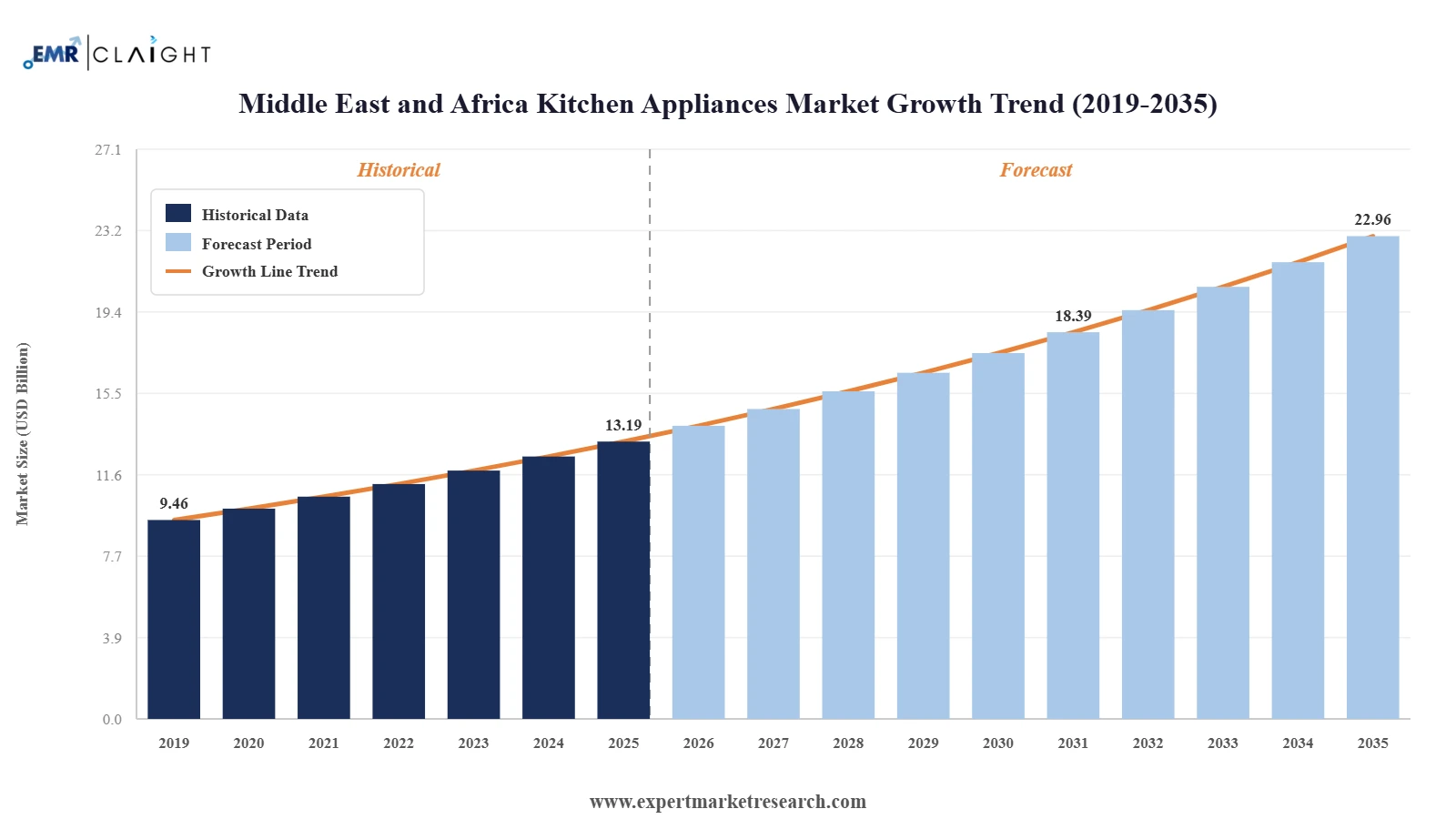
The Middle East and Africa kitchen appliances market size was valued at USD 13.19 Billion in 2025. The industry is expected to grow at a CAGR of 5.70% during the forecast period of 2026-2035 to reach a value of USD 22.96 Billion by 2035. The market is expanding as manufacturers use their partnerships strategically to gain entry to new regions by extending their product lines.
A major factor driving the growth of the Middle East and Africa kitchen appliances market growth is the rising level of urbanization, which has surged the consumer demand for modern, space-saving, and smart appliances that are suitable for apartment living. On the other hand, increased digitalization and e-commerce has enabled manufacturers to offer customized products, home delivery, and easy product comparison. All these trends have made the products more accessible, increased the pace of consumers purchasing energy-efficient and connected appliances, and have resulted in steady industry growth.
Rapid changes in consumer preference toward convenience and lifestyle-based kitchen solutions have spurred companies that depend on local distributors and retail specialists to comprehensively open new growth opportunities in the Middle East and Africa kitchen appliances market by aligning their product offerings with local consumer needs. Through these collaborations, brands can launch a wider range of appliances in an efficient way, lessen their operational risks, and scale up rapidly in the highly fragmented MEA markets.
Consequently, this strategy enables companies to build stronger brand recognition, especially in the United Arab Emirates and Saudi Arabia markets. For instance, in June 2024, Havells India signed a strategic partnership agreement with the United Arab Emirates-based Jumbo Group, whereby Jumbo agreed to launch and distribute Havells' kitchen appliances throughout the Middle East and Africa. The partnership was initiated with the launch of the highly advanced mixer grinders and also planned inclusion of products such as juicers and air fryers, further consolidating regional presence and product range in the Middle East and Africa kitchen appliances market landscape.
Read more about this report - REQUEST FREE SAMPLE COPY IN PDF
The EMR’s report titled “Middle East and Africa Kitchen Appliances Market Report and Forecast 2026-2035” offers a detailed analysis of the market based on the following segments:
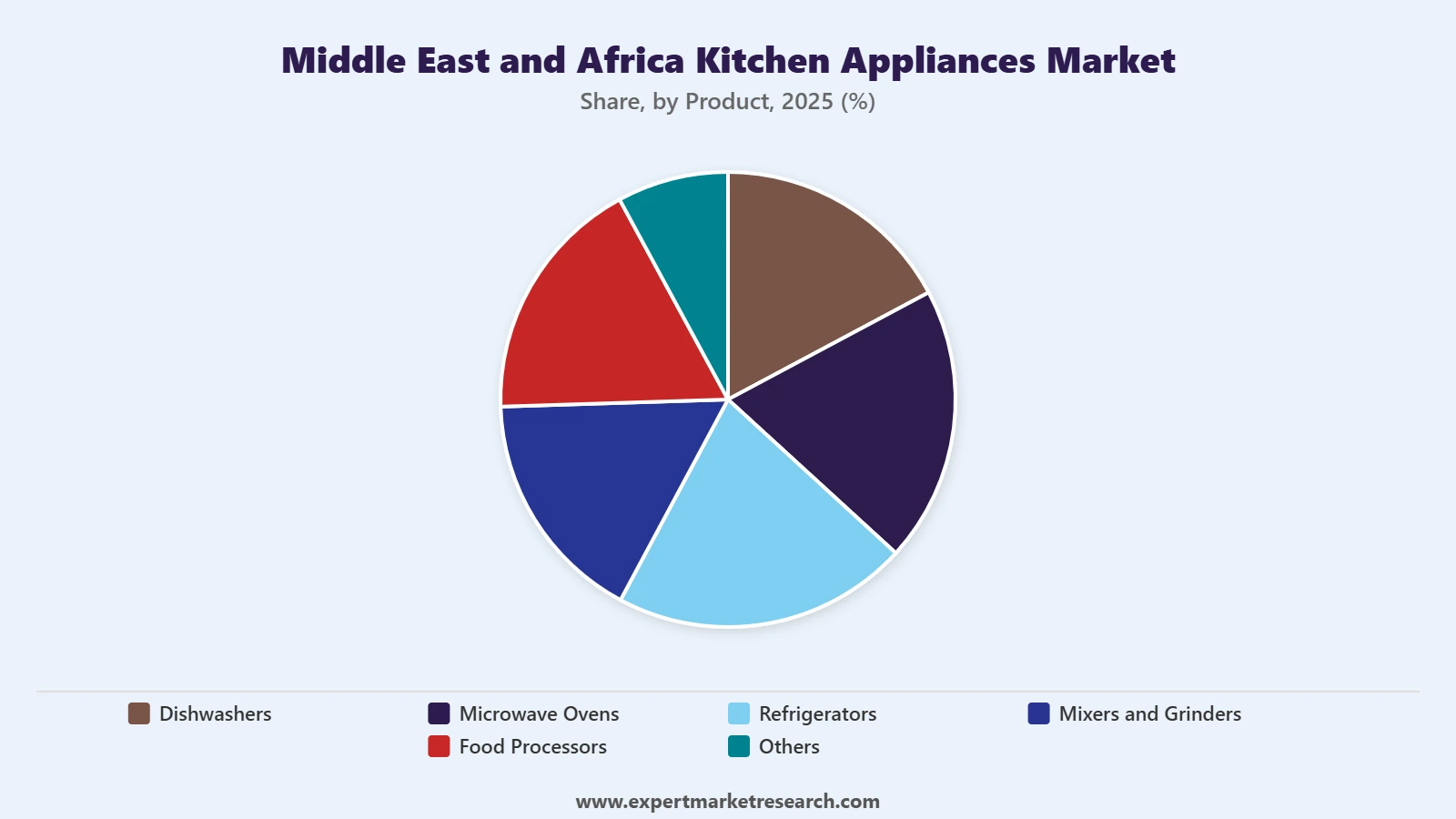
Market Breakup by Product
Key Insights: The Middle East and Africa kitchen appliances market scope comprises dishwashers, microwave ovens, refrigerators, mixers and grinders, food processors, and other appliances such as juicers and air fryers. Refrigerators are at the forefront of growth due to their basic daily usage and rising income levels. Dishwashers are growing along with urban lifestyles and premium housing. Microwave ovens are attractive to consumers who look for convenience. Mixers, grinders, and food processors are the beneficiaries of the trend of more people cooking at home. Companies such as LG, Samsung, and Midea are focusing on energy-efficient refrigerators and smart microwaves, thereby contributing to the increasing adoption across different segments.
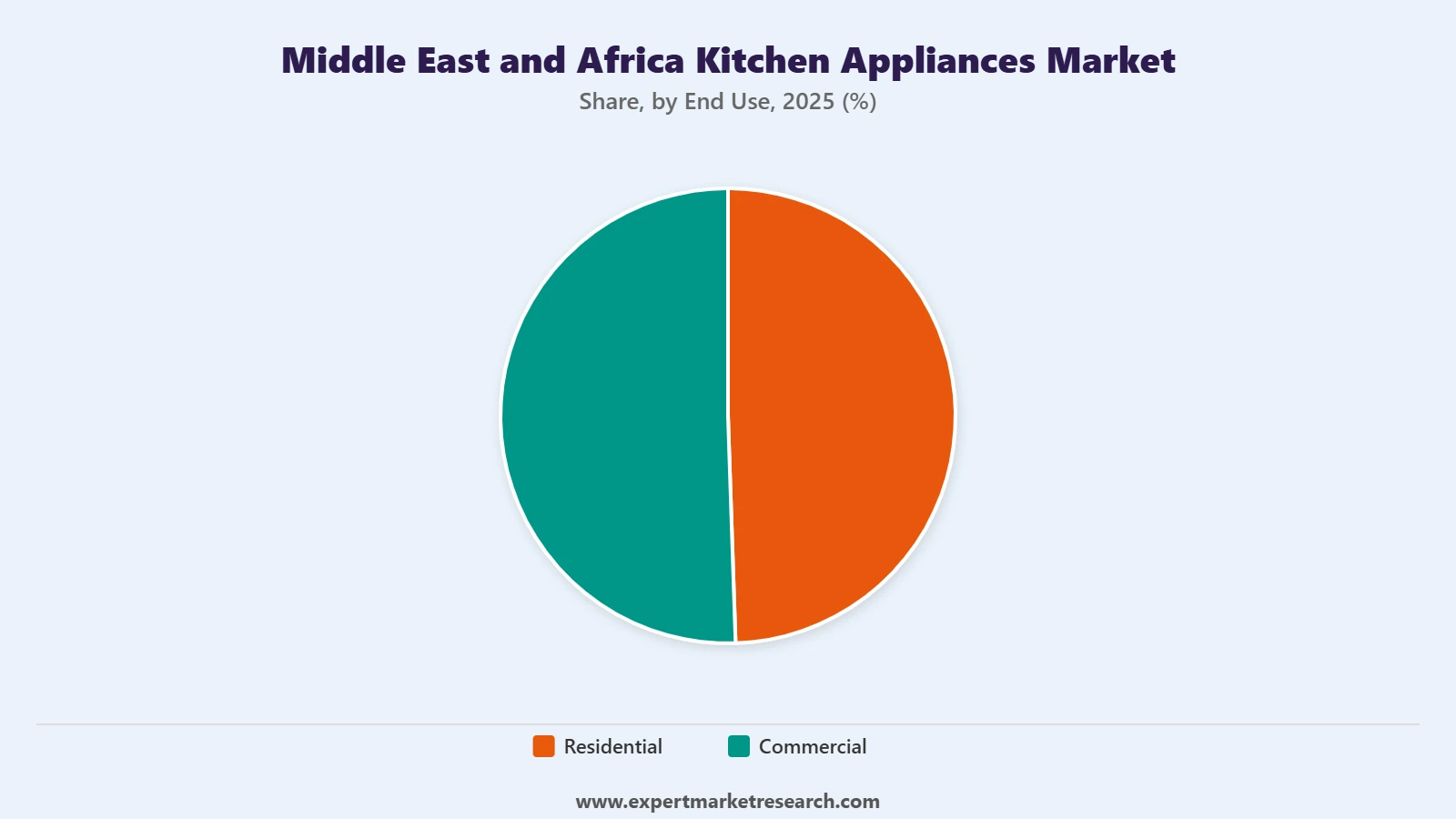
Market Breakup by End Use
Key Insights: The Middle East and Africa kitchen appliances market serves the residential segment, which comprises refrigerators, microwave ovens, and mixers, and is the main driver of growth as households are upgrading to make their lives more convenient and improve their lifestyles. The commercial sector, such as hotels, restaurants, and catering services, is using the demand for heavy-duty refrigerators, ovens, and industrial mixers to generate sales. Brands like Whirlpool, Electrolux, and Bosch are increasing their product lines for both market sectors. Deployments of commercial kitchen solutions and residential smart appliances are being made to grow the total addressable market value.
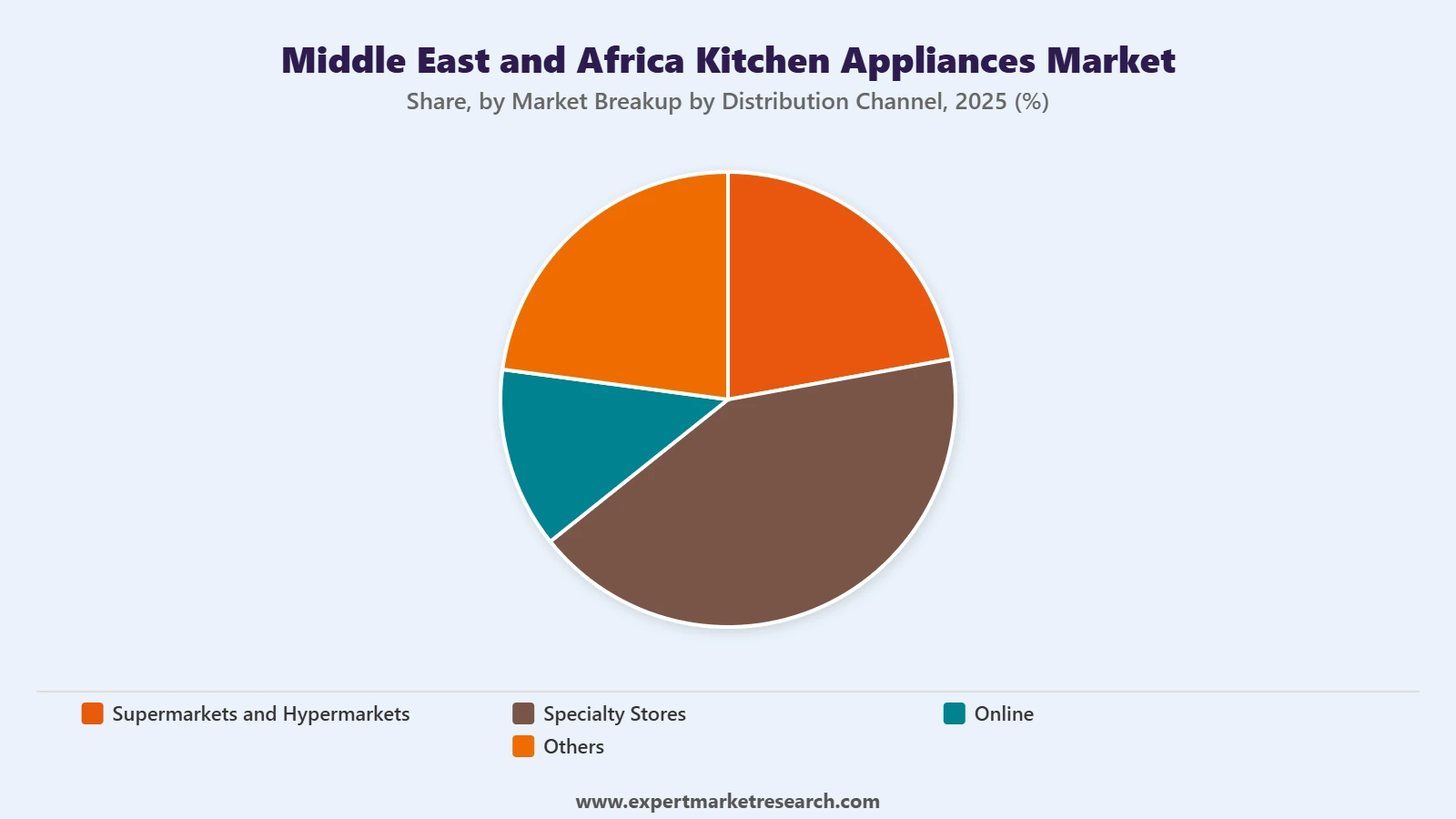
Market Breakup by Distribution Channel
Key Insights: Kitchen appliances in MEA are delivered through supermarkets/hypermarkets that usually stock several ranges of the same brand, for example, Carrefour stocking LG and Samsung ranges. Specialty stores focus on high-end brands which are also available through online channels such as Amazon and Noon and other outlets such as brand stores. Hypermarkets contribute significantly to the Middle East and Africa kitchen appliances market, as they showcase the widest variety of products and run seasonal promotions, whereas specialty stores mainly support premium and luxurious mixers, grinders, and dishwashers. E-commerce channels are rapidly expanding for a wider reach and ease of comparison shopping. Additionally, Bosch and Midea's omnichannel approaches give the consumer more options and help the brands to penetrate the markets deeper.
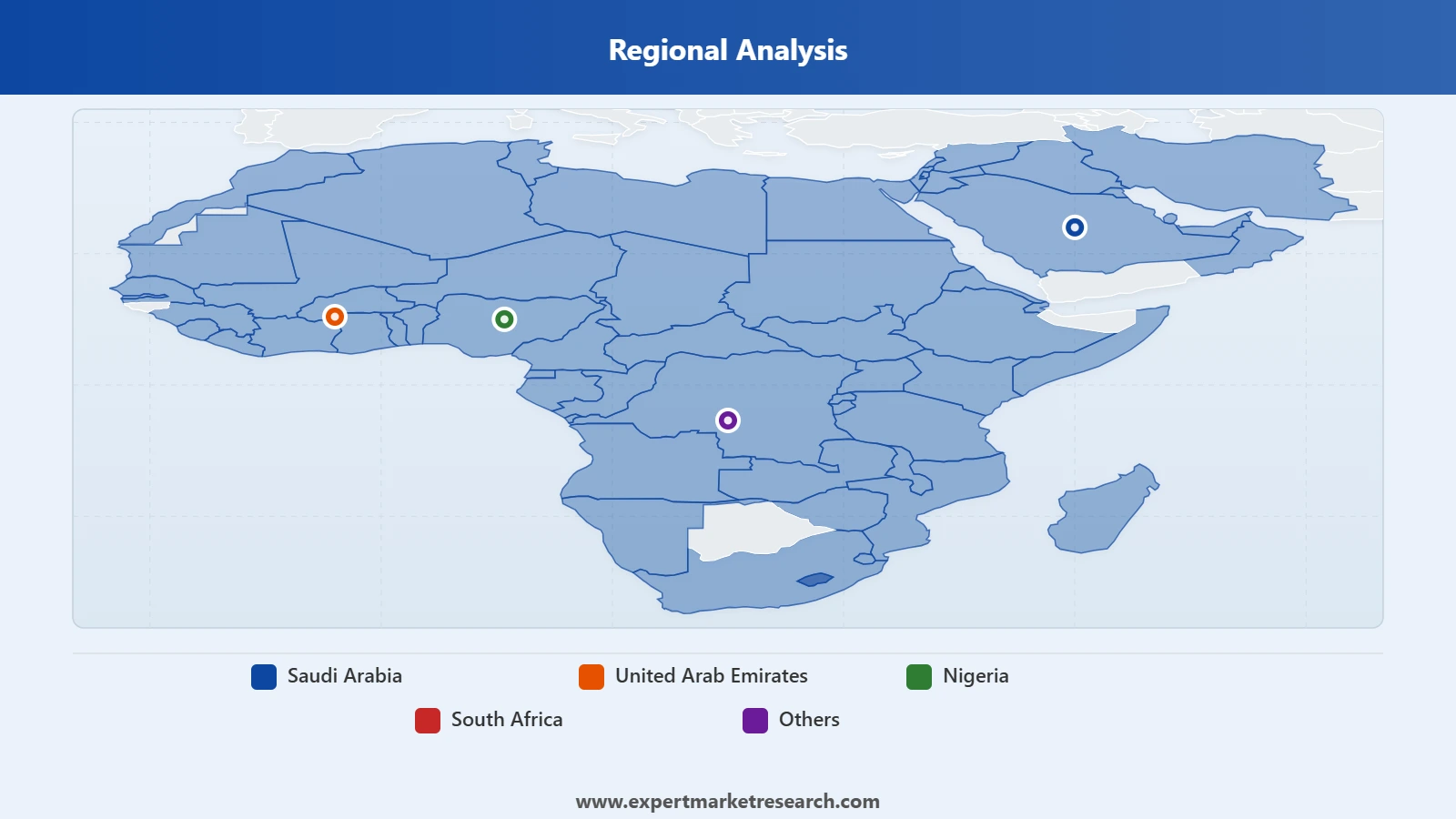
Market Breakup by Country
Key Insights: Saudi Arabia, the United Arab Emirates, Nigeria, South Africa, and other MEA countries have different contributions to the growth of the Middle East and Africa kitchen appliances market. Saudi Arabia is characterized by a high level of disposable income, which leads to the rapid uptake of smart refrigerators and dishwashers. The United Arab Emirates has emerged as a lucrative destination for premium brands like Beko and TEKA, which open distribution channels through showroom flags. The growing middle class in Nigeria is the driving force behind the demand for affordable mixers and microwaves, whereas South Africa's manufacturing ecosystem is paving the way for local production by Defy Appliances. Other markets such as Egypt and Kenya are experiencing a growth spurt due to increased urbanization and the adoption of lifestyle appliances.
Read more about this report - REQUEST FREE SAMPLE COPY IN PDF
By product, dishwashers supporting premium lifestyle adoption
Dishwashers are witnessing high demand in the Middle East and Africa kitchen appliances market, as more urban households focus on convenience, hygiene, and time savings. These appliances are also getting a boost from luxury, quality housing developments and a growing willingness to accept automated cleaning solutions. Manufacturers are launching premium, highly energy-saving models to extend the range of their detached, semi-detached, and apartment market segments. For example, Beko Egypt showcased its latest range of smart ovens, refrigerators, freezers, and dishwashers in line with MEA Industry EXPO 2025, thus reflecting how the local manufacturing innovation trick combined can help appliance chain extension.
Refrigerators continue to be the dominant product category in the Middle East and Africa kitchen appliances market, attributed to their indispensable functions, such as food storage, food preservation, and lifestyle convenience. Besides, growth is being stimulated by the increase of disposable incomes together with the demand for energy-saving refrigerator models made specifically for regional power situations. Major brand names are incorporating web-based features to set apart their products. For instance, LG Electronics formed a joint venture with two Chinese firms to work on the development of affordable appliance portfolios, thus enabling wider availability of refrigerators for price-sensitive consumers in emerging markets.
Read more about this report - REQUEST FREE SAMPLE COPY IN PDF
By end use, residential category is driving volume growth
Residential category account for the largest share of the Middle East and Africa kitchen appliances market, as households continue to replace their old appliances and upgrade to the smart, energy-efficient ones. The trend is mainly attributed to lifestyle changes, urbanization, and increasing access to finance. To cater to the diverse residential needs at various socio-economic levels, manufacturers are strengthening their distribution networks. For instance, in order to address the changing residential demand, Panasonic Marketing Middle East & Africa (PMMA) unveiled its FY2023–2024 growth plan, which was focused on expanding product ranges and boosting customer interaction in the area.
The commercial sector, which includes hotels, restaurants, caterers, and institutional kitchens, generates additional growth through the demand for heavy-duty, high-capacity appliances. The product demand is rising, driven by ongoing infrastructural development and tourist influx in major Middle Eastern and African cities that require dependable refrigeration, industrial ovens, and heavy-duty mixers. Local appliance manufacturers in the Middle East and Africa kitchen appliances industry are taking steps to support the commercial clientele. For instance, Hisense shared its plan to further expand its footprint in the Middle East and Africa region by setting up new manufacturing and service centers to boost product availability.
Read more about this report - REQUEST FREE SAMPLE COPY IN PDF
By distribution channel, supermarkets and hypermarkets improving market accessibility
Supermarkets and hypermarkets continue to be important distribution channels, fueling the Middle East and Africa kitchen appliances market revenue. They usually help volume sales with their wide product assortment and through promotional activities. These channels allow appliances such as refrigerators, microwave ovens, and food processors to reach mass-market consumers. Retailers are not only increasing the space for appliances but also diversifying the category to be ready for the seasonal peaks in demand when people are most active. The extensive physical distribution of these outlets gives consumers a larger choice, and thus the penetration of value and mid-tier segments gets a boost in both urban and suburban areas.
The Middle East and Africa kitchen appliances market sales through online channels are increasing significantly in recent years, as consumers use digital search, reviews, and doorstep delivery conveniences. Online stores make the pricing more transparent, and at the same time, they allow buying several models and brands with ease, which is especially true for small appliances such as mixers, grinders, and compact dishwashers. At the Midea's 2025, MEA Partner Conference, the company emphasized digital collaboration and planned e-commerce expansion with regional partners, highlighting the role of online channels in expanding the reach across the Middle East and Africa kitchen appliances industry.
Read more about this report - REQUEST FREE SAMPLE COPY IN PDF
By country, Saudi Arabia driving premium appliance demand
Saudi Arabia accounts for a significant share of the Middle East and Africa kitchen appliances market revenue, owing to the continuous rise in disposable incomes and a trend among the consumers towards the purchase of premium features such as smart connectivity and energy efficiency. The country's contemporary retail network, along with an increment in home renovations, are conducive factors for the escalated adoption of top-tier refrigerators, built-in ovens, and dishwashers, to name a few. Manufacturers are continually enhancing their distribution and local marketing to be able to meet this demand that is driven by brand awareness and consumer trust in globally recognized brands.
Egypt is gradually becoming a key contributor to the Middle East and Africa kitchen appliances market growth, driven by its growing domestic consumption and strategic manufacturing investments. Production facilities in the domestic market not only lower the dependence on imports but also serve the export to the neighboring countries. This manufacturing-oriented growth is reflected in the announcement by Midea Group of new appliance production plants in Egypt. The company is significantly increasing the refrigerator production capacity and is making Egypt a production base for the Middle East and Africa markets.
Read more about this report - REQUEST FREE SAMPLE COPY IN PDF
The leading Middle East and Africa kitchen appliances market players are relying on product innovation and portfolio diversification to cater to the changing consumer preferences. Bosch, Philips, and LG are examples of companies that are launching smart, energy-efficient, and design-focused appliances in addition to extending their line of refrigerators, dishwashers, and microwave ovens. Such initiatives allow them to not only gain brand recognition but also facilitate the use of their products in residential and commercial sectors.
Major appliance companies in the Middle East and Africa are implementing regional strategic partnerships, local manufacturing, and distribution expansion to deepen their presence in the area. Midea, Hisense, and Panasonic, for instance, are setting up local production facilities and partnering with regional distributors to shorten lead time and improve supply chains, thus making the products available at the right time and cost. Besides that, flagship stores, online marketing, and selective retail collaborations play a significant role in consumer engagement, thereby ensuring continuous growth in both urban and emerging segments of the Middle East and Africa kitchen appliances market.
Robert Bosch GmbH, established in 1886 and based in Gerlingen, Germany, is one of the top global suppliers of home appliances and industrial technology. The brand is well known for its line of kitchen appliances, such as dishwashers, ovens, and refrigerators, which emphasize energy saving and the incorporation of smart technologies.
Philips is a global technology corporation operating in the domains of health, lighting, and consumer lifestyle products. The company was established in 1891, in Amsterdam, Netherlands, and has since emerged to be a prominent name in the global kitchen appliances industry. The cooking appliance department of Philips includes blenders, juicers, and coffee makers that stress ease, styling, and the incorporation of intelligent features.
Electrolux AB was established in 1919, and the head office is in Stockholm, Sweden. The company is recognized globally as a home and professional appliances leader in the Middle East and Africa kitchen appliances market. They manufacture refrigerators, ovens, and food preparation appliances, and their products boast a mix of reliable features and innovations that cater to the modern household needs.
De’Longhi S.p.A. is one of the foremost makers of kitchen and coffee appliances, and the company was established in 1902 in Treviso, Italy. The brand is famous for its coffee machines, food processors, and other small appliances where the elements of design, performance, and user's convenience are well balanced.
Other players in the market include Samsung Electronics Co. Ltd., LG Electronics Inc., Whirlpool Corporation, Hisense Corporation, Hitachi, Ltd., Panasonic Holdings Corporation, Haier Group Corporation, Midea Group Co. Ltd., and several other regional and international companies contributing to the competitive landscape.
*Please note that this is only a partial list; the complete list of key players is available in the full report. Additionally, the list of key players can be customized to better suit your needs.*
The Middle East and Africa kitchen appliances industry contends with a fragmented compliance and service environment. Manufacturers must meet divergent standards including Saudi SASO 2902 energy labelling, GCC Standardization Organization rules, UAE Emirates Quality Mark, and South African SANS specifications, each carrying separate testing obligations. Counterfeit and parallel-import blenders, kettles, and microwaves circulating through informal markets erode brand trust, while limited after-sales coverage across Sub-Saharan Africa, combined with extreme heat, humidity, and dust ingress, accelerates component wear and warranty exposure.
Several structural restraints temper near-term momentum. Currency depreciation in Egypt, Nigeria, and South Africa, alongside import duties and Saudi localisation requirements under the Saudi Made initiative, lifts landed costs for cookers, ovens, and dishwashers. South African load-shedding monitored by NERSA disrupts both factory uptime and consumer purchasing power, while affordability constraints across lower-income segments slow adoption of premium connected kitchen platforms. Variable LPG and grid availability across the continent also complicates dual-fuel range specifications and inverter cooktop deployment.
Opportunity is concentrated in localised manufacturing and demand-led product engineering. Vision 2030 giga-projects such as NEOM and ROSHN, along with Haier's Greater Cairo industrial park, the Kwikot acquisition in South Africa, and Hisense's Egypt and Algeria factories, are expanding regional capacity, while Matter-ready smart kitchens, Ramadan-aligned cooking ranges, BNPL financing via Tabby and Tamara, and e-commerce growth through Noon, Amazon.ae, and Jumia underpin sustained expansion.
Explore the latest trends shaping the Middle East and Africa Kitchen Appliances Market 2026-2035 with our in-depth report. Gain strategic insights, future forecasts, and key market developments that can help you stay competitive. Download a free sample report or contact our team for customized consultation on Middle East and Africa kitchen appliances market trends 2026.
Europe Kitchen Appliances Market
North America Kitchen Appliances Market
Asia Pacific Kitchen Appliances Market
Latin America Kitchen Appliances Market
Africa Small Kitchen Appliances Demand
Middle East Refrigeration Appliances Demand
GCC Built-In Kitchen Equipment Demand


Upto 15% Off
USD
$2499 $2249
$3999 $3599
$4999 $4249
$5999 $5099


*While we strive to always give you current and accurate information, the numbers depicted on the website are indicative and may differ from the actual numbers in the main report. At Expert Market Research, we aim to bring you the latest insights and trends in the market. Using our analyses and forecasts, stakeholders can understand the market dynamics, navigate challenges, and capitalize on opportunities to make data-driven strategic decisions.*
In 2025, the Middle East and Africa kitchen appliances market reached an approximate value of USD 13.19 Billion.
The market is projected to grow at a CAGR of 5.70% between 2026 and 2035.
The kitchen appliances market is expected to reach USD 22.96 Billion in 2035.
The market is categorised according to its product, which includes dishwashers, microwave ovens, refrigerators, mixers and grinders, food processors, and others.
The key players in the market include Robert Bosch GmbH, Koninklijke Philips N.V., Electrolux AB, De’Longhi S.p.A., Samsung Electronics Co. Ltd., LG Electronics Inc., Whirlpool Corporation, Hisense Corporation, Hitachi, Ltd., Panasonic Holdings Corporation, Haier Group Corporation, Midea Group Co. Ltd., and several other regional and international companies contributing to the competitive landscape.
Key strategies driving the market include product innovation and portfolio diversification, strategic partnerships and joint ventures, localization of manufacturing, expansion of distribution channels, and investment in flagship showrooms and e-commerce platforms.
The market is categorised according to its end use, which includes residential and commercial.
China has emerged as the leading global manufacturing hub for home appliance products, contributing to 60-70% of the world's production capacity. Notably, air conditioners constitute 80% of this capacity, while refrigerators and small home appliances account for approximately 60% and 50%, respectively.
Major challenges include high import dependency in certain regions, fragmented distribution networks, price sensitivity among consumers, regulatory compliance across different countries, and intense competition from both global and local appliance brands.
Explore our key highlights of the report and gain a concise overview of key findings, trends, and actionable insights that will empower your strategic decisions.
| REPORT FEATURES | DETAILS |
| Base Year | 2025 |
| Historical Period | 2019-2025 |
| Forecast Period | 2026-2035 |
| Scope of the Report |
Historical and Forecast Trends, Industry Drivers and Constraints, Historical and Forecast Market Analysis by Segment:
|
| Breakup by Product |
|
| Breakup by End Use |
|
| Breakup by Distribution Channel |
|
| Breakup by Region |
|
| Market Dynamics |
|
| Competitive Landscape |
|
| Companies Covered |
|
Datasheet
One User
USD 2,499
USD 2,249
tax inclusive*
Single User License
One User
USD 3,999
USD 3,599
tax inclusive*
Five User License
Five User
USD 4,999
USD 4,249
tax inclusive*
Corporate License
Unlimited Users
USD 5,999
USD 5,099
tax inclusive*
*Please note that the prices mentioned below are starting prices for each bundle type. Kindly contact our team for further details.*
Flash Bundle
Small Business Bundle
Growth Bundle
Enterprise Bundle
*Please note that the prices mentioned below are starting prices for each bundle type. Kindly contact our team for further details.*
Flash Bundle
Number of Reports: 3
20%
tax inclusive*
Small Business Bundle
Number of Reports: 5
25%
tax inclusive*
Growth Bundle
Number of Reports: 8
30%
tax inclusive*
Enterprise Bundle
Number of Reports: 10
35%
tax inclusive*
How To Order

Select License Type
Choose the right license for your needs and access rights.

Click on ‘Buy Now’
Add the report to your cart with one click and proceed to register.

Select Mode of Payment
Choose a payment option for a secure checkout. You will be redirected accordingly.
Strategic Solutions for Informed Decision-Making
Gain insights to stay ahead and seize opportunities.

Get insights & trends for a competitive edge.

Track prices with detailed trend reports.

Analyse trade data for supply chain insights.

Leverage cost reports for smart savings

Enhance supply chain with partnerships.

Connect For More Information
Our expert team of analysts will offer full support and resolve any queries regarding the report, before and after the purchase.
Our expert team of analysts will offer full support and resolve any queries regarding the report, before and after the purchase.
We employ meticulous research methods, blending advanced analytics and expert insights to deliver accurate, actionable industry intelligence, staying ahead of competitors.
Our skilled analysts offer unparalleled competitive advantage with detailed insights on current and emerging markets, ensuring your strategic edge.
We offer an in-depth yet simplified presentation of industry insights and analysis to meet your specific requirements effectively.




