

Consumer Insights
Uncover trends and behaviors shaping consumer choices today
Procurement Insights
Optimize your sourcing strategy with key market data
Industry Stats
Stay ahead with the latest trends and market analysis.
The Nigeria industrial automation market was valued at USD 168.96 Million in 2025. The market is expected to grow at a CAGR of 7.75% during the forecast period of 2026-2035 to reach a value of USD 356.42 Million by 2035. The market is advancing as global automation leaders forge partnerships with local entities to accelerate technology adoption and industrial competence.
The growth in the Nigeria industrial automation market is mainly fueled by the escalating demand for operational efficiency and accuracy in manufacturing and process industries. Innovative robots, sensors, and control systems help manufacturers to avoid mistakes, decrease their machine downtime, and make better use of their resources, which results in increased productivity. Besides that, the rising integration of digital technologies like IoT, AI, and edge computing, that support real-time monitoring, predictive maintenance, and data-driven decision-making is significantly supporting the development of the market. These factors collectively help companies to pave the way for cost-effective, scalable, and highly responsive operations.
Moreover, strategic partnerships facilitate the transfer of first-rate automation technology, operational competencies, and localized support to the industries of manufacturing, oil & gas, and processing sectors, spurring the development of the Nigeria industrial automation market. By merging global research and development and local execution capacity, these partnerships not only lower implementation risks but also increase access to intelligent control systems, motion control products, and digital instrumentation, all of which are essential for modern industrial competitiveness.
For instance, in July 2025, Siemens Digital Industries collaborated with PE Energy in Nigeria to increase the country's ability to utilize hybrid technologies through industrial automation solutions, with the use of state-of-the-art drive equipment, process control, and instrument technologies, which are key areas of local production and system robustness. This strategic alliance reflects the Nigeria industrial automation market's ongoing support for companies to obtain highly sophisticated systems while also receiving local assistance from engineering and service networks that help to reduce risks and scale complex automation projects.
Compound Annual Growth Rate
7.75%
Value in USD Million
2026-2035
|
Nigeria Industrial Automation Market Report Summary |
Description |
Value |
|
Base Year |
USD Million |
2025 |
|
Historical Period |
USD Million |
2019-2025 |
|
Forecast Period |
USD Million |
2026-2035 |
|
Market Size 2025 |
USD Million |
168.96 |
|
Market Size 2035 |
USD Million |
356.42 |
|
CAGR 2019-2025 |
Percentage |
XX% |
|
CAGR 2026-2035 |
Percentage |
7.75% |
|
CAGR 2026-2035 - Market by Component |
Software |
7.6% |
|
CAGR 2026-2035 - Market by Industry |
Process Automation |
7.8% |
The Nigerian government unveiled the Industrial Policy 2025, aiming to enhance the local production, value addition to supply chains, and increased use of technology, thereby creating a supportive environment for automation investment and competitiveness in the industrial sector. The policy led to increased private sector automations propelling new avenues for investments in the Nigeria industrial automation market.
Dover Fueling Solutions signed a partnership agreement with Ardova Plc to upgrade the fuel retail network via the introduction of automation technologies in service stations, thereby resulting in increased operational efficiency and digital transformation. The partnership reflects the integration of automation technologies finding their way even into sectors traditionally considered non-industrial, thus paving the way for larger-scale adoption.
WEG introduced the RUW200 modular remote unit, bringing improvements in the integration of industrial automation with IoT-ready connectivity and scalable I/O support. The product launch was part of a wider program to introduce the industrial hardware innovations that contribute to the optimization and increase in the adoption of automation in the local manufacturing facilities.
Schneider Electric expanded its Nigerian presence with a new Lagos headquarters, making it their main liaison office. The new facility is capable of providing service to West Africa and is supporting automation and energy solutions thereby creating more opportunities in the Nigeria industrial automation market.
The Nigeria industrial automation market growth is propelled by the investments in local automation infrastructure focused on reducing the dependence on imported relevance and expertise that facilitate project delivery timelines. For example, in March 2025, Greenpeg unveiled the West Africa's largest Integrated Control and Safety System (ICSS) Hub in Lagos, which is capable of providing engineering, installation, and maintenance services for industrial control systems at a local level. Such facilities help in the localization of technical capacity, encourage workforce development, and also make the implementation of automation more affordable for Nigerian manufacturers and energy companies.
The increasing requirement for trained automation technicians and engineers is prompting investments in the technical talent pipeline in the country, which is a crucial factor for the growth of the Nigeria industrial automation market. For instance, in December 2025, Advanxis Technologies announced the launch of the Second National Automation Prize (NAP 2025), a national competition based on PLC, SCADA, and automation engineering having the objective of developing local talent. Actions of this nature are helpful in bridging major skills gaps and increasing the trust of investing end users in advanced automation solutions.
Live industry events and festivals are also impacting the overall Nigeria industrial automation market penetration. For instance, the 9ja Automation Fest, held in November 2025, brought together automation engineers, programmers, and business leaders in Lagos to exchange best practices and interact with the latest control technologies. Gathering professionals not only encourages community building, but it also introduces end users to new automation trends and hastens investment decisions through the demonstration of practical use cases and systems in action.
The Nigeria industrial automation market growth is propelled by increased infrastructure investment, which is driving up demand for automated logistics and operational systems. In April 2024, Nigeria arranged a USD 600 million investment from A.P. Moller Maersk to upgrade seaport infrastructure, including digital systems and automation that most effectively aim at the improvement of cargo throughput and operational efficiency. Such improvements increase the need for industrial control systems, robotics, and intelligent monitoring tools in transport and supply chain sectors.
New growth opportunities in the Nigeria industrial automation industry are being driven by the development of the country’s domestic robotics and automation manufacturing initiatives. For instance, Terra Industries, the largest drone production facility in Africa was inaugurated in February 2025. This facility is engaged in the production of robotics and automation-intensive assembly processes designed for infrastructure and energy applications. The move shows that local manufacturing enterprises, especially those incorporating automation and AI technologies, are making a broad contribution to the surging demand in the market.
The EMR’s report titled “Nigeria Industrial Automation Market Report and Forecast 2026-2035” offers a detailed analysis of the market based on the following segments:
Market Breakup by Component
Key Insight: The Nigeria industrial automation market scope comprises hardware and software components. Core hardware devices like sensors PLCs HMIs servos laser marker, safety light curtains, and robots are being combined with smart software programs that enhance efficiency, minimize human involvement, and increase productivity. For instance, in April 2026, Nigeria announced that it intends to become Africa's leader in the Artificial Intelligence revolution by implementing projects such as the UniPod at the University of Lagos. This center brings together students, researchers, and industrial players to design AI-based solutions that are specific to the Nigerian market, thereby spurring innovation, promoting industrial production, and reinforcing the entire automation system of the country.
Market Breakup by Industry
Key Insight: Among the different industries, discrete automation is being identified as a major category contributing to the Nigeria industrial automation market revenue, with sectors such as automotive electronic heavy manufacturing, packaging, and others increasingly using robotics, machine vision, and PLC-based systems to increase operational efficiency and product quality. On the other hand, process automation in the different sectors such as oil and gas chemicals pulp and paper, mining and metal, among others, is growing rapidly, as these sectors install advanced control systems and predictive maintenance tools to improve their continuous processes. Companies such as ABB Ltd. Siemens AG, and Schneider Electric SE are deepening their relationships with local partners and rolling out integrated automation solutions in the different sectors of the Nigerian industry.
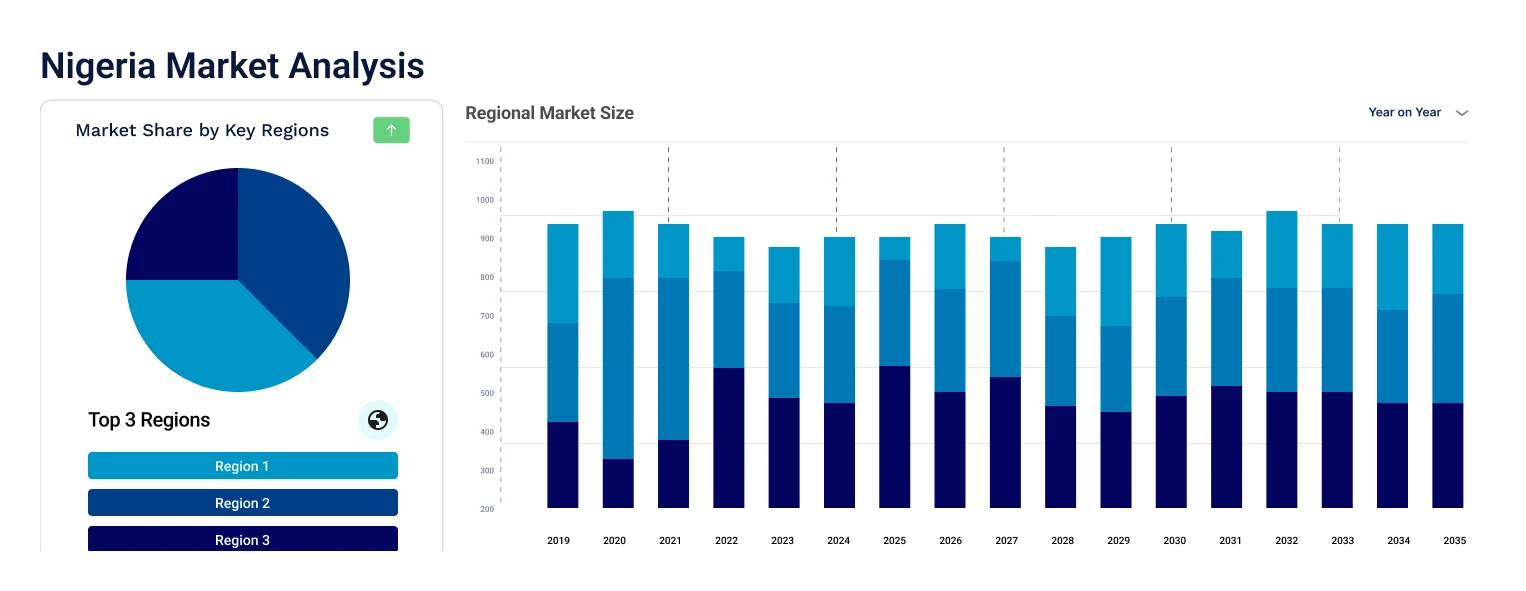
By component, hardware witnesses consistent demand driven by skill development and automation initiatives
The hardware segment, which includes sensors, PLCs, HMIs, servos, laser markers, safety light curtains, and robots, demonstrates high demand in the Nigeria industrial automation market owing to the ongoing activities focused on developing local technical skills and automation readiness. For instance, in July 2025, Anambra State initiated a robotics training program for young people enabling them to design and operate robots and offering them a hands-on experience. Such initiatives are expected to foster the development of a competent workforce to support industrial automation. Along with these programs, greater investments in smart factory technologies and local partnerships have resulted in fast-paced industrial hardware adoption supporting the automation ecosystem of Nigeria as a whole.
The software sector witnesses significant uptake due to Nigeria's decision to embrace AI, digital innovation, and smart industrial solutions. For instance, the GITEX Nigeria 2025 supports the development of locally relevant AI, analytics, and automation software solutions. Businesses and academic institutions are leveraging these platforms to build intelligent process controls, predictive maintenance systems, and digital twins that meet Nigeria's industrial demands. Government intervention, startup incubators, and university-industry partnerships are some of the channels through which software adoption is being facilitated to help Nigeria industrial automation market players streamline their operations and boost productivity.
By industry, process automation gains traction driven by strategic partnership accelerating automation adoption
The process automation category shows notable growth in the Nigeria industrial automation market attributed to its expansion in fields like oil & gas, chemicals, pulp & paper, mining, and metals. This expansion is being largely driven by investments in digital transformation, implementation of continuous process optimization, and deployment of advanced control systems, thereby significantly enhancing efficiency, safety, and reliability. Various companies are intending to upgrade their production methods to boost their productivity and stay competitive in the market. They are resorting to cutting-edge technologies for scalable growth. For instance, in December 2026, the partnership between M2I Corporation and DMS Automation, boosted the market by providing access to leading industrial automation and measurement solutions, thus helping local industries and speeding up the widespread use of process automation in the area.
On the other hand, the discrete automation category covering automotive electronics, heavy manufacturing, and packaging accounts for a significant share of the Nigeria industrial automation market due to manufacturers' efforts to achieve higher efficiency, less downtime, and near real-time operational insights. Additionally, to facilitate continuous connectivity among machines, robots, and processes, companies are rapidly implementing network infrastructure, edge computing, and data interoperability solutions. For instance, in May 2024, Belden announced its enhanced network and data capabilities, allowing discrete manufacturers to leverage the integration of operational technology, improve production lines, and use data-driven decision-making. This demonstrates that technological advancements not only support market growth but also accelerate the adoption of Industry 4.0 solutions in discrete manufacturing areas.
Leading Nigeria industrial automation market players are actively expanding their operations and partnerships in order to meet the growing demand. They are setting up local operations and strengthening regional distribution networks. Companies are improving product availability and service capabilities through the use of investments in modern infrastructure, advanced manufacturing facilities, and skilled workforce development. These efforts have collectively led to increased efficiency and digital transformation of Nigeria's industrial landscape through integration of innovative automation hardware and software solutions including IoT-enabled devices, robotics, and control systems.
In order to support the market growth, many Nigeria industrial automation companies are concentrating on research-led product development and technology adoption, resulting in solutions that increase operational efficiency, reliability, and scalability. Innovation in automation systems accompanied by regional training programs and knowledge-sharing initiatives is providing industries with the ability to update processes and minimize costs. The market further experiences penetration with expansion into new industrial hubs and the use of data-driven insights, resulting in the increasing availability of advanced automation technologies in manufacturing, energy, and infrastructure sectors.
ABB Ltd. is a Swiss-based corporation, located in Zurich, Switzerland established in 1988. The company mainly focuses on delivering electricity, robots, and industrial automation. It is one of the major suppliers of products and services that enable improvement in efficiency and digital integration in different industries.
Emerson Electric Co. is a company that was established in 1890, headquartered in St. Louis, Missouri, United States of America. The company is a prominent vendor in the Nigeria industrial automation market offering automation solutions, control systems for processes, and smart technologies that assist in raising operational efficiency in different industrial sectors.
GE Company was established in 1892, with its main office located in Boston, Massachusetts, United States of America. The company focuses on providing industrial automation solutions, energy management systems, and digital tools that improve productivity and modernization in manufacturing and infrastructure.
Honeywell International Inc. was established in 1906, and its headquarters are located in Charlotte, North Carolina, United States of America. It has emerged to be a major firm in the Nigeria industrial automation market with its extensive portfolio of automation and control technologies, and safety solutions to help maximize operational efficiency.
*Please note that this is only a partial list; the complete list of key players is available in the full report. Additionally, the list of key players can be customized to better suit your needs.*
Other key players in the market include Mitsubishi Electric Corp., Rockwell Automation Inc., Schneider Electric SE, Siemens AG, Robert Bosch GmbH, and Omron Corp., among others.
Explore the latest trends shaping the Nigeria industrial automation market 2026-2035 with our in-depth report. Gain strategic insights, future forecasts, and key market developments that can help you stay competitive. Download a free sample report or contact our team for customized consultation on Nigeria industrial automation market trends 2026.


Upto 15% Off
USD
$3999 $3599
$2499 $2249
$4999 $4249
$5999 $5099


*While we strive to always give you current and accurate information, the numbers depicted on the website are indicative and may differ from the actual numbers in the main report. At Expert Market Research, we aim to bring you the latest insights and trends in the market. Using our analyses and forecasts, stakeholders can understand the market dynamics, navigate challenges, and capitalize on opportunities to make data-driven strategic decisions.*
In 2025, the Nigeria industrial automation market reached an approximate value of USD 168.96 Million.
The market is projected to grow at a CAGR of 7.75% between 2026 and 2035.
The key players in the market include ABB Ltd., Emerson Electric Co., GE Company, Honeywell International Inc., Mitsubishi Electric Corp., Rockwell Automation Inc., Schneider Electric SE, Siemens AG, Robert Bosch GmbH, and Omron Corp., among others.
Key strategies driving the market include strategic partnerships and collaborations, expansion of local operations, introduction of advanced automation products and software, investment in smart manufacturing solutions, and government-supported industrial policies promoting technology adoption.
Major challenges that the Nigeria industrial automation market players face include high initial investment costs, limited skilled workforce, inconsistent power supply, regulatory and policy uncertainties, and slow adoption of advanced automation technologies across certain industries.
Explore our key highlights of the report and gain a concise overview of key findings, trends, and actionable insights that will empower your strategic decisions.
| REPORT FEATURES | DETAILS |
| Base Year | 2025 |
| Historical Period | 2019-2025 |
| Forecast Period | 2026-2035 |
| Scope of the Report |
Historical and Forecast Trends, Industry Drivers and Constraints, Historical and Forecast Market Analysis by Segment:
|
| Breakup by Component |
|
| Breakup by Industry |
|
| Market Dynamics |
|
| Competitive Landscape |
|
| Companies Covered |
|
Single User License
One User
USD 3,999
USD 3,599
tax inclusive*
Datasheet
One User
USD 2,499
USD 2,249
tax inclusive*
Five User License
Five User
USD 4,999
USD 4,249
tax inclusive*
Corporate License
Unlimited Users
USD 5,999
USD 5,099
tax inclusive*
*Please note that the prices mentioned below are starting prices for each bundle type. Kindly contact our team for further details.*
Flash Bundle
Small Business Bundle
Growth Bundle
Enterprise Bundle
*Please note that the prices mentioned below are starting prices for each bundle type. Kindly contact our team for further details.*
Flash Bundle
Number of Reports: 3
20%
tax inclusive*
Small Business Bundle
Number of Reports: 5
25%
tax inclusive*
Growth Bundle
Number of Reports: 8
30%
tax inclusive*
Enterprise Bundle
Number of Reports: 10
35%
tax inclusive*
How To Order

Select License Type
Choose the right license for your needs and access rights.

Click on ‘Buy Now’
Add the report to your cart with one click and proceed to register.

Select Mode of Payment
Choose a payment option for a secure checkout. You will be redirected accordingly.
Strategic Solutions for Informed Decision-Making
Gain insights to stay ahead and seize opportunities.

Get insights & trends for a competitive edge.

Track prices with detailed trend reports.

Analyse trade data for supply chain insights.

Leverage cost reports for smart savings

Enhance supply chain with partnerships.

Connect For More Information
Our expert team of analysts will offer full support and resolve any queries regarding the report, before and after the purchase.
Our expert team of analysts will offer full support and resolve any queries regarding the report, before and after the purchase.
We employ meticulous research methods, blending advanced analytics and expert insights to deliver accurate, actionable industry intelligence, staying ahead of competitors.
Our skilled analysts offer unparalleled competitive advantage with detailed insights on current and emerging markets, ensuring your strategic edge.
We offer an in-depth yet simplified presentation of industry insights and analysis to meet your specific requirements effectively.




