

Consumer Insights
Uncover trends and behaviors shaping consumer choices today
Procurement Insights
Optimize your sourcing strategy with key market data
Industry Stats
Stay ahead with the latest trends and market analysis.
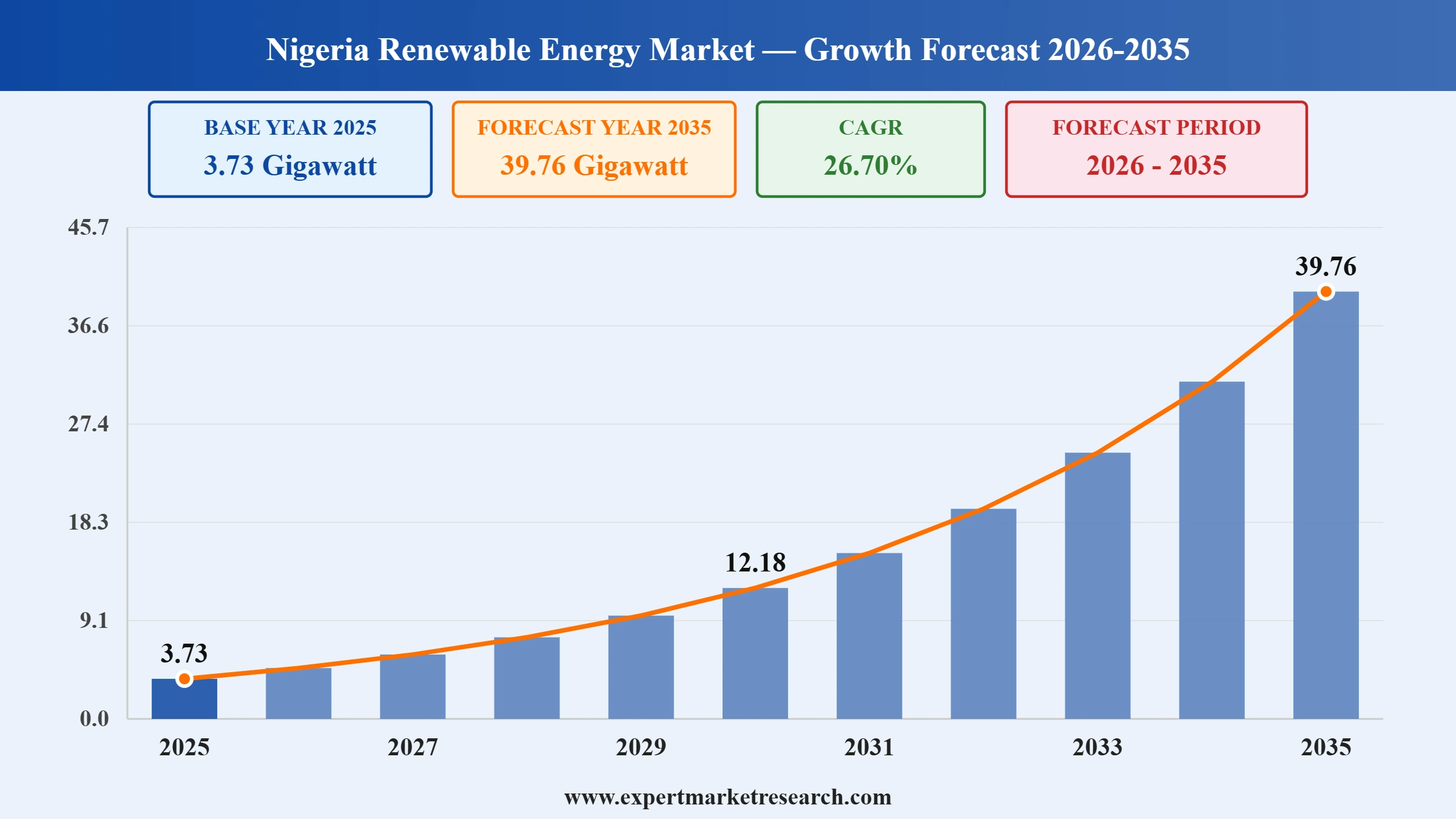
The Nigeria renewable energy market reached the volume of 3.73 Gigawatt in 2025. The market is expected to grow at a CAGR of 26.70% during the forecast period of 2026-2035 to reach a volume of 39.76 Gigawatt by 2035. The market is gaining momentum owing to international capital inflows and domestic industrial capacity development.
The Nigeria renewable energy market growth is being significantly influenced by the increasing demand for energy-efficient facilities in commercial and industrial clusters, and the rapid adoption of battery-integrated solar systems as a solution to the unstable electricity grid. Manufacturers, data centers, and logistics hubs are focusing more on hybrid solar storage systems to maintain their operations, whereas developers are integrating energy storage in their new projects.
Moreover, state governments are taking the initiative by forming appropriate alliances to establish renewable manufacturing facilities in response to international investors expanding their presence in the Nigeria renewable energy market through regional subsidiaries and project pipelines. Hence, this kind of collaboration cuts down on the dependence on imported equipment, significantly boosts the projects' economics, and facilitates the technology transfer into the local ecosystem. Therefore, corporate, industrial, and institutional stakeholders find the market more appealing when financing and supply capacity are strengthened.
Additionally, the presence of seasoned international developers in the Nigeria renewable energy market raises local project execution standards, while manufacturing agreements provide skilled jobs and foster the development of allied sectors. For instance, in November 2024, EWIA Green Investments GmbH announced the establishment of a local subsidiary, EWIA Green Energy Nigeria Ltd., to create, fund, and run solar power projects especially developed for Nigerian commercial and industrial customers.
Read more about this report - REQUEST FREE SAMPLE COPY IN PDF
|
Nigeria Renewable Energy Market Report Summary |
Description |
Value |
|
Base Year |
Gigawatt |
2025 |
|
Historical Period |
Gigawatt |
2019-2025 |
|
Forecast Period |
Gigawatt |
2026-2035 |
|
Market Size 2025 |
Gigawatt |
3.73 |
|
Market Size 2035 |
Gigawatt |
39.76 |
|
CAGR 2019-2025 |
Percentage |
XX% |
|
CAGR 2026-2035 |
Percentage |
26.70% |
|
CAGR 2026-2035 - Market by Type |
Solar Energy |
29.3% |
|
CAGR 2026-2035 - Market by End Use |
Commercial |
32.2% |
On April 16, 2026, a group of Nigerian off-grid developers, including Darway Coast, PriVida Power, Prado Power, GVE Projects, and StarTimes Smart Energy, secured about $83 million in IFC-backed financing under the DARES programme. The agreements were signed at the World Bank Group and IMF Spring Meetings in Washington, D.C.
On March 23, 2026, Nigeria's Rural Electrification Agency (REA) disbursed N3.2 billion to developer Zanoplus for solar mini-grid projects in Bauchi State, delivering a combined capacity of over 1.2 megawatts-peak. The disbursement was made under the World Bank-supported Distributed Access through Renewable Energy Scale-up (DARES) programme.
On February 23, 2026, Nigeria's Rural Electrification Agency (REA) signed a Memorandum of Understanding with Lotus Bank establishing a N100 billion revolving credit facility for mini-grid developers under the DARES programme. The facility offers up to N8 billion per developer with an 18-month tenure.
In January 2026, at Abu Dhabi Sustainability Week, President Bola Tinubu unveiled plans for a $2 billion National Climate Change Fund to finance Nigeria's energy transition, low-emission infrastructure, and renewable energy projects. He also launched a Climate Investment Platform targeting $500 million for climate-resilient infrastructure.
The players in the Nigeria renewable energy market are increasingly promoting hybrid energy solutions to improve system stability and diversify generation. The integration of solar with existing hydropower infrastructure is being enabled through public-private partnerships, which will improve reliability and attract long-term funding. Furthermore, these hybrid systems reduce generation intermittency, increasing their appeal to utility-scale investors. For instance, in March 2024, NSIA and North South Power formed a collaboration for a 20 MW on-grid solar-hydro hybrid project in Shiroro, with a 300 MW growth pipeline planned, demonstrating how hybrid techniques are influencing the energy sector.
Nigerian states are actively entering into partnerships aimed at developing large-scale renewable projects, which in turn attract more investments and create local jobs. These arrangements offer well-defined project pipelines and regulatory conformity that boost to investor trust. In March 2025, the Government of Adamawa State and the Rural Electrification Agency revealed the initiative of a 300 MW solar PV farm, a project that is expected to attract USD 1.9 billion worth of investments and create about 40,000 jobs. Examples of such massive initiatives illustrate how government participation helps to unlock growth opportunities in the Nigeria renewable energy market.
The renewable energy market in Nigeria is increasingly benefiting from structured collaborations between energy developers and commercial off takers, which are driving broader adoption of clean energy solutions beyond government programs. These agreements bring together corporate sustainability goals with flexible financing models that help to reduce energy costs and improve operational resilience. For instance, in October 2025, Empower New Energy collaborated with UBA, Renewvia Solar Nigeria Ltd., and Incremental Energy Solutions to install solar power systems in 25 UBA branches under lease and power as service models. This is an example of how commercial partnerships are increasing market penetration and scaling up deployment.
Nigeria is pushing the decentralized renewable rollout faster by signing agreements with multiple developers under government-led initiatives. This way, deployment risk is distributed, and electrification is carried out faster in the regions that are least served. The Rural Electrification Agency (REA) has played a key role in aggregating developer capacity to scale off-grid mini-grids and solar home systems. In April 2025, REA signed an agreement with nine renewable energy firms to create more than 1,350 mini-grids and solar residential systems, providing energy to 17.5 million Nigerians, demonstrating the power of multi-developer frameworks.
Ongoing projects in the Nigeria renewable energy market are receiving improved institutional management, boosting investor confidence and accelerating deployment. If Nigeria establishes asset management platforms, it will be able to consolidate assets, streamline operations, and attract long-term capital commitments from both domestic and foreign investors. In March 2025, the Rural Electrification Agency (REA) obtained permission to set up a renewable asset management company with the intention to raise nearly NGN 1 trillion and facilitate the deployment of about 600 MW of solar capacity by 2026. This arrangement allows for greater scalability and operational control of the renewable portfolios.
The Expert Market Research's report titled “Nigeria Renewable Energy Market Report and Forecast 2026-2035” offers a detailed analysis of the market based on the following segments:
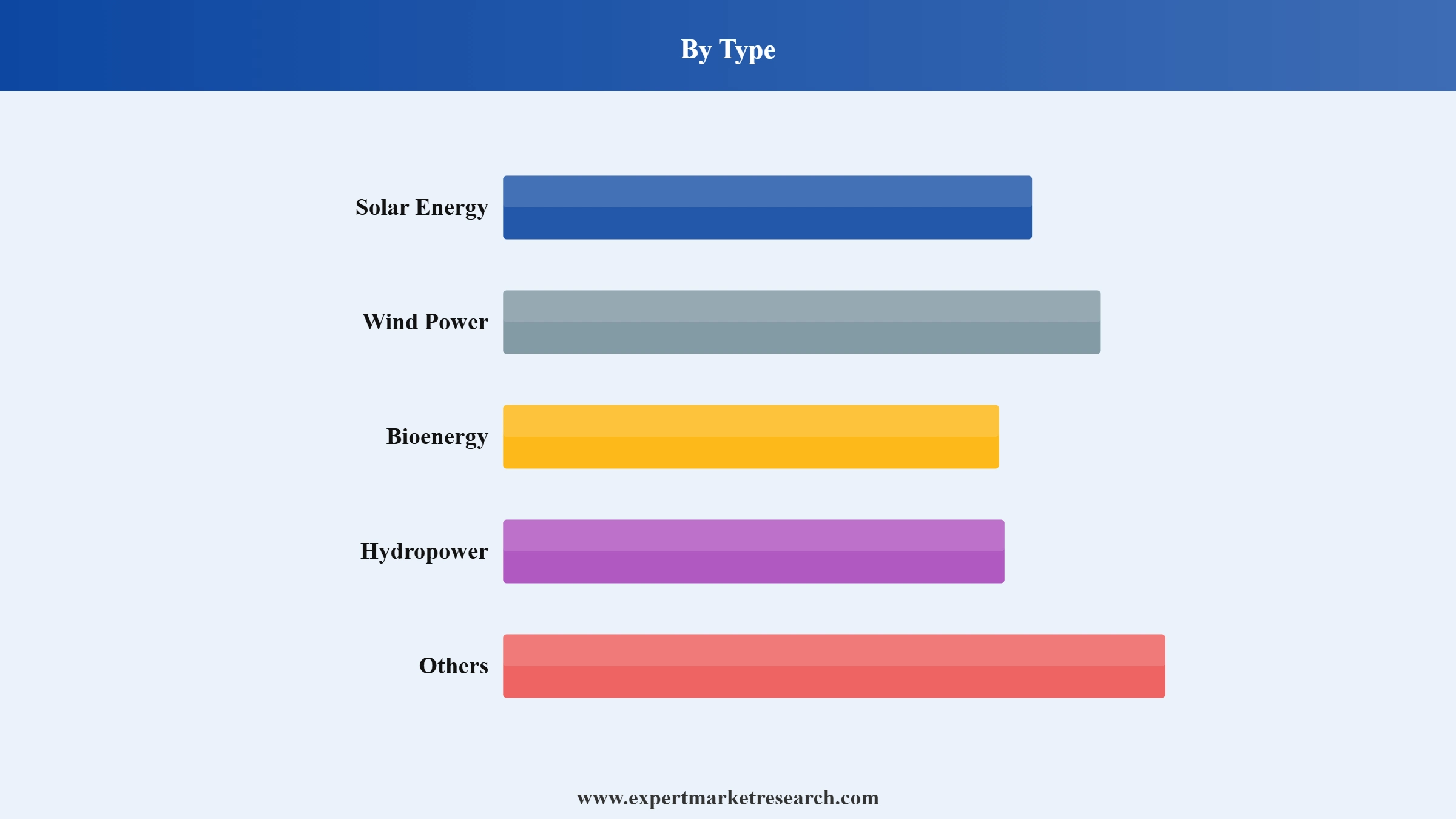
Market Breakup by Type
Key Insight: Solar energy continues to dominate the Nigeria renewable energy market owing to the the technology's adaptability for both large-scale and decentralized power solutions. Development and technology businesses are progressively concentrating on product enhancements that reduce costs and raise the element of safety, especially in regions with inadequate grid infrastructure. Itel Energy brought several small solar power systems, including a Power Tank 500W AIO and a 3.6kW + 8kWh hybrid-ready model, to the Nigerian market in August 2025 at a reasonable and reliable level to supply clean energy to Nigerian homes and small enterprises. The event exemplifies how the solar category is boosting the market growth with customized solutions, increasing the number of people who use solar energy in a decentralized manner.
Market Breakup by End Use
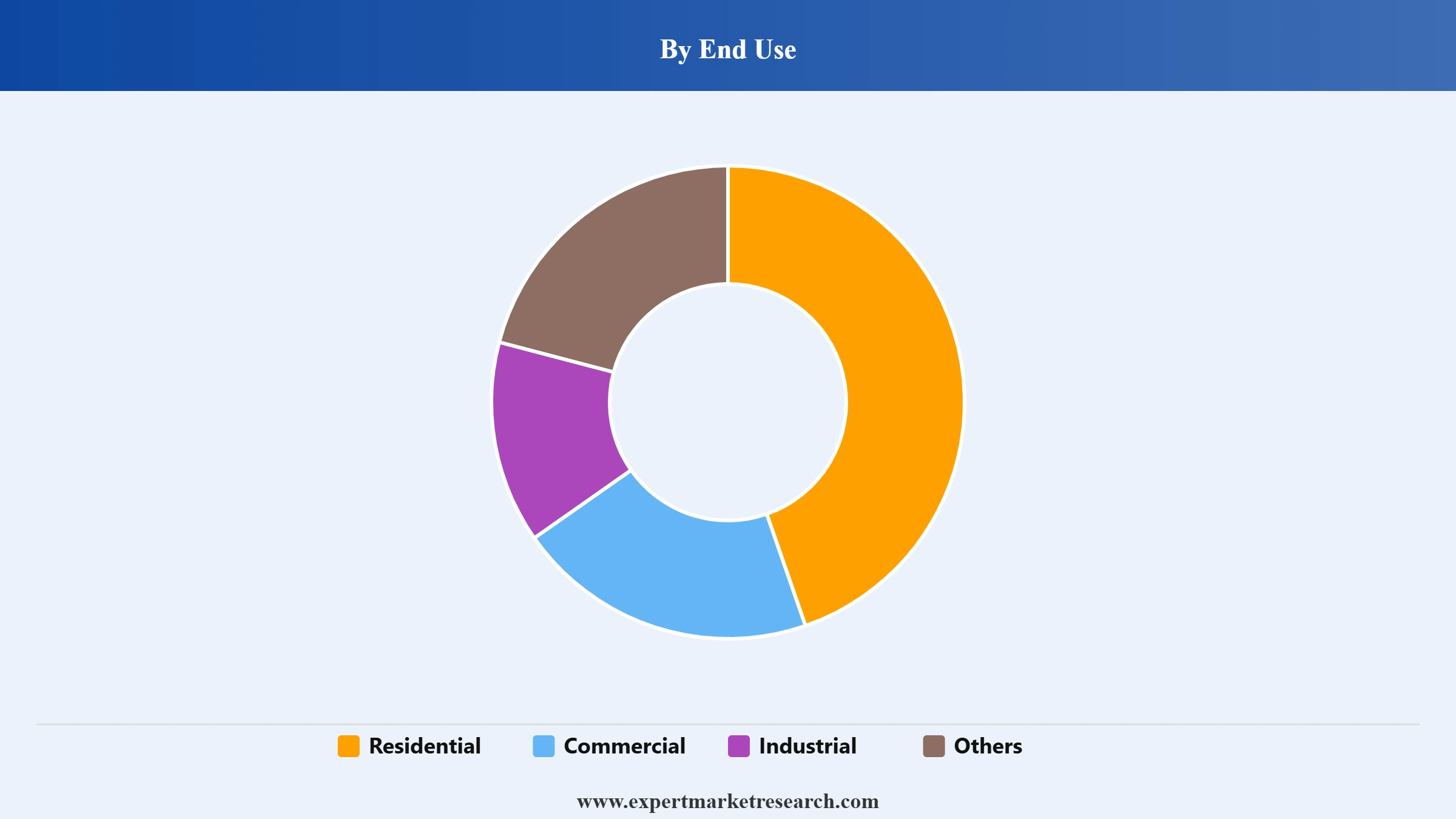
Key Insight: Based on end-use, the Nigeria renewable energy market caters to residential, commercial, industrial and other sectors. The majority of renewable energy sources are reaching residential homes as consumers require power with fewer disruptions and at a lower cost than using a diesel generator. Even in low- and middle-income segments, power without pollution is becoming a reality as market players develop home energy solutions that are eco-friendlier and more tailored to fit household needs. For example, in October 2025, White Consult introduced a brand-new product called Pure Watt Power Stations. This primarily attempts to improve the product's availability by providing reliable, competitively priced electricity to Nigerian homes and small businesses using innovative yet simple payment mechanisms.
Read more about this report - REQUEST FREE SAMPLE COPY IN PDF
By type, solar energy witnesses strong adoption driven by scalability and cost-effective off-grid solutions
Solar energy continues to dominate the Nigeria renewable energy market growth due to its adaptability and scalability for both off-grid and grid-connected applications. Developers and technology suppliers are increasingly producing products that cater to local demand, resulting in widespread acceptance in neglected areas. For example, in March 2025, RenewableTechNigeria partnered to build Nigeria's first solar-powered Polarstore cold storage solution in Lagos, demonstrating how solar technology can support agrifood and healthcare refrigeration without relying on the grid. This breakthrough demonstrates solar energy's growing significance in a variety of industries, as well as its potential to increase energy availability and economic stability.
Read more about this report - REQUEST FREE SAMPLE COPY IN PDF
Hydropower remains a strategic renewable energy source contributing to the Nigeria renewable energy market revenue, offering stable and continuous power generation that complements variable technologies like solar and wind. In August 2025, the Rural Electrification Agency inaugurated a “landmark” solar-hydro hybrid project at Balanga Dam in Gombe State, which integrates a 620 kWp solar array with existing hydropower infrastructure to enhance reliability and broaden clean energy utilization. Such hybrid deployments reflect how hydropower is evolving with solar integration to maximize resource utilization, reduce downtime, and support diversified renewable capacity additions across Nigeria.
By end use, the residential category leads the market growth driven by the growing need for reliable off-grid solutions
The residential segment continues to account for a substantial share of the Nigeria renewable energy market as homeowners seek dependable, clean alternatives to unreliable grid power and costly generators. Companies are rapidly introducing tailored renewable products that simplify solar adoption while enhancing energy continuity in homes. For example, in January 2024, Huawei Digital Power launched its SmartPV Fusionsolar Residential Luna 2.0 solution in Lagos, a modular solar system designed to bridge power gaps for households and small and medium enterprises with scalable capacity options. This product rollout exemplifies how technology innovation and targeted design are expanding residential renewable uptake and supporting sustainable energy transitions across Nigerian communities.
Read more about this report - REQUEST FREE SAMPLE COPY IN PDF
Commercial energy consumers boost the overall demand in the Nigeria renewable energy market, attributed to the increasing adoption of solar solutions to reduce operational costs and dependence on diesel generators while strengthening sustainability credentials. Renewable energy developers are responding with tailored project offerings that deliver scalable capacity and enhanced reliability. For example, in December 2025, Husk Power Systems completed a 1 MW commercial and industrial (C&I) solar hybrid project for the Nasarawa State Government, powering key institutional facilities and demonstrating the commercial viability of renewables in government and business operations. Projects like these illustrate how commercial end-use segments are moving towards cleaner energy with tangible operational benefits.
Major Nigeria renewable energy market players are continuously using public-private partnerships as a strategy to fast-track the rollout of renewable energy. Working together with government entities and banks, developers are getting project financing, mitigating risks, and expanding mini-grid as well as utility-scale solar projects. Besides risk and sharing benefits, such partnerships facilitate knowledge exchange and local skills development, which, in turn, help companies speed up implementation of their projects while staying in line with the national electrification objectives and the regulatory environment.
In order to expand their footprint in the market, Nigeria renewable energy companies are directing their efforts and finances towards local manufacturing and technical skills. A number of firms are setting up solar panel assembly lines, training sessions, and establishing regional service centers so as to lessen reliance on imports and shorten the duration of projects. These initiatives not only improve the supply chain's ability to withstand shocks but also help in the generation of employment and the spread of technology across the commercial, industrial, and residential sectors.
TotalEnergies SA, established in 1924 and based in Courbevoie, France, is an international energy company that operates in the oil, gas, and renewables sectors. The group is ramping up its energy transition efforts by solar and wind projects and is firmly committing itself to carbon emissions reduction
Starsight Nigeria Limited is a prominent firm operating in the Nigeria renewable energy market, that was established in the year 2000 and is currently located at Lagos, Nigeria. The company initially engaged in renewable energy solutions and engineering services in West Africa but through diligent work, has extended its products to solar systems, power infrastructure, and energy consultancy.
Engie SA is a global energy operator group in electricity, natural gas, and renewables, headquartered in La Dfense, France, and established by the meeting in 2008 of Gaz de France and Suez. The group focusses on innovative energy solutions, such as solar, wind, and energy efficiency, thus fostering sustainable development of both emerging and advanced markets sectors.
SINOHYDRO Corporation Limited was established in 1950 and is a leading global construction and engineering company based in Beijing, China. The company is primarily engaged in hydro and solar energy projects along with infrastructure development, enabling it to meet large-scale energy demand while supporting the growth of the Nigeria renewable energy market.
Other key players in the market include JinkoSolar Holding Co., Ltd., North South Power Company Limited, Sterling and Wilson Pvt. Ltd., among others.
*Please note that this is only a partial list; the complete list of key players is available in the full report. Additionally, the list of key players can be customized to better suit your needs.*
Explore the latest trends shaping the Nigeria renewable energy market 2026-2035 with our in-depth report. Gain strategic insights, future forecasts, and key market developments that can help you stay competitive. Download a free sample report or contact our team for customized consultation on Nigeria renewable energy market trends 2026.


Upto 15% Off
USD
$2499 $2249
$3999 $3599
$4999 $4249
$5999 $5099


*While we strive to always give you current and accurate information, the numbers depicted on the website are indicative and may differ from the actual numbers in the main report. At Expert Market Research, we aim to bring you the latest insights and trends in the market. Using our analyses and forecasts, stakeholders can understand the market dynamics, navigate challenges, and capitalize on opportunities to make data-driven strategic decisions.*
In 2025, the Nigeria renewable energy market reached an approximate volume of 3.73 Gigawatt.
The market is projected to grow at a CAGR of 26.70% between 2026 and 2035.
The key players in the market include TotalEnergies SA, Starsight Nigeria Limited, Engie SA, SINOHYDRO Corporation Limited, JinkoSolar Holding Co., Ltd., North South Power Company Limited, Sterling and Wilson Pvt. Ltd., among others.
Key strategies driving the market include forming public-private partnerships to scale projects, expanding local manufacturing of renewable equipment, leveraging international investment for financing, deploying mini-grid and off-grid solutions, and integrating advanced solar-storage systems to improve energy reliability.
Major challenges include inadequate grid infrastructure, high upfront capital costs, regulatory and policy uncertainties, limited local technical expertise, and logistical issues in reaching remote areas for project deployment.
Explore our key highlights of the report and gain a concise overview of key findings, trends, and actionable insights that will empower your strategic decisions.
| REPORT FEATURES | DETAILS |
| Base Year | 2025 |
| Historical Period | 2019-2025 |
| Forecast Period | 2026-2035 |
| Scope of the Report |
Historical and Forecast Trends, Industry Drivers and Constraints, Historical and Forecast Market Analysis by Segment:
|
| Breakup by Type |
|
| Breakup by End Use |
|
| Market Dynamics |
|
| Competitive Landscape |
|
| Companies Covered |
|
Datasheet
One User
USD 2,499
USD 2,249
tax inclusive*
Single User License
One User
USD 3,999
USD 3,599
tax inclusive*
Five User License
Five User
USD 4,999
USD 4,249
tax inclusive*
Corporate License
Unlimited Users
USD 5,999
USD 5,099
tax inclusive*
*Please note that the prices mentioned below are starting prices for each bundle type. Kindly contact our team for further details.*
Flash Bundle
Small Business Bundle
Growth Bundle
Enterprise Bundle
*Please note that the prices mentioned below are starting prices for each bundle type. Kindly contact our team for further details.*
Flash Bundle
Number of Reports: 3
20%
tax inclusive*
Small Business Bundle
Number of Reports: 5
25%
tax inclusive*
Growth Bundle
Number of Reports: 8
30%
tax inclusive*
Enterprise Bundle
Number of Reports: 10
35%
tax inclusive*
How To Order

Select License Type
Choose the right license for your needs and access rights.

Click on ‘Buy Now’
Add the report to your cart with one click and proceed to register.

Select Mode of Payment
Choose a payment option for a secure checkout. You will be redirected accordingly.
Strategic Solutions for Informed Decision-Making
Gain insights to stay ahead and seize opportunities.

Get insights & trends for a competitive edge.

Track prices with detailed trend reports.

Analyse trade data for supply chain insights.

Leverage cost reports for smart savings

Enhance supply chain with partnerships.

Connect For More Information
Our expert team of analysts will offer full support and resolve any queries regarding the report, before and after the purchase.
Our expert team of analysts will offer full support and resolve any queries regarding the report, before and after the purchase.
We employ meticulous research methods, blending advanced analytics and expert insights to deliver accurate, actionable industry intelligence, staying ahead of competitors.
Our skilled analysts offer unparalleled competitive advantage with detailed insights on current and emerging markets, ensuring your strategic edge.
We offer an in-depth yet simplified presentation of industry insights and analysis to meet your specific requirements effectively.




