

Consumer Insights
Uncover trends and behaviors shaping consumer choices today
Procurement Insights
Optimize your sourcing strategy with key market data
Industry Stats
Stay ahead with the latest trends and market analysis.
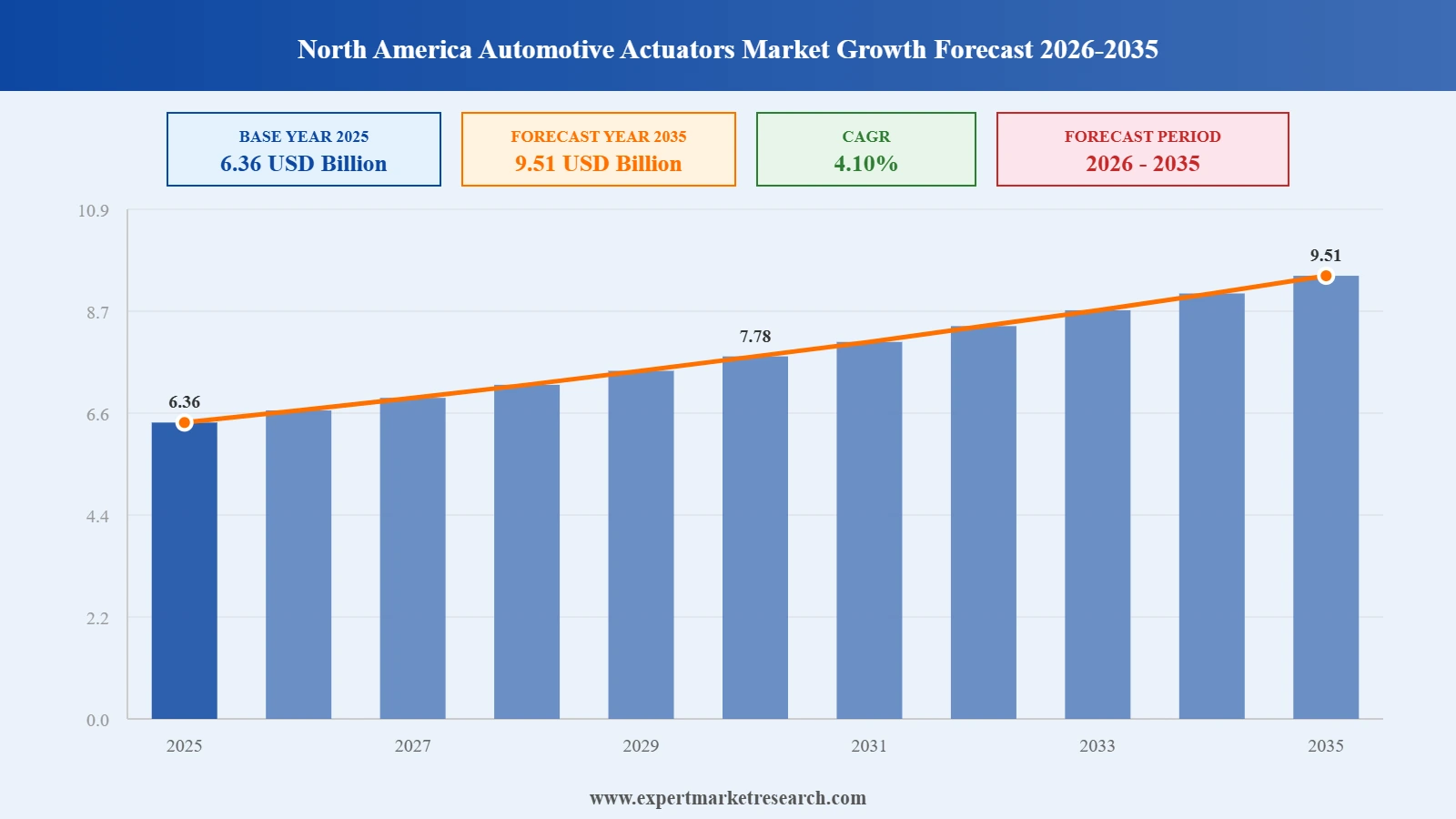
The North America automotive actuators market attained a value of USD 6.36 Billion in 2025 and is projected to expand at a CAGR of 4.10% through 2035. The market is further expected to achieve USD 9.51 Billion by 2035. Rising vehicle electrification, growing adoption of advanced driver assistance systems, and increasing demand for precise motion control across engine, body, and braking systems continue to support demand for electrical, hydraulic, and pneumatic actuators across the United States and Canada.
Rising vehicle electrification continues to anchor steady demand across the North America automotive actuators market, as automakers increasingly replace mechanical and hydraulic linkages with precision electric actuators across engine management, body control, and safety systems. Suppliers are also investing in portfolio consolidation and strategic divestitures, reflecting the industry's ongoing effort to sharpen focus on higher-growth electronics and software-defined vehicle technologies.
The North America automotive actuators market is witnessing further developments as established suppliers reported strong regional performance while continuing investment in growth-oriented product categories. Bosch announced its final 2025 results for the North America region, achieving approximately 18.8 billion US dollars in sales, a year-on-year increase of roughly four percent, while targeting global growth of two to five percent for 2026. This shift toward sustained regional investment is concentrated among suppliers with sufficient manufacturing and engineering scale, while smaller specialists continue to compete on niche application expertise and Tier-1 integration relationships.
In addition, established suppliers are increasingly divesting non-core actuator and control device businesses to sharpen focus on higher-growth electronics and vehicle intelligence platforms, reflecting the industry's recognition that portfolio simplification increasingly determines capital allocation efficiency beyond diversified, multi-segment operating structures alone. Such divestiture activity is reshaping competitive positioning across the wider north america automotive actuators market as suppliers with sharpened, focused portfolios increasingly differentiate themselves from competitors carrying broader, less-integrated product lines.
Read more about this report - Request a Free Sample
Bosch announced its final 2025 results for North America, achieving approximately 18.8 billion US dollars in sales, a year-on-year increase of roughly four percent, while targeting global growth of two to five percent and an EBIT margin from operations of four to six percent for 2026. Companies can sustain regional manufacturing investment and new product introductions to maintain sales momentum amid broader automotive production volatility.
In March 2026, United States regulators confirmed that automatic emergency braking will be required in all new cars and light trucks by September 2029, a mandate expected to increase demand for fast-response braking actuators well ahead of the compliance deadline. Companies can accelerate development of fast-response electro-hydraulic and electromechanical braking actuators to position ahead of upcoming safety mandate compliance timelines.
By February 2026, suppliers building steer-by-wire capability continued positioning themselves ahead of upcoming active safety mandates in North America, with systems limiting maximum steering wheel rotation to improve driver ergonomics in software-defined vehicles. Companies can build production-validated electromechanical actuator programmes ahead of active safety mandates to secure earlier regulatory approval pathways and automaker partnerships.
Stoneridge completed the sale of its Control Devices segment, which manufactured actuators, sensors, switches, and connectors, to an affiliate of Center Rock Capital Partners for a base purchase price of 59 million US dollars. Companies can divest non-core actuator and control device businesses to sharpen focus on higher-growth electronics and vehicle intelligence platforms while strengthening balance sheet capacity.
A narrower product portfolio appears to be winning out over diversification, with some suppliers concluding that a standalone control device business no longer earns its place alongside faster-growing electronics lines. In January 2026, one leading supplier completed the sale of its actuator and control device manufacturing segment to a private investment firm, using proceeds to strengthen its balance sheet and refocus its remaining portfolio across the north america automotive actuators market. Such divestitures reflect suppliers' recognition that portfolio simplification increasingly improves capital allocation efficiency compared with maintaining diversified, multi-segment operating structures.
Even as automotive production volumes swing unpredictably, at least one major supplier has managed to keep North American sales climbing through sustained local investment. In its final 2025 results reported in June 2026, one leading supplier confirmed continued year-on-year sales growth in North America alongside targeted global growth for 2026. Such sustained investment reflects suppliers' recognition that maintaining regional manufacturing presence and new product introductions increasingly determines competitive resilience amid fluctuating vehicle production volumes.
A 2029 compliance deadline may sound distant, but suppliers are already pouring resources into faster-response braking hardware well ahead of the requirement taking effect. The March 2026 regulatory confirmation that automatic emergency braking will be required in all new cars and light trucks by September 2029 has prompted suppliers to accelerate electro-hydraulic and electromechanical braking actuator programmes well ahead of the compliance deadline. Such early investment reflects suppliers' recognition that meeting stringent response-time requirements increasingly demands multi-year development cycles rather than late-stage compliance retrofitting.
Getting regulatory sign-off early has become its own competitive advantage, and suppliers with production-validated electromechanical steering programmes are using that head start to court automakers. By February 2026, suppliers building production-validated electromechanical steering actuator programmes secured earlier regulatory approval pathways by partnering with automakers pursuing software-defined vehicle platforms. Such accelerated development reflects suppliers' recognition that steer-by-wire capability increasingly represents a distinct competitive advantage in securing next-generation vehicle platform contracts.
This Expert Market Research Report titled "North America Automotive Actuators Market Report and Forecast 2026-2035" offers a detailed analysis of the market based on the following segments:
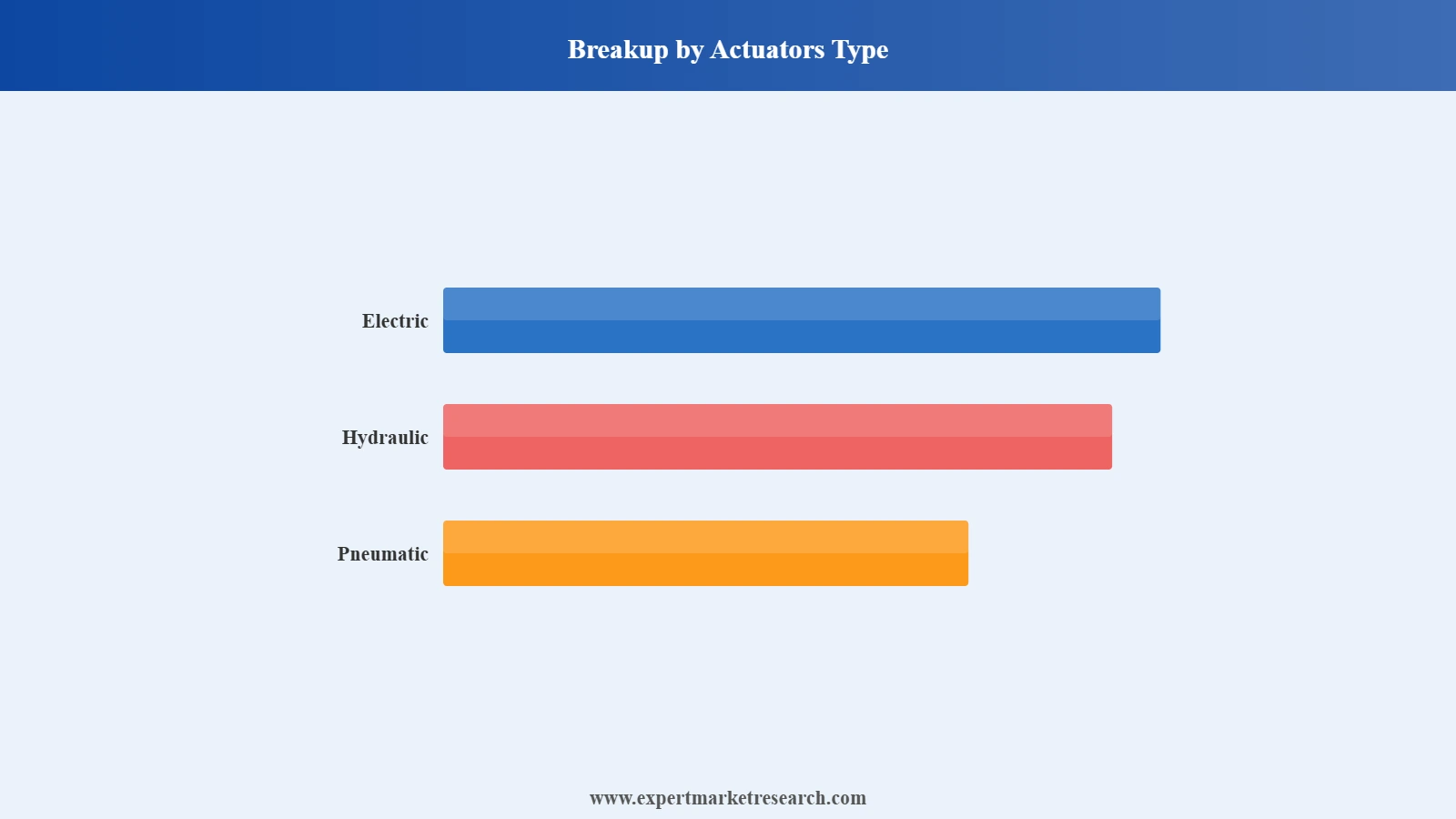
Market Breakup by Actuators Type
Key Insight: Electrical Actuators accounts for the largest share of the north america automotive actuators market, reflecting their precision, lower energy consumption, and ease of integration with electronic control units. Hydraulic Actuators continues to represent substantial demand for high-force braking and steering applications, illustrated by the March 2026 automatic emergency braking mandate driving fast-response braking actuator investment. Pneumatic Actuators serves specialised applications requiring rapid, high-force actuation in specific vehicle systems.
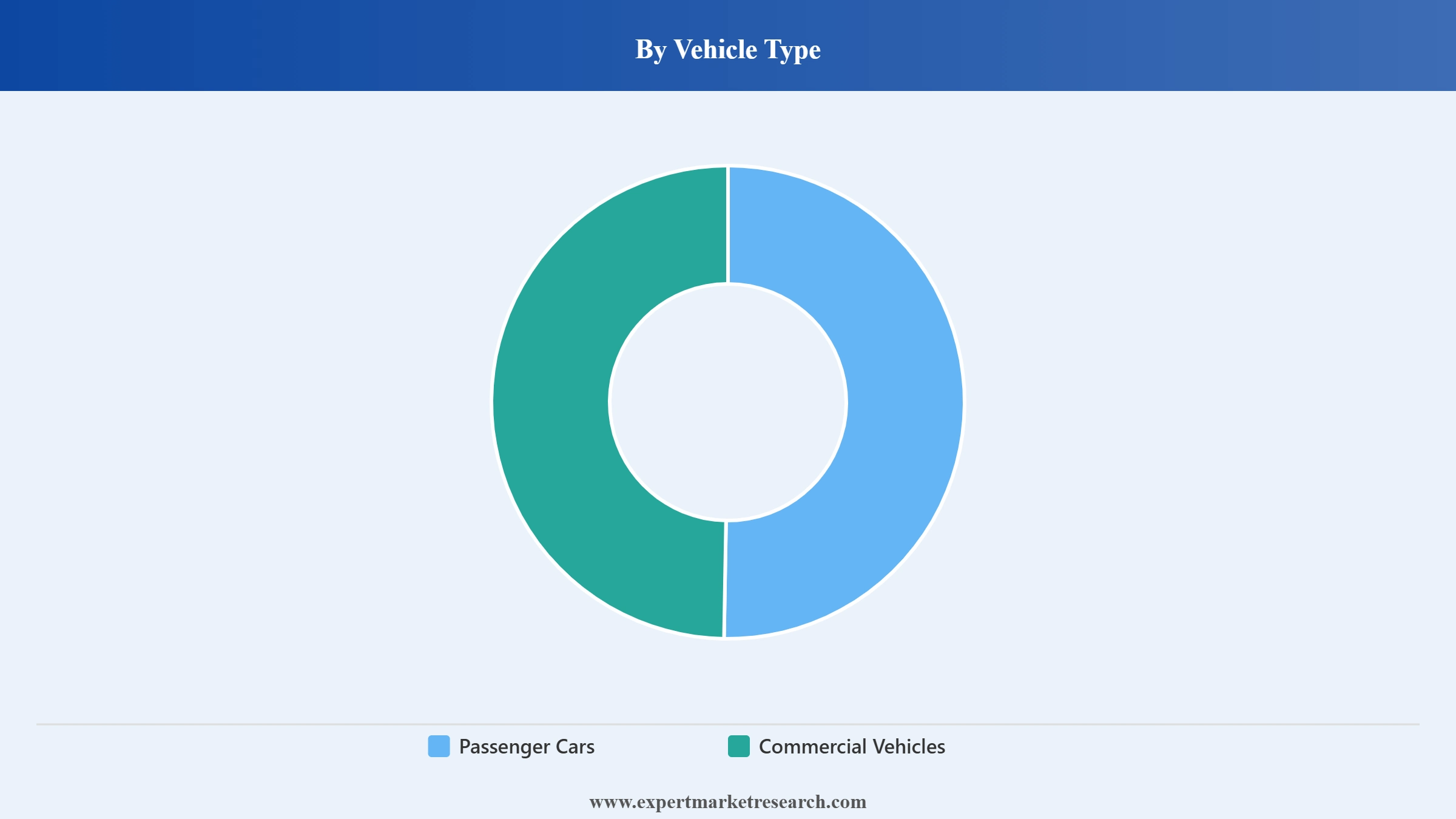
Market Breakup by Vehicle Type
Key Insight: Passenger Cars accounts for the largest share of the north america automotive actuators market, reflecting sustained passenger vehicle production and rising actuator counts per vehicle as electrification and ADAS adoption increase. Commercial Vehicles continues to represent substantial demand tied to braking, steering, and body control actuator requirements across freight and logistics fleets, with the March 2026 automatic emergency braking mandate applying to light trucks alongside passenger cars.
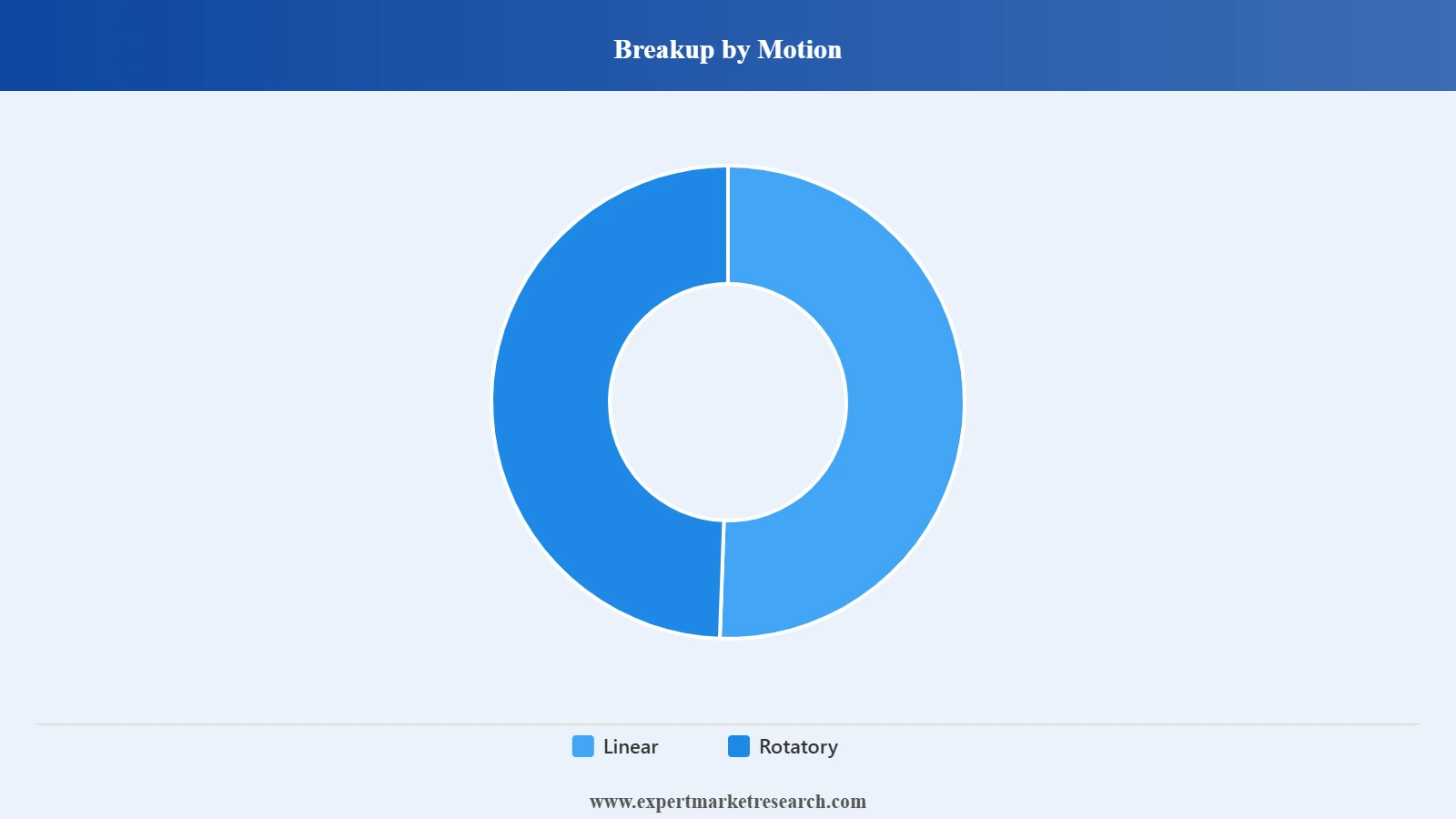
Market Breakup by Motion
Key Insight: Linear accounts for the largest share of the north america automotive actuators market, reflecting its widespread use in throttle control, power windows, and locking mechanisms requiring straight-line motion. Rotatory continues to represent substantial demand for steering and powertrain applications requiring rotational motion control.
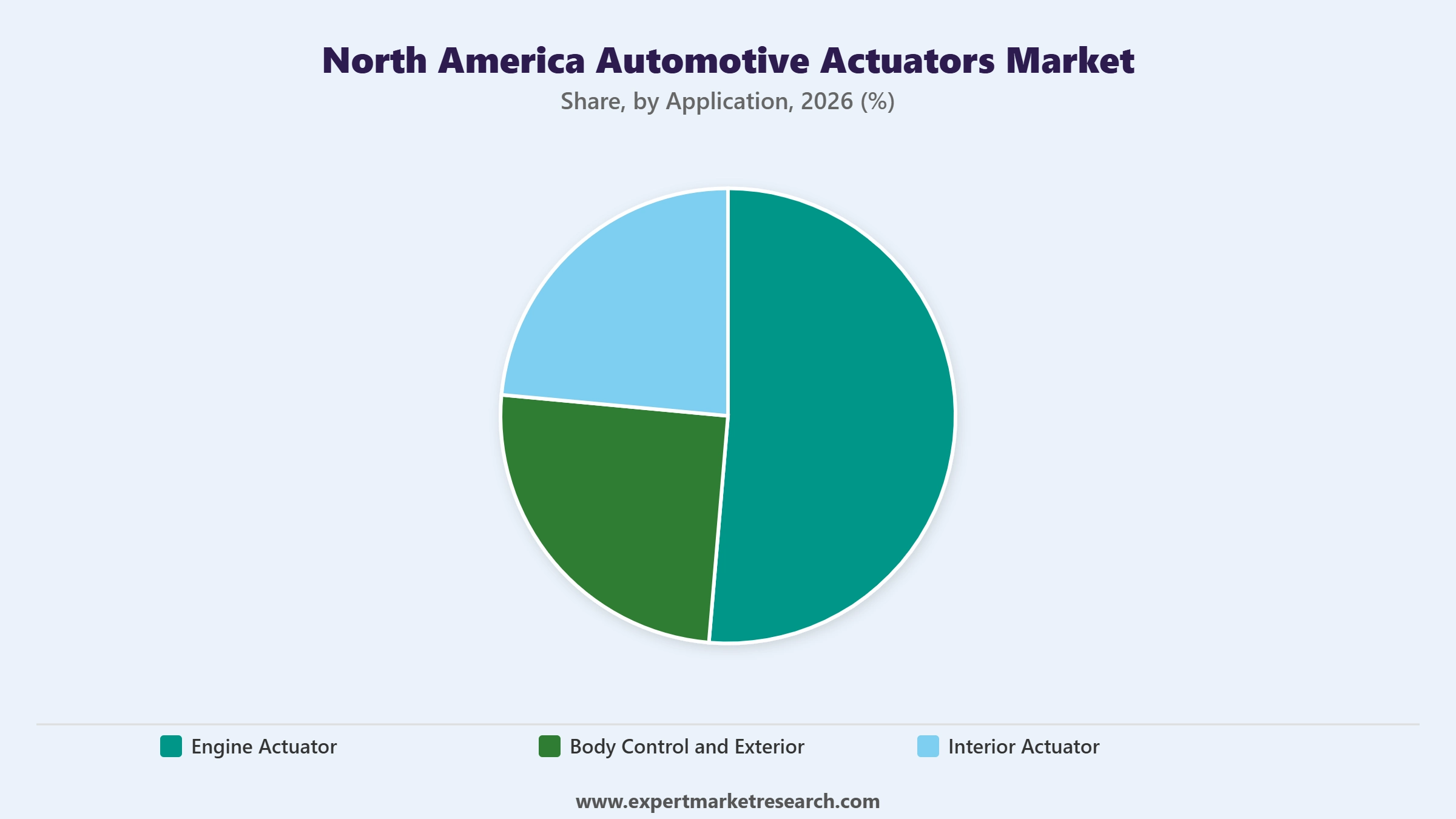
Market Breakup by Application
Key Insight: Engine Actuator accounts for the largest share of the north america automotive actuators market, reflecting sustained demand for precise engine management and emission control across passenger and commercial vehicles. Body Control and Exterior continues to represent growing demand tied to power windows, locks, and mirror positioning, Interior Actuator serves seat adjustment and HVAC damper control applications, while Others covers specialised actuator applications including mirror-fold and fuel-flap mechanisms.
Market Breakup by Sales Channel
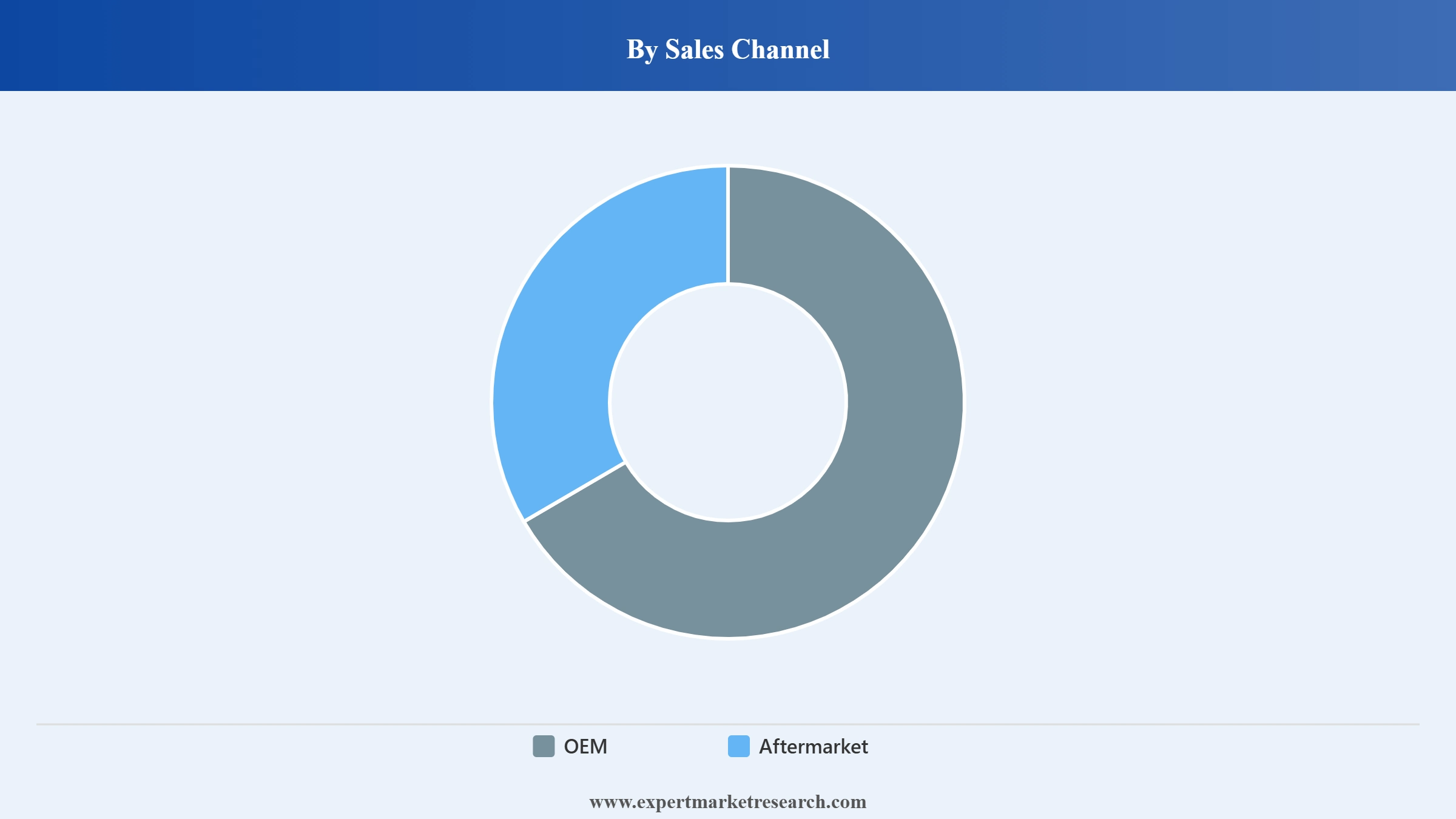
Key Insight: OEM accounts for the largest share of the north america automotive actuators market, reflecting sustained original equipment integration across new vehicle production programmes. Aftermarket continues to represent substantial demand tied to the large installed base of registered vehicles requiring replacement actuator components, a channel Stoneridge exited in January 2026 when it sold its Control Devices segment to sharpen its remaining focus on electronics.
Market Breakup by Country
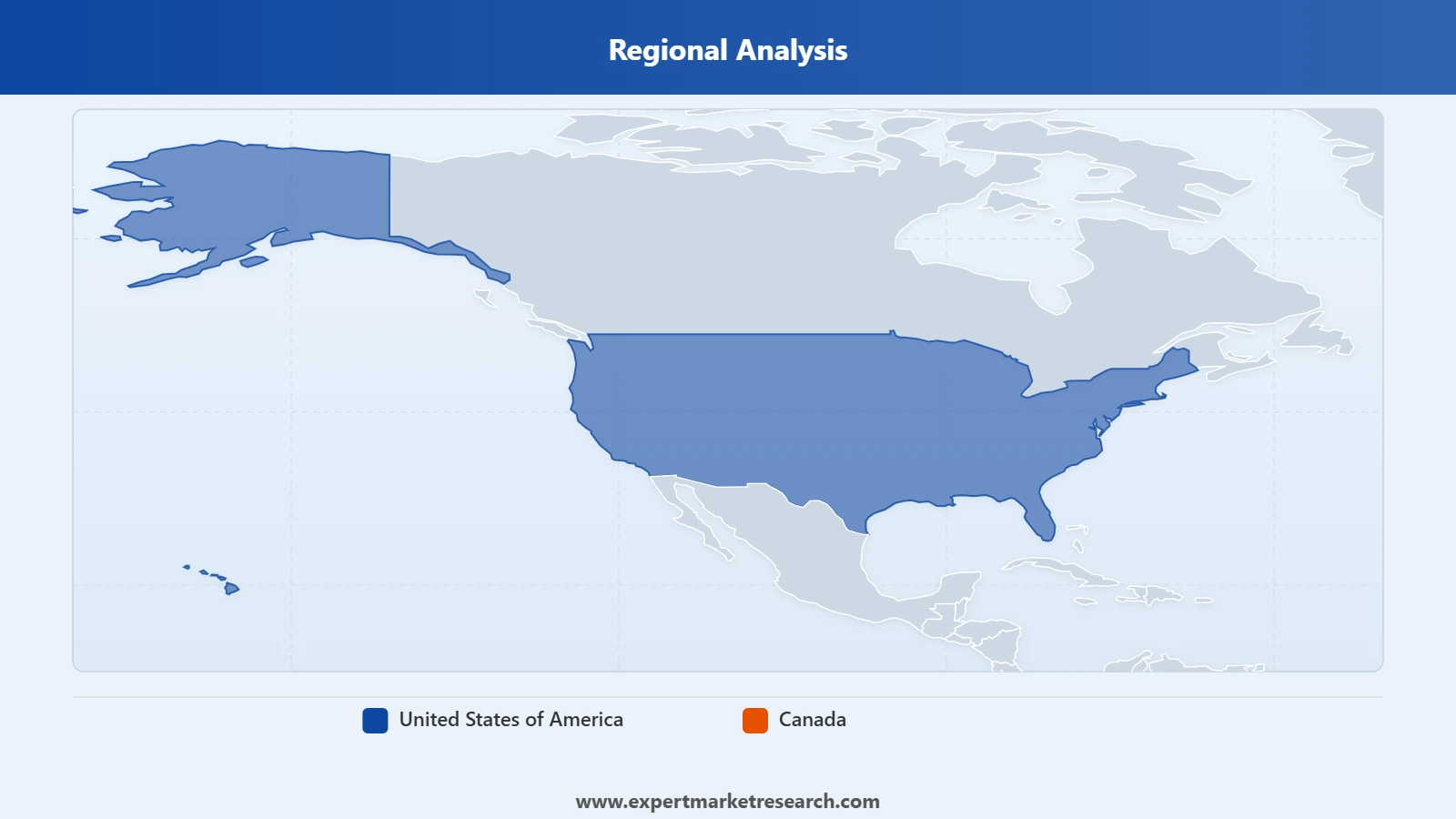
Key Insight: United States of America accounts for the largest share of the north america automotive actuators market, supported by its large passenger and commercial vehicle production base and concentrated Tier-1 supplier presence. Canada is emerging as a key growth market as automation and technological advancement continue to expand across its automotive manufacturing sector.
Read more about this report - Request a Free Sample
By actuators type, electrical actuators lead the market while hydraulic actuators grow fastest given upcoming safety mandates
Electrical Actuators continue to account for the largest share of the market, reflecting their precision, lower energy consumption, and ease of integration with electronic control units. Electrical actuators have become the default specification on new platforms, and once qualified for one vehicle line, automakers tend to carry the same sourcing forward to the next.
Read more about this report - Request a Free Sample
Hydraulic Actuators is growing at a fast pace across the north america automotive actuators market as upcoming safety mandates drive demand for high-force braking applications. Regulatory confirmation that automatic emergency braking will be required in all new cars and light trucks by September 2029 is accelerating fast-response braking actuator investment.
By vehicle type, passenger cars lead the market while passenger cars continue strengthening its position given rising actuator density
Passenger Cars continue to account for the largest share of the market, reflecting sustained passenger vehicle production and rising actuator counts per vehicle as electrification and ADAS adoption increase. Automakers show little appetite to shift away from passenger car actuator suppliers, whose relationships have compounded across successive platform generations.
Read more about this report - Request a Free Sample
Commercial Vehicles continues to represent substantial demand across the north america automotive actuators market tied to braking, steering, and body control actuator requirements across freight and logistics fleets, a category directly affected by the March 2026 mandate extending automatic emergency braking to light trucks.
By application, engine actuator leads the market while body control and exterior grows fastest given rising vehicle feature content
Engine Actuator continues to account for the largest share of the market, reflecting sustained demand for precise engine management and emission control across passenger and commercial vehicles. Engine actuator suppliers who have already cleared one engine platform's validation are the safer bet for the next, since requalifying a new supplier adds cost without a guaranteed payoff.
Read more about this report - Request a Free Sample
Body Control and Exterior is growing at a fast pace across the north america automotive actuators market as rising vehicle feature content increases demand for power windows, locks, and mirror positioning actuators. In January 2026, Stoneridge's divestiture of its Control Devices segment reshaped supplier positioning within this application category.
By motion, linear leads the market while rotatory grows fastest given expanding steering system demand
Linear continues to account for the largest share of the market, reflecting its widespread use in throttle control, power windows, and locking mechanisms requiring straight-line motion. Linear actuators do their job reliably enough that automakers have little incentive to redesign around a rotary alternative for equivalent applications.
Read more about this report - Request a Free Sample
Rotatory is growing at a fast pace across the north america automotive actuators market as steering and powertrain applications increasingly require precise rotational motion control. In February 2026, suppliers building steer-by-wire capability continued positioning ahead of upcoming active safety mandates requiring precise rotatory actuation.
By sales channel, OEM leads the market while OEM continues strengthening its position given sustained new vehicle production
OEM continues to account for the largest share of the market, reflecting sustained original equipment integration across new vehicle production programmes. Tier-1 relationships built over one platform generation tend to carry into the next, since requalifying an entire supply chain rarely pays for itself.
Read more about this report - Request a Free Sample
Aftermarket continues to represent substantial demand across the north america automotive actuators market tied to the large installed base of registered vehicles requiring replacement actuator components, a channel Stoneridge partially exited in January 2026 to sharpen its focus on electronics.
Read more about this report - Request a Free Sample
United States commands the largest share of the market through its concentrated vehicle production base
United States holds the largest share of the North America automotive actuators market, supported by its large passenger and commercial vehicle production base and concentrated Tier-1 supplier presence across Michigan, Ohio, and other manufacturing hubs. OEM and aftermarket orders alike have kept suppliers here adding engineering and manufacturing capacity rather than letting order backlogs build.
Canada is emerging as a key growth market as automation and technological advancement continue to expand across its automotive manufacturing sector. The March 2026 automatic emergency braking mandate and February 2026 steer-by-wire advances underscored sustained regional demand extending well beyond United States' traditional market concentration across the wider north america automotive actuators market.
The industry is moderately consolidated, with north america automotive actuators market companies ranging from diversified global automotive technology groups spanning multiple vehicle systems to specialist actuator manufacturers competing across actuators type, application, and sales channel segments. Established players operate across the full actuator value chain, from precision motor and valve engineering through complete component integration and distribution for OEM and aftermarket customers.
Competitive dynamics among north america automotive actuators players are increasingly shaped by the pace of portfolio simplification through divestitures, the scale of steer-by-wire and electromechanical actuator development, and the strength of Tier-1 integration relationships with major automakers. Suppliers are investing in electrification, safety mandate-driven braking technology, and software-defined vehicle compatibility to differentiate their offering and secure long-term OEM platform contracts.
Founded in 1886 and headquartered in Gerlingen, Germany, Bosch manufactures automotive actuators across its Mobility Solutions segment, serving vehicle applications from two-wheelers to commercial vehicles including general-purpose, comfort, powertrain, window lift, and sunroof drive actuators. In June 2026, the company reported final 2025 North America results of approximately 18.8 billion US dollars in sales. Bosch's extensive global engineering scale and diversified mobility technology portfolio differentiate its offering from specialist actuator-only manufacturers.
Founded in 1949 and headquartered in Kariya, Japan, Denso manufactures electric actuators, powertrain components, and thermal management systems for passenger and commercial vehicles worldwide. The company's actuator technologies support HVAC control, throttle management, and electrified powertrain applications. Denso's strong thermal management and electrification expertise differentiate its offering from competitors with narrower powertrain technology portfolios.
Founded in 1871 and headquartered in Hanover, Germany, Continental manufactures engine actuators, central locking system actuators, air flap actuators, and digital linear actuators under its Automotive segment spanning architecture and networking, autonomous mobility, and safety and motion business areas. The company develops actuators integral to braking and advanced safety technologies. Continental's combined tyre and automotive technology portfolio differentiates its offering from specialist actuator-only competitors.
Founded in 1965 and headquartered in Novi, Michigan, United States, Stoneridge previously manufactured actuators, sensors, switches, and connectors through its Control Devices segment. In January 2026, the company completed the sale of its Control Devices segment to an affiliate of Center Rock Capital Partners, refocusing its remaining portfolio on vision and safety, connectivity, and vehicle intelligence and electronic controls for commercial vehicle and off-highway markets. Stoneridge's post-divestiture focus on electronics and vehicle intelligence differentiates its remaining offering from diversified suppliers maintaining broader actuator manufacturing portfolios.
Other key players in the North America automotive actuators market include Hitachi Ltd., Mitsubishi Electric Corp., Johnson Electric Holdings Limited, Emerson Electric Co., HELLA GmbH & Co. KGaA, and SMC Corp., among others.
*Please note that this is only a partial list; the complete list of key players is available in the full report. Additionally, the list of key players can be customized to better suit your needs.*
Unlock the latest insights with our North America automotive actuators market trends 2026 report. Discover regional growth patterns, actuators type and application trends, and key industry players. Stay ahead of competition with trusted data and expert analysis. Download your free sample report today and drive informed decisions in the market.


Upto 15% Off
USD
$2499 $2249
$3999 $3599
$4999 $4249
$5999 $5099


*While we strive to always give you current and accurate information, the numbers depicted on the website are indicative and may differ from the actual numbers in the main report. At Expert Market Research, we aim to bring you the latest insights and trends in the market. Using our analyses and forecasts, stakeholders can understand the market dynamics, navigate challenges, and capitalize on opportunities to make data-driven strategic decisions.*
In 2025, the market reached an approximate value of USD 6.36 Billion.
The market is projected to grow at a CAGR of 4.10% between 2026 and 2035.
The market is estimated to witness a healthy growth in the forecast period of 2026-2035 to reach USD 9.51 Billion by 2035.
Divesting non-core actuator and control device businesses to sharpen focus on higher-growth electronics platforms, sustaining regional manufacturing investment to maintain sales momentum, and accelerating steer-by-wire and electromechanical braking actuator development ahead of safety mandate deadlines.
Key trends aiding the market are increasing demand for lightweight and compact actuator designs, the gradual shift to electric actuators, and the increasing use of artificial intelligence (AI) and machine learning (ML).
Countries considered in the market are United States of America and Canada.
Based on actuators type, the market is segmented into electric, hydraulic, and pneumatic actuators.
Electric actuators are gaining dominance due to their crucial role in electric powertrain systems, offering precise control and contributing to the growing adoption of electric vehicles.
Stringent emission standards drive the adoption of advanced actuators, facilitating efficient engine management to meet environmental regulations.
The key players in the market include Robert Bosch GmbH, Denso Corp., Continental AG, Hitachi Ltd., Mitsubishi Electric Corp., Johnson Electric Holdings Limited, Emerson Electric Co., HELLA GmbH & Co. KGaA, SMC Corp., and Stoneridge Inc., among others.
Suppliers face intensifying software and mechatronics talent shortages extending calibration and safety validation cycles, rising costs from outsourced engineering amid talent gaps, and the challenge of aligning actuator development timelines with evolving vehicle safety mandate deadlines.
Explore our key highlights of the report and gain a concise overview of key findings, trends, and actionable insights that will empower your strategic decisions.
| REPORT FEATURES | DETAILS |
| Base Year | 2025 |
| Historical Period | 2019-2025 |
| Forecast Period | 2026-2035 |
| Scope of the Report |
Historical and Forecast Trends, Industry Drivers and Constraints, Historical and Forecast Market Analysis by Segment:
|
| Breakup by Actuators Type |
|
| Breakup by Vehicle Type |
|
| Breakup by Motion |
|
| Breakup by Application |
|
| Breakup by Sales Channel |
|
| Breakup by Country |
|
| Market Dynamics |
|
| Competitive Landscape |
|
| Companies Covered |
|
Datasheet
One User
USD 2,499
USD 2,249
tax inclusive*
Single User License
One User
USD 3,999
USD 3,599
tax inclusive*
Five User License
Five User
USD 4,999
USD 4,249
tax inclusive*
Corporate License
Unlimited Users
USD 5,999
USD 5,099
tax inclusive*
*Please note that the prices mentioned below are starting prices for each bundle type. Kindly contact our team for further details.*
Flash Bundle
Small Business Bundle
Growth Bundle
Enterprise Bundle
*Please note that the prices mentioned below are starting prices for each bundle type. Kindly contact our team for further details.*
Flash Bundle
Number of Reports: 3
20%
tax inclusive*
Small Business Bundle
Number of Reports: 5
25%
tax inclusive*
Growth Bundle
Number of Reports: 8
30%
tax inclusive*
Enterprise Bundle
Number of Reports: 10
35%
tax inclusive*
How To Order

Select License Type
Choose the right license for your needs and access rights.

Click on ‘Buy Now’
Add the report to your cart with one click and proceed to register.

Select Mode of Payment
Choose a payment option for a secure checkout. You will be redirected accordingly.
Strategic Solutions for Informed Decision-Making
Gain insights to stay ahead and seize opportunities.

Get insights & trends for a competitive edge.

Track prices with detailed trend reports.

Analyse trade data for supply chain insights.

Leverage cost reports for smart savings

Enhance supply chain with partnerships.

Connect For More Information
Our expert team of analysts will offer full support and resolve any queries regarding the report, before and after the purchase.
Our expert team of analysts will offer full support and resolve any queries regarding the report, before and after the purchase.
We employ meticulous research methods, blending advanced analytics and expert insights to deliver accurate, actionable industry intelligence, staying ahead of competitors.
Our skilled analysts offer unparalleled competitive advantage with detailed insights on current and emerging markets, ensuring your strategic edge.
We offer an in-depth yet simplified presentation of industry insights and analysis to meet your specific requirements effectively.




