

Consumer Insights
Uncover trends and behaviors shaping consumer choices today
Procurement Insights
Optimize your sourcing strategy with key market data
Industry Stats
Stay ahead with the latest trends and market analysis.
The North America seeds market attained a value of USD 20.41 Billion in 2025 and is projected to expand at a CAGR of 4.70% through 2035. The market is further expected to achieve USD 32.31 Billion by 2035, supported by sustained genetically modified seed adoption, expanding row crop and oilseed demand, and continued investment in breeding technology and herbicide-tolerance traits. Growth spans conventional and genetically modified seed types across row crop and vegetable categories, with manufacturers across the United States and Canada competing on trait innovation, breeding-cycle speed, and integrated seed-and-crop-protection portfolios.
Sustained trait innovation continues to anchor demand across the North America seeds market, as major agricultural input suppliers advance combined seed and crop protection pipelines. Bayer AG disclosed in September 2026 that its Preceon Smart Corn System, a digitally enabled short-stature corn platform, is now commercially available across the United States, with its Vyconic soybean, the industry's first five-herbicide-tolerance soybean, planned for U.S. and Canadian launch in 2027. This progression from single-trait launches toward integrated digital-genetics platforms shows suppliers bundling agronomy software with breeding technology to differentiate offerings and defend acreage share against smaller regional seed companies.
The market is witnessing further developments as diversified agricultural input suppliers report strong seed-segment growth. Corteva Inc. reported in May 2026 that its first-quarter net sales reached USD 4.90 billion, an 11% increase year-over-year, with its Seed business generating USD 3.02 billion, up 12%, and North America contributing USD 2.44 billion. This sustained seed-segment outperformance underscores growers' continued willingness to pay a premium for advanced trait technology. Such sustained top-line momentum reflects the broader industry pattern of input suppliers prioritizing premium trait technology and value-based pricing over volume-driven strategies to protect profitability amid fluctuating commodity prices.
In addition, established crop protection majors are restructuring to sharpen focus on agricultural solutions. BASF SE reported in July 2026 that its Agricultural Solutions division achieved volume growth across all regions during the first half of the year, while advancing preparations to separate the division into an independent, IPO-ready entity by mid-2027, targeting a standalone EBITDA margin of approximately 29%. This restructuring mirrors a wider trend among diversified agricultural input suppliers toward standalone crop-science units, allowing tailored capital allocation, sharper cost discipline, and pricing strategies suited to distinct competitive dynamics.
Compound Annual Growth Rate
4.7%
Value in USD Billion
2026-2035
Read more about this report - REQUEST FREE SAMPLE COPY IN PDF
Bayer confirmed its Preceon Smart Corn System, a digitally enabled short-stature corn platform, is commercially available across the United States, Mexico, Italy, and Spain, while its Vyconic soybean, offering five-herbicide tolerance, is scheduled for U.S. and Canadian launch in 2027, supported by the company's AI-powered CropKey breeding platform. Companies can leverage digitally enabled breeding platforms to accelerate trait-stacked product launches across major row crop categories. This platform-level approach reflects the broader industry shift toward bundling digital agronomy tools with genetics, letting suppliers differentiate beyond single-trait products and defend pricing power against smaller regional breeders.
BASF reported in July 2026 that first-half volume grew across all regions in its Agricultural Solutions division, led by fungicides, herbicides, and seed treatment offerings, while maintaining an EBITDA margin of approximately 29% despite currency headwinds and generic competition. The company is targeting IPO readiness for the standalone division by mid-2027. Companies can leverage standalone agricultural solutions structures to sharpen strategic focus and unlock dedicated capital for seed and trait innovation. This restructuring reflects a wider pattern among diversified agricultural input suppliers sharpening capital allocation and pricing discipline for crop-science operations separately from broader industrial chemical portfolios facing distinct margin pressures.
Corteva's first-quarter results, reported in May 2026, showed Seed business net sales of USD 3.02 billion, up 12% year-over-year, driven by favorable product mix and value-based pricing strategy, while overall company net sales reached USD 4.90 billion, an 11% increase, with North America contributing USD 2.44 billion. Companies can leverage value-based pricing strategies to capture premium seed technology demand even amid broader input-cost pressure. This pricing-led performance underscores how seed suppliers increasingly prioritize trait differentiation over acreage volume to sustain margins, shaping competitive positioning across the broader North America row crop seed landscape.
Syngenta opened a USD 10 million vegetable seed technology center in El Ejido, Spain, integrating breeding, trait development, and biosafety capabilities under one roof to accelerate tomato, pepper, and cucumber seed development and combat emerging crop pathogens. Companies can leverage integrated field-to-lab breeding facilities to shorten development timelines for climate- and pathogen-resilient vegetable seed varieties. This integrated facility model reflects a broader industry trend toward consolidating research functions to respond faster to pathogen pressure, helping breeding houses shorten development cycles amid rising compliance costs.
Corteva disclosed in September 2026 that it had advanced a hybrid wheat breeding breakthrough aimed at overcoming a decades-old commercial challenge in wheat seed development, building on the company's broader seed technology pipeline momentum following its 12% year-over-year Seed segment sales growth reported earlier in the year. Companies can leverage hybrid breeding breakthroughs to unlock premium pricing in historically commoditised crop seed categories. This long-horizon breeding investment illustrates how seed developers increasingly target historically underserved crop categories, seeking premium pricing where genetic improvement has traditionally lagged behind row crops such as corn.
Bayer's September 2026 pipeline update outlined a strategy to bring at least 10 blockbuster products, each with minimum peak sales of EUR 500 million, to market over the coming decade, targeting an EBITDA margin of 20-25% and more than EUR 3.5 billion in incremental sales. Companies can leverage a concentrated blockbuster product strategy to prioritise research investment toward the highest-return trait and seed technology platforms. This blockbuster-focused approach reflects a broader industry shift toward concentrated research spending on fewer, higher-value trait platforms, helping major suppliers defend margins against generic competition in mature categories.
BASF's Agricultural Solutions division reported in July 2026 that seed treatment offerings contributed to first-half volume gains across all regions, even as weak farmer incomes, generic competition, and currency headwinds weighed on pricing, underscoring continued grower demand for seed protection technology despite broader commodity-market softness. Companies can leverage seed treatment portfolio strength to partially offset pricing pressure in core crop protection categories. This resilience amid pricing headwinds illustrates how seed treatment has become an important margin buffer for input suppliers navigating soft farmer income and intensifying generic competition across crop protection categories.
Syngenta's new Spain-based technology center, opened in May 2026, incorporates dedicated biosafety infrastructure allowing researchers to study emerging plant pathogens under controlled, quarantined conditions, addressing what the company describes as an unprecedented rate of new pathogen emergence affecting growers worldwide. Companies can leverage dedicated biosafety research infrastructure to respond faster to emerging crop disease threats. This proactive research investment reflects the industry's shift toward anticipating disease pressure rather than responding after outbreaks occur in the field. This emphasis on containment infrastructure reflects a broader industry shift toward proactive disease surveillance, helping breeding houses stay ahead of shifting pathogen pressure rather than reacting after outbreaks disrupt growers.
This Expert Market Research's Report titled "North America Seeds Market Report and Forecast 2026-2035" offers a detailed analysis of the market based on the following segments:
Market Breakup by Seed Type
Key Insight: Genetically Modified Seeds accounts for the largest share of the North America seeds market, with more than half of harvested U.S. cropland now planted with at least one genetically modified seed trait. Conventional Seeds continues to serve growers prioritising non-GM certification requirements and specific regional agronomic needs, an area reinforced by Bayer AG's September 2026 confirmation that its Vyconic five-herbicide-tolerance soybean is scheduled for U.S. and Canadian launch in 2027. This trait-based split mirrors the broader pattern across row crop and treatment categories, where large-scale adoption of genetically enhanced technology continues to coexist with durable, specialised demand for alternatives.
Market Breakup by Crop Type
Key Insight: Row Crops accounts for the largest share of the market, led by Oil Seeds, which represents approximately 90% of U.S. oilseed output through soybean production, alongside substantial Grains and Cereals and Forage Crops demand, while Fiber Crops and Pulses serve smaller specialised acreage. Vegetables is expanding on the strength of dedicated breeding investment, illustrated by Syngenta AG's May 2026 opening of a USD 10 million technology center in Spain focused on Solanaceae varieties including tomatoes and peppers. Brassicas, Cucurbits, Roots and Bulbs, and Unclassified Vegetables each continue to serve distinct fresh-produce and processing-market demand. This crop-type distribution reflects how breeding investment concentrates around high-acreage commodity categories while specialty and fresh-produce segments pursue targeted, technology-led differentiation to capture premium pricing in narrower niches.
Market Breakup by Treatment
Key Insight: Treated Seeds accounts for the largest share of the market, supported by grower demand for integrated pest and disease protection at planting, reinforced by BASF SE's July 2026 disclosure that seed treatment offerings contributed to first-half volume gains across all regions despite broader pricing pressure. Untreated Seeds continues to serve organic and specialty-certified growing programs with more limited input requirements. This treatment-based split reflects a broader pattern across the seed industry, balancing investment in conventional pest and disease protection chemistry against growing demand for reduced-input, certification-driven cultivation practices.
Market Breakup by Trait
Key Insight: Herbicide Tolerance accounts for the largest share of the market, reinforced by Bayer AG's Vyconic soybean, the industry's first five-herbicide-tolerance soybean product announced in September 2026 and scheduled for U.S. and Canadian launch in 2027. Insect Resistance continues to represent substantial demand tied to row crop pest management programs. Others reflects emerging drought-tolerance and disease-resistance trait combinations under continued development across the industry. This trait distribution reflects the broader industry emphasis on stacking multiple resistance mechanisms within single seed products, helping growers manage evolving pest pressure while suppliers differentiate from generic alternatives.
Market Breakup by Country
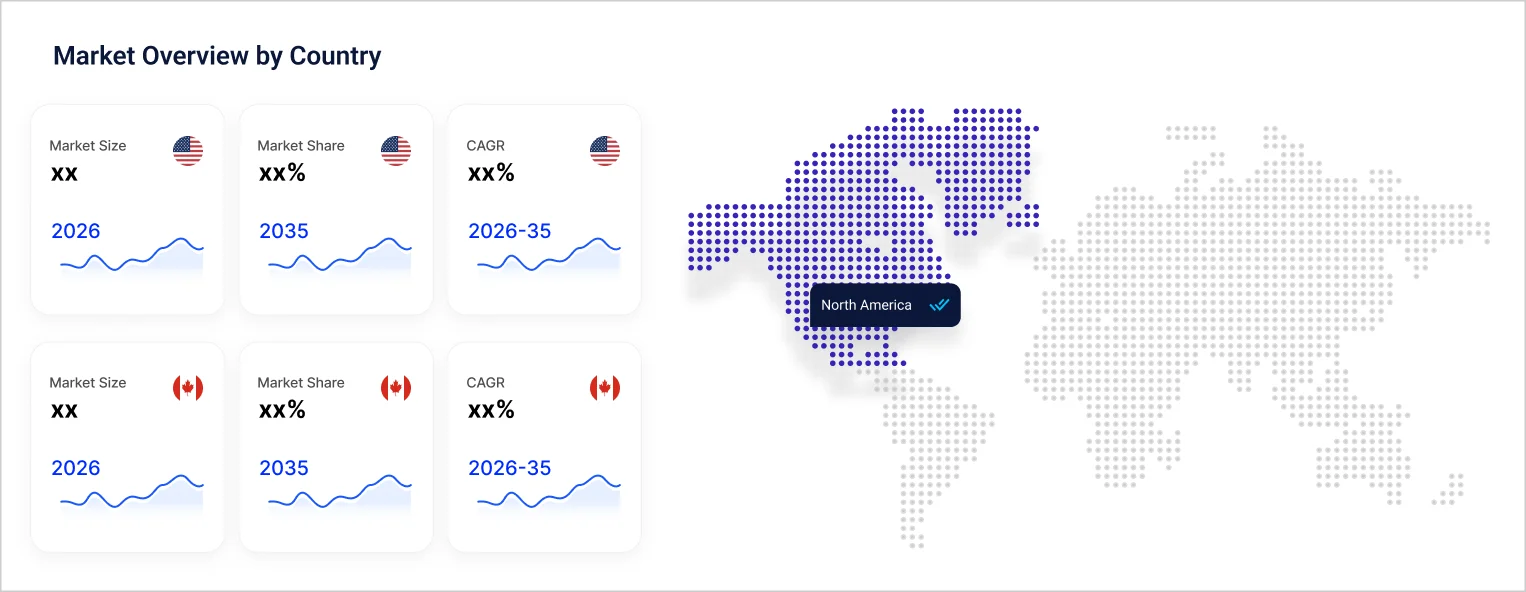
Key Insight: United States accounts for the largest share of the North America seeds market, underpinned by its extensive row crop acreage and deep genetically modified seed trait penetration. Canada is the fastest-growing country market at an estimated CAGR of 5.40%, supported by expanding canola and cereal seed adoption, illustrated by Corteva Inc.'s September 2026 hybrid wheat breeding breakthrough aimed at unlocking premium pricing across North American wheat-growing regions. This country-level split reflects how row crop scale and breeding infrastructure concentrate in the United States, while Canada's smaller but faster-growing footprint increasingly draws targeted regional expansion investment.
Read more about this report - REQUEST FREE SAMPLE COPY IN PDF
By type, genetically modified seeds leads the market while conventional seeds grows fastest given rising non-GM certification demand
Genetically Modified Seeds continues to account for the largest share of the market, with more than half of harvested U.S. cropland now planted with at least one genetically modified trait. Bayer AG's September 2026 pipeline update, targeting 10 blockbuster product launches over the coming decade, underscores sustained innovation investment supporting this segment's continued dominance. Continued adoption across corn, soybean, and cotton acreage reinforces the segment's position as the default choice for large-scale commercial growers. This scale advantage reinforces genetically modified seed's position as the default purchasing choice for large commercial operations, where trait-stacked products deliver yield and input-efficiency benefits smaller offerings struggle to match.
Conventional Seeds is growing at a fast pace across the market, driven by rising demand from growers targeting non-GM certification and premium export markets. Syngenta AG's May 2026 vegetable seed technology center investment reflects continued breeding innovation extending beyond genetically modified row crop categories into conventional specialty seed development. Specialty grain buyers and food processors increasingly pay a premium for verified non-GM supply chains, reinforcing this segment's above-market growth. This growing willingness among buyers to pay above-market prices for verified non-GM supply chains continues to draw breeding investment toward traits valued specifically by premium and export-oriented end markets.
By treatment, treated seeds leads the market while untreated seeds grows fastest given rising organic and specialty-certified demand
Treated Seeds continues to account for the largest share of the market, supported by grower demand for integrated pest and disease protection at planting. BASF SE's July 2026 disclosure of resilient seed treatment volume growth across all regions reinforces this segment's continued scale advantage. Rising input costs continue to push growers toward treated seed as a cost-effective way to protect early-season yield potential. This scale advantage reflects how integrated pest and disease protection has become a standard purchasing expectation among large-scale growers, reinforcing treated seed's position as the default choice across major categories.
Untreated Seeds is growing at a fast pace across the market, driven by expanding organic certification programs and specialty export demand. Corteva Inc.'s May 2026 results showed Seed business sales reaching USD 3.02 billion, up 12% year-over-year, reflecting broad-based premium seed technology demand spanning both treated and untreated categories. Expanding retailer and export-buyer demand for verified non-GM supply chains continues to widen the addressable market for untreated seed producers. This expanding certification-driven demand continues to draw specialty breeding investment toward reduced-input cultivation approaches favored by organic growers and buyers seeking verified, chemical-free supply chain credentials.
By crop type, row crops leads the market while vegetables grows fastest given dedicated breeding investment
Row Crops maintains the largest share of the market, anchored by Oil Seeds — approximately 90% of which is driven by U.S. soybean output — along with substantial Grains and Cereals and Forage Crops volumes. This concentration around high-acreage commodity crops reflects how breeding investment continues to prioritize scale-driven categories serving the region's extensive row-crop acreage across the Midwest and Great Plains. Established seed companies continue to maintain deep genetics and commercial infrastructure specifically built around these high-volume crop categories.
Vegetables continues to gain ground through dedicated breeding investment, as seen in Syngenta AG's May 2026 opening of a USD 10 million Solanaceae-focused technology center in Spain covering tomatoes and peppers. Even among smaller specialty segments, vegetable seed producers pursue targeted genetic differentiation to capture premium pricing from growers serving fresh-market and processing demand. This targeted investment approach reflects vegetable seeds' distinct commercial model, prioritising crop-specific breeding depth over the broad-acreage scale that defines row crop competition.
By trait, herbicide tolerance leads the market while insect resistance continues to represent substantial demand
Herbicide Tolerance continues to account for the largest share of the market, reinforced by Bayer AG's Vyconic soybean, the industry's first five-herbicide-tolerance soybean product announced in September 2026 and scheduled for U.S. and Canadian launch in 2027. Weed-resistance management programs across major row-crop states continue to reinforce grower reliance on herbicide-tolerant trait stacks. This continued reliance on stacked herbicide-tolerance technology reflects how growers increasingly prioritize integrated weed-management solutions, reinforcing demand for advanced trait platforms over single-mechanism alternatives across production regions.
Insect Resistance continues to represent substantial demand tied to row crop pest management programs across the region. Established insect-resistant trait technology remains deeply embedded in corn and soybean production systems, supported by decades of grower familiarity and extensive existing distribution infrastructure across the Midwest and Great Plains. Seed companies continue to pair insect-resistant traits with herbicide-tolerance stacks rather than positioning them as standalone offerings, reflecting how most growers now expect multi-trait protection as a baseline product specification.
Regional dynamics across the North America seeds market are shaped by cropping patterns, breeding technology investment, and the pace of trait adoption across the region's countries.
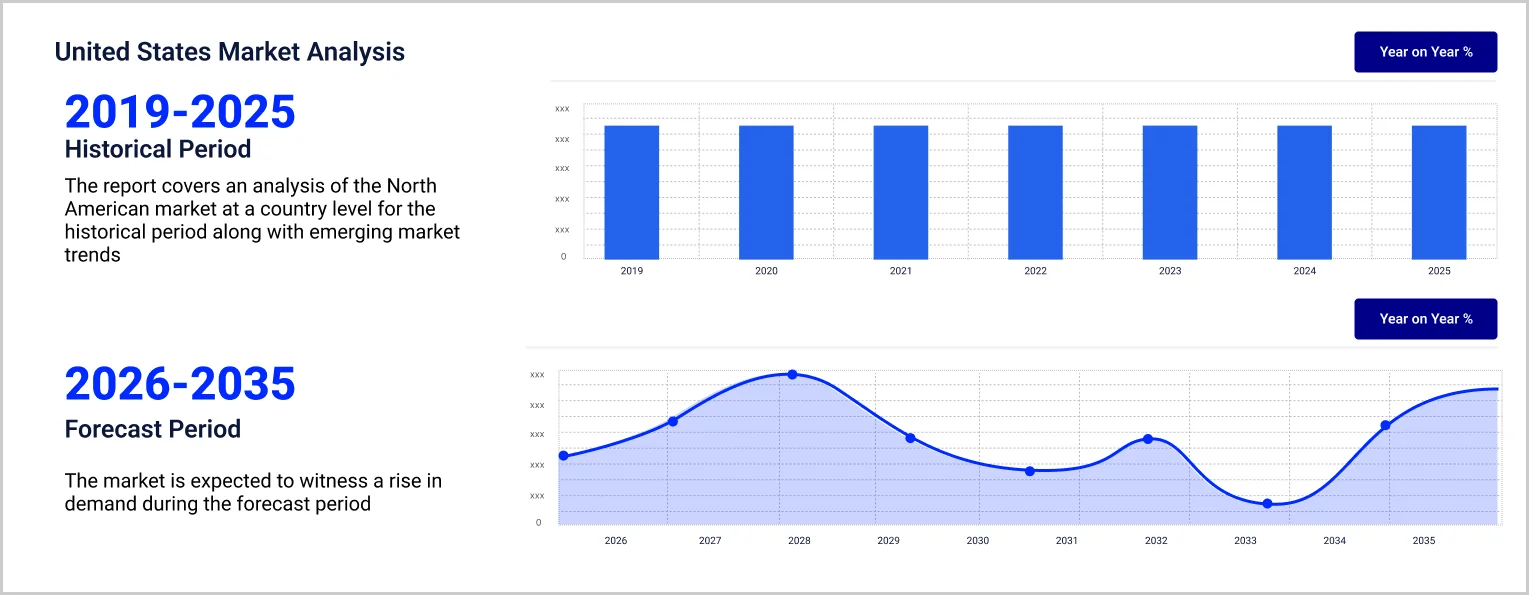
United States commands the largest share of the market. This is underpinned by its extensive row crop acreage across the Midwest and Great Plains and deep genetically modified seed trait penetration, with major agricultural input suppliers maintaining concentrated breeding and commercial infrastructure to serve this dominant demand base.
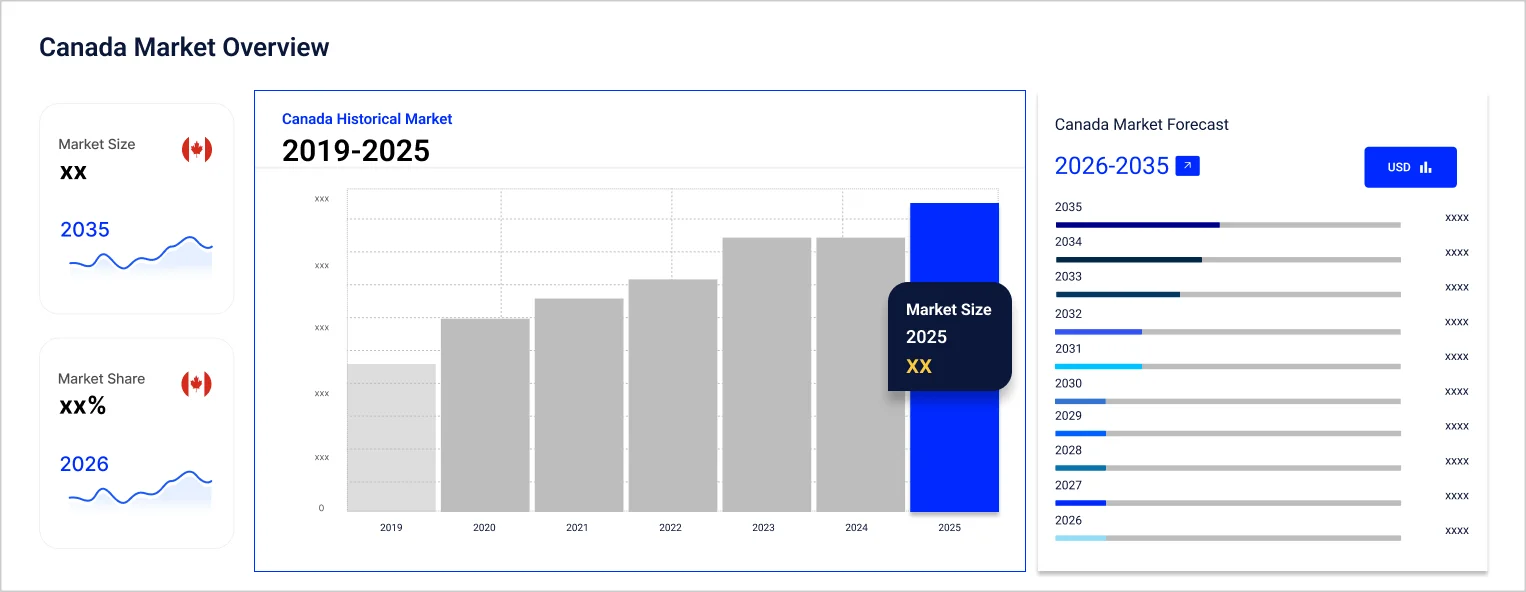
Canada is emerging as the fastest-growing country market at an estimated CAGR of 5.40%, illustrated by Corteva Inc.'s September 2026 hybrid wheat breeding breakthrough targeting premium pricing across North American wheat-growing regions, alongside expanding canola seed adoption supported by continued trait innovation from major agricultural input suppliers operating across both countries.
The industry is fragmented, with North America seeds market companies ranging from diversified agrochemical and seed majors to specialist breeding houses competing across type, crop type, treatment, trait, and country segments. Established players operate across the full seed value chain, from germplasm breeding and trait development through seed treatment and commercial distribution for row crop and vegetable growers.
Competitive dynamics among North America seeds players are increasingly shaped by the scale of trait-stacking research investment, the depth of digitally enabled breeding platforms, and the strength of integrated seed-and-crop-protection portfolios. Manufacturers are investing in AI-powered breeding technology, standalone agricultural solutions structures, and dedicated biosafety research capability to secure long-term relationships with row crop and vegetable growers.
Founded in 1865 and headquartered in Ludwigshafen, Germany, BASF supplies crop protection products, seed treatments, and agricultural technology through its Agricultural Solutions division. The company reported first-half 2026 volume growth across all regions in July 2026, led by fungicides, herbicides, and seed treatment offerings, while advancing preparations to separate the division into an independent, IPO-ready entity by mid-2027.
Founded in 1863 and headquartered in Leverkusen, Germany, Bayer supplies seeds, traits, and crop protection products through its Crop Science division. In September 2026, the company confirmed commercial availability of its Preceon Smart Corn System across the United States and outlined plans for its Vyconic five-herbicide-tolerance soybean, alongside an AI-powered CropKey breeding platform supporting its broader trait pipeline.
Founded in 2019 through the spin-off of DowDuPont's agriculture division, and headquartered in Indianapolis, Indiana, Corteva supplies seeds, traits, and crop protection products globally. The company reported first-quarter 2026 net sales of USD 4.90 billion, up 11% year-over-year, with its Seed business generating USD 3.02 billion, up 12%, and disclosed a hybrid wheat breeding breakthrough in September 2026.
Founded in 2000 and headquartered in Basel, Switzerland, Syngenta supplies seeds, traits, and crop protection products across row crop and vegetable categories worldwide. The company opened a USD 10 million vegetable seed technology center in Spain in May 2026, integrating breeding, trait development, and biosafety capabilities to accelerate development of pathogen-resilient tomato, pepper, and cucumber varieties.
Other key players in the North America seeds market include DLF Seeds A/S, Groupe Limagrain Holding, KWS SAAT SE & Co. KGaA, Sakata Seed Corporation, UPL Ltd. (Advanta US), Rijk Zwaan Zaadteelt en Zaadhandel B.V., and Takii & Co., Ltd., among others.
*Please note that this is only a partial list; the complete list of key players is available in the full report. Additionally, the list of key players can be customized to better suit your needs.*
Unlock the latest insights with our North America seeds market trends 2026 report. Discover regional growth patterns, crop type and trait trends, and key industry players. Stay ahead of competition with trusted data and expert analysis. Download your free sample report today and drive informed decisions in the market.


Upto 15% Off
USD
$2499 $2249
$3999 $3599
$4999 $4249
$5999 $5099


*While we strive to always give you current and accurate information, the numbers depicted on the website are indicative and may differ from the actual numbers in the main report. At Expert Market Research, we aim to bring you the latest insights and trends in the market. Using our analyses and forecasts, stakeholders can understand the market dynamics, navigate challenges, and capitalize on opportunities to make data-driven strategic decisions.*
In 2025, the market reached an approximate value of USD 20.41 Billion.
The market is projected to grow at a CAGR of 4.70% between 2026 and 2035.
The market is estimated to witness healthy growth in the forecast period of 2026-2035 to reach a value of USD 32.31 Billion by 2035.
Investing in AI-powered and digitally enabled breeding platforms, pursuing standalone agricultural solutions structures to sharpen strategic focus, and expanding trait-stacked product pipelines across row crop and vegetable categories.
Key trends aiding market expansion include the introduction of genetic engineering technologies, introduction of efficient crop protection methods, and diversification of markets with the increasing number of startup establishments.
The countries included in the report are United States and Canada.
Based on crop type, market segmentations include row crops and vegetable seeds. Row crops are further segmented into fiber crops, forage crops, grains and cereals, oil seeds, and pulses. Vegetable segment is bifurcated into brassicas, cucurbits, roots and bulbs, Solanaceae, and unclassified vegetables.
North America is leading in seed treatment and genetic modification technologies across the world.
The key players in the market include BASF SE, Bayer AG, Corteva Inc., DLF Seeds A/S, Syngenta AG, Groupe Limagrain Holding, KWS SAAT SE & Co. KGaA, Sakata Seed Corporation, UPL Ltd. (Advanta US), Rijk Zwaan Zaadteelt en Zaadhandel B.V., and Takii & Co., Ltd., among others.
Manufacturers face intense price competition from generic and mid-sized breeding houses, the technical complexity of stacking multiple herbicide-tolerance and insect-resistance traits, and lengthy multi-year breeding and regulatory approval timelines.
Explore our key highlights of the report and gain a concise overview of key findings, trends, and actionable insights that will empower your strategic decisions.
| REPORT FEATURES | DETAILS |
| Base Year | 2025 |
| Historical Period | 2019-2025 |
| Forecast Period | 2026-2035 |
| Scope of the Report |
Historical and Forecast Trends, Industry Drivers and Constraints, Historical and Forecast Market Analysis by Segment:
|
| Breakup by Type |
|
| Breakup by Crop Type |
|
| Breakup by Treatment |
|
| Breakup by Trait |
|
| Breakup by Region |
|
| Market Dynamics |
|
| Competitive Landscape |
|
| Companies Covered |
|
Datasheet
One User
USD 2,499
USD 2,249
tax inclusive*
Single User License
One User
USD 3,999
USD 3,599
tax inclusive*
Five User License
Five User
USD 4,999
USD 4,249
tax inclusive*
Corporate License
Unlimited Users
USD 5,999
USD 5,099
tax inclusive*
*Please note that the prices mentioned below are starting prices for each bundle type. Kindly contact our team for further details.*
Flash Bundle
Small Business Bundle
Growth Bundle
Enterprise Bundle
*Please note that the prices mentioned below are starting prices for each bundle type. Kindly contact our team for further details.*
Flash Bundle
Number of Reports: 3
20%
tax inclusive*
Small Business Bundle
Number of Reports: 5
25%
tax inclusive*
Growth Bundle
Number of Reports: 8
30%
tax inclusive*
Enterprise Bundle
Number of Reports: 10
35%
tax inclusive*
How To Order

Select License Type
Choose the right license for your needs and access rights.

Click on ‘Buy Now’
Add the report to your cart with one click and proceed to register.

Select Mode of Payment
Choose a payment option for a secure checkout. You will be redirected accordingly.
Strategic Solutions for Informed Decision-Making
Gain insights to stay ahead and seize opportunities.

Get insights & trends for a competitive edge.

Track prices with detailed trend reports.

Analyse trade data for supply chain insights.

Leverage cost reports for smart savings

Enhance supply chain with partnerships.

Connect For More Information
Our expert team of analysts will offer full support and resolve any queries regarding the report, before and after the purchase.
Our expert team of analysts will offer full support and resolve any queries regarding the report, before and after the purchase.
We employ meticulous research methods, blending advanced analytics and expert insights to deliver accurate, actionable industry intelligence, staying ahead of competitors.
Our skilled analysts offer unparalleled competitive advantage with detailed insights on current and emerging markets, ensuring your strategic edge.
We offer an in-depth yet simplified presentation of industry insights and analysis to meet your specific requirements effectively.




