

Consumer Insights
Uncover trends and behaviors shaping consumer choices today
Procurement Insights
Optimize your sourcing strategy with key market data
Industry Stats
Stay ahead with the latest trends and market analysis.
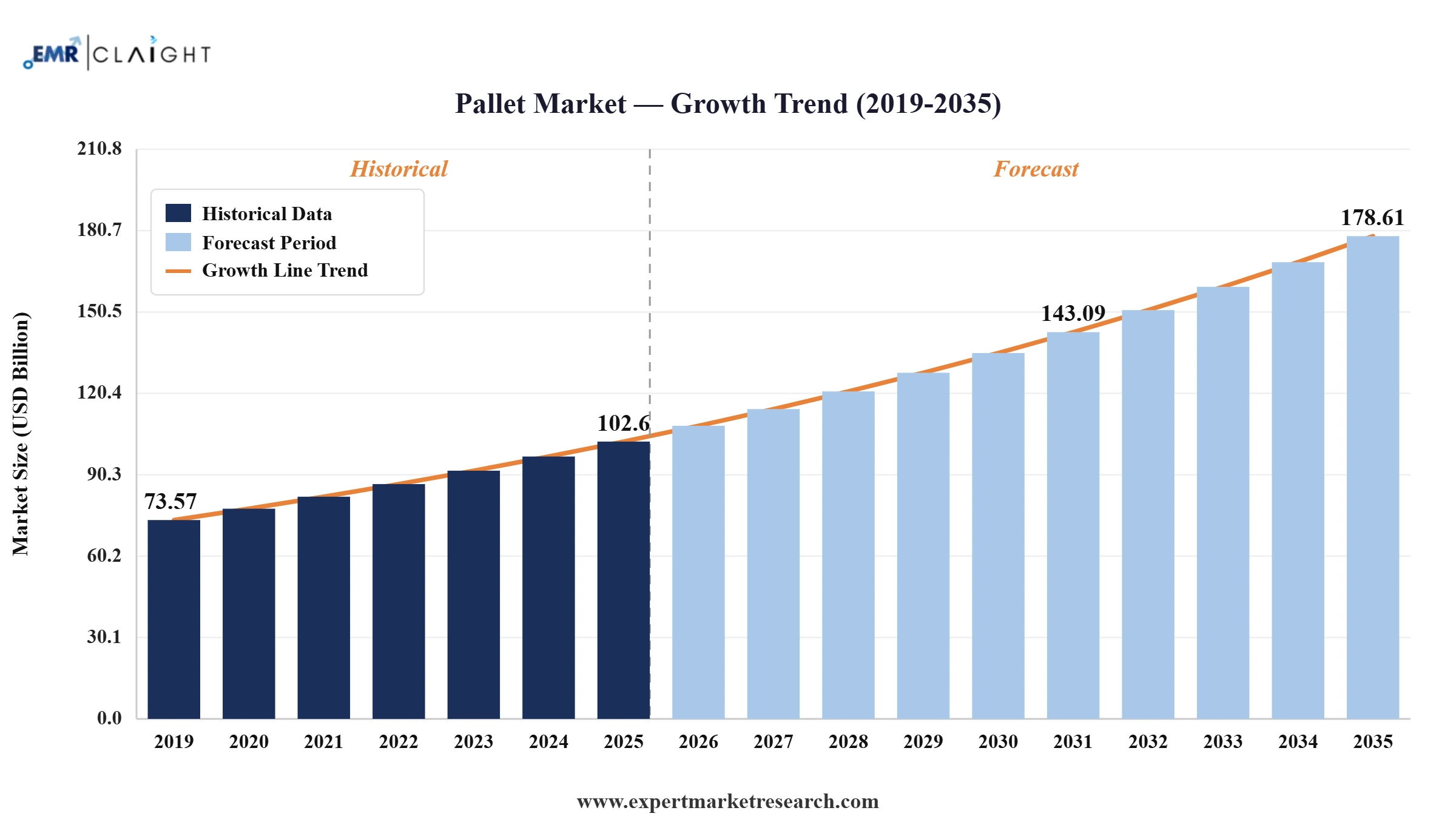
The global pallet market size was valued at USD 102.60 Billion in 2025. Demand for reusable and smart RFID-enabled pallets is growing rapidly in food, pharma, and retail sectors, enabling real-time tracking and loss prevention across regional and cross-border supply chains. In turn, the market is expected to grow at a CAGR of 5.70% during the forecast period of 2026-2035 to reach a value of USD 178.61 Billion by 2035.
The main trends observed in the market include sustainability, automation compatibility, and traceability features. A major catalyst behind the market growth is the increasing adoption of IoT-enabled pallets and RFID-tagged inventory solutions across the warehousing sectors, especially in North America and Europe.
Governments all over the world are further boosting the demand in the pallet market. For example, the United States Department of Agriculture partners with private logistics players under the Climate-Smart Commodities Program, encouraging the adoption of sustainable wooden pallets. On the other hand, in Asia Pacific, India’s PM Gati Shakti plan is fuelling regional demand. These government-led infrastructure missions are directly influencing pallet manufacturing.
Moreover, companies are developing advanced pallets that go beyond serving basic functionality. Pallets embedded with temperature trackers, GPS modules, and AI-predictive maintenance sensors are becoming common among high-value goods transporters. B2B buyers are investing in traceability, reusability, and eco-compliance.
Sustainability is another dimension to focus on, since manufacturers are developing alternatives for environmentally friendly, recyclable, and reusable pallets, boosting the entire pallet market trends and dynamics. Plastic and composite pallets are on the rise across the industry, as they provide longevity. Growth in the market is fuelled by rising logistics activities and increased demand for efficient material handling systems.
Read more about this report - REQUEST FREE SAMPLE COPY IN PDF
UFP Industries announced the acquisition of the operating assets of Berry Pallets, Inc., a pallet manufacturer based in Waseca, Minnesota, for approximately USD 20 million on April 28, 2026. The transaction adds approximately USD 23 million in annual sales and 75 employees to UFP Packaging's network, expanding its pallet manufacturing footprint across the upper Midwest.
Brambles Limited, global operator of the CHEP pallet pooling platform, reported its HY1 FY2026 financial results on February 19, 2026, disclosing free cash flow before dividends of USD 481.7 million, an increase of USD 52.5 million year-over-year. The company's asset pool stood at 348 million pallets, crates, and containers operated across a network of more than 750 service centres in approximately 60 countries.
The National Wooden Pallet and Container Association (NWPCA) announced on January 26, 2026 via PRNewswire that it is officially becoming Woodpack Global, reflecting the global growth and innovation in the wooden packaging sector. The rebrand followed extensive input from more than 800 member companies across 40 countries, with the new logo and brand identity scheduled to debut at the Annual Leadership Conference on March 25, 2026 in Fort Lauderdale, Florida.
IFCO, the world's leading provider of reusable packaging containers for fresh food operating a pool of over 400 million RPCs globally, announced on December 9, 2025 that Stonepeak, a New York-based alternative investment firm with approximately USD 80 billion in assets under management, has acquired a co-controlling stake of approximately 50% from Abu Dhabi Investment Authority (ADIA). Stonepeak now co-owns IFCO alongside existing shareholder Triton, which has held its stake since 2019, with the investment targeted at expanding IFCO's network capacity, digital capabilities, and circular economy operations across 50-plus countries.
Growing integration of RFID and GPS is one of the key emerging trends in the pallet market. Companies like Schoeller Allibert have introduced IoT pallets that track product journeys in real-time. This is especially convenient for pharma and perishable food logistics. According to industry reports, firms that adopted traceable supply chains witnessed a significant reduction in inventory losses. The EU’s Digital Product Passport regulation is prompting industries to adopt such smart packaging solutions. Smart pallets enable tracking and help businesses streamline warehouse planning and even prevent theft in high-value shipments.
As climate compliance intensifies, sustainability has become a priority for pallet manufacturers. Plastic and recycled wood pallets are playing crucial roles in this regard, due to their reusability and reduced carbon footprints. The European Pallet Association (EPAL) mandates pallet repair and reuse under its directive, driving circular economy goals. Further, IKEA, for example, has switched to lightweight corrugated pallets for its global shipments, reshaping the pallet market dynamics. Startups like Pallet Loop UK are also innovating rent-return models, turning one-time-use pallets into reusable assets, reducing timber waste and appealing to eco-conscious B2B buyers.
The industry is evolving with increased automation and modernisation that improve operational performance across industries. Automated warehouses have standardised pallets to facilitate full integration with robots, enhancing the process of materials handling. Enterprises are investing heavily in pallet compatibility with advanced logistics technology to meet market expansion requirements. The automation adoption makes it possible for industries to enhance storage, contain labour costs, and enhance protection. As more companies adopt these innovations, the demand for high-quality, long-lasting pallets will increase, solidifying their position as integral parts of industrial and retail supply chains.
As per the pallet market report, Asia Pacific is witnessing a rapid infrastructure surge, especially in India, Vietnam, and Indonesia. With governments setting up mega logistics parks, demand for durable and modular pallets is rising. For example, India’s National Logistics Policy (2022) aims to slash logistics costs from 14% to 8% of GDP by 2030, massively boosting pallet usage in e-commerce and retail. Meanwhile, China is leading with pallet pooling networks to improve load unitization in rail transport.
Pharmaceutical and biotech industries increasingly demand precision, hygiene, and temperature-sensitive handling. The advent of COVID-19 indicated how vital pallet standards were for cold-chain storage of vaccines. The United States FDA’s Drug Supply Chain Security Act (DSCSA) mandates traceability and hygiene compliance. In response, pharma giants are opting for polyethylene-based pallets with antimicrobial coatings. Companies like ORBIS Corporation have created pallets with sealed surfaces, preventing bacteria accumulation.
The pallet market is growing as industries such as food and beverage, pharmaceuticals, and e-commerce increasingly require efficient supply chain and logistics solutions. The adoption of reusable and sustainable pallets made from materials like plastic, metal, and composite is increasing, helping businesses reduce operational costs and minimize environmental impact. Additionally, pallet tracking technologies and warehouse automation are improving inventory management, enhancing operational efficiency, and reducing losses during transportation and storage.
In addition, the rise of global trade and organized retail sectors is driving greater utilization of pallets in both developed and emerging markets. Innovations in lightweight, durable, and recyclable pallet designs are shaping purchasing decisions, while companies focus on eco-friendly and cost-effective solutions. Growing awareness of sustainability and the demand for environmentally responsible logistics are further supporting the development of advanced pallet systems, contributing to the long-term growth of the industry.
The global pallet market is experiencing increased demand from logistics, warehousing, and e-commerce sectors. Pallets are crucial in supply chain management, providing secure storage and efficient transportation of goods. Key factors influencing the market include industrial development, the growth of retail and e-commerce operations, and innovations in pallet materials. Wooden pallets remain widely used due to their affordability and recyclability, while plastic and metal pallets are gaining popularity for their durability and low maintenance. Major players are focusing on advanced pallet solutions, including smart pallets with IoT technology, which enhance inventory management and operational efficiency.
Sustainability is becoming a major driver in the pallet industry, with growing adoption of reusable and eco-friendly pallets reflecting increased environmental awareness. Supportive government regulations and initiatives promoting recycled and certified pallets are further shaping market trends. Regional analysis shows notable activity in North America and Asia-Pacific, fueled by extensive logistics networks and rising manufacturing output. The competitive landscape is characterized by mergers, strategic partnerships, and technological innovations aimed at improving pallet performance and cost-efficiency. This analysis underscores the vital role of pallets in modern supply chains and highlights opportunities for innovation and sustainable practices.
The Expert Market Research's report titled “Global Pallet Market Report and Forecast 2026-2035” offers a detailed analysis of the market based on the following segments:
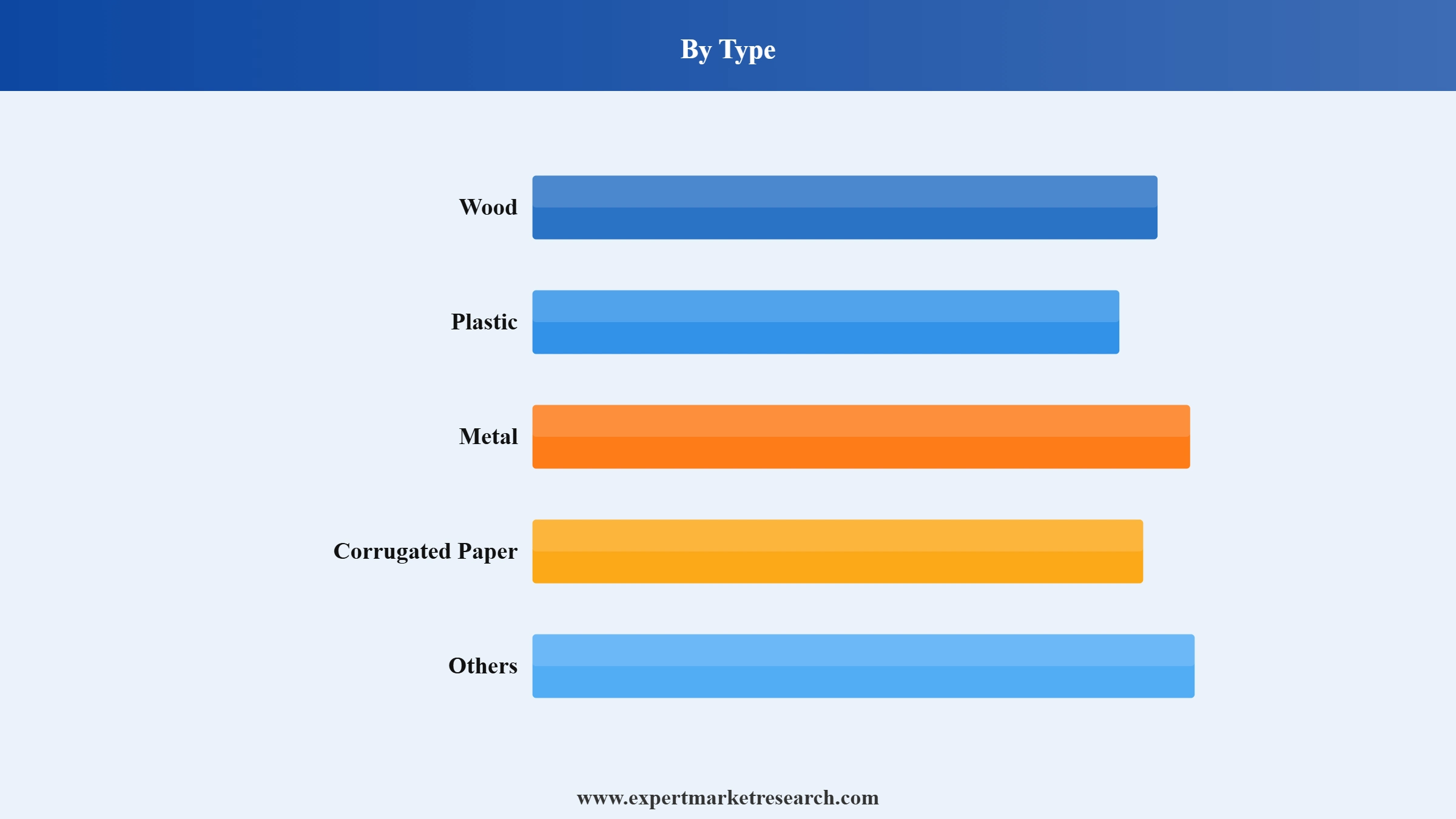
Market Breakup by Type
Key Insight: Due to their low price, availability, and ease of repair, wooden pallets remain the most used category throughout the global market. They offer a good balance of durability and affordable purchasing cost and are widely used in warehousing, transportation, and supply chains. In addition, wooden pallets comply with expanding sustainability concerns as they can be recycled and are easily biodegradable. Furthermore, innovations like heat-treated hardwood pallets for pest-resistance and faster drying processes are making wood more viable for international shipping.
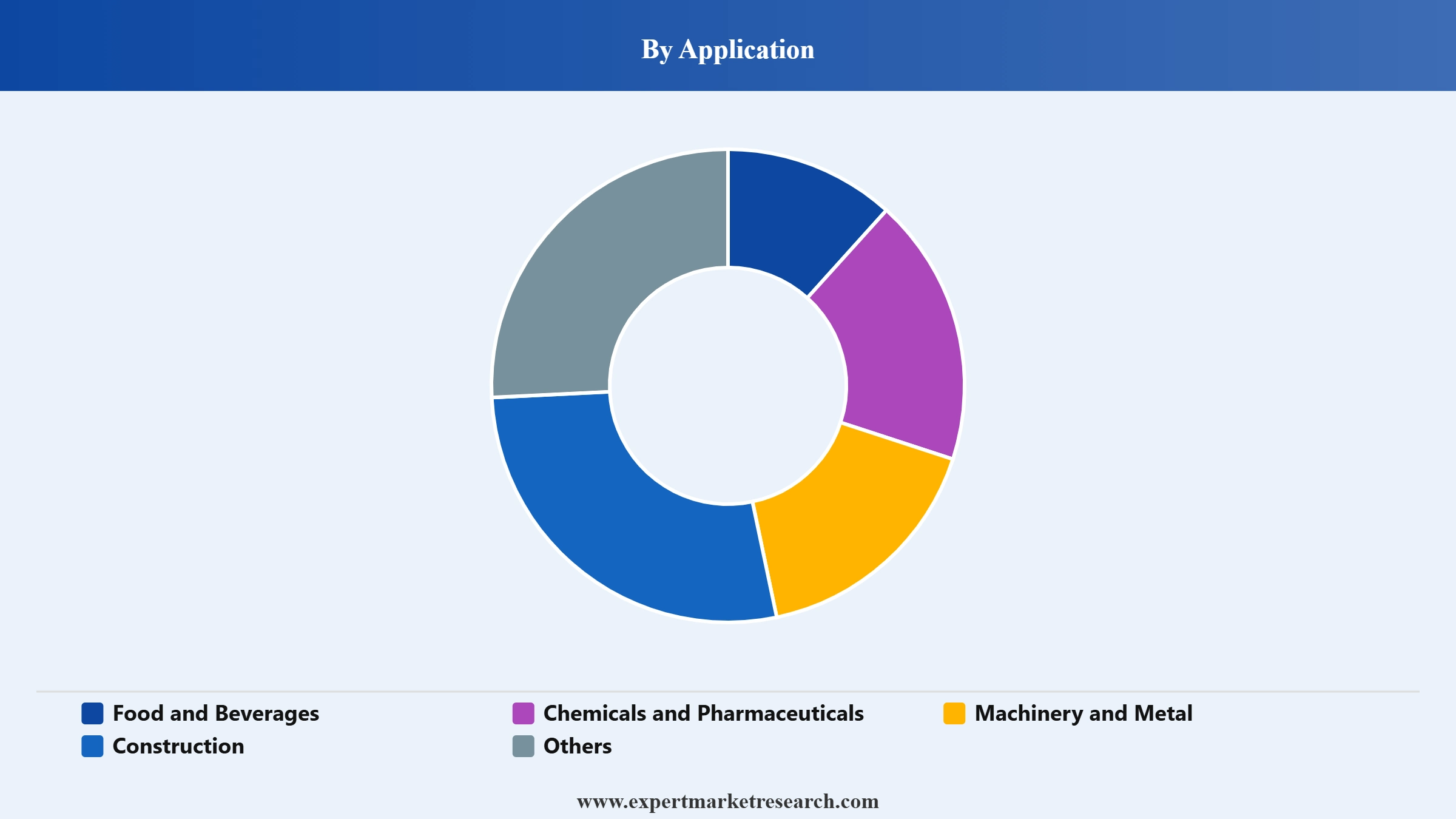
Market Breakup by Application
Key Insight: The Food & Beverage (F&B) industry is one of the biggest contributors to the global pallet market revenue, demanding that sanitary, robust, and standardised pallets be used safely for transportation and storage. Plastic pallets are being widely utilised since they resist moisture, are easy to clean, and meet food safety standards. Besides, wood pallets are still appreciated for low net-cost bulk shipments. Increasing ecommerce grocery sales with high hygiene standards and demands toward higher automated warehousing are a few of the factors driving the demand for sustainable and high-performance pallets in the F&B sector. In addition, AI-monitored pallets that alert users to spoilage or humidity shifts are being explored by firms like Nestlé and Unilever, shifting the focus from basic storage to intelligent freshness tracking.
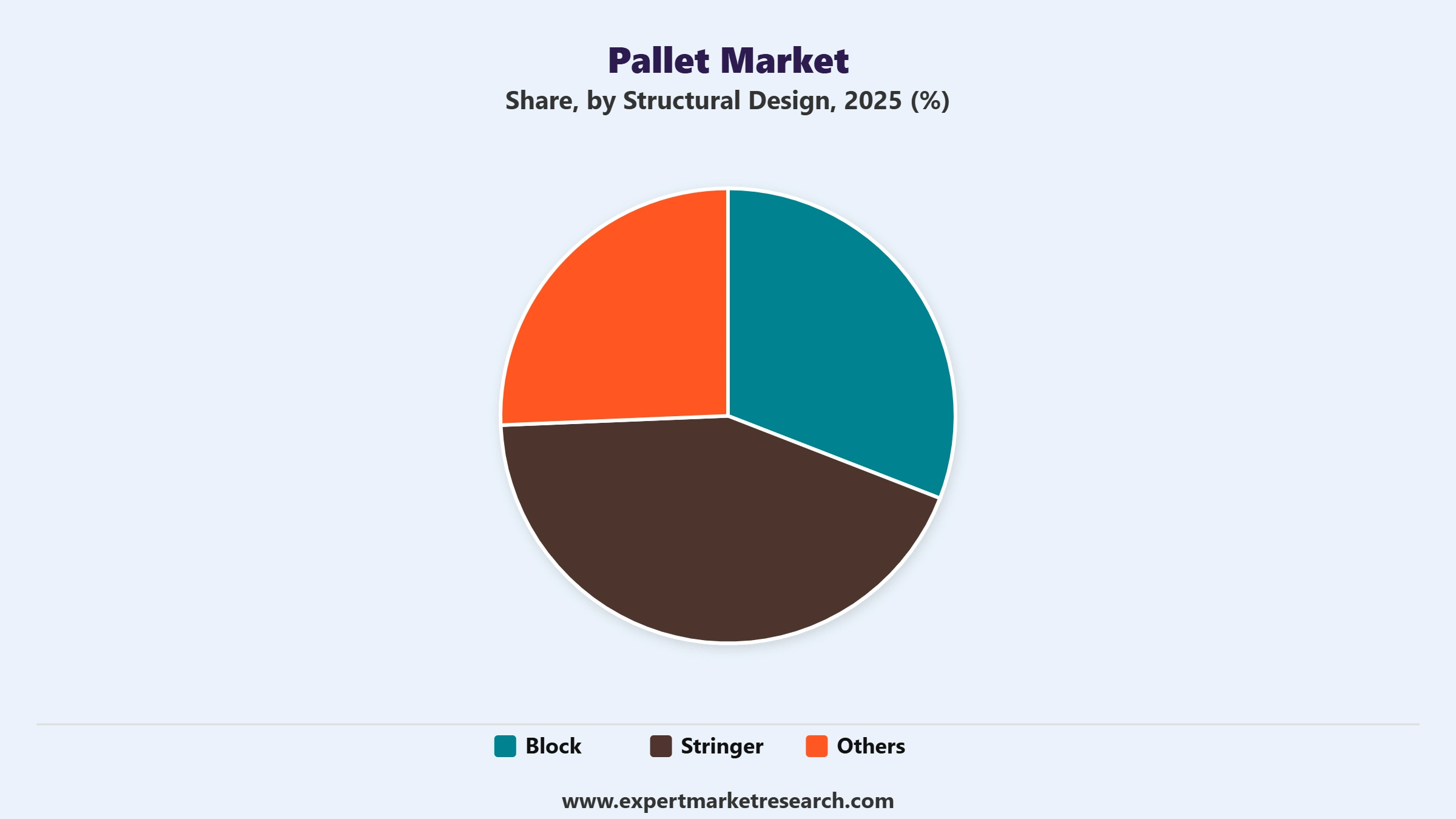
Market Breakup by Structural Design
Key Insight: Block pallets remain the dominant structural design accelerating the pallet market value, due to their industrial-grade capacity and reusability under pooling models. Many of these pallets are being upgraded with RFID chips, helping logistics firms reduce lost inventory costs to a significant extent. Their design also supports AI-assisted inventory systems, reducing turnaround time at warehouses by hours.
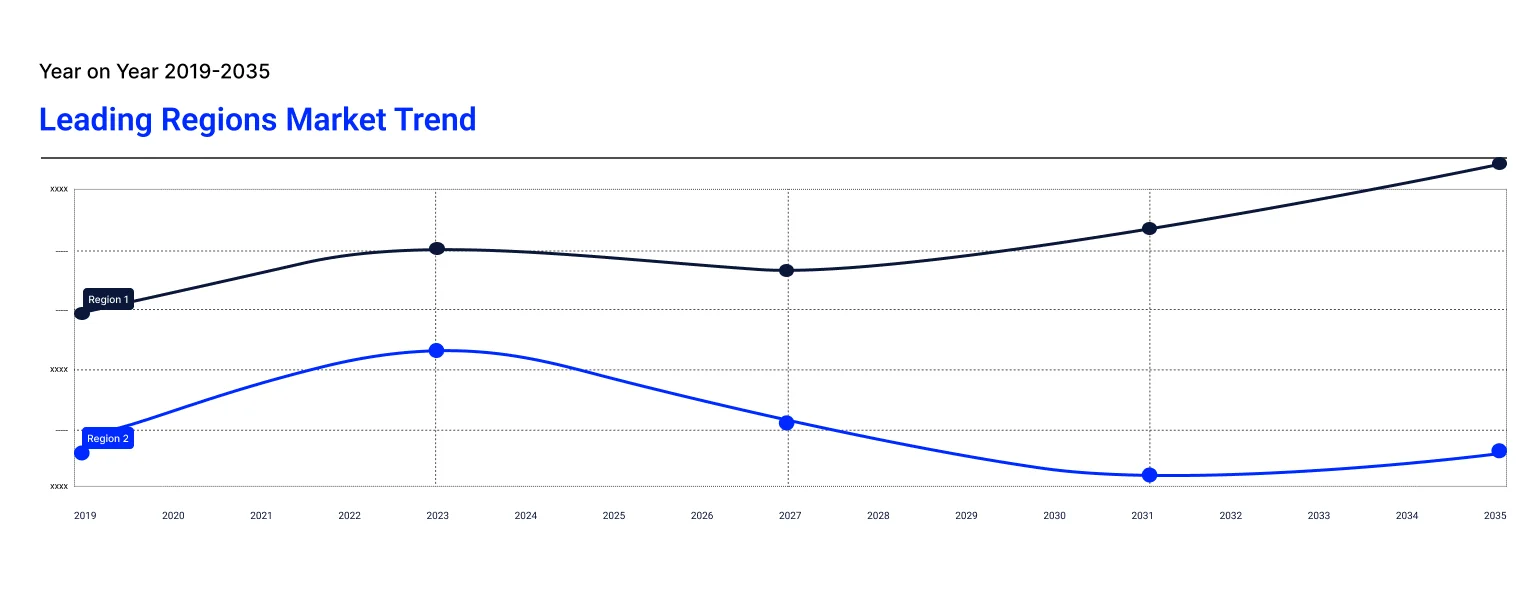
Market Breakup by Region
Key Insight: The North America market witnesses stable growth on account of ecommerce rise, automation, and sustainability demand. The solid logistics support of the region combined with demand for affordable and strong pallets is driving the industry's growth. Wood pallets lead in the market, followed by plastic and composite pallets. These are gaining popularity due to recycling value and sanitary advantages. Automatised warehouse innovation and supply chain improvement further fuel pallet consumption across food, beverages, pharmacy, and retail sectors.
Read more about this report - REQUEST FREE SAMPLE COPY IN PDF
Wooden and Plastic Pallets Lead Global Market Share
Wooden pallets continue dominating the market with their strength, affordability, and wide acceptability in cross-border trade. Over 90% of goods from the United States are shipped using wooden pallets. Their repairability and recycling potential make them the go-to for B2B operations. Brands like CHEP and PECO are innovating by introducing barcode-enabled wooden pallets for automated sorting. Even in emerging markets, small manufacturers prefer wood for its ease of sourcing and low-tech production requirements. Plastic pallets are boosting the pallet demand growth due to hygiene, durability, and precision engineering for automation systems. Their growth is particularly visible in pharmaceuticals, electronics, and FMCG sectors. Companies like CABKA Group are pushing recycled plastic pallet innovations to reduce carbon impact. Manufacturers often favour plastic pallets over wooden ones as the former offers a safer, reusable alternative.
Read more about this report - REQUEST FREE SAMPLE COPY IN PDF
Food and Beverage Sector Drives Largest Application Revenue
Food and beverage industries secure the largest share in the market revenue. This sector often demands consistent, cleanable, and regulation-compliant pallets. Wooden pallets treated under ISPM-15 standards dominate this space due to their affordability and broad acceptance. Powered by the rising e-grocery trends and fresh produce exports, demand in this sector is peaking. Major retailers like Walmart and Tesco are adopting traceable pallets with embedded chips to manage cold chain disruptions and shelf-life tracking, driving technological integrations within traditional markets.
The chemicals and pharmaceuticals application accelerates the pallet market growth due to high-precision and safety needs. Antimicrobial plastic pallets, leak-proof edges, and sealed surfaces are in high demand. Growth is also driven by regulatory mandates, like REACH compliance in the EU and FDA-approved materials in the United States. As global pharma trade expands, the need for robust, contamination-free pallet solutions increases. Reusable pallets are also trending, as pharma firms seek cost-efficiency and temperature regulation for biologics and vaccines. Block pallets, with four-way entry and stronger construction, are being increasingly preferred in high-capacity operations. Logistics giants and warehouses dealing in bulky shipments opt for block designs due to their stability and compatibility with forklifts and automation systems. In Europe, the EPAL Euro pallet (a block design) is the norm, with over 650 million units in circulation. These pallets also offer longer lifespans, averaging 5-7 years under pooling programs. Their adaptability to multiple reuse cycles and recyclability make them ideal for circular logistics.
Read more about this report - REQUEST FREE SAMPLE COPY IN PDF
Stringer Pallets Gain Popularity Across North American and Latin American Markets
As per the pallet industry report, stringer pallets are gaining more popularity due to their low-cost manufacturing and growing use in medium-load retail and regional transport. Particularly in North America and Latin America, stringer pallets are being favoured for consumer goods, pharmaceuticals, and intermediate bulk handling. Recent design upgrades allow two-way and four-way entry options, making them more versatile. Innovations include lightweight stringer models with reinforced plastic coatings that increase their usability and moisture resistance. As per the North American Pallet Association, stringer pallets account for nearly 76% of United States pallet production due to their ease of mass production and disposal.
Read more about this report - REQUEST FREE SAMPLE COPY IN PDF
North America Secures the Leading Position in the Global Market
North America leads in the global market, supported by established logistics networks and rising automation. The United States alone contributes nearly 2 billion active pallets in circulation. Major retailers like Amazon and Home Depot are investing in pallet technology to optimise last-mile delivery. Government programs like the Build America, Buy America Act also encourage local pallet production and sourcing, reducing reliance on imports. Companies are also focusing on recycling, with 95% of pallets in the United States are being recycled or reused, according to industry reports.
Asia Pacific: Fastest-Growing Region Fueled by Trade Volumes and Infrastructure Investment
The pallet market in Asia Pacific registers rapid growth owing to the booming e-commerce sector, logistics corridor projects, and rising manufacturing exports. China, India, and Vietnam have been the key contributors to the regional market growth. India’s PM Gati Shakti, along with Japan’s Smart Logistics 2025 vision, are reshaping warehousing models, where pallets play a vital role.
Europe: Mature Market Anchored by EPAL Standards and Circular Economy Regulation
Europe is a highly regulated and mature pallet market, where the EPAL Euro pallet block design has become the regional standard with over 650 million units in active circulation. The European Union's Packaging and Packaging Waste Regulation is accelerating adoption of certified, recyclable, and reusable pallet materials across the fast-moving consumer goods, food, and pharmaceutical sectors. Pallet pooling models operated by companies including Brambles under the CHEP brand and LPR are deeply embedded in European retail and grocery supply chains. Germany, France, the United Kingdom, and the Netherlands lead regional demand, driven by high warehouse automation penetration and stringent ESG compliance requirements across corporate procurement programs.
Latin America: Emerging Market with Growing Logistics and Cold Chain Investment
Latin America represents an emerging and commercially promising regional market for pallets, led by Brazil and Mexico as the two largest national markets. Brazil's extensive agricultural export sector, which encompasses soybeans, sugar, coffee, and fresh produce, generates consistent high-volume demand for ISPM-15 compliant wooden pallets across port and logistics operations. Mexico's proximity to the United States and its integration into North American manufacturing supply chains under the United States-Mexico-Canada Agreement drives cross-border pallet demand across automotive, electronics, and consumer goods sectors. Cold chain infrastructure investment across the region is additionally increasing demand for plastic and composite pallets that meet hygiene and temperature control requirements for fresh food and pharmaceutical distribution.
Middle East and Africa: High-Potential Market Supported by Trade Hub Development and Infrastructure Projects
The Middle East and Africa region represents a high-growth opportunity market for the global pallet industry, driven by large-scale logistics infrastructure development, expanding trade hub activity, and rising import volumes across Gulf Cooperation Council countries and sub-Saharan Africa. The United Arab Emirates and Saudi Arabia lead regional pallet demand, supported by active investments in port expansion, free trade zone development, and modern warehousing infrastructure across Dubai, Abu Dhabi, Riyadh, and Jeddah. Flagship projects including NEOM in Saudi Arabia and the continued expansion of Jebel Ali Port in Dubai are generating direct demand for high-specification pallet solutions across construction materials, consumer goods, and food logistics supply chains. Africa's growing organized retail sector and expanding agricultural export activity in countries including South Africa, Kenya, and Ethiopia are additionally contributing to gradual but sustained pallet market growth across the continent.
Read more about this report - REQUEST FREE SAMPLE COPY IN PDF
Pallet market players like CHEP, CABKA, Loscam, ORBIS, and PECO Pallet are expanding their portfolios with smart pallet offerings. They are increasingly focusing on innovation, sustainability, and automation to enhance market competitiveness. Companies are investing in recyclable and eco-friendly materials, such as composite and plastic pallets, to reduce their carbon footprint and meet environmental regulations. With the rise of automated warehousing, manufacturers are developing standardised pallets that integrate seamlessly with robotic systems to improve supply chain efficiency. Expansion into emerging markets is another key strategy, as pallet companies seek to capitalise on growing industrialisation and ecommerce demand. Additionally, cost-effective production and durability improvements remain top priorities to attract a broader customer base. Industry leaders are also focusing on smart pallet technologies, integrating RFID tracking and IoT solutions for enhanced logistics management. Through strategic partnerships, mergers, and acquisitions, key players aim to strengthen their global presence.
Brambles Ltd, founded in 1875 and headquartered in Sydney, Australia, is a logistics company that offers crates, pallets, and containers to enable organisations to transport their goods sustainably, safely, and efficiently. Primarily serving the FMCG, general manufacturing, and fresh produce sectors, the company employs over 13,000 individuals and owns nearly 347 million containers, pallets, and crates.
Schoeller Allibert, founded in 1960 and headquartered in Hoofddorp, the Netherlands, is a prominent logistics and packaging solutions provider. It is engaged in developing, designing, and manufacturing Returnable Transit Packaging (RTP). The company operates 11 factories and boasts a global reach serving more than 50 countries.
Loscam, founded in 1942 and headquartered in Hong Kong, is a prominent company that provides pooling and returnable packaging solutions for supply chains. It focuses on offering innovative, high-quality, fit-for-purpose, and sustainable solutions and procedures to 12 regions throughout the Asia Pacific.
ORBIS Corporation, headquartered in Wisconsin, United States, and established in 1849, is a company that offers reusable plastic containers, dunnage and bulk systems, and pallets for optimising supply chain operations. It serves various sectors such as consumer goods, food, beverage, and environmental, among others.
Other key players in the market are Falkenhahn AG, and Craemer Holding GmbH, among others.
*Please note that this is only a partial list; the complete list of key players is available in the full report. Additionally, the list of key players can be customized to better suit your needs.*
The pallet market faces persistent operational challenges tied to raw material cost volatility, particularly for softwood lumber, which remains subject to sharp price fluctuations driven by housing construction cycles, tariff policy changes, and weather-related supply disruptions across North American and European timber regions. The widespread adoption of the International Standards for Phytosanitary Measures No. 15 (ISPM-15) heat-treatment requirement for wooden pallets used in international trade adds compliance costs and processing bottlenecks for manufacturers serving export-oriented customers. Simultaneously, cargo theft and pallet loss within open-loop supply chains continue to impose measurable financial losses on operators who lack asset tracking infrastructure, creating pressure on margins across mid-sized pallet manufacturers and pooling operators alike.
Structural restraints on market expansion include the high upfront cost of transitioning from conventional wooden pallets to plastic, composite, or smart pallet alternatives, which limits adoption among small and medium-sized manufacturers and distributors operating on thin logistics margins. The absence of universal pallet size standardization across key trade corridors, particularly between North American GMA-specification pallets and European EUR-pallet formats, introduces friction in cross-border logistics and restricts the interoperability of pooled pallet assets across regional networks. Additionally, the fragmented nature of pallet repair and recycling infrastructure in emerging markets constrains the circular economy models that larger operators are actively trying to scale.
Significant growth opportunities exist in the integration of RFID and IoT sensor technologies into standard pallet formats, enabling pharmaceutical, food, and retail supply chain operators to meet tightening product traceability regulations without overhauling existing warehouse infrastructure. The accelerating buildout of automated fulfillment centers by e-commerce operators across North America and Asia Pacific is generating sustained demand for dimensionally precise, automation-compatible block pallets designed to function reliably within robotic picking and conveyor systems. Government-backed logistics infrastructure programs, including India's PM Gati Shakti National Master Plan and the U.S. Department of Transportation's port infrastructure investment initiatives, are additionally creating long-term institutional demand for standardized pallet solutions across newly developed freight corridors.
Explore the latest trends shaping the pallet market 2026-2035 with our in-depth report. Gain strategic insights, future forecasts, and key market developments that can help you stay competitive. Download a free sample report or contact our team for customised consultation on pallet market trends 2026.


Upto 15% Off
USD
$2499 $2249
$3999 $3599
$4999 $4249
$5999 $5099


*While we strive to always give you current and accurate information, the numbers depicted on the website are indicative and may differ from the actual numbers in the main report. At Expert Market Research, we aim to bring you the latest insights and trends in the market. Using our analyses and forecasts, stakeholders can understand the market dynamics, navigate challenges, and capitalize on opportunities to make data-driven strategic decisions.*
In 2025, the pallet market reached an approximate value of USD 102.60 Billion.
The market is projected to grow at a CAGR of 5.70% between 2026 and 2035.
The market is estimated to reach a value of nearly USD 178.61 Billion by 2035.
Key strategies driving the market include investing in automation-ready designs, forming regional pooling networks, adopting recyclable materials, embedding tracking sensors, and aligning products with regional logistics policies.
Investments in research and development activities to incorporate advanced technologies into pallet development and increasing internet penetration are the key trends aiding the market.
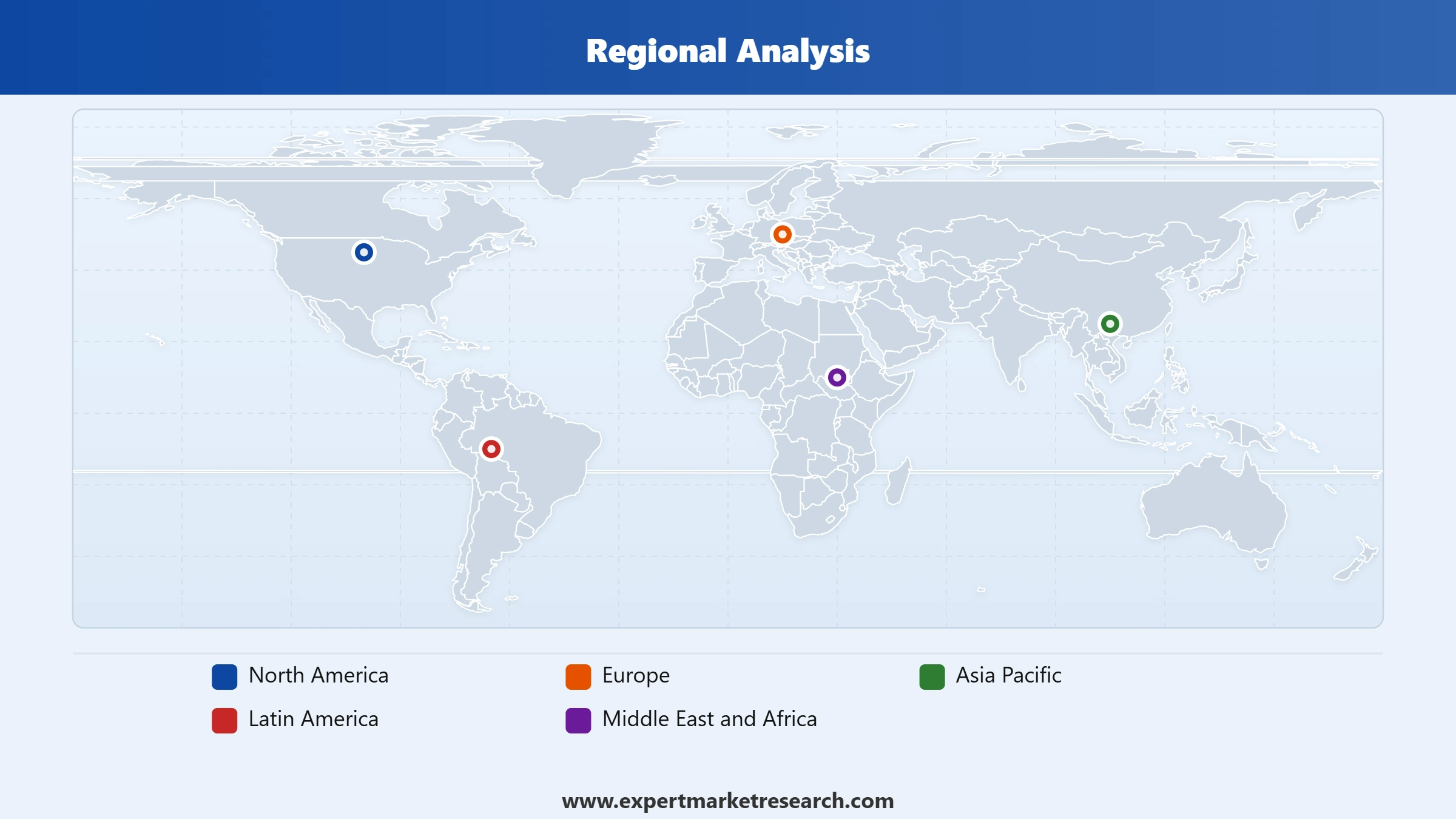
The major regions include North America, Europe, Asia-Pacific, Latin America, and the Middle East & Africa.
The market is segmented into wood, plastic, metal, and corrugated paper pallets.
The market is categorized into block pallets and stringer pallets.
The key applications include food & beverages, chemicals & pharmaceuticals, machinery & metal, and construction.
The leading companies include Brambles Limited, Rehrig Pacific Company, CABKA Group, ORBIS Corporation, Falkenhahn AG, and Craemer Holding GmbH, among others.
COVID-19 accelerated ecommerce demand, disrupted supply chains, increased raw material costs, and boosted the adoption of automated warehousing solutions.
The key challenges are supply chain volatility, rising raw material costs, and regulatory compliance.
Explore our key highlights of the report and gain a concise overview of key findings, trends, and actionable insights that will empower your strategic decisions.
| REPORT FEATURES | DETAILS |
| Base Year | 2025 |
| Historical Period | 2019-2025 |
| Forecast Period | 2026-2035 |
| Scope of the Report |
Historical and Forecast Trends, Industry Drivers and Constraints, Historical and Forecast Market Analysis by Segment:
|
| Breakup by Type |
|
| Breakup by Application |
|
| Breakup by Structural Design |
|
| Breakup by Region |
|
| Market Dynamics |
|
| Competitive Landscape |
|
| Companies Covered |
|
Datasheet
One User
USD 2,499
USD 2,249
tax inclusive*
Single User License
One User
USD 3,999
USD 3,599
tax inclusive*
Five User License
Five User
USD 4,999
USD 4,249
tax inclusive*
Corporate License
Unlimited Users
USD 5,999
USD 5,099
tax inclusive*
*Please note that the prices mentioned below are starting prices for each bundle type. Kindly contact our team for further details.*
Flash Bundle
Small Business Bundle
Growth Bundle
Enterprise Bundle
*Please note that the prices mentioned below are starting prices for each bundle type. Kindly contact our team for further details.*
Flash Bundle
Number of Reports: 3
20%
tax inclusive*
Small Business Bundle
Number of Reports: 5
25%
tax inclusive*
Growth Bundle
Number of Reports: 8
30%
tax inclusive*
Enterprise Bundle
Number of Reports: 10
35%
tax inclusive*
How To Order

Select License Type
Choose the right license for your needs and access rights.

Click on ‘Buy Now’
Add the report to your cart with one click and proceed to register.

Select Mode of Payment
Choose a payment option for a secure checkout. You will be redirected accordingly.
Strategic Solutions for Informed Decision-Making
Gain insights to stay ahead and seize opportunities.

Get insights & trends for a competitive edge.

Track prices with detailed trend reports.

Analyse trade data for supply chain insights.

Leverage cost reports for smart savings

Enhance supply chain with partnerships.

Connect For More Information
Our expert team of analysts will offer full support and resolve any queries regarding the report, before and after the purchase.
Our expert team of analysts will offer full support and resolve any queries regarding the report, before and after the purchase.
We employ meticulous research methods, blending advanced analytics and expert insights to deliver accurate, actionable industry intelligence, staying ahead of competitors.
Our skilled analysts offer unparalleled competitive advantage with detailed insights on current and emerging markets, ensuring your strategic edge.
We offer an in-depth yet simplified presentation of industry insights and analysis to meet your specific requirements effectively.




