

Consumer Insights
Uncover trends and behaviors shaping consumer choices today
Procurement Insights
Optimize your sourcing strategy with key market data
Industry Stats
Stay ahead with the latest trends and market analysis.
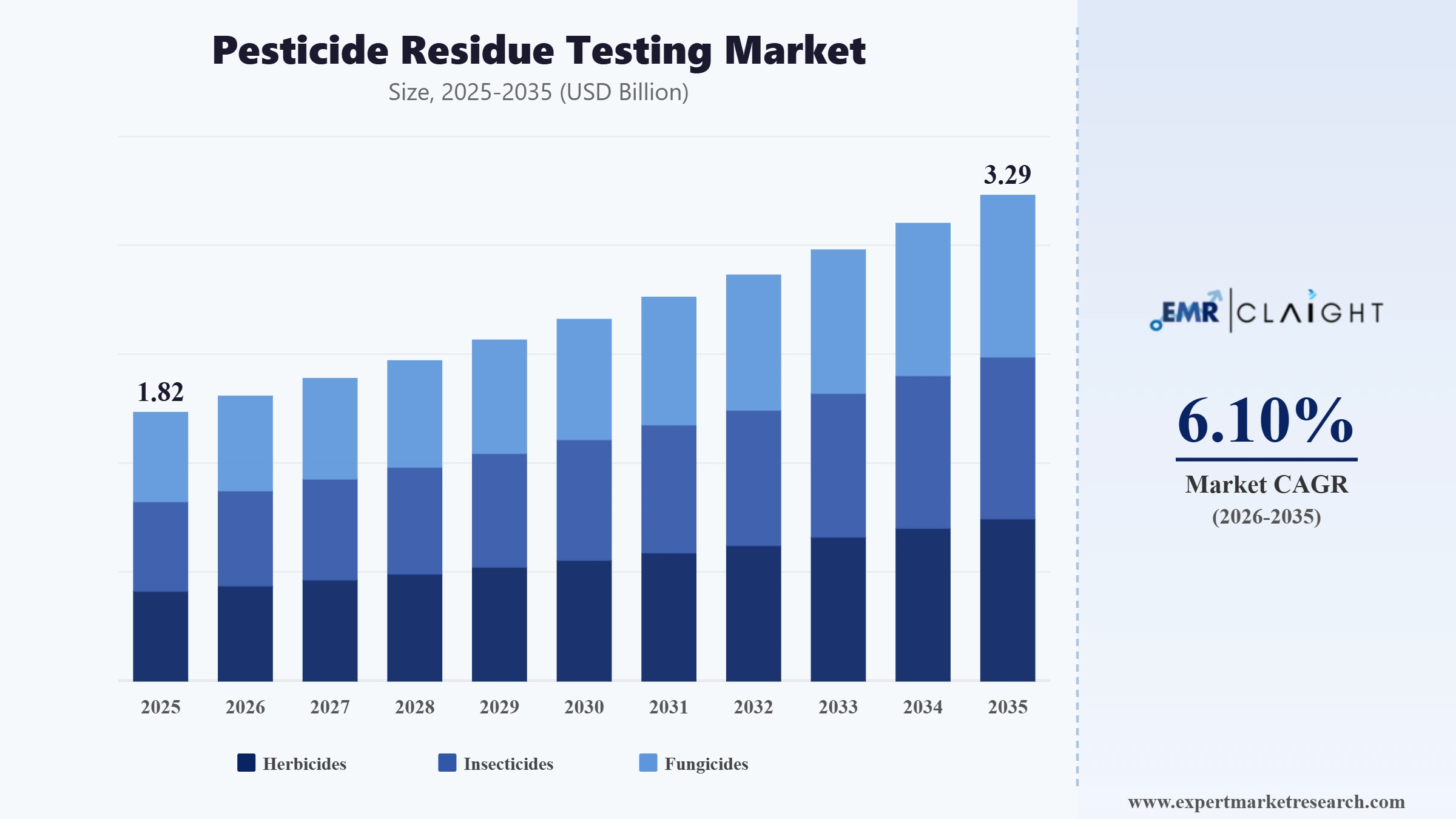
The global pesticide residue testing market attained a value of USD 1.82 Billion in 2025 and is projected to expand at a CAGR of 6.10% through 2035. The market is further expected to reach USD 3.29 Billion by 2035. Stricter food safety regulations, increasing global food trade, and rising consumer awareness of pesticide exposure are helping laboratories expand testing capacity and adopt more sensitive multi-residue methods. Growing emphasis on harmonised international standards and advanced chromatography techniques is further encouraging established providers to broaden their service portfolios across every major food category.
Pesticide residue testing refers to the analytical process of detecting and quantifying pesticide residues remaining on or in food products following agricultural application, ensuring compliance with regulatory maximum residue limits. Fruits and vegetables represent a substantial share of the market owing to direct consumer exposure and the perishable nature of produce requiring rapid turnaround testing. Rising global population and consumption of fresh produce, combined with tightening regulatory oversight, continue to widen the buyer base for pesticide residue testing services worldwide.
Demand is concentrating around laboratories able to align testing capability with evolving international regulatory requirements. In May 2026, the US FDA transitioned its regulatory laboratories to a harmonised multi-analyte gas and liquid chromatography tandem mass spectrometry method, eliminating separate analyte-specific procedures and placing greater emphasis on risk-based sampling, including foods highly consumed by infants and children. This regulation driven positioning is converting rising compliance demand directly into expanded testing volume across the global pesticide residue testing market.
Providers across the market are converging on a common development direction, widening from single-residue confirmatory testing toward comprehensive multi-residue screening capable of detecting hundreds of compounds simultaneously. Laboratories are increasingly investing in high-resolution mass spectrometry and harmonised analytical methods to keep pace with expanding regulatory monitoring programmes across major trading blocs. This consolidated approach is reshaping laboratory selection criteria among food producers and exporters, favouring providers who can demonstrate accreditation across multiple jurisdictions over those offering only domestic compliance testing.
Read more about this report - REQUEST FREE SAMPLE COPY IN PDF
The European Union adopted Regulation 2026/765, setting updated rules for pesticide residue sampling and analysis in food and feed, with the regulation taking effect from January 2027. The update prompts laboratories across the bloc to review analytical methods ahead of the compliance deadline. Laboratories across the pesticide residue testing market can use advance regulatory notice to plan method validation work before enforcement begins.
USDA published its 2024 Pesticide Data Program Annual Summary, testing 9,872 samples across 19 commodities of fruits, vegetables, nuts, and fish, finding over 99 percent of samples had residues below EPA benchmark levels. AMS partners with state agencies to collect residue data on a rotating basis. Laboratories across the pesticide residue testing market can use annual monitoring datasets to anticipate which commodities regulators will prioritise next.
The Codex Alimentarius Commission's 48th Session adopted 340 new maximum residue limits for pesticide and commodity combinations while revoking limits for five actives including fenthion and parathion-methyl. The session also adopted new guidelines for monitoring the purity and stability of pesticide reference materials used in laboratory testing. Laboratories across the pesticide residue testing market can use harmonised international reference standards to reduce costs tied to short shelf-life certified materials.
The US Environmental Protection Agency revised pesticide residue limits under 40 CFR 180, updating tolerances for Glufosinate across several tea and rice commodities to align with international Codex standards. The rice grain tolerance was lowered from 1.0 ppm to 0.9 ppm to match Codex maximum residue limits. Laboratories can use tolerance alignment announcements to anticipate which commodities will require updated testing protocols.
Regional trading blocs across the pesticide residue testing market are increasingly launching multi-year, structured pesticide monitoring programmes rather than relying on ad hoc national testing initiatives. This is reshaping how laboratories plan capacity investment, favouring providers able to commit to sustained testing contracts across member states. In May 2025, the European Commission adopted Regulation 2025/854, establishing a coordinated pesticide monitoring programme covering 2026 to 2028 and requiring member states to share results with the European Food Safety Authority.
Regulators across the pesticide residue testing market are increasingly attaching ongoing monitoring data requirements to new import tolerance decisions, rather than granting open-ended approvals without follow-up verification. This is reshaping compliance obligations for importers and their testing partners, favouring laboratories able to support recurring monitoring programmes over one-time compliance checks. In December 2025, the US EPA required submission of five years of monitoring data to confirm black pepper residue levels remain below the newly established import tolerance, adding an ongoing verification burden for importers and their laboratory partners alike.
Food safety regulators across the pesticide residue testing market are increasingly issuing frequent, narrowly scoped amendments to individual pesticide maximum residue levels, rather than batching changes into infrequent, comprehensive regulatory overhauls. This is reshaping how laboratories track compliance obligations, favouring continuous regulatory monitoring over periodic bulk reviews. In March 2026, the European Union amended maximum residue levels for Cyflufenamid, Fenazaquin, and Nicotine across certain products, one of several such targeted amendments issued during the year requiring laboratories to update reference standards accordingly.
China's Ministry of Agriculture and Rural Affairs issued Order No. 3, systematically revising five sets of measures governing pesticide registration, production licensing, business licensing, labelling, and registration testing, all taking effect from January 1, 2026. This is reshaping compliance timelines for manufacturers and testing laboratories serving the Chinese market. Laboratories can use advance notice of coordinated regulatory overhauls to plan method updates across several compliance areas at once rather than responding to isolated changes.
National food safety regulators across the pesticide residue testing market are increasingly bundling pesticide MRL updates together with broader food code amendments, rather than issuing narrow, single-purpose regulatory changes. This is reshaping how laboratories track compliance obligations, favouring providers with dedicated regulatory monitoring capability over ad hoc update tracking. In March 2026, South Korea's Ministry of Food and Drug Safety announced a partial amendment to its Food Code covering pesticide MRL updates alongside new food testing methods and revised frozen food preservation standards, taking effect immediately upon publication.
The Expert Market Research's report titled "Global Pesticide Residue Testing Market Report and Forecast 2026-2035" offers a detailed analysis of the market based on the following segments:
Market Breakup by Type
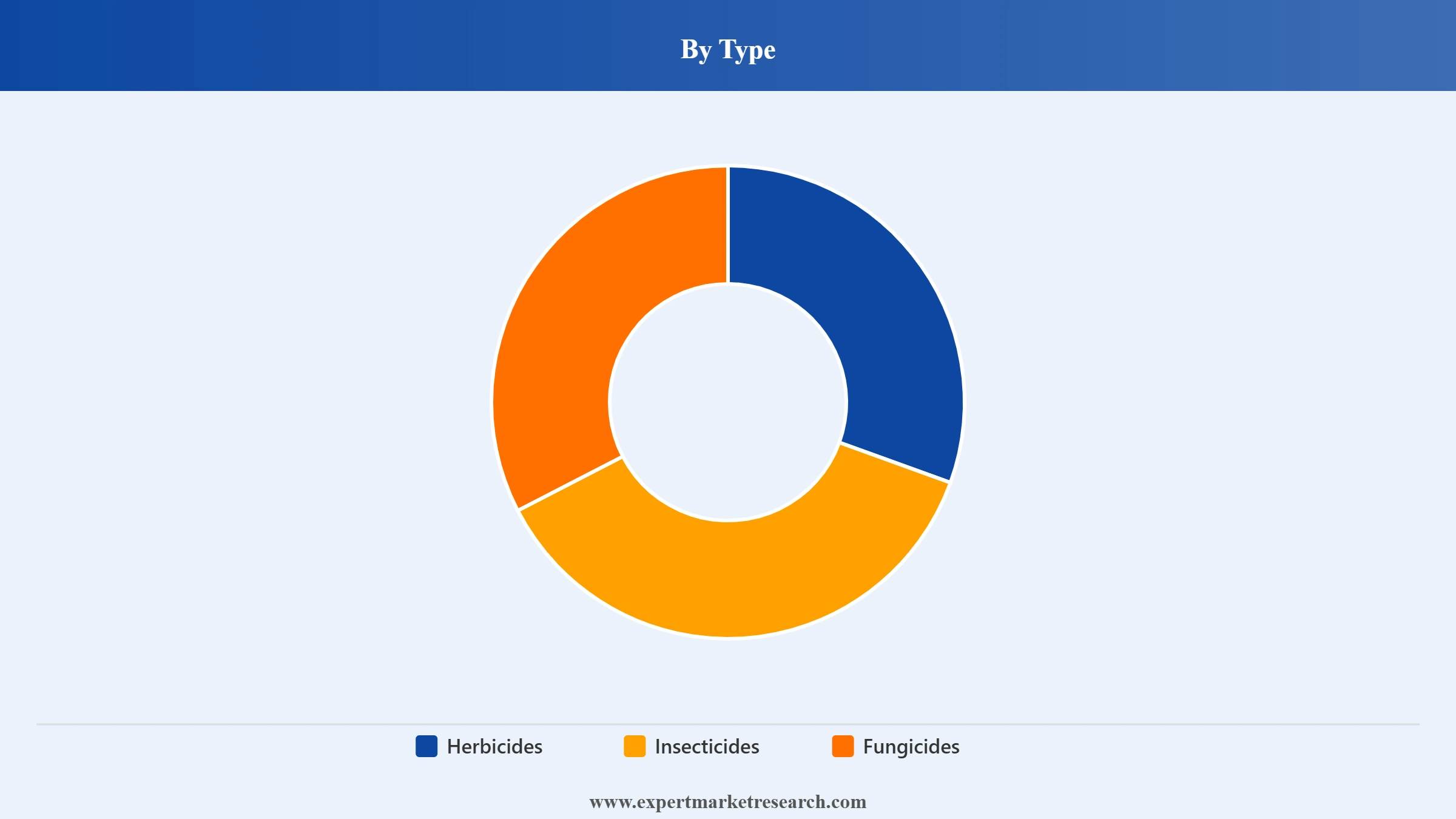
Key Insight: Insecticides account for a substantial type of share across the pesticide residue testing market as their widespread agricultural use and known toxicity profile drive sustained testing demand across fruits, vegetables, and grains. Herbicides form a significant category given their extensive application in row crop farming, requiring dedicated screening methods distinct from insecticide residues. In March 2025, Japan's Consumer Affairs Agency proposed adjustments to maximum residue limits for three pesticides including the fungicide fluazinam, opening a public comment period as part of its ongoing alignment with international standards. Other pesticide classes, including rodenticides and plant growth regulators, round out remaining demand.
Market Breakup by Technology
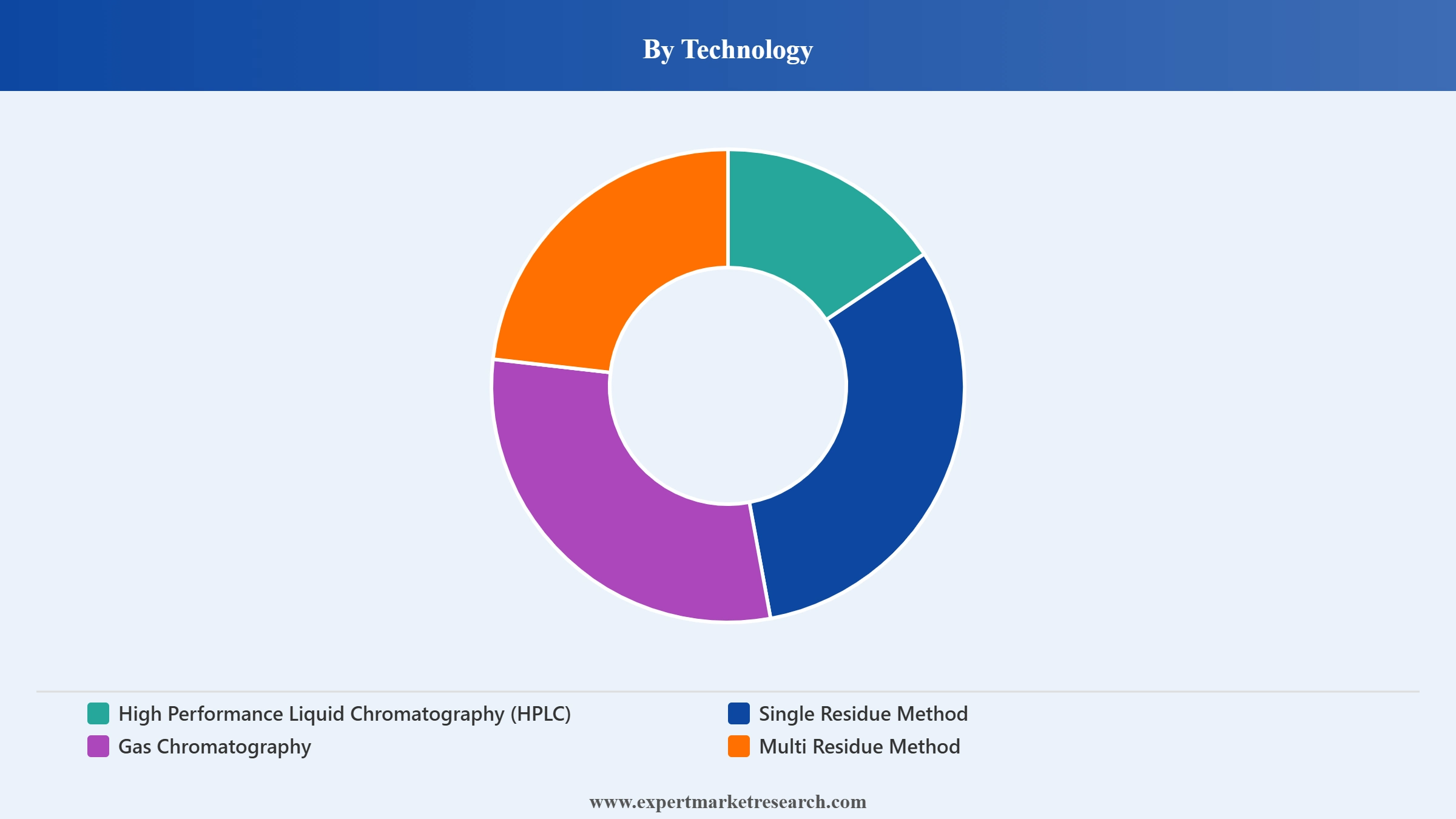
Key Insight: Multi residue methods are registering the fastest growth across the pesticide residue testing market as laboratories seek to screen hundreds of compounds simultaneously rather than relying on slower single-residue techniques. High-performance liquid chromatography and gas chromatography remain foundational technologies, each suited to different classes of pesticide compounds based on volatility and thermal stability. In February 2026, China published its revised GB 2763 National Food Safety Standard, specifying 350 distinct testing methods covering 585 pesticides across 10,749 maximum residue limits, entering into force the following month. Other emerging technologies, including biosensor based rapid screening tools, address preliminary field-testing needs.
Market Breakup by Food Tested
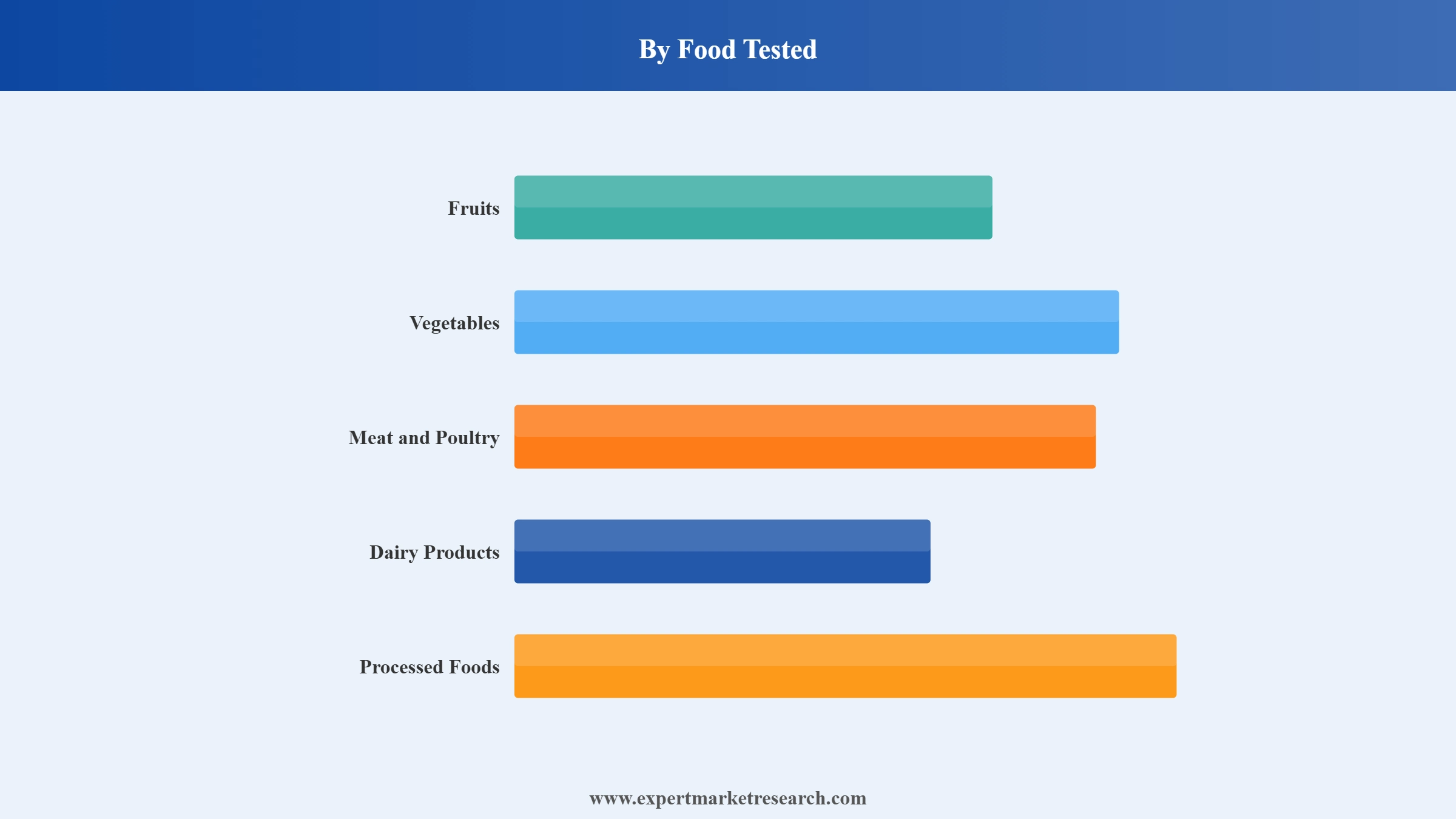
Key Insight: Fruits and vegetables represent a substantial share of the pesticide residue testing market owing to direct consumer exposure and the perishable nature of produce requiring rapid turnaround testing. In March 2025, New Zealand Food Safety and the Ministry for Primary Industries proposed amendments to national maximum residue levels covering cereals, pulses, meat, milk, poultry, and offal, reflecting updated safety assessments across multiple animal-derived food categories. Meat and poultry testing focuses on detecting bioaccumulated residues transferred through animal feed, while dairy testing addresses similar bioaccumulation concerns in milk products, and processed foods require testing across complex matrices combining multiple raw ingredients.
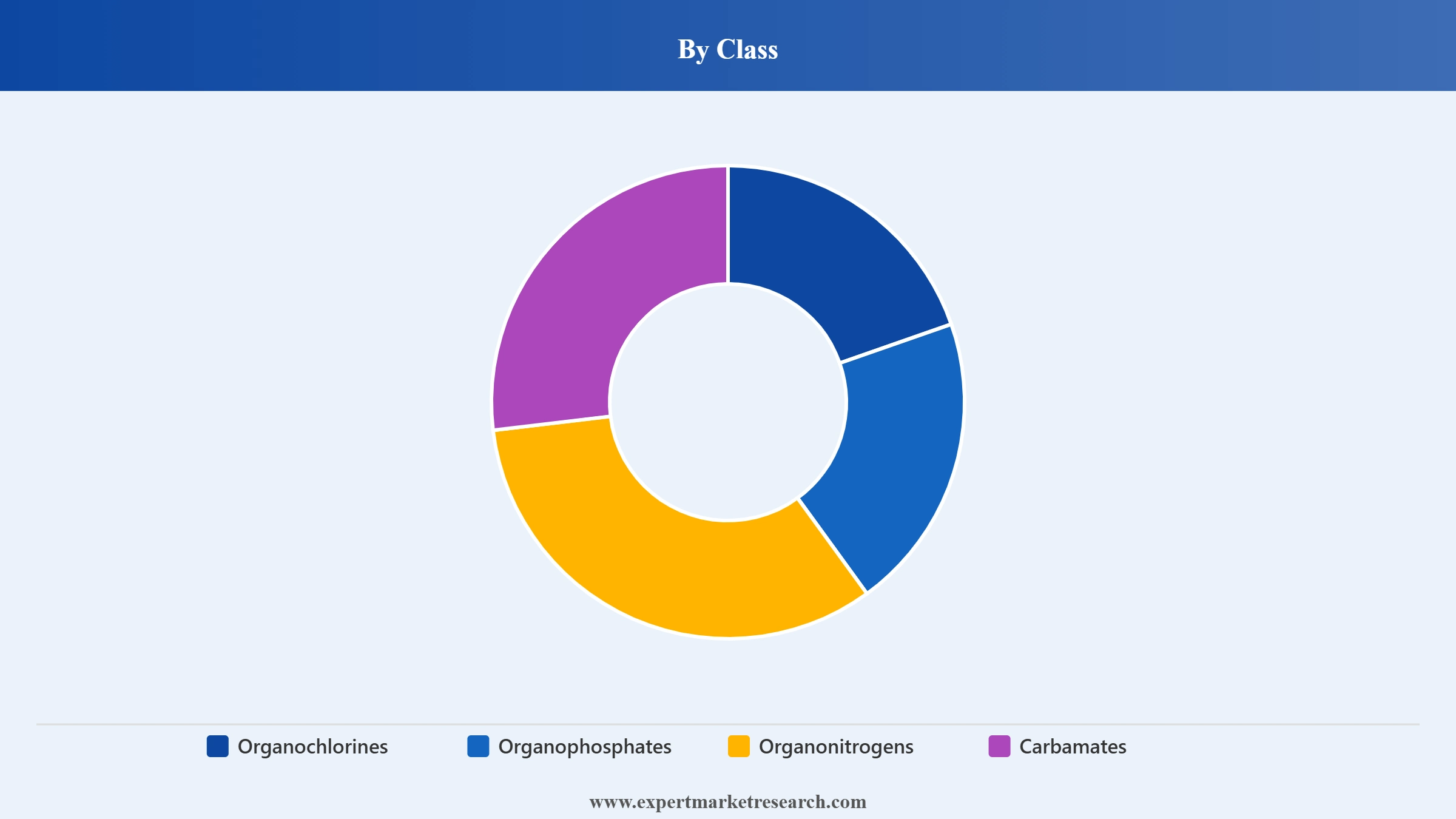
Market Breakup by Class
Key Insight: Organochlorines account for a significant class share across the pesticide residue testing market owing to their slow degradation, high toxicity, and tendency to bioaccumulate through the food chain, making testing necessary even where use has been restricted for decades. Organophosphates form a substantial category given their continued widespread agricultural application and acute toxicity profile. In June 2026, China banned the sale and use of four highly toxic actives nationwide, including the carbamates carbofuran and aldicarb alongside the organophosphate omethoate, requiring retailers to recall remaining stock across the entire supply chain. Organonitrogens round out testing demand, requiring distinct analytical approaches based on chemical structure and degradation behaviour.
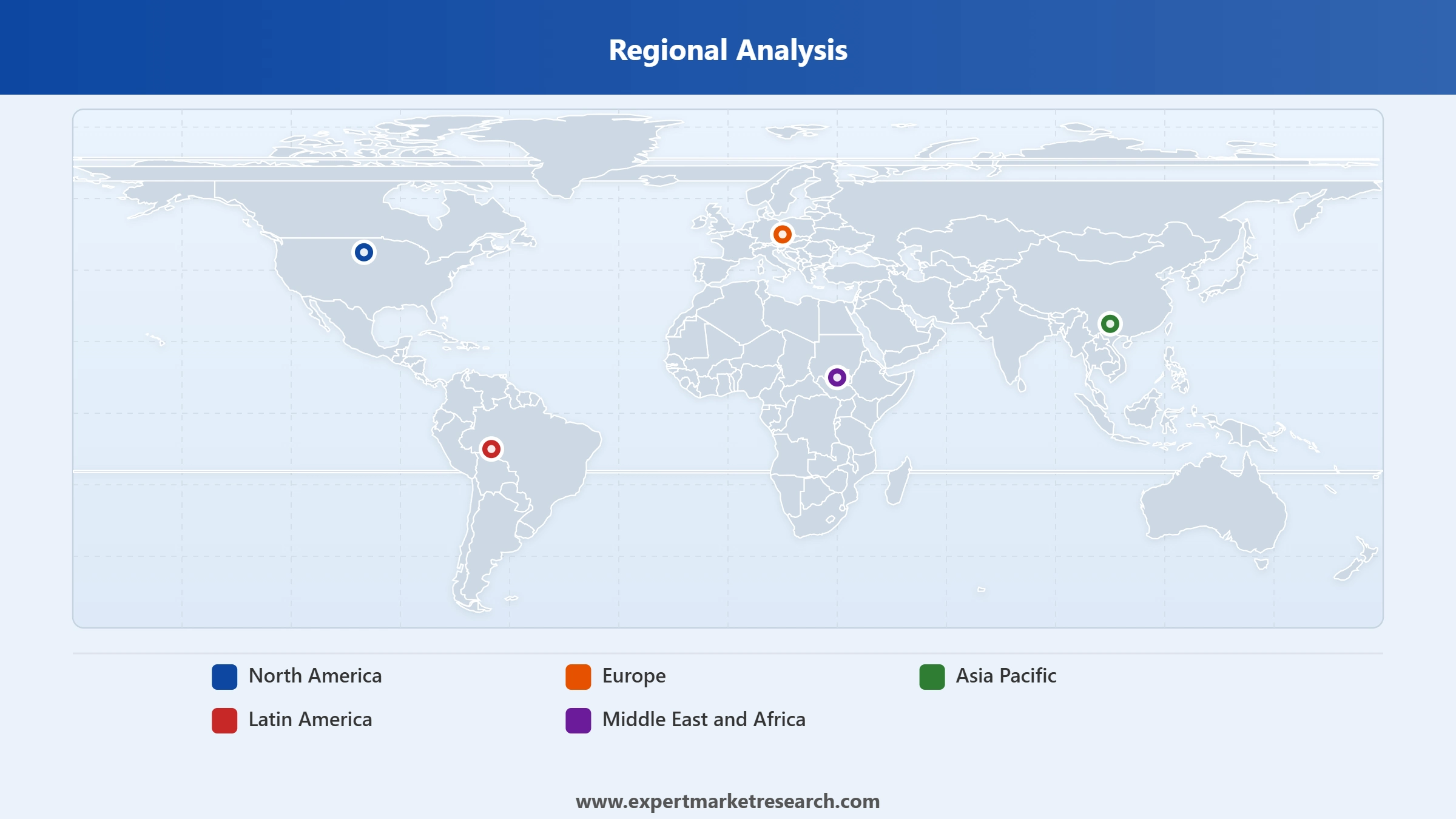
Market Breakup by Region
Key Insight: Europe holds the largest regional share of the market, supported by stringent maximum residue limits and structured multi-year monitoring programmes covering member states. North America follows closely, underpinned by rigorous FDA, EPA, and USDA oversight and a well-established food safety testing infrastructure. Asia Pacific is the fastest-growing region as rising food exports and tightening domestic regulation lift demand for testing aligned with international standards. Latin America is registering steady growth tied to its role as a major agricultural exporter, while Middle East and Africa form a smaller but developing market as food safety infrastructure gradually expands.
Read more about this report - REQUEST FREE SAMPLE COPY IN PDF
By type, insecticides hold a substantial share of the market owing to widespread agricultural use and known toxicity profile
Insecticides hold a substantial type of share of the pesticide residue testing market owing to widespread agricultural use and a known toxicity profile that keeps regulatory scrutiny high across fruit, vegetable, and grain testing. Providers serving this category continue to prioritise sensitive detection limits accordingly, since insecticide residues are subject to some of the strictest maximum residue limits across major food categories worldwide, particularly for produce consumed directly without extensive processing, cooking, or peeling beforehand.
Read more about this report - REQUEST FREE SAMPLE COPY IN PDF
Herbicides form a significant type of share of the pesticide residue testing market given extensive application in row crop farming, requiring dedicated screening methods distinct from insecticide residues due to differing chemical structures across crop types. In October 2025, New Zealand's Ministry for Primary Industries finalised new rules restricting glyphosate use on wheat, barley, and oats grown for human consumption, banning post-emergence application entirely and permitting pre-emergence use only across all covered cereal crops.
By technology, multi residue methods are the fastest-growing segment as laboratories screen hundreds of compounds in a single run
Multi residue methods are the fastest-growing technology segment of the pesticide residue testing market as laboratories increasingly seek to screen hundreds of compounds simultaneously rather than relying on slower single-residue techniques. In July 2026, India's Food Safety and Standards Authority approved updated technical specifications for High End Equipment, including liquid chromatography high-resolution mass spectrometry systems, reflecting growing regulatory recognition of high-resolution multi-residue screening capability across accredited national laboratories nationwide.
Read more about this report - REQUEST FREE SAMPLE COPY IN PDF
Gas chromatography remains a foundational technology of the pesticide residue testing market suited to volatile, thermally stable pesticide compounds requiring separation before detection under standard conditions. In May 2026, EFSA published its 2024 European Union report on pesticide residues, compiling results from 9,842 samples across foods including aubergines, bananas, broccoli, and table grapes, finding no quantifiable residues in 43.1 percent of samples analysed using the bloc's coordinated gas chromatography-based testing programme.
By food tested, fruits and vegetables account for the largest share owing to direct consumer exposure and perishability
Fruits and vegetables represent the largest food tested share of the pesticide residue testing market owing to direct consumer exposure and the highly perishable nature of produce requiring rapid turnaround testing before spoilage occurs. In March 2026, Australia's Pesticides and Veterinary Medicines Authority varied maximum residue limits for avocados and mangoes, significantly reducing the Difenoconazole limit for avocados while establishing a new temporary limit for mangoes entering the domestic retail market.
Read more about this report - REQUEST FREE SAMPLE COPY IN PDF
Processed foods require testing across complex matrices combining multiple raw ingredients, each potentially carrying distinct residue profiles from different source crops across the wider pesticide residue testing market. Providers serving this category continue to develop matrix specific extraction methods accordingly, since combined ingredient testing presents greater analytical complexity than single crop produce testing alone, requiring validated protocols for every distinct ingredient combination encountered in practice.
By class, organochlorines account for a significant share owing to slow degradation and bioaccumulation through the food chain
Organochlorines account for a significant class share of the pesticide residue testing market owing to their slow degradation, high toxicity, and tendency to bioaccumulate through the food chain, making testing necessary even where use has been restricted for decades in many jurisdictions. Providers serving this category continue to maintain legacy detection capability accordingly, since these persistent compounds continue to appear in soil and water systems long after agricultural use ends worldwide, requiring ongoing vigilance from testing laboratories.
Read more about this report - REQUEST FREE SAMPLE COPY IN PDF
Organophosphates form a substantial class share of the pesticide residue testing market given their continued widespread agricultural application and acute toxicity profile requiring close regulatory monitoring across every producing region. In June 2025, Brazil's National Health Surveillance Agency issued a sweeping update to its regulation on pesticide and disinfectant residues through Normative Instruction No. 371, modifying monographs for several active ingredients used across agrochemicals and sanitation products with immediate binding effect nationwide.
Read more about this report - REQUEST FREE SAMPLE COPY IN PDF
Europe leads the market through stringent maximum residue limits and structured multi-year monitoring programmes
Europe commands the largest share of the pesticide residue testing market, supported by stringent maximum residue limits and structured multi-year monitoring programmes covering member states across the entire bloc. In June 2026, the European Commission adopted new maximum residue levels for six pesticide substances under Regulation 2026/1314, amending existing food and animal product limits across the bloc and requiring laboratories throughout the region to update testing protocols and reference standards accordingly.
North America follows closely, underpinned by rigorous US FDA, EPA, and USDA oversight and well-established food safety testing infrastructure across the region. In January 2026, Health Canada opened public consultation on a proposed maximum residue limit for sedaxane, part of an ongoing programme of pesticide-specific reviews that requires testing laboratories to track dozens of parallel proposals moving through the regulatory pipeline at any given time throughout the consultation period.
The pesticide residue testing companies are becoming increasingly consolidated as major pesticide residue testing companies invest in multi-residue capability, accreditation breadth, and harmonised methodology to defend their market positions. Pesticide residue testing players are prioritising rapid turnaround times, expanded analyte coverage, and multi-jurisdictional accreditation to differentiate service offerings in a market where basic single-residue testing is increasingly commoditised. Strategic emphasis on aligning with evolving international regulatory standards is allowing providers to capture growing compliance driven demand from food exporters and producers.
Major pesticide residue testing market players are also focusing on technology upgrades, pursuing high-resolution mass spectrometry and automated sample preparation to reduce turnaround times and expand analyte coverage per run. Opportunities are emerging in rapid field screening technologies and expanded testing capacity across emerging export markets, as well as in supporting harmonised compliance across increasingly aligned international residue standards. Companies that successfully combine broad accreditation with fast turnaround and multi-residue capability are expected to strengthen their competitive position over the coming years.
Founded in 1987 and headquartered in Luxembourg City, Luxembourg, Eurofins Scientific SE supports the market through its global network of accredited laboratories, offering multi-residue and confirmatory testing services across food, agriculture, and environmental sectors. The company's decentralised network structure allows individual laboratories to specialise in regional regulatory requirements while sharing standardised methodology across the group. Eurofins continues to expand its network through targeted acquisitions of specialty testing firms to broaden multi-residue screening capability.
Founded in 1967 and headquartered in Chicago, Illinois, Mérieux NutriSciences Corporation supports the market through its global network of accredited food safety laboratories, offering testing, auditing, consultancy, and certification services across the food and nutrition sector. The company's presence across more than 30 countries provides accredited pesticide residue analysis for producers and exporters navigating diverse regulatory requirements. Mérieux NutriSciences continues to expand its global footprint through targeted acquisitions and regional joint ventures.
Founded in 1828 and headquartered in Neuilly-sur-Seine, France, Bureau Veritas supports the market through its testing, inspection, and certification services spanning agriculture, food, and commodities sectors worldwide. The company's extensive accreditation portfolio and nearly two-century operating history provide credibility with food exporters navigating multiple destination market requirements. Bureau Veritas continues to leverage its global laboratory network to serve producers and exporters requiring multi-jurisdictional compliance testing.
Founded in 2007 and headquartered in Auckland, New Zealand, AsureQuality Limited supports the market through its government-owned food assurance and biosecurity testing services across New Zealand and the wider Asia Pacific region. The company's scientific and agricultural pedigree spanning more than a century provides deep credibility with food exporters serving international markets. AsureQuality continues to extend its testing capability through regional joint ventures across Southeast Asia and Australia.
Other key players in the market include ALS Limited, Symbio Laboratories, Intertek Group plc, and IEH Laboratories and Consulting Group., among others.
*Please note that this is only a partial list; the complete list of key players is available in the full report. Additionally, the list of key players can be customized to better suit your needs.*
Unlock the latest insights with our pesticide residue testing market trends 2026 report. Discover regional growth patterns, technology adoption, and key industry players. Stay ahead of competition with trusted data and expert analysis. Download your free sample report today.


Upto 15% Off
USD
$2499 $2249
$3999 $3599
$4999 $4249
$5999 $5099


*While we strive to always give you current and accurate information, the numbers depicted on the website are indicative and may differ from the actual numbers in the main report. At Expert Market Research, we aim to bring you the latest insights and trends in the market. Using our analyses and forecasts, stakeholders can understand the market dynamics, navigate challenges, and capitalize on opportunities to make data-driven strategic decisions.*
The market reached a value of approximately USD 1.82 Billion in 2025.
The market is projected to grow at a CAGR of 6.10% between 2026 and 2035.
The market is estimated to witness a healthy growth in the forecast period of 2026-2035 to reach USD 3.29 Billion by 2035.
Expanding multi-residue testing capability, pursuing harmonised methodology aligned with international standards, investing in high-resolution mass spectrometry instrumentation, broadening accreditation across export destination markets, and strengthening rapid turnaround capacity for perishable produce testing.
The key trends fuelling the growth of the market include introduction of stringent food safety regulations and growing demand for organic food testing due to rising consumer awareness.
The major regions in the market are North America, Europe, the Asia Pacific, Latin America, and the Middle East and Africa.
The significant technologies available in the market include high performance liquid chromatography (HPLC), single residue method, gas chromatography, and multi residue method, among others.
The key players in the market are Eurofins Scientific SE, Mérieux NutriSciences Corporation, Bureau Veritas, AsureQuality Limited, ALS Limited, Symbio Laboratories, Intertek Group plc, and IEH Laboratories and Consulting Group, among others.
Companies face rising costs of maintaining multi-jurisdictional accreditation, a shortage of skilled analytical chemists, high capital costs for advanced mass spectrometry instrumentation, and the ongoing challenge of aligning testing protocols with continuously evolving international maximum residue limits.
Explore our key highlights of the report and gain a concise overview of key findings, trends, and actionable insights that will empower your strategic decisions.
| REPORT FEATURES | DETAILS |
| Base Year | 2025 |
| Historical Period | 2019-2025 |
| Forecast Period | 2026-2035 |
| Scope of the Report |
Historical and Forecast Trends, Industry Drivers and Constraints, Historical and Forecast Market Analysis by Segment:
|
| Breakup by Type |
|
| Breakup by Technology |
|
| Breakup by Food Tested |
|
| Breakup by Class |
|
| Breakup by Region |
|
| Market Dynamics |
|
| Competitive Landscape |
|
| Companies Covered |
|
Datasheet
One User
USD 2,499
USD 2,249
tax inclusive*
Single User License
One User
USD 3,999
USD 3,599
tax inclusive*
Five User License
Five User
USD 4,999
USD 4,249
tax inclusive*
Corporate License
Unlimited Users
USD 5,999
USD 5,099
tax inclusive*
*Please note that the prices mentioned below are starting prices for each bundle type. Kindly contact our team for further details.*
Flash Bundle
Small Business Bundle
Growth Bundle
Enterprise Bundle
*Please note that the prices mentioned below are starting prices for each bundle type. Kindly contact our team for further details.*
Flash Bundle
Number of Reports: 3
20%
tax inclusive*
Small Business Bundle
Number of Reports: 5
25%
tax inclusive*
Growth Bundle
Number of Reports: 8
30%
tax inclusive*
Enterprise Bundle
Number of Reports: 10
35%
tax inclusive*
How To Order

Select License Type
Choose the right license for your needs and access rights.

Click on ‘Buy Now’
Add the report to your cart with one click and proceed to register.

Select Mode of Payment
Choose a payment option for a secure checkout. You will be redirected accordingly.
Strategic Solutions for Informed Decision-Making
Gain insights to stay ahead and seize opportunities.

Get insights & trends for a competitive edge.

Track prices with detailed trend reports.

Analyse trade data for supply chain insights.

Leverage cost reports for smart savings

Enhance supply chain with partnerships.

Connect For More Information
Our expert team of analysts will offer full support and resolve any queries regarding the report, before and after the purchase.
Our expert team of analysts will offer full support and resolve any queries regarding the report, before and after the purchase.
We employ meticulous research methods, blending advanced analytics and expert insights to deliver accurate, actionable industry intelligence, staying ahead of competitors.
Our skilled analysts offer unparalleled competitive advantage with detailed insights on current and emerging markets, ensuring your strategic edge.
We offer an in-depth yet simplified presentation of industry insights and analysis to meet your specific requirements effectively.




