

Consumer Insights
Uncover trends and behaviors shaping consumer choices today
Procurement Insights
Optimize your sourcing strategy with key market data
Industry Stats
Stay ahead with the latest trends and market analysis.
The Philippines aquaculture market was valued at USD 3.96 Billion in 2025. The market is expected to grow at a CAGR of 7.20% during the forecast period of 2026-2035 to reach a value of USD 7.94 Billion by 2035. The surge in investments in climate-resilient aquaculture systems, including saline-tolerant species and adaptive pond engineering, is helping producers maintain productivity even when typhoons become frequent and coastal conditions keep changing.
The Philippine Fisheries Development Authority is promoting a technology-based approach to fish farming. In August 2025, Philippines announced plans of deploying 10 modern fish ports with cold storage, boosting food security, fisheries productivity, and incomes for over two million fishermen. This effort matches the country's aquaculture output hitting 2.3 million metric tons, as per the Philippines aquaculture market analysis. Moreover, shrimp and milkfish producers are installing tracking systems since buyers in Japan and the United States want better proof of compliance.
The Bureau of Fisheries and Aquatic Resources is also partnering with private hatchery businesses to grow high-value fish. So, the Philippines aquaculture market witnesses a clear focus on vannamei shrimp and dense tilapia farms. Growers are also improving feed use, testing water conditions, and boosting survival rates. These changes are helping raise production per hectare, even though expenses have not been lowered. Moreover, small-scale farms face trouble getting access to these systems. Aligning with this trend, in November 2025, Gideon De Oro opened high-tech Cebu shrimp plant using solar power, boosting exports, reducing imports, creating jobs, and strengthening Philippines seafood competitiveness.
In the meantime, San Miguel Corporation and other players are entering the aquaculture-related supply chains, specifically catering to the rising demand for feed and logistic efficiency. This is gradually resulting in a more cohesive ecosystem. Technological advancements in feed, especially protein-optimized recipes, are decreasing the reliance on imported items. Moreover, exporters are finalizing multi-year supply contracts with Southeast Asian clients. The market is becoming more consolidated, featuring a combination of informal and industrial operations.
Compound Annual Growth Rate
7.2%
Value in USD Billion
2026-2035
|
Philippines Aquaculture Market Report Summary |
Description |
Value |
|
Base Year |
USD Billion |
2025 |
|
Historical Period |
USD Billion |
2019-2025 |
|
Forecast Period |
USD Billion |
2026-2035 |
|
Market Size 2025 |
USD Billion |
3.96 |
|
Market Size 2035 |
USD Billion |
7.94 |
|
CAGR 2019-2025 |
Percentage |
XX% |
|
CAGR 2026-2035 |
Percentage |
7.20% |
|
CAGR 2026-2035 - Market by Region |
Mindanao |
8.2% |
|
CAGR 2026-2035 - Market by Environment |
Marine Water |
7.7% |
|
CAGR 2026-2035 - Market by Fish Type |
Marine Shrimps and Prawns |
8.4% |
|
2025 Market Share by Region |
Visayas |
12.7% |
The Philippines' focus on aquaculture modernization, technology, and sustainability measures enhanced productivity and export potential in this sector. This provides an opportunity for companies in the Philippines aquaculture market to partner with technology, sustainable, and infrastructure companies in enhancing aquaculture modernization in the country.
AquaHub Philippines promoted research collaboration, digital solutions, and stakeholder engagement, enabling a culture of innovation and sustainable practices. This provides an opportunity for companies to leverage innovation hubs and expand their businesses in a rapidly changing aquaculture landscape.
A high-tech shrimp processing plant based in Cebu improved efficiency in shrimp processing through the use of high-end technology and renewable sources of energy, hence enhancing export capacity and reducing the need to import shrimp products. The Philippines aquaculture market, therefore, presents opportunities in processing technology, high-tech facilities, and export-oriented investments in the value chain.
The Philippine government advanced several fisheries infrastructure projects, including the construction of new ports and cold storage facilities, which have improved the efficiency of the supply chain, quality of fish, and incomes of fish farmers. Companies can, hence, find opportunities in cold chain logistics, port infrastructure, and seafood distribution in the Philippines.
Sensor-based aquaculture is being adopted rapidly, accelerating the Philippines aquaculture market value. Some companies are testing IoT-enabled water monitoring tools that accurately measure oxygen levels, salinity, and temperature in real time. Central Luzon clusters for example, stand out in this regard. Pilot projects involving automated feeders and water quality alerts were supported by Bureau of Fisheries and Aquatic Resources. These tools have reduced the amount of waste feed and fish deaths. In July 2024, RS Aqua unveiled smart load monitoring sensors delivering real-time data, improving safety, efficiency, and operational control in aquaculture lifting and mooring systems.
Shrimp farming, particularly vannamei, is attracting strong interest from both domestic and international investors. The export market to Japan and South Korea is driving this change. Companies are focusing on disease-resistant broodstock and hatchery environments with strict control. Several private hatcheries in Visayas are expanding their capacity to stabilize supply cycles, redefining the Philippines aquaculture market dynamics. Although operating below their full potential, the Philippine Statistics Authority showed steady growth in shrimp production. Aligning with this trend, in December 2023, SEAFDEC launched biosecure broodstock facility producing disease-free black tiger shrimp post larvae, supporting industry revival, improving survival rates, and strengthening sustainable aquaculture production.
Feed entails a large percentage of the operational costs, which is why companies are eager to source it locally. San Miguel Corporation, for instance, has been working on aquafeed optimization to utilize alternative protein sources such as soybean derivatives and fishmeal substitutes. Apart from these prominent players, smaller feed producers are also trying to incorporate fermentation-based raw materials in their products. Such trends in the Philippines aquaculture market are not only driven by cost considerations but these are also linked to sustainability standards set by international buyers. In June 2025, Philippine Senate approved aquafeed mill in Capiz producing 30 metric tons daily, reducing feed costs and strengthening local aquaculture productivity.
To increase efficiency and traceability of aquaculture products, the Philippine government is encouraging the grouping of fish farming areas. The Bureau of Fisheries and Aquatic Resources have identified particular areas where the development of aquaculture can be intensified, especially in Mindanao. Besides hatcheries, cold storage and logistics, these shared pools also comprise infrastructure, accelerating the Philippines aquaculture market opportunities. The latest zoning regulations aim at lessening the environmental footprint while increasing the level of productivity. This methodical strategy is offering companies the opportunity to expand their operations in a more controlled manner. In March 2026, the government unveiled fisheries modernization plan focusing on hatchery upgrades, improved broodstock quality, feed technologies, and infrastructure to strengthen aquaculture resilience.
Export logistics is receiving heightened focus, as the Philippine Fisheries Development Authority upgrades fish ports with blast freezing and cold storage facilities. This is crucial in preserving the quality of product during export. Moreover, private players are also teaming up with logistics companies to have quicker turnaround times. Exporters are even making direct investments in refrigerated transport. As a result of these changes, post-harvest losses are declining significantly, stimulating the Philippines aquaculture market growth. In March 2026, Philippines announced plans of opening 99 cold storage facilities with USD 53 million investment, expanding cold chain infrastructure, reducing post-harvest losses, and improving food supply stability.
The EMR’s report titled “Philippines Aquaculture Market Report and Forecast 2026-2035” offers a detailed analysis of the market based on the following segments:
Market Breakup by Environment
Key Insight: Marine water environments sustain traditional species; however, these are increasingly exposed to higher levels of environmental stress. The brackish water segment is mainly export-oriented and is more methodical in its approach, particularly when it comes to shrimp. Freshwater is the only area that is undergoing transformation in terms of efficiency improvements and catering to localized demands, boosting the Philippines aquaculture market penetration.
Market Breakup by Fish Type
Key Insight: As per the Philippines aquaculture market report, shrimp farming relies on exports and demands large amounts of investment. Carps and similar fish help keep local demand steady. Brown and red seaweeds are linked to processing operations and specific export markets. Oysters rely heavily on the health and quality of surrounding coastal ecosystems. Salmon and trout are restricted by climate conditions, so their production remains relatively low. Businesses must balance high-margin export opportunities with large-volume domestic sales, helping diversify risk and maintain stable income when international demand fluctuates.
Market Breakup by Region
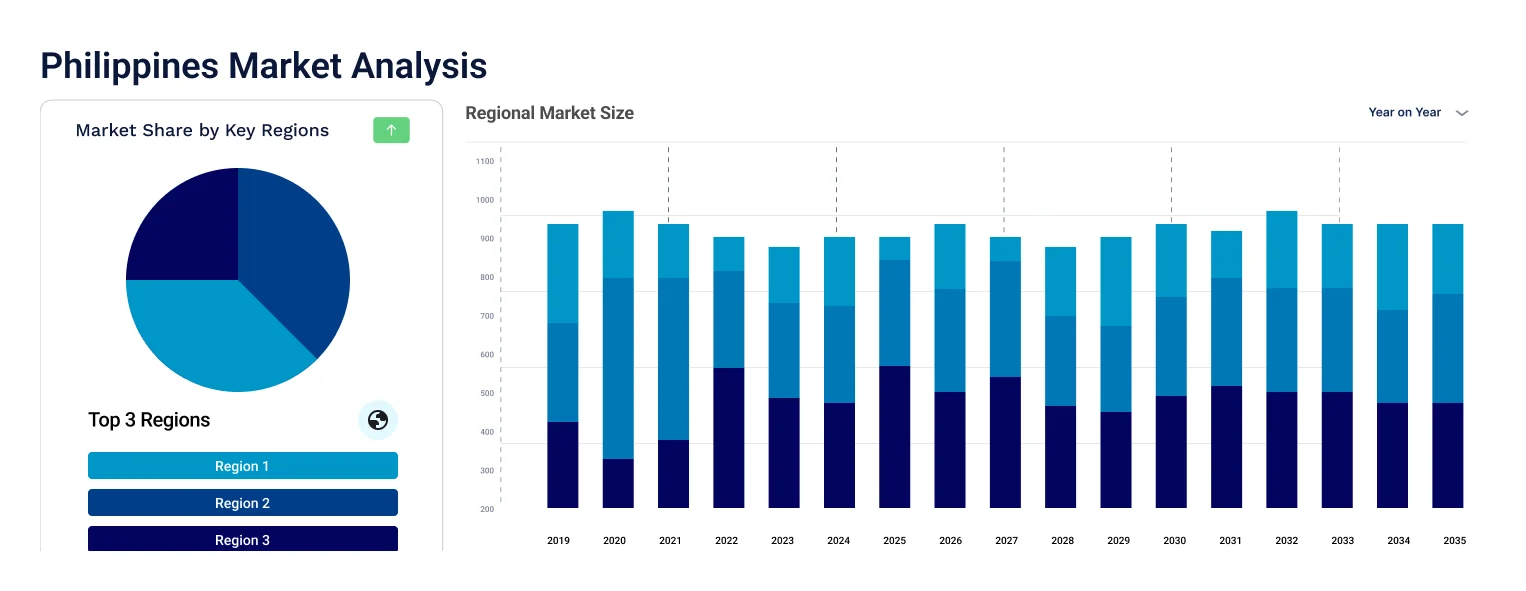
Key Insight: Luzon provides well-organized operational activities along with good infrastructure facilities. This makes Luzon a suitable option for organized aquaculture businesses, widening the Philippines aquaculture market scope. On the other hand, the Visayas region provides mixed fish farming activities, but the scale differs from one island to another. Mindanao is witnessing rapid growth as a result of fresh investments along with available undeveloped land. Each region provides different advantages, but businesses are no more considering a single region. Instead, they are looking to expand their activities across multiple regions. This helps in maintaining a balanced level of production despite varying conditions.
By environment, brackish water dominates the market due to shrimp exports and adaptability
Brackish water aquaculture is considered the leading sector in the Philippines mainly due to shrimp farming which is highly compatible with such water conditions. Coastal provinces are utilizing brackish water ponds mostly for the cultivation of vannamei which is largely accepted in export markets. Companies are concentrating on controlled salinity systems which are not completely natural. Some operators are even lining their pond bases to minimize seepage losses.
Meanwhile, freshwater aquaculture is experiencing major growth in the Philippines aquaculture market, mainly for tilapia and carp production. The demand for these two species from local markets is the main factor for farmers' willingness to increase production, although in a more controlled way. Companies are focusing on water use reduction as the water availability is becoming an issue in some farming zones. Some medium-sized farms are employing floating feeds for which the wastage is relatively less. In March 2024, The University of the Philippines Visayas (UPV), supported by DOST-PCAARRD, developed a saline-tolerant improved Nile tilapia strain known as SPIN.
By fish type, marine shrimps account for the dominant share of the market due to export demand and contract farming models
Breeding shrimp and prawns remains dominant across the Philippines aquaculture market scope, mostly because of strong overseas demand. Companies are forming farm partnerships to maintain a steady supply instead of using scattered sources. Several businesses import specialized strains to raise survival chances. In February 2026, RYNAN partnered with JCP&T to deploy TOMGOXY smart shrimp farming system in Philippines, enabling real-time monitoring, improved farm efficiency, and scalable operations.
Carps and similar cyprinids are gaining increased attention within the Philippines aquaculture market dynamics, mainly due to local dietary habits and preferences. Farmers are also adapting their pond management practices using practical, low-tech methods that have proven effective without requiring advanced technologies. Similarly, the approach to feeding the fish is also changing, with many farmers opting for a combination of feed types to save on costs. The practicality of these approaches is now becoming clearer, especially with regard to the growth and profitability of small and mid-scale aquaculture operators. Aligning with this trend, in January 2026, Philippines piloted Australian redclaw crayfish farming through BFAR trials, assessing commercial viability, promoting sustainability, biosecurity, and diversification into high-value aquaculture species.
Luzon dominates the market due to infrastructure and proximity to buyers
Luzon continues to be the leading regional market as it has better infrastructure and easier access. This region hosts a growing concentration of hatcheries, fish feed suppliers, and cold storage facilities for fish preservation, boosting the overall growth in the Philippines aquaculture market. This leads to a well-connected ecosystem of fish farming. Due to more straightforward management of logistics, companies choose to operate in Luzon. Besides, the export routes are also more accessible. Some companies are investing in farming systems which require less land but yield higher production, particularly in Central Luzon.
Mindanao is becoming a major growth hub, boosting demand in the Philippines aquaculture market. This is largely due to the availability of undeveloped land and strong support from local authorities. Private firms are investing in new farming facilities, especially for shrimp and seaweed cultivation. Besides, the availability of water resources is relatively better, paving ways for further developments. Moreover, several local councils are promoting aquaculture as a means of generating farmer incomes. In November 2025, Philippines launched largest crayfish hub producing high-value redclaw species, boosting aquaculture output, creating jobs, supporting livelihoods, and strengthening global competitiveness.
The market is gradually becoming organized as Philippines aquaculture market players are increasingly shifting their goal from merely enlarging the farm area to also enhancing survival rates. Maintaining hatchery, intensifying quality of feed, and managing water environments are the main focus area where companies invest. Export-oriented firms recognize that they need to make their systems’ traceability more robust, so they can be up to the standards set by their buyers.
Philippines aquaculture companies, in an effort to lessen their reliance on imports, go a step further by producing feeds. Others opt to create partnerships with small-scale farmers through contract farming arrangements. There is also an increased interest in cold chain and logistics. Companies find opportunities in processing value-added products, mainly in shrimps and seaweed. Firms that can consistently ensure high quality and timely delivery are better positioned to capture a larger market share.
Dataj Aquafarm Inc. was established in 2009, and the main office is located in Cagayan Valley, Philippines. The company is primarily focused on the intensive shrimp farming method. Controlled pond environment and biosecurity are key measures emphasized by the company. They supply export-standard shrimps and carry out experiments with water quality automation tools to enhance the consistency of yield and also to gradually decrease the risks of operations.
Palawan Aquaculture Corp. is a company based in Palawan, Philippines, that takes a distinctive approach to sustainable marine aquaculture. The firm produces and cultivates seaweed and fish while ensuring the lowest possible release of harmful substances into the environment. It cooperates with the local people, which in turn results in continuous supply as well as the adherence to environmentally friendly production methods in the coastal farming areas.
Freshious Inc., founded in 2018, is headquartered in Binmaley, Philippines. It has operations in the field of aquaculture processing and distribution. The company focus on fresh and chilled seafood. This ensures faster timelines for both domestic and export markets. It sources directly from farms to provide better quality control.
Fisherfarms, Inc., founded in 1997, is headquartered in Gaston, United States. It is known for tilapia farming as well as value-added seafood. The company employs modern farming methods as well as branded retail strategies. It is expanding its processing capabilities to strengthen its position in supermarkets as well as institutional businesses.
*Please note that this is only a partial list; the complete list of key players is available in the full report. Additionally, the list of key players can be customized to better suit your needs.*
Explore the latest trends shaping the Philippines aquaculture market 2026-2035 with our in-depth report. Gain strategic insights, future forecasts, and key market developments that can help you stay competitive. Download a free sample report or contact our team for customized consultation on Philippines aquaculture market trends 2026.


Upto 15% Off
USD
$2499 $2249
$3999 $3599
$4999 $4249
$5999 $5099


*While we strive to always give you current and accurate information, the numbers depicted on the website are indicative and may differ from the actual numbers in the main report. At Expert Market Research, we aim to bring you the latest insights and trends in the market. Using our analyses and forecasts, stakeholders can understand the market dynamics, navigate challenges, and capitalize on opportunities to make data-driven strategic decisions.*
In 2025, the Philippines aquaculture market reached an approximate value of USD 3.96 Billion.
The market is projected to grow at a CAGR of 7.20% between 2026 and 2035.
The key players in the market include DATAJ Aquafarm Inc., Palawan Aquaculture Corp., Freshious Inc., and Fisherfarms, Inc., among others.
Companies are investing in hatchery upgrades, forming farmer partnerships, improving feed efficiency, expanding cold storage networks, and diversifying species portfolios to balance export demand with domestic consumption stability.
Disease outbreaks, inconsistent feed costs, climate disruptions, and limited access to advanced technology are creating operational uncertainties. Smaller farms struggle more, especially when trying to meet export quality standards consistently.
Explore our key highlights of the report and gain a concise overview of key findings, trends, and actionable insights that will empower your strategic decisions.
| REPORT FEATURES | DETAILS |
| Base Year | 2025 |
| Historical Period | 2019-2025 |
| Forecast Period | 2026-2035 |
| Scope of the Report |
Historical and Forecast Trends, Industry Drivers and Constraints, Historical and Forecast Market Analysis by Segment:
|
| Breakup by Environment |
|
| Breakup by Fish Type |
|
| Breakup by Region |
|
| Market Dynamics |
|
| Competitive Landscape |
|
| Companies Covered |
|
Datasheet
One User
USD 2,499
USD 2,249
tax inclusive*
Single User License
One User
USD 3,999
USD 3,599
tax inclusive*
Five User License
Five User
USD 4,999
USD 4,249
tax inclusive*
Corporate License
Unlimited Users
USD 5,999
USD 5,099
tax inclusive*
*Please note that the prices mentioned below are starting prices for each bundle type. Kindly contact our team for further details.*
Flash Bundle
Small Business Bundle
Growth Bundle
Enterprise Bundle
*Please note that the prices mentioned below are starting prices for each bundle type. Kindly contact our team for further details.*
Flash Bundle
Number of Reports: 3
20%
tax inclusive*
Small Business Bundle
Number of Reports: 5
25%
tax inclusive*
Growth Bundle
Number of Reports: 8
30%
tax inclusive*
Enterprise Bundle
Number of Reports: 10
35%
tax inclusive*
How To Order

Select License Type
Choose the right license for your needs and access rights.

Click on ‘Buy Now’
Add the report to your cart with one click and proceed to register.

Select Mode of Payment
Choose a payment option for a secure checkout. You will be redirected accordingly.
Strategic Solutions for Informed Decision-Making
Gain insights to stay ahead and seize opportunities.

Get insights & trends for a competitive edge.

Track prices with detailed trend reports.

Analyse trade data for supply chain insights.

Leverage cost reports for smart savings

Enhance supply chain with partnerships.

Connect For More Information
Our expert team of analysts will offer full support and resolve any queries regarding the report, before and after the purchase.
Our expert team of analysts will offer full support and resolve any queries regarding the report, before and after the purchase.
We employ meticulous research methods, blending advanced analytics and expert insights to deliver accurate, actionable industry intelligence, staying ahead of competitors.
Our skilled analysts offer unparalleled competitive advantage with detailed insights on current and emerging markets, ensuring your strategic edge.
We offer an in-depth yet simplified presentation of industry insights and analysis to meet your specific requirements effectively.




