

Consumer Insights
Uncover trends and behaviors shaping consumer choices today
Procurement Insights
Optimize your sourcing strategy with key market data
Industry Stats
Stay ahead with the latest trends and market analysis.
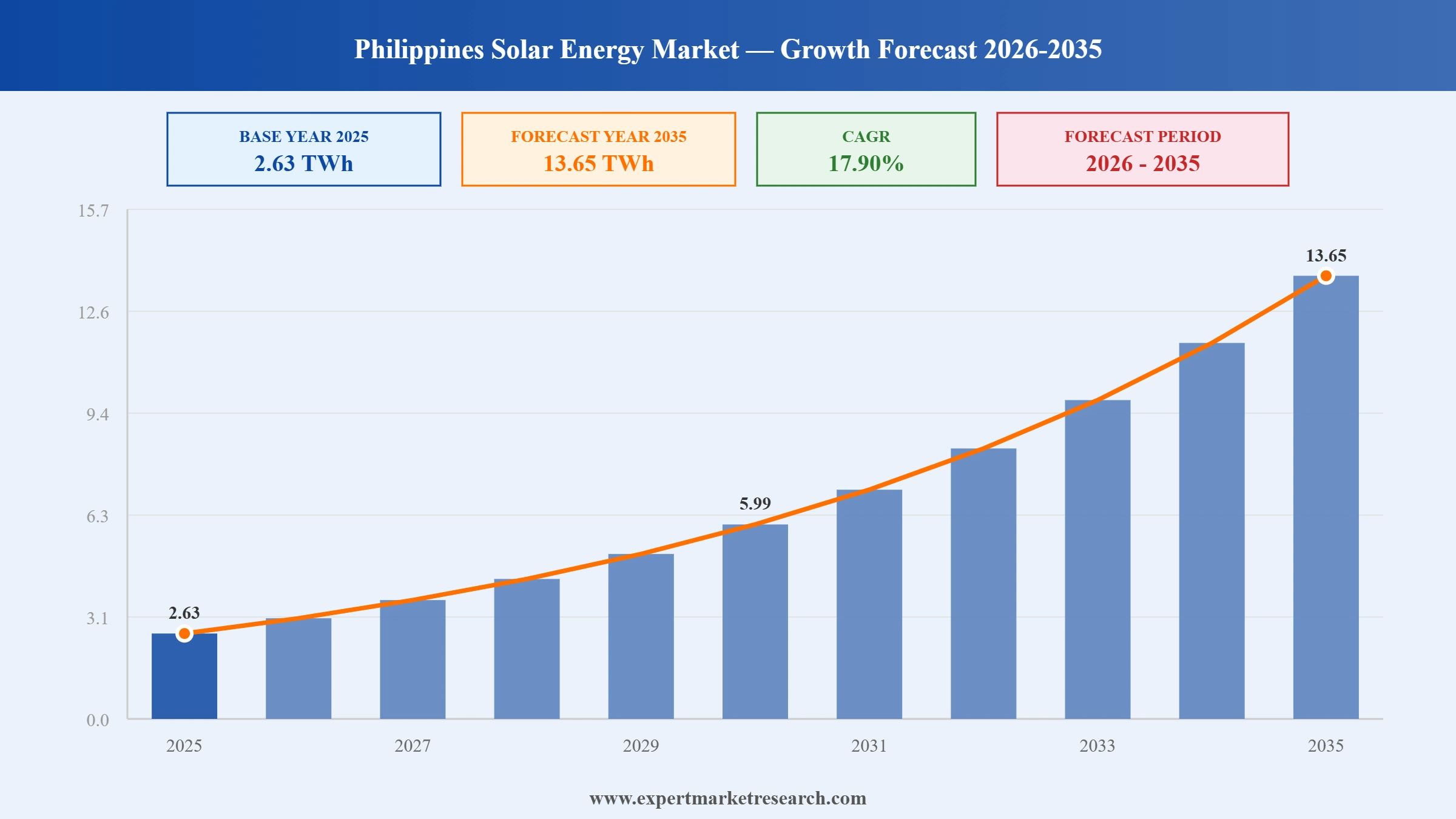
The Philippines solar energy market reached the volume of approximately 2.63 TWh in 2025 and is projected to expand at a CAGR of around 17.90% during the forecast period of 2026-2035. The Philippines' high solar irradiance, supportive government renewable energy policies under the National Renewable Energy Plan 2020-2040, the Green Energy Auction Program driving large-scale utility solar procurement, falling solar panel costs enabling rooftop solar adoption, and the government target to expand solar capacity to 27,162 MW by 2040 are driving Philippines solar energy market growth. The market is expected to reach 13.65 TWh by 2035.
Read more about this report - REQUEST FREE SAMPLE COPY IN PDF
| Philippines Solar Energy Market Report Summary | Description | Value |
| Base Year | TWh | 2025 |
| Historical Period | TWh | 2019-2025 |
| Forecast Period | TWh | 2026-2035 |
| Market Size 2025 | TWh | 2.63 |
| Market Size 2035 | TWh | 13.65 |
| CAGR 2019-2025 | Percentage | XX% |
| CAGR 2026-2035 | Percentage | 17.90% |
| CAGR 2026-2035 - Market by Solar Module | Monocrystalline | 19.8% |
| CAGR 2026-2035 - Market by Application | Residential | 19.8% |
| 2025 Market Share by Solar Module | Polycrystalline | XX% |
The Philippines solar energy market is driven by the government's National Renewable Energy Plan 2020-2040 targeting 27,162 MW of solar capacity by 2040, the Green Energy Auction Program driving utility-scale solar procurement, falling solar panel costs, growing rooftop solar adoption through net metering, and large-scale FDI into the Philippines solar sector.
Ayala-led ACEN Corp. plans to invest PHP 15.8 billion to add a 2,000 MWh battery energy storage system (BESS) at its 585 MW San Marcelino solar park in Zambales, the Philippines' largest operational solar project. ACEN filed the BESS application at the Department of Environment and Natural Resources in March 2026. The San Marcelino solar park's first two phases (384 MW) are already operational, with full 585 MW capacity expected by 2027. ACEN is targeting 5,000 MW of operational capacity by end of 2026.
ACEN Corp. energized its PHP 2.8 billion 60 MW San Manuel Solar farm in San Manuel, Pangasinan in January 2026, expanding its renewable energy presence in the Philippines. The San Manuel Solar forms part of ACEN's strategic expansion following its acquisition of Sinocalan Solar Power Corp. in 2022. ACEN plans to spend more than PHP 80 billion in capex in 2026 (significantly higher than its PHP 55 billion capex in 2025), as the company targets 5,000 MW of operational renewable energy capacity by end of 2026.
Actis, a sustainable infrastructure investor, closed a USD 600 million investment for a 40% share in Terra Solar Philippines in May 2025, marking the country's largest greenfield solar energy FDI. Terra Solar is the 3.5 GW solar and 4.5 GWh battery energy storage system (BESS) project developed by Solar Philippines New Energy Corp. (SPNEC) in Nueva Ecija and Bulacan provinces in Luzon.
ACCIONA Energia began construction of the 176 MW Daanbantayan solar plant in Cebu in March 2025, under the Philippines' Green Energy Auction Program (GEAP) Round 4 power supply contract. The Daanbantayan solar plant, with an investment of EUR 120 million, is expected to generate 280 GWh per year and cover the electricity consumption of approximately 300,000 people. ACCIONA Energia holds a development pipeline of over 2 GW of renewable energy projects in the Philippines.
Solar Photovoltaic (PV) technology is the dominant Philippines solar energy market technology, accounting for virtually all of the country's cumulative solar capacity of approximately 3.892 GW by end of 2025. The Philippines installed 899 MW of solar in 2025, led by ground-mounted solar projects. The government's Philippines Energy Plan targets the addition of 11,070 MW of additional solar capacity. Concentrated Solar Power (CSP) remains a negligible niche.
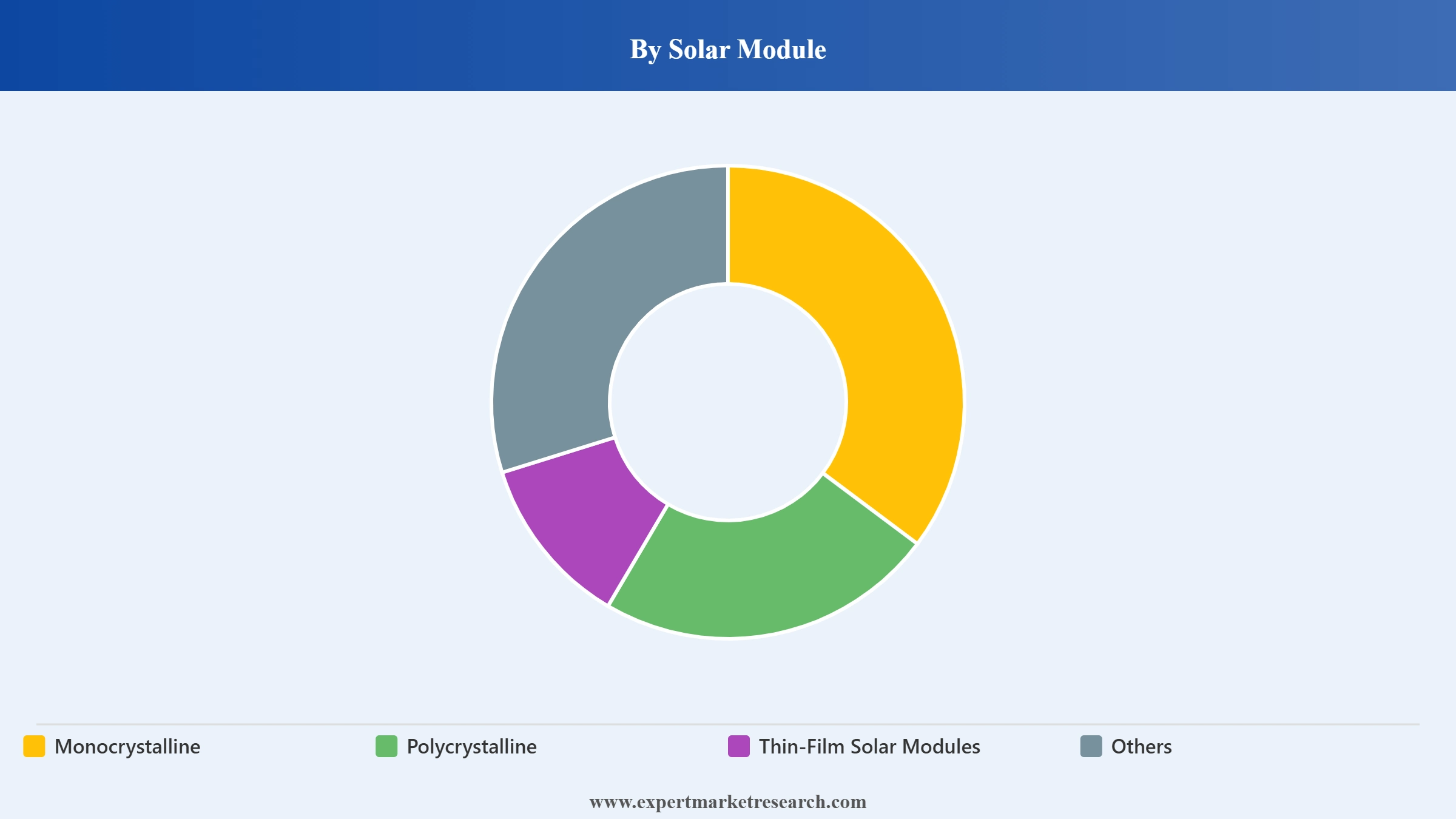
Monocrystalline solar modules are the fastest-growing Philippines solar energy market module type, driven by their higher energy conversion efficiency compared to polycrystalline and thin-film modules, and the rapid decline in monocrystalline module manufacturing costs globally. Monocrystalline modules are increasingly preferred for residential rooftop solar and commercial and industrial applications. Polycrystalline modules are widely used in utility-scale solar installations due to lower upfront costs.
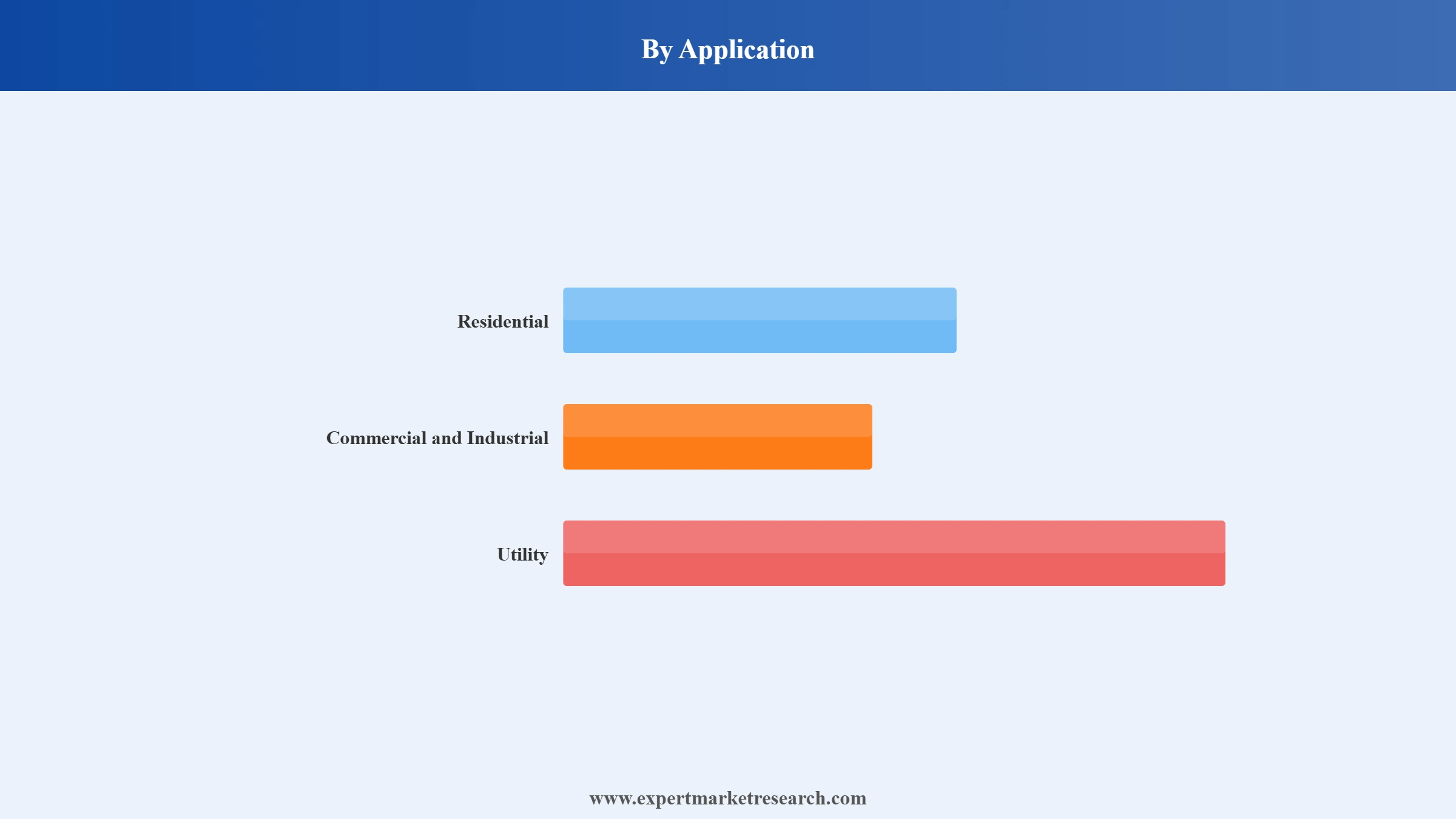
Utility solar energy is the dominant Philippines solar energy market application, capturing approximately 72% of 2025 capacity through large-scale utility solar farms procured under the Green Energy Auction Program. Major utility solar projects include ACEN's 585 MW San Marcelino Solar Park in Zambales and SPNEC's 3.5 GW Terra Solar project in Luzon. Residential solar energy is the fastest-growing application at approximately 31.6% CAGR, driven by the expanded 1 MW net metering cap and falling rooftop solar costs.
Residential solar is the fastest-growing Philippines solar energy market application at approximately 31.6% CAGR, driven by the Philippines government’s expansion of the net metering cap to 1 MW, falling solar module costs, and growing household awareness of rooftop solar as a means to reduce electricity bills under rising distribution utility rates. The DOE’s expanded net metering policy enables residential customers with rooftop solar installations up to 1 MW to export excess solar generation back to the grid, significantly improving the economics of residential solar investment across the Philippines.
Commercial and Industrial solar is a significant Philippines solar energy market application, driven by large corporate entities and industrial facilities procuring renewable energy through corporate power purchase agreements, the Green Energy Option Programme (GEOP), and on-site rooftop solar installations to reduce energy costs and meet sustainability commitments. The Green Energy Auction Program facilitates competitive procurement of renewable energy for commercial and industrial offtakers. Major multinational and local companies in the Philippines are investing in commercial rooftop solar installations across manufacturing, retail, and logistics facilities.
The "Philippines Solar Energy Market Report and Forecast 2026-2035" by Expert Market Research offers analysis across the following segments:
Market Breakup by Technology
Key Insight: Solar Photovoltaic is the dominant Philippines solar energy market technology, accounting for virtually all of the country's cumulative solar capacity. Concentrated Solar Power is a negligible niche.
Market Breakup by Solar Module
Key Insight: Monocrystalline is the fastest-growing Philippines solar energy market module type through efficiency and cost advantages. Polycrystalline is widely used in utility-scale solar. Thin-Film serves niche applications.
Market Breakup by Application
Key Insight: Utility is the dominant Philippines solar energy market application, capturing approximately 72% of 2025 capacity. Residential is the fastest-growing application at approximately 31.6% CAGR through net metering.
Read more about this report - REQUEST FREE SAMPLE COPY IN PDF
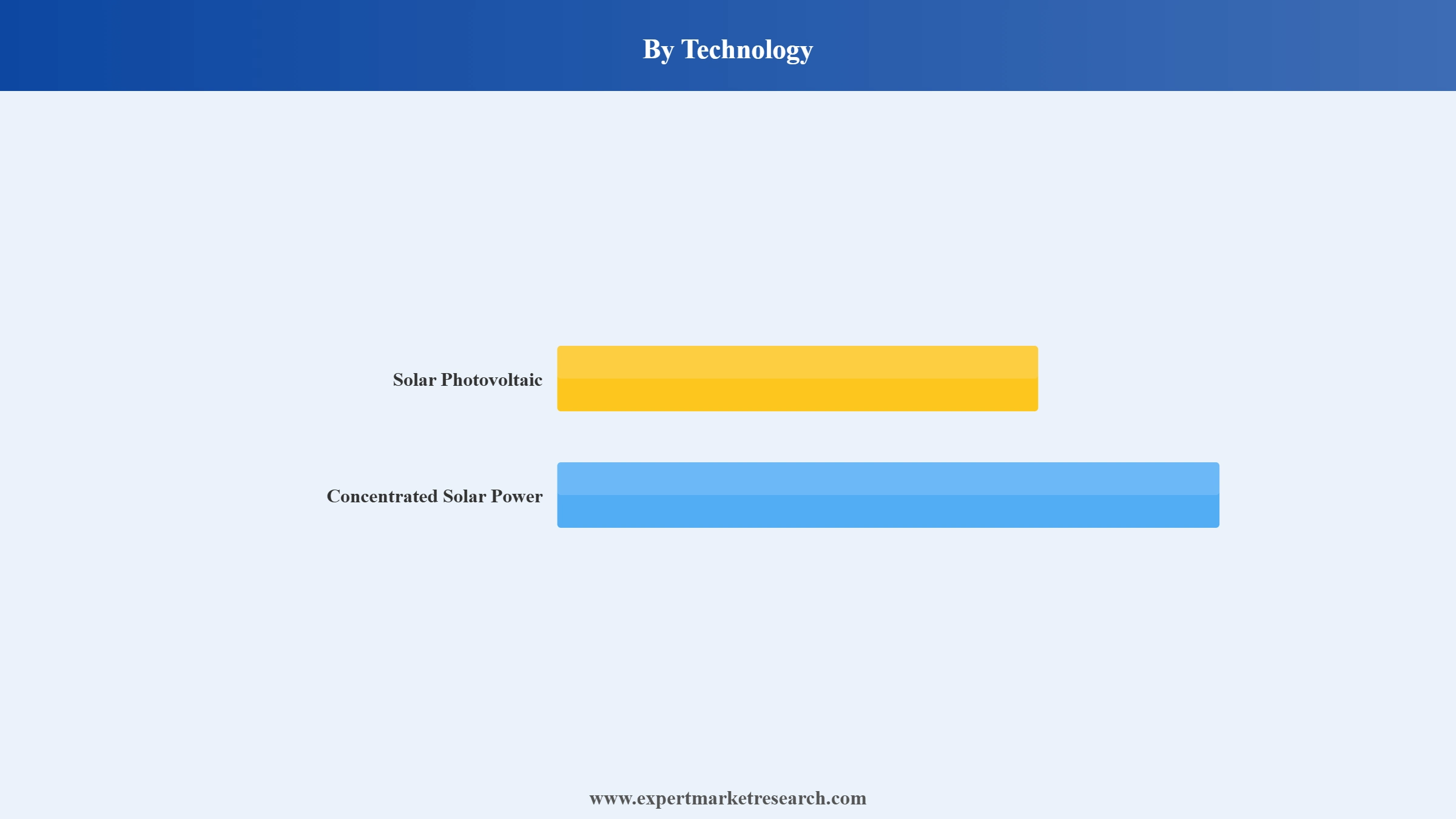
By Technology, Solar Photovoltaic is the dominant technology in the Philippines solar energy market
Solar Photovoltaic (PV) commands the largest Philippines solar energy market share by technology, driven by near-exclusive adoption across utility-scale solar farms, commercial and industrial rooftop installations, and residential rooftop solar systems. The Philippines' cumulative solar PV capacity reached approximately 3.892 GW by end of 2025, with 899 MW installed in 2025 alone. Concentrated Solar Power (CSP) remains a negligible niche in the Philippines solar energy market.
Read more about this report - REQUEST FREE SAMPLE COPY IN PDF
By Solar Module, Monocrystalline is the fastest-growing module in the Philippines solar energy market
Monocrystalline solar modules are the fastest-growing Philippines solar energy market module type, driven by higher energy conversion efficiency, falling module costs, and growing adoption in residential and commercial and industrial applications. Polycrystalline solar modules are widely used in utility-scale solar projects in the Philippines due to their lower upfront cost. Thin-Film Solar Modules serve niche applications in building-integrated photovoltaics.
Read more about this report - REQUEST FREE SAMPLE COPY IN PDF
By Application, Utility is the dominant application while Residential is the fastest-growing in the Philippines market
Utility commands the largest Philippines solar energy market share by application, with approximately 72% of 2025 capacity from large utility-scale solar farms procured through the Green Energy Auction Program and direct bilateral contracts. Commercial and Industrial is a significant application through corporate renewable energy procurement. Residential solar energy is the fastest-growing application at approximately 31.6% CAGR, driven by the expanded net metering cap of 1 MW and falling rooftop solar costs.
Read more about this report - REQUEST FREE SAMPLE COPY IN PDF
The Philippines solar energy market is competitive, with domestic solar developers and installers, international renewable energy companies, and power generation groups competing through project scale, Green Energy Auction Program participation, rooftop solar installation capabilities, and grid connection expertise.
SOLAR PHILIPPINES (Solar Philippines New Energy Corp./SPNEC) is a Philippines-based solar energy developer with a significant Philippines solar energy market presence through its large-scale utility solar project development. SOLAR PHILIPPINES is developing the 3.5 GW Terra Solar project in Nueva Ecija and Bulacan, which upon completion will be among the world's largest solar and battery energy storage system projects. In May 2025, Actis closed USD 600 million for a 40% stake in Terra Solar Philippines, the Philippines' largest greenfield solar energy FDI.
Solaric Corp. is a Philippines-based solar energy company with a significant Philippines solar energy market presence through its residential and commercial rooftop solar installation and distribution services. Solaric Corp. serves the Philippines solar energy market with solar PV system design, installation, and maintenance services for residential, commercial, and industrial customers across Metro Manila and provincial areas. Solaric Corp. is a leading brand in the Philippines' growing rooftop solar segment.
Philergy Inc. is a Philippines-based solar energy company with a significant Philippines solar energy market presence through its rooftop solar design, installation, financing, and maintenance services. Philergy Inc. serves the Philippines solar energy market with high-quality solar PV system installation for residential and commercial customers, offering turnkey solar solutions from system design through installation and after-sales service. Philergy is recognized as one of the Philippines' leading solar energy service providers.
GoSolar Philippines is a Philippines-based solar energy company with a significant Philippines solar energy market presence through its solar panel distribution, rooftop solar installation, and solar energy system services across the Philippines. GoSolar Philippines serves the Philippines solar energy market with solar panel supply, PV system design, and installation services for residential, commercial, and industrial customers.
Other key players include Transnational Uyeno Solar Corporation, We Gen Energy Philippines, and others.
*Please note that this is only a partial list; the complete list of key players is available in the full report. Additionally, the list of key players can be customized to better suit your needs.*
Our full report for 2026-2035 delivers the market data, competitive intelligence, and strategic analysis to capture the Philippines' rapidly growing solar energy market. Reach out to our team to access the complete report or request a customised version.


Upto 15% Off
USD
$3999 $3599
$2499 $2249
$4999 $4249
$5999 $5099


*While we strive to always give you current and accurate information, the numbers depicted on the website are indicative and may differ from the actual numbers in the main report. At Expert Market Research, we aim to bring you the latest insights and trends in the market. Using our analyses and forecasts, stakeholders can understand the market dynamics, navigate challenges, and capitalize on opportunities to make data-driven strategic decisions.*
In 2025, the market reached an approximate volume of 2.63 TWh.
The market is projected to grow at a CAGR of 17.90% between 2026 and 2035.
The market is assessed to witness healthy growth in the forecast period to reach around 13.65 TWh in 2035.
The different technologies in the market are solar photovoltaic and conventional solar power.
The different segments based on solar modules considered in the market report include monocrystalline, polycrystalline, and thin-film solar modules, among others.
The different applications of solar energy include residential, commercial and industrial, and utility.
The key players in the market include SOLAR PHILIPPINES, Solaric Corp., Philergy Inc., GoSolar Philippines, Transnational Uyeno Solar Corporation, and We Gen Energy Philippines, among others.
Grid congestion, land acquisition delays, financing exposure, regulatory complexity, and rising equipment logistics costs continue pressuring project timelines, margins, and execution certainty across diverse Philippine regions.
Developers are integrating storage, forming EPC alliances, securing land early, diversifying C&I portfolios, and structuring peso-denominated financing to improving resilience and long-term project bankability.
Explore our key highlights of the report and gain a concise overview of key findings, trends, and actionable insights that will empower your strategic decisions.
| REPORT FEATURES | DETAILS |
| Base Year | 2025 |
| Historical Period | 2019-2025 |
| Forecast Period | 2026-2035 |
| Scope of the Report |
Historical and Forecast Trends, Industry Drivers and Constraints, Historical and Forecast Market Analysis by Segment:
|
| Breakup by Technology |
|
| Breakup by Solar Module |
|
| Breakup by Application |
|
| Market Dynamics |
|
| Competitive Landscape |
|
| Companies Covered |
|
Single User License
One User
USD 3,999
USD 3,599
tax inclusive*
Datasheet
One User
USD 2,499
USD 2,249
tax inclusive*
Five User License
Five User
USD 4,999
USD 4,249
tax inclusive*
Corporate License
Unlimited Users
USD 5,999
USD 5,099
tax inclusive*
*Please note that the prices mentioned below are starting prices for each bundle type. Kindly contact our team for further details.*
Flash Bundle
Small Business Bundle
Growth Bundle
Enterprise Bundle
*Please note that the prices mentioned below are starting prices for each bundle type. Kindly contact our team for further details.*
Flash Bundle
Number of Reports: 3
20%
tax inclusive*
Small Business Bundle
Number of Reports: 5
25%
tax inclusive*
Growth Bundle
Number of Reports: 8
30%
tax inclusive*
Enterprise Bundle
Number of Reports: 10
35%
tax inclusive*
How To Order

Select License Type
Choose the right license for your needs and access rights.

Click on ‘Buy Now’
Add the report to your cart with one click and proceed to register.

Select Mode of Payment
Choose a payment option for a secure checkout. You will be redirected accordingly.
Strategic Solutions for Informed Decision-Making
Gain insights to stay ahead and seize opportunities.

Get insights & trends for a competitive edge.

Track prices with detailed trend reports.

Analyse trade data for supply chain insights.

Leverage cost reports for smart savings

Enhance supply chain with partnerships.

Connect For More Information
Our expert team of analysts will offer full support and resolve any queries regarding the report, before and after the purchase.
Our expert team of analysts will offer full support and resolve any queries regarding the report, before and after the purchase.
We employ meticulous research methods, blending advanced analytics and expert insights to deliver accurate, actionable industry intelligence, staying ahead of competitors.
Our skilled analysts offer unparalleled competitive advantage with detailed insights on current and emerging markets, ensuring your strategic edge.
We offer an in-depth yet simplified presentation of industry insights and analysis to meet your specific requirements effectively.




