

Consumer Insights
Uncover trends and behaviors shaping consumer choices today
Procurement Insights
Optimize your sourcing strategy with key market data
Industry Stats
Stay ahead with the latest trends and market analysis.
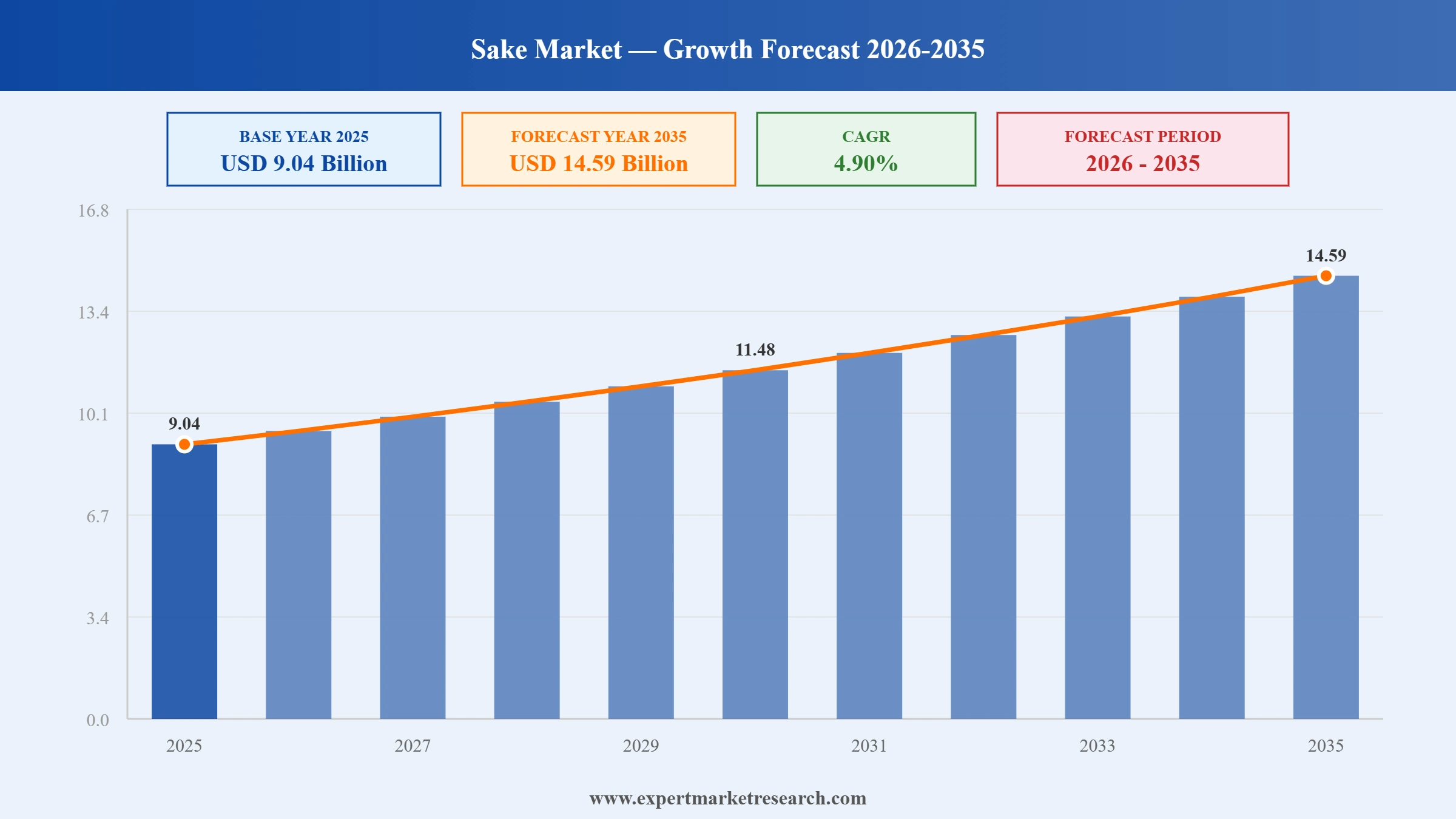
The global sake market was valued at USD 9.04 Billion in 2025. The rise of sake-based cocktails in global mixology circuits is broadening consumer accessibility and boosting on-trade demand, especially across rooftop bars, boutique hotels, and Asian fusion dining venues. As a result, the market is expected to grow at a CAGR of 4.90% during the forecast period of 2026-2035 to reach a value of USD 14.59 Billion by 2035.
The global market growth is largely driven by the surging demand for traditional alcohol blends with premium and health-forward innovations. The market is boosted by global hospitality and retail sectors, mainly across the United States and United Kingdom. Japan’s Ministry of Agriculture revealed a record-breaking export figure, crossing USD 9 billion in 2024.
Meanwhile, Japanese authorities are accelerating the sake demand through promotional programmes like JETRO’s (Japan External Trade Organisation) “Japan Food Product Overseas Promotion” initiative, offering subsidies to exporters. More importantly, sake startups growing in California and New York, encouraged by relaxed local brewing laws and rising interest in artisanal beverages.
The sake market growth is further fuelled by a growing global interest in Japanese culture. The international popularity of Japanese cuisine has sparked interest in the accompanying beverages, with sake emerging as a natural complement to traditional meals. As consumers' exposure to Japanese culture develops, they are likely to become more familiar with sake and its unique role in Japanese dining experiences. This newfound appreciation is projected to increase demand, especially in areas that have adopted Japanese culinary traditions.
Read more about this report - REQUEST FREE SAMPLE COPY IN PDF
| Global Sake Market Report Summary | Description | Value |
| Base Year | USD Billion | 2025 |
| Historical Period | USD Billion | 2019-2025 |
| Forecast Period | USD Billion | 2026-2035 |
| Market Size 2025 | USD Billion | 9.04 |
| Market Size 2035 | USD Billion | 14.59 |
| CAGR 2019-2025 | Percentage | XX% |
| CAGR 2026-2035 | Percentage | 4.90% |
| CAGR 2026-2035 - Market by Region | Asia Pacific | 5.5% |
| CAGR 2026-2035 - Market by Country | India | 6.4% |
| CAGR 2026-2035 - Market by Country | China | 5.3% |
| CAGR 2026-2035 - Market by Product Type | Junmai Ginjo | 5.7% |
| CAGR 2026-2035 - Market by Age Group | 20-40 Years Old | 5.4% |
| Market Share by Country 2025 | France | 3.3% |
Asahi Shuzo Co. announced plans to produce the first outer space sake in history. They will only produce one bottle and donate the 100 million yen (USD 640,000) that is made from its sale to domestic space exploration firms. This initiative reinforces Japan’s tradition-meets-innovation narrative, enhancing brand prestige globally and attracting affluent collectors and luxury beverage distributors seeking exclusivity in premium markets.
The first national non-alcoholic sake, ZERO, was launched by Origami Sake, a pioneer in American sake brewing. ZERO, which is now offered in 750ml bottles at a few retailers, offers the genuine flavour of sake without alcohol, making it a creative and inclusive choice for the changing beverage market. This development expands the market to health-conscious and sober-curious consumers, opening new B2B opportunities in wellness retail and hospitality.
Bōken Sake introduced a line of creative and palatable sakes made by Japan's next generation of brewers. The Junmai Ginjō (rice and water milled to 60%) sakes Bōken Ringo, Bōken no. 77, Bōken Nigori, and Bōken Nana go well with a variety of New American cuisine, including Texas BBQ and regional New England seafood. Bōken Sake’s fusion-friendly, new-age brews cater to international culinary trends, supporting sake’s integration into Western fine dining menus and expanding distribution into niche F&B and gourmet retail markets.
The new official worldwide website of Gekkeikan Sake Company, Ltd., a pioneer in the craft of sake craftsmanship, was launched. With its exciting new releases and timeless classics, this portal acts as a digital getaway to the vast world of Gekkeikan Sake. This launch strengthens direct-to-consumer engagement while enhancing brand accessibility and visibility for importers, distributors, and on-trade clients in emerging sake-consuming regions.
Artisanal breweries are growing in numbers in North America and parts of Europe. For instance, Brooklyn Kura, a sake brewer based in New York City, capitalises on the farm-to-glass trend. Local sourcing of rice and open brewing events are reshaping consumer interest and retail partnerships. Regulatory frameworks in the United States are further aiding to the overall growth in the sake market. For instance, Oregon passed a bill allowing small-scale, out-of-state breweries to distribute directly, making it easy for restaurants and niche retailers to onboard. Such decentralization fosters market expansion and appeals to conscious consumers.
AI is quietly transforming the sake market dynamics. Breweries are adopting precision fermentation using data-driven yeast cultivation to stabilise flavours in fluctuating climates. This is particularly vital as global warming alters rice quality seasonally. For instance, in March 2023, Sapporo adopted artificial intelligence to boost production by tracking fermentation lineage. This is in an effort to maintain authenticity in export markets.
The sake industry further observes an increasing shift towards premium, small-batch offerings. Gekkeikan introduced a gold-flaked Junmai Daiginjo variant in November 2024 that rapidly sold out in Tokyo and Hong Kong. B2B buyers, especially in luxury hotel and airline space, are using these limited editions to build exclusive offerings. Due to their rarity, these launches tend to hype the brand, create loyalty among consumers, and usually come with unique packaging. These variants grow rapidly popular during seasonal promotional events, or even gifting campaigns targeting affluent, discerning customers who wish to find authenticity and rarity in their selections.
Several breweries are reintroducing Edo-period brewing methods, like Kimoto and Yamahai, offering rustic and acidic flavour profiles that pair well with global cuisines, reshaping the sake market trends. For instance, Ozeki’s 2021 limited Kimoto release in the United States has led to repeat orders from fine-dining establishments. This method-driven revival appeals to B2B clients looking to diversify menus beyond the mainstream, adding an exotic yet authentic touch to beverage lists.
The amino acids and peptides that sake drinks offer are being re-marketed as health aids to boost the market growth. For instance, Tatsuuma-Honke offers a low-ABV Junmai blend infused with antioxidant-rich Yuzu, targeting wellness-conscious drinkers. Powered by WHO reports warning against high-alcohol lifestyles, these health-infused variants allow brands to stay competitive in the market.
The EMR’s report titled “Global Sake Market Report and Forecast 2026-2035” offers a detailed analysis of the market based on the following segments:
Market Breakup by Product Type
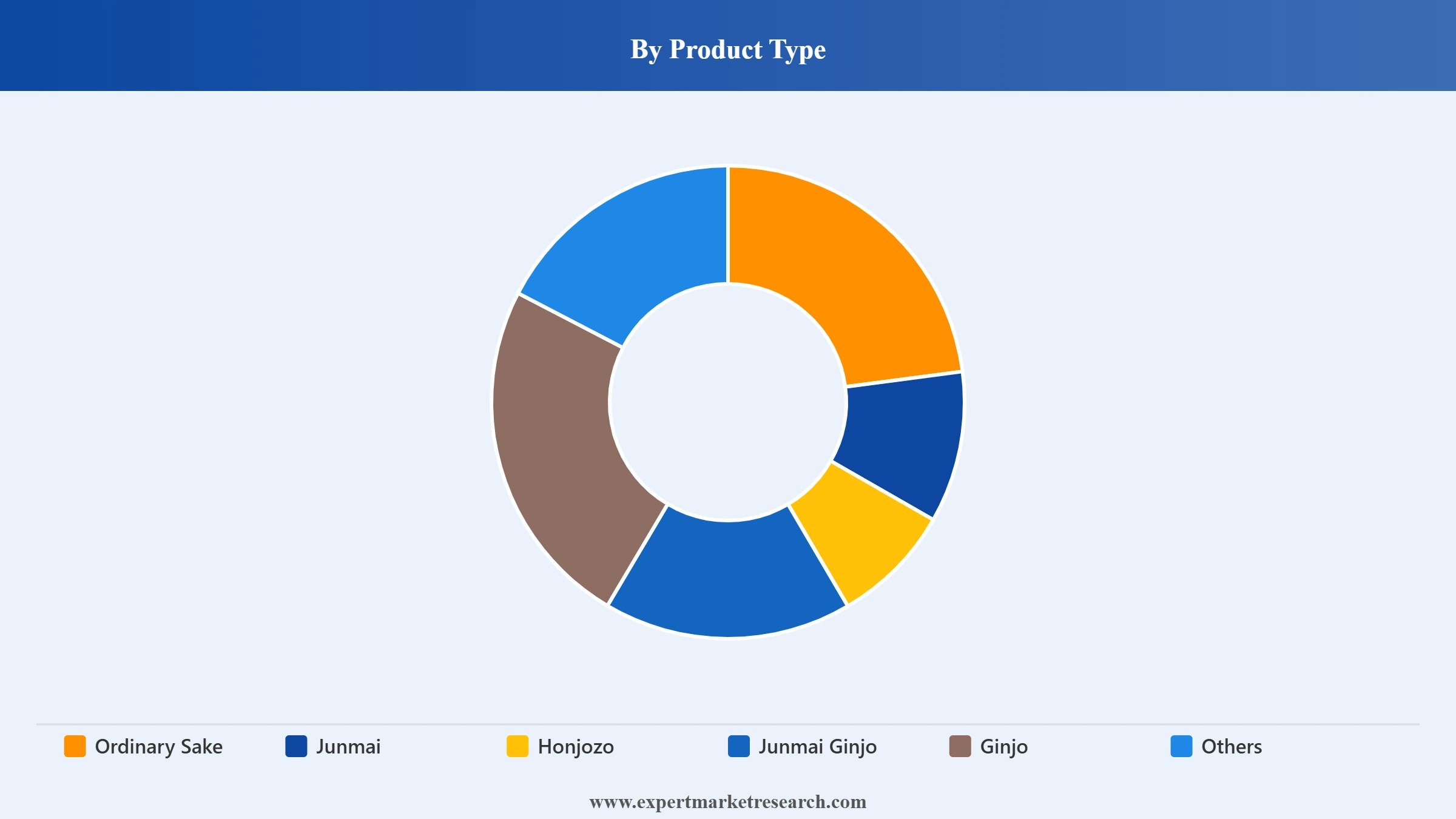
Key Insight: Junmai continues to occupy a substantial share of the sake industry due to its compatibility with evolving culinary experiments and its "no alcohol additives" claim. Restaurants in Europe favour this category of sake for clean-label positioning, complying with EU regulations tightening on artificial additives. B2B stakeholders are leveraging this clean slate narrative for cross-promotional campaigns in vegan and organic food outlets. Moreover, breweries and distributors have been making efforts to educate consumers about the different types of sake, leading to a better appreciation and increased demand for Junmai sake.
Market Breakup by Age Group
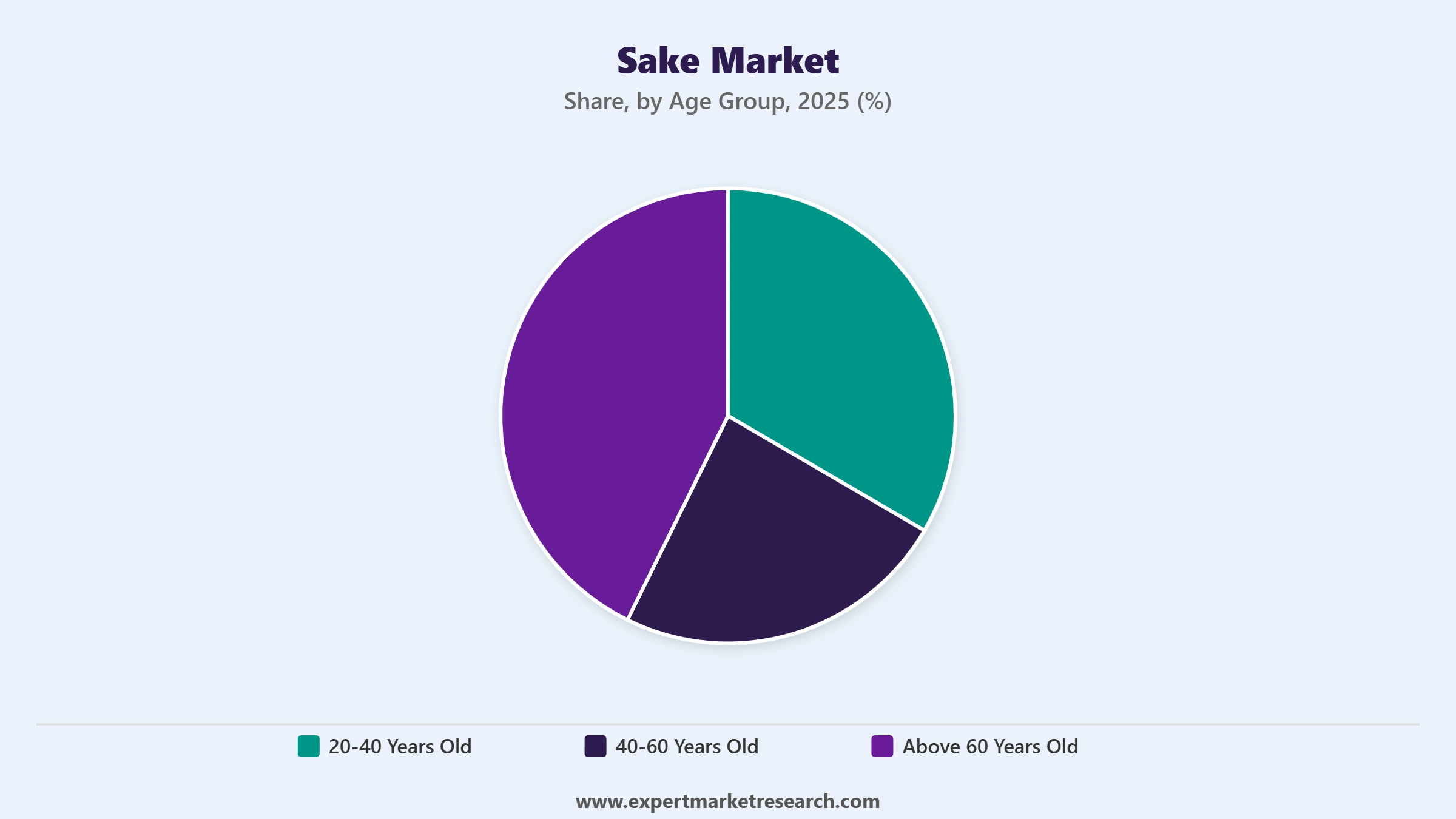
Key Insight: Consumers aged between 40 to 60 have continued to be dominant in terms of sake consumption not only because of tradition but also due to strong ties with cultural gifting practices. Individuals in this group often have more developed and sophisticated palates. They tend to appreciate the nuances of different sake types, including premium varieties like Junmai Daiginjo or aged sakes. This age group is generally more willing to pay for higher-quality products.
Market Breakup by Distribution Channel
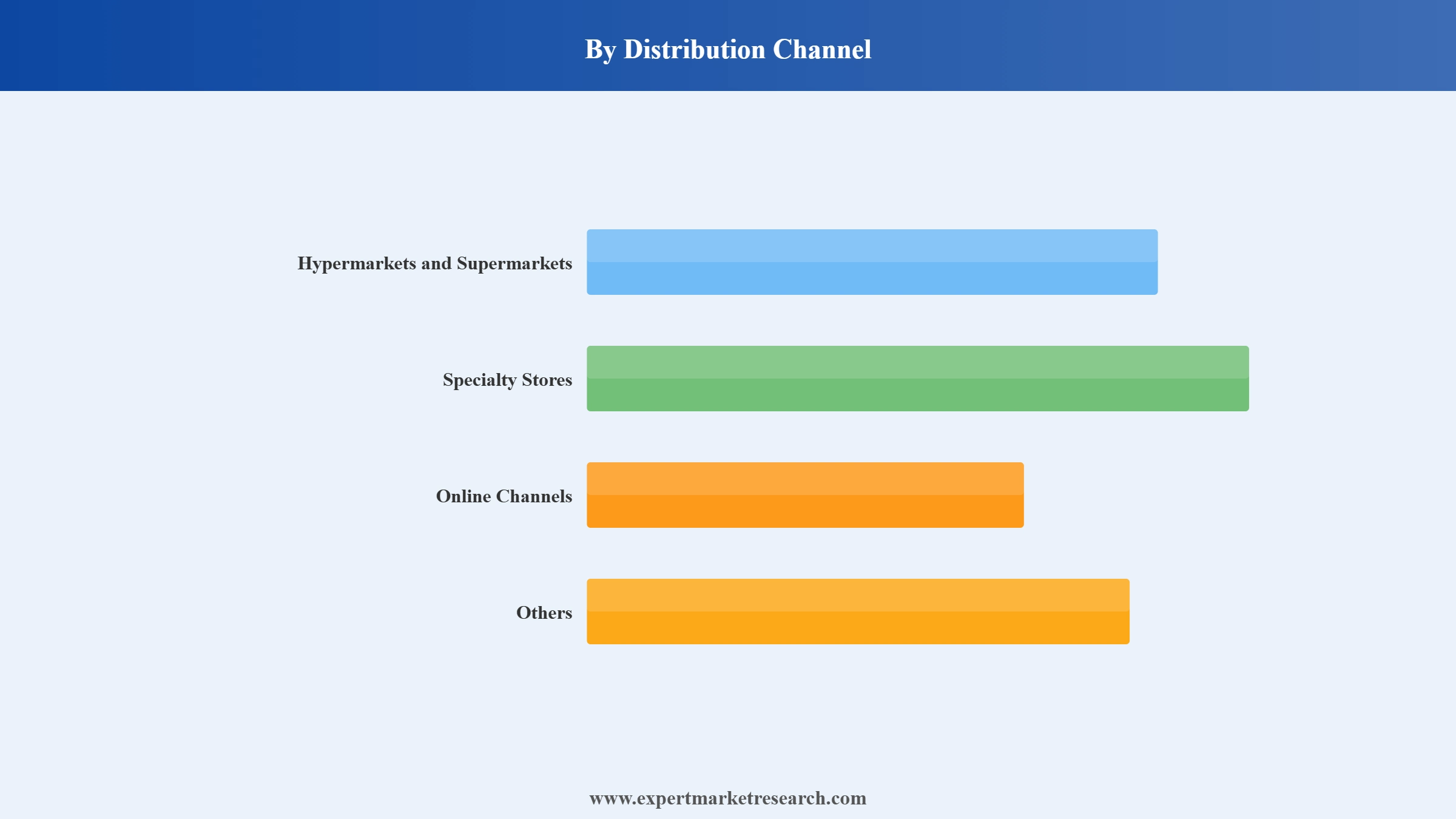
Key Insight: Mass retail channels including hypermarkets and supermarkets boost the global sake demand growth due to their capability to balance tradition with innovation. For instance, a recent campaign by Ito-Yokado in 2025 featured QR codes that let shoppers watch videos about rice origins and brewery heritage, bringing education to the point-of-sale. B2B stakeholders in retail packaging and logistics benefit directly from such interactive innovations.
Market Breakup by Region
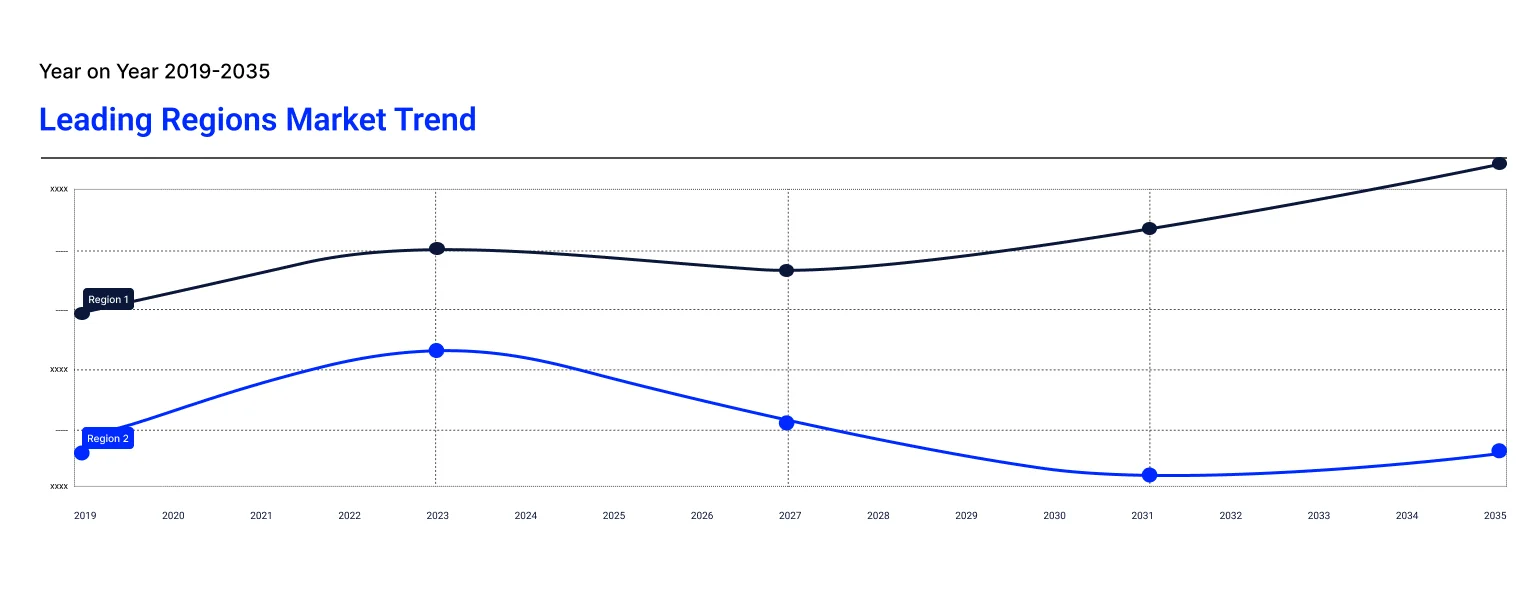
Key Insight: The Asia Pacific region, led by Japan, is well positioned to maintain its considerable share of the market during the forecast period. This dominance can be attributed to a variety of factors, including deep-rooted cultural traditions, established consumption patterns, and a growing appreciation for premium sake throughout the region. Sake holds unmatched cultural significance in Asia, notably in Japan. Sake has long been an essential component of social gatherings, religious ceremonies, and daily life. This close cultural connection fosters a natural preference for sake consumption in the region.
Read more about this report - REQUEST FREE SAMPLE COPY IN PDF
By Product Type, Junmai Account for the Dominant Share of the Market
Junmai sake dominates the market due to its pure rice formulation without additives, appealing to traditionalists and health-driven consumers. In 2025, Japan’s Sake and Shochu Makers Association noted that Junmai sales rose 6% YoY, with a surge in high-end restaurants and premium retail channels. Importers in Canada and Germany increasingly favour Junmai due to its consistent profile and organic certification potential. The category is thriving in B2B with branding focused on authenticity and clarity in taste.
As per the sake market report, Junmai Ginjo is witnessing steep acceleration, particularly in regions like Singapore and South Korea, where fine dining scenes are embracing its fruity aroma and smooth texture. In 2024, shipments of Junmai Ginjo increased by nearly 12% from Japan alone, with major brewers like Gekkeikan launching chilled variants ideal for modern palates. The light flavour and lower acidity are pulling in younger demographics and sommeliers alike.
Read more about this report - REQUEST FREE SAMPLE COPY IN PDF
By Age Group, 40-60 Years Old Consumers Clock in the Largest Share of the Market
Consumers aged 40-60 continue to be the core demographic driving the market growth, especially in Japan and Taiwan. This group prefers traditional, full-bodied sake types like Junmai and Honjozo. Their high disposable income and established drinking habits are contributing to steady demand across upscale izakayas and boutique liquor stores. In 2023, Japan’s National Tax Agency highlighted this age group to account for the major share of the total consumption, propelling the sake market revenue growth.
Younger buyers, aged between 20 to 40 years represent the fastest-developing consumer demographic, owing to branding shifts, eco-conscious packaging, and mixology trends. In 2024, the Tokyo Craft Sake Week witnessed record participation from millennials, prompting producers to launch flavour-infused and sparkling sake. Online campaigns and influencer collaborations, especially on TikTok Japan and Instagram Korea, have also generated demand in the market.
Read more about this report - REQUEST FREE SAMPLE COPY IN PDF
By Distribution Channel, Hypermarkets and Supermarkets Secure the Leading Position in the Market
Retail chains like Aeon and Costco Japan have secured the dominant position in the market, offering accessibility and a wide product spectrum. Private label collaborations are also trending in the market as retail chains are working directly with local brewers to launch region-specific exclusives. For B2B players, this offers bulk volume deals and consistent shelf visibility. Loyalty card tie-ins further help boost repeat purchases, even among occasional drinkers.
The specialty stores play a crucial role in the distribution and promotion of this traditional Japanese beverage, further supporting the demand in the sake market. Specialty sake stores typically offer a broader and more diverse range of sake than general retailers. This includes limited edition brews, regional varieties, premium grades like Junmai Daiginjo, and aged sakes. Staff in specialty sake stores usually possess extensive knowledge about the beverage. They can provide customers with detailed information about the brewing process, flavour profiles, serving them with suggestions, and food pairings to boost consumption.
Read more about this report - REQUEST FREE SAMPLE COPY IN PDF
By Region, Asia Pacific Registers the Dominant Share of the Global Market
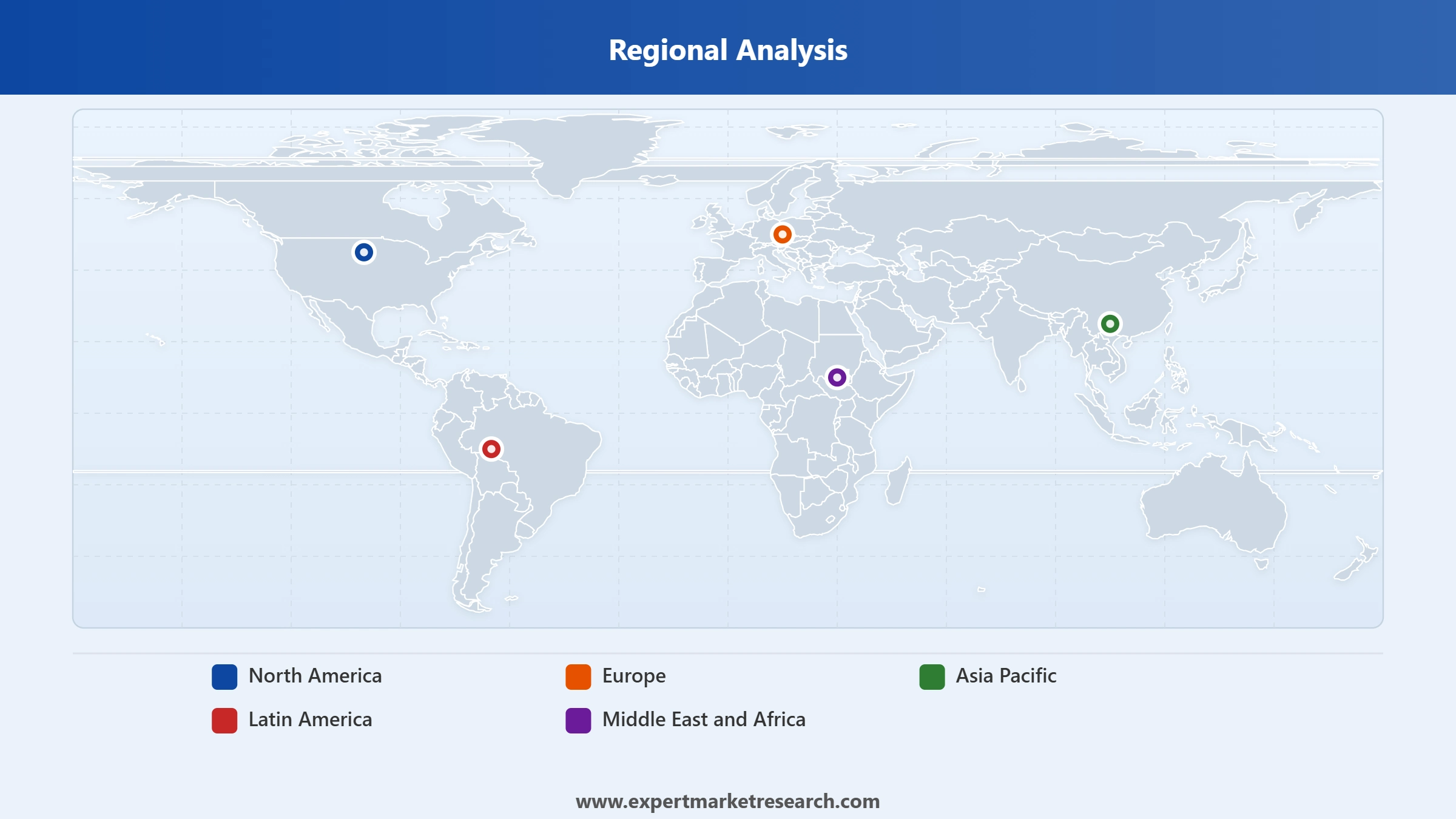
The Asia Pacific region commands the dominant share of the global market. With sake deeply ingrained in Japan, South Korea, and parts of China’s drinking culture, this drink’s consumption in the region has continued to increase. Governments across the region are supporting international promotional campaigns, further bolstering the demand. In South Korea, duty reductions on Japanese alcoholic beverages since late 2022 further boosted imports. Restaurants and retail outlets across ASEAN countries are also diversifying their alcohol offerings with regional variants, widening the scope for sake market opportunities.
North America emerges as the fastest-developing regional market. California's Sake Brewers Association reported that domestic sake production rose by 15% in 2023. Breweries in Portland and San Francisco are gaining rapid popularity and food pairing programs with sushi and ramen chains are bringing sake into mainstream dining. The regional market growth is further being elevated with educational events and sommelier-led tasting tours.
Global sake market players are exploring technology integration, flavour innovations, and sustainable brewing. Cross-industry collaborations, like sake with CBD, or aged in whiskey barrels, are drawing interest from luxury hospitality players. The market also witnesses a sharp focus on sustainable packaging and digital engagement, especially in export-heavy categories. Stakeholders who adapt with experience-based offerings and transparent sourcing are projected to dominate in the market.
In addition, sake companies are using RFID-enabled traceability, creating QR codes that link to the brewery stories, and using AR-based tasting experiences. Increasing focus on AI fermentation, premiumisation, health-infused blends, regional craftsmanship, and blockchain traceability are the key trends of this industry. Meanwhile, climate-resilient rice strains and water conservation techniques are gaining ground among premium brewers looking for long-term ESG compliance before expanding internationally.
Founded in 1711 and headquartered in California, United States, Ozekisake balances heritage with modernity. Known for its dry sake and canned formats, the company exports to over 25 countries and is embracing AI-assisted brewing to maintain consistency in flavour.
Established in 1948 in Yamaguchi, Japan, AsahiShuzo is famous for its Dassai brand. The company leads innovation with its ultramodern brewery and recently launched a United States-based plant to boost local production and minimise carbon emissions from exports.
Operating since 1662, Tatsuuma-Honke focuses on heritage-rich brewing. Their new Junmai blend infused with functional botanicals positions them well among health-conscious consumers. They actively participate in export promotion fairs and wellness expos.
Headquartered in Kyoto and founded in 1637, Gekkeikan is one of the oldest sake brands globally. The firm remains relevant through constant product innovation like sparkling sake and recyclable packaging. Their United States facility in California ensures smooth North American distribution.
Other key players in the market are Hakutsuru Sake Brewing Co., Ltd., and ARAMASA Shuzo, among others.
*Please note that this is only a partial list; the complete list of key players is available in the full report. Additionally, the list of key players can be customized to better suit your needs.*
Explore the latest trends shaping the sake market 2026-2035 with our in-depth report. Gain strategic insights, future forecasts, and key market developments that can help you stay competitive. Download a free sample report or contact our team for customised consultation on sake market trends 2026.


Upto 15% Off
USD
$3999 $3599
$2499 $2249
$4999 $4249
$5999 $5099


*While we strive to always give you current and accurate information, the numbers depicted on the website are indicative and may differ from the actual numbers in the main report. At Expert Market Research, we aim to bring you the latest insights and trends in the market. Using our analyses and forecasts, stakeholders can understand the market dynamics, navigate challenges, and capitalize on opportunities to make data-driven strategic decisions.*
The market is projected to grow at a CAGR of 4.90% between 2026 and 2035.
Key strategies driving the market include investing in smart packaging, collaborating with chefs, localizing production, targeting health trends, and launching storytelling-based digital campaigns.
The rising popularity of sake in international markets and rising consumption of alcoholic beverages are the key industry trends propelling the market's growth.
The major regions in the industry are North America, Latin America, the Middle East and Africa, Europe, and the Asia Pacific.
The different product types in the market are divided into ordinary sake, Junmai, honjozo, junmai ginjo, and ginjo, among others.
Based on age group, the market is classified into 20-40 years old, 40-60 years old, and above 60 years old.
The several distribution channels of the market are hypermarkets and supermarkets, speciality stores, and online channels, among others.
Sake is a clean tasting, mildly sweet beverage with a well-balanced salty and astringent flavour. It has a less fruity and nutty fragrance than wine.
Sake is a brewed alcohol. Sake normally contains 15% alcohol by volume, which is significantly less than common spirits like tequila, whiskey, and gin.
The major players in the industry are Ozekisake, AsahiShuzo Co Ltd., Tatsuuma-Honke Brewing Co. Ltd., Gekkeikan Sake Co., Ltd, Hakutsuru Sake Brewing Co., Ltd., and ARAMASA Shuzo, among others.
In 2025, the sake market reached an approximate value of USD 9.04 Billion.
The key challenges are high logistics costs, climate impact on rice yields, and regulatory complexity across export destinations.
Explore our key highlights of the report and gain a concise overview of key findings, trends, and actionable insights that will empower your strategic decisions.
| REPORT FEATURES | DETAILS |
| Base Year | 2025 |
| Historical Period | 2019-2025 |
| Forecast Period | 2026-2035 |
| Scope of the Report |
Historical and Forecast Trends, Industry Drivers and Constraints, Historical and Forecast Market Analysis by Segment:
|
| Breakup by Product Type |
|
| Breakup by Age Group |
|
| Breakup by Distribution Channel |
|
| Breakup by Region |
|
| Market Dynamics |
|
| Competitive Landscape |
|
| Companies Covered |
|
| Report Price and Purchase Option | Explore our purchase options that are best suited to your resources and industry needs. |
| Delivery Format | Delivered as an attached PDF and Excel through email, with an option of receiving an editable PPT, according to the purchase option. |
Single User License
One User
USD 3,999
USD 3,599
tax inclusive*
Datasheet
One User
USD 2,499
USD 2,249
tax inclusive*
Five User License
Five User
USD 4,999
USD 4,249
tax inclusive*
Corporate License
Unlimited Users
USD 5,999
USD 5,099
tax inclusive*
*Please note that the prices mentioned below are starting prices for each bundle type. Kindly contact our team for further details.*
Flash Bundle
Small Business Bundle
Growth Bundle
Enterprise Bundle
*Please note that the prices mentioned below are starting prices for each bundle type. Kindly contact our team for further details.*
Flash Bundle
Number of Reports: 3
20%
tax inclusive*
Small Business Bundle
Number of Reports: 5
25%
tax inclusive*
Growth Bundle
Number of Reports: 8
30%
tax inclusive*
Enterprise Bundle
Number of Reports: 10
35%
tax inclusive*
How To Order

Select License Type
Choose the right license for your needs and access rights.

Click on ‘Buy Now’
Add the report to your cart with one click and proceed to register.

Select Mode of Payment
Choose a payment option for a secure checkout. You will be redirected accordingly.
Strategic Solutions for Informed Decision-Making
Gain insights to stay ahead and seize opportunities.

Get insights & trends for a competitive edge.

Track prices with detailed trend reports.

Analyse trade data for supply chain insights.

Leverage cost reports for smart savings

Enhance supply chain with partnerships.

Connect For More Information
Our expert team of analysts will offer full support and resolve any queries regarding the report, before and after the purchase.
Our expert team of analysts will offer full support and resolve any queries regarding the report, before and after the purchase.
We employ meticulous research methods, blending advanced analytics and expert insights to deliver accurate, actionable industry intelligence, staying ahead of competitors.
Our skilled analysts offer unparalleled competitive advantage with detailed insights on current and emerging markets, ensuring your strategic edge.
We offer an in-depth yet simplified presentation of industry insights and analysis to meet your specific requirements effectively.




