

Consumer Insights
Uncover trends and behaviors shaping consumer choices today
Procurement Insights
Optimize your sourcing strategy with key market data
Industry Stats
Stay ahead with the latest trends and market analysis.
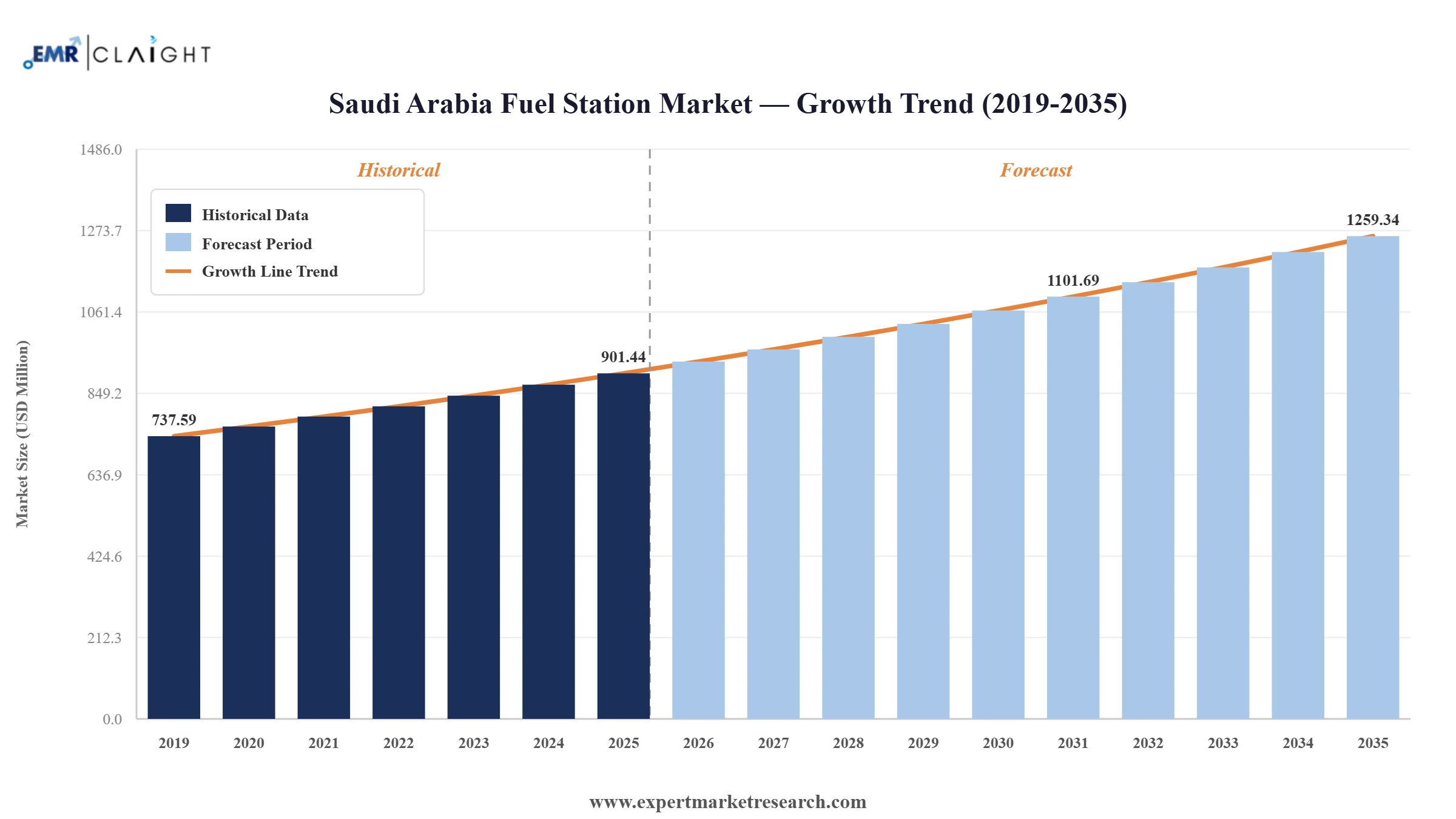
The Saudi Arabia fuel station market reached a value of USD 901.44 Million at 2025 and is projected to expand at a CAGR of around 3.40% during the forecast period of 2026-2035 to reach USD 1259.34 Million by 2035. With rising vehicle ownership, Vision 2030 tourism momentum, network modernisation through convenience retail, and a measured shift toward EV charging and hydrogen pilots.
The Saudi Arabia fuel station market is undergoing its most significant structural transformation since the sector's establishment. Driven by the Kingdom's Vision 2030 national transformation program, rising vehicle ownership across a young and urbanizing population, and the government's commitment to building EV charging infrastructure that supports Saudi Arabia's clean mobility transition, operators are investing in network expansion, station format modernization, and alternative energy integration simultaneously. The traditional fuel-only service station is giving way to a multi-energy, multi-service mobility hub model that serves petrol and diesel vehicles today while building the EV and hydrogen infrastructure that Vision 2030's transport decarbonization agenda will require over the forecast period.
Saudi Arabia's fuel station network is anchored by several large operators with different strategic profiles. Saudi Aramco operates over 1,000 retail stations, the Kingdom's largest fuel retail network, reflecting Aramco's vertically integrated position spanning upstream oil production, refining, and downstream consumer fuel retail. SASCO operates approximately 540 stations concentrated in the major metropolitan markets of Riyadh, Jeddah, and Dammam. ADNOC Distribution, the UAE-headquartered fuel retailer, has been aggressively expanding in Saudi Arabia, reaching 172 stations by Q3 2025 and planning to reach approximately 300 sites by 2026. TotalEnergies, Petromin, and other operators complete the competitive landscape of a sector in active network growth.
Read more about this report - REQUEST FREE SAMPLE COPY IN PDF
| Saudi Arabia Fuel Station Market Report Summary | Description | Value |
| Base Year | USD Million | 2025 |
| Historical Period | USD Million | 2019-2025 |
| Forecast Period | USD Million | 2026-2035 |
| Market Size 2025 | USD Million | 901.44 |
| Market Size 2035 | USD Million | 1259.34 |
| CAGR 2019-2025 | Percentage | XX% |
| CAGR 2026-2035 | Percentage | 3.40% |
| CAGR 2026-2035 - Market by Fuel Type | Petrol | 8.5% |
| CAGR 2026-2035 - Market by End Use | Road Transport Vehicle | 8.4% |
| 2025 Market Share by Fuel Type | Air Transport Vehicle | 4.6% |
Rising Vehicle Ownership and Urbanization
Saudi Arabia's vehicle ownership rate is among the highest in the Middle East, supported by heavily subsidized domestic fuel prices, a car-centric urban planning tradition, underdeveloped public mass transit alternatives, and a large youth demographic cohort entering vehicle ownership age. The country's total registered vehicle fleet continues to grow, driven by both population growth and the ongoing urbanization trend that is concentrating vehicle-owning households in Riyadh, Jeddah, Dammam, and other major cities.
Riyadh, Jeddah, and Dammam collectively house over 60% of Saudi Arabia's vehicle base, directing the lion's share of the Kingdom's fuel station market throughput and non-fuel service revenue to these three metropolitan markets. Station operators are investing disproportionately in these urban markets, where site productivity measured in daily fuel volume dispensed and ancillary services revenue is highest and where the fast-growing convenience retail and food service revenue streams are most commercially viable.
Vision 2030 Tourism and Mobility Expansion
Saudi Arabia's Vision 2030 national transformation program is generating multiple demand vectors for the fuel station market. The dramatic expansion of domestic and international tourism through giga-projects including NEOM, Red Sea Project, Diriyah, and Qiddiya is increasing vehicle traffic on highway corridors and in tourist destination cities, expanding fuel demand across parts of the Kingdom's geography that historically had limited commercial fuel retail development.
The annual Hajj and Umrah pilgrimage traffic, which collectively brings millions of visitors to the Holy Cities of Mecca and Medina each year, creates concentrated, recurring demand for fuel retail services in and around these cities. Vision 2030's target of 150 million Umrah visitors annually by 2030, combined with expanding international tourist arrivals, is a structural long-term driver of fuel station throughput in the Makkah and Madinah regions and on the road corridors connecting them to Jeddah and Riyadh.
EV Charging Infrastructure: The Vision 2030 Clean Mobility Mandate
Electric vehicle infrastructure is the fastest-growing and most strategically consequential development in Saudi Arabia's fuel station sector. The Public Investment Fund (PIF) has established the Electric Vehicle Infrastructure Company (EVIQ) with a mandate to deploy 5,000 fast chargers across 1,000 locations by 2030, creating a national EV charging network that will be largely integrated with and complementary to existing fuel station sites.
Fuel station operators are the natural hosts for EV charging infrastructure; their existing site footprints, customer traffic, convenience retail amenities, and grid connections provide the ideal platform for co-located fast charging. In July 2025, EVIQ partnered with Petromin to install EV fast charging at existing Petromin fuel station sites, an integration model that converts traditional fuel stops into multi-energy mobility hubs capable of serving both conventional vehicle and electric vehicle customers. The Ministry of Energy has tendered 500 new public EV chargers across Riyadh, Jeddah, and Mecca for installation by Q3 2026, providing further regulatory and procurement momentum for EV charging network expansion.
The Saudi Arabia EV charging station market is growing at a CAGR of 21.21% through 2034, reflecting the convergence of Vision 2030 policy targets, PIF infrastructure investment, growing EV vehicle fleet, and international operator interest in Saudi Arabia's EV charging market opportunity.
Hydrogen Refueling: Pilot Infrastructure
Saudi Arabia's ambition to become a global leader in green hydrogen production, supported by the NEOM Helios green hydrogen project and ARAMCO's blue hydrogen initiatives, is beginning to manifest in hydrogen refueling pilots at the fuel station level. In January 2025, Petromin hosted ENOWA's first heavy-duty hydrogen refueling station, marking a landmark in the Saudi Kingdom's hydrogen mobility roadmap and signaling the early integration of hydrogen fuel into the fuel station network's future service portfolio.
While hydrogen refueling remains in the pilot phase and will not represent material market revenue in the near term, the strategic significance is substantial. Saudi Arabia is positioning its fuel station infrastructure as the delivery mechanism for its future hydrogen economy, with heavy-duty transport (trucks, buses, and eventually aircraft) as the priority initial application.
Station Modernization and Non-Fuel Revenue Growth
Saudi Arabia's fuel station operators are investing significantly in station format modernization, upgrading legacy petrol stations to multi-service mobility hubs that incorporate branded convenience stores, quick service restaurant partnerships, drive-through coffee concepts, automatic car wash facilities, ATM services, and automotive maintenance and tyre care services. This diversification of revenue streams is commercially driven: fuel margin compression, regulated price environments, and competitive pressure are making ancillary service revenue increasingly important to station profitability.
Operators including SASCO, Petromin, and ADNOC Distribution are competing on the quality and breadth of their non-fuel service offerings as a customer differentiation and loyalty tool. Convenience retail penetration at Saudi fuel stations is increasing, with the addition of well-stocked convenience stores with fresh food, beverages, and everyday consumer goods significantly increasing the revenue per customer visit and the average time spent at the station.
Saudi Aramco has also introduced 98-octane premium gasoline at over 130 stations, a value-accretive product innovation that serves the growing segment of high-performance and luxury vehicle owners who seek premium fuel grades and creates an additional revenue tier above the standard 91 and 95 octane offering.
Saudi Arabia's fuel station market is shifting from a pure refuelling network into a multi service mobility platform. Operators are racing to add convenience stores, quick service food, EV charging, and even hydrogen pilots, while consolidation through SASCO, Aldrees, and Aramco's joint ventures is reshaping share. Vision 2030 tourism, a young driving population, and growing freight on the kingdom's expanding road grid keep underlying demand resilient even as the long term energy mix evolves.
Ceer Saudi Arabia's first domestically produced electric vehicle brand, backed by the Public Investment Fund (PIF) in partnership with BMW and Foxconn announced plans to launch its initial models in Q4 2026 with production commencing in late 2025. Ceer's entry into the Saudi market is expected to accelerate EV adoption and create direct incremental demand for EV charging infrastructure at fuel stations.
NEOM Green Hydrogen Company confirmed in January 2026 that approximately 90% of construction work is complete across all sites of the world's largest green hydrogen plant a USD 8.4 billion joint venture between ACWA Power and Air Products targeting first production in December 2026. Once operational, the plant will produce approximately 600 tonnes of green hydrogen daily, converted into 1.2 million tonnes of green ammonia annually, with Air Products holding a 30-year exclusive offtake agreement. First deliveries of green ammonia are expected in early 2027.
Foxconn Interconnect Technology (FIT), through its joint venture Smart Mobility, began production in 2026 at Saudi Arabia's first domestic EV charger manufacturing facility a development that significantly shortens supply chains for the Kingdom's rapidly scaling EV charging network and reduces dependency on imported charging equipment as EVIQ and other operators accelerate deployment.
In August 2025, ADNOC Distribution announced plans to roll out 160 new service stations across Saudi Arabia by 2026, lifting its kingdom network toward roughly 300 sites and accelerating cross border retail competition in the fuel station market.
Saudi Arabia targets 100 million tourists by 2030, with 86 million visitors recorded in 2024. This is lifting refuelling traffic on intercity highways and key tourist corridors, driving the Saudi Arabia fuel station market growth toward larger, multi service plazas.
Fuel margins are capped at 5-8 halalas per litre, so non fuel lines like c stores and cafes now contribute 30-40% of station level profit. Aldrees, SASCO, and Petromin are upgrading forecourts and partnering with QSR brands across the Saudi Arabia fuel station market.
EVIQ, in partnership with Petromin and operators including Blacklane, is rolling out fleet charging hubs and city EV chargers. Alternative fuels including hydrogen and EVs are projected to grow at over 25% CAGR, reshaping forward investment in the Saudi Arabia fuel station market.
In July 2025, PetroApp closed a USD 50 million funding round led by Jadwa Investment. Managing over 500,000 vehicles across 5,000 stations, the platform integrates AI for predictive fleet maintenance, deepening the digital layer over Saudi Arabia's fuel station network.
Major operators including Aldrees, SASCO, Petromin, and TotalEnergies are renovating sites with automated payment, premium fuels, and branded convenience formats. This modernisation cycle is lifting customer retention and rebalancing share across the Saudi Arabia fuel station market.
Fuel Price Subsidies and Margin Pressure
Saudi Arabia's domestic fuel prices, while subject to periodic adjustment under the government's fiscal reform program, remain among the most subsidized in the world, creating a low-margin environment for retail fuel dispensing that makes per-liter fuel revenue insufficient alone to sustain site-level profitability for modern high-capital fuel station formats. Operators must increasingly rely on non-fuel revenue streams convenience retail, food service, lubricants, car care, and increasingly EV charging to generate acceptable site-level returns on their station network investments.
EV Transition and Long-Term Demand Uncertainty
The accelerating adoption of electric vehicles supported by Vision 2030 EV targets, PIF investment in EV manufacturing and charging infrastructure, and growing consumer interest in EV ownership creates a medium-term demand transition challenge for fuel station operators. As EV penetration grows, petrol and diesel throughput volumes per station will decline at a rate and pace that operators must plan for and offset through EV charging revenue, diversified services, and site productivity improvements.
Capital Requirements for Station Modernization
Transforming a legacy petrol station into a modern multi-energy, multi-service mobility hub requires substantial capital investment in site infrastructure, EV charging equipment, convenience retail fit-out, food service facility, and digital payment and loyalty system integration. For smaller independent operators with limited capital access, this investment requirement creates a competitive disadvantage relative to large, well-capitalized operators such as Aramco, SASCO, and ADNOC Distribution, who can fund comprehensive modernization programs across large station networks.
Competition from Fleet Operator and Workplace Charging
As EV adoption grows, workplace charging, residential charging, and fleet depot charging, which collectively serve a significant proportion of EV charging demand, represent competition for public fuel station EV charging revenue. Stations must differentiate through fast charging speed, location convenience, co-located amenities, and loyalty program incentives to attract EV drivers to station-based charging rather than alternative charging locations.
The Expert Market Research’s report titled “Saudi Arabia Fuel Station Market Report and Forecast 2026-2035” offers a detailed analysis of the market based on the following segments:
Market Breakup by Fuel Type
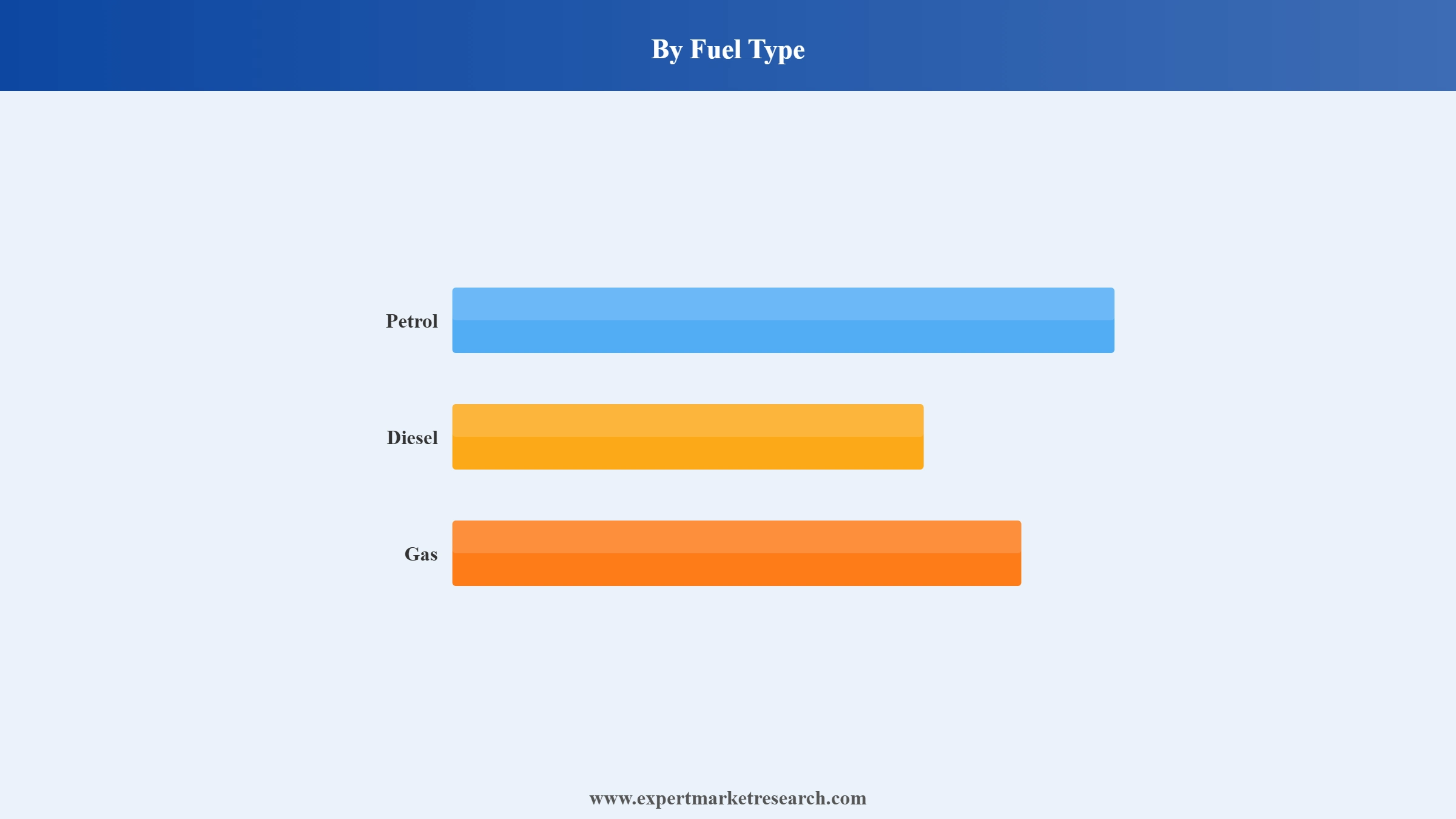
Key Insight: Petrol holds the largest share of the Saudi Arabia fuel station market, supported by the kingdom's heavy passenger car parc and subsidised pump prices that keep gasoline the default refuelling option. Diesel anchors heavy freight, construction, and intercity logistics, while gas and other fuels including LPG, CNG, hydrogen, and EV charging remain emerging tiers. Operators including Aldrees, SASCO, and Petromin are diversifying their pump mix to capture the rising mobility variety on the road.
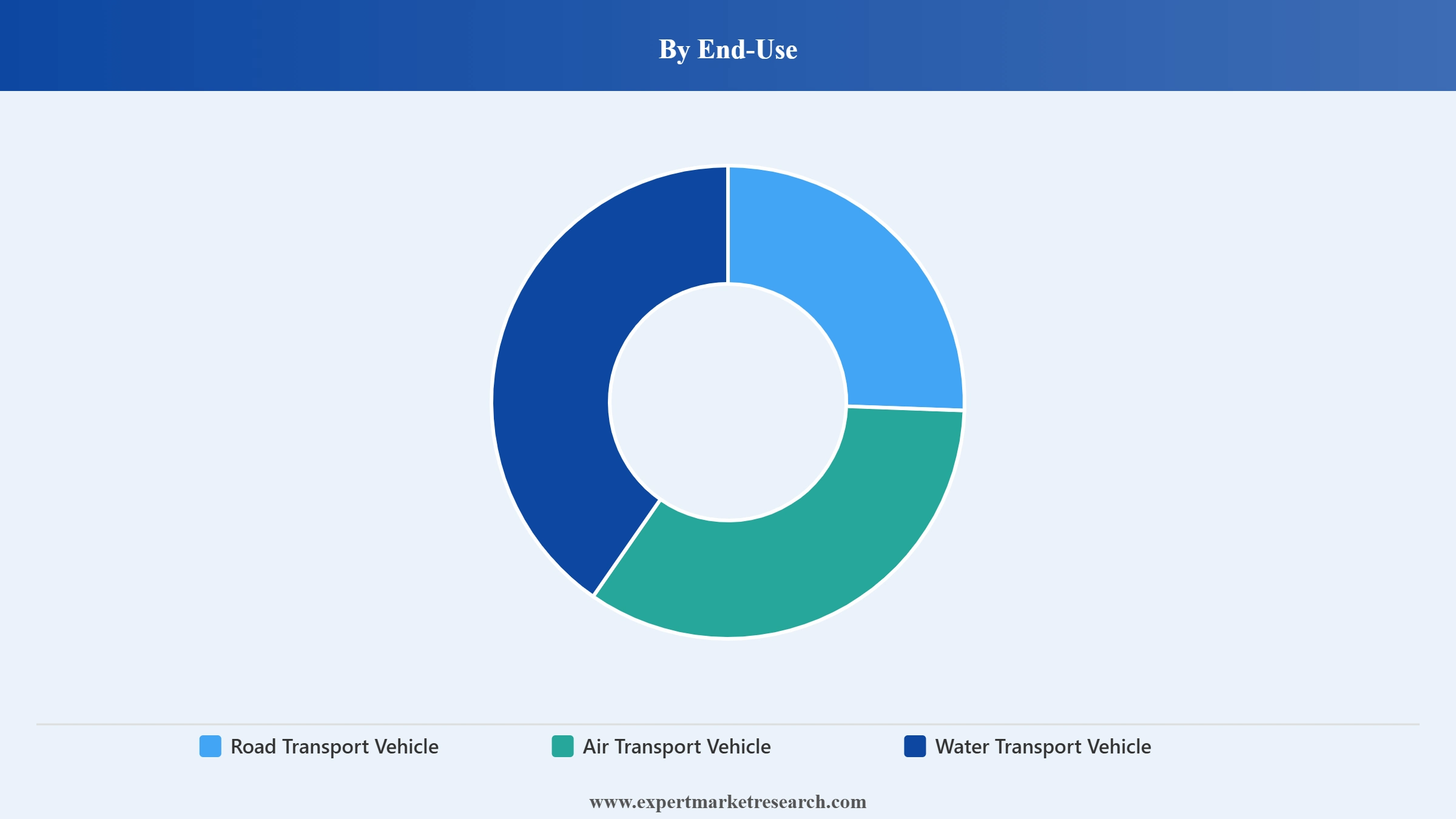
Market Breakup by End-Use
Key Insight: Road transport vehicles dominate the Saudi Arabia fuel station market because passenger cars, taxis, and heavy commercial trucks make up the bulk of daily refuelling demand. Vehicle ownership is projected near 14.6 million, with about 60% of the population under 30, anchoring sustained road demand. Air and water transport refuelling are smaller specialised tiers, served through dedicated aviation and bunkering networks linked to Aramco and TotalEnergies operations.
Read more about this report - REQUEST FREE SAMPLE COPY IN PDF
By fuel type, petrol dominates the market due to a large passenger car parc and subsidised pump prices
Petrol leads the Saudi Arabia fuel station market because the kingdom's vehicle parc is heavily skewed toward passenger cars, and government subsidised gasoline prices keep refuelling affordable for households and ride-hail drivers. Operators such as Aldrees, SASCO, Wafi Energy (Shell brand), and TotalEnergies anchor petrol-led offers across cities and intercity routes, while Vision 2030 tourism inflows lift weekend and holiday refuelling volumes across key corridors.
Diesel is the second largest fuel pool, powering heavy freight, construction equipment, and intercity logistics through Petromin, Aldrees, and SASCO truck stops. Gas and alternative fuels remain emerging but strategic, with January 2025 marking the kingdom's first heavy-duty hydrogen refuelling station at a Petromin site by ENOWA, and EVIQ partnerships expanding EV charging at fuel forecourts across the Saudi Arabia fuel station market.
Read more about this report - REQUEST FREE SAMPLE COPY IN PDF
By end-use, road transport vehicles dominate the market on the strength of car ownership and freight demand
Road transport vehicles are the dominant end use in the Saudi Arabia fuel station market because passenger cars, taxis, ride-hail vehicles, and heavy commercial trucks together account for nearly all daily pump demand. A young driving population, with about 60% under 30, and a vehicle parc projected near 14.6 million keep refuelling traffic steady, while highway service plazas and traditional full service sites compete to capture urban and intercity stops.
Air and water transport vehicle refuelling form smaller specialised tiers, served through dedicated aviation fuel networks at airports like Riyadh, Jeddah, and Dammam and through bunkering services at Red Sea and Gulf ports. Aramco and TotalEnergies anchor much of this aviation and marine supply, while major Vision 2030 megaprojects including NEOM and Red Sea Global are expanding specialised fuel infrastructure across the kingdom.
Read more about this report - REQUEST FREE SAMPLE COPY IN PDF
The Saudi Arabia fuel station market is moderately concentrated, with a handful of well capitalised operators controlling a meaningful share alongside a long tail of regional independents. Aldrees, SASCO, Petromin, Wafi Energy (Shell brand), TotalEnergies, and the Aramco TotalEnergies Sahel venture together hold around a quarter of total share, while ADNOC Distribution is scaling fast from the UAE base.
Competition increasingly turns on convenience retail, branded QSR partnerships, automated payments, EV charging, and pilot hydrogen capability rather than fuel price alone. Vision 2030 tourism, vehicle parc growth, and digital fleet platforms like PetroApp are pushing every major operator to modernise forecourts and broaden their service mix across the Saudi Arabia fuel station market.
Founded in 2023 through Asyad Holding Group's acquisition of Shell's Saudi retail business, Wafi Energy operates the Shell branded fuel station network in the kingdom, including premium fuels, V Power, motor oils, and a growing convenience retail footprint. The company benefits from Shell's product technology and global brand alongside local agility.
Founded in 1957 and headquartered in Riyadh, Aldrees is one of Saudi Arabia's largest fuel retailers with a deep highway and urban station network. Beyond fuel retail, the company offers transport, logistics, and convenience services, and continues to modernise sites with automated payment systems and branded c stores across the kingdom.
Established in 1968 and headquartered in Jeddah, Petromin runs a major fuel retail and automotive services network. In January 2025, it hosted ENOWA's first heavy duty hydrogen station, and in July 2025 expanded EV charging in partnership with EVIQ, positioning itself at the centre of the kingdom's mobility transition.
Headquartered in Paris and founded in 1924, TotalEnergies operates Saudi fuel stations through joint ventures including the Sahel venture with Aramco. The company brings global retail formats, premium fuels, branded c stores, and lubricants, and is investing in network modernisation and EV charging integration across selected sites.
Other key players in the market are ADNOC Distribution, ENOC Company, Saudi Automotive Services Co (SASCO), Tas'Helat Marketing Company, Fuel Integrated Limited (Fuel Way), Al-Atoz Petroleum Services Company, Liter Group, and others.
*Please note that this is only a partial list; the complete list of key players is available in the full report. Additionally, the list of key players can be customized to better suit your needs.*
Get the full intelligence on the Saudi Arabia fuel station market 2026 with our latest report. See how Vision 2030 tourism, vehicle parc growth, convenience retail, EV charging, and hydrogen pilots are reshaping demand across petrol, diesel, gas, and alternative fuel networks. Whether you operate a fuel retail chain, partner on convenience or QSR, run a mobility platform, or invest in Gulf energy retail, this report gives you the clarity to act. Download your free sample today and explore the key opportunities across Saudi Arabia fuel station.
Saudi Arabia Fuel Station Technology
Saudi Arabia Fuel Retail Expansion Strategies
Saudi Arabia Fuel Distribution and Logistics


Upto 15% Off
USD
$2499 $2249
$3999 $3599
$4999 $4249
$5999 $5099


*While we strive to always give you current and accurate information, the numbers depicted on the website are indicative and may differ from the actual numbers in the main report. At Expert Market Research, we aim to bring you the latest insights and trends in the market. Using our analyses and forecasts, stakeholders can understand the market dynamics, navigate challenges, and capitalize on opportunities to make data-driven strategic decisions.*
The market is projected to grow at a CAGR of 3.40% between 2026 and 2035.
Key strategies driving the market include expanding nationwide retail networks, integrating convenience stores and quick-service restaurants within stations, and adopting digital payment systems.
The key market trends include the increasing disposable income among people, the growing population along with an increase in the demand for the installation of fuel stations.
The various technologies used in fuel stations include petrol, diesel, and gas, among others.
The various end-users of the market for fuel stations include road transport vehicle, air transport vehicle, and water transport vehicle.
The key players in the market include Wafi Energy Company, ALDREES Petroleum & Transport Services Company, Petromin Corporation, TotalEnergies SE, ADNOC Distribution, ENOC Company, Saudi Automotive Services Co (SASCO), Tas'Helat Marketing Company, Fuel Integrated Limited (Fuel Way), Al-Atoz Petroleum Services Company, and Liter Group, among others.
In 2025, the Saudi Arabia fuel station market reached an approximate value of USD 901.44 Million.
The key challenges in the Saudi Arabia fuel station market are rising competition from regional and international players, fluctuating crude oil prices impacting profitability, and high investment requirements for upgrading infrastructure.
Explore our key highlights of the report and gain a concise overview of key findings, trends, and actionable insights that will empower your strategic decisions.
| REPORT FEATURES | DETAILS |
| Base Year | 2025 |
| Historical Period | 2019-2025 |
| Forecast Period | 2026-2035 |
| Scope of the Report |
Historical and Forecast Trends, Industry Drivers and Constraints, Historical and Forecast Market Analysis by Segment:
|
| Breakup by Fuel Type |
|
| Breakup by End-Use |
|
| Market Dynamics |
|
| Competitive Landscape |
|
| Companies Covered |
|
Datasheet
One User
USD 2,499
USD 2,249
tax inclusive*
Single User License
One User
USD 3,999
USD 3,599
tax inclusive*
Five User License
Five User
USD 4,999
USD 4,249
tax inclusive*
Corporate License
Unlimited Users
USD 5,999
USD 5,099
tax inclusive*
*Please note that the prices mentioned below are starting prices for each bundle type. Kindly contact our team for further details.*
Flash Bundle
Small Business Bundle
Growth Bundle
Enterprise Bundle
*Please note that the prices mentioned below are starting prices for each bundle type. Kindly contact our team for further details.*
Flash Bundle
Number of Reports: 3
20%
tax inclusive*
Small Business Bundle
Number of Reports: 5
25%
tax inclusive*
Growth Bundle
Number of Reports: 8
30%
tax inclusive*
Enterprise Bundle
Number of Reports: 10
35%
tax inclusive*
How To Order

Select License Type
Choose the right license for your needs and access rights.

Click on ‘Buy Now’
Add the report to your cart with one click and proceed to register.

Select Mode of Payment
Choose a payment option for a secure checkout. You will be redirected accordingly.
Strategic Solutions for Informed Decision-Making
Gain insights to stay ahead and seize opportunities.

Get insights & trends for a competitive edge.

Track prices with detailed trend reports.

Analyse trade data for supply chain insights.

Leverage cost reports for smart savings

Enhance supply chain with partnerships.

Connect For More Information
Our expert team of analysts will offer full support and resolve any queries regarding the report, before and after the purchase.
Our expert team of analysts will offer full support and resolve any queries regarding the report, before and after the purchase.
We employ meticulous research methods, blending advanced analytics and expert insights to deliver accurate, actionable industry intelligence, staying ahead of competitors.
Our skilled analysts offer unparalleled competitive advantage with detailed insights on current and emerging markets, ensuring your strategic edge.
We offer an in-depth yet simplified presentation of industry insights and analysis to meet your specific requirements effectively.




