

Consumer Insights
Uncover trends and behaviors shaping consumer choices today
Procurement Insights
Optimize your sourcing strategy with key market data
Industry Stats
Stay ahead with the latest trends and market analysis.
The global seismic services market was valued at USD 9.70 Billion in 2025. Global interest in offshore wind and hydrogen storage is creating parallel demand for seismic mapping of seabeds, driving new business models and long-term contracts for multi-client seismic service providers. As a result, the market is expected to grow at a CAGR of 3.40% during the forecast period of 2026-2035 to reach a value of USD 13.55 Billion by 2035.
Market growth is powered by digital innovation and the need for deeper exploration precision. The growing demand for unconventional reserves like shale gas and tight oil, particularly in the United States and China, is driving investments in advanced subsurface imaging. Seismic services, including surveys, are key tools in the oil and gas sector, as they enable professionals to identify prospects, assess potential resources, reduce risk, and even quantify reserves. The International Association of Geophysical Contractors endorses seismic surveys as both cost-effective and highly effective, highlighting their crucial role in exploration strategies. Seismic surveys are typically conducted at a speed of about 4.5 to 5 knots (~5.5 mph), and the sound source is typically activated at 10-15 second intervals.
The push for energy security has led to governments amplifying seismic surveys, boosting further demand in the seismic services market. For instance, India’s National Seismic Programme (NSP) aims to acquire 2D seismic data over 48,000-line kilometres across sedimentary basins. Moreover, Saudi Aramco is heavily focused on offshore 3D seismic campaigns in the Red Sea and Arabian Gulf.
Emerging technologies are redefining traditional survey methods. Companies in the seismic services industry are now leaning into nodal seismic systems, AI-driven data processing, and hybrid acquisition models that combine land and marine data. For instance, PGS launched its “GeoStreamer X” platform, which delivers enhanced subsurface images through integrated acquisition and processing.
Compound Annual Growth Rate
3.4%
Value in USD Billion
2026-2035
Abu Dhabi National Oil Company (ADNOC) granted a USD 490 million contract to BGP, a subsidiary of China National Petroleum Company (CNPC), to expand its ongoing onshore and offshore three-dimensional (3D) seismic survey, aimed at uncovering additional oil and gas resources. This reflects growing state-backed investment in advanced 3D seismic services, reinforcing long-term exploration demand across complex onshore and offshore fields in the Middle East.
Argeo, a provider of robotic and digital solutions for the ocean space, and Shearwater GeoServices, a global provider of geophysical marine seismic acquisition and processing services, announced a strategic alliance for innovating and pioneering new technology and products across the subsea and marine seismic markets. This alliance boosts innovation in marine seismic data collection, enabling service providers to meet emerging needs in deep-sea exploration, CCS (carbon capture and storage), and offshore renewables.
Google expanded Android Earthquake Alerts system, with improved safety with early warnings. The company expanded the reach of its Earthquake Alert system across the United States. This significant expansion brings early warning alerts to all 50 states and 6 United States territories, aimed at helping millions of users prepare for earthquakes. This supports demand for seismic monitoring infrastructure, pushing governments and private firms to integrate real-time seismic data platforms in public safety and urban planning.
CGG was awarded a multi-year contract extension by Brunei Shell Petroleum Company Sdn Bhd (BSP) to continue operating a dedicated seismic imaging centre at its head office in Seria, Brunei. The contract marked the addressing of specific regional challenges posed by the presence of widely distributed shallow gas clouds, channels, gas-charged silts, and complex fault structures around the discovered fields.
The use of artificial intelligence has reshaped the seismic services market dynamics. Operators like Schlumberger and CGG have incorporated machine learning algorithms that reduce data processing time by a significant extent, while enhancing imaging accuracy. AI-led platforms such as GAIA Earth Intelligence are automating the detection of subsurface anomalies, reducing the dependency on manual expertise. This digital wave is making seismic surveys smarter and faster, particularly in data-heavy offshore zones, while driving profitability through predictive modelling and automation.
As fossil fuels phase out, the need to extract efficiently and safely has become more urgent, accelerating the seismic services market opportunities. This urgency is pushing investments into frontier basins in East Africa and the Arctic. In June 2024, TotalEnergies launched seismic surveys in Namibia’s Orange Basin as a part of a strategic low-carbon footprint exploration push. Meanwhile, the United States Geological Survey (USGS) estimates that Arctic basins alone hold 13% of the world’s undiscovered oil. Furthermore, advanced 4D imaging and ultra-deep surveys are becoming vital tools in exploring these high-potential regions.
Governments are directly commissioning seismic studies to promote oil block bidding rounds, propelling the seismic services market development. For example, Mexico’s National Hydrocarbons Commission (CNH) offers multiclient surveys to attract private players post-energy reform. On the other hand, in July 2023, Egypt announced its plan to invest USD 1.8 billion to drill new gas wells as part of offshore exploration in the Mediterranean Sea and the Nile Delta. Such government-backed projects ensure data standardisation and reduce entry barriers for smaller E&P firms. This trend is growing in resource-rich yet underexplored nations, creating fresh demand for agile seismic service providers with customisable offerings.
The offshore wind sector is fuelling seismic services demand. As seabed mapping becomes critical for turbine foundation placement, companies like Fugro and TGS are adapting seismic vessels for environmental and geotechnical surveys. The EU’s REPowerEU plan targets 300 GW of offshore wind by 2050, significantly boosting seismic acquisition in North Sea and Baltic regions. This cross-sector convergence is creating new revenue streams for seismic service firms while reducing dependence on oil and gas. Innovations like autonomous seismic nodes are being deployed for both resource identification and marine infrastructure safety assessments.
The shift from conventional cabled sensors to nodal seismic systems is transforming data quality and logistics. These wireless nodes reduce crew size, improve safety, and can operate in hard-to-access terrains. Further, SAExploration announced USD 130 million in Alaska’s remote North Slope, enabling continuous acquisition in extreme conditions. Such systems are ideal for environmentally sensitive or politically unstable zones.
Read more about this report - REQUEST FREE SAMPLE COPY IN PDF
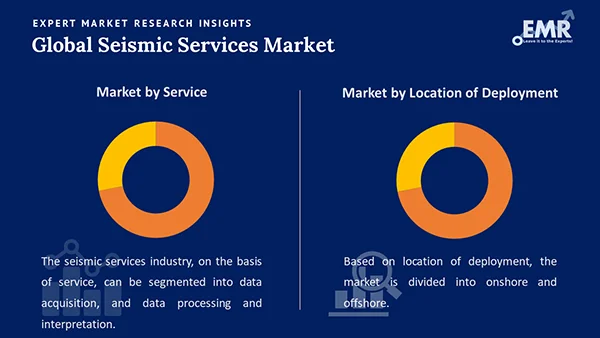
The EMR’s report titled “Global Seismic Services Market Report and Forecast 2026-2035” offers a detailed analysis of the market based on the following segments:
Market Breakup by Service
Key Insight: The dominance of data acquisition in the market is powered by technological upgrades like ultra-sensitive MEMS sensors, which offer richer data quality with fewer deployments. Companies like STRYDE are reducing survey costs, using lightweight wireless nodes. Moreover, 4D seismic, where tracking reservoir changes over time, has become mainstream in mature oilfields.
Market Breakup by Location of Deployment
Key Insight: Onshore continues to be the dominant location of deployment in the seismic services industry owing to its flexibility and rising demand in politically volatile zones where offshore exploration is risky. Chevron’s 2024 surveys in Kurdistan, for instance, showcase how land-based seismic can be more feasible. Moreover, low-cost modular equipment now allows for high-density surveys even in rugged terrains. These advancements, along with satellite-linked telemetry for instant data transfer, make onshore exploration more efficient and scalable.
Market Breakup by Region
Key Insight: The seismic services market in North America has dominated the global industry with a strong shift toward carbon monitoring and geothermal exploration. Firms like Seismic Source Co. are repurposing oilfield equipment for geothermal surveys across Nevada and Utah. Moreover, indigenous land surveys in Canada are receiving federal support, creating new opportunities for firms. This regional blend of oil, clean energy, and digital innovation makes North America a lucrative region for both legacy firms and tech startups.
By Services, Data Acquisition Account for the Dominant Share of the Share
Data acquisition remains dominant in the global market. Increasing exploration in underdeveloped sedimentary basins is fuelling demand for 2D, 3D, and now 4D acquisition services. These services are being increasingly tailored for diverse terrains, including onshore deserts, marine deepwater, and even transition zones. In addition, the rising demand for oil and natural gas for various applications in industrial and transportation sector is resulting in increased government efforts towards the promotion of seismic services and surveys, which is estimated to support the market growth in the coming years.
With the exponential growth in the seismic services market, the processing and interpretation category is experiencing rapid momentum. This growth is driven by cloud-based geophysical platforms like Halliburton’s iEnergy, which streamlines multi-client data integration. As more data is sourced from hybrid and AI-enhanced sensors, the role of interpretation becomes crucial in de-risking assets. Further, the Indian Ministry of Petroleum and Natural Gas in its 2021 report stated that the seismic survey for data acquisition, processing and interpretation achieved a success of 93.5%.
By Location of Deployment, the Onshore Category Accounts for the Larger Share of the Market
Onshore seismic services dominate the global market due to the relatively lower cost and easier logistics. Regions like the Permian Basin in the United States and the Gobi Desert in China are hotspots for onshore campaigns. Government contracts, like India’s Directorate General of Hydrocarbons (DGH) initiative to map un-appraised basins, are further intensifying onshore activity. Innovations such as automated source vehicles and drone-assisted data collection are reducing timelines significantly, making this subsegment indispensable in national energy strategies.
The seismic services market report estimates that offshore exploration is surging. According to data by Rystad Energy, the worldwide offshore wind industry is likely to recover in 2025, with sector-wide spending expected to reach USD 80 billion and capacity additions expected to reach 19 gigawatts (GW), driven by renewed interest in West Africa, Brazil, and Southeast Asia. Deepwater projects demand high-resolution seismic, particularly wide-azimuth and full-azimuth surveys. ExxonMobil’s Guyana operations have triggered demand in the region, leading to long-term contracts for multiclient offshore surveys. Moreover, the use of digital twin models and autonomous seismic vessels is speeding up the survey-to-development pipeline, enhancing this segment’s appeal.
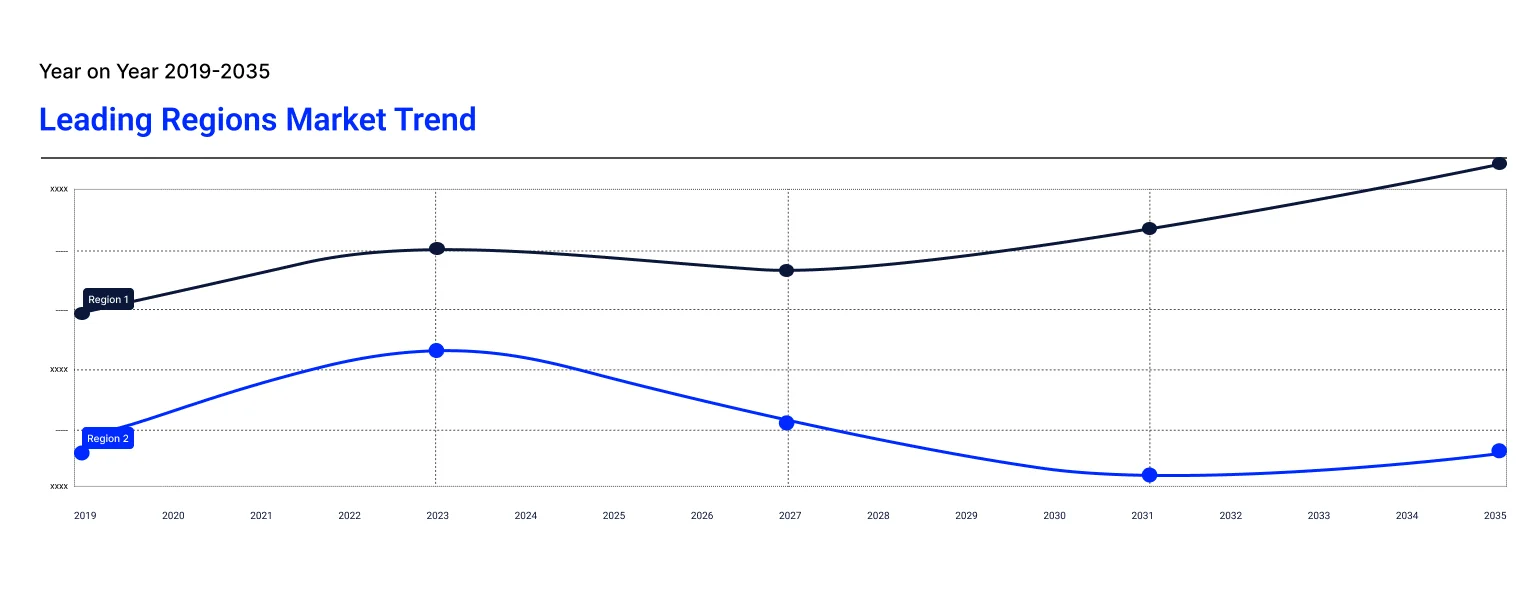
By Region, North America Secures the Leading Position in the Market
North America occupies a sizeable share of the global market, fuelled by continuous shale exploration in the United States and oil sands in Canada. Government incentives made by United States Inflation Reduction Act are indirectly supporting seismic work by funding carbon capture projects, which also require subsurface mapping. Players like TGS and Fairfield Geotechnologies are securing long-term contracts in the Gulf of Mexico. Integration of AI and cloud storage in regional projects adds to the appeal, enabling faster turnaround and deeper analysis.
The Middle East and African market is indicating the fastest seismic services demand growth, led by aggressive exploration in Saudi Arabia, UAE, Namibia, and Angola. Aramco has launched giga-scale seismic campaigns across offshore and Red Sea zones, while Namibia’s Orange Basin is drawing global attention after significant light oil discoveries. According to OPEC, exploration spend in the region rose by 0.9% in 2023. Governments are promoting digitised, environmentally conscious surveys, helping new-age seismic firms find a stronghold here.
Top seismic services market players like TGS, PGS, CGG, Schlumberger, and Shearwater are now focusing on hybrid data models, AI-integrated interpretation, and real-time acquisition. Multiclient libraries are being expanded aggressively in underexplored regions like West Africa and Southeast Asia. As per the market report, the emergence of 4D seismic technology allows for the mapping of potential reserves with accurate reservoir characterisation and seismic monitoring. Additionally, the growing exploration activities in unconventional reservoirs are further increasing the adoption of 4D seismic technologies.
A key opportunity for seismic services companies lies in cross-sector diversification, including geothermal, offshore wind, and carbon storage. Service providers are building modular offerings to suit both oil majors and small independents. Another focus area is sustainability. Firms are investing in low-emission vessels, autonomous drones, and nodal technology to comply with new ESG standards.
Founded in 1948, Schlumberger Limited is a global technology company, with operations in more than 100 countries. SLB conducts its businesses through four categories namely Digital and Integration, Reservoir Performance, Well Construction and Production Systems. The company provides borehole seismic, geosolutions software, multiclient data library, seismic imaging, seismic survey design and modelling, seismic data processing, and seismic drilling solutions among others through its seismic services category.
Viridien is an advanced technology, digital and Earth data company employing about 3,500 people worldwide. The company, established in 1931, is listed on the Euronext Paris SA under the symbol VIRI. The company provides seismic services such as monitoring services, well site services, and geological services among several others. The company provides its solutions to five continents across the globe.
Established in 1981, TGS is a leading integrated energy data and services company, providing advanced technology and solutions across the energy value chain. The company has offices in the United Kingdom, Egypt, Brazil, Kuala Lumpur, and Perth with a workforce of about 2,000. The company’s stock is traded on the Oslo Stock Exchange (TGS) and is part of the OBX Index of the 25 most liquid shares on the exchange and the OTCQX Market (TGSNF and TGSGY).
Halliburton is a leading provider of products and services to the energy sector, founded in 1919. The company has the presence of more than 40,000 employees across the globe. The company helps customers in locating hydrocarbons and managing geological data, drilling and formation evaluation, well construction and completion, and optimising production throughout the life of the asset. Halliburton provides borehole seismic services such as FiberVSP™ service and Odassea™ Subsea Fiber Optic Solution.
*Please note that this is only a partial list; the complete list of key players is available in the full report. Additionally, the list of key players can be customized to better suit your needs.*
Other key players in the market are Furgo N.V., and Polarcus Limited, among others.
Explore the latest trends shaping the seismic services market 2026-2035 with our in-depth report. Gain strategic insights, future forecasts, and key market developments that can help you stay competitive. Download a free sample report or contact our team for customized consultation on seismic services market trends 2026.


Upto 15% Off
USD
$2499 $2249
$3999 $3599
$4999 $4249
$5999 $5099


*While we strive to always give you current and accurate information, the numbers depicted on the website are indicative and may differ from the actual numbers in the main report. At Expert Market Research, we aim to bring you the latest insights and trends in the market. Using our analyses and forecasts, stakeholders can understand the market dynamics, navigate challenges, and capitalize on opportunities to make data-driven strategic decisions.*
The market is projected to grow at a CAGR of 3.40% between 2026 and 2035.
Key strategies driving the market include investing in modular technologies, expanding multiclient libraries, forming regional joint ventures, adopting AI-based interpretation tools, and offering ESG-compliant, low-carbon seismic solutions.
The key market trends guiding the growth of the industry include the rapid technological advancements in seismic technologies.
The major regions in the industry are North America, Europe, the Asia Pacific, Latin America, the Middle East and Africa.
The services explored in the market report include data acquisition, and data processing and interpretation.
The major locations of deployment considered in the market report include onshore and offshore.
The major players in the industry are Schlumberger Limited, CGG S.A., PGS ASA, TGS-NOPEC Geophysical Company ASA, Halliburton Company, Furgo N.V., and Polarcus Limited, among others.
In 2025, the seismic services market reached an approximate value of USD 9.70 Billion.
The key challenges are high operational costs, regulatory delays, and geopolitical instability remain major hurdles. Environmental opposition in offshore zones also adds pressure, especially in Europe and North America.
Explore our key highlights of the report and gain a concise overview of key findings, trends, and actionable insights that will empower your strategic decisions.
| REPORT FEATURES | DETAILS |
| Base Year | 2025 |
| Historical Period | 2019-2025 |
| Forecast Period | 2026-2035 |
| Scope of the Report |
Historical and Forecast Trends, Industry Drivers and Constraints, Historical and Forecast Market Analysis by Segment:
|
| Breakup by Service |
|
| Breakup by Location of Deployment |
|
| Breakup by Region |
|
| Market Dynamics |
|
| Competitive Landscape |
|
| Companies Covered |
|
| Report Price and Purchase Option | Explore our purchase options that are best suited to your resources and industry needs. |
| Delivery Format | Delivered as an attached PDF and Excel through email, with an option of receiving an editable PPT, according to the purchase option. |
Datasheet
One User
USD 2,499
USD 2,249
tax inclusive*
Single User License
One User
USD 3,999
USD 3,599
tax inclusive*
Five User License
Five User
USD 4,999
USD 4,249
tax inclusive*
Corporate License
Unlimited Users
USD 5,999
USD 5,099
tax inclusive*
*Please note that the prices mentioned below are starting prices for each bundle type. Kindly contact our team for further details.*
Flash Bundle
Small Business Bundle
Growth Bundle
Enterprise Bundle
*Please note that the prices mentioned below are starting prices for each bundle type. Kindly contact our team for further details.*
Flash Bundle
Number of Reports: 3
20%
tax inclusive*
Small Business Bundle
Number of Reports: 5
25%
tax inclusive*
Growth Bundle
Number of Reports: 8
30%
tax inclusive*
Enterprise Bundle
Number of Reports: 10
35%
tax inclusive*
How To Order

Select License Type
Choose the right license for your needs and access rights.

Click on ‘Buy Now’
Add the report to your cart with one click and proceed to register.

Select Mode of Payment
Choose a payment option for a secure checkout. You will be redirected accordingly.
Strategic Solutions for Informed Decision-Making
Gain insights to stay ahead and seize opportunities.

Get insights & trends for a competitive edge.

Track prices with detailed trend reports.

Analyse trade data for supply chain insights.

Leverage cost reports for smart savings

Enhance supply chain with partnerships.

Connect For More Information
Our expert team of analysts will offer full support and resolve any queries regarding the report, before and after the purchase.
Our expert team of analysts will offer full support and resolve any queries regarding the report, before and after the purchase.
We employ meticulous research methods, blending advanced analytics and expert insights to deliver accurate, actionable industry intelligence, staying ahead of competitors.
Our skilled analysts offer unparalleled competitive advantage with detailed insights on current and emerging markets, ensuring your strategic edge.
We offer an in-depth yet simplified presentation of industry insights and analysis to meet your specific requirements effectively.




