

Consumer Insights
Uncover trends and behaviors shaping consumer choices today
Procurement Insights
Optimize your sourcing strategy with key market data
Industry Stats
Stay ahead with the latest trends and market analysis.
The global smartphone sensors market attained a value of USD 3.61 Billion in 2025 and is projected to expand at a CAGR of 3.00% through 2035. The market is further expected to achieve USD 4.85 Billion by 2035. The growing adoption of AI-powered imagery, foldable phones, and spatial computing capabilities are fueling the need for small yet powerful, efficient, and accurate smartphone sensors.
Growing investments in computational imaging and edge artificial intelligence processing are bolstering the smartphone sensors market growth. As smartphones become increasingly advanced in camera capabilities to maintain their competitiveness amidst extended replacement cycles in mature markets, the focus on such advancements is increasing. Governments in semiconductor-oriented countries such as South Korea, China, and the United States are also boosting production ecosystems through initiatives aimed at fostering domestic production capacity. Another factor contributing significantly towards market growth is the growing demand for AI-powered assistants in phones that continuously sense the environment and track movements.
The smartphone sensors market remains a highly innovative space as mobile phone manufacturers compete in terms of computational photography, spatial understanding, AI-driven imaging capabilities, and health-focused functions. For instance, in November 2025, Sony Group Corporation launched its cutting-edge stacked CMOS image sensor lineup targeted at high-end smartphones with onboard AI capabilities for improved low light conditions and object recognition. This technological advancement came amid heightened consumer interest in flagship camera systems. Suppliers are ramping up their research on smaller sensor designs that can provide DSLR quality imagery and consume less power without excessive heat dissipation in slim form factors.
Sensor companies are gradually positioning themselves as valuable technology partners within the smartphone sensors market dynamics. There is an increasing trend for them to work alongside smartphone OEMs to design gyroscopes, ambient light sensors, ToF sensors, and MEMS microphones customized for gaming purposes, augmented reality, and generative AI smartphone experience. For example, in May 2026, ANELLO Photonics secured additional USD 25 million funding to accelerate production of advanced GPS-denied navigation and inertial sensing solutions. Other advancements also include wafer-level optics and 3D stacking that help OEMs to minimize module sizes and enhance sensing accuracy. The importance of such innovations cannot be understated, especially as more people embrace foldable smartphone technology.
Compound Annual Growth Rate
3%
Value in USD Billion
2026-2035
MDT released its new TMR2531 and TMR2539 linear sensors, providing better accuracy and speed for camera OIS in smartphones. With such improvements, manufacturers can create innovative solutions that facilitate motion control for smartphones equipped with more sophisticated cameras, thereby boosting the smartphone sensors market growth.
Sony launched its new 200MP smartphone camera sensor, escalating the competition in terms of developing high-performance imaging sensors for mobile phones. With such technological advancements, firms can explore creating highly sophisticated imaging sensors that offer superior image clarity in low-light conditions and AI-based processing.
OMNIVISION introduced TheiaCel OV50R, an image sensor that is geared towards high-end mobile phones and action cams. With these developments, firms can develop state-of-the-art imaging systems for high-quality video production and immersive content creation purposes.
Scientists from the European Laboratory for Particle Physics used smartphone camera sensors in their experiment on antimatter. This development in the smartphone sensors market shows how innovative companies can utilize sensor technology in fields other than smartphones, such as scientific instruments and diagnostic equipment.
AI-native smartphone imaging is emerging as a key field of competition for smartphone OEMs and sensor providers. Companies are integrating AI accelerators into CMOS image sensors to enhance autofocus performance, object detection, and low-light capabilities while minimizing the need for powerful processors. In September 2025, Elliptic Labs launched AI Virtual Smart Sensor Platform on vivo V60 and iQOO smartphones, enabling software-based proximity sensing. Vendors are also seeking sensors that support real-time scene optimization for generating and streaming content online on social networks, influencing the smartphone sensors market dynamics. AI chip development is also being supported by governments of countries with thriving semiconductor industries in order to advance local innovations in sensors.
The trend toward foldable smartphones necessitates the use of smaller sensors that are energy-efficient and mechanically durable. Sensor makers are developing improved gyroscopes, proximity sensors, and camera lenses in foldable smartphones' thin and robust hinges, redefining the smartphone sensors market dynamics. In July 2025, STMicroelectronics N.V. enhanced its lineup of MEMS components designed for foldable consumer electronics that require miniature motion-tracking systems. In addition, smartphone manufacturers are now demanding cutting-edge stabilizer technologies for foldable cameras that must endure considerable mechanical loads.
Leading smartphone manufacturers are embedding more environmentally and wellbeing-oriented sensing capabilities into their latest premium smartphones. Advanced sensors analyze air quality, detect ultraviolet light, measure temperature, and even track the heartbeat of users. In November 2024, Bosch Sensortec GmbH extended its range of miniaturized MEMS sensors dedicated to mobile health and environmental applications, thereby boosting demand in the smartphone sensors market. The governments of many Asian and European countries promote the implementation of digital health ecosystems and indirectly contribute to increased adoption of sensing technologies for connected devices. Smartphone manufacturers benefit from this trend and emphasize lifestyle monitoring possibilities for their premium products.
Modern premium and upper mid-range smartphone models feature innovative ToF and 3D sensor systems, accelerating the overall smartphone sensors market penetration. With these technologies, augmented reality games and apps can provide an immersive experience. Spatial photography techniques become possible, facial recognition authentication becomes available and gaming apps enable exciting games with accurate graphics. In July 2025, Infineon Technologies AG launched its new 3D sensing solution portfolio designed to perform highly precise secure authentication and depth sensing tasks in mobile devices. Moreover, many smartphone brands are embedding LiDAR-like sensing technologies that help capture photos enhanced with artificial intelligence algorithms and measure objects' dimensions in real-time.
The integration of sensor fusion technologies is a necessity owing to the increased emphasis by smartphone makers on using AI to enable customization and context-awareness functionalities. Current phones come with accelerometers, gyroscopes, magnetometers, microphones, and environmental sensors to generate responsive user interfaces, thereby opening up new smartphone sensors market opportunities. For instance, in January 2026, TDK launched edge-intelligent sensing solutions for wearables and smart glasses, enabling low-power AI-driven motion tracking and gesture recognition. The development of MEMS-based semiconductors is further being supported through policy efforts in Japan and the United States.
Read more about this report - REQUEST FREE SAMPLE COPY IN PDF
The Expert Market Research's report titled “Global Smartphone Sensors Market Report and Forecast 2026-2035” offers a detailed analysis of the market based on the following segments:
Market Breakup by Form
Key Insight: As per the smartphone sensors market report, the interface sensors sustain their dominance because there is an ever-growing need for efficient navigation and display response coupled with more sophisticated biometric authentication systems in the high-end phones. The security sensors are on the rise because of their role in facial recognition and the provision of secure mobile payments. Motion sensors are also gaining ground because of their application in gaming, augmented reality, and fitness monitoring.
Market Breakup by Price
Key Insight: Smartphones within the premium range continue to lead the smartphone sensors market growth due to the rising consumer demands for enhanced computational photography, sophisticated biometric features, immersive games, and automation intelligence. In May 2026, XGRIDS launched Lixel K2 and LixelStudio 4, advancing AI-powered LiDAR scanning, real-time mapping, and immersive digital twin creation. Medium-range smartphones are also expanding their market share due to the incorporation of AI-powered sensors and improved camera features at an affordable price. Smartphones in the low-end category continue gaining traction in cost-conscious markets where simple motion sensors and proximity sensors suffice alongside conventional imaging capabilities.
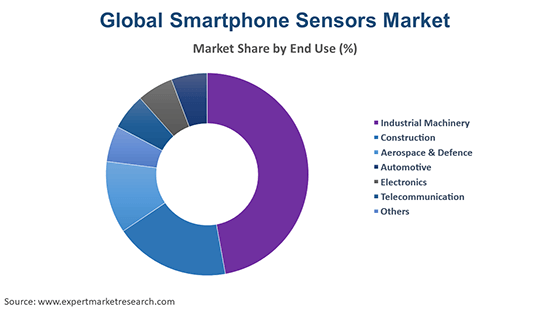
Market Breakup by End Use
Key Insight: The electronics segment leads the smartphone sensors market due to the constant effort by manufacturers to incorporate state-of-the-art sensors for imaging, games, biometrics, and smart displays. In April 2025, OMNIVISION launched an ultra-high dynamic range smartphone image sensor, enabling cinematic video capture, enhanced autofocus, and superior low-light imaging. The construction and machinery sectors are becoming niche areas owing to rugged communication devices, which require robust sensors for detecting movement and other environmental changes. The automotive sector plays a crucial role in ensuring the incorporation of sensors in smartphones via connected mobility systems and navigation capabilities. The aerospace and defense industries contribute to this space through secure communication technology and sensor systems.
Market Breakup by Region
Key Insight: The Asia Pacific region leads the global industry because of massive semiconductor production, sophisticated smartphone assembly networks, and innovative practices from OEMs within the region. The North American region is expanding quickly owing to the emphasis on AI smartphones, high-end devices, and investments in semiconductors. The European smartphone sensors market sustains stable demand by leveraging sophisticated integration of automobiles and smartphones, sustainability-oriented electronics manufacturing, and innovative sensor engineering. Latin America is consistently growing owing to higher smartphone penetration and adoption of budget-friendly mid-range devices. The Middle East and Africa regions are steadily growing owing to improving digital infrastructure and mobile connectivity. In October 2025, Samsung launched a new camera sensor for mobile devices, the ISOCELL HP5, which features 200MP resolution.
By form, interface sensors dominate the market due to rising AI-driven smartphone interaction capabilities
With an increase in demand for a more intuitive user experience, interface sensors dominate the smartphone sensors market. Sensors such as capacitive touch sensors, ambient light sensors, fingerprint sensors, and proximity sensors are currently being used alongside AI technology to allow better responsiveness to screen adjustments and personalized user interaction. Manufacturers of smartphones are now focusing on incorporating ultra-sensitive interface sensors that can be used alongside foldable display screens, edge-to-edge screens, and gesture-driven navigation features. Under-screen biometric sensors are also being developed by firms in order to maintain aesthetic appeal and stringent security measures. Leveraging such trends, in March 2026, STMicroelectronics supported Snapdragon Wear Elite using AI-enabled sensors, enhancing always-on sensing, wearable intelligence, and ultra-low-power connectivity experiences.
The smartphone sensors market observes significant growth in the use of motion sensors since smartphone owners want devices that come with AI-powered games, augmented reality, and fitness features. Advanced sensors are currently used in motion sensing and navigation, as well as spatial awareness. These sensors are also becoming integral in improving gaming responsiveness and camera stability. The development of low-power MEMS motion sensors ensures that users do not sacrifice their battery life while performing motion analysis operations. In December 2025, Samsung developed advanced sensor technology eliminating distortion in smartphone action photography through enhanced global shutter-level imaging performance.
By price, the premium range of smartphones account for a substantial share of the market through advanced multi-sensor integration capabilities
The premium range of smartphones continues to make up for the most significant demand driver in the smartphone sensors market as the flagship smartphones incorporate innovative sensing technology to differentiate themselves from their competitors. Advanced smartphones feature larger image sensors, LiDAR scanners, superior gyrosensors, environmental sensors, and ultrasonic sensors. Manufacturers of smartphones use innovations in sensors to offer premium products and maintain customer loyalty. For example, in May 2026, Ouster launched Rev8 lidar sensors with native color capability, enhancing autonomous perception, imaging accuracy, and advanced AI-driven sensing applications.
The medium range category of smartphones represents one of the fastest-growing segments of the smartphone sensors market due to the fast-paced democratization of advanced sensing technologies supported by AI. The manufacturers of smartphones are incorporating new generations of camera sensors, tracking sensors, and biometric sensors to create affordable phones and increase demand among price-sensitive customers. Enhanced efficiency in semiconductor production helps to produce cheaper sensors of equal performance to those used in flagship smartphones.
By end use, the electronics segment secures the leading market position owing to rising multifunctional smartphone sensor integration worldwide
The electronics division largely contributes to the smartphone sensors market revenue owing to increasing incorporation of multi-purpose sensors in smartphones by consumer electronics companies. Companies are seeking small and energy efficient sensors that can be used in performing activities such as AI imaging, gestures recognition, gaming, and biometric identification. Latest innovations in MEMS technology play a significant role in enhancing camera performance, environmental sensing capabilities, and advanced display functionalities in premium devices. For example, in December 2025, Samsung developed DeepPix camera sensor technology, enhancing smartphone imaging precision, low-light performance, and advanced computational photography capabilities.
The telecommunication segment is expected to experience the highest growth rate in the smartphone sensors market over the coming years, owing to the increasing adoption of smartphones powered by AI technology for creating highly interactive ecosystems. Increasing usage of smartphone sensors in enhancing communication efficiency, network-aware applications, and environmental adaptive features results in growing adoption in the telecom industry. The telecommunication industry is continuously expanding its infrastructure in emerging countries and therefore demand for smartphone sensors having capabilities to offer enhanced speed and data experiences is expected to rise.
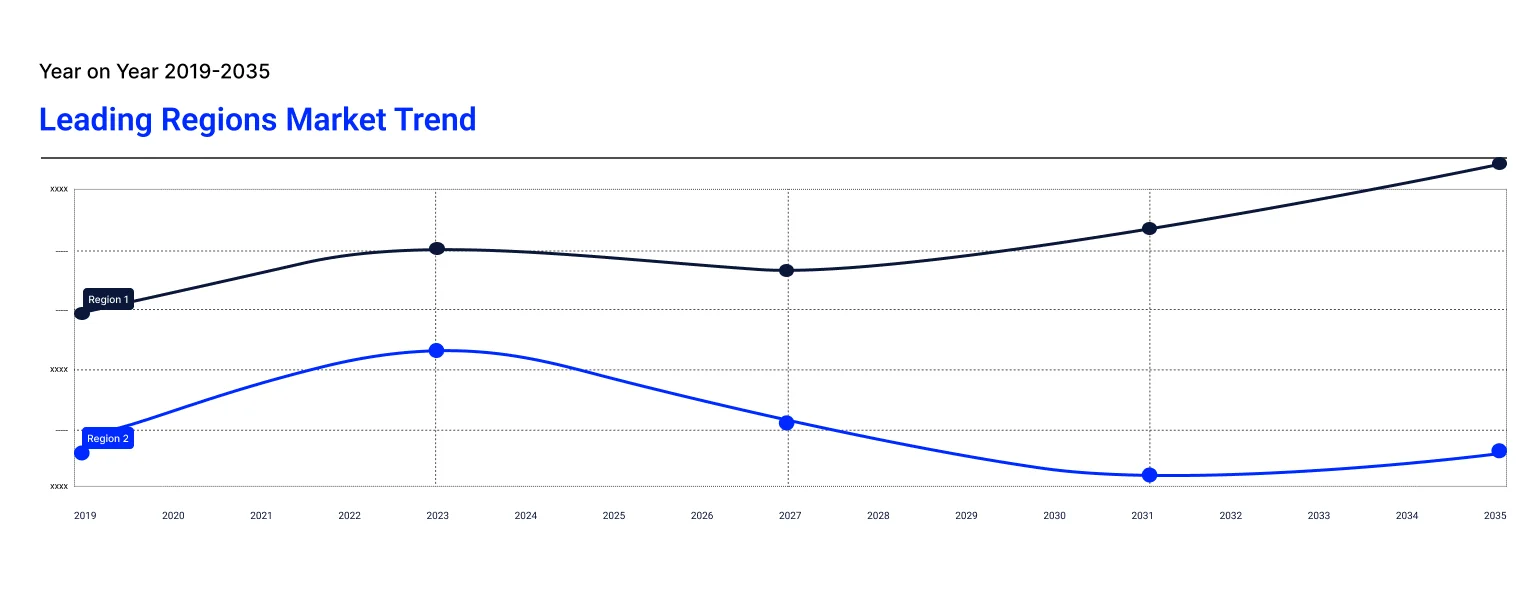
Asia Pacific clocks in the largest market share due to strong smartphone manufacturing and semiconductor ecosystems
Asia Pacific continues to dominate the smartphone sensors market owing to its robust semiconductor manufacturing infrastructure and strong smartphone manufacturing capabilities. Countries such as China, South Korea, Japan, and Taiwan are playing a key role in the manufacturing of sensors and MEMS and smartphone manufacturing activities. Smartphone manufacturers from the region are making extensive investments in AI-based smartphone devices with cameras, environmental sensors, and gesture recognition capability. Self-reliant efforts by governments in the production of semiconductors and chips bolster supply chain security for sensors. Demonstrating such shifts, in May 2026, Vivo launched X300 Ultra and X300 FE smartphones featuring flagship cameras, AI imaging, and advanced Snapdragon performance capabilities.
North America is expected to be the fastest-growing smartphone sensors market during the forecast period owing to increasing investments in AI-based consumer electronics and high-end smartphone ecosystems. Tech companies in North America are putting emphasis on spatial computing, mixed reality, and computational photography, which would require innovative sensor technology solutions. Smartphones manufacturers from North America are making heavy investments in secure authentication system, environmental intelligence, and personalized features based on sensors. Semiconductor development programs supported by governments in the region further boost research and development of sensor technologies.
The industry is increasingly becoming competitive as manufacturers vie for excellence in AI-enabled sensing, miniaturization, and power efficiency. Smartphone sensor companies are increasingly devoting their efforts towards the development of stacking CMOS imaging technology, ultra-miniature MEMS, and advanced sensor fusion technology for creating immersive smartphone experience. There is an increasing trend of strategic collaboration between sensor manufacturers, chipmakers, and smartphone manufacturers to foster rapid innovation.
Leading smartphone sensors market players are increasingly allocating their resources towards developing wafer-level packaging technology, under-screen sensing, and low-power motion tracking solutions specifically designed for foldable smartphones and AI native smartphones. The areas of opportunity in the sensors market for smartphone applications are growing beyond computational photography, biometric sensing, environmental sensing, and mixed reality applications. Suppliers who can offer sensor products which have good performance and are efficient in terms of thermal and scalable manufacturing processes gain competitive advantages.
The Alps Electric Corporation was founded in 1948 and has its headquarters in Tokyo, Japan. It specializes in small sensing innovations that enable advanced functions in modern smartphones. The company designs haptic sensing technology, motion sensors, and interface modules designed for top-end mobile phones. Its strategic initiatives include innovation in low-power MEMS, smaller sensors, and improved touch sensation capabilities for flexible and gaming-oriented phones.
The Fujitsu Limited Company was established in 1935 and has its headquarters in Kanagawa, Japan. It is actively engaged in enabling sensors in modern smartphones through semiconductors and smart communication technologies. The company has been placing particular emphasis on AI-supported sensing systems, secure authentication systems, and intelligent connection technologies.
Formed in the year 2003, with headquarters in California, United States, InvenSense is one such company that manufactures MEMS motion sensor technology products for use in smartphones and consumer electronics. The firm focuses on gyroscopes, accelerometers, and sensor fusion technology for gaming, augmented reality applications, and camera stabilization. It is positioning its product line towards low-latency motion analytics and immersive interaction in smartphones.
Founded in the year 1944, Murata Manufacturing is based out of Kyoto, Japan. This company focuses on manufacturing miniature sensing products designed for advanced smartphones. It places more emphasis on designing products related to MEMS sensors, wireless modules, and environmental sensing technologies, all designed specifically for AI-powered products.
Other key players in the market include Bosch Sensortec GmbH, MEMS VISION, Samsung Electronics Co., Ltd., Sony Semiconductor Solutions Corporation, Broadcom Inc., and STMicroelectronics International N.V, and Panasonic Corporation among others.
*Please note that this is only a partial list; the complete list of key players is available in the full report. Additionally, the list of key players can be customized to better suit your needs.*
Unlock the latest insights with our smartphone sensors market trends 2026 report. Discover regional growth patterns, consumer preferences, and key industry players. Stay ahead of competition with trusted data and expert analysis. Download your free sample report today and drive informed decisions in the market.


Upto 15% Off
USD
$2499 $2249
$3999 $3599
$4999 $4249
$5999 $5099


*While we strive to always give you current and accurate information, the numbers depicted on the website are indicative and may differ from the actual numbers in the main report. At Expert Market Research, we aim to bring you the latest insights and trends in the market. Using our analyses and forecasts, stakeholders can understand the market dynamics, navigate challenges, and capitalize on opportunities to make data-driven strategic decisions.*
The global smartphone sensors market is projected to grow at a CAGR of nearly 3.00% in the forecast period of 2026-2035.
The major drivers of the industry include the rising disposable incomes, increasing population, rising construction industry, and the growing adoption of sensor fusion solutions.
The integration of more sensors into premium smartphones is likely to be a key trend guiding the development of the industry.
North America, Europe, the Asia Pacific, Latin America, and the Middle East and Africa are the leading regions in the market.
The price ranges of smartphone sensors available in the industry are premium range, medium range, and low range.
The major forms of smartphone sensors in the market are interface, security, and motion.
The leading end use sectors of the market are industrial machinery, construction, aerospace and defence, automotive, electronics, and telecommunication, among others.
The leading players in the market are Alps Electric Co., Ltd. (TYO: 6770), Fujitsu Limited (TYO: 6702), InvenSense Inc., Murata Manufacturing Co., Ltd. (TYO: 6981), Panasonic Corporation (TYO: 6752), Bosch Sensortec GmbH, MEMS VISION, Samsung Electronics Co., Ltd., Sony Semiconductor Solutions Corporation, Broadcom Inc., STMicroelectronics International N.V, Others.
Explore our key highlights of the report and gain a concise overview of key findings, trends, and actionable insights that will empower your strategic decisions.
| REPORT FEATURES | DETAILS |
| Base Year | 2025 |
| Historical Period | 2019-2025 |
| Forecast Period | 2026-2035 |
| Scope of the Report |
Historical and Forecast Trends, Industry Drivers and Constraints, Historical and Forecast Market Analysis by Segment:
|
| Breakup by Form |
|
| Breakup by Price Range |
|
| Breakup by End Use |
|
| Breakup by Region |
|
| Market Dynamics |
|
| Competitive Landscape |
|
| Companies Covered |
|
| Report Price and Purchase Option | Explore our purchase options that are best suited to your resources and industry needs. |
| Delivery Format | Delivered as an attached PDF and Excel through email, with an option of receiving an editable PPT, according to the purchase option. |
Datasheet
One User
USD 2,499
USD 2,249
tax inclusive*
Single User License
One User
USD 3,999
USD 3,599
tax inclusive*
Five User License
Five User
USD 4,999
USD 4,249
tax inclusive*
Corporate License
Unlimited Users
USD 5,999
USD 5,099
tax inclusive*
*Please note that the prices mentioned below are starting prices for each bundle type. Kindly contact our team for further details.*
Flash Bundle
Small Business Bundle
Growth Bundle
Enterprise Bundle
*Please note that the prices mentioned below are starting prices for each bundle type. Kindly contact our team for further details.*
Flash Bundle
Number of Reports: 3
20%
tax inclusive*
Small Business Bundle
Number of Reports: 5
25%
tax inclusive*
Growth Bundle
Number of Reports: 8
30%
tax inclusive*
Enterprise Bundle
Number of Reports: 10
35%
tax inclusive*
How To Order

Select License Type
Choose the right license for your needs and access rights.

Click on ‘Buy Now’
Add the report to your cart with one click and proceed to register.

Select Mode of Payment
Choose a payment option for a secure checkout. You will be redirected accordingly.
Strategic Solutions for Informed Decision-Making
Gain insights to stay ahead and seize opportunities.

Get insights & trends for a competitive edge.

Track prices with detailed trend reports.

Analyse trade data for supply chain insights.

Leverage cost reports for smart savings

Enhance supply chain with partnerships.

Connect For More Information
Our expert team of analysts will offer full support and resolve any queries regarding the report, before and after the purchase.
Our expert team of analysts will offer full support and resolve any queries regarding the report, before and after the purchase.
We employ meticulous research methods, blending advanced analytics and expert insights to deliver accurate, actionable industry intelligence, staying ahead of competitors.
Our skilled analysts offer unparalleled competitive advantage with detailed insights on current and emerging markets, ensuring your strategic edge.
We offer an in-depth yet simplified presentation of industry insights and analysis to meet your specific requirements effectively.




