

Consumer Insights
Uncover trends and behaviors shaping consumer choices today
Procurement Insights
Optimize your sourcing strategy with key market data
Industry Stats
Stay ahead with the latest trends and market analysis.
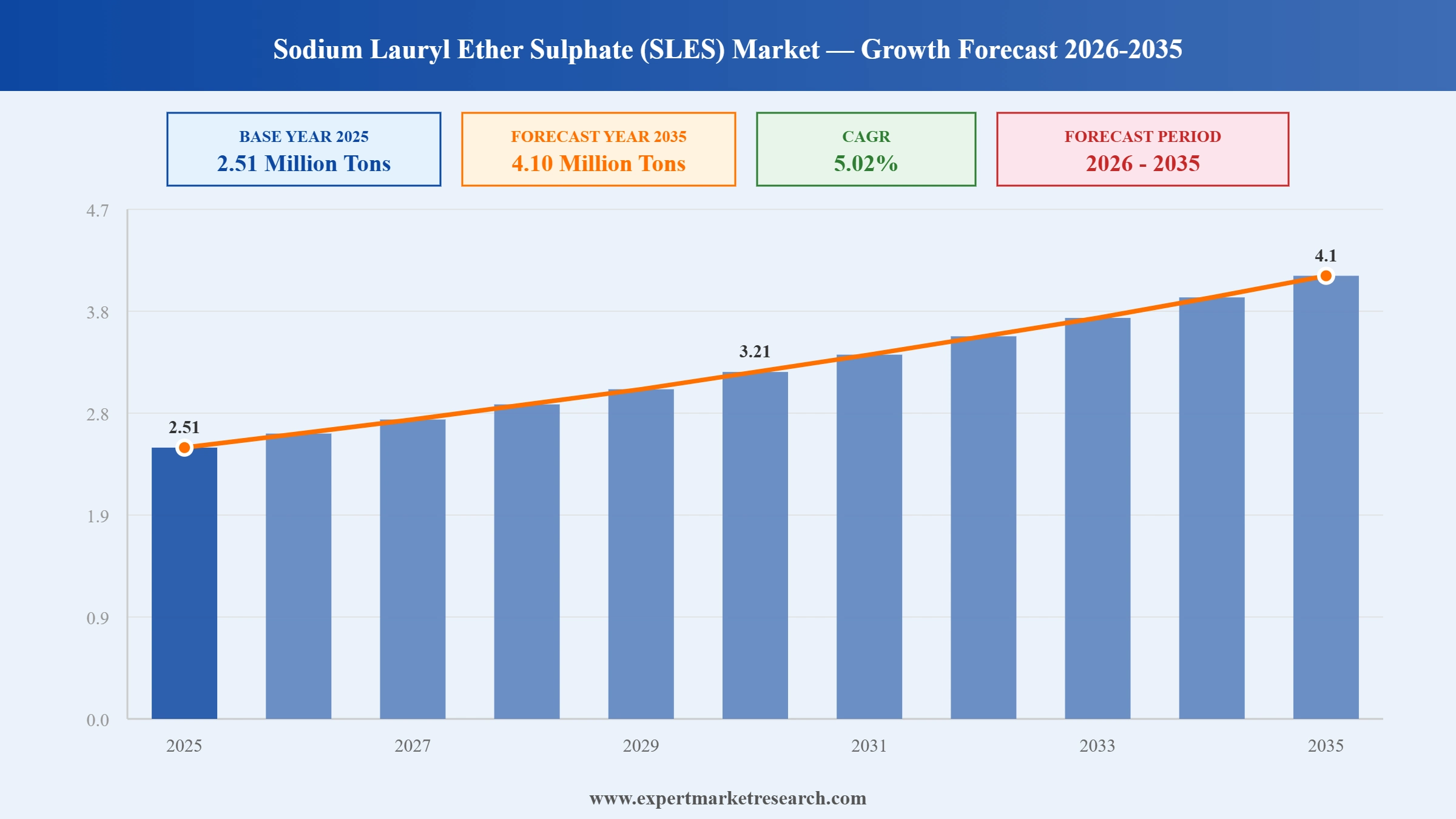
The global sodium lauryl ether sulphate (SLES) market reached a volume of 2.51 Million Tons at 2025 and is projected to expand at a CAGR of around 5.02% during the forecast period of 2026-2035. With growing consumer demand for personal care products including shampoos, body washes, and liquid hand soaps, rising household cleaning product penetration in emerging markets, expanding industrial detergent applications in textile and leather processing, and increasing SLES adoption in low-irritation personal care formulations, the market is expected to reach 4.10 Million Tons by 2035.
Read more about this report - REQUEST FREE SAMPLE COPY IN PDF
The global sodium lauryl ether sulphate (SLES) market is experiencing growing strategic emphasis on sustainable production, bio-based raw material sourcing, and low-irritation formulation development as consumer demand for eco-friendly personal care and cleaning products intensifies. Leading producers including Kao Corporation, Solvay SA, BASF SE, and Evonik Industries AG are investing in green surfactant technologies and regional partnerships to capture growing demand across Asia Pacific and North America.
Solvay published its 2025 Annual Integrated Report, highlighting the company's progress in advancing sustainable surfactant chemistry, strengthening operational competitiveness, and delivering more sustainable solutions to its SLES and specialty chemical customers globally. The report outlined Solvay's commitment to eco-design, CO2-neutral production pathways, and bio-based raw material integration, reinforcing its strategic positioning within the global sodium lauryl ether sulphate (SLES) market.
Evonik Industries AG progressed development of its CO2-neutral surfactant production capabilities, including enzyme-stable SLES variants designed for industrial cleaning applications. The company's research centre advancements targeted sustainability certification requirements in European and North American markets, where regulatory frameworks including the EU's Safe and Sustainable by Design programme are driving formulators to adopt greener SLES-based chemistries within the global sodium lauryl ether sulphate (SLES) market.
BASF SE advanced its commitment to sustainable surfactant formulation in the Asia Pacific region, developing SLES grades with improved environmental profiles to meet growing regulatory and consumer expectations for eco-friendly cleaning and personal care products. BASF's investment in alternative feedstock and energy-efficient manufacturing approaches for its Asia Pacific surfactant operations reinforced its competitive position in the global sodium lauryl ether sulphate (SLES) market's fastest-growing region.
Kao Corporation announced an exclusive partnership with Pilot Chemical Company to bring Bio IOS bio-based internal olefin sulfonates to the North American market. This sustainable surfactant technology, commercially available from 2026, directly complements SLES-based formulations in laundry, dish, hard surface cleaning, and personal care applications, reflecting growing demand for bio-based surfactant alternatives within the global sodium lauryl ether sulphate (SLES) market.
Consumer hygiene awareness and rising personal care product adoption across developing markets is structurally expanding SLES consumption in the global sodium lauryl ether sulphate (SLES) market. SLES accounts for over 50% of formulations in personal care products including shampoos and body washes, making it the dominant surfactant active across mass-market and premium personal care categories globally, particularly across Asia Pacific's rapidly growing middle-class population.
The European Union's Safe and Sustainable by Design chemicals framework is compelling surfactant formulators across Europe and globally to develop SLES variants with reduced environmental impact, improved biodegradation profiles, and bio-based feedstock sourcing. This regulatory catalyst is driving R&D investment by producers including Clariant Ltd., Solvay SA, and Evonik Industries AG in next-generation sustainable SLES grades for the global sodium lauryl ether sulphate (SLES) market.
The textile and leather processing industries are significant consumers of SLES-based industrial cleaning and wetting agents globally, with growing apparel and leather goods manufacturing in Asia Pacific sustaining procurement demand. Rising food processing sector hygiene standards and healthcare facility cleaning product procurement are adding incremental industrial end-use volumes to the global sodium lauryl ether sulphate (SLES) market through both established and emerging manufacturing hubs.
SLES's adaptability in low-temperature formulations is attracting growing adoption in cold-wash detergent products across Europe and Asia Pacific, where energy efficiency and environmental impact reduction are consumer priorities. South Korea and Germany are leading markets for cold-wash detergent products incorporating SLES, with manufacturers including Kao Corporation and Evonik developing specialised low-temperature-active SLES grades for this growing segment of the global sodium lauryl ether sulphate (SLES) market.
The premiumisation of personal care products globally is driving demand for high-purity, low-irritation SLES grades suitable for sensitive skin formulations, baby care products, and dermatologist-recommended cleansers. Kao Corporation's focus on mild SLES blends for sensitive skincare and Huntsman Corporation's speciality surfactant development for high-end personal care reflect the commercial importance of premium formulation grades within the global sodium lauryl ether sulphate (SLES) market.
The report of the Expert Market Research's titled "Global Sodium Lauryl Ether Sulphate (SLES) Market Report and Forecast 2026-2035" offers a detailed analysis of the market based on the following segments:
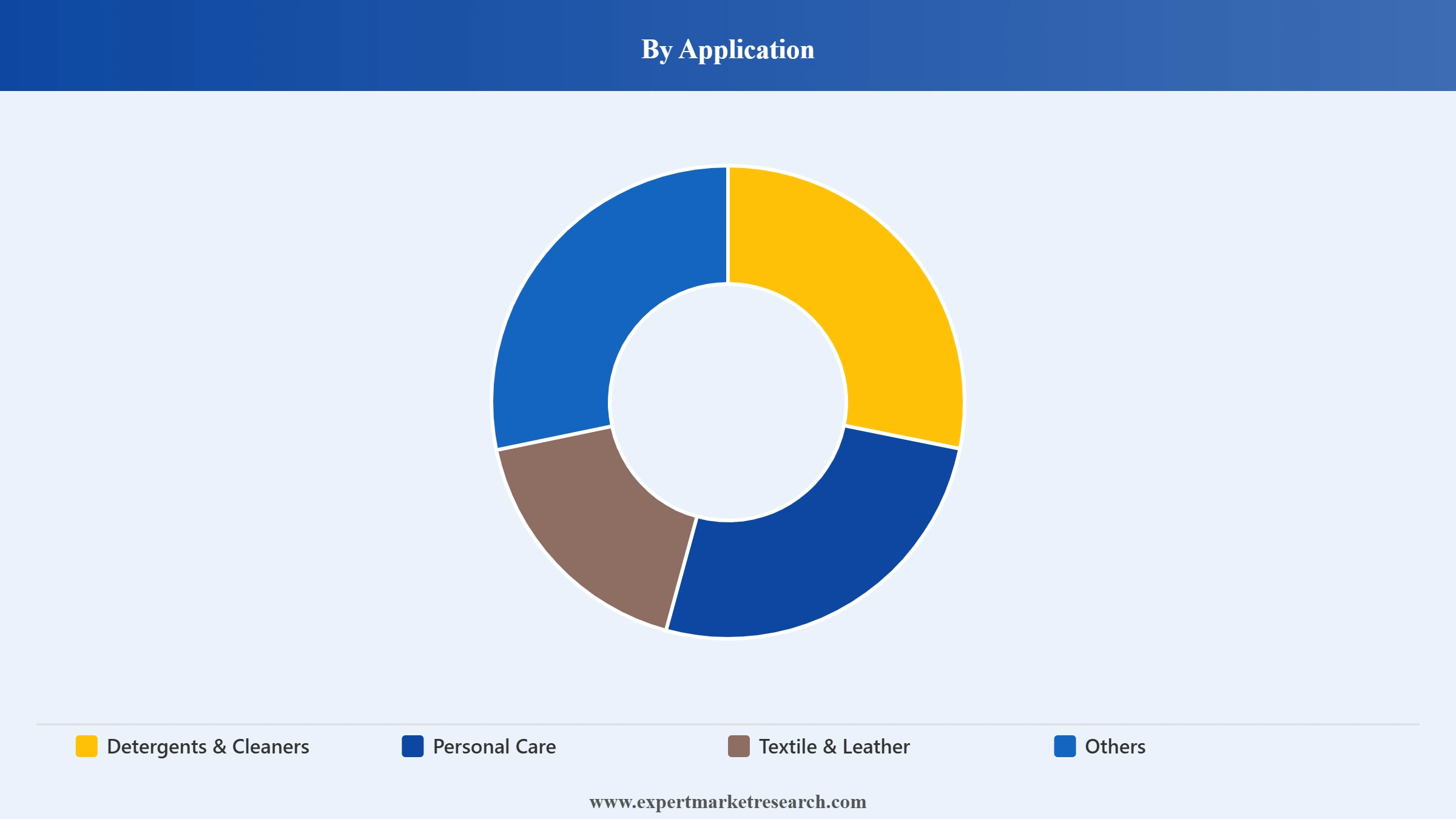
Market Breakup by Application
Key Insight: Personal care is the dominant application segment in the global sodium lauryl ether sulphate (SLES) market, with SLES accounting for over 50% of formulations in shampoos, body washes, and liquid soaps. Detergents and cleaners represent the second largest application. Hair care is the fastest-growing personal care sub-segment. Textile and leather processing sustains consistent industrial SLES demand, particularly in ASIA PACIFIC's expanding apparel manufacturing sector.
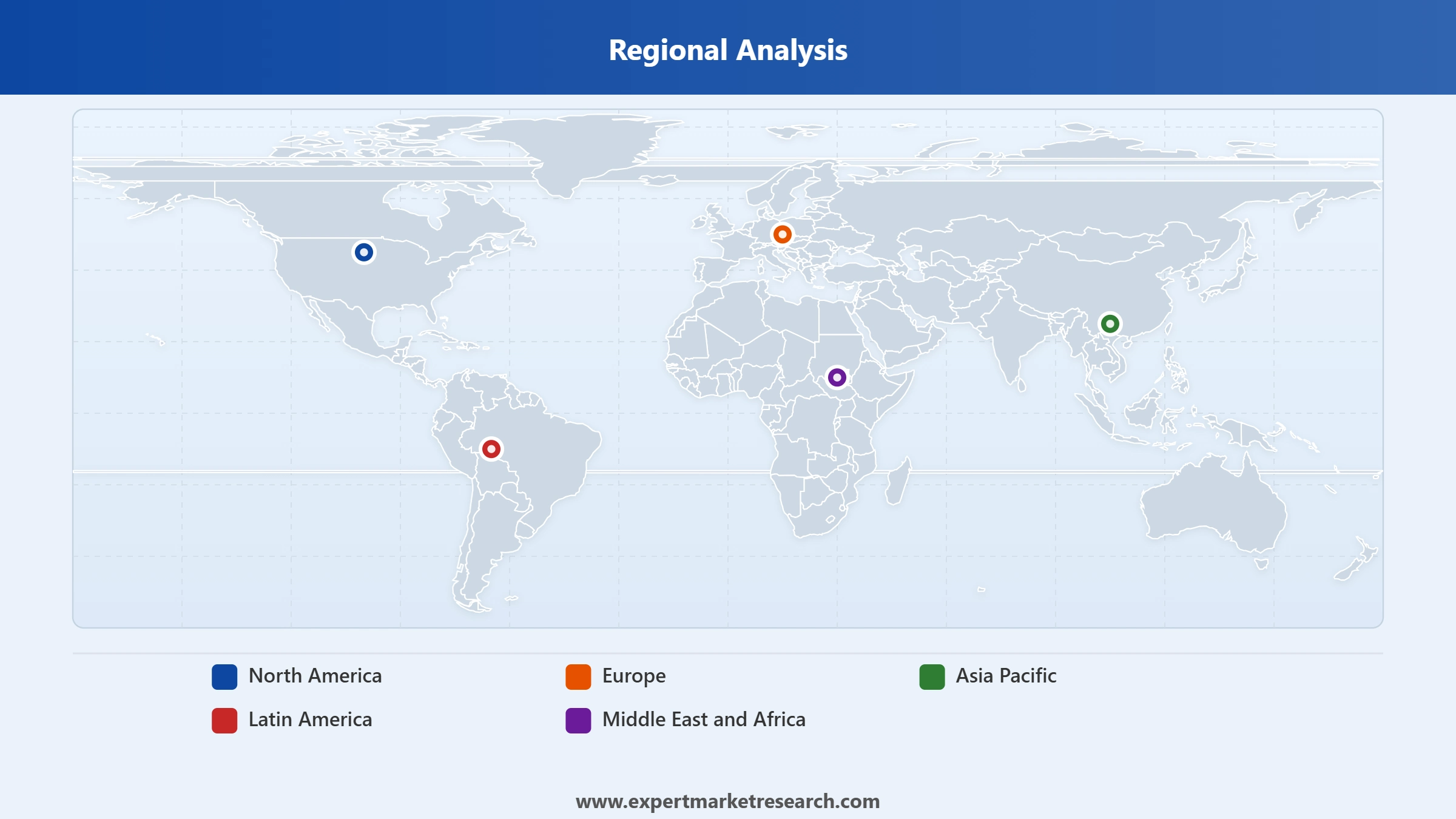
Market Breakup by Region
Key Insight: ASIA PACIFIC dominates the global sodium lauryl ether sulphate (SLES) market, accounting for the largest regional volume driven by China's vast surfactant manufacturing base, India's rapidly growing personal care market, and Southeast Asia's expanding consumer goods sector. EUROPE is a high-regulation market advancing sustainable surfactant development. NORTH AMERICA shows steady growth anchored by established personal care and home care product markets.
Read more about this report - REQUEST FREE SAMPLE COPY IN PDF
By Application, personal care accounts for the dominant share of the market due to SLES being the primary surfactant active in shampoos, body washes, and liquid soap formulations globally.
Personal care is the leading application segment in the global sodium lauryl ether sulphate (SLES) market, driven by SLES's established role as the primary foaming and cleansing agent in mass-market and premium personal hygiene products. With approximately 900 million internet users in India alone and growing middle class populations across Asia Pacific, demand for personal care products incorporating SLES is structurally expanding. Kao Corporation's personal care research centre actively develops mild SLES blends for sensitive skincare, capturing premium market demand.
Read more about this report - REQUEST FREE SAMPLE COPY IN PDF
Detergents and cleaners represent the second largest application in the global sodium lauryl ether sulphate (SLES) market, with laundry care, dishwashers, and industrial cleaning collectively consuming significant SLES volumes. Growing household income in emerging markets is driving adoption of liquid laundry and dish cleaning products with higher SLES content compared to powder alternatives. Stepan Company and Huntsman Corporation supply SLES grades specifically formulated for high-performance laundry and dishwashing detergent applications globally.
By Region, Asia Pacific accounts for the dominant share of the market due to its large-scale surfactant manufacturing base and rapidly growing personal care and home care markets.
Asia Pacific commands the dominant share of the global sodium lauryl ether sulphate (SLES) market, driven by China's position as a major SLES producer and consumer, India's fast-growing personal care sector, and Southeast Asia's expanding manufacturing base. The region's palm oil feedstock availability in Malaysia and Indonesia provides cost-competitive raw material access for local SLES producers. Godrej Industries Limited (GIL) is a significant SLES producer in India, serving both domestic and export markets across the region.
Read more about this report - REQUEST FREE SAMPLE COPY IN PDF
Europe is a technology-leading region in the global sodium lauryl ether sulphate (SLES) market, with regulatory frameworks including the EU's Safe and Sustainable by Design programme driving investment in bio-based SLES formulations and sustainable production processes. Solvay SA and Clariant Ltd. are major European SLES producers advancing CO2-neutral and plant-derived surfactant technologies. North America shows steady demand growth anchored by the established personal care market, with Stepan Company, Huntsman Corporation, and Kao Corporation through its Pilot Chemical partnership serving the region.
Asia Pacific dominates the global sodium lauryl ether sulphate (SLES) market due to its large surfactant production capacity, abundant palm-oil feedstock, and rapidly growing consumer goods markets.
Asia Pacific commands the leading regional position in the global sodium lauryl ether sulphate (SLES) market, supported by China's extensive surfactant manufacturing infrastructure, India's rapidly expanding personal care and cleaning product market, and Southeast Asia's palm oil-driven feedstock advantage. India's Godrej Industries Limited (GIL) supplies SLES to both domestic FMCG companies and international customers, benefiting from growing domestic consumer hygiene awareness and rising personal care product adoption across all income levels.
North America is a steady growth market within the global sodium lauryl ether sulphate (SLES) market, characterised by established consumer personal care brands, growing demand for bio-based and sustainable surfactant products, and new partnership activity expanding sustainable SLES technology access. In January 2025, Kao Corporation and Pilot Chemical announced a Bio IOS sustainable surfactant partnership specifically targeting the North American market, with commercial availability planned from 2026, reflecting the region's growing preference for sustainable cleaning and personal care surfactant formulations.
The global sodium lauryl ether sulphate (SLES) market is moderately consolidated among a relatively small group of global specialty chemical producers with integrated surfactant manufacturing capabilities. BASF SE, Solvay SA, Evonik Industries AG, and Clariant Ltd. lead the European market with advanced technology and sustainability-focused product portfolios, while Kao Corporation, Stepan Company, and Huntsman Corporation serve North American and Asia Pacific markets. Godrej Industries Limited (GIL) is the leading Indian producer, serving the growing domestic personal care and cleaning sectors.
Competitive differentiation in the global sodium lauryl ether sulphate (SLES) market is increasingly driven by sustainability credentials, bio-based raw material content, and the ability to develop low-irritation formulations for sensitive skin and premium personal care applications. Regulatory pressure in EUROPE from the Safe and Sustainable by Design framework is accelerating investment in green SLES chemistry. The Kao Corporation and Pilot Chemical Bio IOS partnership announced in January 2025 exemplifies the strategic partnerships being formed to bring next-generation sustainable surfactant technologies to commercial scale.
Founded in 1863 and headquartered in Brussels, Belgium, Solvay SA is a global specialty chemicals company producing a broad range of surfactants, polymers, and advanced materials. Solvay's surfactant portfolio includes SLES and related anionic surfactants under its Rhodapex and related product families, serving personal care, household cleaning, and industrial applications globally. The company is advancing CO2-neutral surfactant production and bio-based chemistry, reinforcing its sustainability leadership position in the global sodium lauryl ether sulphate (SLES) market.
Founded in 1995 and headquartered in Muttenz, Switzerland, Clariant Ltd. is a global specialty chemicals company producing surfactants, additives, and performance chemicals for personal care, home care, and industrial markets. Clariant's SLES and anionic surfactant products are used in shampoos, shower gels, liquid detergents, and industrial cleaning formulations. The company leads in sustainable and bio-based surfactant innovation through its VITA range of bio-derived formulations, serving sustainability-conscious customers within the global sodium lauryl ether sulphate (SLES) market.
Founded in 1865 and headquartered in Ludwigshafen, Germany, BASF SE is the world's largest chemical company, producing a comprehensive range of SLES and anionic surfactants under its Texapon product family for personal care, home care, and industrial applications. BASF serves global FMCG companies, personal care manufacturers, and industrial cleaning formulators with tailored SLES grades. The company is investing in alternative feedstocks and energy-efficient manufacturing processes to reduce the environmental impact of SLES production across its global operations.
Founded in 1887 and headquartered in Tokyo, Japan, Kao Corporation is a global consumer goods and specialty chemicals company producing surfactants, personal care ingredients, and cleaning materials. Kao's surfactant division supplies SLES and anionic surfactant inputs to personal care and home care manufacturers globally. In January 2025, Kao announced an exclusive Bio IOS sustainable surfactant partnership with Pilot Chemical for the North American market, targeting laundry, dish, and personal care applications within the global sodium lauryl ether sulphate (SLES) market.
Other key players in the market are Stepan Company, Godrej Industries Limited (GIL), Huntsman Corporation, Evonik Industries AG, and Others.
*Please note that this is only a partial list; the complete list of key players is available in the full report. Additionally, the list of key players can be customized to better suit your needs.*
Unlock growth opportunities in the global sodium lauryl ether sulphate (SLES) industry from 2026 with our comprehensive market report. Gain intelligence on application segment dynamics, regional market shifts, sustainability-driven product innovation, and competitive strategies defining the market. Whether you are an SLES producer, personal care formulator, or specialty chemical investor, this report delivers the clarity you need. Download your free sample today and discover the key opportunities in the thriving global SLES industry through 2035.


Upto 15% Off
USD
$2499 $2249
$3999 $3599
$4999 $4249
$5999 $5099


*While we strive to always give you current and accurate information, the numbers depicted on the website are indicative and may differ from the actual numbers in the main report. At Expert Market Research, we aim to bring you the latest insights and trends in the market. Using our analyses and forecasts, stakeholders can understand the market dynamics, navigate challenges, and capitalize on opportunities to make data-driven strategic decisions.*
The market is projected to grow at a CAGR of 5.02% between 2026 and 2035.
Key strategies driving the market include expanding localised manufacturing, investing in AI-based formulation tools, co-developing mild SLES blends with FMCG clients, and pursuing sustainability certifications to meet evolving compliance and customer expectations.
The increasing consumer awareness of hygiene and personal cleanliness and increasing incidence of chronic diseases are the key industry trends propelling the market's growth.
The major regions in the industry are North America, Latin America, Middle East and Africa, Europe, and Asia Pacific.
Sodium lauryl ether sulphate (SLES) find its significant application in detergents and cleaners, personal care, and textile and leather, among others. Detergents and cleaners are further divided into laundry care, dishwashers, and industrial cleaners while personal care is bifurcated into hair care, skin care, and oral care.
The major players in the industry are Solvay SA, Clariant Ltd., BASF SE, Kao Corporation, Stepan Company, Godrej Industries Limited (GIL), Huntsman Corporation, and Evonik Industries AG, among others.
In 2025, the sodium lauryl ether sulphate (SLES) market reached an approximate volume of 2.51 Million Tons.
The key challenges are raw material volatility, rising green compliance costs, and consumer backlash against sulphates.
Explore our key highlights of the report and gain a concise overview of key findings, trends, and actionable insights that will empower your strategic decisions.
| REPORT FEATURES | DETAILS |
| Base Year | 2025 |
| Historical Period | 2019-2025 |
| Forecast Period | 2026-2035 |
| Scope of the Report |
Historical and Forecast Trends, Industry Drivers and Constraints, Historical and Forecast Market Analysis by Segment:
|
| Breakup by Application |
|
| Breakup by Region |
|
| Market Dynamics |
|
| Competitive Landscape |
|
| Companies Covered |
|
| Report Price and Purchase Option | Explore our purchase options that are best suited to your resources and industry needs. |
| Delivery Format | Delivered as an attached PDF and Excel through email, with an option of receiving an editable PPT, according to the purchase option. |
Datasheet
One User
USD 2,499
USD 2,249
tax inclusive*
Single User License
One User
USD 3,999
USD 3,599
tax inclusive*
Five User License
Five User
USD 4,999
USD 4,249
tax inclusive*
Corporate License
Unlimited Users
USD 5,999
USD 5,099
tax inclusive*
*Please note that the prices mentioned below are starting prices for each bundle type. Kindly contact our team for further details.*
Flash Bundle
Small Business Bundle
Growth Bundle
Enterprise Bundle
*Please note that the prices mentioned below are starting prices for each bundle type. Kindly contact our team for further details.*
Flash Bundle
Number of Reports: 3
20%
tax inclusive*
Small Business Bundle
Number of Reports: 5
25%
tax inclusive*
Growth Bundle
Number of Reports: 8
30%
tax inclusive*
Enterprise Bundle
Number of Reports: 10
35%
tax inclusive*
How To Order

Select License Type
Choose the right license for your needs and access rights.

Click on ‘Buy Now’
Add the report to your cart with one click and proceed to register.

Select Mode of Payment
Choose a payment option for a secure checkout. You will be redirected accordingly.
Strategic Solutions for Informed Decision-Making
Gain insights to stay ahead and seize opportunities.

Get insights & trends for a competitive edge.

Track prices with detailed trend reports.

Analyse trade data for supply chain insights.

Leverage cost reports for smart savings

Enhance supply chain with partnerships.

Connect For More Information
Our expert team of analysts will offer full support and resolve any queries regarding the report, before and after the purchase.
Our expert team of analysts will offer full support and resolve any queries regarding the report, before and after the purchase.
We employ meticulous research methods, blending advanced analytics and expert insights to deliver accurate, actionable industry intelligence, staying ahead of competitors.
Our skilled analysts offer unparalleled competitive advantage with detailed insights on current and emerging markets, ensuring your strategic edge.
We offer an in-depth yet simplified presentation of industry insights and analysis to meet your specific requirements effectively.




