

Consumer Insights
Uncover trends and behaviors shaping consumer choices today
Procurement Insights
Optimize your sourcing strategy with key market data
Industry Stats
Stay ahead with the latest trends and market analysis.
The solid rocket motor market was valued at USD 7.20 Billion in 2025. The market is expected to grow at a CAGR of 7.60% during the forecast period of 2026-2035 to reach a value of USD 14.98 Billion by 2035. Rising munitions demand, strategic missile modernization, hypersonic programs, and growing satellite launches are collectively driving the market growth.
The current solid rocket motor market dynamics reflect a clear policy push to widen the domestic supply base for missile and launcher motors. In January 2026, congressional appropriators agreed to provide USD 500 million for alternate solid rocket motor production sources, aimed at modernizing and expanding the industrial base. The FY2027 request, analyzed by the Center for a New American Security, seeks USD 49.5 billion to buy ten munitions’ programs, mostly through reconciliation, and separately seeks USD 30.4 billion for Defense Production Act Title III, with about USD 5.6 billion for munitions production. Motor makers with qualified designs, secure energetics supply, and available plant capacity are better placed to win these multiyear orders.
The overall solid rocket motor market value is also supported by wider public spending on defense and industrial capability. According to the Stockholm International Peace Research Institute, world military expenditure reached USD 2,887 billion in 2025, up 2.9% in real terms, which keeps missile, interceptor, and launcher programs well-funded. In October 2026, the European Union awarded EUR 168.2 million to eight projects under the first EDIP industrial reinforcement call, expected to attract about EUR 1.26 billion of industrial investment across 17 sites. Buyers weigh reliability, delivery speed, and qualification history, so suppliers with scalable plants and stable energetics supply can convert this funding into long term contracts.
Compound Annual Growth Rate
7.6%
Value in USD Billion
2026-2035
Read more about this report - REQUEST FREE SAMPLE COPY IN PDF
|
Solid Rocket Motor Market Report Summary |
Description |
Value |
|
Base Year |
USD Billion |
2025 |
|
Historical Period |
USD Billion |
2019-2025 |
|
Forecast Period |
USD Billion |
2026-2035 |
|
Market Size 2025 |
USD Billion |
7.20 |
|
Market Size 2035 |
USD Billion |
14.98 |
|
CAGR 2019-2025 |
Percentage |
XX% |
|
CAGR 2026-2035 |
Percentage |
7.60% |
|
CAGR 2026-2035 - Market by Region |
Asia Pacific |
8.8% |
|
CAGR 2026-2035 - Market by Propellant Type |
Composite Modified Double Base |
10.8% |
|
CAGR 2026-2035 - Market by Application |
Launch Vehicles |
9.4% |
|
2025 Market Share by Region |
Europe |
24.0% |
The solid rocket motor market is being shaped by L3Harris's new Camden motor plant, Mach Industries' acquisition of Exquadrum, Avio's planned Virginia plant, and Prometheus Energetics' Indiana motor campus. New plants, acquisitions, and venture backed entrants are further reshaping the competitive landscape for motor makers, missile primes, launch providers, and defense ministries worldwide, as buyers look for secure and scalable motor supply.
L3Harris opened its next generation solid rocket motor facility in Camden, Arkansas, in October 2026, supporting the Army's GMLRS rocket and designed to double current production capacity. The plant formed part of a USD 216 million Title III agreement that also covered Orange County, Virginia, and upgrades in Huntsville. Missile makers can leverage this by securing more reliable motor supply.
Mach Industries acquired Exquadrum in May 2026 and renamed it Mach Energetics, adding solid rocket motor technology and test infrastructure to its defense technology portfolio. Terms were not disclosed. The deal brought propulsion capability in house at a time of strong demand for missile motors. Defense startups can leverage this by buying motor expertise instead of building it from scratch.
Avio announced in February 2026 plans for a USD 500 million solid rocket motor plant in Hurt, Virginia, backed by up to USD 97.7 million of state incentives subject to legislative approval. The plant was expected to create more than 1,000 jobs and add US based capacity. Missile makers can leverage this by adding a second source for tactical motors.
Prometheus Energetics, a joint venture of Kratos and RAFAEL, broke ground in February 2026 on a campus of about 600 acres in Bloomfield, Indiana, planned with four solid rocket motor lines and up to 800 tons of energetics capacity. The partners committed up to USD 175 million, with production expected from 2027. Missile makers can leverage this by adding sources.
Depleted stockpiles and wider conflicts are pushing governments to scale interceptor and rocket output, which depends directly on motor supply. For example, in January 2026, Lockheed Martin reached a framework agreement with the US Department of War to lift PAC-3 MSE output from about 600 to 2,000 interceptors a year over seven years, after delivering 620 in 2025. The agreement sets a clear volume target for motor suppliers, which must now add plants, tooling, and trained workers to keep pace.
Replacing aging intercontinental missiles requires new motors and plants that take years to build. Following such trends, in April 2026, Northrop Grumman said it had invested USD 13.5 billion in infrastructure and research for security programs, including USD 2 billion for solid rocket motor capacity, with Sentinel motors for the first five flight tests in production and composite cases about 70% lighter than those on Minuteman III. Programs of this size give motor makers long visibility and justify new plants.
Established prime contractors have long dominated motor supply, and buyers now back newer firms that print propellant and cases. As an illustration, in July 2026, reports said X-Bow Systems secured contracts worth over USD 280 million, including USD 191.3 million from the Air Force Test Center, USD 64 million for Army and Navy hypersonics, and USD 28.67 million from the Air Force Research Laboratory for 3D printed propellant, showing growing trust in newer producers and wider supplier choice for buyers.
Motor output depends on small parts and chemicals as much as on large plants. Demonstrating this shift, in May 2026, the Department of War awarded USD 27.3 million under the Defense Production Act to Pacific Scientific Energetic Materials Company for a new integrated plant in Chandler, Arizona, that makes the universal Arm Fire Device, a safety component used in solid rocket motors. Such awards target small but very critical items that can delay entire motor lines when supply is thin.
Allies are building their own propulsion lines so that missile output does not depend on a few foreign suppliers. For instance, in December 2025, Japanese media reported that IHI planned a missile solid rocket motor plant inside IHI Aerospace's Tomioka factory in Gunma, due for completion in fiscal 2028. Investment and capacity were not disclosed, but the plan shows how allied countries are widening supply and keeping motor know how close to home for long term national security and resilience.
The Expert Market Research's report titled "Solid Rocket Motor Market Report and Forecast 2026-2035" offers a detailed analysis of the market based on the following segments:
Market Breakup by Propellant Type
Key Insight: Composite propellant dominates the solid rocket motor market by propellant type, supported by high energy, controllable burn, and long storage life, while composite modified double base propellant is the fastest growing on demand for higher performance weapons. Double base propellant serves gun, and artillery rounds and smaller rockets. Showing growing propellant capacity in Europe, in June 2026, Eurenco and Poland's MESKO signed a shareholders' agreement for a joint venture making 155 mm propellants and bi-modular charge systems, with operational launch targeted for summer 2028.
Market Breakup by Application
Key Insight: Tactical missiles dominate the solid rocket motor market by application on interceptor and guided weapon volumes, while launch vehicles are the fastest growing as more satellite launchers use solid boosters. Strategic missiles bring large, long running motor programs, rockets and artillery add munitions volume, and others cover hypersonic boost motors and target vehicles. Showing demand for hypersonic and missile defense motors, in July 2026, the US Navy awarded Ursa Major a USD 10 million development contract for the MK 104 motor.
Market Breakup by End Use
Key Insight: Defense dominates the solid rocket motor market by end use, as missiles, rockets, and munitions account for most motor demand, while space is the fastest growing as more launchers add solid boosters or solid first stages. Showing continued public funding for new entrants, in October 2025, the US Department of War added USD 43.7 million of Defense Production Act Title III funding for Anduril's rocket motor plant in Mississippi, on top of USD 14.3 million awarded in December 2024.
Market Breakup by Region
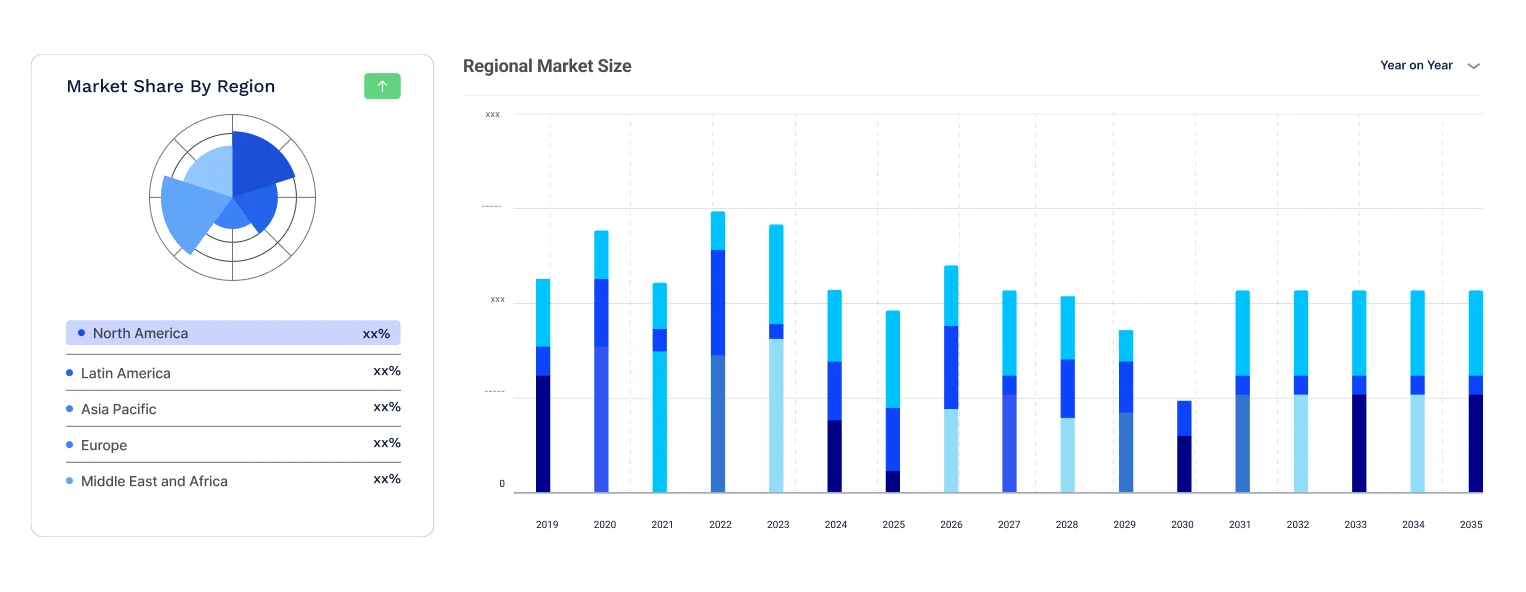
Key Insight: North America dominates the solid rocket motor market on large missile programs and the biggest motor plants, while Asia Pacific is the fastest growing as Australia, Japan, India, and South Korea build local capacity. Europe holds a strong share on rearmament and launcher programs, Latin America grows from a small base, and the Middle East and Africa adds demand from national missile programs. Showing European capacity growth, in October 2026, the EU and Norway committed about EUR 50 million to help Nammo add a fourth motor production line at Raufoss, Norway.
Read more about this report - REQUEST FREE SAMPLE COPY IN PDF
By propellant type, composite propellant dominates on high energy, controllable burn, and long storage life
Composite propellant accounts for the largest share of the solid rocket motor market by propellant type, because ammonium perchlorate and binder mixtures give high energy, controllable burn rates, and stable storage for years. Missiles, space boosters, and strategic systems rely on these grains. Makers also value its flexibility in grain shape and casting, which suits motors from small tactical rounds to very large boosters. Decades of flight heritage make buyers reluctant to switch propellants once programs are approved and qualified.
Composite modified double base propellant is the fastest growing type as buyers seek higher performance with less smoke for tactical and air launched weapons, while double base propellant serves gun and artillery rounds at a slower pace. In August 2026, Firehawk won a USD 24 million Department of Defense contract over 22 months to expand propellant production for the M1128 155 mm base bleed projectile, which shows how artillery and rocket programs are pulling new propellant capacity into the market.
By application, tactical missiles dominate as interceptors and guided weapons are bought in large numbers
Tactical missiles account for the largest share of the solid rocket motor market by application, because air defense interceptors, anti-tank weapons, guided rockets, and air to air missiles are bought in the largest numbers and each one needs a motor. Stockpile replenishment and production ramps keep order books full. Short development cycles and repeat annual buys give suppliers steady volume and support further plant investment. Allied export orders add to national demand and lengthen production runs for motor makers worldwide.
Launch vehicles are the fastest growing application as more satellite launches use solid boosters, while strategic missiles, rockets and artillery, and others such as hypersonic boost motors follow. In February 2026, the first Ariane 64 flight with four P120C boosters, built by Europropulsion, carried 32 Amazon Leo satellites. The boosters burned for about 134 seconds, and the four-booster setup gave twice the performance of the two-booster version, which shows rising reliance on solid boosters for heavier payloads today.
By end use, defense dominates as missiles, rockets, and munitions account for most motor demand
Defense accounts for the largest share of the solid rocket motor market by end use, because missiles, guided rockets, artillery rockets, and strategic deterrent programs consume far more motors than space launch. Armies and navies are rebuilding stockpiles and adding new weapons, so orders run through multiyear contracts. Government funded plants and qualified suppliers keep this segment ahead, and long program lives support steady demand. Each weapon family also needs spare motors and life extension work, adding recurring volume.
Space is the fastest growing end use as more countries and companies add launchers with solid boosters or solid first stages, while defense grows on munitions demand. In August 2026, India's space agency ISRO reported a ground test of an improved SSLV solid first stage, with a changed grain shape, a strengthened liner, and a simpler nozzle, aimed at lifting about 100 kg more to low Earth orbit and raising small satellite launch capacity for domestic and commercial customers alike.
North America dominates the market due to its large missile programs and motor plant base
North America dominates the solid rocket motor market, as the United States funds the largest missile, interceptor, and strategic programs and hosts the largest motor plants. Prime contractors and newer entrants are adding capacity, and government programs support production lines. A deep domestic base of energetics suppliers, test sites, and long running contracts keeps the region clearly ahead, while Canada adds smaller demand from research and sounding rockets. Federal funding for munitions and deterrent programs keeps new facilities under way.
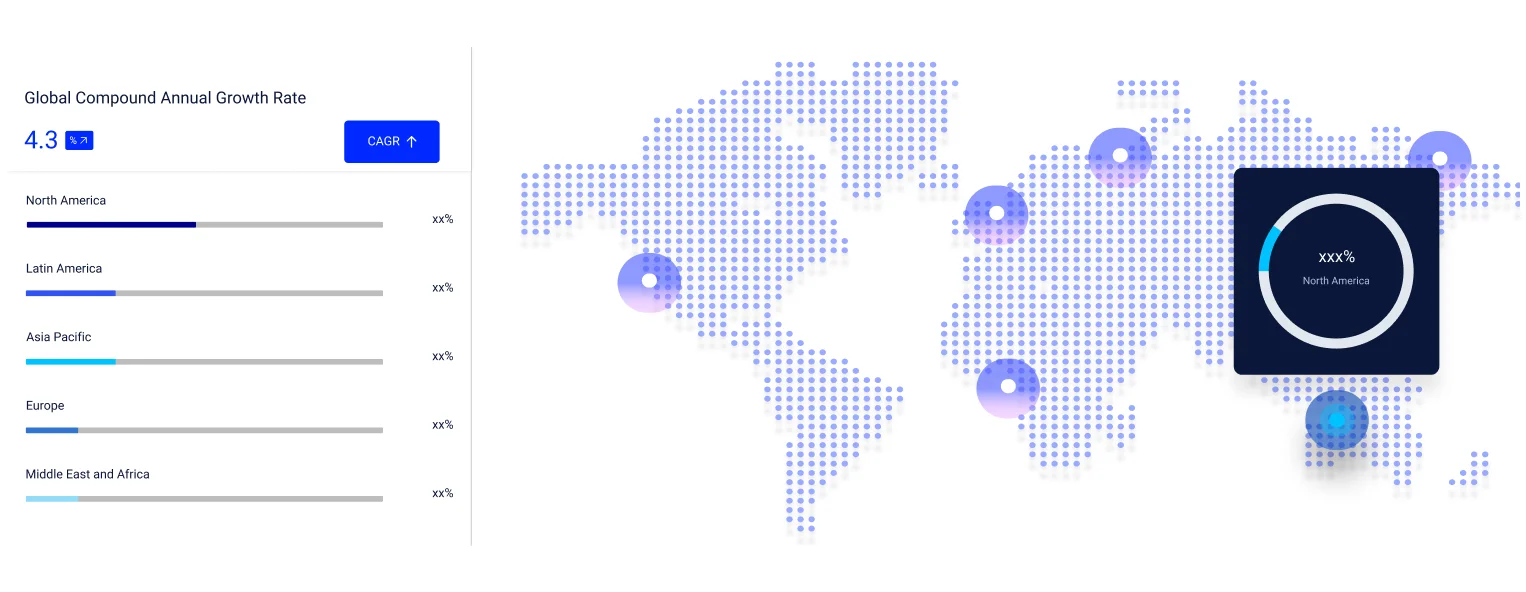
Asia Pacific is the fastest growing region as Australia, Japan, India, and South Korea build local missile and launcher motor capacity. Europe holds a strong share on rearmament and launcher programs, while Latin America and the Middle East and Africa grow from smaller bases. In April 2026, Australia committed initial AUD 126.9 million to motor manufacturing at Mulwala in New South Wales, with Northrop Grumman Australia as preferred partner, aiming for GMLRS motor production by 2030 and a complex from 2033.
|
CAGR 2026-2035 - Market by |
Region |
|
North America |
7.2% |
|
Europe |
7.6% |
|
Asia Pacific |
8.8% |
|
Latin America |
5.6% |
|
Middle East and Africa |
7.6% |
The global solid rocket motor market is competitive, as solid rocket motor market players include defense primes, specialist propulsion companies, and venture backed entrants serving missile, launcher, and space customers, each competing on performance, capacity, and delivery. Companies like Northrop Grumman Corporation, L3Harris Technologies, Inc., Nammo AS, and Avio S.p.A. lead through proven motors and large plants, while ArianeGroup SAS, X-Bow Systems Inc., and Ursa Major Technologies, Inc. add launcher, additive, and new capacity strengths.
Leading solid rocket motor market companies are differentiating through new plants, additive manufacturing, secure energetics supply, and partnerships with governments and missile primes. Several are also expanding capacity, qualifying second sources, and investing in test infrastructure to win long term programs. Buyers weigh performance, delivery speed, qualification history, and supply security when choosing a motor supplier, so makers with scalable plants and secure energetics supply hold an advantage in repeat orders.
Northrop Grumman Corporation, headquartered in Falls Church, Virginia, was formed in 1994 through the merger of Northrop Corporation and Grumman Corporation. Its solid rocket motor range includes GEM 63 boosters for Atlas V and Vulcan, Trident II D5 motors, and GMLRS motors. The company reported 2025 sales of USD 42.0 billion and a year end backlog of USD 95.7 billion.
L3Harris Technologies, Inc., headquartered in Melbourne, Florida, was formed in 2019 through the merger of Harris Corporation and L3 Technologies. It completed the acquisition of Aerojet Rocketdyne in July 2023 and is the supplier of composite case and steel case GMLRS motors. The company reported 2025 revenue of USD 21.9 billion and orders of USD 27.5 billion.
Nammo AS, headquartered in Raufoss, Norway, was founded in 1998 through a merger of Nordic ammunition businesses. It makes rocket motors for missiles such as AMRAAM, ESSM, and IRIS-T. The company is owned by the Norwegian government and Patria of Finland, and reported 2025 revenue of NOK 14.41 billion and an order stock of NOK 54,979 million.
Avio S.p.A., headquartered in Rome, Italy, traces its roots to 1912 at Colleferro. It makes the P120C booster used on Ariane 6 and Vega-C, the P160C upgrade, and Zefiro motors, and supplies tactical motors to missile makers. The company reported FY2025 revenue of EUR 541.7 million, up 22.7%, and a backlog of EUR 2,166 million.
Other key players in the market report include ArianeGroup SAS, X-Bow Systems Inc., and Ursa Major Technologies, Inc., among others.
*Please note that this is only a partial list; the complete list of key players is available in the full report. Additionally, the list of key players can be customized to better suit your needs.*
Discover the key trends shaping the solid rocket motor market 2026-2035 through our in-depth report. Access strategic insights, forward looking forecasts, and major market developments that help you stay ahead of competitors. Request a free sample report or speak with our team for tailored guidance on the solid rocket motor market trends 2026.


Upto 15% Off
USD
$2499 $2249
$3999 $3599
$4999 $4249
$5999 $5099


*While we strive to always give you current and accurate information, the numbers depicted on the website are indicative and may differ from the actual numbers in the main report. At Expert Market Research, we aim to bring you the latest insights and trends in the market. Using our analyses and forecasts, stakeholders can understand the market dynamics, navigate challenges, and capitalize on opportunities to make data-driven strategic decisions.*
In 2025, the solid rocket motor market reached an approximate value of USD 7.20 Billion.
The market is projected to grow at a CAGR of 7.60% between 2026 and 2035.
The key players in the market include Northrop Grumman Corporation, L3Harris Technologies, Inc., Nammo AS, Avio S.p.A., ArianeGroup SAS, X-Bow Systems Inc., and Ursa Major Technologies, Inc., among others.
Leading companies are building new plants, adopting additive manufacturing, securing energetics supply, qualifying second sources, and forming partnerships with governments and missile primes.
Key challenges include limited energetics and component supply, long qualification timelines, high capital cost for plants and test sites, and safety risks in motor production and testing.
Explore our key highlights of the report and gain a concise overview of key findings, trends, and actionable insights that will empower your strategic decisions.
|
Report Features |
Details |
|
Base Year |
2025 |
|
Historical Period |
2019-2025 |
|
Forecast Period |
2026-2035 |
|
Scope of the Report |
Historical and Forecast Trends, Industry Drivers and Constraints, Historical and Forecast Market Analysis by Segment: Propellant Type Application End Use Region |
|
Breakup by Propellant Type |
|
|
Breakup by Application |
|
|
Breakup by End Use |
|
|
Breakup by Region |
|
|
Market Dynamics |
|
|
Competitive Landscape |
|
|
Companies Covered |
|
Datasheet
One User
USD 2,499
USD 2,249
tax inclusive*
Single User License
One User
USD 3,999
USD 3,599
tax inclusive*
Five User License
Five User
USD 4,999
USD 4,249
tax inclusive*
Corporate License
Unlimited Users
USD 5,999
USD 5,099
tax inclusive*
*Please note that the prices mentioned below are starting prices for each bundle type. Kindly contact our team for further details.*
Flash Bundle
Small Business Bundle
Growth Bundle
Enterprise Bundle
*Please note that the prices mentioned below are starting prices for each bundle type. Kindly contact our team for further details.*
Flash Bundle
Number of Reports: 3
20%
tax inclusive*
Small Business Bundle
Number of Reports: 5
25%
tax inclusive*
Growth Bundle
Number of Reports: 8
30%
tax inclusive*
Enterprise Bundle
Number of Reports: 10
35%
tax inclusive*
How To Order

Select License Type
Choose the right license for your needs and access rights.

Click on ‘Buy Now’
Add the report to your cart with one click and proceed to register.

Select Mode of Payment
Choose a payment option for a secure checkout. You will be redirected accordingly.
Strategic Solutions for Informed Decision-Making
Gain insights to stay ahead and seize opportunities.

Get insights & trends for a competitive edge.

Track prices with detailed trend reports.

Analyse trade data for supply chain insights.

Leverage cost reports for smart savings

Enhance supply chain with partnerships.

Connect For More Information
Our expert team of analysts will offer full support and resolve any queries regarding the report, before and after the purchase.
Our expert team of analysts will offer full support and resolve any queries regarding the report, before and after the purchase.
We employ meticulous research methods, blending advanced analytics and expert insights to deliver accurate, actionable industry intelligence, staying ahead of competitors.
Our skilled analysts offer unparalleled competitive advantage with detailed insights on current and emerging markets, ensuring your strategic edge.
We offer an in-depth yet simplified presentation of industry insights and analysis to meet your specific requirements effectively.




