

Consumer Insights
Uncover trends and behaviors shaping consumer choices today
Procurement Insights
Optimize your sourcing strategy with key market data
Industry Stats
Stay ahead with the latest trends and market analysis.
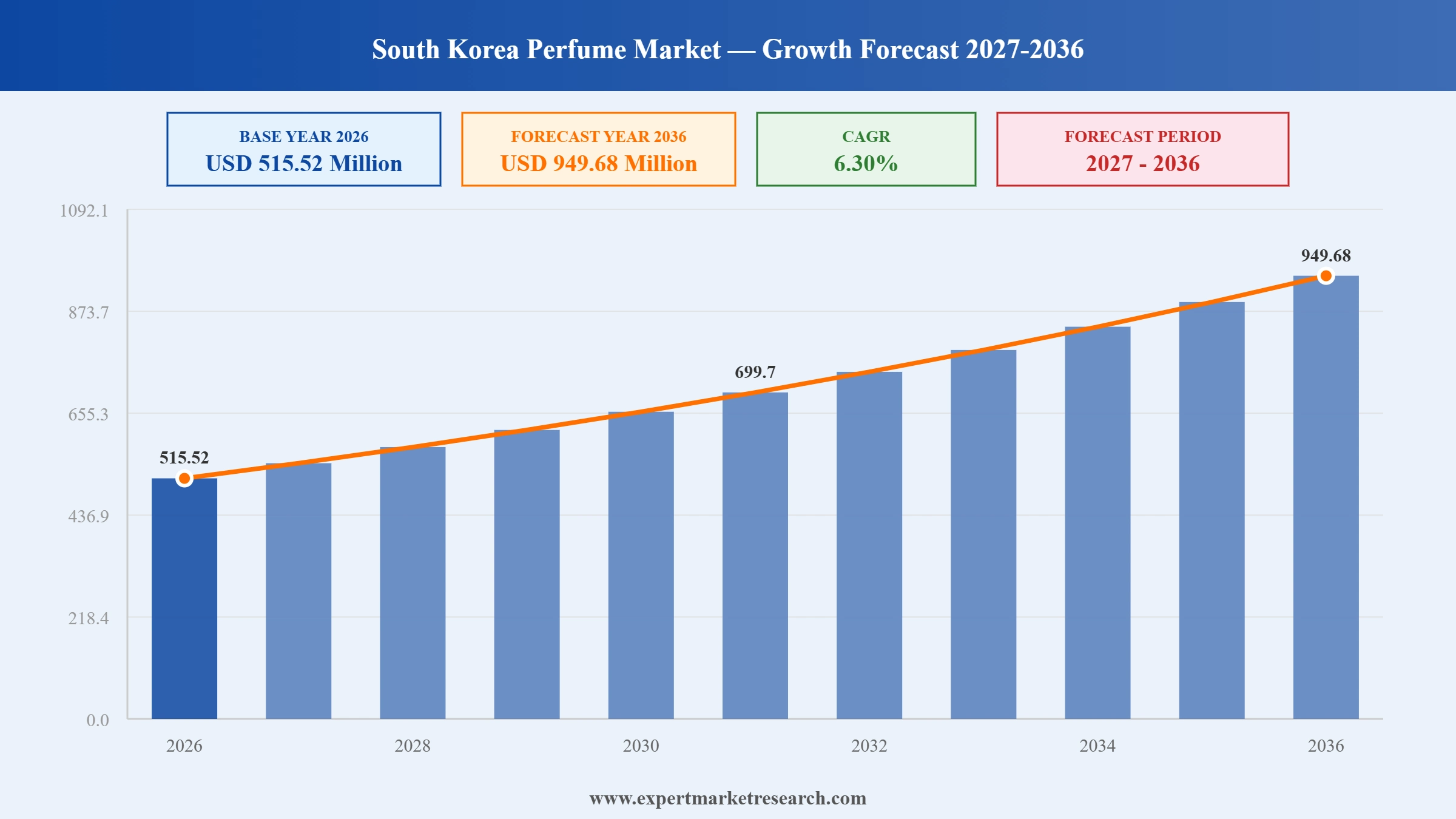
The South Korea perfume market attained a value of USD 484.97 Million in 2025 and is projected to expand at a CAGR of 6.30% through 2035. The market is further expected to achieve USD 893.40 Million by 2035. South Korea’s fragrance exports surged 46.2% to USD 60 million in 2025, according to Ministry of Food and Drug Safety data. This rapid export expansion is encouraging domestic perfume brands to develop distinctive scent concepts, packaging, and formats suited to overseas consumers, strengthening K-fragrance as an emerging export-oriented product category rather than a purely domestic niche.
Rising fragrance exports and mobile-led beauty commerce are supporting South Korea’s perfume market growth. Rising fragrance exports increased 46.2% to USD 60 million in 2025, according to Ministry of Food and Drug Safety data, encouraging Korean fragrance brands to develop export-oriented scent collections and strengthen overseas distribution. Meanwhile, mobile shopping accounted for 78.2% of total online-shopping value in January 2026, according to Statistics Korea, creating a scalable channel for sample sets, personalised scent recommendations, and direct-to-consumer fragrance sales. These developments are expanding specialised routes for Korean perfume brands to reach domestic and international consumers, thereby boosting the South Korea perfume market value.
Environmental sustainability factors are becoming more prominent in South Korean perfume brands, especially concerning their use of component separation and less material use. For instance, one such design innovation from South Korea is that of Longtake Eau de Parfum from Amorepacific, which employs a redesign in its packaging through the use of a screw-fit mechanism that allows the pump, the cap, and the bottle to be separated for easy recycling. In addition, Amorepacific has cut down its packaging volume by 68 percent when compared to the previous packaging and has used upcycled oakwood materials. The design received recognition at the 2026 Red Dot Design Awards, demonstrating how packaging engineering is becoming part of premium fragrance differentiation.
South Korean perfume brands are expanding beyond the domestic market, but overseas sales require adjustments to fragrance formulations, ingredient declarations, packaging, labelling, and regulatory documentation across individual destinations. This becomes particularly relevant as fragrance exports grow rapidly. According to Ministry of Food and Drug Safety data, South Korea’s fragrance exports reached USD 60 million in 2025, representing a 46.2% year-on-year increase. While this creates opportunities for domestic manufacturers, smaller companies may face greater operational complexity when adapting products and documentation for multiple foreign markets and distributor requirements, thereby restricting the South Korea perfume market developments.
Read more about this report - REQUEST FREE SAMPLE COPY IN PDF
Jo Malone London held a Sea Salt & Bergamot Cologne launch event and pop-up activation in Seoul’s Seongsu-dong on August 13, 2026. The activation featured K-pop artists including Stray Kids’ I.N and TWICE’s Sana, connecting the fragrance launch with celebrity-led consumer engagement. The Seongsu pop-up ran from August 14 to August 23 and provided visitors with an environment for fragrance exploration and brand interaction. The development demonstrates how premium fragrance brands are using temporary Seoul retail spaces and cultural partnerships to turn new-product launches into physical discovery experiences.
Amorepacific announced in August 2026 that Longtake Eau de Parfum had been named a Winner at the Red Dot Design Award 2026, following earlier recognition at the iF Design Award. The fragrance packaging uses recyclable glass and an easy-to-separate pump, while the wider redesign incorporates a screw-fit structure that allows key components to be separated for recycling. Amorepacific also states that packaging volume was reduced by 68% compared with the previous design and that upcycled oakwood ingredients were incorporated into the fragrance. The development links fragrance positioning with detailed packaging engineering and sustainability requirements.
Gucci introduced Flora Gorgeous Orchid Eau de Parfum Intense in June 2026 as a new addition to its Flora fragrance collection. The composition combines Vanilla Orchid with a Salty Ozonic Accord and Dark Cocoa Accord, creating a floral, sweet, salty, and gourmand profile. Gucci’s international and Korean websites list the fragrance in 50-ml and 100-ml formats, giving retailers multiple full-size options for assortment planning. The launch expands the Flora franchise through a more intense interpretation of its orchid theme, adding another premium variant for fragrance merchandising and seasonal product activity.
South Korean fragrance brand NONFICTION opened its first U.S. store in New York’s Lower East Side in May 2026, extending its international retail network beyond South Korea, Japan, Hong Kong, and Thailand. The 855-square-foot store on Orchard Street places the brand within a neighbourhood known for independent fragrance and lifestyle retailers. NONFICTION’s retail model combines perfumes with discovery sets, body-care products, home fragrance, and gift formats. The New York opening therefore provides a physical platform for the Korean brand to present its fragrance identity directly to overseas consumers while expanding its international retail footprint, thus boosting the trends of the South Korea perfume market.
South Korea’s fragrance exports rose 46.2% to USD 60 million in 2025, according to data from the Ministry of Food and Drug Safety reported by Yonhap. For perfume companies based domestically, the growth offers a concrete solution to experiment with Korean perfume formulas in foreign markets without having to immediately set up a large number of physical retail outlets. The K-beauty export infrastructure, in its entirety, had been in place across 202 countries by 2025, offering a solid experience in international packing, documentation, distributor connections, and regulatory compliance. Fragrance companies can therefore adapt these capabilities to smaller perfume batches, destination-specific launches, and export-focused collections.
In South Korea, the exemption of perfume duty was raised from 60 ml to 100 ml as of January 1, 2024, after amending the corresponding customs laws. The Korea Customs Service highlighted in particular that a large portion of the perfumes being sold through duty-free stores comes in a 100-ml packaging. This particular regulation has a specific effect for the perfumers since they no longer suffer from volume mismatch. Airport and duty-free operators can consequently maintain standard 100-ml SKUs without requiring travelers to select smaller bottles solely because of the previous limit. This is relevant for imported luxury fragrances and travel-retail assortments.
South Korea’s established online beauty-commerce infrastructure gives perfume sellers opportunities to solve a fundamental digital limitation: consumers cannot physically smell a fragrance before purchasing. Rather than relying solely on conventional product pages, fragrance retailers can build discovery journeys around sample sets, scent-family filters, fragrance quizzes, layering recommendations, and miniature collections. These formats allow several olfactory profiles to be evaluated before a full-size purchase. The opportunity is particularly relevant for independent Korean fragrance labels that lack extensive physical distribution. Digital storefronts can also connect discovery products with complementary scented body products, creating a more structured path from trial-size sampling to repeat perfume purchases, thereby boosting the South Korea perfume market dynamics and trends.
Seoul recorded 5.2 million international visitors between January and April 2026, up 21.4% year on year, while foreign visitors generated KRW 1.1532 trillion in card spending in April. For fragrance businesses, the niche opportunity lies in converting tourist traffic into portable, gift-oriented fragrance purchases. Department stores, flagship stores, and beauty-focused retail districts can emphasize compact discovery sets, exclusive packaging, multilingual scent descriptions, and Korea-specific collections. The concentration of tourist spending is also commercially relevant for retailers selecting locations and merchandising formats. Seoul’s Gangnam-gu and Jung-gu were particularly prominent spending districts in the first half of 2026.
Amorepacific’s redesigned Longtake Eau de Parfum provides a concrete example of sustainability moving into perfume-component engineering. The design uses a screw-fit structure that allows the pump, cap, and bottle to be separated for recycling, while packaging volume was reduced by 68% compared with the previous design. The fragrance also incorporates upcycled oakwood ingredients. For Korean fragrance manufacturers and packaging suppliers, the development highlights opportunities around separable pumps, recyclable glass, lightweight cartons, reduced finishing processes, and lower-material packaging. This shifts sustainability requirements toward component design and end-of-life separation, rather than relying only on recycled-content claims.
The Expert Market Research’s report titled "South Korea Perfume Market Report and Forecast 2026-2035” offers a detailed analysis of the market based on the following segments:
Market Breakup by Type
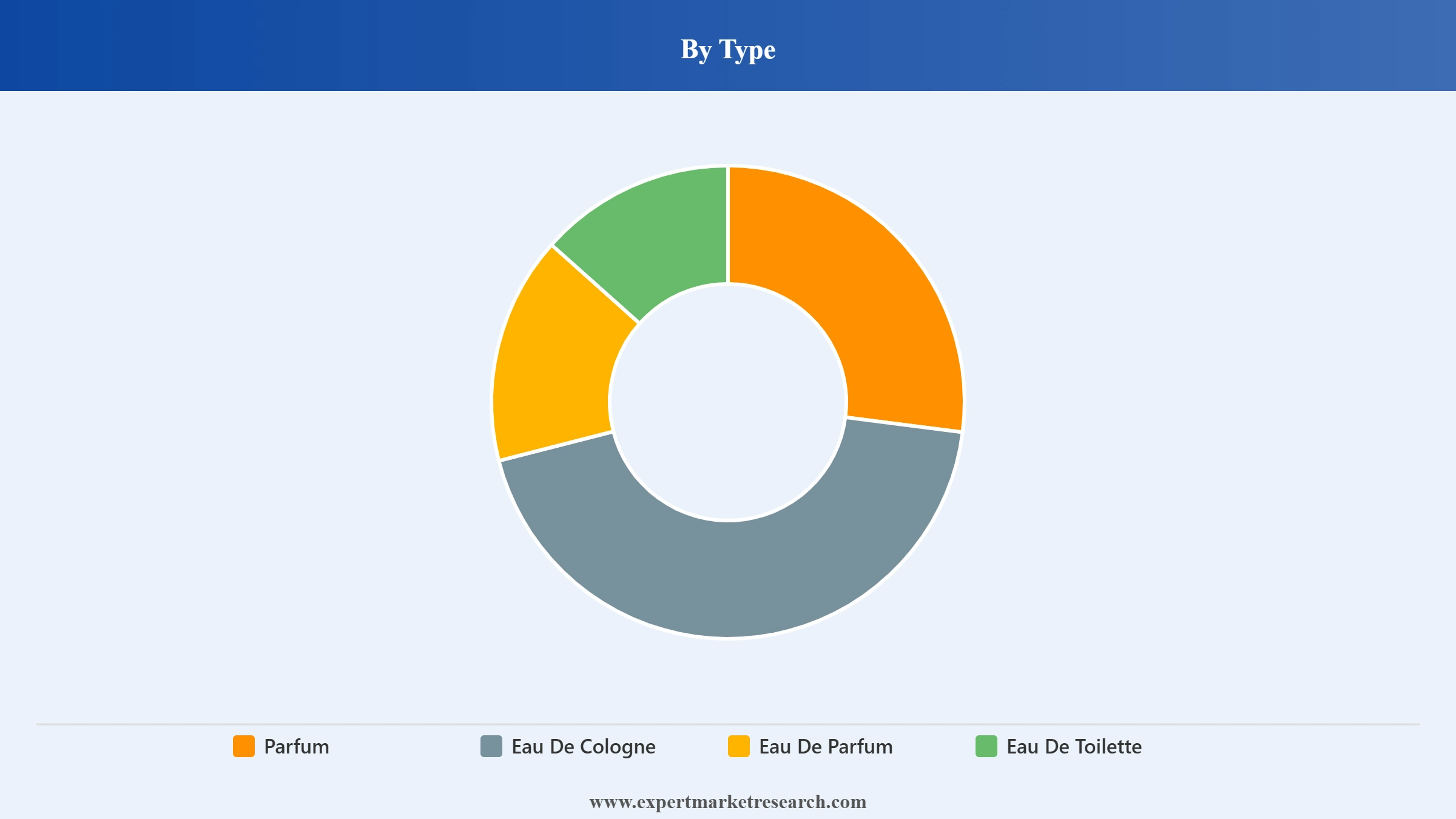
Key Insight: The South Korea perfume market is segmented into Parfum, Eau De Cologne, Eau De Parfum, Eau De Toilette, and Others. Eau De Parfum has strong commercial relevance because it combines a premium positioning with a format widely used by luxury, niche, and Korean fragrance brands. Current Korean retail assortments demonstrate substantial availability of EDP formats across local and international labels, while EDC and EDT continue to provide lower-intensity and potentially more accessible alternatives. Parfum remains relevant for highly concentrated prestige offerings, while other formats create opportunities in hair, body, solid, and lifestyle fragrance. Retailers are increasingly able to merchandise multiple concentration formats together, enabling consumers to enter through accessible products before moving toward higher-value fragrances. This format ladder supports both premiumization and broader category penetration.
Market Breakup by Product
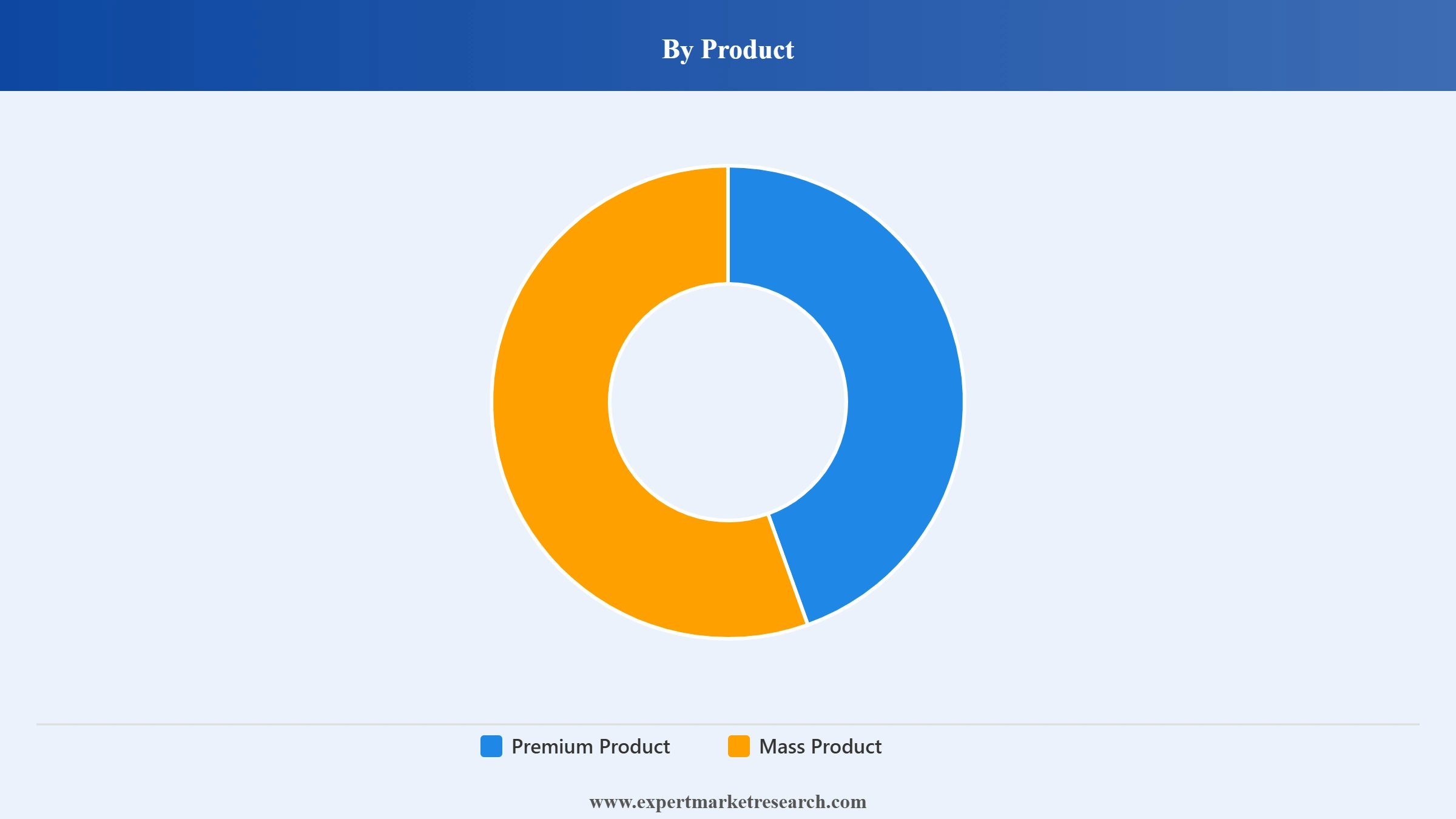
Key Insight: Premium Product and Mass Product form the two product categories. Premium fragrances benefit from Korea's expanding niche-perfumery culture, international luxury-brand presence, and increasing use of fragrance as an identity and gifting product. Meanwhile, the mass products will continue to play their role in wide distribution since low entry costs may entice new consumers. Thus, the two categories fulfill the function of acquiring clients but do not compete with each other in doing that. Premiums resort more often to the use of the discovery set, limited edition, personalization, and boutique experience to justify their higher price tag, whereas mass products may rely on convenience and promotional pricing. The coexistence of both categories also allows manufacturers to tailor packaging, concentration, ingredients, and channel strategy to different purchasing occasions, thus driving the demand in the South Korea perfume market.
Market Breakup by End Use
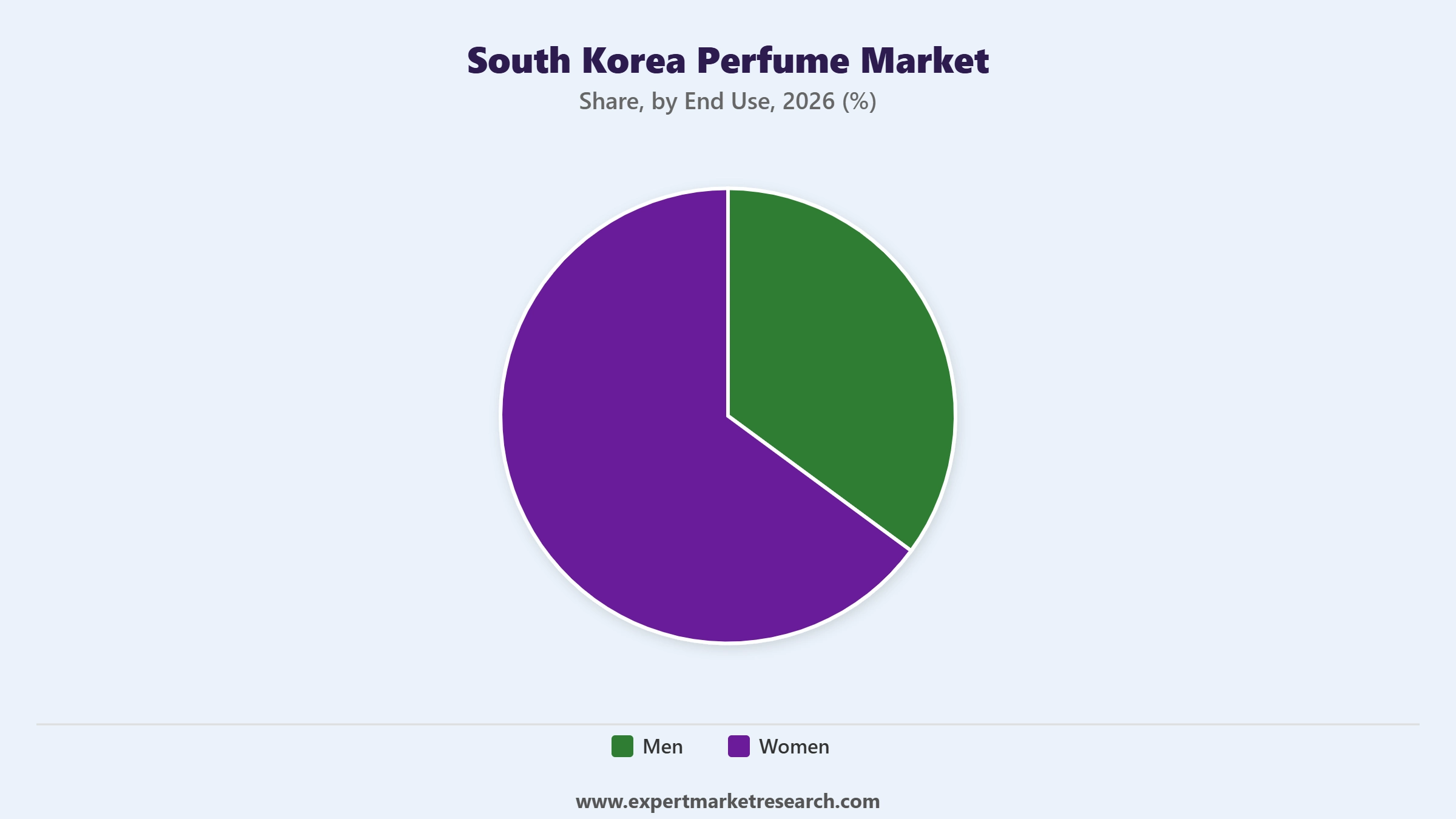
Key Insight: The market is divided into men and women. Historically, fragrance merchandising has often been organized around gender-specific portfolios, but current Korean retail assortments increasingly provide products that can appeal across gender boundaries. The commercial opportunity therefore extends beyond conventional men's and women's shelves toward unisex positioning, layering, and lifestyle fragrance. NONFICTION, for instance, describes Gentle Night using woody, musk, and vanilla characteristics and presents its range through a scent-discovery framework rather than relying solely on gender classification. International brands similarly maintain separate men's and women's assortments while adding fragrances designed around broader lifestyle identities. This dual structure allows distributors to preserve established demand while developing gender-neutral merchandising. For manufacturers, this means portfolio architecture can combine gender-specific hero products with flexible fragrances that appeal to a wider consumer base.
Market Breakup by Distribution Channel
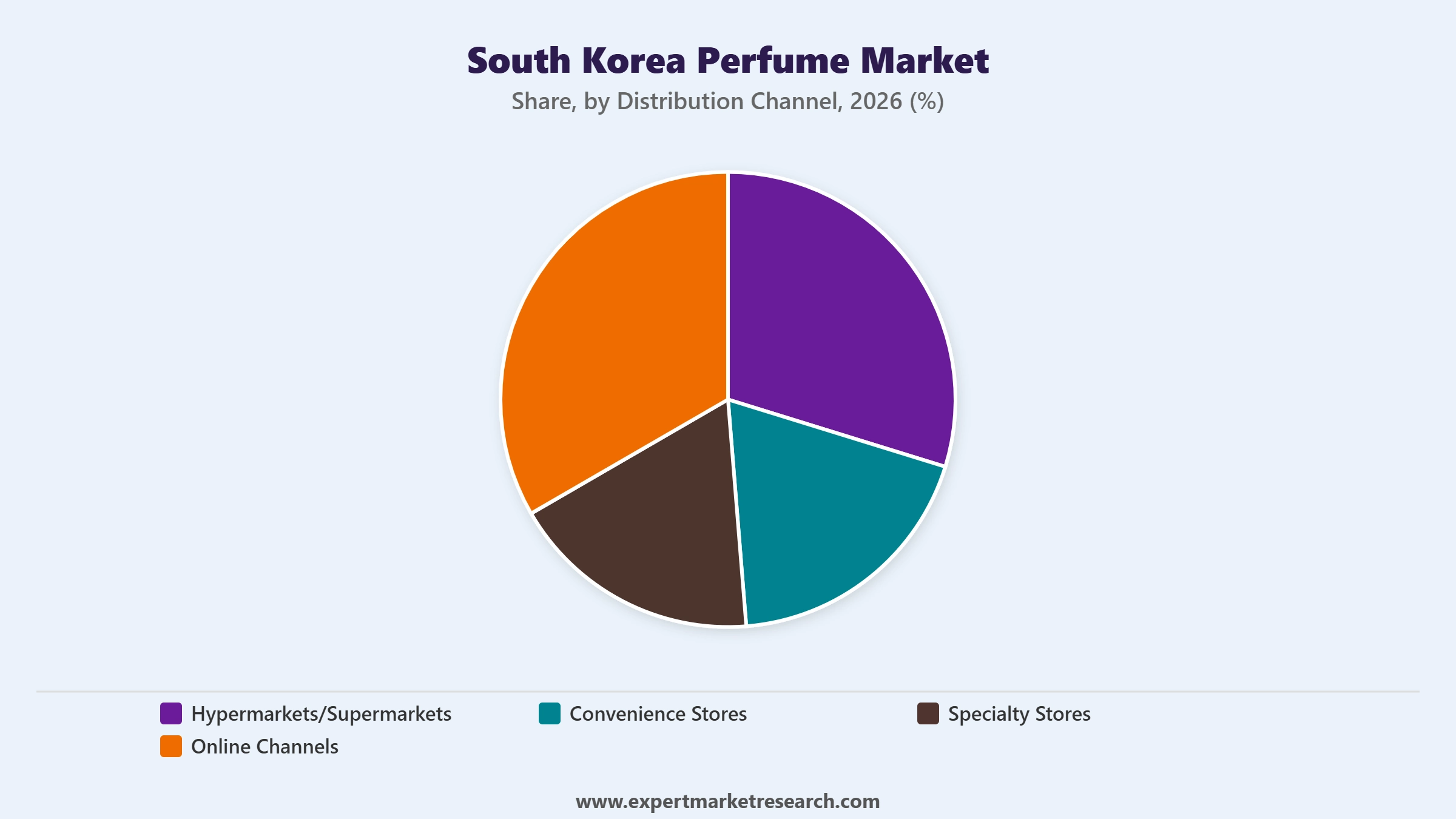
Key Insight: Distribution comprises Hypermarkets/Supermarkets, Convenience Stores, Specialty Stores, Online Channels, and Others. Specialty stores remain central to fragrance because consumers often require scent trials, consultation, and premium brand storytelling before purchasing. Online channels, however, are increasingly important for discovery sets, replenishment, promotions, and direct-to-consumer engagement. Korean cosmetics online transactions reached KRW 13.8484 trillion in 2025, with online-only transactions reaching KRW 9.478 trillion. Olive Young's online fragrance assortment illustrates the growing digital availability of perfumes across Korean and international brands, including EDT and EDP formats. Convenience and mass retail channels can widen access to lower-priced formats, while hypermarkets and supermarkets provide promotional scale. The resulting omnichannel structure allows brands to use physical retail for trial and online retail for conversion and repeat purchasing.
Read more about this report - REQUEST FREE SAMPLE COPY IN PDF
By type, Eau De Parfum remains commercially prominent due to broad premium and niche adoption
Eau De Parfum stands as the most commercially relevant category within current Korean fragrances' lineup. Official NONFICTION products, for instance, are presented in 50 ml and 100 ml EDP sizes, and Gucci Korea features several EDP items both within the Flora and The Alchemist's Garden ranges. Public Korean government statistics do not disclose perfume sales by concentration, so an audited EDP market share should not be inferred. The segment's prominence is instead supported by its extensive presence across premium and niche portfolios, making it strategically important for retailers seeking broad assortment coverage. Such developments will thus boost South Korea perfume market trends in the long run.
Read more about this report - REQUEST FREE SAMPLE COPY IN PDF
The others category is positioned for rapid expansion as fragrance moves beyond traditional spray perfume. Korean retail platforms increasingly feature solid perfume, hair-and-body fragrance, discovery products, and lifestyle scent formats. Olive Young's current fragrance assortment includes solid perfume and hair-and-body perfume products, demonstrating that fragrance is expanding into portable and multifunctional formats. These products can lower trial barriers and increase purchase frequency sinve they are suitable for gifting, travel, layering, and everyday use. The category also gives retailers additional shelf and digital merchandising opportunities outside conventional perfume bottle formats.
By product, premium fragrances gain traction through personalization, exclusivity, and experiential retail
Premium products are commercially prominent within South Korea's fragrance ecosystem, particularly across designer and niche retail. Gucci Korea currently lists premium fragrance products ranging from approximately KRW 175,000 to more than KRW 500,000 depending on collection and format, illustrating the breadth of the high-value assortment. Premiumization is further supported by the country's strong luxury retail infrastructure and tourism spending. However, government sources do not publish an audited premium-versus-mass perfume share, so these retail-price observations should be interpreted as commercial indicators rather than formal market-share statistics, thus boosting the South Korea perfume market revenues.
Read more about this report - REQUEST FREE SAMPLE COPY IN PDF
Premium fragrance has significant expansion potential because brands are increasingly adding experiential and personalization features around higher-value products. NONFICTION, for example, offers perfume engraving and discovery-set programs, allowing premium fragrance to be sold as an experience rather than solely as a bottle. Gucci's Korean portfolio also spans multiple luxury fragrance collections, including The Alchemist's Garden. The combination of personalization, niche positioning, collectible packaging, and experiential retail creates additional opportunities for premium products to increase value per transaction.
By end use, women remain commercially prominent, while men's fragrance portfolios continue expanding
Women represent a commercially important end-use segment because leading international fragrance portfolios maintain extensive women's assortments in the Korean market. Gucci Korea currently lists 57 women's fragrance products, compared with 38 men's products, providing a current retail-assortment indicator of the depth of women's fragrance offerings. This does not constitute a market-share measurement, since assortment count differs from sales value. Nevertheless, the breadth of women's collections gives retailers greater scope for seasonal launches, gift sets, flankers, and premiumization.
Read more about this report - REQUEST FREE SAMPLE COPY IN PDF
Men's fragrance is gaining commercial space as brands broaden portfolios and retailers give male consumers dedicated fragrance assortments. Gucci Korea lists 38 men's fragrance products across Gucci Guilty and The Alchemist's Garden collections. Armani Beauty also introduced the I Will men's fragrance in August 2026, describing it as a new pillar line and its first new men's fragrance pillar in approximately two decades. Such portfolio investment indicates opportunities for male-focused fragrance launches, grooming cross-selling, and premium gift programs.
By distribution channel, specialty retail remains crucial while online channels accelerate scalable fragrance discovery
Specialty stores are significant from a commercial perspective since fragrance is still a sensory category where actual experience and high-end product presentation are still able to aid in making purchase decisions. Korean beauty stores are increasing their selection of scented products along with traditional beauty products, whereas high-end brands continue to have dedicated boutiques and counters in department stores. In 2025, Seoul's Myeong-dong saw a daily average of 100,910 foreign tourists visiting, with foreigners representing 47.1 percent of total visitors, as per data from Seoul Metropolitan Government. Such concentrated shopping districts provide specialty fragrance retailers with access to both domestic consumers and international shoppers.
Read more about this report - REQUEST FREE SAMPLE COPY IN PDF
Online channels have the strongest measurable momentum among Korean beauty distribution formats. Cosmetics transactions through online-only malls increased 7.0% in 2025, reaching KRW 9.478 trillion, while total cosmetics online and combined online/offline transactions reached KRW 13.8484 trillion. For fragrance businesses, digital channels support sample-led conversion, personalized recommendations, product reviews, social commerce, limited drops, and rapid testing of new SKUs. Online channels also allow local fragrance brands to reach international buyers without establishing a full physical retail network, supporting the export ambitions visible in Korea's broader beauty sector.
By region, Seoul leads South Korea’s fragrance market, driven by premium retail and tourism
South Korea's fragrance market is concentrated around major commercial and tourism hubs, with Seoul functioning as the principal premium-retail and brand-discovery center. Seoul received 5.2 million international visitors during January–April 2026, up 21.4% year on year, while foreign visitors generated KRW 1.1532 trillion in card spending during April. Myeong-dong, Gangnam, Hongdae, COEX, and other high-traffic districts provide concentrated opportunities for department stores, specialty retailers, flagship boutiques, and experiential fragrance activations. Seoul's combination of international tourism, luxury retail, K-beauty exposure, and digital commerce makes it the primary environment for premium and niche fragrance launches. The capital also houses major Korean beauty headquarters and commercial operations, including Amorepacific's Yongsan headquarters and ELCA Korea's Gangnam office, thereby directly boosting the South Korea perfume market regional growth.
Busan and other metropolitan areas are emerging as secondary opportunities, particularly through tourism-led fragrance purchasing. Busan recorded 3,019,164 foreign visitors through October 2025, approximately 23% more than the corresponding 2024 period. In the first quarter of 2026 alone, the city recorded 1,023,946 foreign visitors, with visitor spending reaching KRW 235.5 billion, up 26.4% year on year. This creates opportunities for airport retail, department stores, tourism-linked boutiques, and localized fragrance experiences outside Seoul. Gyeonggi Province also benefits from proximity to Seoul's large consumer base and logistics infrastructure, supporting warehouse, fulfillment, and omnichannel distribution operations. For manufacturers, a Seoul-centered launch model combined with Busan and Gyeonggi distribution can therefore broaden national reach without immediately requiring a highly fragmented physical network.
South Korea perfume market players are aiming to strengthen their premium and luxury positioning while responding to consumers’ growing interest in niche, personalised, and distinctive fragrances. Companies are expanding their portfolios across eau de parfum, eau de toilette, solid perfumes, body fragrances, and complementary scented products to address different price points and usage occasions. They are also investing in product innovation, sophisticated packaging, limited-edition collections, and brand collaborations to create differentiation in an increasingly competitive fragrance landscape.
South Korea perfume companies are additionally focusing on expanding their retail and digital presence to improve consumer access and engagement. E-commerce, social media, influencer marketing, experiential stores, and fragrance discovery experiences are becoming important channels for reaching younger consumers. International fragrance houses are strengthening their presence through premium department stores and specialised beauty retailers, while Korean companies are leveraging local consumer insights and K-beauty expertise. Sustainability, ingredient transparency, and environmentally conscious packaging are also gaining importance in product development and brand communication.
Established in 1991 in South Korea, ELCA Korea Co., Ltd. is the Korean affiliate of The Estée Lauder Companies, with its headquarters in Seoul, South Korea. Its fragrance portfolio includes Estée Lauder, Jo Malone London, TOM FORD Beauty, AERIN Beauty, Le Labo, and KILIAN PARIS, covering prestige, niche, and luxury fragrance segments. These brands offer eau de parfum, colognes, fragrance collections, and complementary scented products, supporting ELCA Korea’s broad presence across South Korea’s premium perfume market.
Established in 1882, Beiersdorf AG is headquartered in Hamburg, Germany. The company is primarily focused on skincare and personal-care products rather than dedicated fine perfumes. Its South Korean offering includes fragrance-related personal-care products, particularly NIVEA deodorants and scented body-care products, alongside its broader NIVEA portfolio. Beiersdorf’s fragrance exposure therefore differs from dedicated perfume houses, with scent incorporated mainly into everyday personal-care formats rather than a large eau de parfum or luxury fragrance portfolio.
Founded in 1945, Amorepacific Corporation is headquartered in Seoul, South Korea, and has developed several fragrance-oriented offerings within its beauty portfolio. Its perfume-related brands include HERA, which offers eau de parfum products such as Jiil and Velvet Night, and Longtake, which provides eau de parfum and solid perfumes centred on woody, forest-inspired scents. The company has also developed fragrance-focused products under brands such as Happy Bath. These offerings combine Korean beauty positioning with increasingly premium and experiential fragrance concepts.
Founded in 1921 in Florence, Italy, Guccio Gucci S.p.A. is headquartered in Florence, Italy. Gucci participates in the South Korean perfume market through its Gucci Beauty fragrance portfolio, which includes major lines such as Gucci Bloom, Gucci Flora, Gucci Guilty, and The Alchemist’s Garden. Its offerings span eau de parfum, eau de toilette, parfum, and premium fragrance collections for women and men. Gucci’s fragrance portfolio combines floral, woody, oriental, and contemporary scent profiles with the brand’s luxury-fashion identity.
Other key players in the market include Giorgio Armani S.p.A., Combined Co., Ltd., NONFICTION Inc., and Elorea, among others.
*Please note that this is only a partial list; the complete list of key players is available in the full report. Additionally, the list of key players can be customized to better suit your needs.*
Explore the South Korea perfume market outlook with comprehensive analysis of South Korea perfume market trends 2026, competitive developments, product segmentation, distribution opportunities, and emerging fragrance formats. The report provides actionable intelligence for manufacturers, retailers, distributors, investors, packaging suppliers, and beauty companies assessing the South Korea perfume market forecast 2026-2035 and broader South Korea perfume market size opportunities. Download the sample to evaluate the report scope, segmentation, and strategic insights.


Upto 15% Off
USD
$2499 $2249
$3999 $3599
$4999 $4249
$5999 $5099


*While we strive to always give you current and accurate information, the numbers depicted on the website are indicative and may differ from the actual numbers in the main report. At Expert Market Research, we aim to bring you the latest insights and trends in the market. Using our analyses and forecasts, stakeholders can understand the market dynamics, navigate challenges, and capitalize on opportunities to make data-driven strategic decisions.*
In 2025, the market reached an approximate value of USD 484.97 Million.
The market is projected to grow at a CAGR of 6.30% between 2026 and 2035.
The market is assessed to witness a healthy growth in the forecast period of 2026-2035 to reach around USD 893.40 Million in 2035.
The different distribution channels include hypermarkets/supermarkets, convenience stores, specialty stores, and online channels, among others.
The major segments considered in the market report include men, and women.
The different segments considered in the market report are parfum, Eau De Cologne, Eau De Parfum, and Eau De Toilette, among others.
The different products in the market include premium product and mass product.
Key players in the market are ELCA Korea Co., Ltd., Beiersdorf AG, Amorepacific Corporation, Guccio Gucci S.p.A., Giorgio Armani S.p.A., Combined Co., Ltd., NONFICTION Inc., and Elorea, among others.
Key challenges in the South Korea perfume market include intense competition among local and international brands, changing consumer preferences, counterfeit products, regulatory compliance, premium pricing pressures, supply-chain disruptions, and the need for continuous product innovation to match rapidly evolving fragrance trends.
Key strategies driving the South Korea perfume market include product personalisation, premium and niche fragrance launches, influencer-led marketing, e-commerce expansion, experiential retail, sustainable packaging, limited-edition collaborations, and stronger omnichannel distribution to engage younger consumers and respond to evolving preferences.
Explore our key highlights of the report and gain a concise overview of key findings, trends, and actionable insights that will empower your strategic decisions.
| REPORT FEATURES | DETAILS |
| Base Year | 2025 |
| Historical Period | 2019-2025 |
| Forecast Period | 2026-2035 |
| Scope of the Report |
Historical and Forecast Trends, Industry Drivers and Constraints, Historical and Forecast Market Analysis by Segment:
|
| Breakup by Type |
|
| Breakup by Product |
|
| Breakup by End Use |
|
| Breakup by Distribution Channel |
|
| Market Dynamics |
|
| Competitive Landscape |
|
| Companies Covered |
|
Datasheet
One User
USD 2,499
USD 2,249
tax inclusive*
Single User License
One User
USD 3,999
USD 3,599
tax inclusive*
Five User License
Five User
USD 4,999
USD 4,249
tax inclusive*
Corporate License
Unlimited Users
USD 5,999
USD 5,099
tax inclusive*
*Please note that the prices mentioned below are starting prices for each bundle type. Kindly contact our team for further details.*
Flash Bundle
Small Business Bundle
Growth Bundle
Enterprise Bundle
*Please note that the prices mentioned below are starting prices for each bundle type. Kindly contact our team for further details.*
Flash Bundle
Number of Reports: 3
20%
tax inclusive*
Small Business Bundle
Number of Reports: 5
25%
tax inclusive*
Growth Bundle
Number of Reports: 8
30%
tax inclusive*
Enterprise Bundle
Number of Reports: 10
35%
tax inclusive*
How To Order

Select License Type
Choose the right license for your needs and access rights.

Click on ‘Buy Now’
Add the report to your cart with one click and proceed to register.

Select Mode of Payment
Choose a payment option for a secure checkout. You will be redirected accordingly.
Strategic Solutions for Informed Decision-Making
Gain insights to stay ahead and seize opportunities.

Get insights & trends for a competitive edge.

Track prices with detailed trend reports.

Analyse trade data for supply chain insights.

Leverage cost reports for smart savings

Enhance supply chain with partnerships.

Connect For More Information
Our expert team of analysts will offer full support and resolve any queries regarding the report, before and after the purchase.
Our expert team of analysts will offer full support and resolve any queries regarding the report, before and after the purchase.
We employ meticulous research methods, blending advanced analytics and expert insights to deliver accurate, actionable industry intelligence, staying ahead of competitors.
Our skilled analysts offer unparalleled competitive advantage with detailed insights on current and emerging markets, ensuring your strategic edge.
We offer an in-depth yet simplified presentation of industry insights and analysis to meet your specific requirements effectively.




