

Consumer Insights
Uncover trends and behaviors shaping consumer choices today
Procurement Insights
Optimize your sourcing strategy with key market data
Industry Stats
Stay ahead with the latest trends and market analysis.
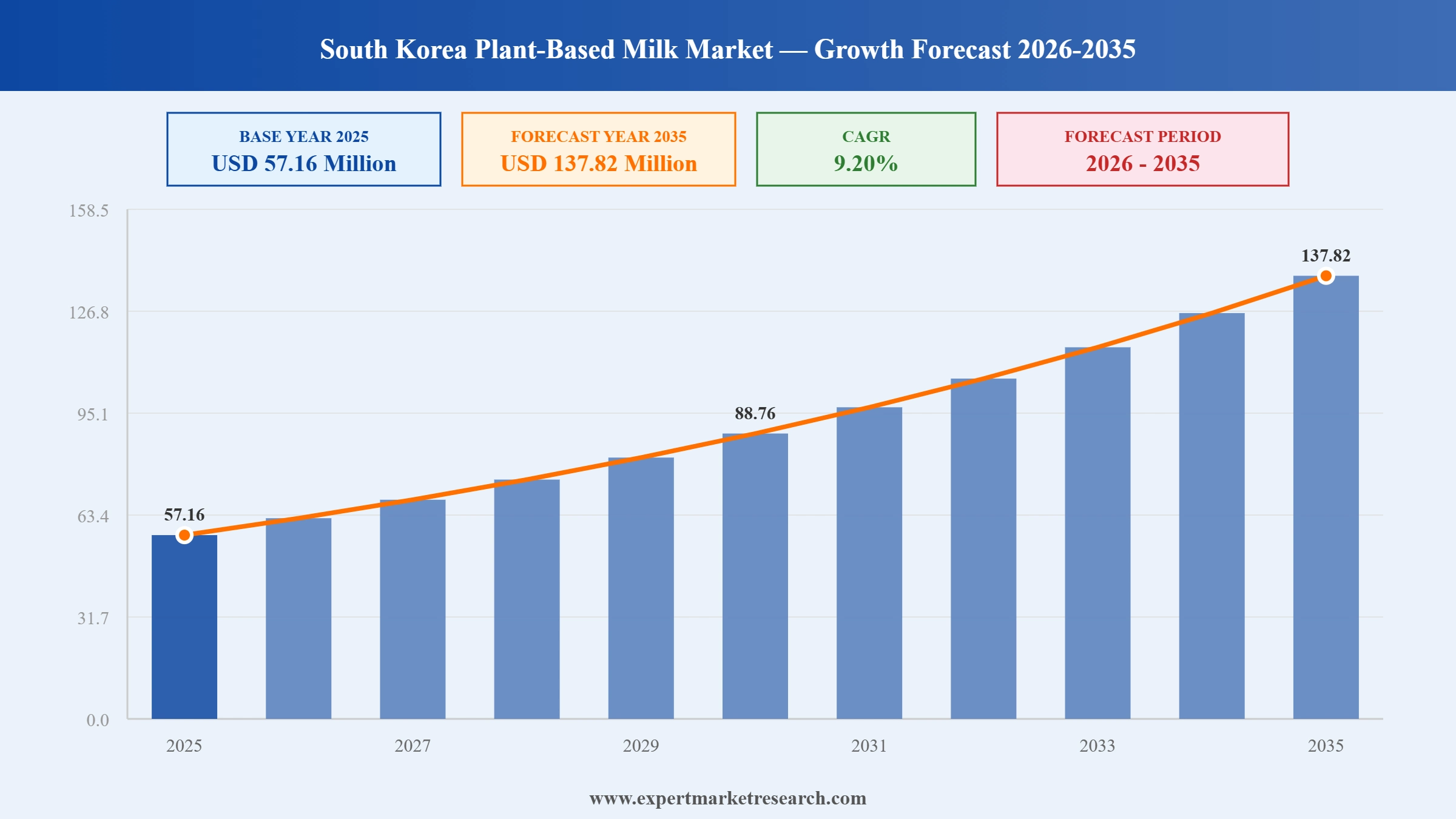
The South Korea plant-based milk market reached a value of USD 57.16 Million at 2025 and is projected to expand at a CAGR of around 9.20% during the forecast period of 2026-2035. With widespread lactose intolerance, cafe-channel normalisation of oat milk, the K-wellness clean-label movement, and online subscription-based repurchasing, the market is expected to reach USD 137.82 Million by 2035.
Read more about this report - REQUEST FREE SAMPLE COPY IN PDF
South Korea's plant-based milk market is moving from niche to mainstream, propelled by widespread lactose intolerance, a fast-maturing cafe channel, and the K-wellness push toward clean-label nutrition. Domestic incumbents like Maeil and Sahmyook are deepening their portfolios while online and subscription channels build recurring demand. The result is a small but fast-growing category where first-time buyers, not replacement cycles, drive the runway.
In November 2025, Maeil Dairies detailed its Korea-first, patented whole-oat grain milk technology, produced with Finnish oats supplied by Fazer Mills. The innovation underpins Amazing Oat's lower-sugar, higher-fibre, creamy profile and reinforces Maeil's leadership in South Korea's plant-based milk category.
In July 2025, as South Korea unveiled a national plant-based food action plan, Nongshim committed KRW 10 billion to a venture fund incubating future food-tech startups, signalling deeper corporate investment in plant-based and alternative-protein innovation across the plant-based milk sector.
In May 2025, Sahmyook Foods extended its plant-based milk portfolio with fortified, clean-label options, responding to rising South Korean demand for nutritious dairy alternatives. The expansion strengthened the company's soy-based offerings across supermarket and online retail channels and broadened choice.
In January 2024, Namyang Dairy Products, South Korea's third-largest dairy manufacturer, partnered with US biotech Pureture, a producer of GMO-free yeast-derived casein, to develop fully plant-based dairy products without compromising taste, nutrition, or affordability across the wider South Korean market.
With over 75 percent of South Koreans lactose intolerant, plant milk demand rests on biology, not fashion. As taste-credible options arrive, switching accelerates, while the K-wellness clean-label movement reinforces premium positioning across the plant-based milk market through brands like Maeil.
The cafe channel drives first trial more effectively than retail. Starbucks Korea sold over 200,000 oat milk drinks in its first month after adding the option, and widespread cafe adoption since has compounded South Korea plant-based milk market growth nationwide.
Plant milk began as occasional tetrapak retail but now earns recurring revenue. Coupang same-day delivery and Market Kurly subscriptions convert one-off buyers into repeat purchasers, while Maeil's Kakao Makers debut sold 310,000 packs online, validating online-first launches in plant-based milk.
Most South Korea plant-based milk growth comes from first-time purchasers rather than replacement cycles, so the runway is long. As awareness builds and cafe availability normalises, the product becomes a standard grocery item, and low penetration keeps the category expanding.
Policy and capital now back the shift. In July 2025, South Korea introduced a national plant-based food action plan, while Nongshim committed KRW 10 billion to food-tech startups, strengthening domestic supply, innovation, and investor confidence across the plant-based milk market.
The report by Expert Market Research, titled “South Korea Plant-Based Milk Market Report and Forecast 2026-2035”, offers a detailed analysis of the market based on the following segments:
Market Breakup by Nature
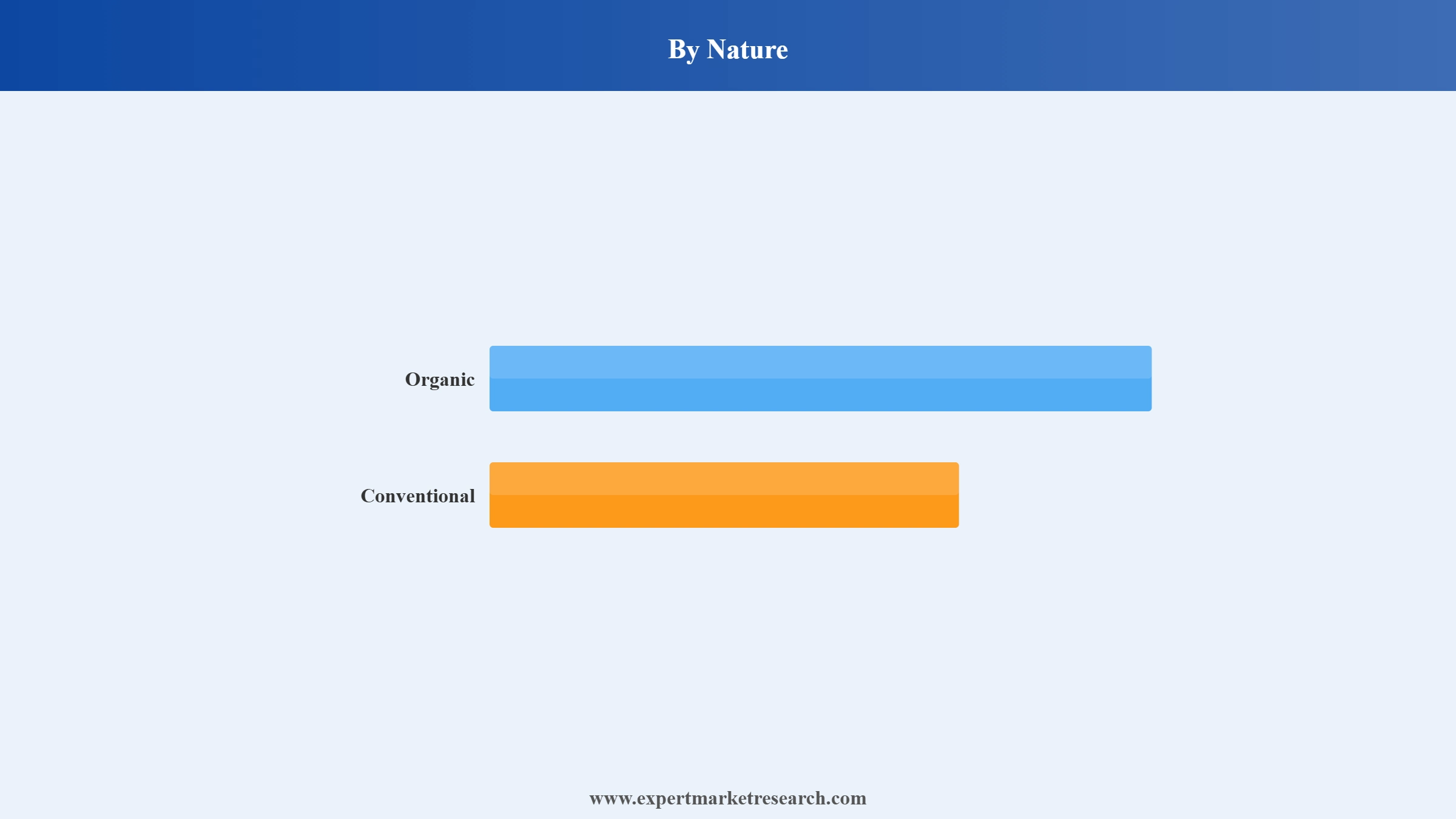
Key Insight: Conventional plant-based milk dominates by volume because it is affordable and broadly distributed across mainstream retail and the cafe channel, serving the large lactose-intolerant majority that wants a practical dairy substitute. Organic is the higher-value tier, gaining ground as shoppers weigh animal welfare, environmental impact, and clean nutrition. The competition among brands to offer varied, fortified options for different preferences is steadily bolstering development of the South Korea plant-based milk market.
Market Breakup by Product
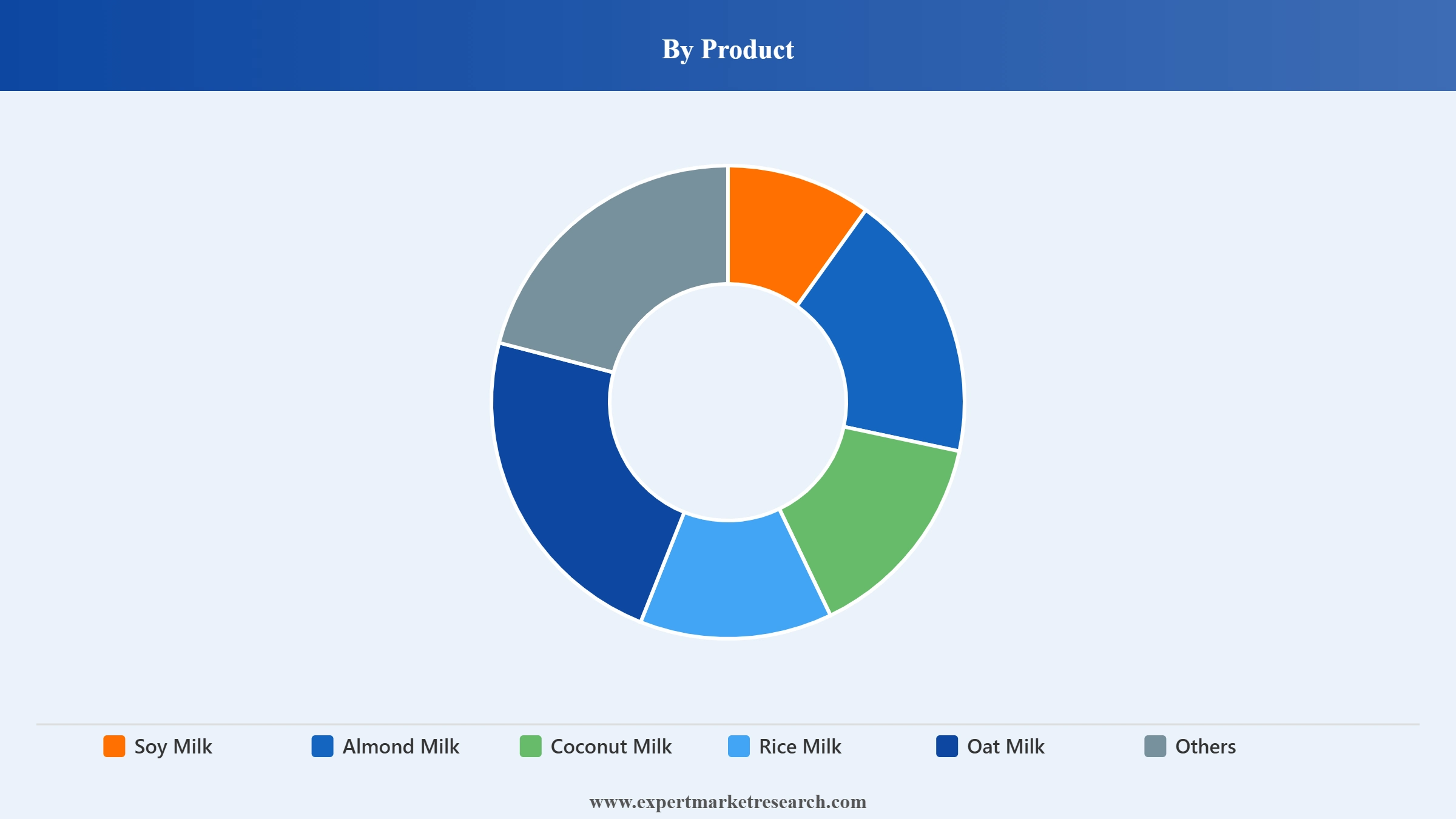
Key Insight: Soy milk holds the largest historical share, rooted in centuries of duyu heritage and valued for being cholesterol-free, lactose-free, and low in calories. Oat milk is the fastest-growing product, normalised by the cafe channel and prized for beta-glucan fibre and a dairy-like flavour. Almond, coconut, and rice milk fill niche, preference-driven demand, while ongoing research continues to widen the plant-based milk options available to South Korean consumers.
Market Breakup by Formulation
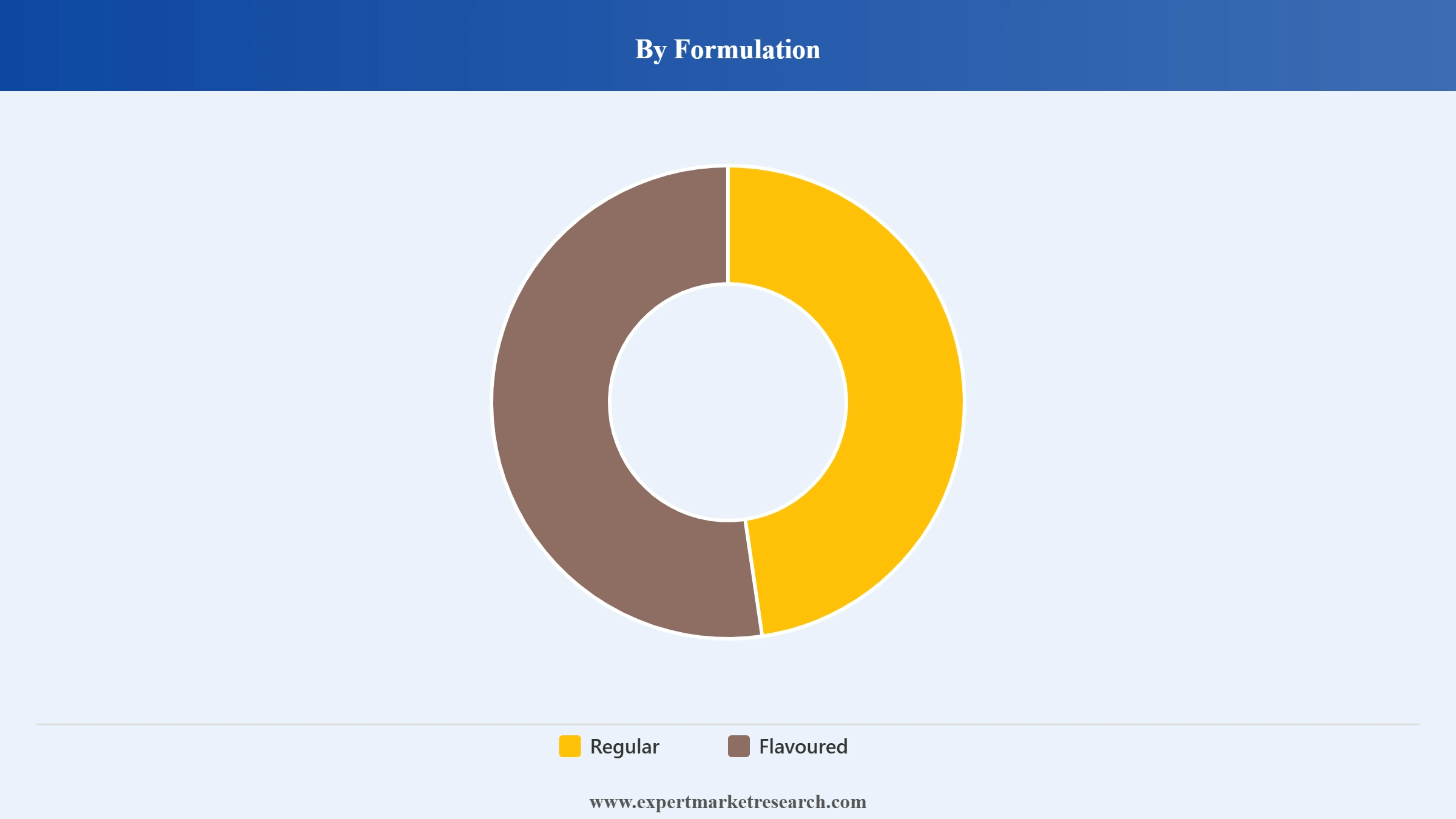
Key Insight: Flavoured plant-based milk enjoys strong demand because Korean palates historically found plain milk less appealing, prompting brands to add taste and aroma, a pattern set by Binggrae's 1974 banana milk. Building on that heritage, companies now offer flavoured plant-based milk alongside unflavoured, clean-label options for health-conscious buyers who prefer minimal additives. The coexistence of both formats broadens appeal across age groups and supports steady growth of the South Korea plant-based milk market.
Market Breakup by Distribution Channels
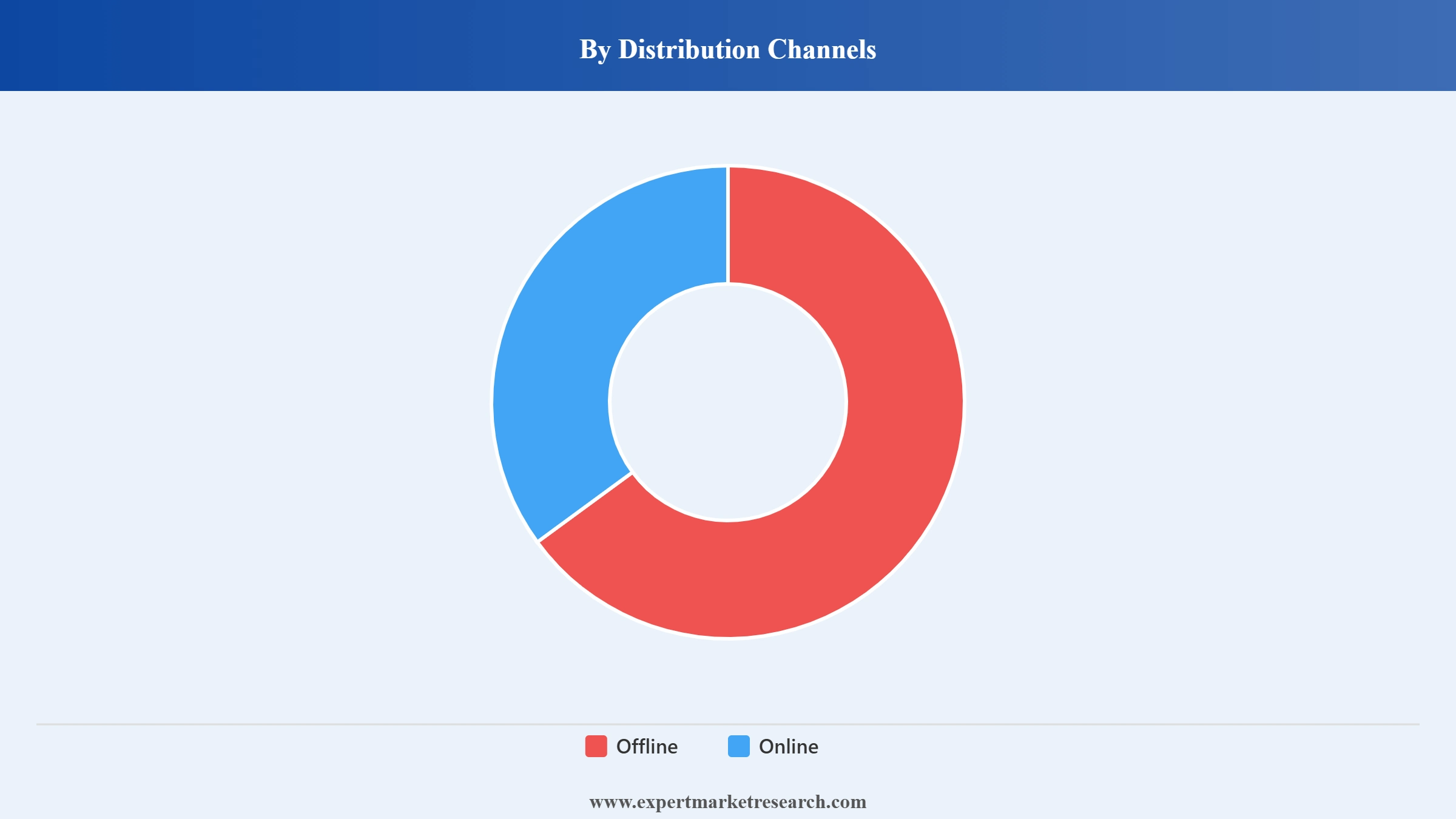
Key Insight: Offline retail holds the larger absolute share through hypermarkets, supermarkets, and convenience stores, supported by the commercially decisive cafe food-service channel that turns plant milk into a daily purchase. Online is the fastest-growing channel, backed by roughly 98 percent internet penetration, Coupang same-day delivery, and Market Kurly subscription repurchasing. Both segments are expected to perform well, with online increasingly lifting recurring demand for plant-based milk in South Korea.
Read more about this report - REQUEST FREE SAMPLE COPY IN PDF
By nature, conventional plant-based milk dominates the market due to affordability and broad retail and cafe distribution
Conventional plant-based milk leads the South Korea plant-based milk market by volume because it is affordable and widely available across mainstream retail and the cafe channel. It serves the price-sensitive majority, including the large lactose-intolerant population, who want a practical dairy substitute rather than a premium statement product. Hypermarkets, convenience stores, and food-service operators stock conventional lines as default options, which keeps unit turnover high and anchors everyday category demand.
Read more about this report - REQUEST FREE SAMPLE COPY IN PDF
Organic plant-based milk is the higher-value tier, gaining ground as shoppers weigh animal welfare, environmental impact, and clean nutrition. Demand tracks the K-wellness movement and a willingness to pay for fortified, additive-light formulations. In May 2025, domestic players including Sahmyook Foods extended fortified, clean-label plant-based milk lines, reflecting how organic and premium positioning is widening choice and supporting healthier margins within the South Korea plant-based milk market.
By product, soy milk holds the largest share due to deep duyu heritage and nutritional familiarity
Soy milk holds the largest historical share of the South Korea plant-based milk market, rooted in centuries of duyu heritage that makes it culturally familiar. It is cholesterol-free, lactose-free, and low in calories, offering a hydrating, affordable, and nutritious option for consumers with milk-protein allergies or lactose intolerance. That blend of tradition, accessibility, and nutrition keeps soy milk the default choice across households and broad retail distribution nationwide.
Read more about this report - REQUEST FREE SAMPLE COPY IN PDF
Oat milk is the fastest-growing product, normalised by the cafe channel and a flavour profile closest to dairy. Its beta-glucan fibre adds a functional, health-forward appeal that resonates with Korean shoppers. In November 2025, Maeil Dairies detailed its Korea-first, patented whole-oat grain milk technology produced with Finnish oats, reinforcing premium credentials and helping oat milk move from specialist interest to a standard grocery and cafe option.
By formulation, flavoured plant-based milk leads demand due to Korean taste preferences and milk-flavour heritage
Flavoured plant-based milk leads formulation demand because Korean palates historically found plain milk less appealing, prompting brands to add taste and aroma. Banana milk, launched by Binggrae in 1974, set the template for flavoured popularity that endures today. Building on that heritage, companies now offer flavoured plant-based milk alongside unflavoured options, broadening appeal across age groups and supporting steady development of the South Korea plant-based milk market.
Read more about this report - REQUEST FREE SAMPLE COPY IN PDF
Regular, unflavoured plant-based milk anchors the health-conscious and clean-label segment, valued by consumers who prefer minimal additives and a neutral base for coffee, cereal, and cooking. Demand here aligns with the K-wellness shift toward functional nutrition. In May 2025, fortified, clean-label line extensions from domestic players reinforced the regular segment, showing how unflavoured formats remain central to everyday plant-based milk consumption in South Korea.
By distribution channel, offline retail holds the larger share while online grows fastest
Offline retail holds the larger absolute share of the South Korea plant-based milk market through hypermarkets, supermarkets, and convenience stores, supported by the commercially decisive cafe food-service channel. Cafes such as Starbucks Korea turn plant milk into a daily, habit-forming purchase, while large-format grocers provide reach and impulse visibility. This dense physical footprint keeps offline the backbone of category volume even as digital channels accelerate quickly.
Read more about this report - REQUEST FREE SAMPLE COPY IN PDF
Online is the fastest-growing channel, supported by roughly 98 percent internet penetration and powerful e-commerce platforms. Coupang's same-day delivery and Market Kurly's subscription systems convert trial buyers into repeat purchasers, while Maeil's Kakao Makers debut, which sold 310,000 packs in three months, proved online-first launches work. Subscription repurchasing and digital discovery are steadily lifting online's share of plant-based milk sales in South Korea.
The South Korea plant-based milk market combines domestic dairy incumbents adapting to the plant shift, such as Maeil and Seoul Milk Cooperative, with premium international barista specialists like Oatside and global conglomerates like Danone through Alpro. The market is fragmented across product types, with no single company dominant across every segment.
Maeil holds the strongest commercial position, anchored by Amazing Oat's mainstream success and its Blue Diamond almond milk licensing that supplies roughly 6,000 Starbucks stores in China. Competition increasingly turns on cafe-channel performance, online-first launches, clean-label formulation, and proprietary processing technology rather than price alone.
South Korea's second-largest milk producer, headquartered in Seoul and founded in 1969. Maeil's Amazing Oat sold 310,000 packs through Kakao Makers in three months, validating an online-first strategy, while its Blue Diamond almond milk licensing supplies around 6,000 Starbucks outlets in China.
South Korea's largest dairy company, headquartered in Seoul and established in 1937, with sales of roughly KRW 1.83 trillion in 2021. Its 88-year retail and food-service distribution network is a deployable asset, and its plant-based development is a key signal of category legitimation.
Singapore-based premium oat milk specialist founded in 2021, expanding across Asia including South Korea. Its range is engineered for cafe espresso, delivering barista-grade steaming and microfoam, positioning it as the international premium tier alongside domestic incumbents in the plant-based milk category.
Global plant-based nutrition leader headquartered in Paris and founded in 1919, operating in South Korea through the Alpro brand acquired in 2017. Its January 2024 Pureture partnership signals active investment in animal-free casein technology that can flow into Korean product specifications.
Other key players in the market are Hanmi Healthcare Inc., and Others.
*Please note that this is only a partial list; the complete list of key players is available in the full report. Additionally, the list of key players can be customized to better suit your needs.*
Get the full intelligence on the South Korea plant-based milk market with our latest report. See why lactose intolerance, cafe-channel adoption, and online subscriptions are reshaping demand, and where oat milk and clean-label formats are opening the next opportunities. Whether you produce plant-based dairy, run cafe or retail channels, operate an e-commerce platform, or invest in food and beverage, this report gives you the clarity to act. Download your free sample today and explore the key opportunities across plant-based milk.


Upto 15% Off
USD
$2499 $2249
$3999 $3599
$4999 $4249
$5999 $5099


*While we strive to always give you current and accurate information, the numbers depicted on the website are indicative and may differ from the actual numbers in the main report. At Expert Market Research, we aim to bring you the latest insights and trends in the market. Using our analyses and forecasts, stakeholders can understand the market dynamics, navigate challenges, and capitalize on opportunities to make data-driven strategic decisions.*
In 2025, the South Korea plant-based milk market attained a value of nearly USD 57.16 Million.
The market is projected to grow at a CAGR of 9.20% between 2026 and 2035.
The South Korea plant-based milk market is estimated to witness a healthy growth in the forecast period of 2026-2035 to reach USD 137.82 Million by 2035.
The growing demand for plant-based nutrition, high standards of living, rising disposable income, growing awareness regarding sustainability and veganism are the major drivers of the South Korea plant-based milk industry.
The growing lactose-intolerant population, the inclination toward flavouring milk, and the growing popularity of oat milk are the leading trends of the South Korea plant-based milk market.
The dominant type of plant-based milk in the industry are soy milk, almond milk, coconut milk, rice milk, and oat milk, among others.
The distribution channel segment is led by online and offline channels.
The major players in the industry are Maeil Co.Ltd, Seoul Milk Cooperative, Oatside, Danone S.A., and Hanmi Healthcare Inc., among others.
Explore our key highlights of the report and gain a concise overview of key findings, trends, and actionable insights that will empower your strategic decisions.
| REPORT FEATURES | DETAILS |
| Base Year | 2025 |
| Historical Period | 2019-2025 |
| Forecast Period | 2026-2035 |
| Scope of the Report |
Historical and Forecast Trends, Industry Drivers and Constraints, Historical and Forecast Market Analysis by Segment:
|
| Breakup by Nature |
|
| Breakup by Product |
|
| Breakup by Formulation |
|
| Breakup by Distribution Channels |
|
| Market Dynamics |
|
| Competitive Landscape |
|
| Companies Covered |
|
Datasheet
One User
USD 2,499
USD 2,249
tax inclusive*
Single User License
One User
USD 3,999
USD 3,599
tax inclusive*
Five User License
Five User
USD 4,999
USD 4,249
tax inclusive*
Corporate License
Unlimited Users
USD 5,999
USD 5,099
tax inclusive*
*Please note that the prices mentioned below are starting prices for each bundle type. Kindly contact our team for further details.*
Flash Bundle
Small Business Bundle
Growth Bundle
Enterprise Bundle
*Please note that the prices mentioned below are starting prices for each bundle type. Kindly contact our team for further details.*
Flash Bundle
Number of Reports: 3
20%
tax inclusive*
Small Business Bundle
Number of Reports: 5
25%
tax inclusive*
Growth Bundle
Number of Reports: 8
30%
tax inclusive*
Enterprise Bundle
Number of Reports: 10
35%
tax inclusive*
How To Order

Select License Type
Choose the right license for your needs and access rights.

Click on ‘Buy Now’
Add the report to your cart with one click and proceed to register.

Select Mode of Payment
Choose a payment option for a secure checkout. You will be redirected accordingly.
Strategic Solutions for Informed Decision-Making
Gain insights to stay ahead and seize opportunities.

Get insights & trends for a competitive edge.

Track prices with detailed trend reports.

Analyse trade data for supply chain insights.

Leverage cost reports for smart savings

Enhance supply chain with partnerships.

Connect For More Information
Our expert team of analysts will offer full support and resolve any queries regarding the report, before and after the purchase.
Our expert team of analysts will offer full support and resolve any queries regarding the report, before and after the purchase.
We employ meticulous research methods, blending advanced analytics and expert insights to deliver accurate, actionable industry intelligence, staying ahead of competitors.
Our skilled analysts offer unparalleled competitive advantage with detailed insights on current and emerging markets, ensuring your strategic edge.
We offer an in-depth yet simplified presentation of industry insights and analysis to meet your specific requirements effectively.




