

Consumer Insights
Uncover trends and behaviors shaping consumer choices today
Procurement Insights
Optimize your sourcing strategy with key market data
Industry Stats
Stay ahead with the latest trends and market analysis.
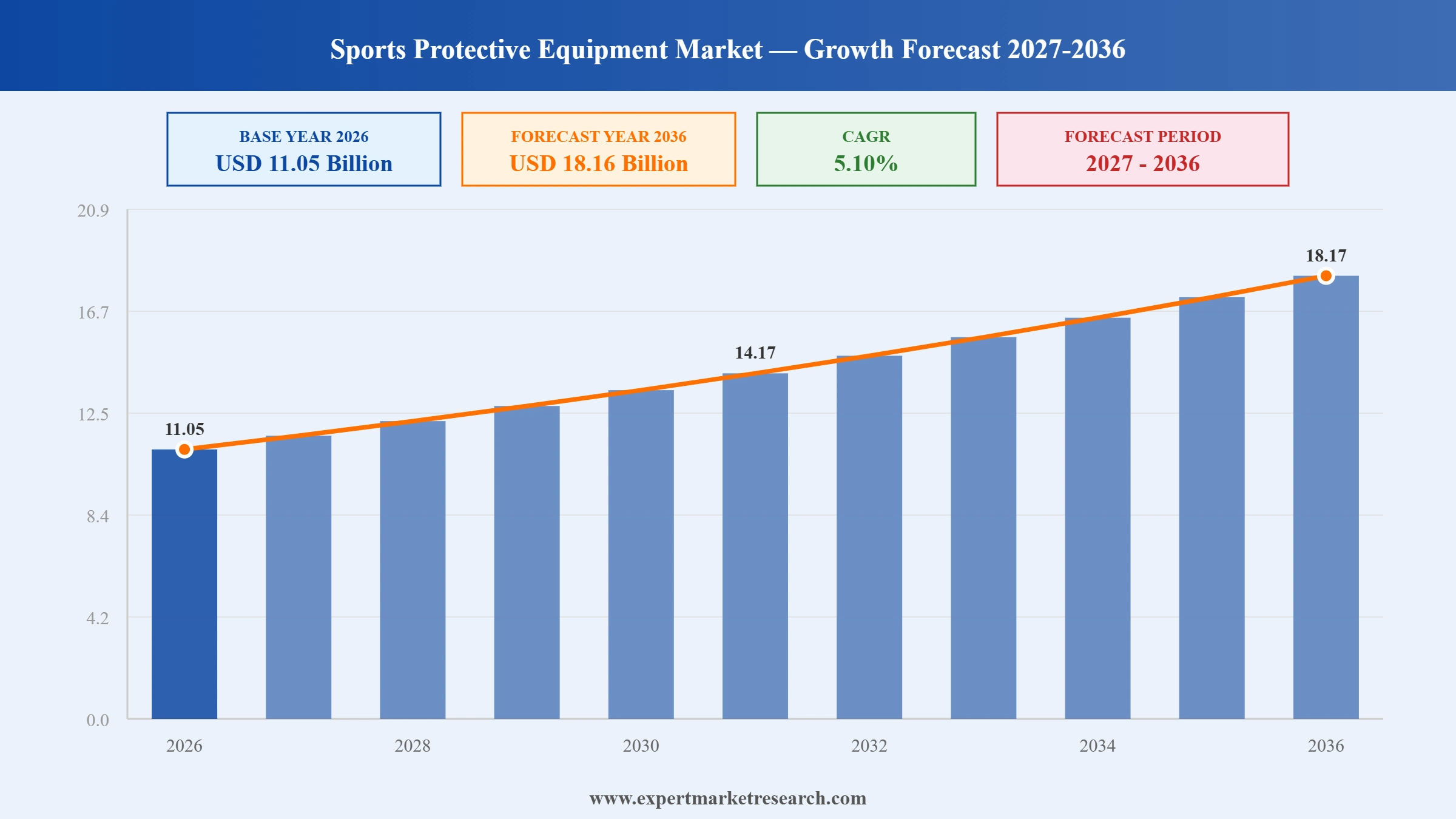
The global sports protective equipment market attained a value of USD 10.51 Billion in 2025 and is projected to expand at a CAGR of 5.10% through 2035. The market is further expected to reach USD 17.28 Billion by 2035. Rising participation in youth and amateur sports, together with tightening safety mandates for helmets, mouthguards, and padding, is helping manufacturers broaden their protective equipment portfolios. Growing emphasis on concussion protection technology, lightweight materials, and smart sensor integration is further encouraging established brands to expand distribution across specialty retail, multi retail, and online channels.
The sports protective equipment market covers helmets and other headgear, protective eyewear, face protection and mouth guards, and pads, guards, chest protectors, and gloves worn across football, ice hockey, cycling, lacrosse, baseball, and combat sports. Adoption spans school and club programs, professional leagues, and recreational athletes, with demand concentrated among parents, athletic departments, and team equipment managers who replace gear on multi-year cycles. Broader public awareness of concussion risk and repetitive impact exposure continues to widen the base of buyers seeking certified, properly fitted protective equipment rather than hand-me-down or undersized gear, particularly across youth leagues in North America and Europe.
Demand is concentrating around established football, hockey, and action-sports equipment makers that can demonstrate compliance with updated headform and mouthguard testing protocols. In July 2025, the Virginia Tech Helmet Lab recalibrated its STAR rating thresholds after more than a decade of use, with VICIS ZERO2 and Schutt models topping the updated varsity and youth football helmet ratings. The tougher scoring made five-star status harder to earn and gave buyers a clearer basis for comparing helmet lines, intensifying competitive pressure on manufacturers to continue refining shell geometry, liner materials, and facemask attachment systems across the sports protective equipment market.
Manufacturers are directing new investment toward specialty padding compounds, modular chest and shoulder protection, and youth-specific sizing rather than relying on scaled-down adult designs. Several equipment makers are also expanding distribution through team dealers and specialty retailers to reach school and club buyers directly, while licensing arrangements with professional leagues continue to lend credibility to premium product lines sold to amateur athletes. Portfolios are widening further as diversified sporting goods groups add protective accessories alongside footwear and apparel, giving them additional shelf space with the same specialty and team-dealer accounts and a broader base from which to fund certification testing.
Read more about this report - REQUEST FREE SAMPLE COPY IN PDF
Bell Helmets released a limited-edition version of its flagship Moto-10 Spherical helmet, carrying the same race-proven shell and liner construction used by professional racer Eli Tomac. The helmet keeps its energy management layers unchanged while adding a distinct finish for club riders. Brands can use athlete-tied editions to move certified helmet platforms into the broader sports protective equipment market.
Riddell introduced its SpeedFlex, Speed, and Jet ND6 youth helmet models more than a year before a new youth-specific helmet performance standard becomes mandatory. The line keeps each helmet under 3.5 pounds while meeting impact thresholds set for pre-high school players. Equipment makers across the sports protective equipment market can launch compliant gear early to build trust with parents before enforcement begins.
Amer Sports closed fiscal 2025 with revenue of USD 6.566 billion, up 27 percent year-on-year, with management citing double-digit growth across all regions and channels. The result reflects continued willingness to pay for premium, technically engineered sporting goods, including protective equipment. Diversified sporting goods groups can use this channel growth to justify further investment in protective product development.
6D Helmets launched its ATR-3 off-road helmet built around a patented Omni-Directional Suspension system engineered to reduce linear and angular acceleration across a broad range of impact types. The design targets riders seeking reduced concussion risk over incremental shell updates. Helmet makers can use multi-directional energy management systems to differentiate premium models within the sports protective equipment market.
Asia Pacific manufacturers across the sports protective equipment market are capturing a growing share of global protective equipment orders as North American and European brands seek cost-competitive, certified production partners. Chinese makers are scaling output of licensed ice hockey gear for export. Fujian-based Xiameter Better Sporting Goods projected a 12 to 15 percent year-on-year increase in export sales of its NHL-branded helmets and gloves by the end of 2025, as reported in February 2026, with North America accounting for half of its export revenue.
Independent youth travel programs across the sports protective equipment market are becoming meaningful distribution partners for equipment makers as club baseball and softball participation grows outside school leagues. Brands are signing exclusive supply deals that place batting gloves and protective gear in front of thousands of young athletes and their families. Franklin Sports became the exclusive batting glove and protective equipment provider for Wow Factor Baseball's more than 5,500 athletes across 400 teams in October 2025, extending the arrangement to its softball programs as well.
Contact sports across the sports protective equipment market are increasingly pairing physical padding with sensor-based monitoring to catch head injuries sooner than visual observation allows. Instrumented mouthguards that communicate with pitch-side equipment are moving from trial use toward tournament-wide deployment. World Rugby fitted players across its Women's Rugby World Cup in August 2025 with transparent mouthguards that flash red on detecting a significant impact, prompting referees to stop play for assessment. The tools are pushing mouthguard and headgear makers toward broader sensor integration across contact sports.
Contact sport programs across the sports protective equipment market are adopting wearable sensors alongside helmets and headgear to flag head impacts instantly, beyond sideline observation. These wearables feed real time data to coaches and medical staff through connected apps. In August 2025, Sports Impact Technologies secured EUR 650,000 in pre-seed funding to finalize a behind the ear impact sensor ahead of beta testing across American football, rugby, soccer, hockey, and Gaelic football. The technology is widening head injury monitoring beyond padding and shell design.
Youth football participation continues to draw scrutiny over whether downsized adult helmets adequately protect smaller, less experienced players. Governing bodies are responding with dedicated testing protocols instead of standards built for older athletes. NOCSAE finalized its first-ever youth football helmet performance standard in April 2025 after more than ten years of research, setting separate weight and rotational acceleration limits for pre-high school players ahead of mandatory compliance. The standard gives manufacturers a concrete target for redesigning youth helmet lines.
The Expert Market Research's report titled "Global Sports Protective Equipment Market Report and Forecast 2026-2035" offers a detailed analysis of the market based on the following segments:
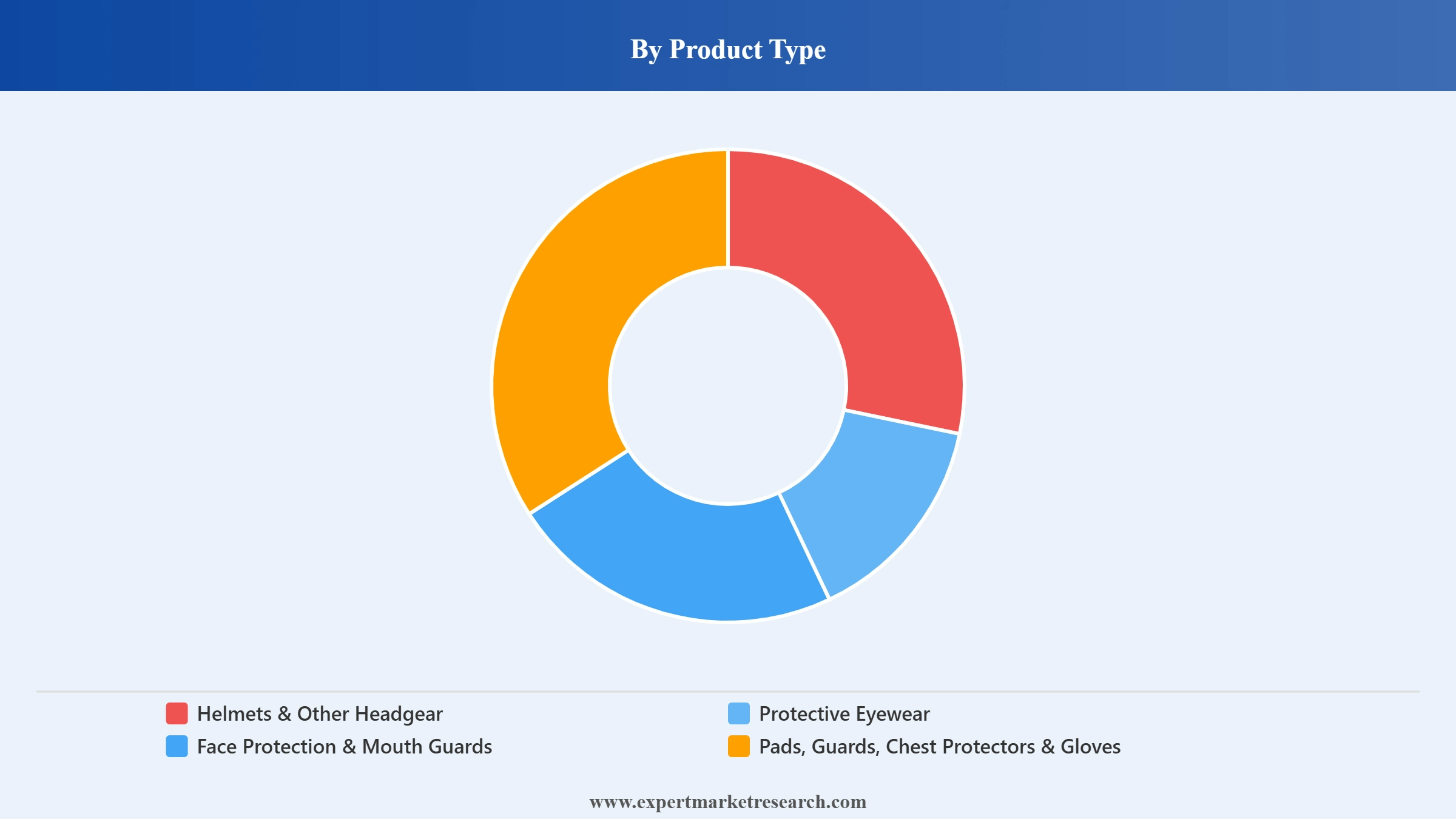
Market Breakup by Product Type
Key Insight: Helmets and other headgear dominate the sports protective equipment market given their mandatory use in football, ice hockey, cycling, and action sports and their comparatively high replacement value. Protective eyewear is gaining share as racquet sports, cycling, and winter sports participants seek impact-rated lenses alongside UV protection. Face protection and mouth guards’ benefit from mandatory school and league rules and from growing interest in sensor-equipped designs that monitor impact exposure. Pads, guards, chest protectors, and gloves round out the category, serving baseball, lacrosse, hockey, and combat sports athletes who require flexible, joint-specific coverage without restricting movement.
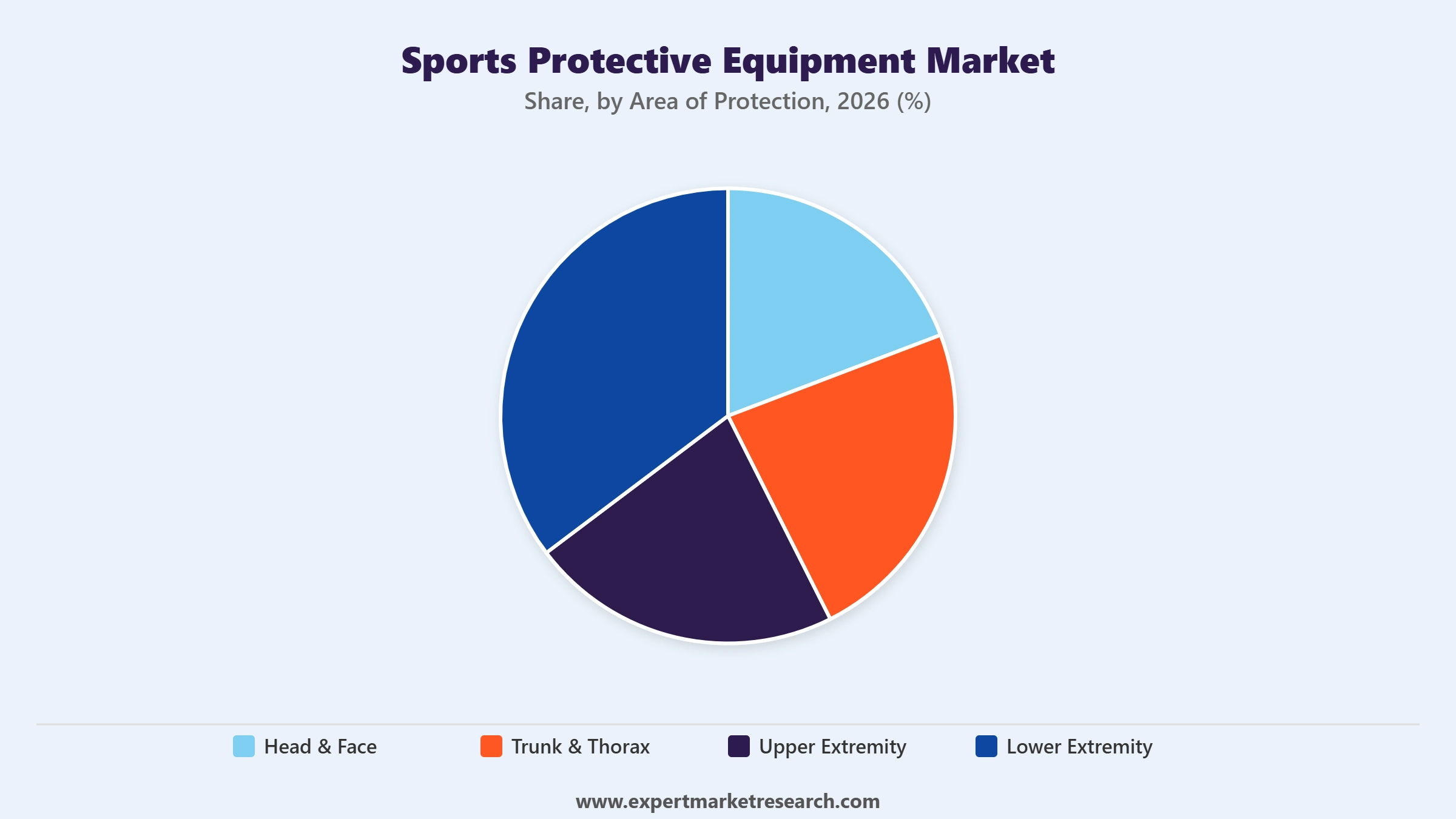
Market Breakup by Area of Protection
Key Insight: Head and face protection accounts for the largest share of the sports protective equipment market because helmets, face shields, and mouth guards address the highest-consequence injury risk and are mandated across the widest range of sports. Trunk and thorax protection, covering chest protectors and rib guards, is expanding fastest as catching, goaltending, and motocross disciplines adopt modular hard and soft-shell designs. Upper extremity protection, including gloves, elbow pads, and wrist guards, supports athletes in hockey, lacrosse, and cycling, while lower extremity protection, spanning shin guards and knee pads, remains central to football, soccer, and field hockey programs.
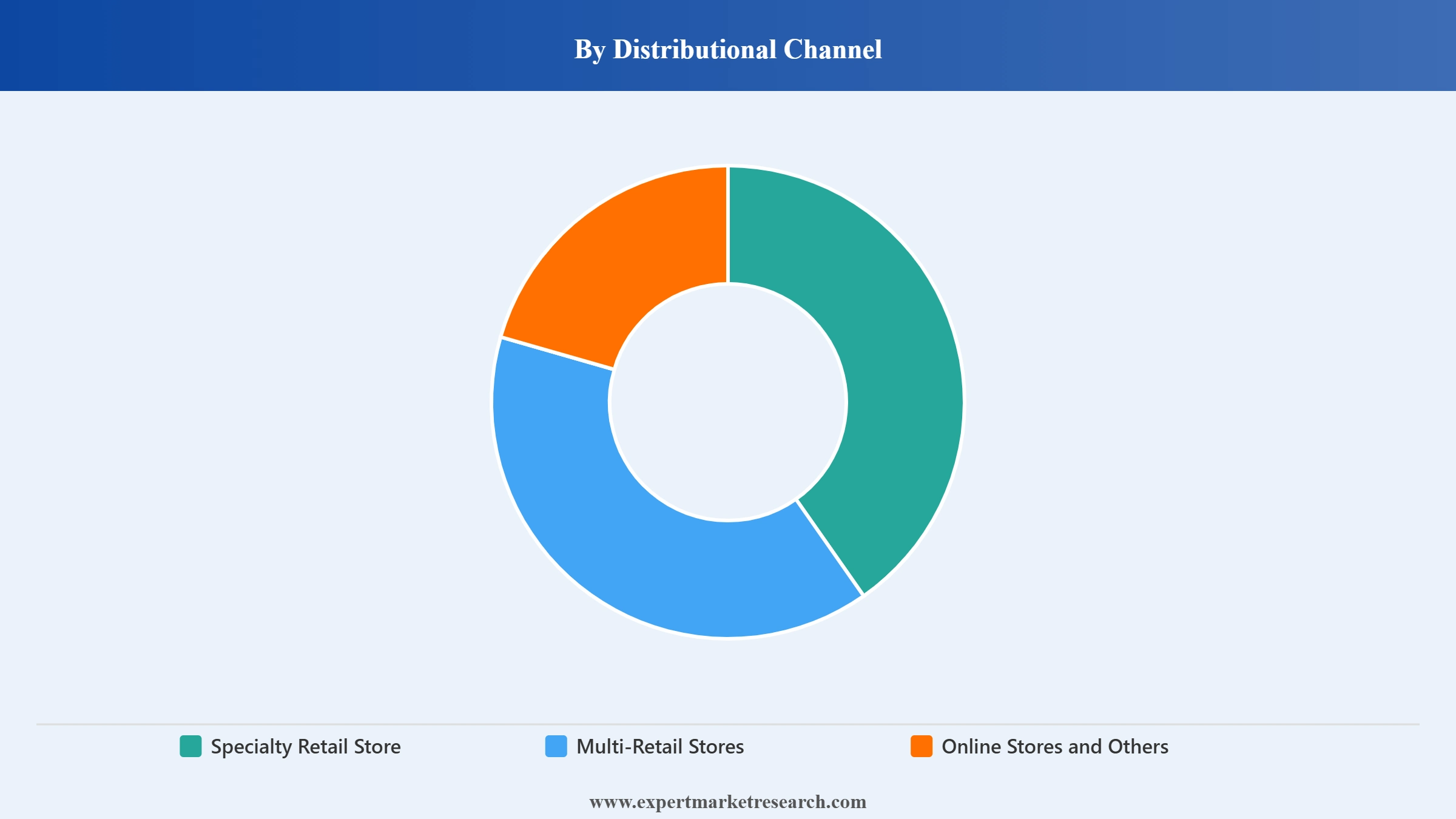
Market Breakup by Distribution Channel
Key Insight: Specialty retail stores lead distribution of sports protective equipment market because trained staff can properly size helmets, pads, and mouth guards for individual athletes, a factor parents and coaches weigh heavily for safety-critical gear. Multi-retail stores serve higher-volume, standardized items such as shin guards and basic pads where fitting needs are simpler. Online stores and others, including team dealer platforms and league-affiliated e-commerce, are growing quickly as digital sizing tools and bulk team-ordering portals make remote purchasing more reliable for school and club programs.
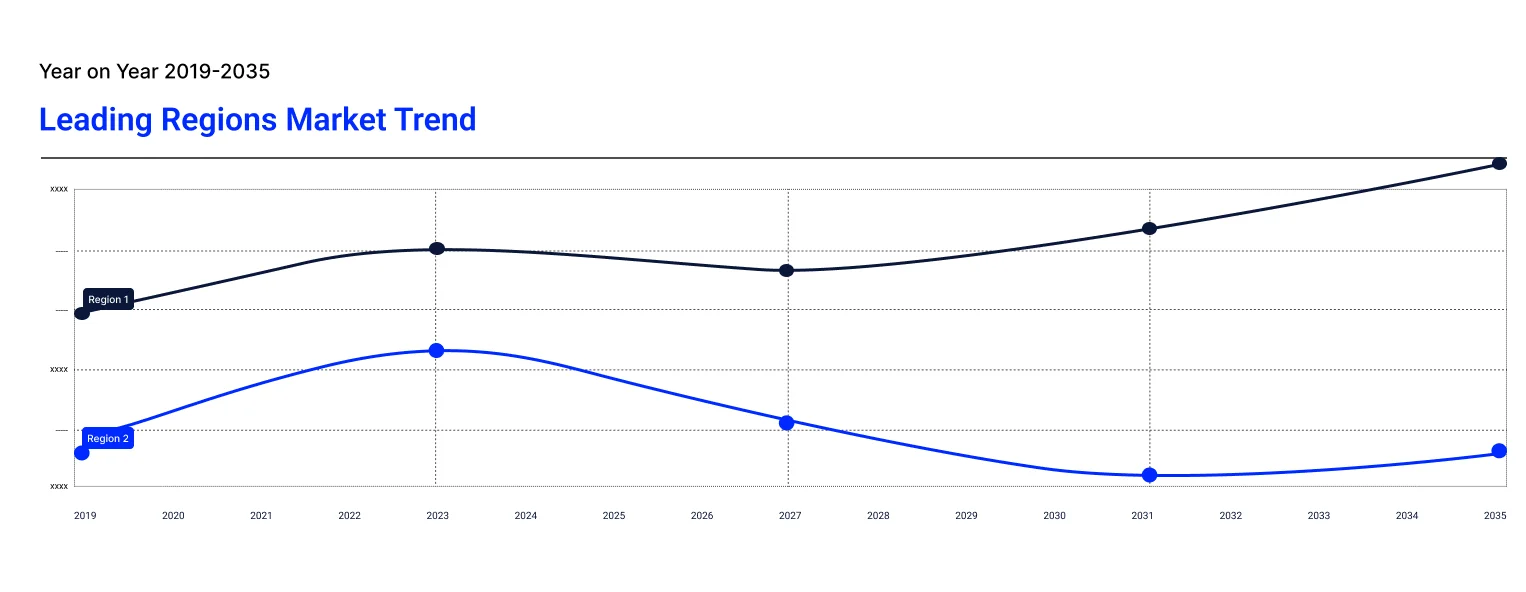
Market Breakup by Region
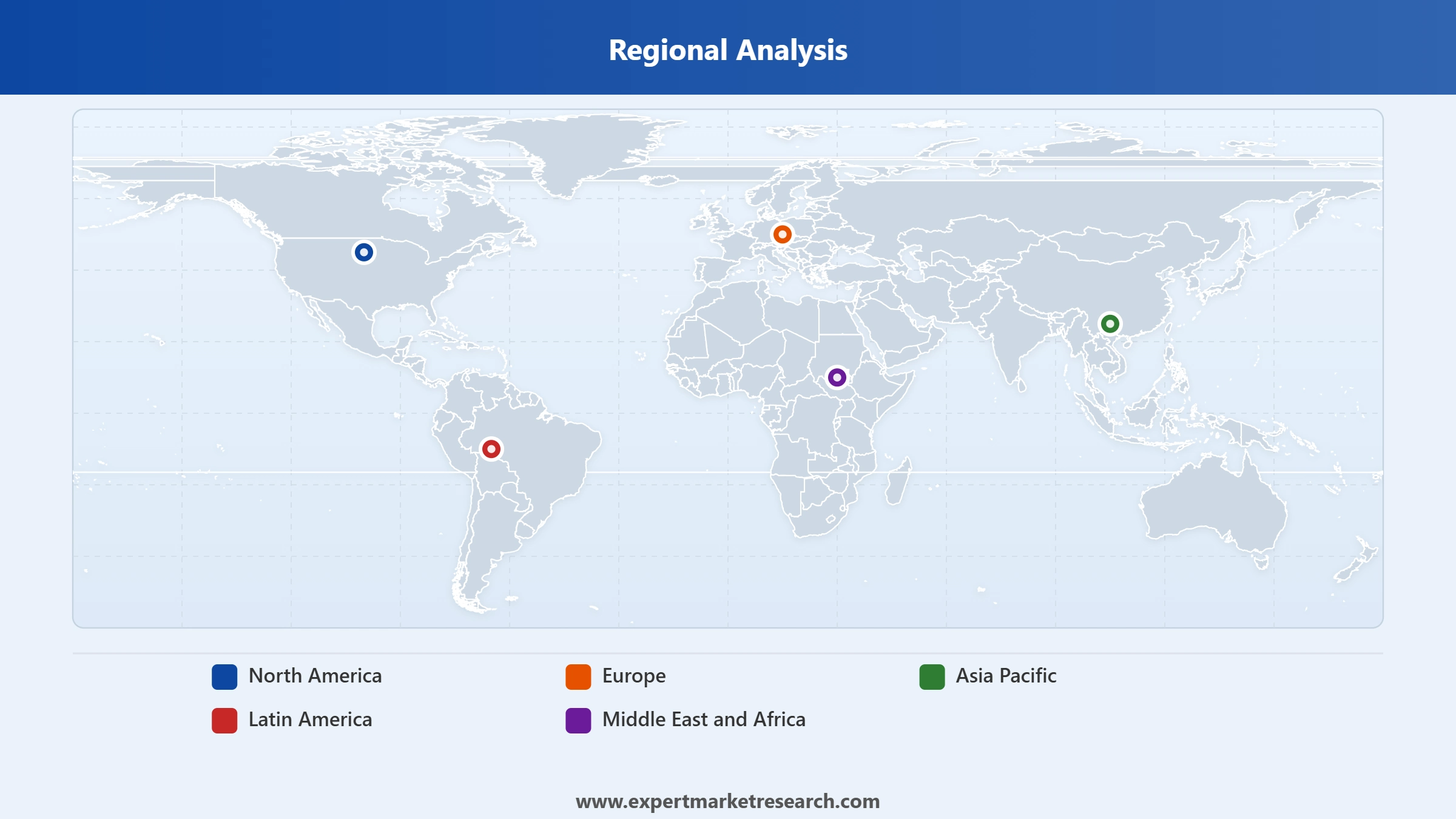
Key Insight: Regional demand for sports protective equipment market continues to reflect each region's dominant sports and safety culture. North America leads on the back of football, ice hockey, and lacrosse participation combined with strict school-level equipment mandates. Europe sustains steady demand through cycling, winter sports, and rugby, supported by harmonized safety certification schemes. Asia Pacific is registering the fastest growth as youth sports participation rises and regional manufacturers scale export-oriented production. Latin America is expanding on growing football and baseball academy infrastructure, while the Middle East and Africa region is building demand through new school sports programs and stadium-linked youth development initiatives.
Read more about this report - REQUEST FREE SAMPLE COPY IN PDF
By product type, helmets and other headgear dominate the market owing to mandatory use across football, hockey, and action sports
Helmets and other headgear hold the largest share of the sports protective equipment market because most contact sports mandate certified head protection and replace it on defined cycles. Teams and leagues increasingly favor models carrying the strongest third-party safety approvals when issuing equipment. In April 2026, the National Football League approved the Guardian Cap NXT 2.0 soft-shell overlay for continued mandatory use across contact practices, giving teams a choice between two certified designs for the first time.
Read more about this report - REQUEST FREE SAMPLE COPY IN PDF
Face protection and mouth guards are growing fastest within the sports protective equipment market as school associations tighten fitting and composition rules while sensor-equipped designs expand beyond elite programs. The National Federation of State High School Associations added new tooth and mouth protector requirements to its 2025 football rules, reported in March 2025, barring non-protective attachments and materials that could pose a health risk. Such rule changes push manufacturers toward compliant, properly certified mouthguard designs across youth and scholastic programs.
By area of protection, head and face coverage leads the market through mandatory helmet and eyewear use
Head and face protection remains the largest area-of-protection category in the sports protective equipment market, reflecting the severity of head injury risk across contact and high-speed sports. Cycling and endurance disciplines are a growing part of this demand as riders seek combined helmet and eyewear systems rather than separate purchases. POC launched its Cytal EF Pro Cycling Edition helmet and Elicit Toric sunglasses in May 2025, pairing an integrated rotational protection liner with frameless, wide-field eyewear built for race-day use.
Read more about this report - REQUEST FREE SAMPLE COPY IN PDF
Trunk and thorax protection is expanding quickly within the sports protective equipment market as motocross, mountain biking, and other impact-heavy disciplines adopt modular chest protection previously limited mainly to catching and goaltending roles in team sports. Leatt introduced its Chest Protector 4.5 Hybrid in February 2026, combining a hard-shell front with a soft-shell back panel and neck brace compatibility across men's, women's, and junior fits. The hybrid approach is encouraging other makers to broaden thorax protection beyond single-sport designs.
By distribution channel, specialty retail stores account for the largest share through trained fitting and safety expertise
Specialty retail stores remain the leading distribution channel for sports protective equipment as trained staff properly size helmets, pads, and mouth guards, a service parents and coaches value for safety-critical purchases. In August 2026, Winmark extended its resale partnership with Rawlings and Easton for another three years, with its Play It Again Sports stores having bought more than one million pieces of used baseball and softball equipment since 2022. Manufacturers continue to prioritize specialty retail partnerships when launching premium, certification-driven product lines.
Read more about this report - REQUEST FREE SAMPLE COPY IN PDF
Online stores and other digital channels are growing fastest in sports protective equipment distribution as league-affiliated e-commerce platforms and team-ordering portals simplify bulk purchasing for coaches and equipment managers. Digital fit guides and video-based sizing tools are narrowing the gap with in-store fitting for standardized items such as shin guards and gloves. Brands are increasingly offering direct-to-team online storefronts alongside traditional retail listings, letting programs reorder specific sizes and colors without visiting a physical store.
North America leads the market through widespread football and ice hockey participation and strict school equipment mandates
North America commands the largest share of the sports protective equipment market, anchored by football, ice hockey, lacrosse, and baseball programs that mandate certified helmets, pads, and mouth guards from youth through professional levels. In May 2026, Certor Sports became a Gold Level sponsor of the Athletic Equipment Managers Association, backing certification training and safety education for staff who fit equipment for school and collegiate teams. Equipment makers are responding with region-specific product lines built around the continent's dominant contact sports.
Read more about this report - REQUEST FREE SAMPLE COPY IN PDF
Asia Pacific is registering the fastest growth in the sports protective equipment market as youth sports participation expands and regional manufacturers scale export-oriented production capacity. Government-backed school sports programs across China, Japan, and South Korea are widening the base of buyers seeking properly certified helmets, pads, and mouth guards rather than informal or hand-me-down equipment. Rising vehicle and household incomes are further supporting demand for premium protective gear across the region's growing club and private-academy sports ecosystem.
Sports protective equipment companies are competing on certification credentials, fit innovation, and speed in responding to updated safety standards rather than on price alone. Leading players maintain in-house or partnered impact-testing capabilities to validate new shell, liner, and padding designs ahead of regulatory deadlines, while smaller specialists compete by focusing on single sports or niche protection categories such as mouth guards or chest protection. Licensing arrangements with professional leagues and governing bodies remain an important way for sports protective equipment players to signal credibility to coaches, parents, and amateur buyers.
Sports protective equipment market players are also investing in sensor integration, modular fit systems, and youth-specific sizing to differentiate otherwise similar product categories. Distribution partnerships with specialty retailers, team dealers, and league-affiliated online stores are expanding alongside product development, helping brands reach school and club buyers directly. Companies that combine verifiable safety performance with reliable, season-ready distribution are best placed to build durable relationships with athletic departments and youth league administrators.
Founded in 1949 and headquartered in Herzogenaurach, Germany, Adidas AG supplies shin guards, goalkeeper gloves, and other protective accessories alongside its broader football and training equipment lines. The company draws on long-standing partnerships with professional leagues and federations to test and refine protective gear worn at the highest competitive levels before extending the technology to recreational and youth product lines.
Founded in 1994 and headquartered in Minneapolis, Minnesota, United States, Shock Doctor, Inc. specializes in mouth guards, braces, and compression protective wear for contact and field sports. The company built its reputation on custom-fit mouth guard technology and has since expanded into knee, ankle, and shoulder support products sold through specialty sporting goods retailers across North America.
Founded in 1964 and headquartered in Beaverton, Oregon, United States, Nike, Inc. produces goalkeeper gloves, shin guards, and padded compression apparel as part of its football and training equipment portfolio. The company applies its broader footwear and apparel materials research to protective accessories, aiming to keep padding lightweight without compromising coverage for athletes across multiple sports.
Founded in 1948 and headquartered in Herzogenaurach, Germany, PUMA SE offers shin guards and other protective football accessories alongside its footwear and apparel lines. The company leverages sponsorship relationships with professional clubs and federations to field-test protective gear before bringing updated designs to mass retail and specialty sporting goods channels worldwide.
Other key players in the global market include Under Armour, Inc., Amer Sports Corporation, Asics, and BRG Sports, among others.
*Please note that this is only a partial list; the complete list of key players is available in the full report. Additionally, the list of key players can be customized to better suit your needs.*
Unlock the latest insights with our global sports protective equipment market trends 2026 report. Discover regional growth patterns, safety standard developments, and key industry players. Stay ahead of competition with trusted data and expert analysis. Download your free sample report today and drive informed decisions in the market.


Upto 15% Off
USD
$2499 $2249
$3999 $3599
$4999 $4249
$5999 $5099


*While we strive to always give you current and accurate information, the numbers depicted on the website are indicative and may differ from the actual numbers in the main report. At Expert Market Research, we aim to bring you the latest insights and trends in the market. Using our analyses and forecasts, stakeholders can understand the market dynamics, navigate challenges, and capitalize on opportunities to make data-driven strategic decisions.*
In 2025, the market reached an approximate value of USD 10.51 Billion.
The market is projected to grow at a CAGR of 5.10% between 2026 and 2035.
The market is estimated to witness healthy growth in the forecast period of 2026-2035 to reach a value of around USD 17.28 Billion by 2035.
The major drivers of the market include the rising sports industry, rising disposable incomes, and the improved customer understanding of health and fitness.
The rising implementation of technology in sports acts as a key trend for the market.
The major regions in the market are North America, Latin America, the Middle East and Africa, Europe, and the Asia Pacific.
The leading product type in the market are helmets and other headgear, protective eyewear, face protection and mouth guards, pads, guards, chest protectors, and gloves.
The area of protection in the market are head and face, trunk and thorax, upper extremity, and lower extremity.
The distribution channels in the market are specialty retail store, multi-retail stores, online stores, and others.
The key players in the market include Adidas AG, Shock Doctor, Inc., Nike, Inc., PUMA SE, Under Armour, Inc., Amer Sports Corporation, Asics, and BRG Sports, among others.
Companies face rising certification and testing costs, fast-changing youth safety standards, price sensitivity among school and recreational buyers, and the challenge of balancing lighter designs with stronger impact protection.
Investing in sensor-equipped mouthguards and headgear, expanding youth-specific sizing, strengthening specialty retail and online distribution, pursuing league certification and licensing, and broadening protective lines for growing female and youth participation.
Explore our key highlights of the report and gain a concise overview of key findings, trends, and actionable insights that will empower your strategic decisions.
| REPORT FEATURES | DETAILS |
| Base Year | 2025 |
| Historical Period | 2019-2025 |
| Forecast Period | 2026-2035 |
| Scope of the Report |
Historical and Forecast Trends, Industry Drivers and Constraints, Historical and Forecast Market Analysis by Segment:
|
| Breakup by Product Type |
|
| Breakup by Area of Protection |
|
| Breakup by Distributional Channel |
|
| Breakup by Region |
|
| Market Dynamics |
|
| Competitive Landscape |
|
| Companies Covered |
|
| Report Price and Purchase Option | Explore our purchase options that are best suited to your resources and industry needs. |
| Delivery Format | Delivered as an attached PDF and Excel through email, with an option of receiving an editable PPT, according to the purchase option. |
Datasheet
One User
USD 2,499
USD 2,249
tax inclusive*
Single User License
One User
USD 3,999
USD 3,599
tax inclusive*
Five User License
Five User
USD 4,999
USD 4,249
tax inclusive*
Corporate License
Unlimited Users
USD 5,999
USD 5,099
tax inclusive*
*Please note that the prices mentioned below are starting prices for each bundle type. Kindly contact our team for further details.*
Flash Bundle
Small Business Bundle
Growth Bundle
Enterprise Bundle
*Please note that the prices mentioned below are starting prices for each bundle type. Kindly contact our team for further details.*
Flash Bundle
Number of Reports: 3
20%
tax inclusive*
Small Business Bundle
Number of Reports: 5
25%
tax inclusive*
Growth Bundle
Number of Reports: 8
30%
tax inclusive*
Enterprise Bundle
Number of Reports: 10
35%
tax inclusive*
How To Order

Select License Type
Choose the right license for your needs and access rights.

Click on ‘Buy Now’
Add the report to your cart with one click and proceed to register.

Select Mode of Payment
Choose a payment option for a secure checkout. You will be redirected accordingly.
Strategic Solutions for Informed Decision-Making
Gain insights to stay ahead and seize opportunities.

Get insights & trends for a competitive edge.

Track prices with detailed trend reports.

Analyse trade data for supply chain insights.

Leverage cost reports for smart savings

Enhance supply chain with partnerships.

Connect For More Information
Our expert team of analysts will offer full support and resolve any queries regarding the report, before and after the purchase.
Our expert team of analysts will offer full support and resolve any queries regarding the report, before and after the purchase.
We employ meticulous research methods, blending advanced analytics and expert insights to deliver accurate, actionable industry intelligence, staying ahead of competitors.
Our skilled analysts offer unparalleled competitive advantage with detailed insights on current and emerging markets, ensuring your strategic edge.
We offer an in-depth yet simplified presentation of industry insights and analysis to meet your specific requirements effectively.




