

Consumer Insights
Uncover trends and behaviors shaping consumer choices today
Procurement Insights
Optimize your sourcing strategy with key market data
Industry Stats
Stay ahead with the latest trends and market analysis.
The global tall oil rosin market attained a value of USD 1.17 Billion in 2025 and is projected to expand at a CAGR of 4.80% through 2035. The market is further expected to achieve USD 1.87 Billion by 2035. Increasing use of environmentally friendly resins in packaging, automotive, and construction industries is boosting investment in refining processes of tall oil rosin, pulp agreements, and formulating specialty resins.
The rise in environmental sustainability laws and the surge in bio-based sourcing requirements are driving tall oil rosin consumption in industrial manufacturing segments. Manufacturers in packaging adhesives segment are increasingly opting for pine-derived resins to comply with environmental laws and decrease VOC emission. At the same time, construction industries around the world are using more quantities of modified ester rosins due to their increased ability to resist wear and tear in adverse climatic conditions. Players in the tall oil rosin market are also offering customized formulations for industrial applications with improved heat resistance. Expansion of kraft pulp facilities in the regions of Scandinavia and North America is increasing raw material availability for producers.
The global tall oil rosin market is further experiencing increased economic activity as pulp and paper derivatives continue to hold relevance in the manufacturing of adhesives, coatings, inks, and rubber compounds. For example, in February 2024, Kraton launched SYLVASOLV biobased oils, delivering sustainable, high-performance solutions for agrochemicals, adhesives, lubricants, and fertilizer coating applications. The firm stressed the improved oxidation stability and increased softness in their products which can be leveraged by manufacturers of packing materials and infrastructure that need alternative sources of raw materials to petroleum-based substances.
An important aspect of the current dynamics in the tall oil rosin market is the supply chain integration of pulp mills and specialty chemicals manufacturers. For example, in February 2025, BIM Finland developed a chemical separation method, increasing pine oil recovery efficiency above 95% in pulp manufacturing processes. On the other hand, companies in the specialty chemicals industry are now actively exploring fractionation technologies, which are useful in enhancing rosin quality, color stability, and heat resistance for industrial customers. The demand from packaging adhesive makers continues to grow, as they require better adhesion performance of raw materials, as well as environmentally friendly solutions.
Compound Annual Growth Rate
4.8%
Value in USD Billion
2026-2035
United Resins invested in the acquisition of 50% of the shares of Brazil-based Florpinus, which increased its ability to produce tall oil resins. These developments show how corporate acquisitions are becoming an integral part of improving the supply chain of global tall oil rosin producers.
Varo Energy agreed to buy Swedish refinery SunPine, which is expected to increase its ability to process renewable feedstocks into tall oil derivatives. Such trends allow organizations to explore renewable energy processing technology in the tall oil rosin market.
Ingevity Corporation finalized the sale of its North Charleston tall oil refinery and Industrial Specialties product line to Mainstream Pine Products. Such developments create tall oil rosin market opportunities for companies to acquire bio-refining assets, expand tall oil derivative production, and strengthen sustainable specialty chemical supply chains.
TOFA prices were increased in the EMEA region as a result of higher prices for feedstocks and growing demand for bio-derived chemicals. This underscores that there are numerous areas in which suppliers can enhance their capabilities with regard to improving resilience in supply, optimizing sourcing, and developing more value-added tall oil derivatives.
Leading pine chemical companies are now focusing on incorporating bio-refining processes for greater efficiency in utilizing their crude tall oil and producing specialty rosins, accelerating the tall oil rosin market expansion. They are aiming to develop higher-end applications rather than supplying raw materials to industries. For example, in February 2026, Södra sold its Sunpine ownership stake to VAROPreem, supporting renewable fuel expansion and advanced tall oil refining capabilities across Europe. Similarly, the governments of Nordic nations are providing support to businesses involved in developing circular bioeconomy solutions in forestry innovations and renewable industrial materials.
The market observes a significant uptake of tall oil rosin derivatives for pressure-sensitive adhesives, tapes, label stock, hygiene goods, and flexible packaging. Leading global brands’ pursuit of sustainable packaging solutions and greener purchasing policies is boosting the demand in the tall oil rosin market. In January 2025, Ingevity Corporation announced plans to divest Industrial Specialties operations and crude tall oil refinery assets, strengthening focus on higher-margin specialty chemicals. Moreover, there is a growing trend in e-commerce packaging, which increases demand for specialized tackifiers able to facilitate automated high-speed packaging processes.
Tall oil rosin producers are witnessing favorable conditions due to increased investments in infrastructure modernization projects necessitating tough road marking paints and industrial coatings. There is an increasing preference for modified rosin esters that deliver superior adhesion properties, excellent weather resistance, and enhanced pigment distribution during coating formulation, driving growth in the tall oil rosin market. Transportation agencies in Europe and Asia are making more commitments towards smart highway construction, urban traffic management, and airport runway maintenance activities, thus indirectly driving the demand for industrial resins. The construction industry in Germany and the Netherlands is witnessing the implementation of environmentally friendly road marking materials that meet changing emission standards. For example, in April 2025, Kraton introduced CirKular+ Paving Circularity Series, enabling over 50% reclaimed asphalt usage while improving pavement durability and sustainability performance.
Rubber processors are progressively adding tall oil rosin products to tire and specialty elastomers to boost tackability and streamline the manufacturing process, creating new opportunities in the tall oil rosin market. Specialty tire producers are exploring renewable resin systems that improve rubber compatibility without relying heavily on petrochemical additives. Suppliers of automotive parts are equally focusing on sustainable sourcing of raw materials in all components used in the manufacturing process owing to stricter ESG sourcing practices adopted by global automakers. Demonstrating this shift, in March 2026, CrudeChem Technology inaugurated a 15-acre Midland facility, strengthening specialty chemical production, logistics, and oilfield supply capabilities across North America.
Significant capital investment is being made in developing cutting-edge esterification and purification technologies for producing high-quality tall oil rosin to meet the demands of specialty inks, coatings, and electronics. Lighter rosin products with uniform softening temperatures and low impurities are preferred by industrial customers to facilitate precision manufacturing processes. Governments of Japan and South Korea are supporting sustainable production of specialty chemicals through green innovations and industrial decarbonization, propelling the tall oil rosin market growth. Similarly, the revised EU Ecolabel, published in September 2023, clarified rosin ester usage in adhesives, supporting bio-based tackifier adoption across hygiene product applications.
The Expert Market Research's report titled “Global Tall Oil Rosin Market Report and Forecast 2026-2035” offers a detailed analysis of the market based on the following segments:
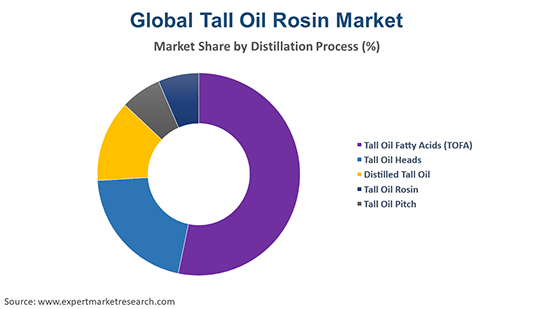
Market Breakup by Distillation Process
Key Insight: The distilled tall oil category is increasingly becoming popular in the production of chemical intermediates and alkyd resins owing to its favorable fatty acid ratio and flexibility in formulation. The tall oil heads are mainly used in flotation chemicals and low-value industrial applications where economical performance continues to matter, thereby stimulating growth in the tall oil rosin market. The demand for tall oil pitch is steadily rising in the blending of fuels, asphalts, and energy recycling processes owing to its calorific content and heaviness. On the other hand, the tall oil rosin is leading in adhesives and coatings applications, while TOFA applications are growing more rapidly in renewable fuel, lubricant, and biobased chemical manufacturing. In May 2023, Lumene introduced bio-based moisturizer jars using Finnish forest industry side streams, reducing fossil-plastic usage and improving recyclable packaging sustainability.
Market Breakup by Application
Key Insight: Demand for mining chemicals remains stable owing to its use in flotation processes that increase efficiency of mineral processing and ore separation. The demand for coatings and ink chemicals is driven by greater preference for environmentally sustainable binders that enhance the quality of their products and improve interaction with pigments. The demand for rubber chemicals continues to grow due to increased use of environmentally friendly tackifiers for production of tires and other rubber-based industrial products. The segment of fuel additives is expanding its share in the tall oil rosin market due to increased investment in renewable energy sources, while adhesives are commercially dominant due to demand for packaging products.
Market Breakup by Region
Key Insight: North America continues to be one of the largest producers of tall oil rosin because of its strong pulp and paper industry as well as existing pine chemical manufacturing facilities. Europe takes lead because of its sustainable forestry management system along with investments made in bio refineries and advanced resins. The tall oil rosin market in Asia Pacific shows the highest rate of growth owing to the region’s developments in industry manufacturing, infrastructure, and packaging. Latin America is gaining strength on account of increasing its forest industry and improving its chemical exportation for industrial purposes. The Middle East and Africa region is slowly growing on account of increasing use of chemicals in construction, industrial, and fuel additives sectors.
Read more about this report - REQUEST FREE SAMPLE COPY IN PDF
Tall Oil Rosin dominates the market due to expanding sustainable adhesive manufacturing demand
The segment of tall oil rosin continues to lead in distillation processes as more companies turn to using pine-based resin systems for adhesive and coating formulations and rubber compounding applications. Packagers and hygiene products makers are increasingly using tall oil rosin owing to its superior tack properties, renewable feedstock sources, and suitability for hot-melt adhesive technologies. Companies are opting for rosin derivatives that offer better oxidation stability for fast-moving processes.
The segment of tall oil fatty acids continues to be the fastest-growing category in the tall oil rosin market owing to their increasing adoption in biofuels, lubricants, metal-working fluids, and alkyd resins. Industrial companies are increasingly shifting from petroleum-derived intermediates to TOFA-derived formulations in order to comply with environmental regulations and carbon-reducing sourcing strategies. High demand is expected from renewable diesel refiners and industrial lubricant makers looking for biodegradable feedstock sources.
By application, the adhesives segment accounts for the dominant market share owing to renewable packaging demands
Adhesives represent the largest application segment, with tall oil rosin derivatives increasingly used to substitute petroleum-derived tackifiers for applications in packaging, hygiene, woodworking, and labeling sectors. Companies in the tall oil rosin market are now focusing on developing renewable adhesives that can help them fulfill their sustainability goals while ensuring good bonding efficiency at high-speed industrial processing. The growing use of e-commerce packaging solutions is also driving demand for pressure-sensitive adhesives made with modified rosin esters. Customized adhesives with superior thermal stability and peel resistance are also being developed.
Fuel additives emerge as the fastest-growing segment, with investments increasingly focused on the production of renewable diesel, environmentally friendly fuels, and bio-based refinery feedstocks. Tall oil derivatives are being deployed to enhance the efficiency of fuel combustion, lubricity, and stability. Energy companies and refiners are ramping up processing capacities to produce renewable fuel blending agents from forestry residues, thereby driving demand in the tall oil rosin market. Tall oil-based fuel additives are also gaining traction among marine fuel producers to address stringent standards regarding sulfur emission reduction. In June 2025, OMV Petrom signed a EUR 700 million agreement with Astra Bioplant, securing renewable feedstock supply for sustainable aviation fuel production.
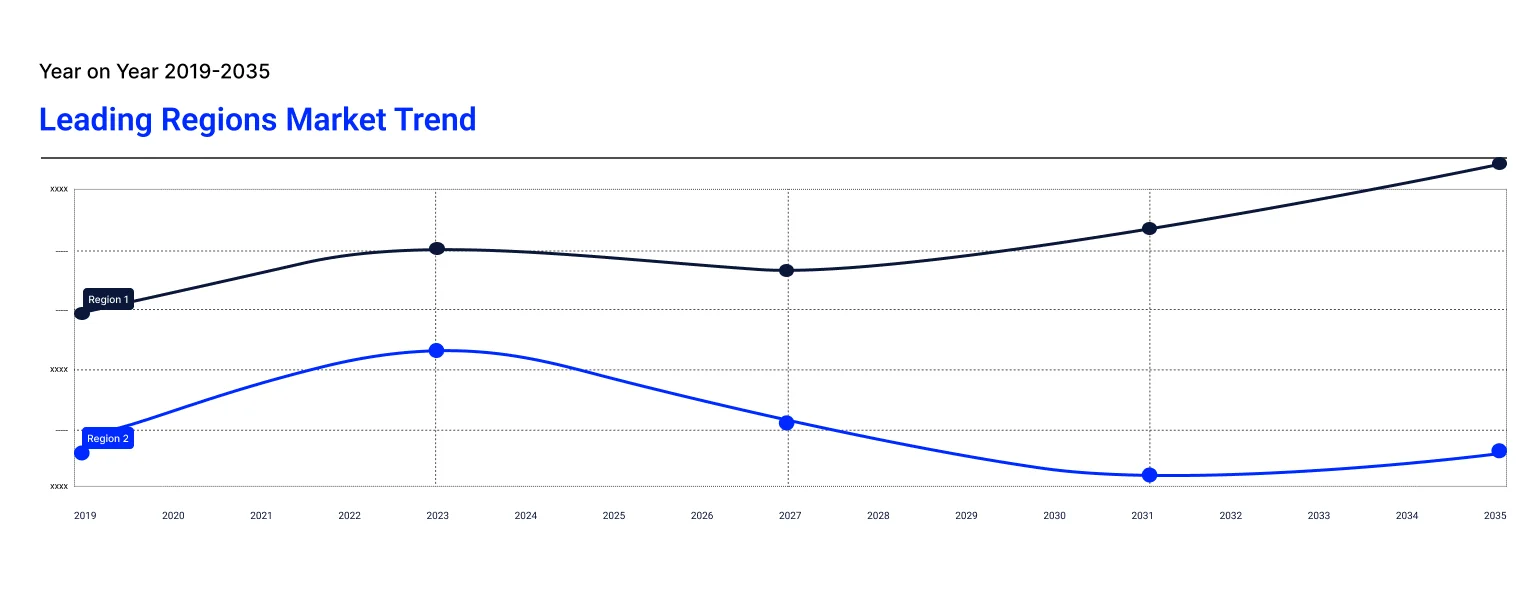
Europe clocks in the leading market position owing to advanced forestry integration and sustainable chemical manufacturing investments
The dominance of Europe in the global tall oil rosin market can be attributed to the region's highly integrated forest sector, developed kraft pulp industry, and focus on renewable chemicals manufacturing. Scandinavian nations are particularly known for their ability to produce significant amounts of crude tall oil tied to well-established pulp and paper industries. The firms operating within this region are making heavy investments in biorefineries, specialty resins, and low carbon material production. For example, in September 2025, Fintoil reported consecutive production and sales records at its Hamina biorefinery, strengthening renewable crude tall oil refining capacity.
The Asia Pacific region represents the fastest-growing tall oil rosin market owing to increased packaging manufacturing, automotive manufacturing, and industrial chemical manufacturing. Nations such as China, India, Japan, and South Korea are relying on tall oil derivatives imports to aid in adhesive and rubber compounding applications. In addition, regional players are making investments in pine chemical refinement facilities.
Competition within the global industry is increasing with a trend towards purity-focused bio-resins, integrated pulp supply chains, and custom industrial formulations. The leading tall oil rosin market players are scaling up their esterification capabilities to enhance thermal stability, lighter color options, and oxidation resistance for use in adhesives, paints, and rubbers. Several firms are pursuing renewable diesel and sustainable packaging industries with pine chemistry derivatives. Corporate investment priorities include the development of bio-refineries that provide feedstock security and minimize waste production.
Several tall oil rosin companies are directing their efforts to collaborate more closely with packaging converters, tire makers, and coating specialists for infrastructure projects to obtain contract agreements. Moreover, digital tracking systems within pulp plants are enhancing the efficiency of crude tall oil extraction. The rising demand for environmentally friendly industrial materials offers significant prospects for specialty resin providers to develop application-specific tall oil rosin variants with better regulatory standing and enhanced economic value.
Founded in 1965 and operating from its headquarters in Saint Petersburg, Russia, Ilim Group has become one of the world's largest producers of pulp and paper with excellent capacity in the production of crude tall oil used for further processing into pine chemicals. The organization serves the needs of industrial customers through its integrated forestry and pulp manufacturing business segments.
Since its establishment in 1947 and from its headquarters in Tokyo, Japan, Harima Chemicals Group, Inc. has been specialized in the provision of pine chemical technology solutions, especially rosin derivatives for electronics, inks, coatings, and adhesives with improved performance characteristics. The company is currently developing more functional rosin materials that can withstand higher temperatures.
Founded in 1964 and based in the United States, Ingevity Corporation produces specialty chemicals and performance materials from pine-based feedstock. It provides adhesive, paving, and industrial lubricant sectors with advanced rosin from tall oil technologies that are designed for sustainability and highly efficient processing.
Kraton Corporation was founded in 2009 and is headquartered in Houston, Texas, United States. It is a provider of specialty polymers and pine chemicals, which serve the adhesives, coating, and road marking industries. Its products include biobased rosin derivatives with enhanced thermal properties and oxidative stability.
Other key players in the market include Sunpine AB, among others.
*Please note that this is only a partial list; the complete list of key players is available in the full report. Additionally, the list of key players can be customized to better suit your needs.*
Unlock the latest insights with our tall oil rosin market trends 2026 report. Discover regional growth patterns, consumer preferences, and key industry players. Stay ahead of competition with trusted data and expert analysis. Download your free sample report today and drive informed decisions in the market.


Upto 15% Off
USD
$2499 $2249
$3999 $3599
$4999 $4249
$5999 $5099


*While we strive to always give you current and accurate information, the numbers depicted on the website are indicative and may differ from the actual numbers in the main report. At Expert Market Research, we aim to bring you the latest insights and trends in the market. Using our analyses and forecasts, stakeholders can understand the market dynamics, navigate challenges, and capitalize on opportunities to make data-driven strategic decisions.*
The market is projected to grow at a CAGR of 4.80% between 2026 and 2035.
Stakeholders are strengthening pulp sourcing partnerships, investing in advanced esterification technologies, expanding renewable adhesive portfolios, improving feedstock recovery systems, and developing customized bio-based formulations targeting packaging, automotive, and infrastructure industries.
The growing penetration of the major players in significant regions is the key trend guiding the growth of the overall market.
The major regions in the market are North America, Latin America, the Middle East and Africa, Europe, and the Asia Pacific.
Distilled tall oil, tall oil fatty acids (TOFA), tall oil heads, tall oil rosin, and tall oil pitch are the significant distillation processes for the product in the global tall oil rosin market.
The major applications of the product include fuel additives, mining chemicals, adhesives, coatings and inks, rubber, and emulsifier, among others.
The key players in the market include Ilim Group, Harima Chemicals Group, Inc., Ingevity Corporation, Kraton Corporation, and SunPine AB, among others.
In 2025, the market reached an approximate value of USD 1.17 Billion.
Fluctuating crude tall oil availability, forestry supply disruptions, volatile energy costs, and increasing competition from synthetic resin producers are pressuring margins while complicating long-term feedstock planning and specialty formulation investments.
Explore our key highlights of the report and gain a concise overview of key findings, trends, and actionable insights that will empower your strategic decisions.
| REPORT FEATURES | DETAILS |
| Base Year | 2025 |
| Historical Period | 2019-2025 |
| Forecast Period | 2026-2035 |
| Scope of the Report |
Historical and Forecast Trends, Industry Drivers and Constraints, Historical and Forecast Market Analysis by Segment:
|
| Breakup by Distillation Process |
|
| Breakup by Application |
|
| Breakup by Region |
|
| Market Dynamics |
|
| Competitive Landscape |
|
| Companies Covered |
|
| Report Price and Purchase Option | Explore our purchase options that are best suited to your resources and industry needs. |
| Delivery Format | Delivered as an attached PDF and Excel through email, with an option of receiving an editable PPT, according to the purchase option. |
Datasheet
One User
USD 2,499
USD 2,249
tax inclusive*
Single User License
One User
USD 3,999
USD 3,599
tax inclusive*
Five User License
Five User
USD 4,999
USD 4,249
tax inclusive*
Corporate License
Unlimited Users
USD 5,999
USD 5,099
tax inclusive*
*Please note that the prices mentioned below are starting prices for each bundle type. Kindly contact our team for further details.*
Flash Bundle
Small Business Bundle
Growth Bundle
Enterprise Bundle
*Please note that the prices mentioned below are starting prices for each bundle type. Kindly contact our team for further details.*
Flash Bundle
Number of Reports: 3
20%
tax inclusive*
Small Business Bundle
Number of Reports: 5
25%
tax inclusive*
Growth Bundle
Number of Reports: 8
30%
tax inclusive*
Enterprise Bundle
Number of Reports: 10
35%
tax inclusive*
How To Order

Select License Type
Choose the right license for your needs and access rights.

Click on ‘Buy Now’
Add the report to your cart with one click and proceed to register.

Select Mode of Payment
Choose a payment option for a secure checkout. You will be redirected accordingly.
Strategic Solutions for Informed Decision-Making
Gain insights to stay ahead and seize opportunities.

Get insights & trends for a competitive edge.

Track prices with detailed trend reports.

Analyse trade data for supply chain insights.

Leverage cost reports for smart savings

Enhance supply chain with partnerships.

Connect For More Information
Our expert team of analysts will offer full support and resolve any queries regarding the report, before and after the purchase.
Our expert team of analysts will offer full support and resolve any queries regarding the report, before and after the purchase.
We employ meticulous research methods, blending advanced analytics and expert insights to deliver accurate, actionable industry intelligence, staying ahead of competitors.
Our skilled analysts offer unparalleled competitive advantage with detailed insights on current and emerging markets, ensuring your strategic edge.
We offer an in-depth yet simplified presentation of industry insights and analysis to meet your specific requirements effectively.




