

Consumer Insights
Uncover trends and behaviors shaping consumer choices today
Procurement Insights
Optimize your sourcing strategy with key market data
Industry Stats
Stay ahead with the latest trends and market analysis.
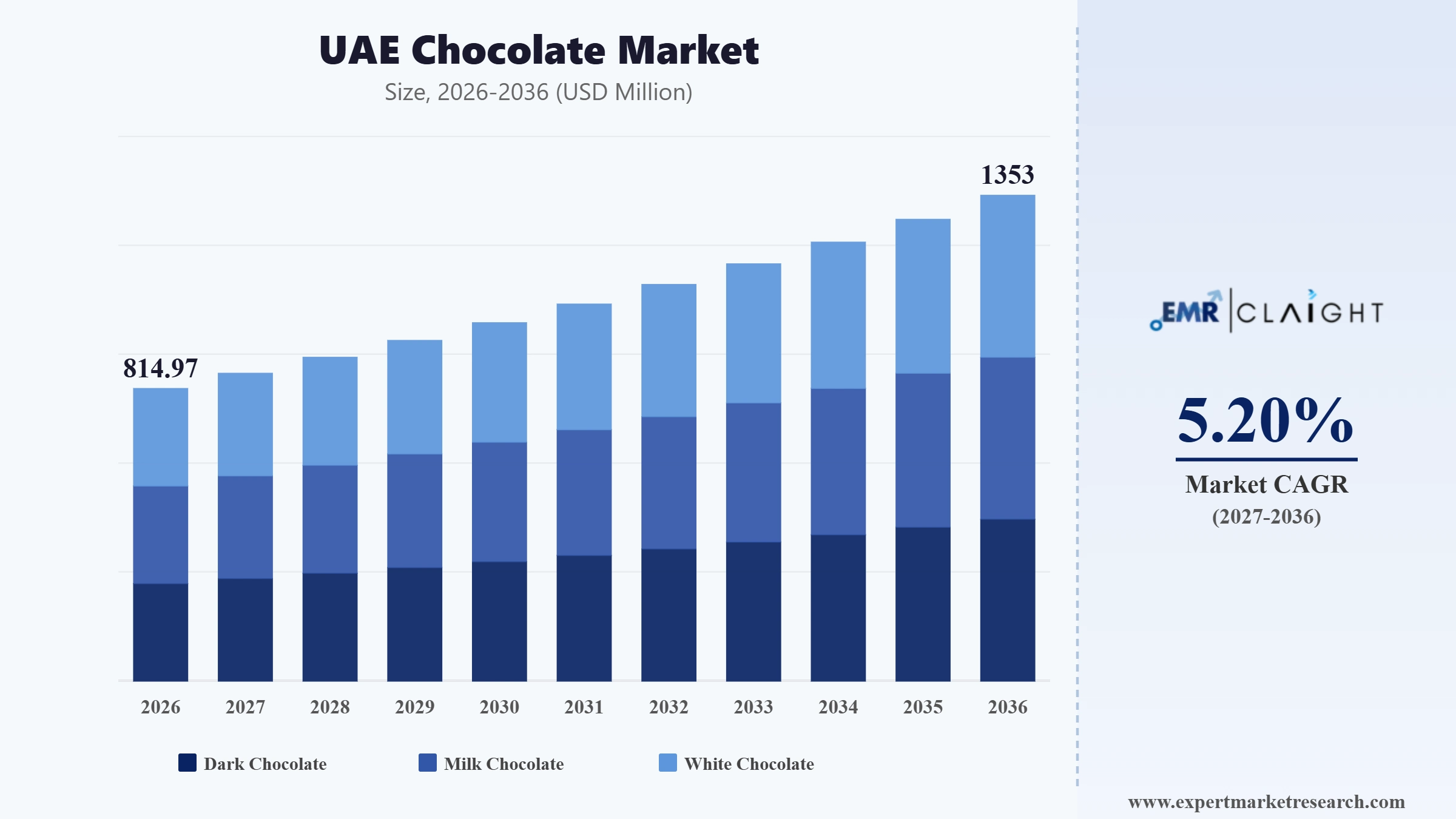
The UAE chocolate market attained a value of USD 774.69 Million in 2025 and is projected to expand at a CAGR of 5.20% through 2035. The market is further expected to achieve USD 1286.13 Million by 2035, driven by the country's strong gifting culture, rising tourism footfall, and growing consumer appetite for premium and regionally flavoured chocolate products. Growth spans dark, milk, and white chocolate across pure and compound product formats, with manufacturers increasingly competing on Middle Eastern flavour localisation, seasonal gifting assortments, and premium positioning across Dubai, Abu Dhabi, and the other Emirates.
The UAE's strong gifting culture and rising tourism footfall continue to anchor steady demand across the market, as consumers increasingly favour premium and regionally flavoured chocolate over standard mass-market alternatives. The UAE commands an estimated 28.3 percent share of the broader Middle East chocolate market as of early 2026, positioning it as the clear regional leader ahead of Saudi Arabia and Kuwait.
The UAE chocolate market is witnessing further developments as global manufacturers increasingly localise product portfolios around Middle Eastern flavour profiles, including pistachio, kunafa, dates, saffron, and camel milk, reflecting the viral success of Dubai-style chocolate formats. FIX Dessert Chocolatier, the format's originator, opened a second Dubai International Airport pop-up with Dubai Duty Free in January 2026, after the operator's 2025 results showed 719 tonnes of Dubai Chocolate products sold at its stores.
In addition, leading confectionery groups are increasingly investing in alternative cocoa sourcing and cell-cultured ingredient technology, reflecting the industry's broader response to cocoa price volatility and long-term supply chain resilience concerns. Dubai-based artisan chocolatier Mirzam won five Academy of Chocolate Awards in 2025 for its single-origin dark chocolate and vegan collections, reinforcing the growing recognition of UAE bean-to-bar specialists alongside multinational cocoa processors.
Read more about this report - REQUEST FREE SAMPLE COPY IN PDF
Chocolate ingredient suppliers continue diversifying cocoa sourcing strategies to manage climate-related supply risk and persistent price volatility affecting the broader confectionery industry worldwide. Barry Callebaut announced, in a July 2026 industry report, a long-term commercial partnership with Planet A Foods to help scale and distribute ChoViva, a cocoa-free chocolate alternative, globally through one of the industry's largest supply networks, reflecting the company's broader alternative cocoa sourcing strategy amid persistent price volatility affecting conventional cocoa farming regions. Companies can partner with cocoa-alternative technology developers to diversify sourcing risk while maintaining large-scale global distribution reach.
Global confectionery majors continue expanding beyond core chocolate categories to build diversified breakfast and snacking portfolios that capture additional consumer occasions. Ferrero completed its acquisition of WK Kellogg Co in February 2026, following the deal's original announcement in July 2025, bringing iconic cereal brands including Frosted Flakes and Froot Loops under its ownership and strengthening its North American breakfast and snacking presence alongside its existing confectionery business. Companies can pursue major cross-category acquisitions to diversify beyond core product lines and capture additional consumer occasions throughout the day.
Global confectionery brands increasingly tie flagship products to major sporting properties to build cross-generational engagement beyond traditional retail marketing channels. Nestle kicked off KitKat's first full season as the official chocolate partner of Formula 1 in January 2026, featuring the brand at twelve races across its top markets alongside a limited-edition chocolate car product and dedicated merchandise line for fans, extending the brand's reach into motorsport audiences it had not previously engaged directly. Companies can leverage major sporting partnerships to extend brand relevance beyond conventional retail advertising and reach younger, digitally engaged audiences.
Large confectionery groups continue emphasising workplace culture recognition across their Gulf operations as a signal of long-term regional commitment to employees and investors alike. Mondelez International was recognised as a Top Employer for 2025 in both the UAE and Saudi Arabia in January 2025, reflecting the company's people practices and diversity initiatives across its Gulf and developing markets operations and regional teams spanning multiple functions. Companies can pursue formal workplace culture recognition to strengthen employer branding across competitive Gulf talent markets.
Industry coverage confirmed, in May 2026, that Dubai-style chocolate innovation had moved from a viral social media moment into a scalable commercial trend adopted by both premium and mainstream players across the global confectionery industry. Ferrero and other majors increasingly used limited editions tied to major cultural and sporting events to strengthen emotional consumer connections, with the pistachio-and-kadayif flavour profile appearing across new product lines from legacy brands previously associated with more traditional chocolate formats. Companies can adapt viral flavour trends into limited-edition product lines to capture consumer attention without committing to permanent portfolio changes.
Premium chocolate manufacturers are increasingly diversifying cocoa sourcing strategies to manage climate-related supply risk and persistent price volatility affecting the broader industry worldwide. Lindt became a strategic investor in Swiss food-tech company Food Brewer in February 2025, a start-up growing cocoa cells in bioreactors to replicate conventional cocoa's taste and functionality, positioning the company ahead of competitors still reliant entirely on traditional cocoa farming supply chains facing mounting climate pressure. Companies can invest early in alternative cocoa technology start-ups to secure preferential access ahead of broader industry adoption.
Diversified confectionery groups are increasingly reinvesting profit upside directly into flagship brand building rather than prioritising short-term margin gains across their global portfolios. Mondelez outlined, in September 2026, a strategy of ploughing profits back into its most popular brands including Cadbury, Oreo, and Milka, emphasising continued investment in emerging markets as a key growth lever expected to sustain double-digit brand-level growth over the coming years. Companies can reinvest profit upside directly into flagship brands rather than diverting capital toward shorter-term financial returns.
Chocolate ingredient suppliers are navigating significant cocoa price volatility while continuing to invest in innovation to support customer manufacturers across the value chain worldwide. Barry Callebaut published its half-year results for the period ended February 2026 on April 16, 2026, reporting a 6.9 percent decline in sales volume amid softer demand and supply disruption, with new chief executive Hein Schumacher outlining plans to restore volume and strengthen the company's regional businesses. Companies can prioritise transparent reporting of near-term volume pressures while outlining concrete turnaround plans to maintain investor and customer confidence.
This Expert Market Research's Report titled "UAE Chocolate Market Report and Forecast 2026-2035" offers a detailed analysis of the market based on the following segments:
Market Breakup by Type
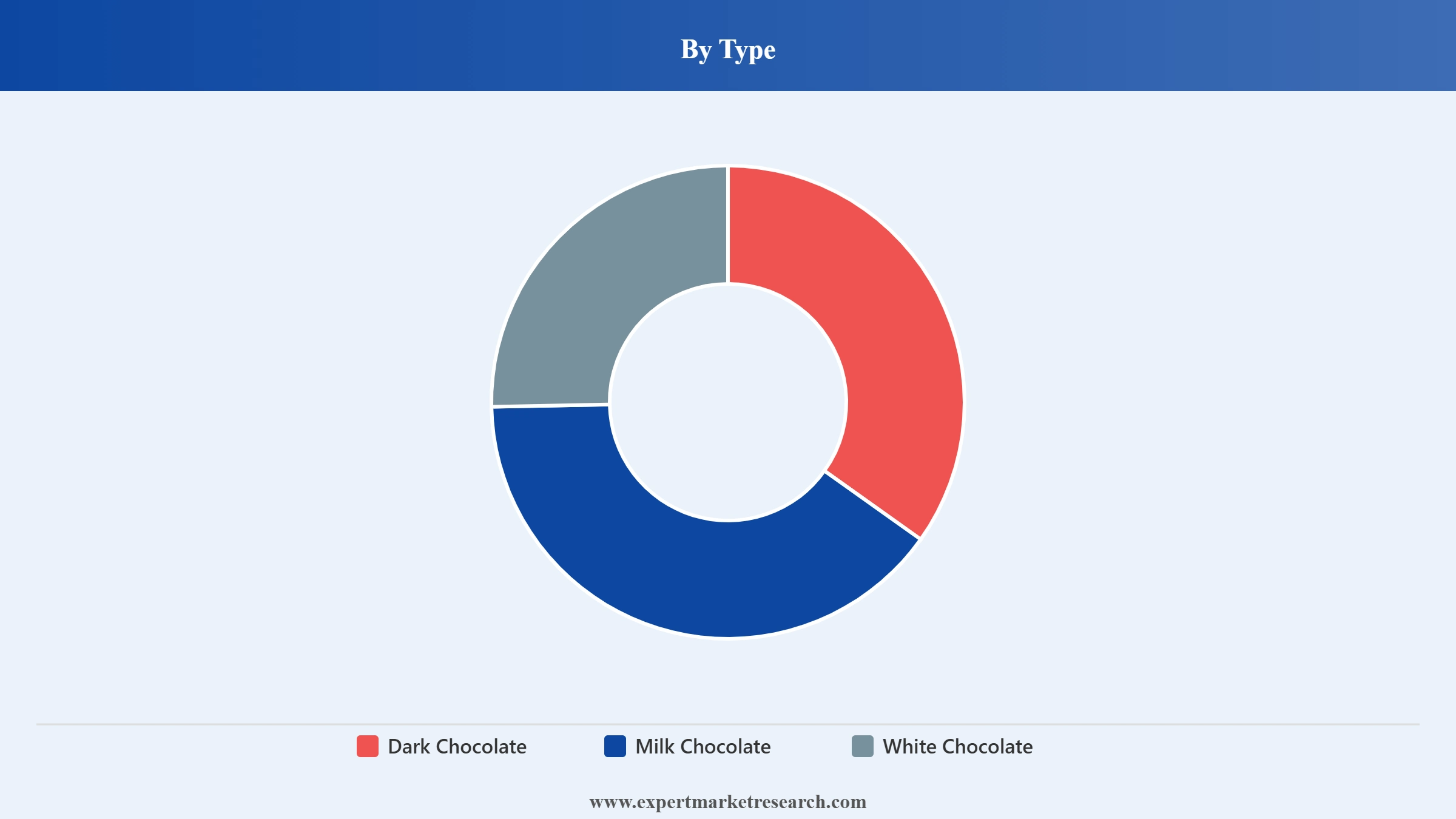
Key Insight: Milk Chocolate accounts for the largest share of the market, reflecting broad cross-generational appeal across everyday and gifting occasions throughout the year across the Emirates. Dark Chocolate is growing fastest as health-conscious consumers favour higher cocoa content, illustrated by Lindt's February 2025 investment in Food Brewer, a start-up developing cell-cultured cocoa to diversify sourcing beyond conventional farming. White Chocolate serves a smaller premium niche. Nestle's January 2026 KitKat Formula 1 partnership reinforces the brand's continued innovation investment across its milk chocolate portfolio.
Market Breakup by Product Type
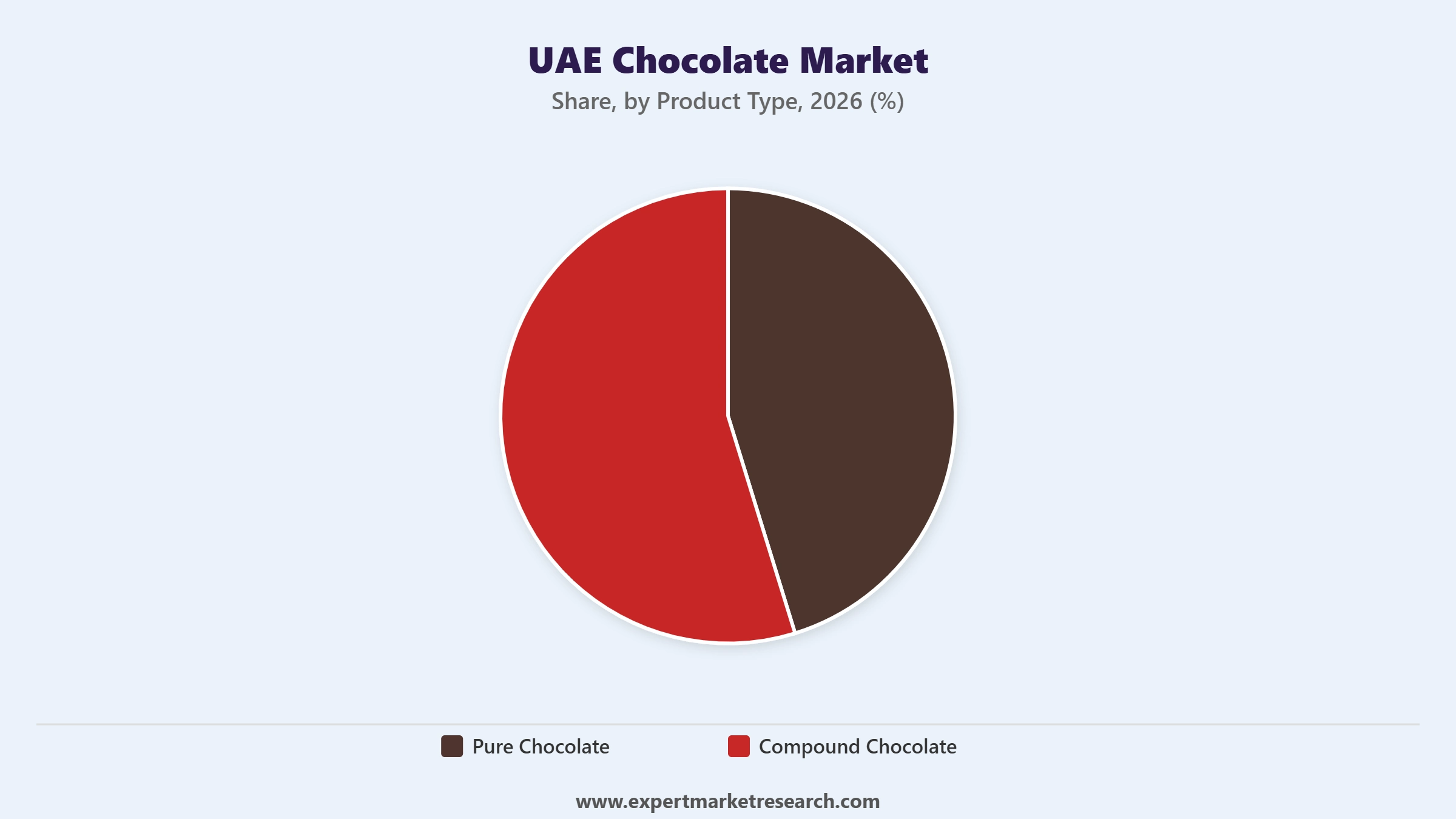
Key Insight: Pure Chocolate accounts for the largest share of the market, reflecting consumer preference for cocoa butter-based formulations associated with premium taste and quality across retail and gifting channels nationwide. Compound Chocolate serves cost-sensitive bakery and confectionery applications requiring simpler processing and lower input costs. Ferrero's February 2026 completion of its $3.1 billion WK Kellogg Co acquisition reinforces the scale of investment global confectionery majors continue to direct toward diversified growth alongside sustained pure chocolate category investment.
Market Breakup by Distribution Channel
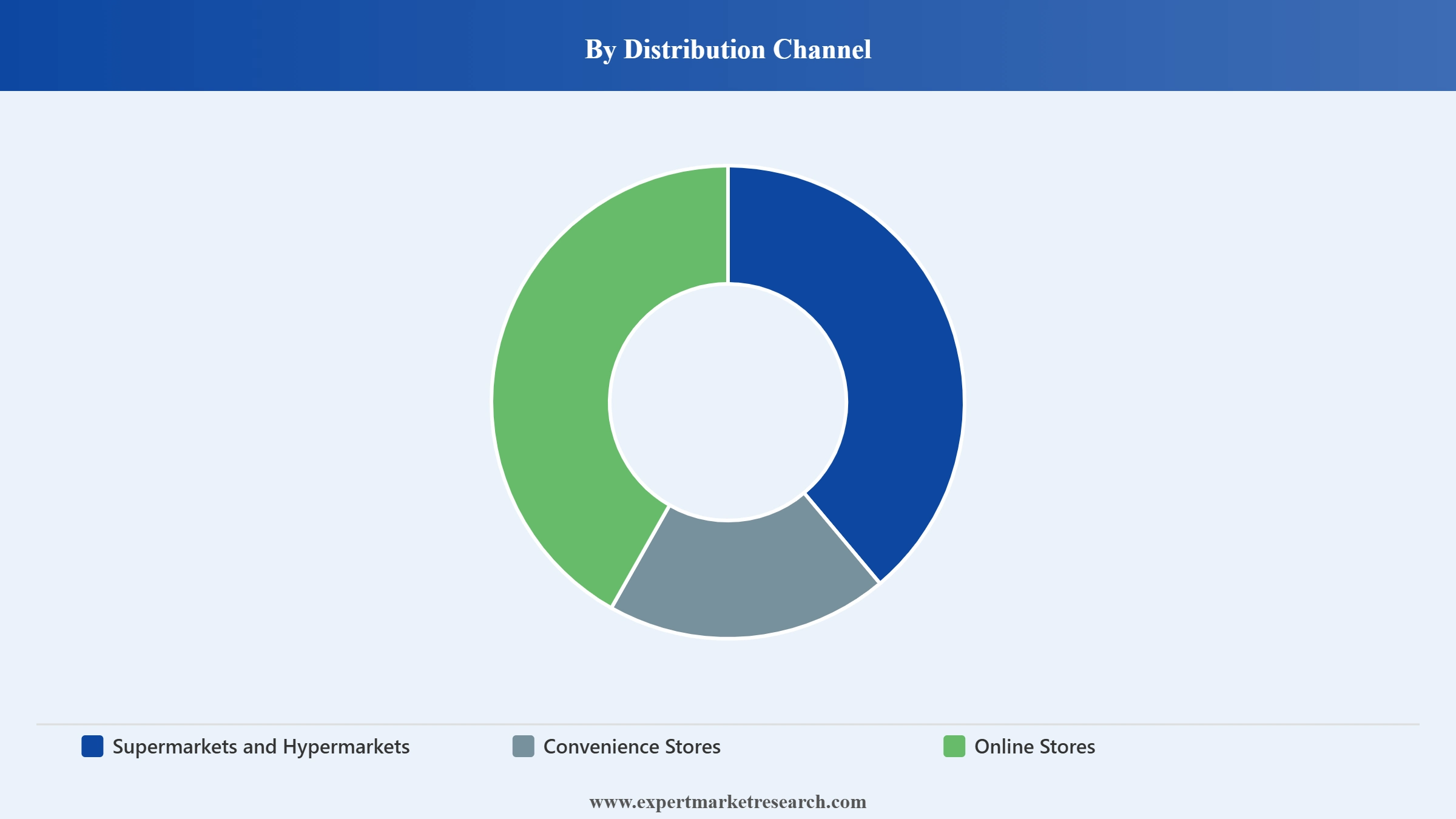
Key Insight: Supermarkets and Hypermarkets accounts for the largest share of the market, offering broad assortment across mass and premium brands through retailers such as Carrefour and Lulu Hypermarket nationwide. Convenience Stores continues to serve impulse and top-up purchases across dense urban neighbourhoods. Online Stores is growing fastest as e-commerce and quick-commerce platforms expand assortment. Mondelez's September 2026 commitment to sustained investment behind flagship brands including Cadbury and Milka reinforces demand across both traditional retail and digital channels, while Others covers hotel retail, airport duty-free, and specialty chocolatier boutiques serving premium gifting occasions.
Market Breakup by Region
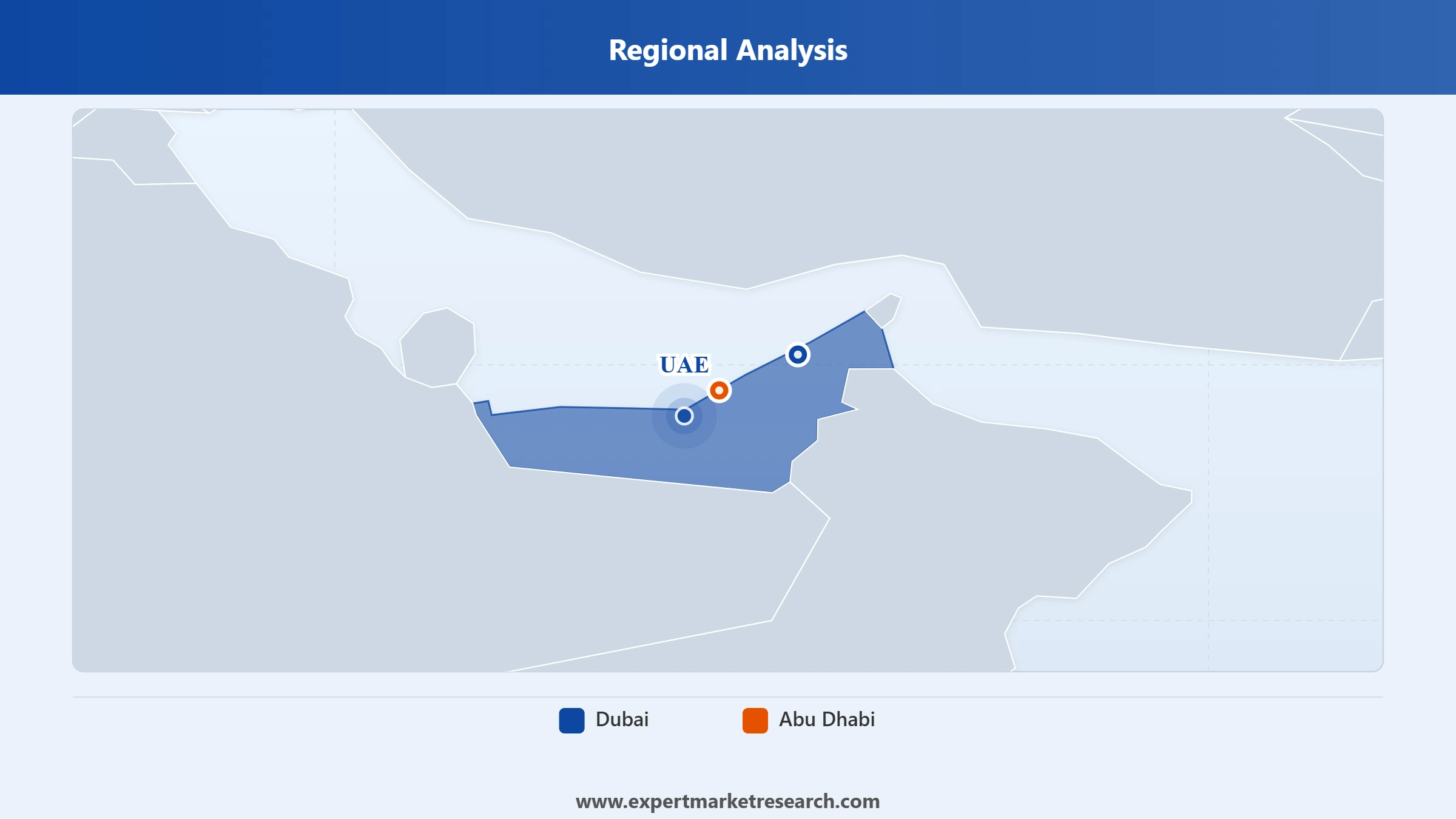
Key Insight: Dubai accounts for the largest share of the market, anchored by concentrated tourism infrastructure and status as the epicentre of the viral Dubai-style chocolate trend shaping global confectionery innovation worldwide. Others captures the remaining Northern Emirates, where smaller-scale retail and hospitality footprints sustain modest but steady chocolate demand. Abu Dhabi is growing fastest, supported by expanding hospitality investment and rising retail footfall across the emirate's growing tourism sector. Barry Callebaut's July 2026 partnership with Planet A Foods to scale ChoViva, a cocoa-free chocolate alternative, reinforces sustained manufacturer investment across the wider UAE chocolate market.
Read more about this report - REQUEST FREE SAMPLE COPY IN PDF
By type, milk chocolate leads the market while dark chocolate grows fastest given health-conscious demand
Milk Chocolate continues to account for the largest share of the market, reflecting its broad cross-generational appeal across everyday and gifting occasions throughout the year. Approximately 2.5 million Dubai-style chocolate bars were sold at UAE airports alone during a six-month window in 2025, underscoring the scale of viral-driven consumption nationwide.
Read more about this report - REQUEST FREE SAMPLE COPY IN PDF
Dark Chocolate is the fastest-growing type as health-conscious consumers favour higher cocoa content formulations across the market. Hershey began selling limited-edition Dubai-style chocolate bars through delivery platform GoPuff in December 2025, offering 10,000 pistachio and kadayif-filled bars specifically to reach younger Gen Z consumers nationwide.
By product type, pure chocolate leads the market while compound chocolate serves cost-sensitive applications
Pure Chocolate continues to account for the largest share of the market, reflecting consumer preference for cocoa butter-based formulations associated with premium taste and quality. Industry estimates published in February 2026 valued the UAE chocolate market at approximately USD566.68 million, projected to grow at a 5.47 percent CAGR through 2031.
Read more about this report - REQUEST FREE SAMPLE COPY IN PDF
Compound Chocolate continues to serve cost-sensitive bakery and confectionery applications requiring simpler processing and lower input costs nationwide. Pralines and truffles, a premium pure-chocolate format, are separately projected to grow at a 6.74 percent CAGR through 2031, widening the gap between premium and cost-sensitive product formats.
By distribution channel, supermarkets and hypermarkets lead the market while online stores grow fastest on e-commerce expansion
Supermarkets and Hypermarkets continues to account for the largest share of the market, offering broad assortment across mass-market and premium brands through established retailers. Search interest in "Dubai chocolate gift set" spiked sharply in February 2026, reflecting seasonal gifting demand concentrated around Valentine's Day and cultural celebrations nationwide.
Read more about this report - REQUEST FREE SAMPLE COPY IN PDF
Online Stores is the fastest-growing channel as quick-commerce platforms expand assortment and delivery speed across the Emirates. The Middle East and Africa chocolate market overall is projected to grow at a 7.5 percent CAGR between 2025 and 2033, among the fastest-growing regional categories worldwide.
The industry is fragmented, with UAE chocolate market companies ranging from global confectionery conglomerates to specialist regional and artisanal chocolatiers competing across type, product type, and distribution channel segments nationwide.
Competitive dynamics among UAE chocolate players are increasingly shaped by the pace of Middle Eastern flavour localisation, the depth of alternative cocoa sourcing investment, and the strength of major sporting and cultural partnerships. Manufacturers are investing in regional headquarters expansion, cocoa-free ingredient technology, and workplace culture recognition to secure long-term relationships with both retail and gifting customers.
Founded in 1866 and headquartered in Vevey, Switzerland, Nestle is the world's largest food and beverage company, operating a regional manufacturing facility in Dubai that produces KitKat chocolate for Middle East markets. Nestle's KitKat became the official chocolate partner of Formula 1 in January 2026, featuring the brand at twelve races worldwide. Nestle's combination of global manufacturing scale and major sporting partnerships differentiates its offering from smaller regional chocolatiers.
Founded in 1946 and headquartered in Luxembourg, Ferrero is a leading global confectionery manufacturer best known for Nutella, Ferrero Rocher, and Kinder, with a strong presence across the GCC region. Ferrero completed its $3.1 billion acquisition of WK Kellogg Co in February 2026, bringing iconic North American cereal brands under its ownership. Ferrero's diversification beyond core confectionery differentiates its offering from competitors focused solely on chocolate and sugar confectionery categories.
Founded in 2012 following its split from Kraft Foods and headquartered in Chicago, Illinois, United States, Mondelez is a leading global snacking company operating iconic chocolate brands including Cadbury, Milka, and Toblerone. Mondelez was recognised as a UAE and Saudi Arabia Top Employer in January 2025 for its people practices. Mondelez's sustained brand reinvestment strategy differentiates its offering from competitors prioritising short-term margin over long-term brand equity.
Founded in 1996 through the merger of Cacao Barry and Callebaut and headquartered in Zürich, Switzerland, Barry Callebaut is the world's leading manufacturer of chocolate and cocoa products, supplying multinational and artisanal customers. Barry Callebaut partnered with Planet A Foods in July 2026 to scale the cocoa-free alternative ChoViva globally. Barry Callebaut's scaled cocoa processing operations and alternative sourcing partnerships differentiate its offering from smaller, less diversified ingredient suppliers.
Other key players in the UAE chocolate market include The Hershey Company, Zokolat, IFFCO Group, Chocoladefabriken Lindt & Sprüngli AG, August Storck KG, Le Chocolat LLC, and LEE Chocolate, among others.
*Please note that this is only a partial list; the complete list of key players is available in the full report. Additionally, the list of key players can be customized to better suit your needs.*
Dubai commands the largest share of the market through its concentrated tourism infrastructure and retail density
Dubai's status as the epicentre of the viral Dubai-style chocolate trend continues to reinforce its position as the region's chocolate innovation hub, supported by extensive hotel, airport duty-free, and premium retail infrastructure that draws both residents and the emirate's high international tourist footfall throughout the year.
Read more about this report - REQUEST FREE SAMPLE COPY IN PDF
Abu Dhabi is the fastest-growing region at an estimated CAGR of 6.10%, supported by expanding tourism infrastructure and rising retail footfall across the emirate's growing hospitality and gifting sectors, where Barry Callebaut's July 2026 partnership with Planet A Foods to scale ChoViva, a cocoa-free chocolate alternative, reinforces sustained manufacturer investment across the wider Emirates. Others captures chocolate consumption across the remaining Emirates, including Sharjah, Ajman, Ras Al Khaimah, Fujairah, and Umm Al Quwain, where more limited premium retail and tourism infrastructure continues to constrain overall throughput relative to Dubai and Abu Dhabi.
Unlock the latest insights with our UAE chocolate market trends 2026 report. Discover regional growth patterns, type and distribution channel adoption trends, and key industry players. Stay ahead of competition with trusted data and expert analysis. Download your free sample report today and drive informed decisions in the market.


Upto 15% Off
USD
$2499 $2249
$3999 $3599
$4999 $4249
$5999 $5099


*While we strive to always give you current and accurate information, the numbers depicted on the website are indicative and may differ from the actual numbers in the main report. At Expert Market Research, we aim to bring you the latest insights and trends in the market. Using our analyses and forecasts, stakeholders can understand the market dynamics, navigate challenges, and capitalize on opportunities to make data-driven strategic decisions.*
In 2025, the market reached an approximate value of USD 774.69 Million.
The market is projected to grow at a CAGR of 5.20% between 2026 and 2035.
The market is estimated to witness a healthy growth in the forecast period of 2026-2035 to reach USD 1286.13 Million by 2035.
Localising product portfolios around Middle Eastern flavour profiles, investing in alternative and cell-cultured cocoa sourcing technology, and leveraging major sporting and cultural partnerships to strengthen brand engagement are among the leading strategies shaping the market.
Key trends aiding the market expansion include emerging popularity of organic, vegan, and sugar-and gluten-free chocolates in various baked goods and growing popularity of nut-infused chocolates.
Regions considered in the market are Dubai and Abu Dhabi, among others.
Based on distribution channel, the market segmentations include supermarkets and hypermarkets, convenience stores, and online stores, among others.
Dark chocolate, milk chocolate, and white chocolate are considered in the report.
The key players in the market include Nestlé S.A., Ferrero International S.A., Mondelēz International, Inc., Barry Callebaut AG, The Hershey Company, Zokolat, IFFCO Group, Chocoladefabriken Lindt & Sprüngli AG, August Storck KG, Le Chocolat LLC, and LEE Chocolate.
Manufacturers face significant cocoa price volatility, intensifying competition from viral artisanal and independent brands, and the need for constant flavour innovation to satisfy the UAE's multicultural consumer base while managing supply chain exposure to climate-related cocoa production risk.
Explore our key highlights of the report and gain a concise overview of key findings, trends, and actionable insights that will empower your strategic decisions.
| REPORT FEATURES | DETAILS |
| Base Year | 2025 |
| Historical Period | 2019-2025 |
| Forecast Period | 2026-2035 |
| Scope of the Report |
Historical and Forecast Trends, Industry Drivers and Constraints, Historical and Forecast Market Analysis by Segment:
|
| Breakup by Type |
|
| Breakup by Product Type |
|
| Breakup by Distribution Channel |
|
| Breakup by Region |
|
| Market Dynamics |
|
| Competitive Landscape |
|
| Companies Covered |
|
Datasheet
One User
USD 2,499
USD 2,249
tax inclusive*
Single User License
One User
USD 3,999
USD 3,599
tax inclusive*
Five User License
Five User
USD 4,999
USD 4,249
tax inclusive*
Corporate License
Unlimited Users
USD 5,999
USD 5,099
tax inclusive*
*Please note that the prices mentioned below are starting prices for each bundle type. Kindly contact our team for further details.*
Flash Bundle
Small Business Bundle
Growth Bundle
Enterprise Bundle
*Please note that the prices mentioned below are starting prices for each bundle type. Kindly contact our team for further details.*
Flash Bundle
Number of Reports: 3
20%
tax inclusive*
Small Business Bundle
Number of Reports: 5
25%
tax inclusive*
Growth Bundle
Number of Reports: 8
30%
tax inclusive*
Enterprise Bundle
Number of Reports: 10
35%
tax inclusive*
How To Order

Select License Type
Choose the right license for your needs and access rights.

Click on ‘Buy Now’
Add the report to your cart with one click and proceed to register.

Select Mode of Payment
Choose a payment option for a secure checkout. You will be redirected accordingly.
Strategic Solutions for Informed Decision-Making
Gain insights to stay ahead and seize opportunities.

Get insights & trends for a competitive edge.

Track prices with detailed trend reports.

Analyse trade data for supply chain insights.

Leverage cost reports for smart savings

Enhance supply chain with partnerships.

Connect For More Information
Our expert team of analysts will offer full support and resolve any queries regarding the report, before and after the purchase.
Our expert team of analysts will offer full support and resolve any queries regarding the report, before and after the purchase.
We employ meticulous research methods, blending advanced analytics and expert insights to deliver accurate, actionable industry intelligence, staying ahead of competitors.
Our skilled analysts offer unparalleled competitive advantage with detailed insights on current and emerging markets, ensuring your strategic edge.
We offer an in-depth yet simplified presentation of industry insights and analysis to meet your specific requirements effectively.




