

Consumer Insights
Uncover trends and behaviors shaping consumer choices today
Procurement Insights
Optimize your sourcing strategy with key market data
Industry Stats
Stay ahead with the latest trends and market analysis.
The United States bronze market attained a value of USD 2.75 Billion in 2025 and is projected to expand at a CAGR of 2.70% through 2035. The market is further expected to achieve USD 3.59 Billion by 2035. Defense modernization and naval fleet maintenance are lifting demand for corrosion-resistant bronze castings. Shipyards and contractors prioritize domestic alloys that meet stringent performance, traceability, and lifecycle durability requirements standards.
Bronze buyers increasingly prioritize domestic sourcing and tighter quality control for mission-critical applications. In July 2023, Wieland Group expanded its North American bronze alloy portfolio through capacity upgrades with its Farmers Copper Ltd.'s acquisition, targeting high-performance bearing and connector applications. The move supports rising domestic demand from defense, marine, and industrial automation buyers seeking consistent alloy quality. Wieland’s investment focuses on tighter compositional tolerances and faster order fulfillment, reducing reliance on imported semi-finished bronze products. This United States bronze market development reflects a broader shift among producers toward vertically integrated processing to secure supply reliability as lead times and input volatility remain elevated.
Bronze suppliers are prioritizing application-specific alloys for electrification and infrastructure renewal projects. Companies such as AMPCO METAL and Farmers Copper are promoting aluminum bronze and manganese bronze grades optimized for high-load electrical connectors, EV charging hardware, and water infrastructure components. In September 2023, AML3D Limited announced the development of a new prototype nickel-aluminum-bronze (NAB) component to support the United States Navy’s submarine program. Industry players are converging R&D and sales strategies around long-life, maintenance-friendly components that reduce costs of ownership for the utilities and the original equipment manufacturers. In addition, the specifiers of the materials are now placing a greater emphasis on traceability, local sourcing, and the compatibility of materials with recycling, which is encouraging the suppliers to transform the practices of melt and certification. These shifts are gradually shifting the focus of the United States bronze markets to a new category of alloys that will encompass the area of electrification and compliance.
The average total cost for the replacement of a plumbing system in a typical US house is USD 3,000- USD 16,000. Plumbing equipment often uses bronze, leading to market growth.
During 2023, the USA imported USD 4.68 billion tons of copper from Chile, showcasing the high demand for bronze market in the United States.
Aluminium bronze grade C95900 is expected to find increasing applications in manufacturing turbine blades and aircraft components.
Compound Annual Growth Rate
2.7%
Value in USD Billion
2026-2035
| United States Bronze Market Report Summary | Description | Value |
| Base Year | USD Billion | 2025 |
| Historical Period | USD Billion | 2019-2025 |
| Forecast Period | USD Billion | 2026-2035 |
| Market Size 2025 | USD Billion | 2.75 |
| Market Size 2035 | USD Billion | 3.59 |
| CAGR 2019-2025 | Percentage | XX% |
| CAGR 2026-2035 | Percentage | 2.70% |
| CAGR 2026-2035 - Market by Region | New England | 3.2% |
| CAGR 2026-2035 - Market by Region | Mideast | 2.9% |
| CAGR 2026-2035 - Market by Alloy Type | Aluminium | 3.0% |
| CAGR 2026-2035 - Market by Application | Transportation | 3.1% |
| 2025 Market Share by Region | Southeast | 22.3% |
USA Rare Earth, Inc. declared that it has finalized its purchase of Less Common Metals Ltd. USA Rare Earth, Inc. This development strengthens access to specialty metals, indirectly stabilizing advanced bronze alloy formulations that depend on controlled alloying inputs and domestic supply security.
Wieland takes over Morgan Bronze Products, Inc., a long-standing, family-operated producer of precision-machined finished components located in Lake Zurich, Illinois. This United States bronze market development deepens downstream machining capacity, enabling tighter tolerance bronze components for defense, industrial, and infrastructure customers demanding finished parts.
SPEE3D revealed the launch of a novel material for its proprietary Cold Spray Additive Manufacturing (CSAM) technology. The firm has created a Nickel Aluminum Bronze Expeditionary (NAB Expeditionary) material that can be commercially purchased, intended for field deployment and allowing for parts production within hours. This positions bronze alloys for rapid, on-site part production, opening new defense and maintenance use cases beyond traditional foundry timelines.
Wieland revealed its intention to execute a significant USD 500 million capital investment to upgrade, enlarge, and modernize its facility in East Alton, Illinois. Wieland’s East Alton investment upgrades melting, rolling, and recycling capabilities, directly strengthening United States bronze supply reliability, sustainability credentials, and volume readiness for large-scale industrial and public-sector procurement.
United States defense procurement remains a core demand pillar for bronze alloys, especially aluminum bronze used in naval valves, propellers, and bearings. The United States Department of Defense FY2024 shipbuilding budget exceeded USD 32 billion, supporting fleet expansion and maintenance. Bronze suppliers are aligning production with military specifications such as MIL-B-24480, emphasizing corrosion resistance in saltwater exposure. In August 2025, Gabler and FLANQ entered into a strategic partnership to co-develop a new class of USVs specifically designed for submarine TTL. These investments favor domestic bronze producers, as defense contracts increasingly restrict foreign-sourced copper alloys to secure supply resilience, boosting demand in the United States bronze market.
Infrastructure rehabilitation is reinforcing demand for bronze components in water treatment, rail, and transit projects. The United States Environmental Protection Agency estimates that over USD 625 billion is required for drinking water infrastructure upgrades throughout the nation. As a response, Neptune Technology Group Inc. offers bronze meters that meet the future lead-free requirements of the Safe Drinking Water Act (SDWA) as well as planned revisions to National Sanitary Foundation/American National Standards Institute (NSF/ANSI) standards regarding lead in drinking water system components. Bronze valves, pumps, and fittings are preferred for longevity and antimicrobial properties, creating new United States bronze market opportunities.
Grid modernization and electrification initiatives are expanding demand for bronze in connectors, switchgear, and grounding components. The Department of Energy allocated over USD 10.5 billion in 2023 for grid resilience programs. Phosphor bronze and silicon bronze are increasingly specified for electrical reliability under thermal cycling. In October 2025, Aligned and Calibrant unveiled a large-scale battery system that enables Aligned’s Pacific Northwest facility to access grid power years early, providing a scalable and sustainable solution to data center power constraints. Manufacturers are developing tighter-grain alloys to reduce resistance losses in high-load applications. EV charging infrastructure projects are also adopting bronze connectors for durability and fire resistance, accelerating the United States bronze market scope.
Rising import uncertainty and trade scrutiny are pushing OEMs toward domestically produced bronze alloys. Metal buyers are reducing exposure to overseas semi-finished bronze products due to tariff risks and logistics volatility. In response, domestic mills and foundries are expanding casting and extrusion capacity. For example, in October 2025, Metal Powder Works announced the addition of two powders to its metal powder portfolio including bronze and naval brass. The new powders are intended for use with Cold Spray Additive Manufacturing (CSAM), Powder Bed Fusion (PBF), Directed Energy Deposition (DED), and Binder Jetting (BJT). This United States bronze market development supports capital investment in melting, continuous casting, and finishing operations aimed at industrial and defense customers.
Sustainability pressures are reshaping bronze production strategies across the United States. Manufacturers are launching recycled-content bronze alloys to meet ESG procurement requirements from utilities and public agencies. Several foundries are investing in induction furnaces and emissions monitoring to cut energy intensity. In June 2025, RUSAL officially launched commercial production of its new Primary Equivalent Foundry Alloys (PEFA), tailored for the automotive industry. These innovative alloys incorporate up to 40% post-consumer bronze and aluminum scrap, marking a significant step towards sustainable manufacturing in the United States bronze market.
The EMR’s report titled “United States Bronze Market Report and Forecast 2026-2035” offers a detailed analysis of the market based on the following segments:
Market Breakup by Alloy Type
Key Insight: Alloy selection in the market reflects application-driven procurement rather than cost alone. Aluminum bronze leads due to durability and defense alignment. According to the United States bronze market analysis, copper alloy consumption in the country exceeded 1.8 million metric tons in 2024, with bronze grades gaining share due to superior wear resistance and corrosion stability. Phosphor bronze gains traction from electrification and precision needs, while silicon bronze supports architectural and marine fabrication. This segmentation structure rewards suppliers with metallurgical expertise, certification depth, and application-level sales engagement.
Market Breakup by Application
Key Insight: Industrial equipment dominates the United States bronze market due to continuous wear exposure. Federal infrastructure funding continues to translate into downstream metals demand, with the American Society of Civil Engineers estimating a USD 2.6 trillion United States infrastructure investment gap through 2030. Transportation grows through fleet upgrades and mobility infrastructure, meanwhile architectural uses favor aesthetics and corrosion resistance. Buyers select bronze based on operational stability rather than novelty.
Market Breakup by End Use
Key Insight: Manufacturing leads the United States bronze market revenue because production facilities require continuous replacement of wear components such as bearings, bushings, and guides. These parts face constant friction and load cycles, making bronze a preferred material for reliability. Construction demand is expanding alongside infrastructure renewal, where bronze fittings and hardware are specified for corrosion resistance and long service life. Mining applications rely on bronze for abrasion tolerance in harsh operating environments where equipment failure is costly. Other end uses remain smaller but highly specialized, selecting bronze for specific mechanical or chemical performance traits.
Market Breakup by Region
Key Insight: Regional demand patterns in the United States bronze market dynamics reflect industrial concentration and investment flows. The market in the Great Lakes is sustained by legacy manufacturing business, while the Southeast region is driven by new manufacturing facilities. The Far West is engaged in funding infrastructure projects and marine requirements. The continuous growth in the Mideast and New England is sustained by maintenance-based requirements. The geographic break-up helps suppliers by allowing them to develop regional-based inventory and regional-based capabilities. The bronze business is driven by manufacturing footprint rather than simply by population.
| CAGR 2026-2035 - Market by | Region |
| New England | 3.2% |
| Mideast | 2.9% |
| Great Lakes | XX% |
| Plains | XX% |
| Southeast | XX% |
| Others | XX% |
Aluminum bronze dominates the market due to defense durability, corrosion resistance
Aluminum bronze holds the dominant share in the United States bronze market due to its superior strength, corrosion resistance, and load-bearing capability. Manufacturers supply aluminum bronze extensively to naval shipyards, defense contractors, and heavy industrial OEMs. The alloy performs well in seawater, chemical exposure, and high-friction environments, making it ideal for bearings, valves, propellers, and pump components. Defense-focused buyers favor aluminum bronze because it meets stringent military specifications while offering long service life. In October 2025, NioCorp Developments Ltd. and IBC Advanced Alloys announced the successful production of a 0.2% aluminum-scandium (“Al-Sc”) alloy at IBC’s integrated foundry in Franklin, Indiana.
Phosphor bronze is also expanding its share in the United States bronze market due to rising electrification and precision manufacturing demand. Suppliers are promoting phosphor bronze for electrical connectors, springs, switches, and wear-resistant components requiring high fatigue strength. The alloy’s fine grain structure and conductivity performance support applications in EV charging hardware, grid connectors, and industrial electronics.
Industrial applications drive maximum demand in the market due to equipment reliability and wear resistance
Industrial applications represent the dominant category driving bronze demand in the United States. Bronze components are widely used in bearings, bushings, gears, valves, and pump assemblies operating under continuous load. Manufacturers prefer bronze for its low friction properties and resistance to galling in high-stress machinery. Industrial OEMs prioritize uptime, making bronze an essential material for maintenance-heavy environments. Suppliers align product offerings with standardized industrial dimensions to support aftermarket replacement cycles.
Transportation is experiencing massive growth in the United States bronze market as fleet modernization accelerates. Rail systems, defense vehicles, and marine transport increasingly specify bronze components for vibration resistance and longevity. Transit authorities and logistics operators seek materials that reduce maintenance frequency. A EUR 1 million investment in new machinery and R&D development work on a new material, announced in October 2025, is set to give Alucast a lightweight advantage in the rail, aerospace and defense sectors.
Manufacturing largely boosts the market growth due to continuous equipment wear replacement
Manufacturing represents the dominant end use category across the market, driven by constant equipment wear and replacement cycles. Bronze components are integral to production machinery across automotive, machinery, food processing, and chemical plants. Manufacturers depend on bronze for bearings, guides, and moving parts exposed to friction and thermal stress. Factories prioritize materials that minimize downtime and reduce lubrication complexity. In October 2023, 6K Additive and Metal Powder Works announced a strategic partnership to bring pure copper, copper alloys, and bronze powder to the market.
As per the United States bronze market report, the construction industry is growing rapidly as infrastructure rehabilitation expands across the nation. Bronze is increasingly specified in structural fittings, architectural hardware, and water system components. Contractors favor bronze for corrosion resistance and long service life in exposed environments. Municipal and commercial projects prefer materials that reduce future maintenance costs. Bronze suppliers in the country support construction demand through standardized castings and custom fabrication services.
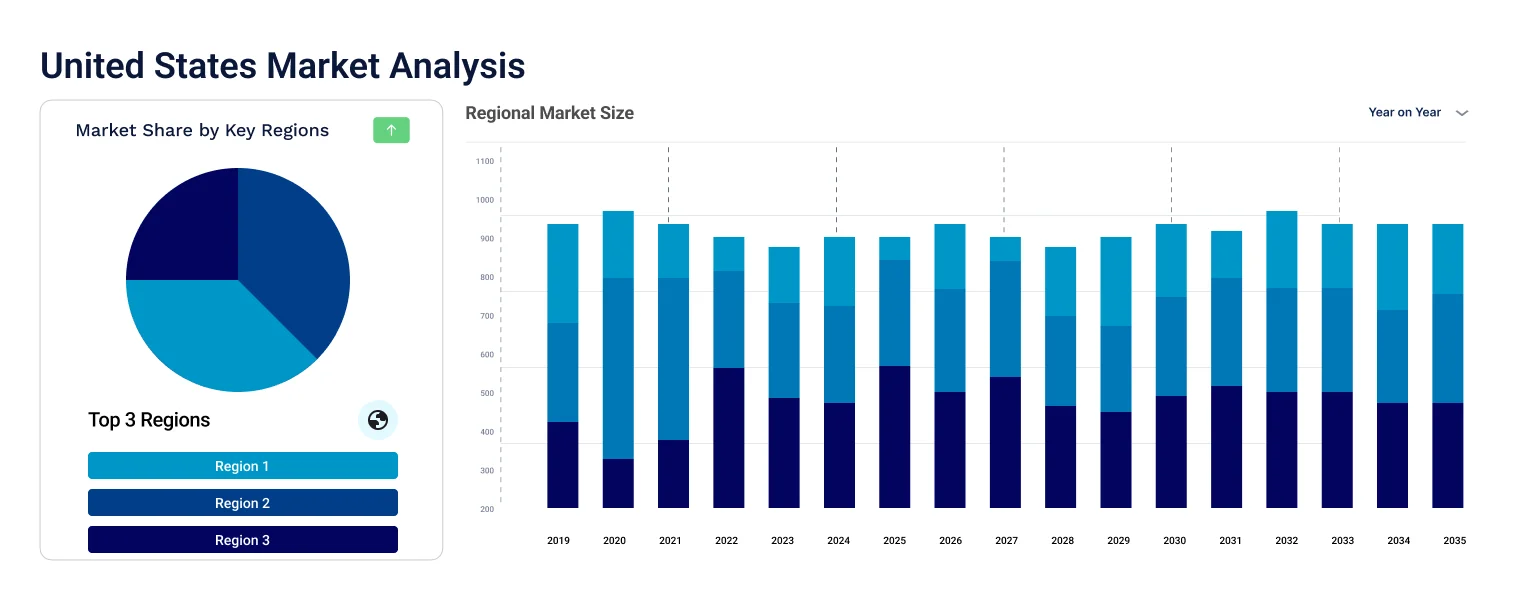
Great Lakes captures the leading position in the market due to manufacturing density and metals processing clusters
The Great Lakes region dominates the United States bronze market due to its dense manufacturing and metal processing base. States in this region host automotive, machinery, and industrial equipment producers with steady bronze consumption. Proximity to foundries, distributors, and machining hubs supports efficient supply chains. Bronze demand here is driven by equipment maintenance, component fabrication, and OEM production. In October 2025, Lebronze Alloys pursued its growth strategy with the acquisition of Manufacture pour l’Extrusion d’Alliages (MEA), a French leader in copper and copper alloys profile extrusion. The Great Lakes’ industrial heritage sustains long-term bronze demand across manufacturing and infrastructure-linked applications, making it the most stable regional market segment in the United States.
| 2025 Market Share by | Region |
| Southeast | 22.3% |
| New England | XX% |
| Mideast | XX% |
| Great Lakes | XX% |
| Plains | XX% |
| Others | XX% |
The Southeast region represents the fastest-growing regional market for bronze as industrial migration accelerates. Manufacturing plants, defense facilities, and infrastructure projects are expanding across southern states. Bronze demand is rising in transportation equipment, utilities, and construction hardware. Suppliers are strengthening regional distribution to reduce delivery times. Workforce growth and facility investments support sustained materials consumption. Bronze producers view the Southeast as an expansion zone for fabrication partnerships and customer proximity.
Leading United States bronze companies are prioritizing defense, infrastructure, and electrification-linked bronze grades rather than commodity volumes. Investments are flowing into continuous casting, tighter melt control, and recycled-content alloys to meet procurement expectations from OEMs and public agencies.
United States bronze market players are also strengthening downstream services such as precision machining and rapid customization, which improves customer retention. Opportunities exist in low-lead and lead-free bronze for water systems, as well as high-fatigue alloys for grid hardware and EV infrastructure. Players with strong certification portfolios and domestic footprints are gaining preference as buyers reduce import exposure. The competitive edge increasingly comes from metallurgical consistency, shorter lead times, and application engineering support rather than pricing alone.
Mueller Industries Inc was established in 1917 and is headquartered in Memphis, Tennessee, United States. The company serves the United States bronze market through engineered copper alloy products for plumbing, industrial, and infrastructure applications. Mueller focuses on low-lead bronze fittings aligned with water system regulations. Its strength lies in vertically integrated manufacturing and broad distribution reach.
National Bronze Manufacturing Co, founded in 1911 and headquartered in Michigan, United States, specializes in bronze bearings, bushings, and wear components for industrial machinery. It caters to United States-based manufacturers seeking application-specific bronze solutions. National Bronze emphasizes custom casting, machining precision, and fast turnaround.
Wieland-Werke AG was founded in 1820 and is headquartered in Ulm, Germany, with significant United States operations. The company supplies advanced bronze and copper alloys to defense, electrical, and industrial customers. Wieland focuses on high-performance aluminum bronze and phosphor bronze grades with strict compositional control.
MetalTek International was established in 1945 and is headquartered in Waukesha, Wisconsin, United States. The company serves the United States bronze market with engineered castings for defense, marine, and industrial applications. MetalTek emphasizes complex alloy casting, including aluminum bronze for high-stress environments. Its strategy centers on technical collaboration with customers during design stages.
*Please note that this is only a partial list; the complete list of key players is available in the full report. Additionally, the list of key players can be customized to better suit your needs.*
Other key players in the market include Advance Bronze Inc., PMX Industries, Inc., ANCHOR BRONZE & Metals, Inc., All Metal Sales, Inc., Aviva Metals, and Colonial Bronze, among others.
Unlock the latest insights with our United States bronze market trends 2026 report. Discover regional growth patterns, consumer preferences, and key industry players. Stay ahead of competition with trusted data and expert analysis. Download your free sample report today and drive informed decisions in the market.


Upto 15% Off
USD
$3999 $3599
$2499 $2249
$4999 $4249
$5999 $5099


*While we strive to always give you current and accurate information, the numbers depicted on the website are indicative and may differ from the actual numbers in the main report. At Expert Market Research, we aim to bring you the latest insights and trends in the market. Using our analyses and forecasts, stakeholders can understand the market dynamics, navigate challenges, and capitalize on opportunities to make data-driven strategic decisions.*
In 2025, the market reached an approximate value of USD 2.75 Billion.
The market is projected to grow at a CAGR of 2.70% between 2026 and 2035.
The market is estimated to witness healthy growth in the forecast period of 2026-2035 to reach a value of around USD 3.59 Billion by 2035.
Key trends aiding the market expansion are rising electrification of automotives and consumer electronics, growth of industries such as construction, agriculture, and shipbuilding, and increasing automotive sales.
The different applications of bronze include architectural parts, musical instruments, transportation, and industrial, among others.
The different types of alloys in the market are aluminium, phosphor, and silicon.
The key players in the market include Mueller Industries Inc, National Bronze Manufacturing Co., Wieland-Werke AG, MetalTek International, Advance Bronze Inc., PMX Industries, Inc., ANCHOR BRONZE & Metals, Inc., All Metal Sales, Inc., Aviva Metals, and Colonial Bronze, among others.
The different regions covered in the market report are New England, Mideast, Great Lakes, Plains, Southeast, Southwest, Rocky Mountain, and Far West.
Companies face volatile copper pricing, skilled labor shortages, strict compliance requirements, and rising customer expectations for traceability, sustainability disclosures, and shorter lead times across domestic bronze supply chains.
Stakeholders are investing in alloy specialization, strengthening domestic capacity, expanding recycling use, enhancing machining services, and aligning product development closely with defense, infrastructure, and electrification procurement pipelines.
Explore our key highlights of the report and gain a concise overview of key findings, trends, and actionable insights that will empower your strategic decisions.
| REPORT FEATURES | DETAILS |
| Base Year | 2025 |
| Historical Period | 2019-2025 |
| Forecast Period | 2026-2035 |
| Scope of the Report |
Historical and Forecast Trends, Industry Drivers and Constraints, Historical and Forecast Market Analysis by Segment:
|
| Breakup by Alloy Type |
|
| Breakup by Application |
|
| Breakup by End Use |
|
| Breakup by Region |
|
| Market Dynamics |
|
| Competitive Landscape |
|
| Companies Covered |
|
Single User License
One User
USD 3,999
USD 3,599
tax inclusive*
Datasheet
One User
USD 2,499
USD 2,249
tax inclusive*
Five User License
Five User
USD 4,999
USD 4,249
tax inclusive*
Corporate License
Unlimited Users
USD 5,999
USD 5,099
tax inclusive*
*Please note that the prices mentioned below are starting prices for each bundle type. Kindly contact our team for further details.*
Flash Bundle
Small Business Bundle
Growth Bundle
Enterprise Bundle
*Please note that the prices mentioned below are starting prices for each bundle type. Kindly contact our team for further details.*
Flash Bundle
Number of Reports: 3
20%
tax inclusive*
Small Business Bundle
Number of Reports: 5
25%
tax inclusive*
Growth Bundle
Number of Reports: 8
30%
tax inclusive*
Enterprise Bundle
Number of Reports: 10
35%
tax inclusive*
How To Order

Select License Type
Choose the right license for your needs and access rights.

Click on ‘Buy Now’
Add the report to your cart with one click and proceed to register.

Select Mode of Payment
Choose a payment option for a secure checkout. You will be redirected accordingly.
Strategic Solutions for Informed Decision-Making
Gain insights to stay ahead and seize opportunities.

Get insights & trends for a competitive edge.

Track prices with detailed trend reports.

Analyse trade data for supply chain insights.

Leverage cost reports for smart savings

Enhance supply chain with partnerships.

Connect For More Information
Our expert team of analysts will offer full support and resolve any queries regarding the report, before and after the purchase.
Our expert team of analysts will offer full support and resolve any queries regarding the report, before and after the purchase.
We employ meticulous research methods, blending advanced analytics and expert insights to deliver accurate, actionable industry intelligence, staying ahead of competitors.
Our skilled analysts offer unparalleled competitive advantage with detailed insights on current and emerging markets, ensuring your strategic edge.
We offer an in-depth yet simplified presentation of industry insights and analysis to meet your specific requirements effectively.




