

Consumer Insights
Uncover trends and behaviors shaping consumer choices today
Procurement Insights
Optimize your sourcing strategy with key market data
Industry Stats
Stay ahead with the latest trends and market analysis.
The United States education market size attained a value of USD 1.30 Trillion in 2025 and is projected to expand at a CAGR of 4.30% through 2035. The U.S. education market is further expected to achieve USD 1.98 Trillion by 2035. Rising federal and state funding for workforce-aligned credentials is accelerating vendor revenues, as employers co-invest in short-cycle programs tied to healthcare, technology, and defense skill shortages across the nation.
Immigration-led population growth in southern states is compelling districts to adopt scalable digital curricula faster than physical capacity allows. Moreover, corporate tax incentives tied to domestic manufacturing are increasing employer-sponsored training budgets, accelerating the continuous growth of the United States education market. Companies are purchasing customized certification tracks directly from providers, bypassing universities. These factors expand addressable revenue pools for edtech vendors while reducing reliance on traditional tuition cycles and public workforce agencies.
The market is being reshaped by platform-led product innovation rather than institutional expansion alone. For example, in September 2024, Coursera introduced Coursera Coach, an AI-driven learning assistant embedded across enterprise and campus offerings. The launch reflects how providers are productizing personalization at scale. This United States education market trend has become critical for suppliers because corporations now fund reskilling contracts directly, shifting budget ownership away from traditional academic procurement cycles and toward measurable workforce outcomes.
Structural change in the United States education market is coming from product bundling across content, assessment, and credentialing layers. Publishers and edtech vendors are packaging degrees, certificates, and analytics into subscription models. Companies like Pearson are accelerating digital-first strategy by prioritizing skills validation tools tied to employer frameworks. For example, EchoExam launched by Echo360 in August 2023, is the most comprehensive SaaS assessment platform for education and business. Meanwhile, university systems are licensing courseware platforms to stabilize revenues amid enrollment volatility. These moves allow suppliers to lock multiyear contracts, defend pricing, and reposition education products as operating infrastructure.
Compound Annual Growth Rate
4.3%
Value in USD Trillion
2026-2035
Mantra Health revealed the introduction of Beacon, the initial early warning and intelligence platform aimed at enhancing student mental health and well-being. Such developments in the United States education market signal opportunities for edtech and analytics firms to co-develop retention tools, mental health dashboards, and predictive student success modules for universities.
New York University (NYU) and the State University of New York (SUNY) revealed the establishment of The Higher Education Design Lab, aimed at assessing and advancing innovations in higher education. Leveraging this opportunity, education technology providers can pilot experimental platforms, co-fund applied research, and validate scalable innovations in higher education systems.
Prairie View A&M University expanded their training modules for teachers to assist the youngest students in Texas. Such developments in the United States education market open funding and partnership potential for content developers and learning platform providers focused on infant education, special needs training, and early intervention digital tools.
OpenAI formed agreements with numerous United States universities, distributing more than 700,000 ChatGPT licenses. Such large-scale licensing accelerates demand for AI-integrated learning platforms, enabling competitors to build complementary assessment, tutoring, and curriculum-aligned AI education solutions.
AI-driven learning platforms are moving from pilots into funded procurement cycles across the market. Vendors like Pearson and McGraw Hill are embedding AI study assistants in core courseware. DataCamp announced it will provide free AI upskilling to one million teachers and students in January 2026. Districts justify spending using measurable score improvements and teacher workload reduction. Higher education systems are also licensing AI copilots for advising and retention analytics. This trend in the United States education market supports premium pricing models and long-term contracts, particularly where platforms integrate compliance reporting, accessibility standards, and secure data governance required by public institutions.
Workforce-aligned credential programs are reshaping product strategy in the education market. Federal funding under the Workforce Innovation and Opportunity Act continues to favor short-cycle certifications. Providers such as Coursera and edX are expanding employer-backed certificate portfolios. State governments are partnering with vendors to standardize credentials across community colleges, accelerating the overall United States education market value. In response, in January 2026, CeriFi launched the Small Business Wealth Adviso certificate program in partnership with Wake Forest University.
Digital curriculum adoption is accelerating due to enrollment volatility and regional teacher shortages. Southern and western states report sustained population growth. Districts are deploying cloud-based curriculum platforms to manage scale. Subscription-based licensing is replacing textbook purchasing cycles, boosting the United States education market expansion opportunities. In February 2025, Pearson and Amazon Web Services announced an expanded collaboration to accelerate AI-powered learning globally, enhancing learner experiences and advancing intelligent, scalable education solutions across Pearson’s products and services.
Defense, healthcare, and public safety training demand is expanding education technology revenues. Federal agencies are increasingly mandating credentialed training programs to meet compliance and operational standards, which is raising entry barriers for suppliers. Pricing structures now reflect regulatory complexity and certification requirements rather than pure volume delivery. This environment limits competition, allowing qualified private providers to secure stable demand. This segment drives stable cash flows, accelerating the overall United States education market revenue growth. It also pushes innovation in virtual labs, assessment integrity, and data security frameworks aligned with federal procurement standards. For example, in September 2025, The Pentagon held its first “Top Drone” school at Camp Atterbury, training military, industry and academic operators in threat-representative drone missions and evaluating prototype UAS capabilities under real-world conditions.
Hybrid campus infrastructure investments are influencing supplier roadmaps across the market. Universities are modernizing classrooms to support simultaneous online and in-person delivery. Federal infrastructure and broadband funding support this United States education market trend. Vendors supplying learning management systems, lecture capture, and analytics are winning bundled contracts. Providers offering end-to-end ecosystems secure higher contract values. It also encourages acquisitions as firms expand capabilities through platform consolidation strategies driven by competitive procurement cycles and long-term digital transformation mandates nationally. In January 2026, Education company EAB announced that it has acquired Hybrid, a United Kingdom-based leader in digital marketing for higher education, from private equity investor LDC.

Read more about this report - REQUEST FREE SAMPLE COPY IN PDF
The EMR’s report titled “United States Education Market Report and Forecast 2026-2035” offers a detailed analysis of the market based on the following segments:
Market Breakup by Component
Key Insight: Component segmentation, considered in the United States education market report, reflects how education buyers prioritize reliability over experimentation. Software anchors delivery by standardizing content, assessment, and credentials. Hardware supports access and classroom execution but remains budget-constrained. Services are becoming essential as institutions outsource complexity.
Market Breakup by Deployment Mode
Key Insight: Cloud platforms account for the larger share of the United States education market because they reduce infrastructure burden and accelerate rollout. They support hybrid delivery and analytics at scale. On-premises deployment remains relevant where data control is critical. Defense, healthcare, and research institutions favor localized environments. Some districts adopt hybrid models to balance flexibility with compliance. Vendors now design modular architectures that support both modes.
Market Breakup by Content
Key Insight: Text-based content remains foundational for assessments and reference, accelerating demand in the United States education market. Video dominates instruction, simulations, and demonstrations, while audio content is expanding through podcasts and microlearning. About 98% of universities and four-year colleges in the nation offer online courses or programs. Vendors differentiate through content packaging and delivery efficiency. Buyers value flexibility across formats to support diverse learners. Content decisions increasingly influence platform selection. Providers aligning content strategy with learning outcomes outperform competitors.
Market Breakup by Sector
Key Insight: Sector dynamics in the United States education market reflect institutional scale and instructional complexity. K-12 dominates through volume-driven adoption and standardized delivery requirements. Higher education accelerates through flexibility needs, digital transformation goals, and competitive positioning. Preschool adoption remains selective, focusing on simplicity and engagement. Vendors align sector strategies with procurement structures, educator autonomy, and content sophistication.
Market Breakup by End Use
Key Insight: Business users prioritize structure, accountability, and measurable outcomes. Consumers seek flexibility, accessibility, and self-paced exploration, according to the United States education market report. As per government reports, total undergraduate enrollment is projected to increase by 9% (from 15.4 million to 16.8 million students) between 2021 and 2031. Vendors tailor engagement models, pricing strategies, and feature sets accordingly. End-use focus shapes platform complexity, support expectations, and content delivery approaches.
Market Breakup by Region
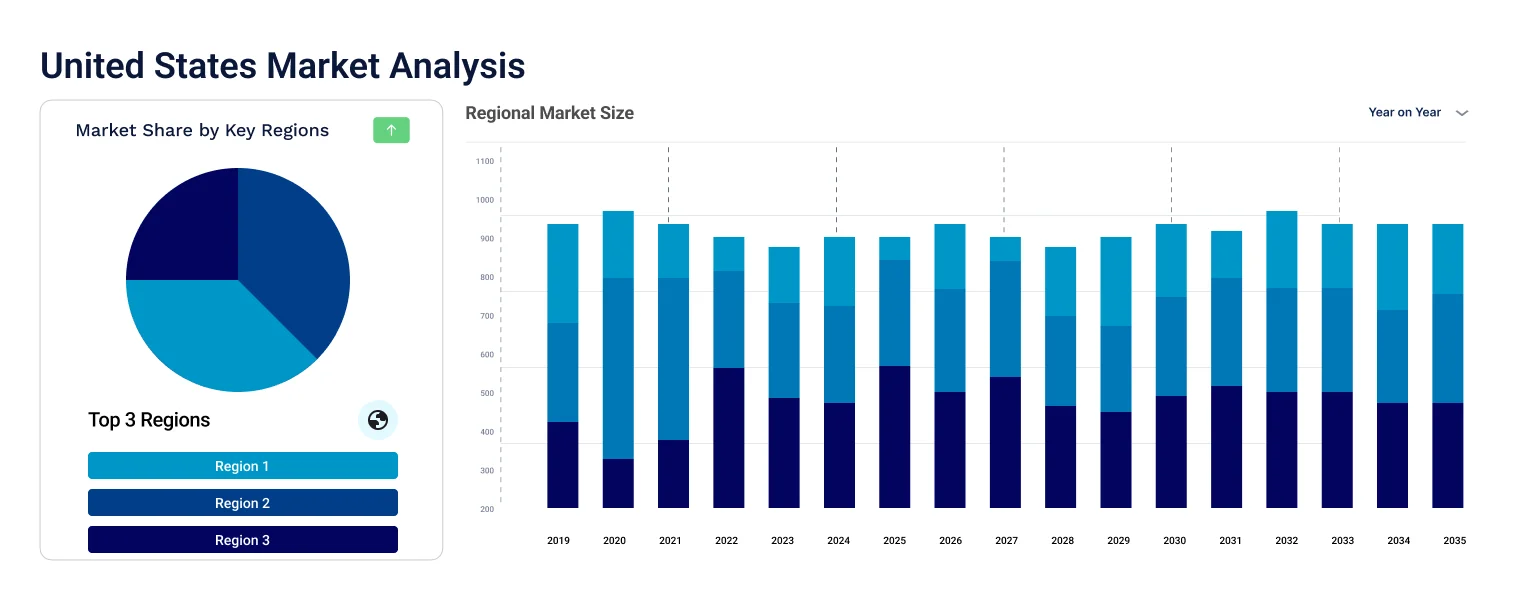
Key Insight: Regional dynamics in the United States education market reflect varying levels of digital maturity, institutional scale, and investment priorities. The Far West leads through innovation-driven adoption and platform sophistication. The Southeast accelerates through system expansion and modernization needs. New England sustains demand through academic rigor and institutional consistency. The Mideast benefits from dense institutional concentration and cross-sector collaboration. Great Lakes adoption aligns with workforce reskilling and industrial education needs. Plains regions emphasize cost-effective, scalable solutions. Southwest growth links to population shifts and hybrid learning models, while Rocky Mountains adoption remains selective, shaped by connectivity and geographic dispersion.
Read more about this report - REQUEST FREE SAMPLE COPY IN PDF
By component, software dominates the market due to scalable platforms and institutional subscription-driven procurement models
Software remains the dominant component in the United States education market as institutions increasingly treat platforms as long-term infrastructure. Learning management systems, assessment engines, analytics dashboards, and credentialing software are now bundled into multiyear licenses. Universities and districts prefer software because it stabilizes delivery across fluctuating enrollments. Vendors position these products as mission-critical systems rather than optional tools. Software also allows suppliers to upsell analytics, compliance modules, and reporting layers.
Services are expanding faster as buyers struggle with implementation complexity and accountability pressures. Institutions require onboarding, customization, migration, and ongoing support to extract value from platforms. Vendors now attach services contracts to nearly every enterprise sale. These include instructional design, compliance mapping, and outcome measurement. In October 2025, Adtalem Global Education Inc. announced the launch of the first comprehensive AI credentials program, in partnership with Google Cloud.
Cloud deployment accounts for the largest share of the market due to scalability, remote access, and faster procurement approvals
On-premises deployment continues to dominate the United States education market growth due to enterprise preference for internal control, system ownership, and predictable governance structures. Large institutions favor localized infrastructure to manage sensitive educational data, ensure compliance alignment, and integrate deeply with legacy systems already embedded across operations. IT teams value direct oversight over upgrades, security protocols, and performance tuning, especially where customization requirements remain high. In January 2026, IBM announced IBM Sovereign Core, the industry's first AI-ready sovereign-enabled software for enterprises, governments and service providers to build, deploy and manage AI-ready sovereign environments.
Cloud deployment is rapidly expanding its share in the United States education market revenue as organizations prioritize flexibility, faster rollout cycles, and reduced infrastructure burden. Decision-makers increasingly favor cloud-based environments to support distributed learning, remote collaboration, and cross-device accessibility. Cloud models simplify content updates, platform scaling, and user management without extensive internal IT intervention. Subscription-based pricing aligns well with operational budgets and encourages broader experimentation across departments.
Video-based content registers a substantial share of the market due to engagement, skills demonstration, and hybrid learning suitability
As institutions prioritize engagement, concept visualization, and flexible learning experiences, video-based content is gaining huge momentum in the United States education market dynamics. Educators increasingly adopt video formats to support asynchronous instruction, flipped classrooms, and skill-based demonstrations. Video enhances retention through visual storytelling and supports diverse learning styles more effectively than static materials. Platforms enabling interactive playback, embedded assessments, and analytics-driven insights strengthen adoption further. For example, in January 2025, WeVideo announced a new partnership with YouTube to implement YouTube Player for Education.
Text-based content continues to be relevant due to its versatility, ease of localization, and alignment with structured curricula. Institutions rely on text formats for assessments, reference materials, policy documentation, and standardized instruction delivery. Content creators value the speed of production, revision control, and compatibility with accessibility tools. For vendors, this segment supports scalable content libraries, version management tools, and institutional licensing models.
By sector, K-12 accounts for the largest share of the market driven by curriculum standardization
K-12 remains the dominant sector driven by curriculum standardization, large enrollment volumes, and sustained public and private investment. Schools prioritize structured platforms supporting lesson planning, assessments, and teacher collaboration. Decision-makers favor solutions aligned with classroom management, progress tracking, and parental visibility. Vendors tailor offerings toward district-level procurement cycles, multi-school scalability, and educator training support. In January 2026, INLX launched a new AI-powered data processing solution targeting the K-12 education market in the United States.
Higher education is growing rapidly as universities adopt digital platforms to support hybrid instruction, credential diversification, and global reach. Institutions seek tools enabling flexible course delivery, collaborative research environments, and advanced analytics. Faculty adoption drives demand for customizable content, multimedia integration, and assessment autonomy. Universities also prioritize platforms supporting lifelong learning initiatives and professional certifications. Vendors position solutions around modular design, interoperability, and institutional branding control.
Business end users register a substantial share in the market due to structured training requirements
Business end users account for the bigger market share due to structured training needs, workforce upskilling initiatives, and measurable learning outcomes. Organizations deploy platforms to support onboarding, compliance training, and role-specific skill development. Decision-makers prioritize scalability, reporting capabilities, and integration with enterprise systems. Content customization aligned with internal processes strengthens adoption. Vendors target this category through enterprise licensing, analytics features, and administrative control layers. According to the United States education market analysis, companies spend more than USD 340 billion on employee training and development, averaging more than USD1500 per employee per year.
Consumer adoption is growing rapidly as individuals pursue self-directed learning, certifications, and personal development. Users favor intuitive platforms offering flexible pacing, mobile accessibility, and diverse content formats. Subscription models lower entry barriers and encourage continuous engagement. Vendors respond by enhancing user experience, personalization algorithms, and content discovery features. Community-driven learning and peer interaction further accelerate adoption. Consumer demand pushes vendors to balance simplicity with depth, creating scalable platforms capable of serving diverse learning objectives without enterprise-level complexity.
Far West leads adoption through innovation-driven institutions and advanced digital ecosystems
The Far West remains the dominant regional education market in the United States due to its deep-rooted technology ecosystem and early adoption culture across education and enterprise learning environments. Institutions in this region prioritize digital-first delivery models, advanced platform integrations, and scalable content frameworks that support innovation-led instruction. Decision-makers are receptive to platform experimentation, modular feature adoption, and analytics-driven optimization, enabling vendors to pilot sophisticated solutions with shorter sales cycles. In examining enrollment data by grade level, it was found that statewide TK enrollment increased from 151,491 in 2023–24 to 177,570 in 2024–25.
The Southeast United States education market is emerging as the fastest-growing regional market as institutions accelerate modernization efforts and expand digital learning access. Educational systems increasingly adopt scalable platforms to address growing enrollment, workforce alignment, and regional skill development priorities. Decision-makers emphasize cost efficiency, ease of deployment, and rapid user onboarding, creating opportunities for cloud-based and modular solutions. Vendors benefit from rising institutional openness to external technology partnerships and managed service models.
The competitive landscape in the market is shaped by technology-led differentiation, platform integration depth, and content-enablement capabilities. United States education market players are focusing on immersive learning tools, cloud-based collaboration environments, and AI-supported content creation to strengthen institutional engagement. Demand is shifting toward solutions that support hybrid classrooms, personalized learning paths, and scalable digital infrastructure.
United States education companies are also targeting long-term contracts with school districts and universities by embedding analytics, accessibility tools, and curriculum-aligned workflows. Opportunities exist in professional development platforms, creative skill training, and secure digital collaboration systems. Vendors that align product innovation with educator usability and administrative efficiency gain stronger adoption. The market rewards players that combine software, content, and services into cohesive ecosystems rather than standalone products, creating recurring revenue opportunities and higher switching costs for institutional buyers.
Established in 1982 and headquartered in California, United States, Adobe Inc. plays a critical role in creative and digital education. The company supports the education market through tools enabling digital storytelling, design-based learning, and content creation. Adobe targets higher education and K-12 institutions by integrating creative skills into curricula, helping educators prepare students for digital-first careers.
Founded in 1984 and headquartered in California, United States, Cisco Systems Inc. serves the education market through secure networking, collaboration platforms, and virtual learning infrastructure. Cisco addresses institutional needs for reliable connectivity, cybersecurity, and hybrid classroom enablement.
Established in 1994 and headquartered in Gurugram, India, Educomp Solutions Ltd has historically focused on digital education content and smart classroom solutions. In the U.S. context, its influence is linked to structured digital curriculum models and technology-enabled instruction frameworks. The company emphasizes interactive learning tools, curriculum digitization, and teacher enablement solutions.
Founded in 1981 and headquartered in Gurugram, India, NIIT Limited contributes to the United States education market through skill development, digital learning platforms, and workforce-aligned training programs. The company focuses on corporate learning, professional education, and technology-driven reskilling initiatives. NIIT’s strength lies in outcome-based learning models, adaptive content delivery, and long-term enterprise partnerships.
*Please note that this is only a partial list; the complete list of key players is available in the full report. Additionally, the list of key players can be customized to better suit your needs.*
Other key players in the market include Blackboard Inc., AWE Learning, Sumtotal Systems, LLC, McGraw Hill, Promethean Limited, Omnitracs, LLC, and Ellucian Company L.P., among others.
Unlock the latest insights with our United States education market trends 2026 report. Discover regional growth patterns, consumer preferences, and key industry players. Stay ahead of competition with trusted data and expert analysis. Download your free sample report today and drive informed decisions in the market.


Upto 15% Off
USD
$2499 $2249
$3999 $3599
$4999 $4249
$5999 $5099


*While we strive to always give you current and accurate information, the numbers depicted on the website are indicative and may differ from the actual numbers in the main report. At Expert Market Research, we aim to bring you the latest insights and trends in the market. Using our analyses and forecasts, stakeholders can understand the market dynamics, navigate challenges, and capitalize on opportunities to make data-driven strategic decisions.*
In 2025, the market reached an approximate value of USD 1.30 Trillion.
The market is projected to grow at a CAGR of 4.30% between 2026 and 2035.
The market is estimated to witness healthy growth in the forecast period of 2026-2035 to reach around USD 1.98 Trillion by 2035.
Investing in modular platforms, strengthening educator training programs, expanding cloud partnerships, integrating analytics-driven personalization, and aligning offerings with workforce outcomes are improving long-term competitiveness and adoption.
The key trends driving the market development are the increasing demand for skill-based education and the growing popularity of distance learning.
The major regional markets in the United States include New England, Mideast, Great Lakes, Plains, Southeast, Southwest, Rocky Mountains, and Far West.
The major components of education include hardware, software, and service.
The key players in the market include Adobe Inc., Cisco Systems Inc., Educomp Solutions Ltd, NIIT Limited, Blackboard Inc., AWE Learning, Sumtotal Systems, LLC, McGraw Hill, Promethean Limited, Omnitracs, LLC, and Ellucian Company L.P., among others.
Balancing rapid technology change, educator adoption resistance, budget constraints, data privacy concerns, and integration complexity remains challenging while delivering scalable, user-friendly solutions across diverse United States education institutions.
Explore our key highlights of the report and gain a concise overview of key findings, trends, and actionable insights that will empower your strategic decisions.
| REPORT FEATURES | DETAILS |
| Base Year | 2025 |
| Historical Period | 2019-2025 |
| Forecast Period | 2026-2035 |
| Scope of the Report |
Historical and Forecast Trends, Industry Drivers and Constraints, Historical and Forecast Market Analysis by Segment:
|
| Breakup by Component |
|
| Breakup by Deployment Mode |
|
| Breakup by Content |
|
| Breakup by Sector |
|
| Breakup by End Use |
|
| Breakup by Region |
|
| Market Dynamics |
|
| Competitive Landscape |
|
| Companies Covered |
|
Datasheet
One User
USD 2,499
USD 2,249
tax inclusive*
Single User License
One User
USD 3,999
USD 3,599
tax inclusive*
Five User License
Five User
USD 4,999
USD 4,249
tax inclusive*
Corporate License
Unlimited Users
USD 5,999
USD 5,099
tax inclusive*
*Please note that the prices mentioned below are starting prices for each bundle type. Kindly contact our team for further details.*
Flash Bundle
Small Business Bundle
Growth Bundle
Enterprise Bundle
*Please note that the prices mentioned below are starting prices for each bundle type. Kindly contact our team for further details.*
Flash Bundle
Number of Reports: 3
20%
tax inclusive*
Small Business Bundle
Number of Reports: 5
25%
tax inclusive*
Growth Bundle
Number of Reports: 8
30%
tax inclusive*
Enterprise Bundle
Number of Reports: 10
35%
tax inclusive*
How To Order

Select License Type
Choose the right license for your needs and access rights.

Click on ‘Buy Now’
Add the report to your cart with one click and proceed to register.

Select Mode of Payment
Choose a payment option for a secure checkout. You will be redirected accordingly.
Strategic Solutions for Informed Decision-Making
Gain insights to stay ahead and seize opportunities.

Get insights & trends for a competitive edge.

Track prices with detailed trend reports.

Analyse trade data for supply chain insights.

Leverage cost reports for smart savings

Enhance supply chain with partnerships.

Connect For More Information
Our expert team of analysts will offer full support and resolve any queries regarding the report, before and after the purchase.
Our expert team of analysts will offer full support and resolve any queries regarding the report, before and after the purchase.
We employ meticulous research methods, blending advanced analytics and expert insights to deliver accurate, actionable industry intelligence, staying ahead of competitors.
Our skilled analysts offer unparalleled competitive advantage with detailed insights on current and emerging markets, ensuring your strategic edge.
We offer an in-depth yet simplified presentation of industry insights and analysis to meet your specific requirements effectively.




