

Consumer Insights
Uncover trends and behaviors shaping consumer choices today
Procurement Insights
Optimize your sourcing strategy with key market data
Industry Stats
Stay ahead with the latest trends and market analysis.
The United States heart valve devices market was valued at USD 3.93 Billion in 2025, driven by the advancements in medical technology, an expanding aging population, and increasing prevalence of cardiovascular diseases in the region. The market is anticipated to grow at a CAGR of 9.60% during the forecast period of 2026-2035, with the values likely to reach USD 9.83 Billion by 2035.
Compound Annual Growth Rate
9.6%
Value in USD Billion
2026-2035
Read more about this report - REQUEST FREE SAMPLE COPY IN PDF
Heart valve devices refer to medical devices designed to repair or replace damaged or diseased heart valves. These devices are used for the treatment of conditions such as aortic stenosis, mitral regurgitation, and tricuspid regurgitation. The rising advancements in technology, increasing prevalence of cardiovascular diseases, and favorable regulatory environments are some of the major drivers of the United States market for heart valve devices. Moreover, the country benefits from favorable regulatory frameworks and reimbursement policies that encourage the adoption of advanced heart valve devices, which is likely to fuel the market growth in the forecast period.
Rising Prevalence of Cardiovascular Diseases to Support Market Growth
Cardiovascular diseases (CVDs), including heart disease, stroke, and heart valve diseases, are becoming increasingly prevalent due to lifestyle factors such as poor diet, lack of exercise, smoking, and excessive alcohol consumption. In 2022, coronary heart disease (CHD) accounted for 39.5% of all deaths attributable to cardiovascular diseases in the United States, followed by stroke at 17.6%, and other CVD at 17%, according to the American Heart Association. The growing prevalence of these conditions is driving the demand for heart valve devices to treat and manage valve-related diseases, which is anticipated to support market expansion in the country in the coming years.
The market is witnessing several trends and developments to improve the current scenario. Some of the notable trends are as follows:
In December 2024, Capstan Medical, a California-based company developing heart valve implants using a robotic delivery system, announced it had raised USD 110 million in new funding to support its progress toward pivotal clinical trials. The company’s mitral valve technology is expected to enter first-in-human trials in early 2025, with pivotal trials planned for 2026. This significant investment reflects the growing interest and financial support in the United States heart valve devices market.
One of the major market trends is the increasing regulatory approvals of heart valve devices, allowing innovative solutions to address critical heart conditions. For instance, in April 2024, the U.S. Food and Drug Administration (FDA) granted approval to Abbott's TriClip™ transcatheter edge-to-edge repair (TEER) system, the first device specifically designed to treat tricuspid regurgitation (TR), or a leaky tricuspid valve. These regulatory approvals are expected to accelerate product development, expand access to advanced cardiovascular treatments, and meet the United States heart valve devices market demand.
The market report offers a detailed analysis of the market based on the following segments:
Market Breakup by Valve Type
Market Breakup by Product Type
Market Breakup by Procedure
Market Breakup by End User
Read more about this report - REQUEST FREE SAMPLE COPY IN PDF
Segmentation Based on Valve Type to Witness Substantial Growth
Based on the valve type, the market is segmented into biological (tissue) valve and mechanical valve. In the United States, the biological (tissue) valve segment covers a substantial market share, which is primarily due to the valves' natural composition that reduces the need for long-term anticoagulation therapy compared to mechanical valves. Moreover, advancements in tissue engineering and preservation are improving the durability and performance of biological valves, thereby boosting their market demand.
Read more about this report - REQUEST FREE SAMPLE COPY IN PDF
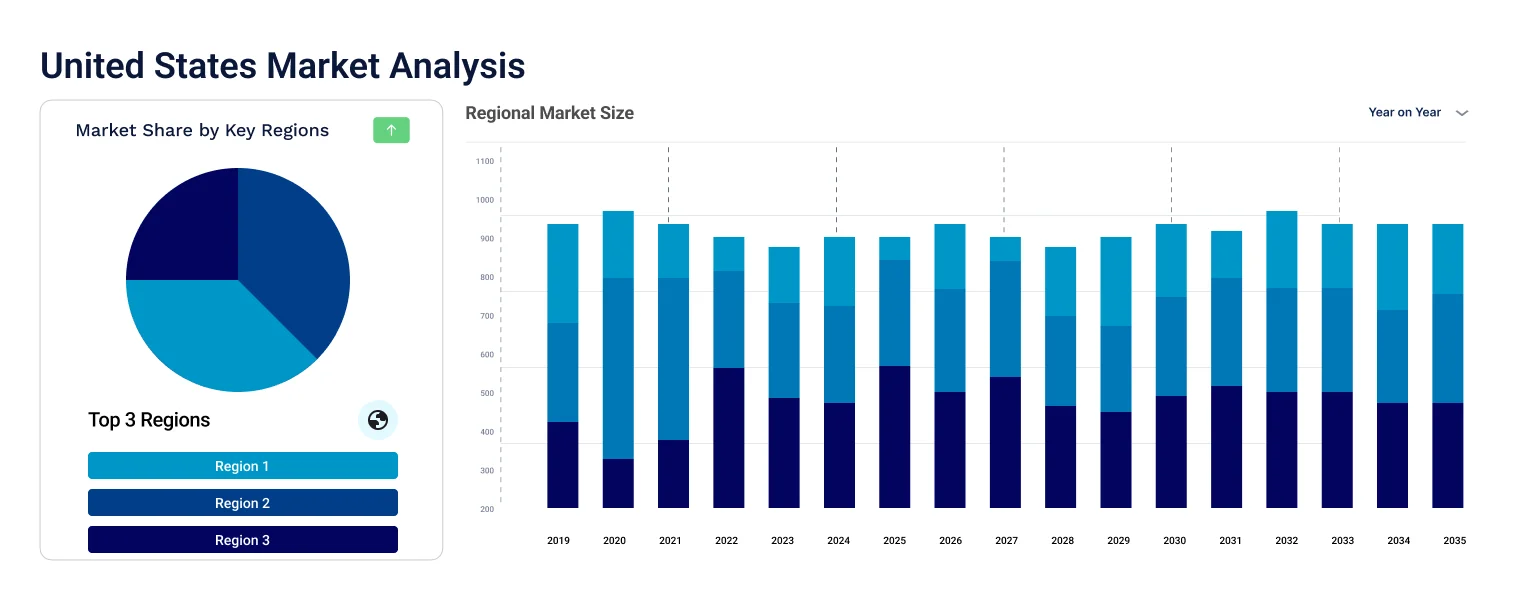
In the United States, the Northeast and West Coast regions hold a high market value due to advanced healthcare infrastructure and higher adoption rates of innovative treatments like transcatheter aortic valve replacement (TAVR). The Midwest and Southern states are witnessing a growing demand, owing to the expanding aging population and increasing prevalence of cardiovascular diseases, which are fueling the need for heart valve treatments. Moreover, the presence of major medical device companies and healthcare hubs in states like California, Massachusetts, and Minnesota is expected to boost market growth in the region.
The key features of the market report comprise patent analysis, grants analysis, funding and investment analysis, and strategic initiatives by the leading players. The major companies in the market are as follows:
Medtronic is a leading player in the heart valve devices market of the United States, with its TAVR systems being widely used for treating aortic stenosis. The company is focused on accelerating innovation in minimally invasive heart valve therapies. Medtronic offers a wide range of heart valve devices, including the Evolut™ R and Evolut™ PRO transcatheter aortic valve replacement (TAVR) systems, along with surgical heart valves and repair technologies.
Edwards Lifesciences, headquartered in Irvine, California, specializes in artificial heart valves and hemodynamic monitoring. The company's portfolio includes transcatheter heart valves (THVs), including the SAPIEN™ series for aortic valve replacement. It also offers surgical heart valves and critical care monitoring devices, and significantly contributes to the United States heart valve devices market growth.
Abbott, with its headquarters in Illinois (United States), has a prominent presence in the market. The company’s structural heart portfolio includes the MitraClip™ device for mitral valve repair, the TriClip™ device for tricuspid valve repair, and the Portico™ TAVR system for aortic valve replacement. Abbott engages in strategic acquisitions and product innovations to expand its footprint in the United States heart valve devices market.
Corcym Group, a global medical device company specializing in the structural heart area, is one of the key players in the market. The company specializes in mechanical and biological heart valves, including the Carbomedics™ and Bicarbon™ series. While Corcym is based in Italy, its heart valve products are distributed in the United States through partnerships with local medical device companies.
*Please note that this is only a partial list; the complete list of key players is available in the full report. Additionally, the list of key players can be customized to better suit your needs.*
Other key players in the market include Boston Scientific Corporation, Artivion, Inc., Shockwave Medical Inc. (Johnson & Johnson Services, Inc.), JenaValve Technology, Inc., and Micro Interventional Devices, Incorporated.


Upto 15% Off
USD
$1999 $1799
$3099 $2789
$4599 $3909
$5999 $5099


*While we strive to always give you current and accurate information, the numbers depicted on the website are indicative and may differ from the actual numbers in the main report. At Expert Market Research, we aim to bring you the latest insights and trends in the market. Using our analyses and forecasts, stakeholders can understand the market dynamics, navigate challenges, and capitalize on opportunities to make data-driven strategic decisions.*
Explore our key highlights of the report and gain a concise overview of key findings, trends, and actionable insights that will empower your strategic decisions.
| REPORT FEATURES | DETAILS |
| Base Year | 2025 |
| Historical Period | 2019-2025 |
| Forecast Period | 2026-2035 |
| Scope of the Report |
Historical and Forecast Trends, Industry Drivers and Constraints, Historical and Forecast Market Analysis by Segment:
|
| Breakup by Valve Type |
|
| Breakup by Product Type |
|
| Breakup by Procedure |
|
| Breakup by End User |
|
| Market Dynamics |
|
| Competitive Landscape |
|
| Companies Covered |
|
Datasheet
One User
USD 1,999
USD 1,799
tax inclusive*
Single User License
One User
USD 3,099
USD 2,789
tax inclusive*
Five User License
Five User
USD 4,599
USD 3,909
tax inclusive*
Corporate License
Unlimited Users
USD 5,999
USD 5,099
tax inclusive*
*Please note that the prices mentioned below are starting prices for each bundle type. Kindly contact our team for further details.*
Flash Bundle
Small Business Bundle
Growth Bundle
Enterprise Bundle
*Please note that the prices mentioned below are starting prices for each bundle type. Kindly contact our team for further details.*
Flash Bundle
Number of Reports: 3
20%
tax inclusive*
Small Business Bundle
Number of Reports: 5
25%
tax inclusive*
Growth Bundle
Number of Reports: 8
30%
tax inclusive*
Enterprise Bundle
Number of Reports: 10
35%
tax inclusive*
How To Order

Select License Type
Choose the right license for your needs and access rights.

Click on ‘Buy Now’
Add the report to your cart with one click and proceed to register.

Select Mode of Payment
Choose a payment option for a secure checkout. You will be redirected accordingly.
Strategic Solutions for Informed Decision-Making
Gain insights to stay ahead and seize opportunities.

Get insights & trends for a competitive edge.

Track prices with detailed trend reports.

Analyse trade data for supply chain insights.

Leverage cost reports for smart savings

Enhance supply chain with partnerships.

Connect For More Information
Our expert team of analysts will offer full support and resolve any queries regarding the report, before and after the purchase.
Our expert team of analysts will offer full support and resolve any queries regarding the report, before and after the purchase.
We employ meticulous research methods, blending advanced analytics and expert insights to deliver accurate, actionable industry intelligence, staying ahead of competitors.
Our skilled analysts offer unparalleled competitive advantage with detailed insights on current and emerging markets, ensuring your strategic edge.
We offer an in-depth yet simplified presentation of industry insights and analysis to meet your specific requirements effectively.




