

Consumer Insights
Uncover trends and behaviors shaping consumer choices today
Procurement Insights
Optimize your sourcing strategy with key market data
Industry Stats
Stay ahead with the latest trends and market analysis.
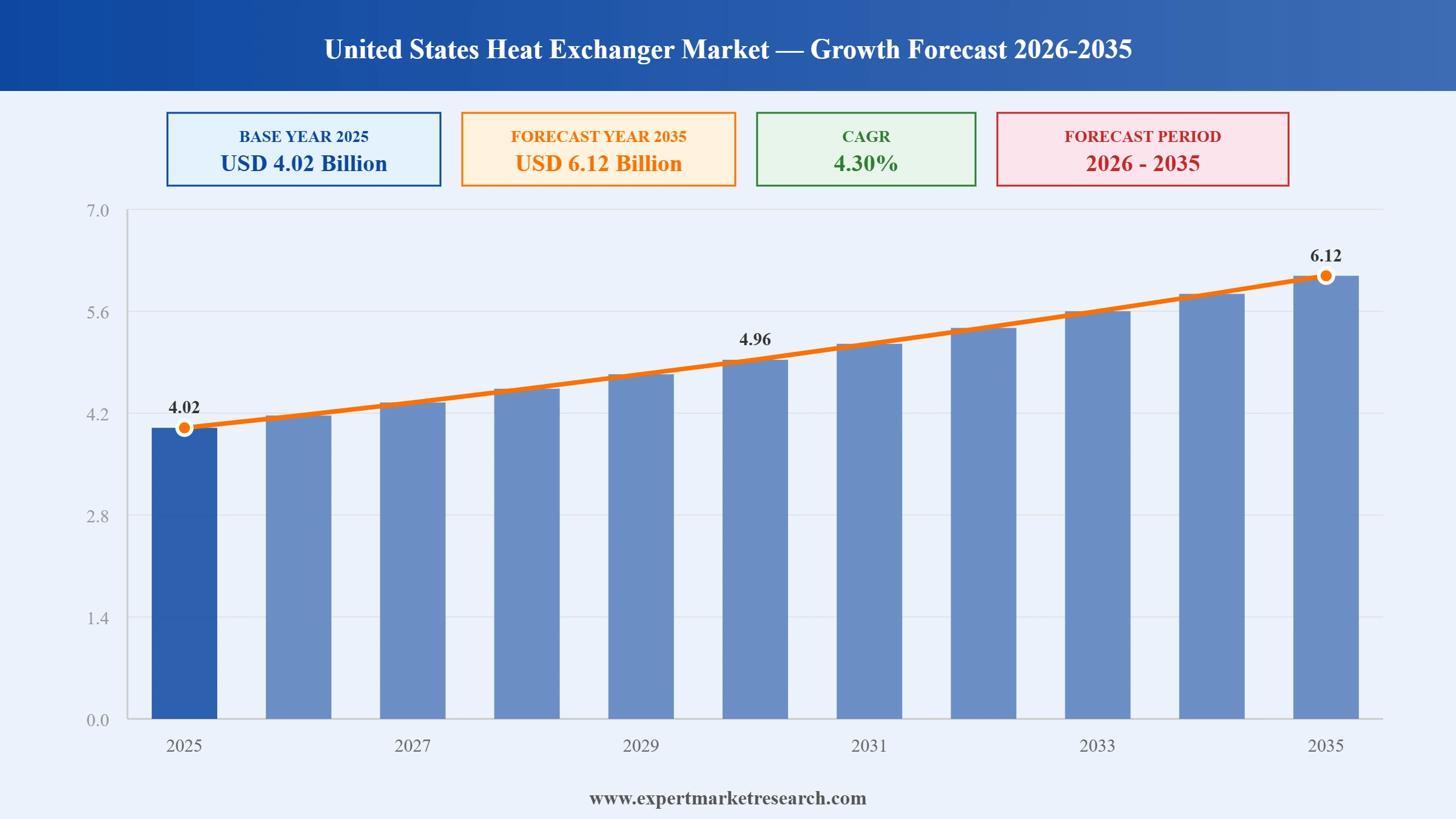
The United States heat exchanger market attained a value of USD 4.02 Billion in 2025 and is projected to expand at a CAGR of 4.30% through 2035. The market is further expected to reach USD 6.12 Billion by 2035. Rising adoption of stainless-steel based heat exchangers, expanding data center liquid cooling requirements, and growing demand across chemical and petrochemical processing are helping manufacturers differentiate their product portfolios. Growing emphasis on energy efficient thermal management and regional manufacturing expansion is further encouraging established players to widen capacity across every major end use.
A heat exchanger is a system used to transfer thermal energy between two fluids at different temperatures, commonly used across oil and gas, chemical, power generation, and HVAC applications. Shell and tube heat exchangers hold a substantial share of the market owing to their widespread use and proven reliability across demanding industrial processes. Rising industrial and commercial thermal management requirements continue to widen the buyer base for heat exchanger equipment nationwide.
Demand is concentrating around manufacturers able to combine precise thermal performance with proven reliability for data center and industrial cooling applications. In March 2026, Ecolab agreed to acquire liquid cooling company CoolIT Systems for 4.75 billion dollars, with the transaction expected to close in the third quarter of 2026, reflecting the scale of capital flowing into data center thermal management. This product innovation driven positioning is converting rising demand for precise, high-performance thermal management directly into expanded adoption across the United States heat exchanger market.
Manufacturers across the United States heat exchanger market are converging on a common development direction, widening from conventional shell and tube designs toward compact plate and frame platforms capable of meeting rising data center and industrial cooling demands. Specialty heat transfer manufacturers are increasingly pursuing acquisitions to broaden technical expertise rather than relying solely on organic product development. This shift is reshaping procurement criteria among industrial and commercial buyers, favouring manufacturers who can demonstrate proven high density thermal management capability over those offering only conventional designs.
Read more about this report - Request a Free Sample
API Heat Transfer introduced its SIGMA M186 plate and frame heat exchanger designed for large scale data center cooling applications, achieving a validated temperature approach of 0.5 degrees Celsius. The unit targets hyperscale and colocation facilities requiring precise thermal management at scale. Manufacturers across the United States heat exchanger market can use validated performance benchmarks to differentiate compact platforms from conventional shell and tube designs across the wider global sector.
Vertiv announced a 50-million-dollar investment to expand its Westerville, Ohio headquarters campus and its Ironton, Ohio manufacturing facility, creating up to 730 new jobs through 2029. The expansion strengthens the company's engineering, services, and production capacity to meet growing domestic demand for thermal management equipment. Manufacturers across the United States heat exchanger market can use headquarters and manufacturing expansions to signal sustained confidence in long term US market growth.
Modine opened a new 155,000 square foot manufacturing facility in Franklin, Wisconsin, dedicated to producing Airedale by Modine data center cooling products. The facility forms part of a multiyear 100-million-dollar investment and is expected to create more than 300 new jobs. Manufacturers across the United States heat exchanger market can use dedicated domestic facilities to scale production capacity ahead of rising data center cooling demand nationwide.
WCR opened a 15-million-dollar, 212,000 square foot plate heat exchanger manufacturing facility in southwest Ohio, the largest of its kind in the United States. The facility produces plate heat exchangers, gaskets, and replacement parts serving brewing, dairy, chemical, and industrial HVAC customers. Manufacturers can use dedicated large scale domestic facilities to shorten lead times across multiple industries.
Thermal management companies across the United States heat exchanger market are increasingly opening dedicated manufacturing facilities specifically for data center cooling equipment, rather than adapting general industrial production lines for this emerging application. This is reshaping manufacturing footprint decisions across the market, favouring purpose-built facilities over repurposed capacity. In October 2025, XNRGY held a ribbon cutting for its Mesa 1 facility in the Phoenix metropolitan area, producing advanced cooling systems for hyperscale data centers across the growing regional market.
Diversified industrial engineering groups are increasingly acquiring specialized heat transfer manufacturers focused on data center power generation, rather than developing this capability internally. This is reshaping ownership structures across the United States heat exchanger market, favouring consolidated technical portfolios over standalone specialty manufacturers. In March 2026, Smiths agreed to acquire DRC Heat Transfer for 164 million pounds, a US designer of custom cooling solutions for data center power generators across multiple markets nationwide.
Regional heat exchanger manufacturers are increasingly acquiring complementary service providers to expand their geographic footprint, rather than building new service centres from scratch. This is reshaping competitive dynamics across the United States heat exchanger market, favouring combined manufacturing and service platforms over standalone operations. In October 2025, Active Thermal Solutions acquired D&B Heat Transfer Products, a Michigan based provider, expanding its Midwest presence and broader national service network across several states.
Industrial thermal management companies are increasingly pursuing large scale mergers with environmental systems providers, rather than remaining narrowly focused on traditional heat transfer products alone. This is reshaping the competitive landscape across the United States heat exchanger market, favouring combined entities with broader environmental and thermal solution portfolios. In February 2026, Thermon Group entered a merger agreement with CECO Environmental valued at approximately 2.2 billion dollars, combining thermal and environmental systems capabilities under a single unified corporate structure.
Federal decarbonisation programmes are increasingly funding next generation ceramic heat exchanger research, rather than limiting support to incremental improvements on existing metal-based designs. This is reshaping long term technology development across the market, favouring materials innovation over conventional design refinement. In January 2025, Penn State received approximately 2.5 million dollars from the US Department of Energy to develop a next generation ceramic heat exchanger in collaboration with Saint-Gobain Ceramics and Plastics over the coming years.
The Expert Market Research's report titled "United States Heat Exchanger Market Report and Forecast 2026-2035" offers a detailed analysis of the market based on the following segments:
Market Breakup by Type
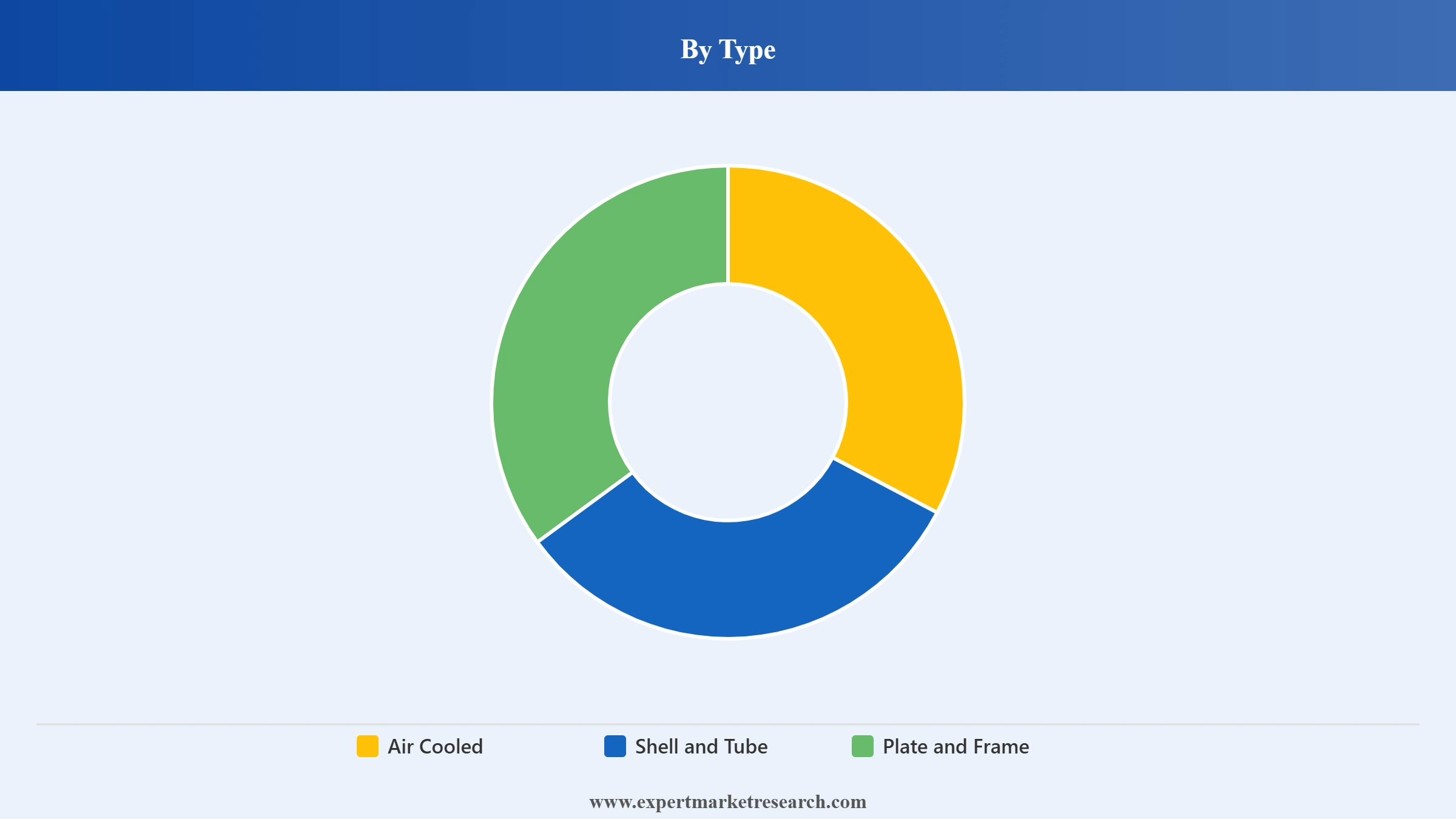
Key Insight: Shell and tube heat exchangers hold a substantial type of share in the United States heat exchanger market owing to their widespread use and proven reliability across demanding industrial processes requiring high pressure and temperature tolerance. Plate and frame heat exchangers are the fastest-growing type as compact, efficient designs gain traction across data center cooling and space constrained industrial applications. In February 2026, Trane Technologies acquired Stellar Energy Americas for 553.4 million dollars, adding modular and scalable data center cooling system design capability to its thermal management portfolio. Air cooled units serve applications where water availability is limited, while other types, including brazed plate designs, address specialized niche cooling requirements.
Market Breakup by Material
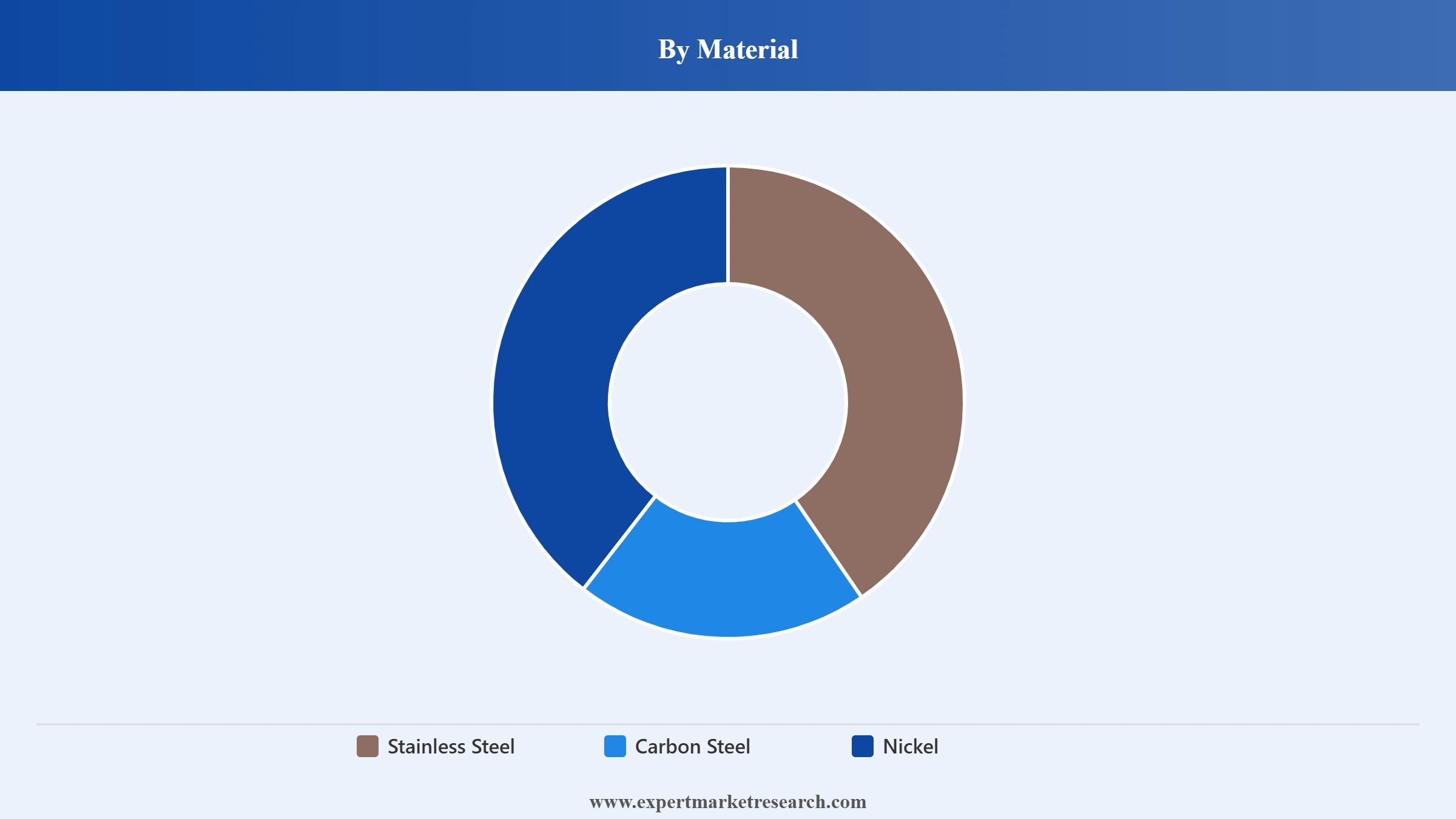
Key Insight: Stainless steel accounts for the largest material share in the United States heat exchanger market given its high thermal conductivity, energy efficiency, and superior corrosion resistance across demanding industrial environments. Carbon steel continues to serve cost sensitive applications where corrosion exposure is limited, while nickel-based materials address specialized applications requiring exceptional resistance to highly corrosive process fluids. Other materials, including titanium and copper alloys, serve niche applications with specific thermal or chemical resistance requirements.
Market Breakup by End Use
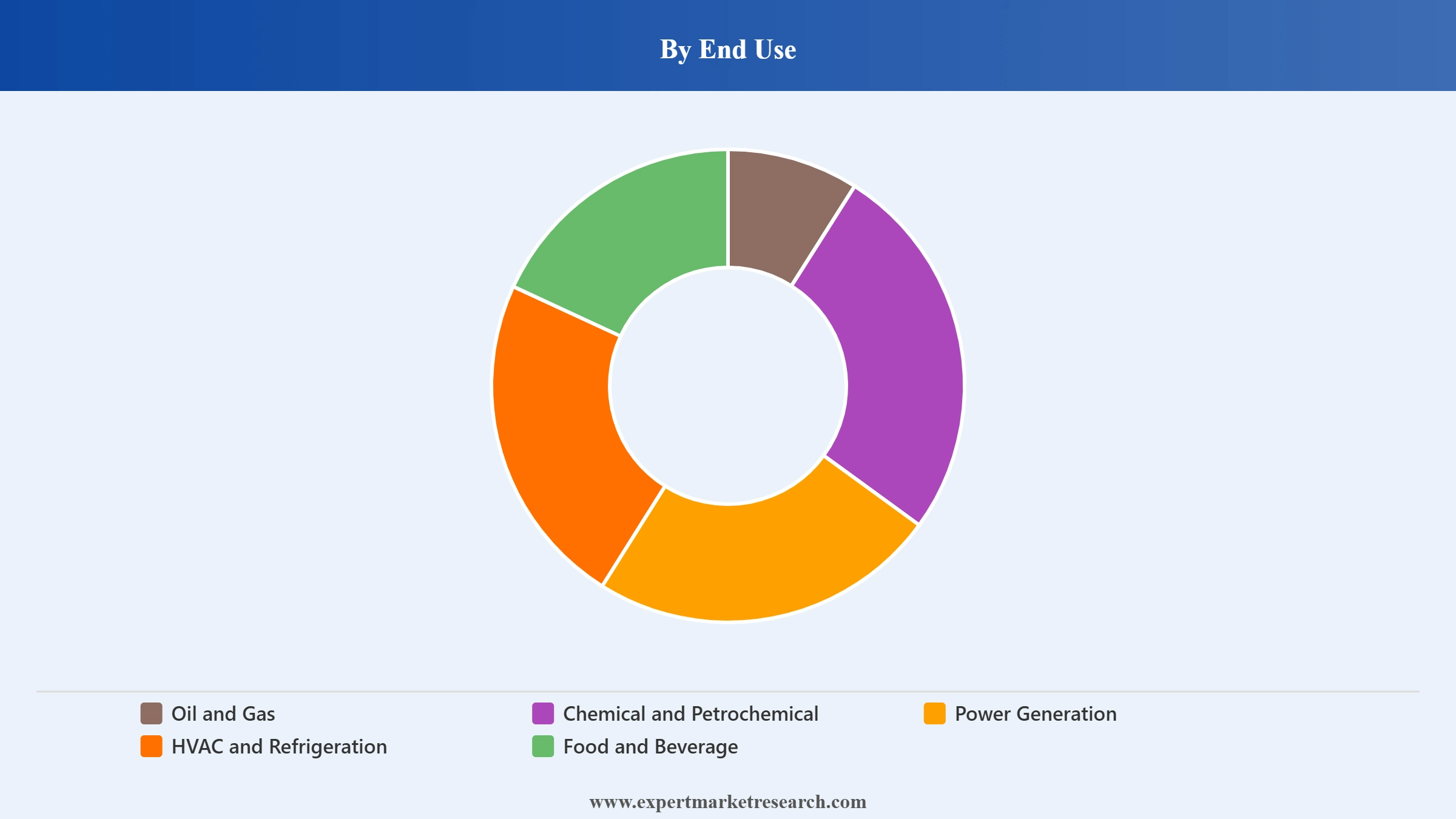
Key Insight: Chemical and petrochemical applications account for the largest end use share in the United States heat exchanger market as heat exchangers play an indispensable role in distillation, condensation, and other critical thermal processes. HVAC and refrigeration is registering the fastest growth as rising installations of climate control systems across commercial and residential buildings drive sustained demand. In November 2025, Daikin Applied acquired Chilldyne, adding direct-to-chip liquid cooling technology to its data center cooling portfolio. Oil and gas applications require heavy duty equipment for refining and processing operations, while power generation and food and beverage applications round out remaining demand.
Market Breakup by Region
Key Insight: The Mideast region holds a substantial share of the United States heat exchanger market, supported by established chemical and petrochemical processing infrastructure across the region's industrial corridors. The Southwest is registering strong growth as expanding energy sector activity drives sustained demand for process cooling equipment. The Great Lakes region sustains steady demand from its established manufacturing base, while the Southeast benefits from expanding HVAC installation driven by population growth. Remaining regions round out demand through smaller scale but consistent industrial and commercial thermal management needs.
Read more about this report - Request a Free Sample
By type, shell and tube heat exchangers dominate the market owing to their widespread use and proven reliability across demanding industrial processes
Shell and tube heat exchangers dominate the type of segment of the United States heat exchanger market owing to their widespread use and proven reliability across demanding industrial processes requiring high pressure and temperature tolerance. In February 2025, EVAPCO launched its eco-Air Titan air cooled heat exchanger at AHR Expo, designed for large scale heat rejection duty across battery plants, data centers, and power generation facilities throughout the country.
Read more about this report - Request a Free Sample
Plate and frame heat exchangers are the fastest-growing type as compact, efficient designs gain traction across data center cooling and space constrained industrial applications. Manufacturers serving this category continue to prioritise compact footprint engineering accordingly, since space constrained data center environments demand equipment capable of delivering high thermal performance within limited physical dimensions and available floor space across every operating facility nationwide.
By material, stainless-steel accounts for the largest share owing to its high thermal conductivity and superior corrosion resistance across demanding industrial environments
Stainless steel accounts for the largest material share of the United States heat exchanger market given its high thermal conductivity, energy efficiency, and superior corrosion resistance across demanding industrial and commercial environments nationwide. In May 2025, Flex acquired JetCool, adding modular, direct-to-chip liquid cooling manufacturing capability that integrates cooling solutions at the point of production rather than as a post assembly addition to already finished cooling systems shipped to customers.
Read more about this report - Request a Free Sample
Nickel based materials serve specialized applications requiring exceptional resistance to highly corrosive process fluids beyond what conventional stainless steel can reliably withstand. Manufacturers serving this category continue to prioritise specialized welding and fabrication techniques accordingly, since nickel alloys require distinct manufacturing expertise compared to conventional steel-based equipment across every industrial facility served nationwide.
By end use, chemical and petrochemical applications account for the largest share owing to heat exchangers playing an indispensable role in distillation and condensation processes
Chemical and petrochemical applications account for the largest end use share of the United States heat exchanger market as heat exchangers play an indispensable role in distillation, condensation, and other critical thermal processes. In May 2025, Oglethorpe Power selected GE Vernova's 7HA.03 combined cycle technology for a new natural gas plant in Georgia, including two heat recovery steam generators supplying its 38-member electric cooperatives across the entire state.
Read more about this report - Request a Free Sample
HVAC and refrigeration are registering the fastest end use growth as rising installations of climate control systems across commercial and residential buildings drive sustained demand for compact, efficient units. Manufacturers serving this category continue to prioritise energy efficiency improvements accordingly, since building operators increasingly weigh long term operating costs alongside upfront equipment pricing across every commercial and residential project.
The Mideast leads the market through established chemical and petrochemical processing infrastructure
The Mideast region holds a substantial share of the United States heat exchanger market, supported by established chemical and petrochemical processing infrastructure across the region's industrial corridors including New Jersey and Pennsylvania. In July 2026, Mitsubishi Chemical Advanced Materials announced a 20.3-million-dollar expansion of its Reading, Pennsylvania facility, establishing a Center of Excellence for engineering plastics extrusion and advanced composite material production.
The Southwest is registering strong regional growth as expanding energy sector activity across states including Texas drives sustained demand for process cooling equipment considerably faster than in more mature regional markets. In March 2026, America First Refining announced a 300-billion-dollar refinery at the Port of Brownsville, Texas, the first new US Gulf Coast refinery in nearly 50 years, with groundbreaking scheduled for the second quarter across the entire site.
The United States heat exchanger companies are becoming increasingly consolidated as major heat exchanger companies invest in compact platform development, material engineering, and regional manufacturing expansion to defend their market positions. Heat exchanger players are prioritising data center cooling capability, energy efficiency improvements, and specialized material expertise to differentiate their offerings in a market where conventional shell and tube equipment is increasingly commoditised. Strategic emphasis on validated performance benchmarks is allowing these companies to capture growing demand from data center and industrial process customers.
Major United States heat exchanger market players are also focusing on regional consolidation, pursuing acquisitions of specialty heat transfer manufacturers to broaden technical expertise and expand engineering capability across new application areas. Opportunities are emerging in compact plate and frame platforms for data center cooling, as well as in specialized nickel and alloy-based equipment for corrosive process applications. Companies that successfully combine proven thermal performance with broad material engineering expertise and dedicated regional support are expected to strengthen their competitive position over the coming years.
Founded in 1940 and headquartered in Houston, Texas, United States, Koch Heat Transfer Company supports the heat exchanger market as a pioneer in heat transfer technology, offering shell and tube heat exchangers, hairpin heat exchangers, and tank heating coils. The company continues to serve refineries, chemical companies, and industrial facilities requiring proven thermal management equipment. Koch Heat Transfer draws on more than eight decades of engineering expertise across its parent Koch Industries' broader industrial portfolio.
Founded in 1891 and headquartered in La Defense, France, Mersen SA supports the heat exchanger market through its electrical power and advanced materials portfolio serving corrosive chemicals, energy, and electronics customers worldwide. The company continues to expand its heat exchanger and cooling device offerings across demanding industrial applications. Mersen draws on more than a century of materials engineering expertise to serve customers requiring corrosion resistant thermal management solutions.
Originally established in 1859 as John Marston Ltd. and headquartered in Ball Ground, Georgia, United States, Chart Industries supports the heat exchanger market through its cryogenic equipment and heat transfer systems portfolio serving industrial gas, energy, and life sciences customers. The company continues to expand its repair, service, and leasing services alongside its core equipment offerings. Chart Industries draws on more than 160 years of engineering heritage to serve customers across cryogenic and industrial thermal management applications.
Founded in 1961 and headquartered in Tuscaloosa, Alabama, United States, SHECO Industries supports the heat exchanger market through its Southern Heat Exchanger brand, offering custom fabricated shell and tube and air-cooled heat exchangers for chemical, fertilizer, and oil and gas customers. The company continues to expand manufacturing capacity across facilities in Alabama and Texas. SHECO draws on more than six decades of fabrication expertise, having delivered more than 20,000 units since its founding.
Other key players in the market include HEATTRAN, Alfa Laval AB, Mason Manufacturing LLC, Kelvion Holding GmbH, Xylem Inc., and Danfoss A/S., among others.
*Please note that this is only a partial list; the complete list of key players is available in the full report. Additionally, the list of key players can be customized to better suit your needs.*
Unlock the latest insights with our United States heat exchanger market trends 2026 report. Discover regional growth patterns, material adoption, and key industry players. Stay ahead of competition with trusted data and expert analysis. Download your free sample report today.


Upto 15% Off
USD
$2499 $2249
$3999 $3599
$4999 $4249
$5999 $5099


*While we strive to always give you current and accurate information, the numbers depicted on the website are indicative and may differ from the actual numbers in the main report. At Expert Market Research, we aim to bring you the latest insights and trends in the market. Using our analyses and forecasts, stakeholders can understand the market dynamics, navigate challenges, and capitalize on opportunities to make data-driven strategic decisions.*
In 2025, the market reached an approximate value of USD 4.02 Billion.
The market is projected to grow at a CAGR of 4.30% between 2026 and 2035.
The market is estimated to witness a healthy growth in the forecast period of 2026-2035, reaching a value of around USD 6.12 Billion by 2035.
The major market drivers are the growing demand for heat exchangers in the chemical and oil and gas sectors and technological advancements and innovations.
The key trends of the market include increased incorporation of stainless steel-based heat exchangers, growing applications of heat exchangers in HVAC systems, the advent of advanced nanotechnology on the surface of heat exchangers, and developmental efforts by market players.
The major regions in the market are New England, Mideast, Great Lakes, Plains, Southeast, Southwest, Rocky Mountain, and Far West.
Different heat exchanger types are air cooled, shell and tube, and plate and frame, among others.
The key players in the market include Koch Industries, Inc. (Koch Heat Transfer Company), Mersen SA, Chart Industries, Inc., SHECO Industries, Inc., HEATTRAN, Alfa Laval AB, Mason Manufacturing LLC, Kelvion Holding GmbH, Xylem Inc., and Danfoss A/S., among others.
Companies face rising costs of specialized alloy materials, a shortage of skilled fabrication technicians, high capital costs for compact platform development, and the ongoing challenge of meeting increasingly precise performance benchmarks demanded by data center cooling customers.
Expanding compact plate and frame product portfolios, pursuing acquisitions to broaden specialized material expertise, establishing dedicated regional engineering centres, investing in validated performance benchmarking, and strengthening service networks ahead of rising data center cooling demand.
Explore our key highlights of the report and gain a concise overview of key findings, trends, and actionable insights that will empower your strategic decisions.
| REPORT FEATURES | DETAILS |
| Base Year | 2025 |
| Historical Period | 2019-2025 |
| Forecast Period | 2026-2035 |
| Scope of the Report |
Historical and Forecast Trends, Industry Drivers and Constraints, Historical and Forecast Market Analysis by Segment:
|
| Breakup by Type |
|
| Breakup by Material |
|
| Breakup by End Use |
|
| Breakup by Region |
|
| Market Dynamics |
|
| Competitive Landscape |
|
| Companies Covered |
|
Datasheet
One User
USD 2,499
USD 2,249
tax inclusive*
Single User License
One User
USD 3,999
USD 3,599
tax inclusive*
Five User License
Five User
USD 4,999
USD 4,249
tax inclusive*
Corporate License
Unlimited Users
USD 5,999
USD 5,099
tax inclusive*
*Please note that the prices mentioned below are starting prices for each bundle type. Kindly contact our team for further details.*
Flash Bundle
Small Business Bundle
Growth Bundle
Enterprise Bundle
*Please note that the prices mentioned below are starting prices for each bundle type. Kindly contact our team for further details.*
Flash Bundle
Number of Reports: 3
20%
tax inclusive*
Small Business Bundle
Number of Reports: 5
25%
tax inclusive*
Growth Bundle
Number of Reports: 8
30%
tax inclusive*
Enterprise Bundle
Number of Reports: 10
35%
tax inclusive*
How To Order

Select License Type
Choose the right license for your needs and access rights.

Click on ‘Buy Now’
Add the report to your cart with one click and proceed to register.

Select Mode of Payment
Choose a payment option for a secure checkout. You will be redirected accordingly.
Strategic Solutions for Informed Decision-Making
Gain insights to stay ahead and seize opportunities.

Get insights & trends for a competitive edge.

Track prices with detailed trend reports.

Analyse trade data for supply chain insights.

Leverage cost reports for smart savings

Enhance supply chain with partnerships.

Connect For More Information
Our expert team of analysts will offer full support and resolve any queries regarding the report, before and after the purchase.
Our expert team of analysts will offer full support and resolve any queries regarding the report, before and after the purchase.
We employ meticulous research methods, blending advanced analytics and expert insights to deliver accurate, actionable industry intelligence, staying ahead of competitors.
Our skilled analysts offer unparalleled competitive advantage with detailed insights on current and emerging markets, ensuring your strategic edge.
We offer an in-depth yet simplified presentation of industry insights and analysis to meet your specific requirements effectively.




