

Consumer Insights
Uncover trends and behaviors shaping consumer choices today
Procurement Insights
Optimize your sourcing strategy with key market data
Industry Stats
Stay ahead with the latest trends and market analysis.
The United States packaging automation market attained a value of USD 24.12 Billion in 2025 and is projected to expand at a CAGR of 5.70% through 2035. The market is further expected to achieve USD 41.99 Billion by 2035. Manufacturers are reducing recall risks with smarter vision systems that catch defects faster and track compliance better. These automation systems also help maintain precision even when operations move quickly, thereby boosting demand in the market.
The United States packaging automation market is evolving to meet rising demands for efficiency and sustainability. Automated inspection tools are being designed to reduce material usage without compromising product strength, while the surge in e-commerce is driving the need for faster processing and throughput. The push for greener practices and faster fulfillment is driving investment decisions. Some systems now handle both tasks simultaneously, improving workflow across the supply chain.
The United States packaging automation market is slowly shifting toward smarter, more flexible systems, with players like Rockwell Automation and Schneider Electric rolling out latest features. For example, in April 2025, Rockwell Automation launched AI-powered digital twins using Nvidia Omniverse, enabling factory-scale simulation, testing, and optimization of automation systems before physical deployment. The system’s ability to manage frequent SKU changes with minimal manual intervention stands out as a feature other than speed.
At the same time, demand is surging because of labor shortages and tighter compliance rules. Factories across the country are gradually overhauling their packaging lines, adding robotics, vision checks, and predictive technology to lower errors. Companies like ProMach are focusing on collaborative automation setups that let workers operate machines easily, particularly in places where full automation is not possible yet. In February 2026, Yaskawa America launched robotic warehouse solutions in North America, combining palletizing and layer-picking systems to improve throughput, labor efficiency, and scalable automation performance. These changes help companies in the United States packaging automation market sustain output even as staffing remains unstable, an issue that continues to impact many industrial regions.
Compound Annual Growth Rate
5.7%
Value in USD Billion
2026-2035
Bradman Lake unveiled new robotic packaging systems at Interpack 2026, which include cartooning, case packing, and flow wrapping. This is expected to create new United States packaging automation market opportunities for companies to invest in multifunctional packaging systems that reduce fragmentation in packaging lines and increase consistency in packaging line speeds.
Ranpak partnered with Medline to implement automated paper-based packaging solutions in distribution centers. This is anticipated to create new opportunities for companies to focus on sustainability through automation, especially in developing eco-friendly packaging systems.
ILPRA collaborated with Chef to launch automated tray sealing solutions that are suitable for the packaging of ready meals. This is where businesses in the United States packaging automation market can benefit by targeting the food automation industry, providing solutions that are relevant to the industry's hygiene standards and flexible packaging solutions.
FANUC America showcased food-grade robotic solutions that are suitable for handling, packaging, and palletizing food products, emphasizing the need for speed, precision, and strict hygiene standards. This is where businesses can benefit by providing robotic solutions that are industry-specific, especially in the food industry where compliance and accuracy are becoming key differentiators.
Artificial intelligence is eventually changing the way in which packaging lines are set up. For instance, companies such as Emerson are integrating machine learning into these systems. The goal is to make the system predictive rather than reactive. Over the recent past, the initial installations in the United States' food processing plants showed improvements in downtime. In addition, artificial intelligence-based vision systems are also being implemented to detect defects in the packaging materials, thereby reshaping the United States packaging automation market dynamics. This is important for the pharmaceutical industry because any small defects in the materials might lead to issues with compliance. As a response, in March 2025, Ranpak unveiled three AI-driven automation solutions at ProMat 2025, enhancing packaging efficiency, customization, sustainability, and quality assurance through vision-based systems.
Robotics are no longer limited to the bigger industrial plants. In the United States, mid-tier packaging plants are gradually starting to adopt robotics. The primary reason is its ease of implementation and lower requirement for technical expertise. Companies such as FANUC America have already developed compact robots that can be implemented in these plants. The robots can be implemented without the need for any structural changes. The United States packaging automation market observes that the adoption of robotics is also largely driven by declining costs and quicker return on investment timelines. Aligning with this trend, in June 2023, ABB Robotics opened a United States packaging and logistics headquarters in Georgia, enabling AI-driven robot development, customer collaboration, workforce training, and automation innovation.
Sustainability is also having an impact on the development of packaging automation systems. Companies like Sealed Air are developing automated systems that make dynamic changes in packaging sizes. This trend is also gaining importance as several states in the United States are tightening their regulations on packaging wastes. Moreover, the move toward recyclable or biodegradable materials is also creating a need for machines that can work with these materials effectively without compromising efficiency. In line with this United States packaging automation market trend, in August 2025, Ranpak partnered with Walmart to deploy AI-powered AutoFill systems across fulfillment centers, improving packaging efficiency, reducing waste, and streamlining end-of-line automation processes.
The e-commerce industry is also accelerating the overall growth of the United States packaging automation market. The sector is creating a demand for high-speed automation. Companies like Amazon are investing in automated facilities that integrate with robots for sorting, labeling, and tracking products. This trend is also creating a need for automation solutions that can be highly scalable while maintaining efficiency, as there is always fluctuation in demand during different periods. In January 2025, Packsize launched X5, a fully automated box system producing right-sized packages on demand, improving efficiency, reducing waste, and supporting sustainable e-commerce fulfillment operations.
The application of IoT-based devices in the process of packaging is helping manufacturers gain better visibility in the process, accelerating the United States packaging automation market value. Companies like Siemens are developing devices that can be connected to the cloud while offering valuable insights. Devices are helping the operator identify the inefficiencies in the process and make changes accordingly. The ability to monitor all the plants with the help of such devices is slowly becoming common, although the adoption of the process is in progress. In March 2026, Texas Instruments launched IsoShield-based isolated power modules, delivering three times higher power density and reducing solution size by nearly 70% for compact designs.
The EMR’s report titled “United States Packaging Automation Market Report and Forecast 2026-2035” offers a detailed analysis of the market based on the following segments:
Market Breakup by Offering
Key Insight: The software is affecting the way in which packaging systems are coordinated, offering businesses better control of their operations, as well as an improved way of responding to changes in production, boosting the United States packaging automation market penetration. In February 2026, Vention introduced a one-stop automation platform integrating case packing, conveying, and palletizing, enabling faster deployment, simplified integration, and scalable end-of-line packaging operations. Simultaneously, services are becoming essential, particularly as companies seek to address challenges associated with their teams. The balance between software and services is becoming essential, particularly as packaging systems become complex, making it difficult to manage without robust software support, as well as consistent support from experts.
Market Breakup by Function
Key Insight: The category of case packaging continues to be essential in the operations of businesses, particularly due to the support it offers to various product formats without affecting production operations. Simultaneously, labeling is becoming essential, particularly due to the increasing demands for compliance in various sectors. Other operations in the United States packaging automation market, such as filling, palletizing, and wrapping, are also becoming essential, though they are often adjusted to meet packaging needs.
Market Breakup by Product Type
Key Insight: As per the United States packaging automation market report, packaging robots are being widely preferred due to their ability to perform tasks with speed and consistency. For example, in September 2024, Premier Tech launched TOMA cobot-based packaging line enabling intuitive, no-code automation deployment, improving accessibility, operational efficiency, and faster implementation for manufacturers. However, there is a growing adoption of conveyors and sortation systems to manage increasing volumes and improve operational efficiency. The automated packager is also being used in structured processes where consistency is key.
Market Breakup by End Use
Key Insight: The food and beverage industry continues to be at the core of using automated technologies due to their consistent need for handling volumes. For example, in December 2025, Promarksvac launched advanced vacuum packaging equipment for beverage industry, improving shelf life, hygiene, and efficiency. However, the e-commerce and logistics sector is experiencing strong demand growth, driven by fluctuating volumes that require fast and efficient movement. Other industries, such as healthcare and automotive, are also using automated technologies depending on their operational requirements, thereby propelling the United States packaging automation market growth.
Market Breakup by Region
Key Insight: The Great Lakes area continues to benefit from its established industrial infrastructure, where automation is being utilized to improve existing operations. The Southeast is also expanding its markets share as new operations and logistic facilities are being built, creating opportunities in the United States packaging automation market. Other regions are making their contributions depending on industrial presence and infrastructure growth. Investment decisions are increasingly being made based on locations offering the highest efficiency gains, a trend that is expanding across the United States.
By offering, the software segment accounts for the dominant markets share due to rising need for centralized packaging intelligence systems
Software continues to be at the core of automation investments, with more manufacturers in the United States moving towards connected packaging environments. There is also a visible trend in unified control platforms, where all machine data, performance monitoring, and predictive notifications are being provided in a single interface. This is helping manufacturers make faster decisions without having to deal with disparate systems. Another trend that is visible in the United States packaging automation market is simulation-based tools. This is where the packaging lines are being tested in a virtual environment, thereby reducing delays in installations. Cloud-based monitoring is also eventually becoming mainstream, which is helping manufacturers remotely monitor operations in multiple facilities. In October 2025, Hybrid Software showcased upgraded prepress automation tools, accelerating workflows, automating complex packaging tasks, and improving design-to-print accuracy across packaging production processes.
Services are also expanding their share in the market, with more manufacturers in the United States struggling with implementing complex automation systems. An increasing number of manufacturers are seeking external system integration services, consulting services, and maintenance services. This is because modern-day packaging environments have multiple technologies that need to be seamlessly integrated.
By function, case packaging dominates the market due to rising demand for flexible multi-format packaging systems
As per the United States packaging automation market report, case packaging continues to be at the center of the development of packaging automation with the increasing variety of products. Manufacturers are developing systems that can be easily adapted to the changing product sizes and varieties without interrupting the production process. This is particularly important in sectors that deal with highly diverse products. The development of robotic case packing systems is becoming increasingly common. The introduction of vision guidance in these systems helps in improving accuracy even at high speeds. For example, in October 2024, EndFlex launched Boxxer wrap-around case packer reducing material usage through secure, high-speed automated case forming.
Labelling is another area that is growing its share in the United States packaging automation market scope with the increasing stringency of regulations and the need for greater traceability. Pharmaceutical and food industries are under pressure to ensure that labelling is done with accuracy. This has led to the development of advanced labelling systems that are now equipped with inspection systems that check the accuracy of the labels in real time. This helps in achieving industry objectives with greater efficiency.
By product type, packaging robots dominate the market due to flexibility, speed, and precision across operations
Packaging robots are commonly used as businesses seek efficiency in their operations. This is because robots are effective in repetitive tasks that involve picking, placing, and palletizing goods with minimal error rates. However, there is a rising United States packaging automation market trend towards the adoption of collaborative robots that are capable of working alongside humans. This is helpful for businesses wherein full automation is not possible. Companies are also adding artificial intelligence capabilities to their robots to enable them to adjust to different packaging types without the need to reprogram them.
Conveyor and sorting systems are growing at a rapid pace due to increased volumes, especially in logistics. These systems help in efficient movement of goods within facilities, thus improving the overall workflow. New developments in this technology include intelligent routing systems that adjust package routing according to real-time conditions. Modular conveyor systems are also becoming increasingly popular, allowing companies to scale up. In August 2025, Glide-Line released heavy-duty roller chain conveyors for industrial environments, enabling transport of large volumes, seamless robotic integration, and flexible configuration across production lines.
Food and beverage end uses register a substantial market share due to high-volume production and strict hygiene requirements
The food and beverages industry is at the forefront of the United States packaging automation market dynamics in terms of adopting automated solutions. This is mainly because of the need for fast and consistent packaging. Companies in this industry are using automated solutions to deal with high production volumes. The solutions have been developed in such a manner that they can deal with different kinds of packaging formats without causing any delays. Another reason that is contributing to the adoption of these solutions in the food and beverages industry is hygiene. Companies in this industry are aiming to minimize human intervention in production, enabling more consistent and reliable operations. In September 2025, CRYOVAC installed its 4,000th rotary vacuum packaging system at Cargill, highlighting long-term durability, operational efficiency, and sustained innovation in automated food packaging solutions.
E-commerce and logistics is another industry that is witnessing significant growth in the United States packaging automation market. Companies in this industry are using automated solutions for packaging. This is helping them deal with high volumes in an efficient manner. Technologies that have been used in automated solutions include automated sorting and labeling. Companies in this industry are increasingly adopting automated solutions to efficiently manage high-volume operations.
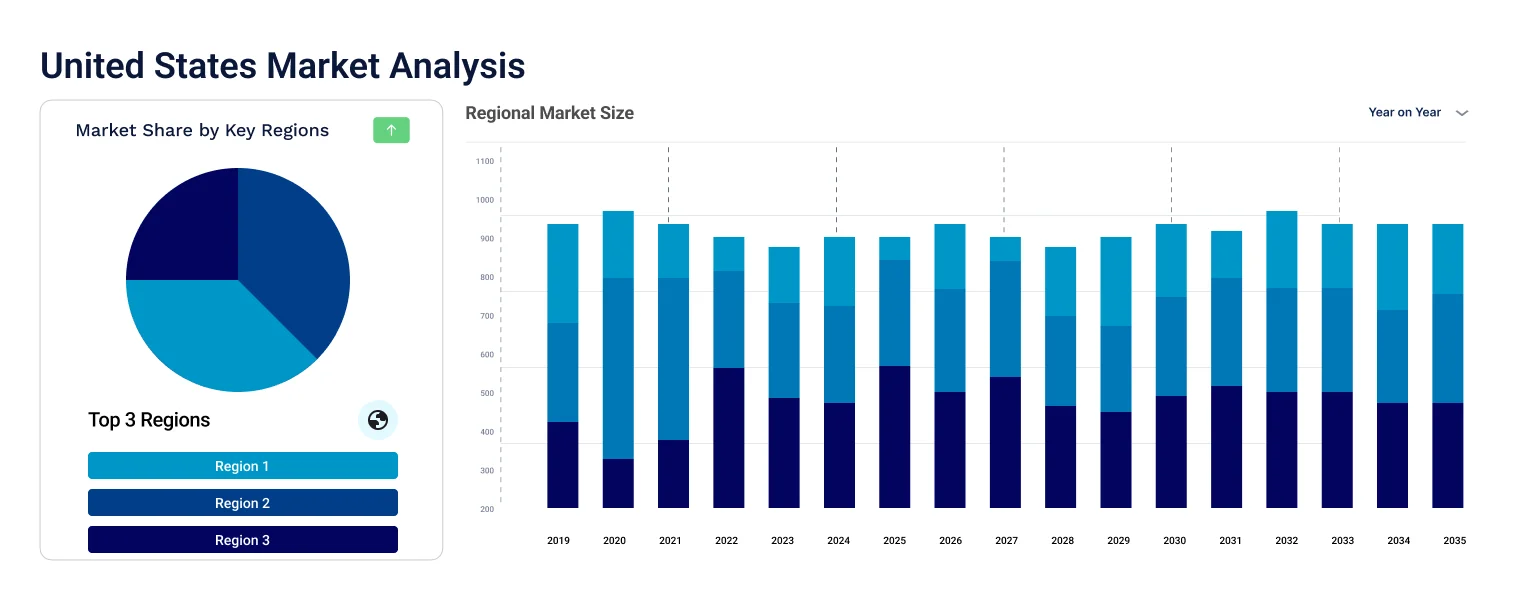
Great Lakes clocks in the largest share of the market due to strong industrial base and automation investments
The Great Lakes region secures the largest share of the United States packaging automation market revenue owing to the region’s existing manufacturing environment. The region's manufacturing industry, such as the automotive and food industry, requires packaging automation. The companies are looking for ways to automate the existing packaging systems to increase efficiency and lower costs. The region's labor and supply chains are also well developed, allowing companies to implement new technologies.
The Southeast region is also growing rapidly, especially because of the increase in industrial activities and expansion of the logistics sector. The region is witnessing the construction of new manufacturing plants and logistics facilities, leading to a surge in packaging automation demand. In addition, the growth of e-commerce companies is resulting in the adoption of these automated systems. The companies are establishing fulfillment centers and incorporating new technologies to increase efficiency. In March 2026, nVenia partnered with IPS Packaging & Automation to expand distribution of bag closing systems, strengthening regional service, support, and access across Southeastern United States.
The competitive environment of the market is shifting towards integrated solution offerings, which are flexible in nature. United States packaging automation companies are no longer just offering machinery; instead, they are offering integrated solution packages with software, robotics, and other technologies to improve the overall visibility of operations. There is a focus on modular solution offerings, which enable the scaling of operations without disrupting them significantly.
The market also observes an increasing number of partnerships between companies offering automation solutions and those offering technology solutions, which enables the development of an interconnected solution environment. The other focus area of the leading United States packaging automation market players is on offering support solutions, which enable them to maintain their operations in the long term. It is observed that companies offering integrated solution packages with support solutions are gaining a stronger competitive edge, as customers are increasingly looking for reliability.
Rockwell Automation Inc. was founded in 1903 and is headquartered in Milwaukee, United States. The company specializes in providing automation solutions that integrate hardware, software, and analytics. The company helps packaging companies achieve real-time monitoring, maintenance, and adjustments in production through connected environments.
Mitsubishi Electric Corp. was founded in 1921 and is headquartered in Tokyo, Japan. The firm specializes in packaging solutions that include robotics and automation. The company’s solutions are precise, efficient, and they integrate well with existing industrial environments.
ABB Ltd. was founded in 1988 and is headquartered in Zurich, Switzerland. The company specializes in robotics and automation solutions. They also offer AI-enabled robotic solutions for packaging industries that aim to increase speed, precision, and flexibility in production.
Emerson Electric Co. is an American-based firm founded in 1890 and operates its main office in St. Louis, United States. The firm provides process optimization solutions, including predictive maintenance and real-time monitoring within its packaging systems portfolio.
*Please note that this is only a partial list; the complete list of key players is available in the full report. Additionally, the list of key players can be customized to better suit your needs.*
Other key players in the market include Siemens AG, ATS Corp., JLS Automation, Dover Corporation (DESTACO), Harpak-ULMA Packaging, LLC, Massman Companies, Inc., among others.
Unlock the latest insights with our United States packaging automation market trends 2026 report. Discover regional growth patterns, consumer preferences, and key industry players. Stay ahead of competition with trusted data and expert analysis. Download your free sample report today and drive informed decisions in the United States packaging automation market.


Upto 15% Off
USD
$2499 $2249
$3999 $3599
$4999 $4249
$5999 $5099


*While we strive to always give you current and accurate information, the numbers depicted on the website are indicative and may differ from the actual numbers in the main report. At Expert Market Research, we aim to bring you the latest insights and trends in the market. Using our analyses and forecasts, stakeholders can understand the market dynamics, navigate challenges, and capitalize on opportunities to make data-driven strategic decisions.*
In 2025, the market reached an approximate value of USD 24.12 Billion.
The market is projected to grow at a CAGR of 5.70% between 2026 and 2035.
The market is assessed to witness healthy growth in the forecast period to reach around USD 41.99 Billion in 2035.
The different functions of packaging automation are filling, labelling, palletising, capping, wrapping, bagging, and case packaging, among others.
Based on product types, the market is divided into automated packagers, packaging robots, and automated conveyor and sortation systems.
The different offerings in the market include software and services.
The key players in the market include Rockwell Automation Inc., Mitsubishi Electric Corp., ABB Ltd., Emerson Electric Co., Siemens AG, ATS Corp., JLS Automation, Dover Corporation (DESTACO), Harpak-ULMA Packaging, LLC, Massman Companies, Inc., among others.
The market is broken down into New England, Mideast, Great Lakes, Plains, Southeast, Southwest, Rocky Mountain, and Far West.
High capital investment, difficulty integrating with legacy equipment, shortage of skilled operators, cybersecurity risks, and inconsistent system compatibility are limiting faster adoption of advanced packaging automation solutions across industries.
Companies are adopting modular automation, investing in AI-driven analytics, forming service partnerships, optimizing sustainable packaging processes, and integrating cloud-based monitoring systems to improve efficiency, scalability, and long-term operational performance.
Explore our key highlights of the report and gain a concise overview of key findings, trends, and actionable insights that will empower your strategic decisions.
| REPORT FEATURES | DETAILS |
| Base Year | 2025 |
| Historical Period | 2019-2025 |
| Forecast Period | 2026-2035 |
| Scope of the Report |
Historical and Forecast Trends, Industry Drivers and Constraints, Historical and Forecast Market Analysis by Segment:
|
| Breakup by Offering |
|
| Breakup by Function |
|
| Breakup by Product Type |
|
| Breakup by End Use |
|
| Breakup by Region |
|
| Market Dynamics |
|
| Competitive Landscape |
|
| Companies Covered |
|
Datasheet
One User
USD 2,499
USD 2,249
tax inclusive*
Single User License
One User
USD 3,999
USD 3,599
tax inclusive*
Five User License
Five User
USD 4,999
USD 4,249
tax inclusive*
Corporate License
Unlimited Users
USD 5,999
USD 5,099
tax inclusive*
*Please note that the prices mentioned below are starting prices for each bundle type. Kindly contact our team for further details.*
Flash Bundle
Small Business Bundle
Growth Bundle
Enterprise Bundle
*Please note that the prices mentioned below are starting prices for each bundle type. Kindly contact our team for further details.*
Flash Bundle
Number of Reports: 3
20%
tax inclusive*
Small Business Bundle
Number of Reports: 5
25%
tax inclusive*
Growth Bundle
Number of Reports: 8
30%
tax inclusive*
Enterprise Bundle
Number of Reports: 10
35%
tax inclusive*
How To Order

Select License Type
Choose the right license for your needs and access rights.

Click on ‘Buy Now’
Add the report to your cart with one click and proceed to register.

Select Mode of Payment
Choose a payment option for a secure checkout. You will be redirected accordingly.
Strategic Solutions for Informed Decision-Making
Gain insights to stay ahead and seize opportunities.

Get insights & trends for a competitive edge.

Track prices with detailed trend reports.

Analyse trade data for supply chain insights.

Leverage cost reports for smart savings

Enhance supply chain with partnerships.

Connect For More Information
Our expert team of analysts will offer full support and resolve any queries regarding the report, before and after the purchase.
Our expert team of analysts will offer full support and resolve any queries regarding the report, before and after the purchase.
We employ meticulous research methods, blending advanced analytics and expert insights to deliver accurate, actionable industry intelligence, staying ahead of competitors.
Our skilled analysts offer unparalleled competitive advantage with detailed insights on current and emerging markets, ensuring your strategic edge.
We offer an in-depth yet simplified presentation of industry insights and analysis to meet your specific requirements effectively.




