

Consumer Insights
Uncover trends and behaviors shaping consumer choices today
Procurement Insights
Optimize your sourcing strategy with key market data
Industry Stats
Stay ahead with the latest trends and market analysis.
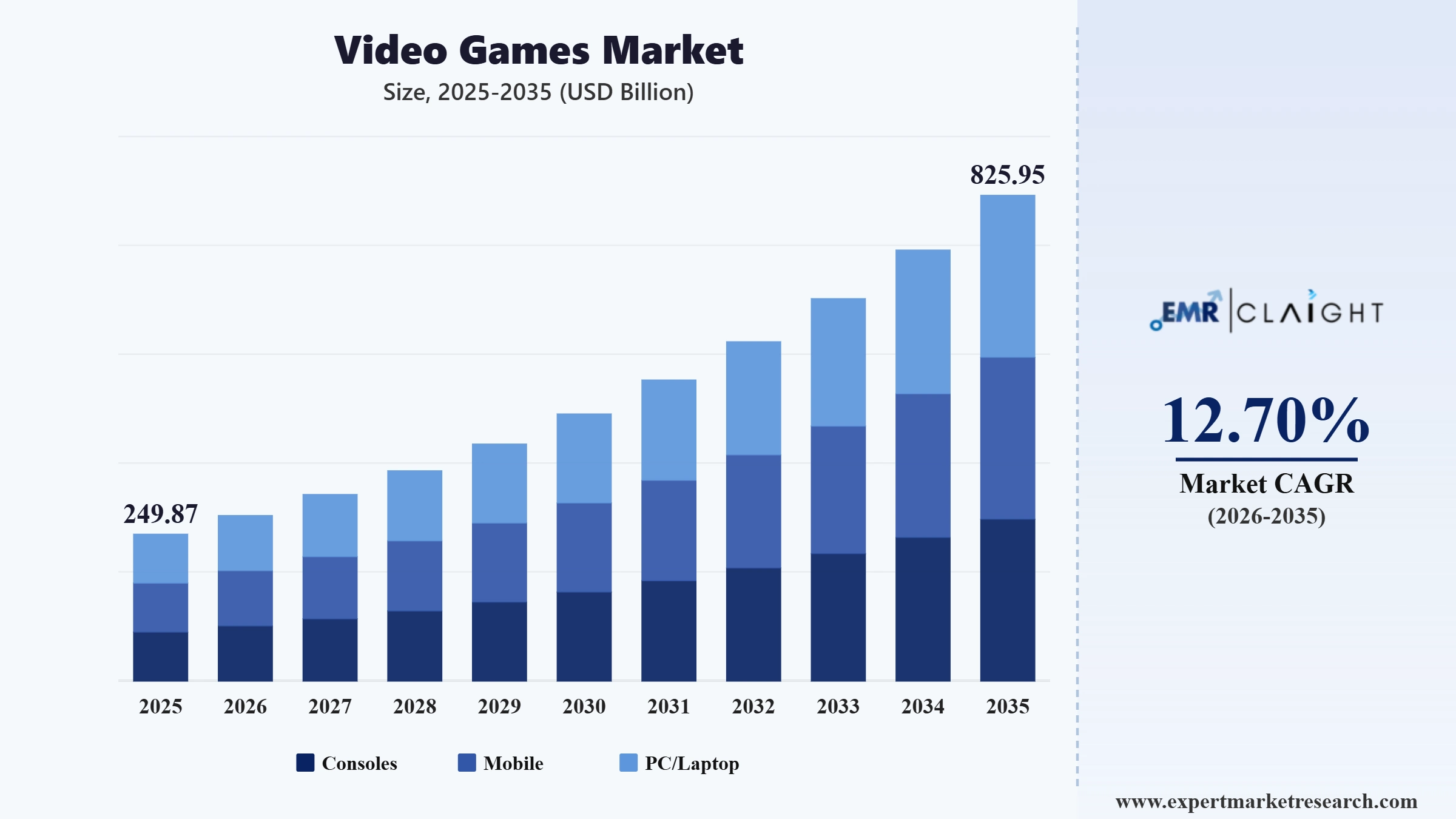
The global video games market attained a value of USD 249.87 Billion in 2025 and is projected to expand at a CAGR of 12.70% through 2035. The market is further expected to achieve USD 825.95 Billion by 2035. Expansion of cloud gaming infrastructure is enabling instant access models, allowing publishers to test new IP faster and monetize emerging markets, that were previously constrained by device ownership.
As platform owners look to widen player access and stabilize recurring revenue, lowering entry barriers has become a central competitive strategy across the industry. In June 2022, Microsoft expanded Xbox Game Pass by integrating cloud streaming directly into smart TVs and handheld devices, removing console dependency for millions of users. This shift matters for publishers because engagement hours rise when access friction drops. Microsoft disclosed that Game Pass subscribers spend significantly more time across first-party titles than non-subscribers, reinforcing subscription-led monetization. This trend in the video games market signals how platform holders are competing on distribution reach, reshaping how studios plan launches, content cadence, and long-term revenue visibility.
Publishers are developing live service infrastructure, cross-platform engines, and proprietary analytics. Companies like Electronic Arts and Take-Two are investing in in-house tools that track player behavior in real time, guiding content drops and monetization tuning. In November 2025, Unity and Epic Games announced that they are working together to bring Unity games into Fortnite, creating more opportunity and value for players and developers. Console makers now court PC and mobile ecosystems, while middleware providers scale cloud-based development kits, accelerating the video games market value.
Read more about this report - REQUEST FREE SAMPLE COPY IN PDF
| Global Video Games Market Report Summary | Description | Value |
| Base Year | USD Billion | 2025 |
| Historical Period | USD Billion | 2019-2025 |
| Forecast Period | USD Billion | 2026-2035 |
| Market Size 2025 | USD Billion | 249.87 |
| Market Size 2035 | USD Billion | 825.95 |
| CAGR 2019-2025 | Percentage | XX% |
| CAGR 2026-2035 | Percentage | 12.70% |
| CAGR 2026-2035 - Market by Region | Asia Pacific | 14.6% |
| CAGR 2026-2035 - Market by Country | India | 16.8% |
| CAGR 2026-2035 - Market by Country | China | 14.0% |
| CAGR 2026-2035 - Market by Device | Mobile | 14.2% |
| CAGR 2026-2035 - Market by Platform Type | Online | 16.9% |
| Market Share by Country 2025 | Germany | 4.2% |
Amazon Games and Crystal Dynamics presented the initial glimpse of Tomb Raider: Catalyst, at The Game Awards. The video game presents an entirely new chapter in the legendary series, set to debut in 2027. This launch reinforces how publishers are reviving legacy IP with long development runways to build sustained franchises rather than short-term releases in the global industry.
IO Interactive, the celebrated developer and publisher of the renowned HITMAN series, alongside Amazon MGM Studios, revealed that Grammy Award winner Lenny Kravitz has been added to the cast of 007 First Light as The Pirate King Bawma. IO Interactive’s celebrity casting highlights the video games market’s push toward cinematic storytelling that blurs film and gaming, attracting broader audiences and boosting cross-media engagement value.
Comcast and Amazon collaborated to introduce the Amazon Luna cloud gaming service on X1 and Xfinity Xumo Stream Box devices in the United States. The Luna rollout on X1 and Xumo Stream Box devices signals accelerating cloud gaming distribution, reducing hardware dependence and expanding reach across household entertainment ecosystems in the United States video games market.
Electronic Arts and Battlefield Studios unveiled Battlefield 6, the ultimate experience in large-scale combat. EA and Mother LA collaborated to create a live-action launch film campaign for Battlefield 6 squads, starring actor and producer Zac Efron, 6x NBA All-Star Jimmy Butler, chart-topping artist Morgan Wallen, and MMA fighter Paddy Pimblett. This shows how major publishers are pairing blockbuster gameplay with influencer-led marketing to amplify reach, deepen community engagement, and extend franchise longevity.
Subscription platforms are changing how publishers plan revenue and content cadence. Microsoft’s Xbox Game Pass and Sony’s expanded PlayStation Plus tiers have shifted value from single-title launches to sustained engagement. Publishers now negotiate inclusion deals that provide upfront guarantees while preserving DLC and in-game monetization. In October 2025, Amazon Luna launched more than 50 games for Prime members at no additional cost, including GameNight, an evolving collection of more than 25 approachable, local multiplayer games. Governments indirectly support this shift through digital infrastructure funding, for example, broadband expansion programs in the United States and Europe have improved access to cloud-based gaming services. For studios, subscriptions reduce launch risk but demand continuous content pipelines. This video games market trend is pushing mid-sized developers to partner with platforms earlier in development, reshaping publishing contracts and long-term IP planning.
Cloud gaming is accelerating market reach by removing hardware dependency. Companies like NVIDIA and Microsoft are scaling cloud delivery to smart TVs and low-end PCs, expanding addressable audiences. Government-backed cloud infrastructure initiatives in regions such as South Korea and Singapore support low-latency gaming services. This model benefits publishers by enabling faster market testing and global rollouts without console manufacturing constraints, redefining the video games market dynamics. In November 2025, Microsoft Corp.’s Xbox launched cloud gaming for users in India. While monetization models are still evolving, cloud gaming is increasingly viewed as a strategic distribution mode rather than a niche service, especially for emerging markets with mobile-first users.
Live-service titles dominate investment decisions as publishers seek predictable cash flows. Companies like Activision Blizzard and Epic Games continuously update flagship titles with seasonal content, cosmetic items, and limited-time events. Regulatory clarity around digital purchases, such as updated consumer protection guidelines in the EU, has helped stabilize monetization practices, driving the video games market value. In December 2025, Phygital International announced the official launch of the GOTF OTT Platform, the dedicated streaming destination for the Games of the Future 2025 Abu Dhabi powered by ADNOC. For publishers, live-service models demand robust backend infrastructure and community management. Here, the benefit is extended player lifecycles and higher lifetime value compared to traditional boxed releases.
Studios are adopting generative AI tools to reduce production costs and timelines. These tools allow teams to focus more on design and gameplay while reducing repetitive work. In December 2025, Beam announced the launch of its Veo 3.1-powered playable video platform, a new AI creation tool that allows creators to turn ordinary videos into playable mini-games and interactive AI stories in minutes, exemplifying new video games market opportunities. For B2B stakeholders, this trend opens opportunities for middleware providers offering compliant, studio-grade generative solutions tailored to game development workflows.
Localization is becoming a growth contributor as publishers focus more on global audiences. Asian developers increasingly partner with Western publishers to distribute regionally successful IP across the world. For example, Phrase is a Unity Verified Localization Solution, helping game developers scale at speed with high-quality multilingual content. This support lowers market entry barriers and improves global visibility for regional studios. Publishers now invest in localization, voice acting, and cultural adaptation in the earlier stages. For platforms and distributors, region-specific content improves user retention, broadening the video games market expansion. This trend highlights how games are treated not only as entertainment products but also as exportable digital assets within national growth strategies.
The EMR’s report titled “Global Video Games Market Report and Forecast 2026-2035” offers a detailed analysis of the market based on the following segments:
Market Breakup by Device
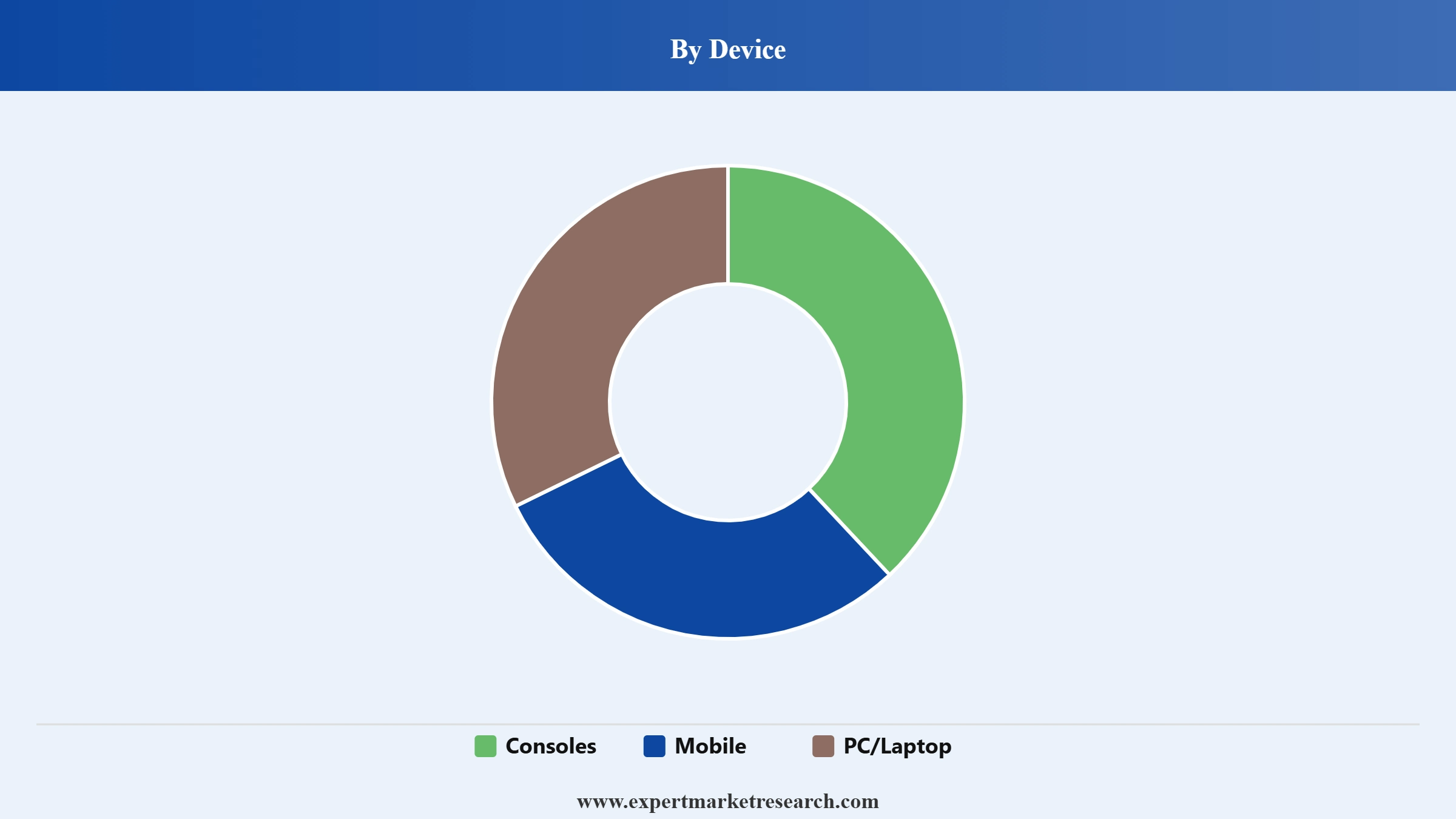
Key Insight: Mobile leads the video games industry through accessibility and data-driven monetization. Consoles are gaining popularity by evolving into service platforms. PC and laptop gaming remains relevant for competitive and creator-driven content. Platform flexibility is shaping investment decisions as each device serves a distinct role in player acquisition, engagement depth, and revenue optimization.
Market Breakup by Age Group
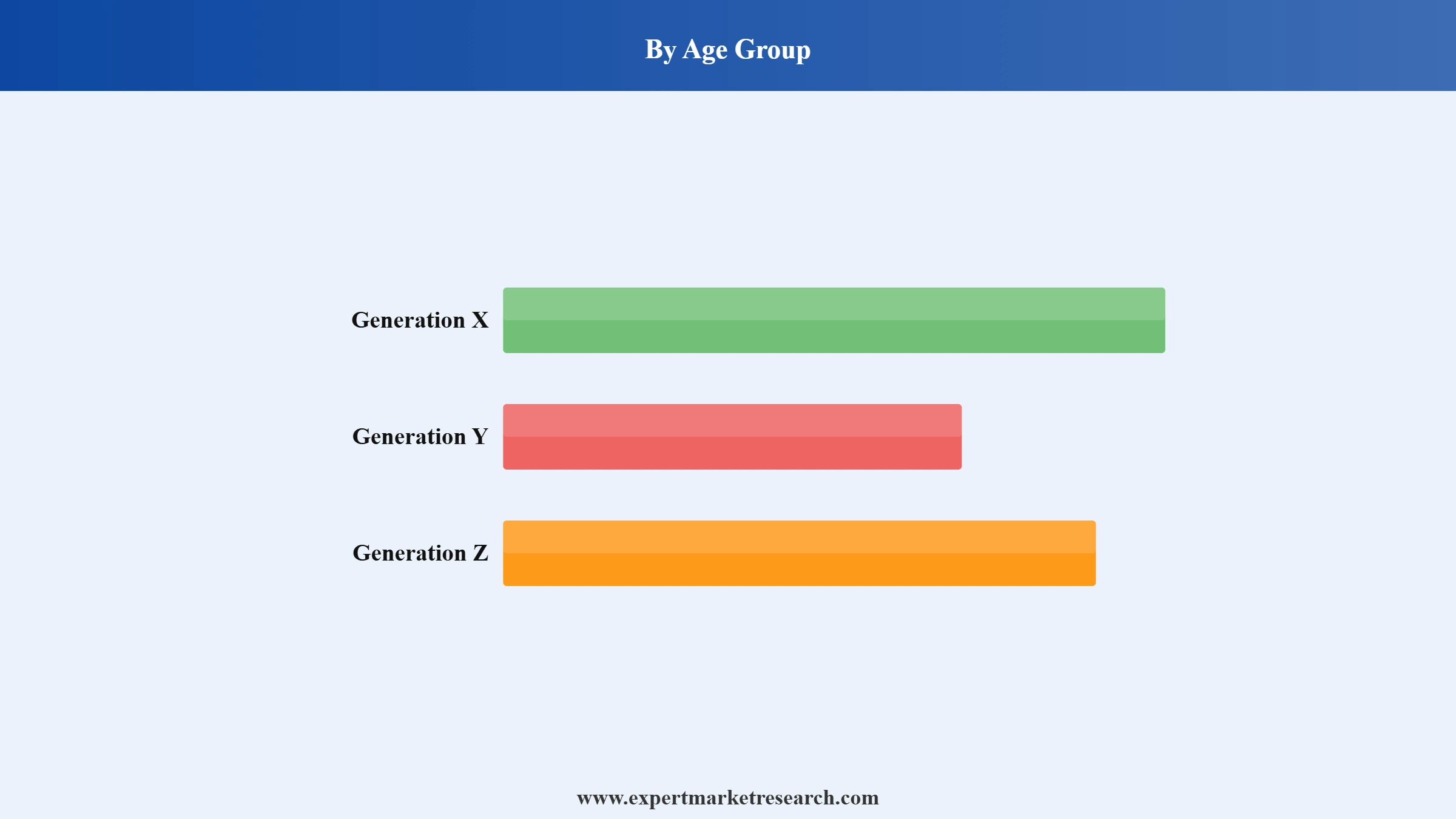
Key Insight: Age segmentation shapes content design and monetization. Generation Y dominates the video games market revenue share through consistent spending. Generation Z drives growth through engagement volume and cultural influence. Generation X remains selective but loyal to established franchises. Publishers increasingly segment content strategies by age behavior rather than demographics alone. Understanding attention spans across these age groups has also become critical.
Market Breakup by Platform Type
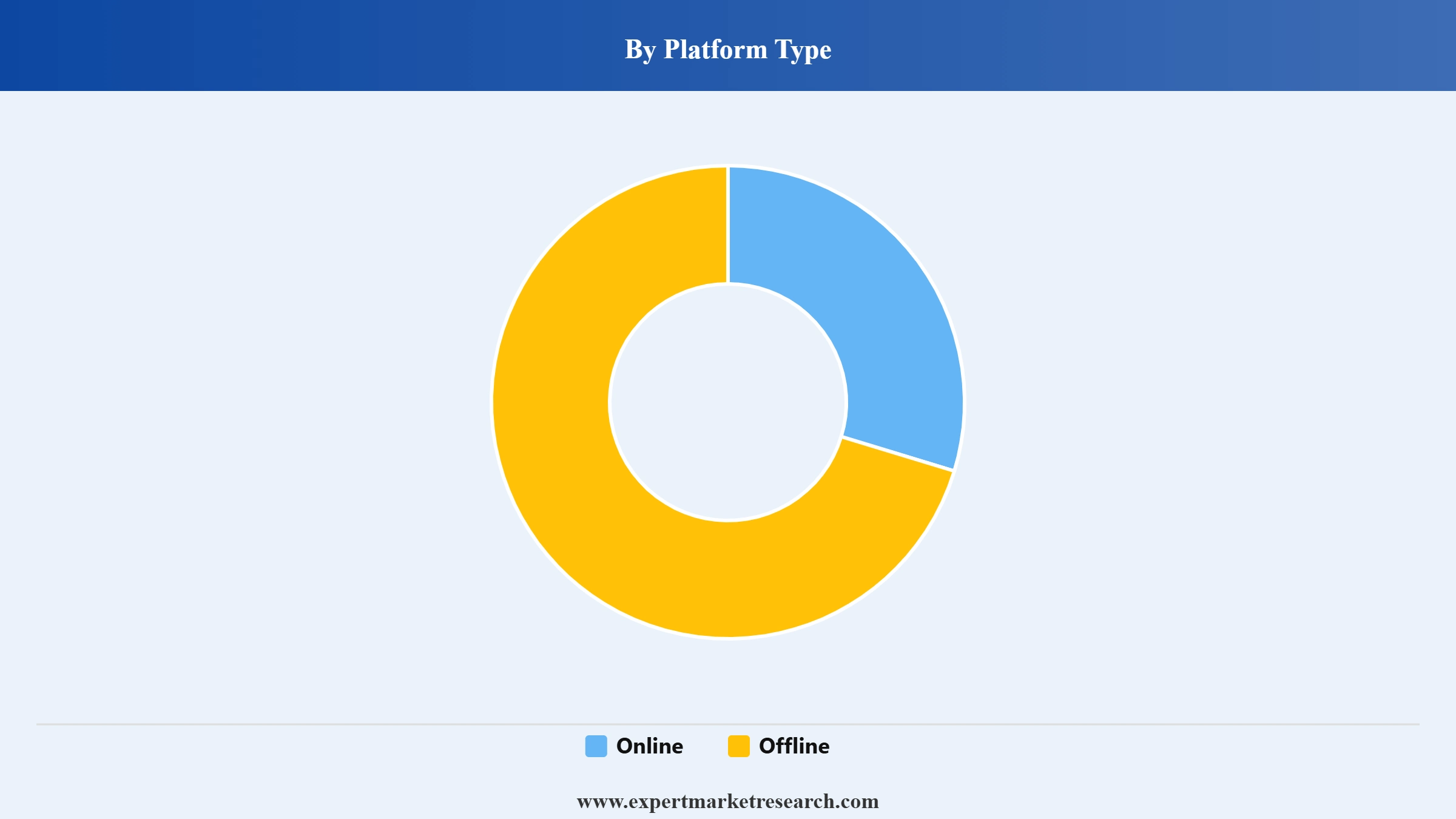
Key Insight: Online platforms dominate the video games market shares owing to rapid engagement and monetization. Offline platforms expand in regions where internet access, devices, or digital infrastructure remain limited. Publishers increasingly blend both of these modes to create hybrid designs and improve reach and resilience. Platform flexibility is becoming a competitive advantage, so this hybrid approach also lowers churn, supports regional scaling, and helps studios protect revenues when connectivity or platform access fluctuates unexpectedly.
Market Breakup by Region
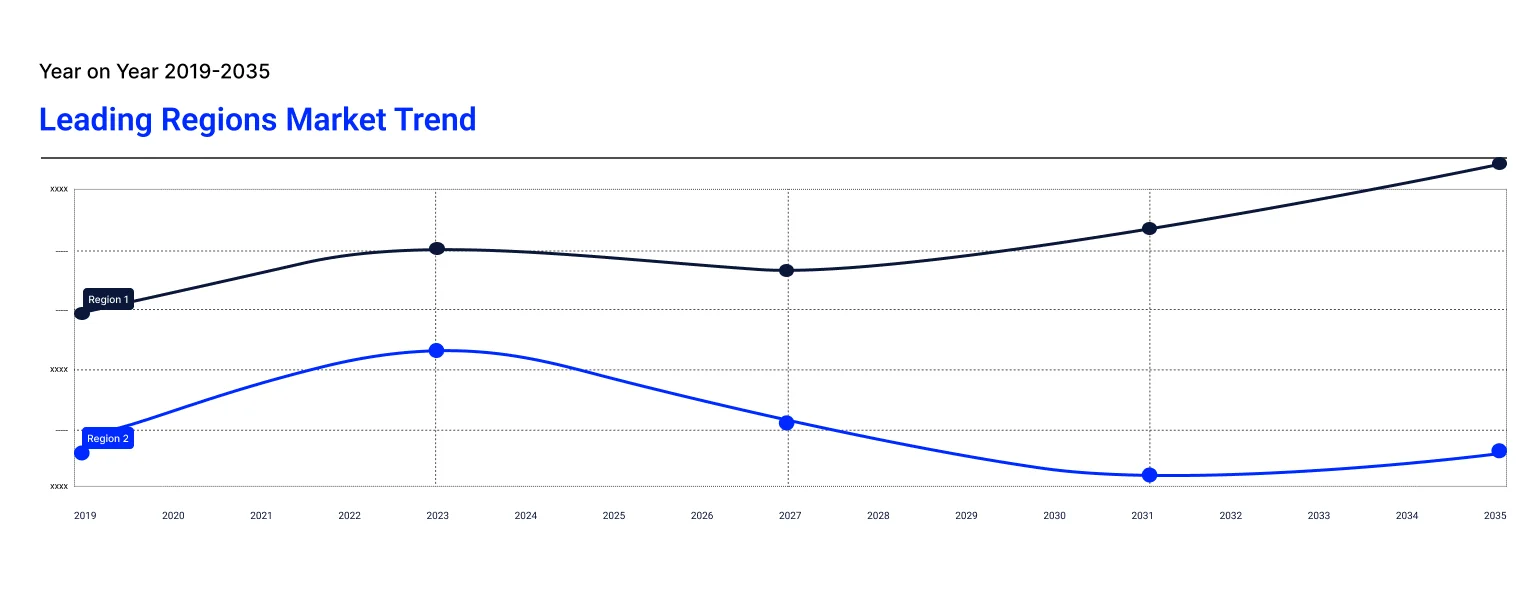
Key Insight: North America leads through platform ownership, studio capital, and strong IP control, allowing companies to set monetization norms. Asia Pacific grows at the fastest pace due to mobile-first scale, rapid innovation, and culturally adaptive content pipelines. Europe emphasizes regulation, data protection, and premium quality standards that influence design choices. The Latin America video games industry expands mainly through mobile access, affordable data plans, and social gaming formats. Middle East and Africa progress through infrastructure investment, youth demographics, and government-backed digital initiatives. Publishers increasingly tailor pricing, content cadence, and partnerships by region to manage risk and unlock engagement.
Read more about this report - REQUEST FREE SAMPLE COPY IN PDF
By device, mobile gaming accounts for the largest share due to accessibility and scale
Mobile gaming dominates the global market because it removes entry barriers for both players and publishers. Studios prioritize mobile-first launches since distribution relies on app stores rather than physical logistics. Monetization models favor frequent microtransactions and live events. Publishers benefit from rapid update cycles and real-time user data. In September 2024, Media company Future launched the Mobile Gaming Show, a new broadcast event that will highlight a range of exciting upcoming mobile games. Telecom upgrades and affordable smartphones support deeper penetration across emerging markets. Developers also test new IP on mobile before expanding to console or PC, accelerating the overall video games market revenue growth.
Read more about this report - REQUEST FREE SAMPLE COPY IN PDF
Console gaming is gaining major momentum in the market as platform holders invest in ecosystem expansion. Sony and Microsoft focus on subscription services, cloud access, and backward compatibility to extend console lifecycles. Exclusive titles remain important, but engagement hours now drive strategy. Developers favor consoles for high production value releases and stable monetization. Cross-play capabilities are pulling mobile and PC users into console ecosystems.
By age group, generation Y dominates the market due to spending power and engagement intensity
Generation Y is the main spending group, as publishers use live services and nostalgia-based franchises to drive recurring purchases, including season passes and premium subscriptions. Gen Y players also influence younger audiences through streaming and social platforms. Studios value this age group for stable engagement and willingness to pay for content depth, sustaining the overall demand in the video games market.
Read more about this report - REQUEST FREE SAMPLE COPY IN PDF
Generation Z is the fastest-growing audience due to digital-native behavior and social-first gaming habits. They engage through short sessions, creator content, and community-driven platforms. Game publishers design games with shareable moments and customization features. In this category, cross-platform access matters more than graphics fidelity. In July 2025, IGN Entertainment launched Gaming Trends, a data-driven insights platform that utilises the company's vast reach to predict the future direction of gaming and entertainment. Developers integrate social tools directly into gameplay. This group influences monetization innovation and content pacing.
Online platforms secure a substantial share of the market due to connectivity and service-based monetization
Online gaming dominates the video games market as publishers shift toward connected ecosystems. Live updates, multiplayer formats, and digital distribution define modern releases. Online platforms enable real-time analytics and faster iteration. Monetization extends through subscriptions, battle passes, and in-game purchases. Publishers rely on online infrastructure to maintain engagement beyond launch. Online access also supports esports and creator economies. For studios, online platforms reduce dependency on retail channels.
Read more about this report - REQUEST FREE SAMPLE COPY IN PDF
Offline gaming is experiencing rapid growth in the video games market in regions with inconsistent connectivity. Publishers optimize offline modes to reach broader audiences. Single-player experiences remain relevant for premium storytelling. Governments promoting digital inclusion indirectly support offline game accessibility. Developers bundle offline features to expand market reach. Growth is driven by necessity rather than preference. Offline capability improves retention where networks are unreliable.
North America secures the leading position of the market due to publisher concentration and platform ownership
North America leads the market due to the presence of major publishers and platform owners. Companies here control distribution, engines, and monetization frameworks. Strong IP portfolios drive global revenues. Government support for digital industries strengthens gaming infrastructure in the region, while consumer spending remains high. Developers benefit from mature investment ecosystems.
The video games market expansion across Asia Pacific is driven by mobile-first adoption and government-backed digital growth. Local publishers scale rapidly across borders. Governments support gaming as a creative export. Growth is engagement-led and culturally adaptive. Rising esports investment and regional streaming platforms further amplify visibility, while localized storytelling helps global publishers resonate with diverse youth audiences.
Competition in the market is increasingly shaped by platform ecosystems, service depth, and content ownership rather than one-time game launches. Leading video games market players are focusing on subscription models, cloud delivery, and cross-platform engagement to lock in long-term users. Opportunities can be found in live-service titles, proprietary engines, and creator-led monetization tools that extend game lifecycles.
Video game companies are also investing in first-party studios to control IP pipelines and reduce reliance on external releases. Another key focus is data-driven personalization, using player analytics to refine content pacing and monetization. As development costs rise, players that can scale distribution while managing risk gain an advantage. The competitive landscape favors firms that treat games as ongoing digital services, blending technology, content, and community control to sustain growth.
Established in 1946 and headquartered in Tokyo, Japan, Sony dominates through its PlayStation ecosystem and strong first-party studios. The company emphasizes premium exclusives, cinematic storytelling, and hardware-software integration. Sony also expands into PC ports and live-service experiments to extend IP reach beyond consoles.
Founded in 1975 and headquartered in the United States, Microsoft approaches gaming as a platform service. Xbox Game Pass, cloud gaming, and studio acquisitions define its strategy. Microsoft targets scale and accessibility, focusing on engagement hours rather than console sales alone.
Established in 1889 and headquartered in Kyoto, Japan, Nintendo differentiates through proprietary hardware and character-driven IP. The company prioritizes gameplay innovation and family-friendly franchises. Its closed ecosystem supports long hardware cycles and strong software attachment rates.
Founded in 2008 and headquartered in California, United States, Activision Blizzard specializes in live-service franchises. The company focuses on recurring monetization, esports integration, and long-running IP that generate steady engagement across platforms.
*Please note that this is only a partial list; the complete list of key players is available in the full report. Additionally, the list of key players can be customized to better suit your needs.*
Other key players in the market include Electronic Arts Inc., Epic Games, Inc., Take-Two Interactive Software, Inc, Rovio Entertainment Oyj, Lucid Games Limited, Tencent Holdings Ltd., and Bandai Namco Holdings Inc., among others.
Unlock the latest insights with our video games market trends 2026 report. Discover regional growth patterns, consumer preferences, and key industry players. Stay ahead of competition with trusted data and expert analysis. Download your free sample report today and drive informed decisions in the market.


Upto 15% Off
USD
$2499 $2249
$3999 $3599
$4999 $4249
$5999 $5099


*While we strive to always give you current and accurate information, the numbers depicted on the website are indicative and may differ from the actual numbers in the main report. At Expert Market Research, we aim to bring you the latest insights and trends in the market. Using our analyses and forecasts, stakeholders can understand the market dynamics, navigate challenges, and capitalize on opportunities to make data-driven strategic decisions.*
In 2025, the market reached an approximate value of USD 249.87 Billion.
The market is projected to grow at a CAGR of 12.70% between 2026 and 2035.
The market is estimated to witness healthy growth in the forecast period of 2026-2035 to reach a value of around USD 825.95 Billion by 2035.
Stakeholders are expanding service-based platforms, acquiring scalable IP, investing in analytics, strengthening cross-platform access, and building creator-friendly ecosystems to stabilize revenues and extend player lifetime value.
The key trends in the market include the penetration of modern technologies such as augmented and virtual reality, emerging online-gaming platforms, and growing number of live streamers.
Consoles, mobile, and PC/laptop are the different devices of video games in the market.
Generation X, Generation Y, and Generation Z are the different age groups of video games in the market.
Video games can improve cognitive development, stimulate brain cells, and helps improve the health of neural circuits.
Technologies such as augmented and virtual reality and cloud gaming helps video games by boosting graphics quality and enabling metaverse gaming.
The key players in the market include Sony Group Corporation, Microsoft Corporation, Nintendo Co., Ltd., Activision Blizzard, Inc., Electronic Arts Inc., Epic Games, Inc., Take-Two Interactive Software, Inc., Rovio Entertainment Oyj, Lucid Games Limited, Tencent Holdings Ltd., and Bandai Namco Holdings Inc., among others.
Rising development costs, talent retention pressure, regulatory scrutiny on monetization, platform fragmentation, and player fatigue are forcing companies to balance innovation speed with sustainable production and long-term engagement strategies.
Explore our key highlights of the report and gain a concise overview of key findings, trends, and actionable insights that will empower your strategic decisions.
| REPORT FEATURES | DETAILS |
| Base Year | 2025 |
| Historical Period | 2019-2025 |
| Forecast Period | 2026-2035 |
| Scope of the Report |
Historical and Forecast Trends, Industry Drivers and Constraints, Historical and Forecast Market Analysis by Segment:
|
| Breakup by Device |
|
| Breakup by Age Group |
|
| Breakup by Platform Type |
|
| Breakup by Region |
|
| Market Dynamics |
|
| Competitive Landscape |
|
| Companies Covered |
|
Datasheet
One User
USD 2,499
USD 2,249
tax inclusive*
Single User License
One User
USD 3,999
USD 3,599
tax inclusive*
Five User License
Five User
USD 4,999
USD 4,249
tax inclusive*
Corporate License
Unlimited Users
USD 5,999
USD 5,099
tax inclusive*
*Please note that the prices mentioned below are starting prices for each bundle type. Kindly contact our team for further details.*
Flash Bundle
Small Business Bundle
Growth Bundle
Enterprise Bundle
*Please note that the prices mentioned below are starting prices for each bundle type. Kindly contact our team for further details.*
Flash Bundle
Number of Reports: 3
20%
tax inclusive*
Small Business Bundle
Number of Reports: 5
25%
tax inclusive*
Growth Bundle
Number of Reports: 8
30%
tax inclusive*
Enterprise Bundle
Number of Reports: 10
35%
tax inclusive*
How To Order

Select License Type
Choose the right license for your needs and access rights.

Click on ‘Buy Now’
Add the report to your cart with one click and proceed to register.

Select Mode of Payment
Choose a payment option for a secure checkout. You will be redirected accordingly.
Strategic Solutions for Informed Decision-Making
Gain insights to stay ahead and seize opportunities.

Get insights & trends for a competitive edge.

Track prices with detailed trend reports.

Analyse trade data for supply chain insights.

Leverage cost reports for smart savings

Enhance supply chain with partnerships.

Connect For More Information
Our expert team of analysts will offer full support and resolve any queries regarding the report, before and after the purchase.
Our expert team of analysts will offer full support and resolve any queries regarding the report, before and after the purchase.
We employ meticulous research methods, blending advanced analytics and expert insights to deliver accurate, actionable industry intelligence, staying ahead of competitors.
Our skilled analysts offer unparalleled competitive advantage with detailed insights on current and emerging markets, ensuring your strategic edge.
We offer an in-depth yet simplified presentation of industry insights and analysis to meet your specific requirements effectively.




