

Consumer Insights
Uncover trends and behaviors shaping consumer choices today
Procurement Insights
Optimize your sourcing strategy with key market data
Industry Stats
Stay ahead with the latest trends and market analysis.
The global virtual reality glove market attained a value of USD 1.65 Billion in 2025 and is projected to expand at a CAGR of 17.30% through 2035. The market is further expected to achieve USD 8.14 Billion by 2035. With more enterprises using immersive training platforms, the need for reliable, accurate haptic gloves that can withstand repeated usage is growing rapidly. As a result, manufacturers are focusing on aspects such as reliability, the stability of sensor calibration, and long-term software compatibility across different platforms.
The virtual reality glove market benefits from the convergence of robotics, digital twins, and remote operations. These gloves are being increasingly employed for the direct control of robotic systems and the verification of digital workflows. Hence, the demand for bidirectional force feedback and high-precision motion capture is generated. Manufacturers are investing in hybrid solutions that offer a combination of tactile realism and industrial-strength durability.
Firms are focusing on pilot deployments with aerospace and military contractors, indicating the demand is growing beyond the gaming sector. Companies like HaptX are launching microfluidic haptic glove platforms by embedding higher density tactile actuators that were geared towards industrial simulation and defense training programs. In June 2024, HaptX started distributing G1 gloves, delivering world-leading tactile feedback for virtual environments, enhancing realistic touch sensation in training and simulation applications in North America. It is worth noting that the United States Department of Defense has increased funding allocations for immersive training technologies under its digital modernization roadmap, accelerating the virtual reality glove market growth. For example, in January 2026, AIM secured a USD 49 million Air Force AI platform contract, advancing immersive training applications for defense operations and autonomous systems.
Underlying demand in the virtual reality glove market is being structurally shaped by the enterprise simulation adoption trend across such sectors as manufacturing, healthcare, and defense. Companies are integrating such tools into their recurring training workflows. This, in turn, has geared manufacturers towards designing gloves that can be worn for a long time, that are modular and easily serviced, while featuring interoperable software. Brands focus their efforts on improving the accuracy of their sensors, the stability of calibration, and the capability to work with the existing XR platforms. For example, in March 2025, SenseGlove and Aeon Robotics unveiled the HEART project, combining advanced haptic gloves with robotics for immersive, tactile feedback in simulation and training.
Compound Annual Growth Rate
17.3%
Value in USD Billion
2026-2035
Read more about this report - REQUEST FREE SAMPLE COPY IN PDF
SenseGlove introduced R1, an advanced exoskeleton glove enabling precise robotic control and imitation learning for industrial training environments. Other companies can also target industrial automation clients by integrating force-feedback gloves with robotics and digital twin simulation platforms, capitalizing on such developments in the virtual reality glove market.
UDEXREAL launched UDCAP VR gloves controller featuring lightweight design and enhanced motion capture for immersive virtual interaction. Hence, competitors can focus on ergonomic, cost-efficient motion tracking gloves to penetrate gaming, training, and educational VR ecosystems.
Sharp revealed a hybrid VR glove combining tactile haptics with traditional physical controls for improved precision and user familiarity. Firms can develop hybrid input systems blending haptics and manual controls to attract enterprise simulation and prototyping sectors, leveraging such virtual reality glove market trends.
Japanese developers launched haptic VR gloves capable of simulating punches and physical contact for immersive gaming and training realism. Therefore, brands can invest in high-fidelity tactile feedback to capture defense, sports simulation, and advanced training applications.
Enterprise training is one of the main avenues for growth in the virtual reality glove market. Manufacturing companies utilize gloves for assembly line simulations and safety drills. Healthcare centers are using them for surgeons to rehearse operations. Military departments are investing in combat and equipment maintenance training through VR. European and North American governments are actively encouraging XR-based workforce development initiatives. VR glove makers are changing models to accommodate longer sessions and more frequent use. In April 2024, SenseGlove began global shipments of Nova 2 haptic gloves, delivering refined tactile feedback for immersive VR training and simulation applications.
VR glove haptics is rapidly becoming one of the most essential elements that distinguish the competitors. Firms engage in R&D related to force feedback, pressure simulation, and increasing tactile resolution. For example, in January 2026, Edinburgh scientists developed new sensor glove technology that could help robots use their hands in more human-like ways. These technical breakthroughs make it possible to interact with inanimate objects in a highly realistic manner, accelerating the virtual reality glove market value. Industrial users need accurate sensation for training to be precise. Suppliers that are able to demonstrate a higher level of feedback fidelity are expected to be chosen for pilot programs.
Digital twin adoption is expanding across industrial sectors, while reshaping the virtual reality glove market dynamics. VR gloves enable intuitive interaction with virtual replicas of equipment and processes. Manufacturers and utilities use gloves to test workflows before physical execution. VR glove suppliers are aligning APIs with simulation software providers to reduce deployment friction. In December 2025, Fluid Reality introduced its cutting-edge haptic VR gloves, unlocking enhanced tactile feedback and immersive interaction capabilities.
Defense and public sector applications are accelerating virtual reality glove demand. Military training requires realistic hand interaction for weapon handling and equipment maintenance. Suppliers meeting defense-grade durability standards gain long-term contracts. VR gloves in this segment must perform reliably under heavy usage. Product development emphasizes robustness and precision. Public sector procurement favors suppliers with compliance readiness. This trend in the virtual reality glove market strengthens company credibility and supports scaling beyond commercial entertainment markets. In December 2025, Deep tech startup Cybosense BV partnered with SenseGlove to develop self-healing, bioelectronic 3D printed smart gloves.
Manufacturers are redesigning materials and weight distribution to support longer training sessions. Comfortable gloves reduce adoption resistance. Suppliers focusing on wearability gain higher usage rates. This trend aligns hardware design with human factors engineering. Ergonomics has now become a functional requirement that is significantly redefining the virtual reality glove market trends. Companies addressing this effectively see better retention in enterprise deployments. For example, HaptX offers Gloves DK2, delivering realistic contact haptics for virtual reality and robotics, enhancing tactile immersion in simulation and interaction.
Read more about this report - REQUEST FREE SAMPLE COPY IN PDF
The EMR’s report titled “Global Virtual Reality Glove Market Report and Forecast 2026-2035” offers a detailed analysis of the market based on the following segments:
Market Breakup by Type
Key Insight: Type segmentation as considered in the virtual reality glove market report reflects a balance between performance stability and operational flexibility. Wired gloves dominate applications where precision and security matters, while wireless gloves grow popular where mobility improves training realism. Vendors increasingly design shared platforms supporting both of these segments. Modular architectures allow customers to switch configurations. Procurement decisions depend on application criticality and space constraints. This structure encourages suppliers to balance engineering rigor with user convenience.
Market Breakup by Application
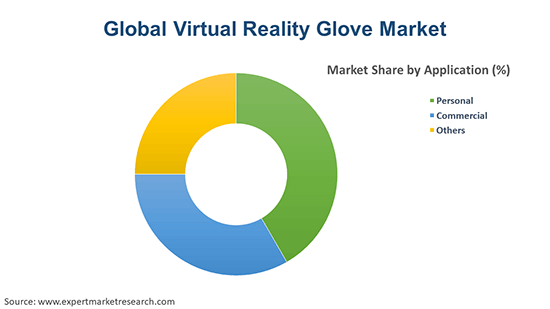
Key Insight: Commercial users demand reliability and integration. On the other hand, personal users prioritize comfort and accessibility. Others include research and experimental use. Vendors balance these needs through tiered product lines and boost the overall virtual reality glove market penetration. Application focus shapes pricing and support models. Companies are increasingly aligning designs to user intent to gain traction. This segmentation reinforces that VR gloves are not one-size solutions.
Market Breakup by Industry
Key Insight: Industrial and defense sectors boost structured demand in the virtual reality glove market. Healthcare and education grow steadily, while the gaming and entertainment sectors influence innovation. Industry focus impacts design priorities and certification needs as a balanced exposure across industries reduces risk. For example, Teslasuit provides a full-body haptic and motion capture system with biometric tracking, enabling realistic touch, force feedback, and training analytics in virtual environments. This segmentation shows how VR gloves transition from novelty to infrastructure tools.
Market Breakup by Region
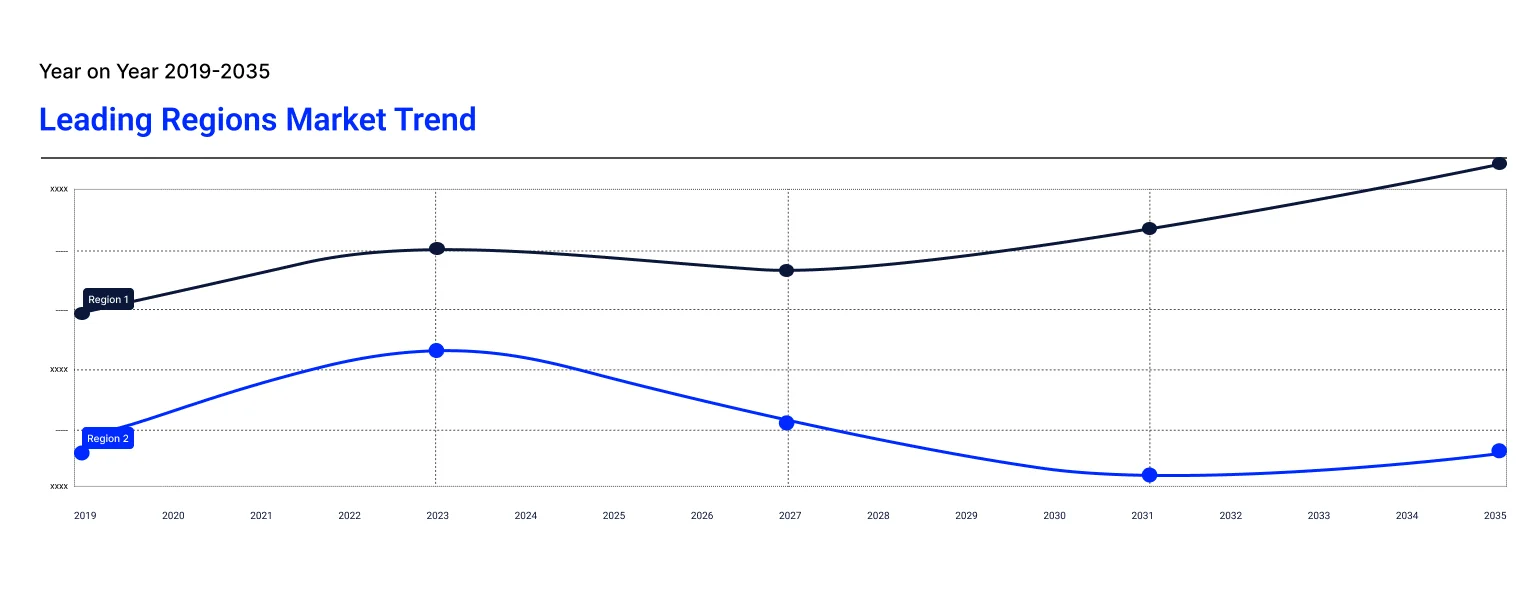
Key Insight: Regional virtual reality glove market dynamics shape adoption pace and product strategy. North America leads through structured enterprise demand and defense programs while Europe emphasizes standards and validation. Asia Pacific drives growth through scale and workforce digitization. Latin America advances gradually with education-led adoption and Middle East and Africa expand their shares through government-backed training projects. Regional alignment improves deployment success and long-term supplier relevance across the market.
Wired VR gloves dominate adoption due to latency critical enterprise use
For performance reliability reasons, wired virtual reality gloves continue to be the leading type. Industrial applications, defense/soldier training, and healthcare/medical facilities tend to focus on low latency and uninterrupted data streams as their main requirements. Some companies even market their wired setups as reference-grade hardware that can be used for demanding or mission critical jobs. Such gloves are directly merged with simulation setups and computing clusters. In May 2023, SenseGlove revealed the Nova 2, a next-generation haptic VR glove offering refined force feedback and ergonomic design for immersive virtual interactions.
Wireless virtual reality gloves are also contributing to the virtual reality glove market revenue as enterprises seek greater movement freedom. Training scenarios increasingly involve large physical spaces. Wireless designs enable natural interaction without tether constraints. Manufacturers are improving battery efficiency and signal stability to meet enterprise expectations. Product roadmaps emphasize lightweight construction and extended session support. Wireless gloves appeal strongly to education and commercial training providers.
Commercial applications largely accelerate demand in the market due to institutional training adoption
Commercial applications capture the dominant share of the virtual reality glove market as enterprises integrate VR gloves into training and simulation workflows. Manufacturing firms use gloves for assembly validation. Healthcare providers deploy them for procedural practice and defense contractors apply them in skill rehearsal. These users demand reliability and repeatability. Vendors tailor gloves for long sessions and shared use. Product strategies emphasize serviceability and software compatibility. Commercial buyers prefer long-term vendor relationships and technical support.
Personal applications are also gaining rapid momentum as immersive content expands beyond gaming. Consumers seek realistic interaction in home VR setups, demanding wireless gloves. Manufacturers focus on comfort and affordability. Personal users value ease of setup and intuitive design. This segment benefits from rising interest in immersive fitness and creative tools. While volumes are smaller per buyer, scale potential is high in this category. In January 2023, Singapore scientists developed a VR glove simulating realistic touch sensations, enhancing immersion for training and virtual environment interactions.
The industrial sector captures a significant share of the market due to simulation driven skill training
Industrial use dominates virtual glove adoption as companies digitize training processes. Manufacturing firms deploy gloves for equipment handling simulation while utilities use them for maintenance planning. These applications reduce physical risk and downtime. Vendors design gloves for precision and repeatability; their product development strategies focus on compatibility with digital twin platforms. Industrial buyers require measurable outcomes from training programs to drive structured procurement. In June 2024, WEart launched the TouchDiver Pro haptic glove, enabling enhanced tactile feedback and immersive experiences across extended reality applications.
Defense emerges to be the fastest-growing industry segment across the virtual reality glove market scope due to immersive training priorities. Military organizations use VR gloves for tactical and equipment simulations. Governments allocate funding to reduce live training costs. Vendors who are meeting defense standards by integrating high realism and durability, gain long-term contracts. Growth in this particular category is driven by modernization programs and simulation mandates.
Read more about this report - REQUEST FREE SAMPLE COPY IN PDF
North America dominates deployments due to defense and enterprise XR funding
North America continues to dominate the virtual reality glove market due to sustained enterprise and public sector investment. Defense agencies, industrial manufacturers, and healthcare institutions lead adoption. Buyers in this region demand high fidelity haptics and system reliability. Vendors are supplying gloves designed for long training cycles and repeated daily usage. North American B2B customers favor suppliers offering strong technical support and upgrade paths.
Asia Pacific currently represents the fastest growing regional market as governments and enterprises scale digital training infrastructure. Manufacturing hubs, technical education centers, and vocational programs are adopting immersive tools. VR gloves support skill development without physical risk. Vendors are adjusting designs to support cost efficiency and rapid deployment. Regional governments support immersive learning initiatives, which accelerate institutional procurement. Companies like AjnaLens are offering haptic gloves in India, featuring immersive tactile feedback for VR experiences and interactive applications.
The competitive landscape for the market is moving away from experimental hardware towards deployment-ready systems for enterprise use. Top virtual reality glove market players are focusing on precision haptics, low-latency motion capture, and long wear comfort to satisfy industrial training needs. The most robust opportunities lie in defense simulation, digital twin interaction, and healthcare rehearsal where gloves are an integral part of daily workflows.
Virtual reality glove companies are dedicating their resources to developing modular designs that make maintenance easier and allow component upgrades. Software compatibility is gradually becoming equally important to hardware quality. Those companies that manage to align gloves with simulation platforms secure long-term contracts. Players that bring together reliable hardware, scalable manufacturing, and integration services are well positioned to transform pilot programs into recurring procurement relationships.
Manus Machinae BV, founded in 2014 and located in Eindhoven, Netherlands, is a developer of professional grade data gloves for motion capture and enterprise simulation. The company stresses precise finger tracking and robust sensor calibration. Manus caters to industrial training, animation, and research communities. Its gloves are compatible with major simulation engines.
Neurodigital Technologies, S.L., founded in 2012 and located in Spain, is a company specializing in wearable haptic gloves for immersive interaction. Among the company's main points of emphasis is tactile feedback realism through the use of vibrotactile arrays. Neurodigital is a business that provides customer training, research, and industrial prototyping. Its product development is comfort and portability focused.
Vivoxie S. de R.L. de C.V., a company founded in 2009, based in Mexico City, concentrates on lightweight wireless haptic gloves. The firm’s main target is the education and commercial simulation market. Vivoxie concentrates mainly on keeping things simple to deploy and portable. Its gloves are made for multiuser environments and training labs.
Dexta Robotics, established in 2014 and headquartered in China, is a creator of exoskeleton style haptic gloves for force feedback. The business is dedicated to providing ultra-high-fidelity interaction aimed at robotics control and industrial simulation. Dexta is the service provider of research institutions and advanced manufacturing users.
*Please note that this is only a partial list; the complete list of key players is available in the full report. Additionally, the list of key players can be customized to better suit your needs.*
Other key players in the market include Noitom International Inc., among others.
Unlock the latest insights with our virtual reality glove market trends 2026 report. Discover regional growth patterns, consumer preferences, and key industry players. Stay ahead of competition with trusted data and expert analysis. Download your free sample report today and drive informed decisions in the market.
Virtual Reality Glove Demand Surge
Virtual Reality Glove Commercialization Trends
Virtual Reality Glove Product Innovation Pathways


Upto 15% Off
USD
$2499 $2249
$3999 $3599
$4999 $4249
$5999 $5099


*While we strive to always give you current and accurate information, the numbers depicted on the website are indicative and may differ from the actual numbers in the main report. At Expert Market Research, we aim to bring you the latest insights and trends in the market. Using our analyses and forecasts, stakeholders can understand the market dynamics, navigate challenges, and capitalize on opportunities to make data-driven strategic decisions.*
The market is projected to grow at a CAGR of 17.30% between 2026 and 2035.
Stakeholders are investing in sensor accuracy, expanding software partnerships, improving ergonomics, localizing support teams, targeting enterprise training contracts, and aligning glove development with defense, healthcare, and industrial simulation requirements globally.
The virtual reality glove market is being aided by the diversity of applications of the product across various industries.
The major regions in the industry are North America, Latin America, the Middle East and Africa, Europe, and the Asia Pacific.
Wired and wireless are the leading types in the industry.
Personal and commercial, among others are the leading applications in the industry.
Gaming, entertainment, industrial, defence, healthcare, and education, among others are the leading industries in the industry.
The key players in the market include Manus Machinae BV, Neurodigital Technologies, S.L., Vivoxie S. de R.L. de C.V., Dexta Robotics, and Noitom International Inc., among others.
In 2025, the market reached an approximate value of USD 1.65 Billion.
Companies face challenges including high production costs, limited standardization, complex calibration requirements, durability constraints under heavy use, slow enterprise adoption cycles, and the need to balance realism with comfort levels.
Explore our key highlights of the report and gain a concise overview of key findings, trends, and actionable insights that will empower your strategic decisions.
| REPORT FEATURES | DETAILS |
| Base Year | 2025 |
| Historical Period | 2019-2025 |
| Forecast Period | 2026-2035 |
| Scope of the Report |
Historical and Forecast Trends, Industry Drivers and Constraints, Historical and Forecast Market Analysis by Segment:
|
| Breakup by Type |
|
| Breakup by Application |
|
| Breakup by Industry |
|
| Breakup by Region |
|
| Market Dynamics |
|
| Competitive Landscape |
|
| Companies Covered |
|
| Report Price and Purchase Option | Explore our purchase options that are best suited to your resources and industry needs. |
| Delivery Format | Delivered as an attached PDF and Excel through email, with an option of receiving an editable PPT, according to the purchase option. |
Datasheet
One User
USD 2,499
USD 2,249
tax inclusive*
Single User License
One User
USD 3,999
USD 3,599
tax inclusive*
Five User License
Five User
USD 4,999
USD 4,249
tax inclusive*
Corporate License
Unlimited Users
USD 5,999
USD 5,099
tax inclusive*
*Please note that the prices mentioned below are starting prices for each bundle type. Kindly contact our team for further details.*
Flash Bundle
Small Business Bundle
Growth Bundle
Enterprise Bundle
*Please note that the prices mentioned below are starting prices for each bundle type. Kindly contact our team for further details.*
Flash Bundle
Number of Reports: 3
20%
tax inclusive*
Small Business Bundle
Number of Reports: 5
25%
tax inclusive*
Growth Bundle
Number of Reports: 8
30%
tax inclusive*
Enterprise Bundle
Number of Reports: 10
35%
tax inclusive*
How To Order

Select License Type
Choose the right license for your needs and access rights.

Click on ‘Buy Now’
Add the report to your cart with one click and proceed to register.

Select Mode of Payment
Choose a payment option for a secure checkout. You will be redirected accordingly.
Strategic Solutions for Informed Decision-Making
Gain insights to stay ahead and seize opportunities.

Get insights & trends for a competitive edge.

Track prices with detailed trend reports.

Analyse trade data for supply chain insights.

Leverage cost reports for smart savings

Enhance supply chain with partnerships.

Connect For More Information
Our expert team of analysts will offer full support and resolve any queries regarding the report, before and after the purchase.
Our expert team of analysts will offer full support and resolve any queries regarding the report, before and after the purchase.
We employ meticulous research methods, blending advanced analytics and expert insights to deliver accurate, actionable industry intelligence, staying ahead of competitors.
Our skilled analysts offer unparalleled competitive advantage with detailed insights on current and emerging markets, ensuring your strategic edge.
We offer an in-depth yet simplified presentation of industry insights and analysis to meet your specific requirements effectively.




