

Consumer Insights
Uncover trends and behaviors shaping consumer choices today
Procurement Insights
Optimize your sourcing strategy with key market data
Industry Stats
Stay ahead with the latest trends and market analysis.
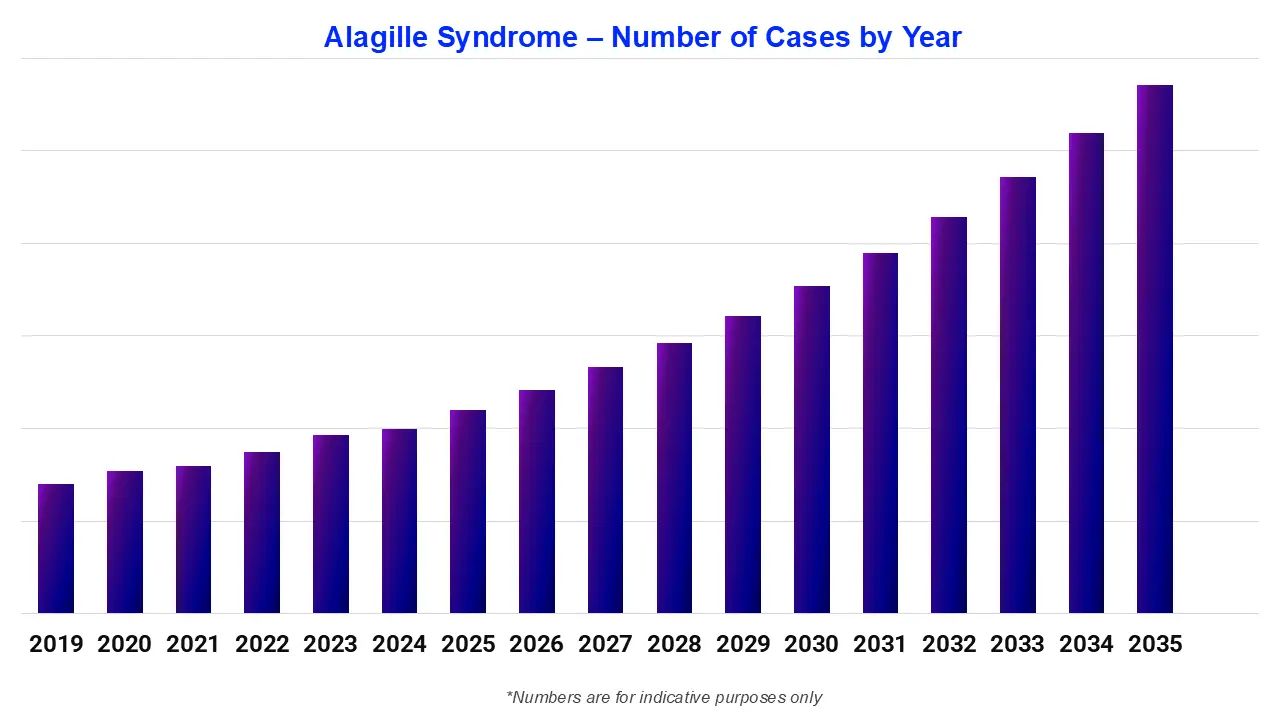
Alagille syndrome is a rare, inherited genetic disorder that primarily affects the liver, heart, kidneys, skeleton, and other organs due to abnormalities in bile duct development. According to Shreya Sodhani et al. (2026), the condition affects males and females equally, with an estimated incidence of 1 in 30,000 to 50,000 live births worldwide. As per Alagille syndrome epidemiology forecast by Expert Market Research, ongoing advances in diagnosis are expected to improve disease identification and patient management.
Base Year
Historical Period
Forecast Period
Read more about this report - Request a Free Sample
Expert Market Research's “Alagille Syndrome Epidemiology Forecast Report 2026-2035” offers comprehensive information on the prevalence and demographics of Alagille syndrome. It projects the future incidence and prevalence rates of Alagille syndrome cases across various populations. The study covers age, gender, and type as major determinants of the Alagille syndrome population. The report highlights patterns in the prevalence of Alagille syndrome over time and projects future trends based on multiple variables.
The report provides a comprehensive overview of the disease, as well as historical and projected data on the epidemiology of Alagille syndrome in the 8 major markets.
Regions Covered
Alagille syndrome is a rare, inherited multisystem disorder primarily caused by pathogenic variants in the JAG1 gene and, less commonly, the NOTCH2 gene, resulting in abnormal Notch signaling during embryonic development. The condition mainly affects the liver, heart, skeleton, eyes, kidneys, and blood vessels. Chronic cholestasis caused by a reduced number of intrahepatic bile ducts is a hallmark feature, often leading to impaired bile flow and progressive liver damage. Cholestatic liver disease is a key clinical characteristic, and the disorder is generally classified based on genetic etiology or the severity of organ involvement rather than distinct disease types.
|
Parameter |
Insight |
|
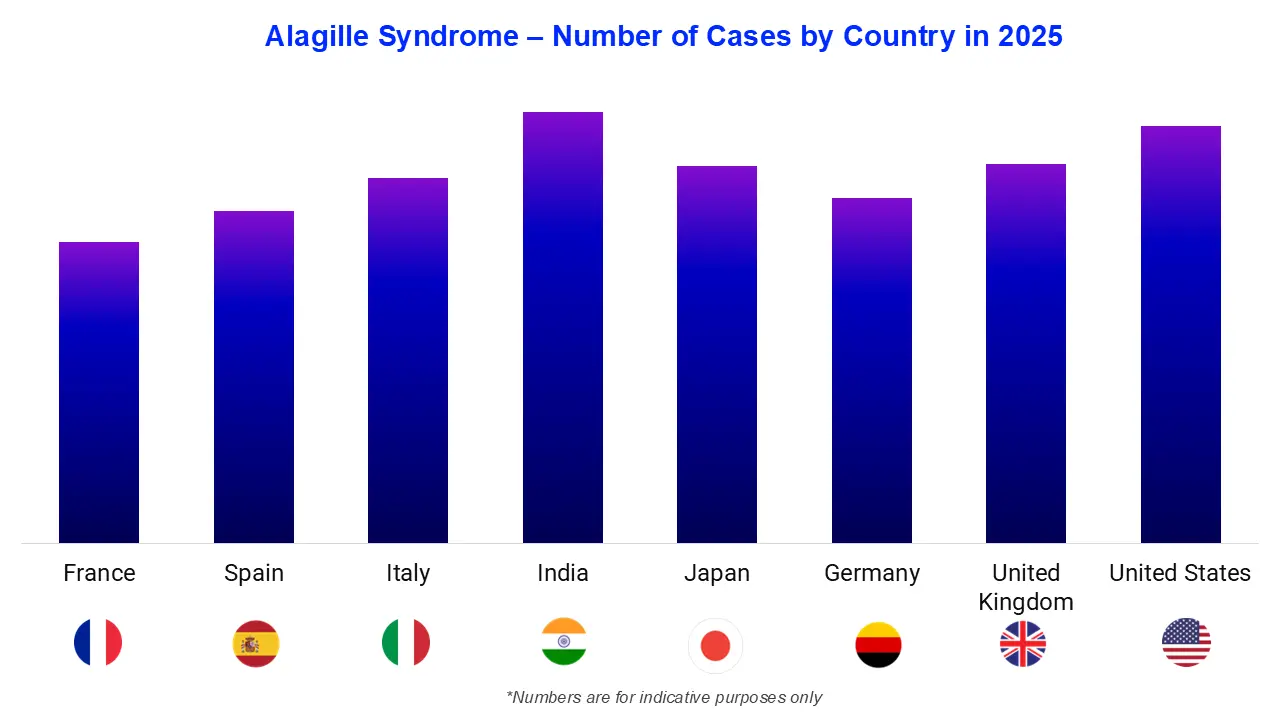
Largest Patient Pool |
United States |
|
Fastest Growing Region |
India |
|
High-Risk Population |
Individuals with inherited JAG1 or NOTCH2 gene mutations and affected family members |
|
Key Diagnostic Method |
Genetic testing supported by liver biopsy and clinical evaluation |
|
Major Risk Factor |
Autosomal dominant inheritance of pathogenic genetic variants |
|
Major gap in the market |
Delayed diagnosis due to variable clinical presentation and limited disease awareness |
The Alagille syndrome epidemiology division offers information on the patient pool from history to the present as well as the projected trend for each of the 8 major markets. Expert Market Research provides both current and predicted trends for the Alagille syndrome epidemiology scenario by examining a wide range of studies. Additionally, the report covers the diagnosed patient pool for Alagille syndrome and their trends. The data is broken down into specific categories, such as total prevalent cases in males and females, and total diagnosed cases across different age groups and patient pools.
|
Epidemiology Segment |
Key Insights |
|
Diagnosed Prevalent Cases of the Disease |
According to Shreya Sodhani et al. (2026), Alagille syndrome has an estimated incidence of 1 in 30,000–50,000 live births in both the United States and worldwide. The disorder remains underdiagnosed because of its variable phenotype and reduced penetrance, although advances in genetic testing have improved diagnosis and case detection. |
|
Gender-Specific Cases of the Disease |
As reported by Shreya Sodhani et al. (2026), Alagille syndrome affects males and females equally, with no known sex predilection. The available epidemiological findings also indicate no recognized racial or ethnic predilection, demonstrating a broadly distributed disease burden across populations. |
|
Age-Specific Cases of the Disease |
As per Shreya Sodhani et al. (2026), Alagille syndrome most commonly presents during infancy or early childhood, with 92.6% of patients in a multicenter cohort having a history of neonatal cholestasis. Pruritus generally develops within the first 10 years of life, affecting 59%–88% of patients. |
|
Ethnicity-Wise Cases of the Disease |
Alagille syndrome has been identified across diverse populations, and epidemiological assessments generally evaluate disease burden according to demographic distribution, genetic characteristics, and healthcare accessibility to support improved diagnosis and patient management. |
|
Mortality and Survival Analysis of the Disease |
Based on Takeda Pharmaceutical Company Limited, 60%–75% of patients with Alagille syndrome require liver transplantation before reaching adulthood, highlighting the significant long-term disease burden associated with progressive liver dysfunction and survival outcomes. |
|
Disease Type |
Prevalence |
|
ALGS Type 1 (JAG1-Associated) |
Caused by mutations in the JAG1 gene. This is the major and more frequently occurring genetic form of Alagille syndrome and represents the predominant type identified among diagnosed patients. |
|
ALGS Type 2 (NOTCH2-Associated) |
Caused by mutations in the NOTCH2 gene. This is the less frequently occurring genetic form of Alagille syndrome and represents a comparatively smaller proportion of diagnosed patients. |
Read more about this report - Request a Free Sample
The Alagille syndrome epidemiology data and findings for the United States, Germany, Spain, Italy, France, the United Kingdom, Japan, and India are also provided in the epidemiology section.
|
Country |
Key Insights |
|
United States |
According to Shreya Sodhani et al. (2026), Alagille syndrome has an estimated incidence of 1 in 30,000–50,000 live births. The condition is considered underdiagnosed because of its variable phenotype and reduced penetrance, although genetic testing has improved diagnosis. |
|
Germany |
Epidemiological assessments in Germany focus on evaluating disease prevalence, patient demographics, age distribution, and healthcare utilization to support early diagnosis and long-term management of Alagille syndrome. |
|
France |
Disease epidemiology in France generally emphasizes prevalence trends, demographic characteristics, and patient identification to strengthen clinical management and healthcare planning for Alagille syndrome. |
|
Italy |
Epidemiological analyses in Italy evaluate disease burden through prevalence patterns, patient demographics, and age-specific distribution to improve disease recognition and healthcare strategies. |
|
Spain |
Epidemiological studies in Spain generally assess disease prevalence, demographic distribution, and diagnosis patterns to support effective disease monitoring and patient management. |
|
United Kingdom |
The epidemiology of Alagille syndrome in the United Kingdom focuses on prevalence trends, patient demographics, and diagnostic patterns to facilitate improved healthcare planning and disease management. |
|
Japan |
As reported by Takeda Pharmaceutical Company Limited, the estimated incidence of Alagille syndrome is approximately 1 in 30,000 people, with a national survey identifying around 200–300 patients in Japan. |
|
India |
Epidemiological evaluations in India generally focus on disease prevalence, patient demographics, age-specific burden, and diagnostic trends to improve understanding of the affected population and support healthcare planning. |
The regional epidemiology landscape for Alagille syndrome continues to face challenges due to delayed diagnosis, underrecognition of mild or atypical cases, and inconsistent access to comprehensive genetic testing across healthcare systems. Expanding newborn and rare disease screening programs, improving physician awareness, and increasing the availability of molecular diagnostic services present significant opportunities for earlier detection and more accurate epidemiological assessment. Emerging investments in precision medicine, patient registries, and multidisciplinary rare disease care networks are expected to strengthen disease surveillance, improve patient identification, and support future therapeutic advancements across major global regions.
The treatment of Alagille syndrome focuses on symptom management, slowing disease progression, and improving quality of life through a multidisciplinary approach. Medical management includes medications to reduce pruritus, improve bile flow, supplement fat-soluble vitamins, and address nutritional deficiencies. Patients with advanced liver disease or liver failure may require liver transplantation, while cardiac, renal, and vascular complications are managed according to their severity. Regular monitoring by hepatology, cardiology, nephrology, and genetics specialists is essential. Liver transplantation remains the definitive treatment option for patients with end-stage hepatic disease or severe, treatment-resistant complications.


Upto 15% Off
USD
$1999 $1799
$2999 $2699
$4399 $3739
$5799 $4929


*While we strive to always give you current and accurate information, the numbers depicted on the website are indicative and may differ from the actual numbers in the main report. At Expert Market Research, we aim to bring you the latest insights and trends in the market. Using our analyses and forecasts, stakeholders can understand the market dynamics, navigate challenges, and capitalize on opportunities to make data-driven strategic decisions.*
Explore our key highlights of the report and gain a concise overview of key findings, trends, and actionable insights that will empower your strategic decisions.
|
Report Features |
Details |
|
Base Year |
2025 |
|
Historical Period |
2019-2025 |
|
Forecast Period |
2026-2035 |
|
Epidemiology Statistics Provided |
|
|
Segmentation Provided |
|
|
Geographies Covered |
|
Datasheet
One User
USD 1,999
USD 1,799
tax inclusive*
Single User License
One User
USD 2,999
USD 2,699
tax inclusive*
Five User License
Five User
USD 4,399
USD 3,739
tax inclusive*
Corporate License
Unlimited Users
USD 5,799
USD 4,929
tax inclusive*
*Please note that the prices mentioned below are starting prices for each bundle type. Kindly contact our team for further details.*
Flash Bundle
Small Business Bundle
Growth Bundle
Enterprise Bundle
*Please note that the prices mentioned below are starting prices for each bundle type. Kindly contact our team for further details.*
Flash Bundle
Number of Reports: 3
20%
tax inclusive*
Small Business Bundle
Number of Reports: 5
25%
tax inclusive*
Growth Bundle
Number of Reports: 8
30%
tax inclusive*
Enterprise Bundle
Number of Reports: 10
35%
tax inclusive*
How To Order

Select License Type
Choose the right license for your needs and access rights.

Click on ‘Buy Now’
Add the report to your cart with one click and proceed to register.

Select Mode of Payment
Choose a payment option for a secure checkout. You will be redirected accordingly.
Strategic Solutions for Informed Decision-Making
Gain insights to stay ahead and seize opportunities.

Get insights & trends for a competitive edge.

Track prices with detailed trend reports.

Analyse trade data for supply chain insights.

Leverage cost reports for smart savings

Enhance supply chain with partnerships.

Connect For More Information
Our expert team of analysts will offer full support and resolve any queries regarding the report, before and after the purchase.
Our expert team of analysts will offer full support and resolve any queries regarding the report, before and after the purchase.
We employ meticulous research methods, blending advanced analytics and expert insights to deliver accurate, actionable industry intelligence, staying ahead of competitors.
Our skilled analysts offer unparalleled competitive advantage with detailed insights on current and emerging markets, ensuring your strategic edge.
We offer an in-depth yet simplified presentation of industry insights and analysis to meet your specific requirements effectively.




