

Consumer Insights
Uncover trends and behaviors shaping consumer choices today
Procurement Insights
Optimize your sourcing strategy with key market data
Industry Stats
Stay ahead with the latest trends and market analysis.
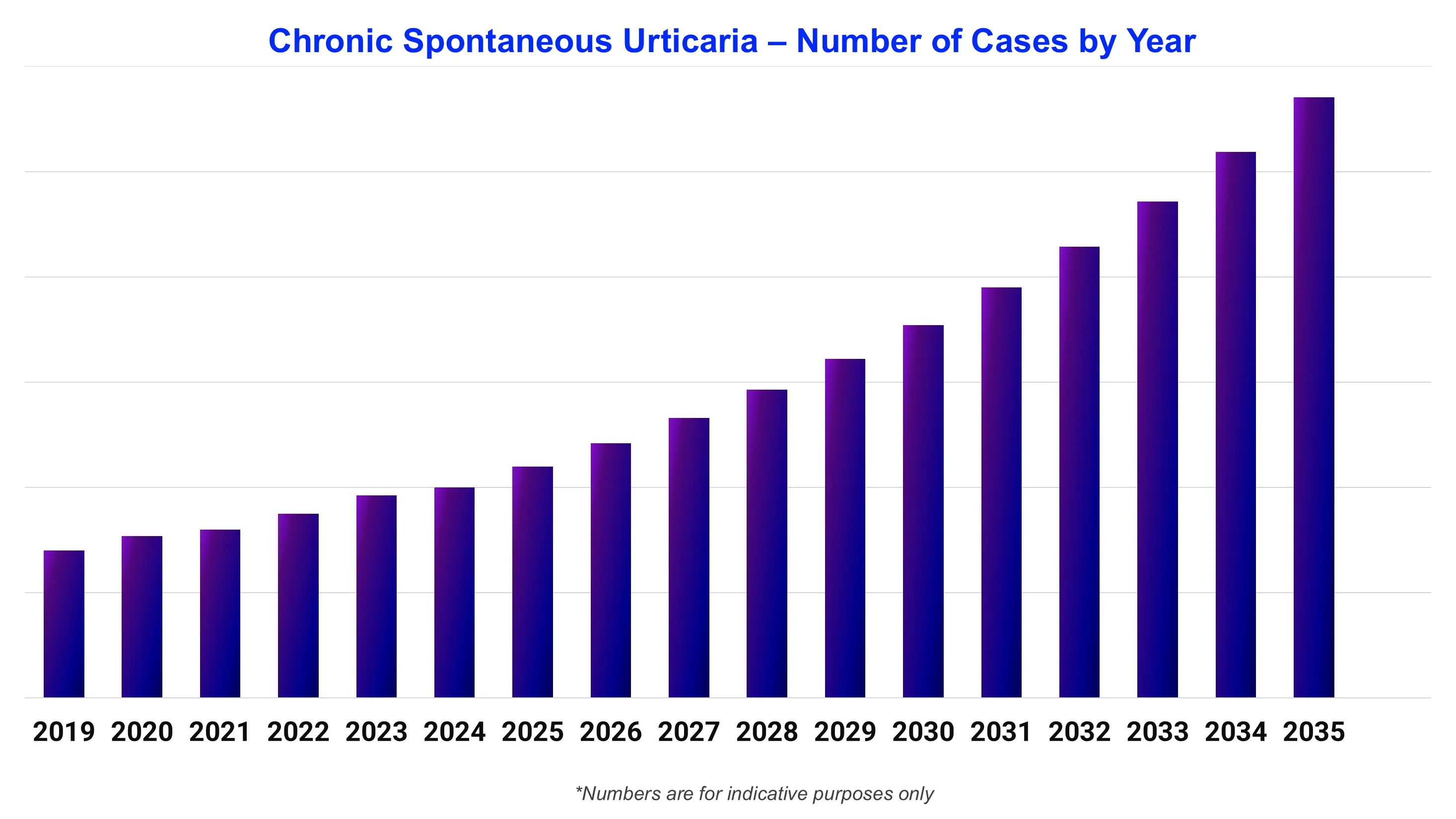
Chronic Spontaneous Urticaria (CSU) is a chronic, relapsing, mast cell-driven inflammatory disease characterized by recurrent wheals, angioedema, or both, occurring spontaneously without a consistent identifiable external trigger. In the United States, a recent National Health and Wellness Survey analysis estimated the prevalence of physician-diagnosed CSU at 0.78%, with 635 of 815 respondents with physician-diagnosed chronic urticaria classified as having CSU. According to Chronic Spontaneous Urticaria Epidemiology Forecast by Expert Market Research (EMR), CSU represents a significant and persistent global disease burden, with continuing therapeutic development driven by its substantial impact on quality of life, the need for improved disease control in antihistamine-refractory patients, and demand for more targeted and effective treatments.
Base Year
Historical Period
Forecast Period
Read more about this report - REQUEST FREE SAMPLE COPY IN PDF
Expert Market Research's “Chronic Spontaneous Urticaria Epidemiology Forecast Report 2026-2035” offers comprehensive information on the prevalence and demographics of Chronic Spontaneous Urticaria. It projects the future incidence and prevalence rates of Chronic Spontaneous Urticaria cases across various populations. The study covers age, gender, and type as major determinants of the Chronic Spontaneous Urticaria population. The report highlights patterns in the prevalence of Chronic Spontaneous Urticaria over time and projects future trends based on multiple variables.
The report provides a comprehensive overview of the disease, as well as historical and projected data on the epidemiology of Chronic Spontaneous Urticaria in the 8 major markets.
Regions Covered
Chronic spontaneous urticaria (CSU) is a mast cell-driven inflammatory skin disease characterized by the recurrent, spontaneous appearance of wheals, angioedema, or both for more than 6 weeks, without a consistent identifiable external trigger. It is classified under chronic urticaria, which comprises CSU and chronic inducible urticaria, the latter being provoked by defined physical or environmental stimuli. CSU can occur at any age but is more frequently reported in females, particularly adults aged 30-50 years, and affects approximately 0.5%-1% of the general population. The disease results primarily from inappropriate activation and degranulation of cutaneous mast cells, leading to the release of histamine and other inflammatory mediators that produce vasodilation, increased vascular permeability, pruritus, and dermal edema.
|
Parameter |
Insight |
|
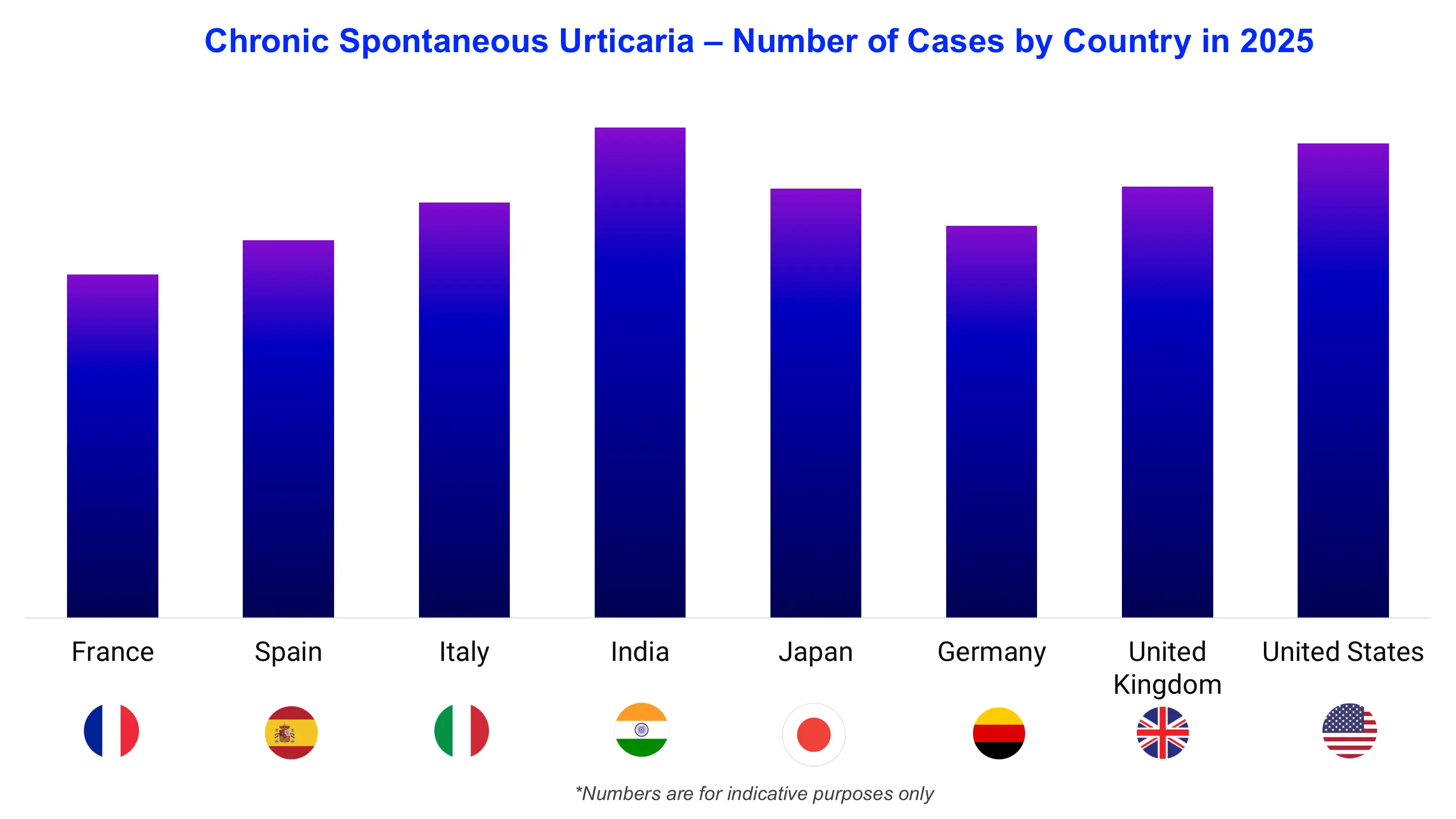
Largest Patient Pool |
United States |
|
Fastest Growing Country |
India |
|
High-Risk Population |
Individuals at higher risk of chronic spontaneous urticaria (CSU) include women, adults aged 20-50 years, people with a personal or family history of autoimmune disease, and patients with other allergic or inflammatory conditions. |
|
Key Diagnostic Method |
The key diagnostic method for chronic spontaneous urticaria (CSU) is clinical diagnosis based on the patient's history and physical examination, particularly the presence of recurrent wheals, angioedema, or both for more than 6 weeks without a consistent identifiable trigger. |
|
Major Risk Factor |
The major risk factor for chronic spontaneous urticaria (CSU) is an underlying autoimmune predisposition, particularly the presence of autoimmune thyroid disease and other systemic autoimmune disorders. |
|
Major gap in the market |
The major gap in the chronic spontaneous urticaria (CSU) market is the limited availability of rapidly acting, durable, and well-tolerated therapies that achieve complete disease control in patients who remain inadequately controlled with standard-dose or up-dosed H1-antihistamines and existing biologic treatment. |
The Chronic Spontaneous Urticaria epidemiology division offers information on the patient pool from history to the present as well as the projected trend for each of the 8 major markets. Expert Market Research provides both current and predicted trends for the Chronic Spontaneous Urticaria epidemiology scenario by examining a wide range of studies. Additionally, the report covers the diagnosed patient pool for Chronic Spontaneous Urticaria and their trends. The data is broken down into specific categories, such as total prevalent cases in males and females, and total diagnosed cases across different age groups and patient pools.
|
Epidemiology Segment |
Key Insights |
|
Diagnosed Prevalent Cases of the Disease |
Chronic spontaneous urticaria (CSU) affects approximately 1% of the general population worldwide, although estimates of diagnosed prevalence vary substantially according to the case definition and data source. In the United States, a 2025 National Health and Wellness Survey analysis estimated the physician-diagnosed prevalence of CSU at 0.78%, while a separate 2025 analysis of U.S. electronic health-record and claims databases reported diagnosed prevalence estimates ranging from 0.244% to 0.283% depending on the database. |
|
Gender-Specific Cases of the Disease |
Chronic spontaneous urticaria (CSU) shows a consistent female predominance, with women generally accounting for approximately two-thirds of affected patients. A 2024 systematic review of 26 studies found higher CSU incidence and prevalence among females across the available epidemiological studies; in a U.S. population-based study, standardized prevalence was 309.3 cases per 100,000 women versus 145.5 per 100,000 men, corresponding to approximately a 2.1-fold higher prevalence in women. |
|
Age-Specific Cases of the Disease |
Chronic spontaneous urticaria (CSU) can occur across the lifespan but is predominantly an adult disease, with onset and prevalence generally concentrated in young and middle-aged adults. Epidemiological literature places the typical age of CSU onset at approximately 30-50 years, with the disease particularly common during the third to fifth decades of life. In a large U.S. population-based analysis of chronic urticaria, prevalence was highest among adults aged 40-49 years (256 cases per 100,000), followed by those aged 50-59 years (246 per 100,000). |
|
Ethnicity-Wise Cases of the Disease |
Chronic spontaneous urticaria (CSU) occurs across all ethnic groups, but available U.S. epidemiological evidence suggests higher prevalence among Black/African American populations than among White populations. A large population-based analysis of more than 55 million U.S. patients reported adjusted chronic urticaria prevalence of 292 cases per 100,000 among Black patients, compared with 262 per 100,000 among White patients; patients categorized as “other” had 331 per 100,000. |
|
Mortality and Survival Analysis of the Disease |
Chronic spontaneous urticaria (CSU) has historically been regarded as a non-life-limiting disease, and most patients do not die from the urticaria itself. A large 2025 U.S. population-based cohort study involving 264,680 propensity-score-matched adults with CSU found significantly higher all-cause mortality at 3 months, 1 year, and 5 years compared with controls, with a 5-year mortality hazard ratio of 1.69 (95% CI, 1.65-1.73). |
Read more about this report - REQUEST FREE SAMPLE COPY IN PDF
The Chronic Spontaneous Urticaria epidemiology data and findings for the United States, Germany, Spain, Italy, France, the United Kingdom, Japan, and India are also provided in the epidemiology section.
|
Country |
Key Insights |
|
United States |
Chronic spontaneous urticaria (CSU) has a diagnosed prevalence of approximately 0.78% in the United States, according to a 2025 analysis of the U.S. National Health and Wellness Survey. Among 74,994 respondents, 635 had physician-diagnosed CSU, producing a weighted 12-month prevalence of 0.78%. The mean age at diagnosis was 37.0 years, and 51.7% of diagnosed patients were female. |
|
Germany |
Among 15,020 German respondents, 112 had physician-diagnosed CSU, corresponding to an age- and sex-adjusted prevalence of 0.79% (95% CI: 0.78%–0.79%). This was comparable to the United Kingdom (0.79%) and higher than France (0.76%). A German statutory health-insurance analysis provides a more conservative real-world estimate. In 2017, 0.5% of the insured population had diagnosed chronic urticaria (CU), of whom 71.2% had CSU, 19.7% had chronic inducible urticaria, and 9.1% had both. The corresponding diagnosed prevalence specifically for CSU was 0.35% overall, rising to 0.44% among women and 0.26% among men. |
|
France |
Chronic spontaneous urticaria (CSU) has a diagnosed prevalence of 0.76% in France, according to the 2020 EU5 National Health and Wellness Survey (NHWS). Among 15,152 French respondents, 109 reported physician-diagnosed CSU, corresponding to an age- and sex-adjusted prevalence of 0.76%. This was lower than the estimates for Germany (0.79%), the United Kingdom (0.79%), Spain (1.0%), and Italy (1.3%). |
|
Italy |
Chronic spontaneous urticaria (CSU) has a diagnosed prevalence of 1.3% in Italy, according to the 2020 EU5 National Health and Wellness Survey (NHWS). Among 10,026 Italian respondents, 134 reported physician-diagnosed CSU, corresponding to an age- and sex-adjusted prevalence of 1.3%. This was the highest diagnosed CSU prevalence among the five European countries evaluated: Italy (1.3%), Spain (1.0%), Germany (0.79%), the United Kingdom (0.79%), and France (0.76%). |
|
Spain |
The most recent robust country-specific estimate for chronic spontaneous urticaria (CSU) in Spain comes from the 2020 EU5 National Health and Wellness Survey. The age- and sex-adjusted prevalence of physician-diagnosed CSU was 1.0% among Spanish adults. The estimate was based on 75 diagnosed CSU respondents among 7,074 Spanish survey participants. This was higher than France (0.76%), Germany (0.79%) and the United Kingdom (0.79%), but lower than Italy (1.3%). |
|
United Kingdom |
The most recent robust country-specific estimate for chronic spontaneous urticaria (CSU) in the United Kingdom is 0.79% of the adult population. This comes from the 2020 EU5 National Health and Wellness Survey, with results published in the Journal of the European Academy of Dermatology and Venereology in 2025. The estimate was age- and sex-adjusted and was based on 109 physician-diagnosed CSU cases among 15,047 UK respondents. |
|
Japan |
The most recent evidence indicates that chronic spontaneous urticaria (CSU) prevalence in Japan is approximately 1.1%. A 2025 cross-sectional analysis of the Japanese National Health and Wellness Survey included 30,006 adults, of whom 334 reported physician-diagnosed CSU. After weighting to the Japanese population, the estimated 12-month prevalence was 1.1% (95% CI: 1.1–1.1%). Using the JMDC claims database, investigators estimated CSU prevalence increased from 1.2% in 2016 to 1.6% in 2021, with a standardized prevalence also reaching 1.6% in 2021. The prevalence was highest among children younger than 10 years, at 2.2%, while prevalence among people in their twenties was approximately 1.1%. |
|
India |
A national population-based prevalence estimate for chronic spontaneous urticaria (CSU) in India has not yet been established. The 2024 North Indian CSU cohort specifically notes that comprehensive population-level data from the Indian subcontinent remain limited. The study analyzed 1,104 CSU patients attending the urticaria clinic at PGIMER, Chandigarh, but because this was a tertiary-care retrospective cohort, its patient count cannot be converted into a national prevalence estimate. Indian guidelines similarly state that the exact prevalence of CSU in India is unknown. |
The major unmet need in the regional CSU landscape is inadequate disease control among patients who remain symptomatic despite second-generation H1-antihistamines and omalizumab. Real-world CURE registry data show that treatment escalation remains suboptimal, with 28.6% of clinically eligible patients failing to receive appropriate step-up treatment and only 28.4% achieving a complete response after escalation to omalizumab. A key opportunity lies in rapid-acting, oral and mechanism-specific therapies for antihistamine- and omalizumab-refractory CSU. The emergence of BTK inhibitors such as remibrutinib, IL-4/IL-13 pathway inhibition with dupilumab, and KIT-directed therapies such as barzolvolimab is expanding treatment options beyond conventional anti-IgE therapy.
Treatment of chronic spontaneous urticaria (CSU) follows a stepwise approach aimed at achieving complete disease control and minimizing treatment-related toxicity. The international EAACI/GA²LEN/EuroGuiDerm/APAAACI guideline recommends starting with a standard-dose second-generation, non-sedating H1-antihistamine. If symptoms remain inadequately controlled, the antihistamine dose can be increased up to fourfold. For patients who remain uncontrolled despite high-dose H1-antihistamines, omalizumab, an anti-IgE monoclonal antibody, is the established next-line biologic treatment. Omalizumab reduces IgE-mediated mast-cell and basophil activation and can substantially improve wheal and angioedema control. Patients who remain refractory may require ciclosporin, although its immunosuppressive and renal/toxicological risks restrict long-term use. Systemic corticosteroids are generally avoided for chronic treatment because of their adverse-effect burden, although short rescue courses may occasionally be used for severe acute exacerbations.


Upto 15% Off
USD
$2699 $2429
$4299 $3869
$5799 $4949
$6999 $5949


*While we strive to always give you current and accurate information, the numbers depicted on the website are indicative and may differ from the actual numbers in the main report. At Expert Market Research, we aim to bring you the latest insights and trends in the market. Using our analyses and forecasts, stakeholders can understand the market dynamics, navigate challenges, and capitalize on opportunities to make data-driven strategic decisions.*
Explore our key highlights of the report and gain a concise overview of key findings, trends, and actionable insights that will empower your strategic decisions.
|
Report Features |
Details |
|
Base Year |
2025 |
|
Historical Period |
2019-2025 |
|
Forecast Period |
2026-2035 |
|
Epidemiology Statistics Provided |
|
|
Segmentation Provided |
|
|
Geographies Covered |
|
Datasheet
One User
USD 2,699
USD 2,429
tax inclusive*
Single User License
One User
USD 4,299
USD 3,869
tax inclusive*
Five User License
Five User
USD 5,799
USD 4,949
tax inclusive*
Corporate License
Unlimited Users
USD 6,999
USD 5,949
tax inclusive*
*Please note that the prices mentioned below are starting prices for each bundle type. Kindly contact our team for further details.*
Flash Bundle
Small Business Bundle
Growth Bundle
Enterprise Bundle
*Please note that the prices mentioned below are starting prices for each bundle type. Kindly contact our team for further details.*
Flash Bundle
Number of Reports: 3
20%
tax inclusive*
Small Business Bundle
Number of Reports: 5
25%
tax inclusive*
Growth Bundle
Number of Reports: 8
30%
tax inclusive*
Enterprise Bundle
Number of Reports: 10
35%
tax inclusive*
How To Order

Select License Type
Choose the right license for your needs and access rights.

Click on ‘Buy Now’
Add the report to your cart with one click and proceed to register.

Select Mode of Payment
Choose a payment option for a secure checkout. You will be redirected accordingly.
Strategic Solutions for Informed Decision-Making
Gain insights to stay ahead and seize opportunities.

Get insights & trends for a competitive edge.

Track prices with detailed trend reports.

Analyse trade data for supply chain insights.

Leverage cost reports for smart savings

Enhance supply chain with partnerships.

Connect For More Information
Our expert team of analysts will offer full support and resolve any queries regarding the report, before and after the purchase.
Our expert team of analysts will offer full support and resolve any queries regarding the report, before and after the purchase.
We employ meticulous research methods, blending advanced analytics and expert insights to deliver accurate, actionable industry intelligence, staying ahead of competitors.
Our skilled analysts offer unparalleled competitive advantage with detailed insights on current and emerging markets, ensuring your strategic edge.
We offer an in-depth yet simplified presentation of industry insights and analysis to meet your specific requirements effectively.




