

Consumer Insights
Uncover trends and behaviors shaping consumer choices today
Procurement Insights
Optimize your sourcing strategy with key market data
Industry Stats
Stay ahead with the latest trends and market analysis.
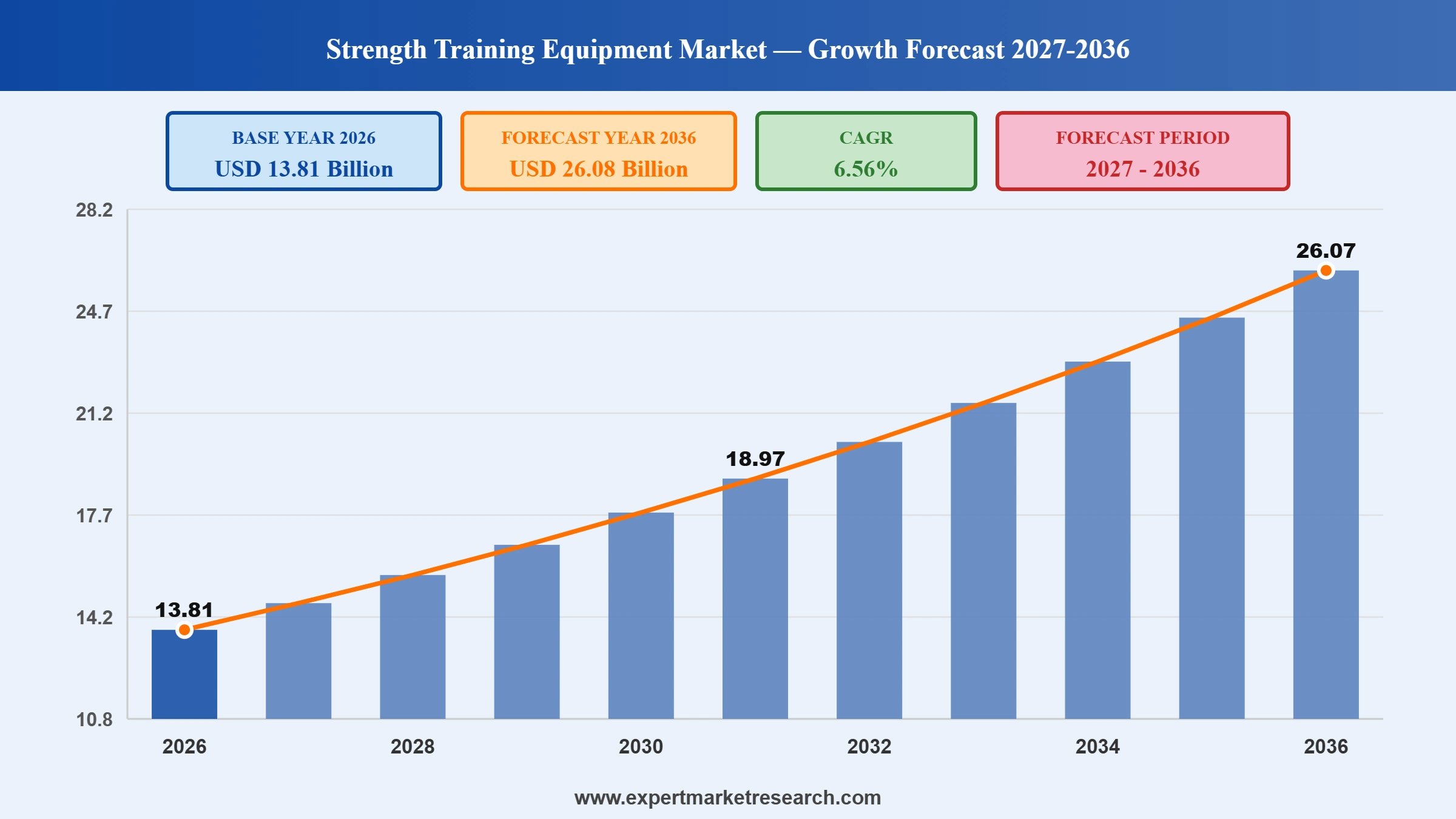
The Strength Training Equipment market was valued at USD 12.96 Billion in 2025. The market is expected to grow at a CAGR of 6.56% during the forecast period of 2026-2035 to reach a value of USD 24.47 Billion by 2035. Rising health and fitness awareness across diverse age groups, growing preference for home-based workout solutions, and increasing investment in digitally connected equipment are collectively driving market growth.
The Strength Training Equipment market is shaped by rising health and fitness awareness across diverse age groups and growing consumer interest in strength-focused fitness routines. North America dominated the market, supported by extensive gym and fitness club infrastructure and strong consumer spending on premium fitness equipment. Weights account for the largest share by product type, reflecting their fundamental, low-cost role in strength training across both commercial and residential settings.
Established fitness equipment manufacturers are reinforcing their market presence through continued product innovation, facility investment, and digital integration rather than relying on a single growth lever. In January 2026, for example, Life Fitness opened its Nieto-Jones Innovation Center in Illinois, accelerating product development and testing across its Life Fitness and Hammer Strength brands. This continued pace of innovation investment is helping leading manufacturers differentiate their offerings even as consumer demand shifts toward connected, data-driven strength training experiences.
The competitive landscape remains moderately consolidated, with supply concentrated among established global manufacturers such as Life Fitness, Technogym, and Johnson Health Tech that maintain strong brand recognition and extensive commercial distribution networks. Participation requires sustained investment in product engineering, manufacturing scale, and digital ecosystem development, creating meaningful entry barriers while leaving room for specialized providers to compete on niche strength training equipment segments and direct-to-consumer channels.
Read more about this report - REQUEST FREE SAMPLE COPY IN PDF
|
Strength Training Equipment Market Report Summary |
Description |
Value |
|
Base Year |
USD Billion |
2025 |
|
Historical Period |
USD Billion |
2019-2025 |
|
Forecast Period |
USD Billion |
2026-2035 |
|
Market Size 2025 |
USD Billion |
12.96 |
|
Market Size 2035 |
USD Billion |
24.47 |
|
CAGR 2019-2025 |
Percentage |
XX% |
|
CAGR 2026-2035 |
Percentage |
6.56% |
|
CAGR 2026-2035 - Market by Region |
Asia Pacific |
8.2% |
|
CAGR 2026-2035 - Market by Product Type |
Racks and Benches |
7.0% |
|
CAGR 2026-2035 - Market by End User |
Residential |
6.8% |
|
2025 Market Share by Region |
North America |
31.3% |
The strength training equipment market is being shaped by connected home-gym business models, commercial club expansion in the Middle East and Latin America, brand-led retail partnerships, and tariff-driven cost pressure on imported equipment.
Matrix Fitness, part of Johnson Health Tech, expanded its strength range with 14 plate-loaded machines including pendulum squat, belt squat and standing hip thrust, tied to partnership events with the BWT Alpine Formula One Team and Wigan Warriors. Its managing director cited growing demand for strength training among UK commercial gyms and sports facilities. Overall, partnership-led product launches are becoming a route for commercial strength brands to reach UK gyms and sports facilities.
Nike Strength, operated by Dimension 6 Fitness, began rolling out dumbbells, kettlebells, barbells, racks, benches and accessories through 25 Johnson Fitness & Wellness stores in the US. The specialty retailer has nearly 100 locations, all planned to stock the line within months. Overall, brand-led free weights and racks are moving into offline home-gym retail.
Tonal introduced Tonal Rent, letting US customers lease its connected strength system with no upfront cost at $279 a month for Tonal 2 and $219 for a certified refurbished Tonal 1, versus purchase prices of $2,495-$4,295. It is Tonal's first rental option. Overall, rental pricing lowers the entry barrier for connected home strength equipment.
The Sports & Fitness Industry Association's 2026 State of the Industry Report, released on 19 May 2026, found the US sporting goods industry grew 3.4% in 2025. Tariffs were the top concern, with materials, logistics and tariff costs pressuring pricing, while most firms kept existing sourcing. Overall, tariffs are affecting landed costs of imported fitness equipment.
Listed fitness equipment makers publish half-year results that show how commercial, retail and regional demand for strength and cardio equipment is shifting. In July 2026, Technogym reported revenue of EUR 493 million for January-June 2026, up 7.4%, with adjusted EBITDA of EUR 85.7 million. Sector coverage shows commercial sales up 8.5%, the retail channel up 28.4%, Europe excluding Italy up 11.4% and Middle East and Africa up 8.6%, while the Americas dipped 1.1%. Management cited higher production costs.
Digital-resistance home gyms are sold mainly online, so in-store demonstration gives brands a way to reach buyers who want to try the equipment first. In April 2026, Speediance partnered with Smartech to showcase its AI-coached Gym Monster 2s digital-resistance system at Times Square (New York), Selfridges (London), KaDeWe (Berlin) and Rinascente (Rome), with a base price of $4,599 reported by Athletech News. The move adds in-store demonstration to a category sold mainly online across North America and Europe.
Licensing agreements let global sports brands enter regional fitness equipment markets through local manufacturers rather than building their own plants. In March 2026, Indian manufacturer Jerai Fitness announced a long-term partnership with Reebok to make and distribute Reebok-branded gym equipment across India, Sri Lanka, Bangladesh and Nepal from 1 April 2026. The range covers cardio, free weights and premium home use, and the automated plant had installed capacity of 21,000 units a year as of 31 August 2025.
New gym chain clubs in the Gulf region create bulk demand for commercial strength equipment, with operators announcing membership targets ahead of launch. In January 2026, GymNation took 3,000 memberships in 24 hours before opening its first Bahrain club, its third GCC market. It operates 34 sites across the UAE and Saudi Arabia with over 150,000 members and targets 60 gyms and 300,000 members by December 2026, a clear driver of commercial equipment demand in the Middle East.
Large Latin American gym chains expand quickly across countries, and each new club needs a full floor of strength and cardio equipment. Smart Fit reported in January 2026 that it closed 2025 with its 2,000th location in São Paulo, and projects more than 340 new openings during 2026. It operates in 16 countries including Brazil, Mexico, Colombia, Chile and Peru and serves over 5 million members, sustaining commercial strength equipment procurement in Latin America.
The Expert Market Research's report titled "Strength Training Equipment Market Report and Forecast 2026-2035" gives an in-depth analysis of the global strength training equipment market, assessing the market based on its segments like product type, end user, distribution channel, and major regions.
Market Breakup by Product Type
Key Insight: Weights account for the largest share of the strength training equipment market by product type, reflecting their fundamental, low-cost role in strength training routines across both commercial gyms and residential settings. Free weights such as dumbbells, barbells, and kettlebells require minimal maintenance, offer broad exercise versatility, and remain a staple purchase for new home gym owners and established fitness facilities alike. Their durability and long replacement cycles further sustain consistent unit demand, while expanding adjustable-weight product lines are helping manufacturers capture additional value within this already-dominant category. Racks and benches are the fastest-growing product type as consumers and gym operators invest in structured setups such as power racks and adjustable benches, exercise and medicine balls serve functional and conditioning routines at low cost, and others cover the remaining strength training accessories. In July 2026, BowFlex underscored this shift with the SelectTech 52, a redesigned adjustable dumbbell featuring premium metal plates and a 2kg-to-24kg range across 15 settings that replaces multiple fixed-weight pairs with a single unit.
Market Breakup by End User
Key Insight: The commercial segment remains the dominant end user within the strength training equipment market, particularly across gyms, health clubs, and fitness centers investing in durable, high-volume equipment designed for continuous daily use by large member bases. These operators typically replace equipment on structured replacement cycles and prioritize brand reputation, warranty support, and after-sales service when selecting suppliers, sustaining steady bulk order volumes. The continued global expansion of boutique fitness studios and franchised gym chains is further reinforcing commercial demand alongside traditional large-format health clubs. The residential segment is the fastest-growing end user as consumers invest in compact, space-efficient home gym equipment, while others, covering the remaining institutional users, account for a smaller share. In July 2026, Spirit Commercial Fitness launched i-Strength, a commercial strength machine that runs on an electronic resistance motor instead of iron weight stacks and offers four training modes, designed so clubs can update the floor without spatial redesign or retraining.
Market Breakup by Distribution Channel
Key Insight: Offline retail stores account for the largest share of the strength training equipment market by distribution channel, as consumers continue to value in-person product trials and expert guidance for larger equipment purchases such as racks, benches, and multi-station machines. Specialty sporting goods retailers and dedicated fitness showrooms allow buyers to assess build quality, adjust settings, and compare models side-by-side before committing to often bulky, higher-cost purchases. Delivery and assembly services offered through physical retailers also remain an important purchase consideration that continues to favor offline channels over online-only alternatives. Online retail stores are the fastest-growing channel as consumers buy compact, home-use equipment through e-commerce platforms offering wider selection and competitive pricing, while others cover the remaining sales routes.
Market Breakup by Region
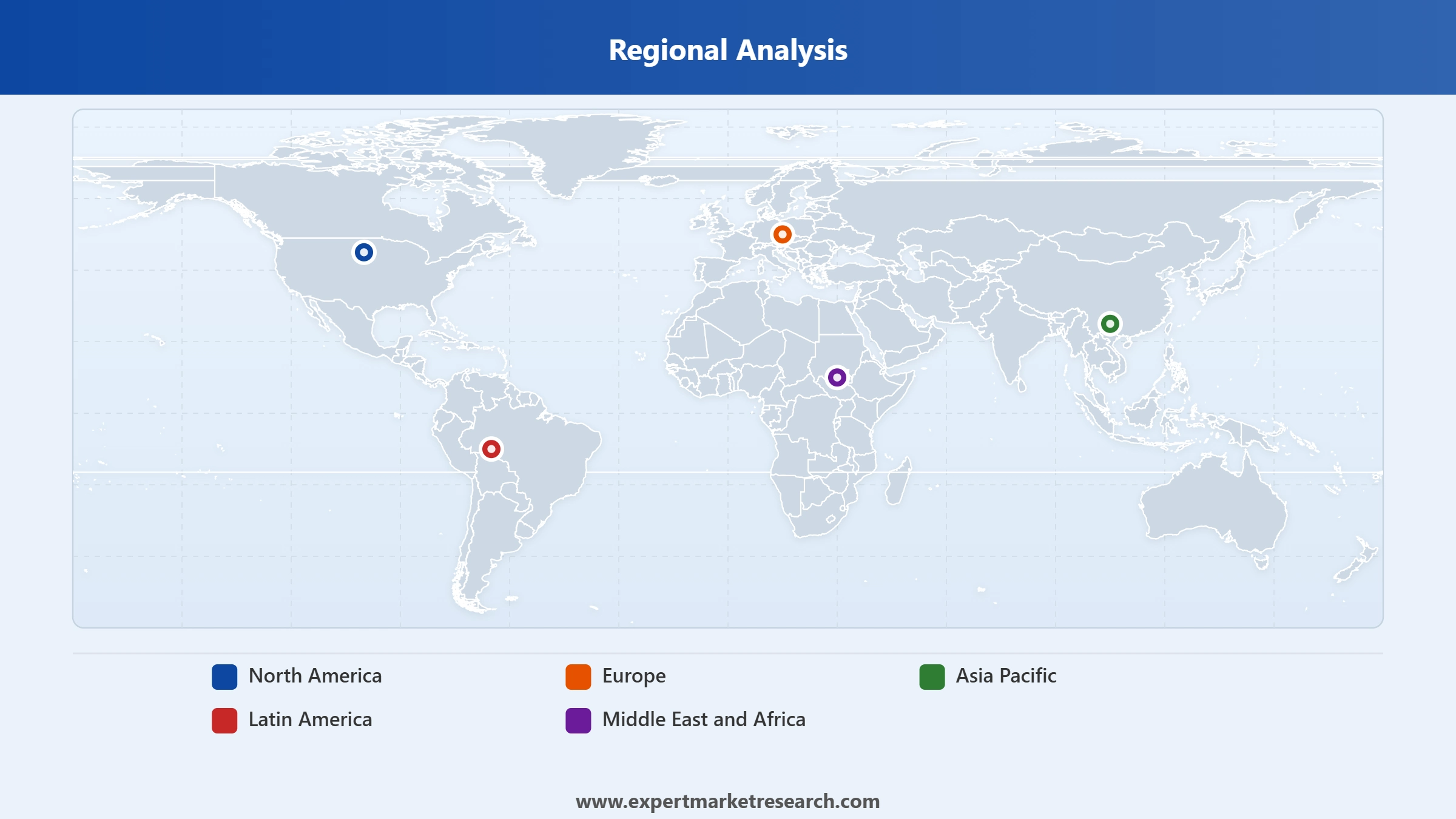
Key Insight: North America dominates the strength training equipment market, supported by extensive gym and fitness club infrastructure, strong consumer spending on premium fitness equipment, and a well-established base of commercial equipment manufacturers headquartered in the region. High rates of home gym adoption, driven by consumer preference for flexible workout schedules, further reinforce regional demand across both residential and commercial channels. The presence of major fitness chains and a mature specialty retail network also gives the region an advantage in product availability and after-sales support compared with other markets. Asia Pacific is the fastest-growing region as rising disposable incomes, expanding gym infrastructure, and growing health consciousness lift demand, Europe maintains a strong base of commercial equipment manufacturers and fitness chains, and Latin America and Middle East and Africa are smaller but expanding markets supported by new gym openings. Underscoring the region's domestic manufacturing base, Curt and Tammy Tambornino acquired the U.S. arm of Escape Fitness in February 2026, adding it to a strength equipment portfolio that includes Dynamic Fitness & Strength, Dynamic Fabrication and Finishing, and Exerfly.
Read more about this report - REQUEST FREE SAMPLE COPY IN PDF
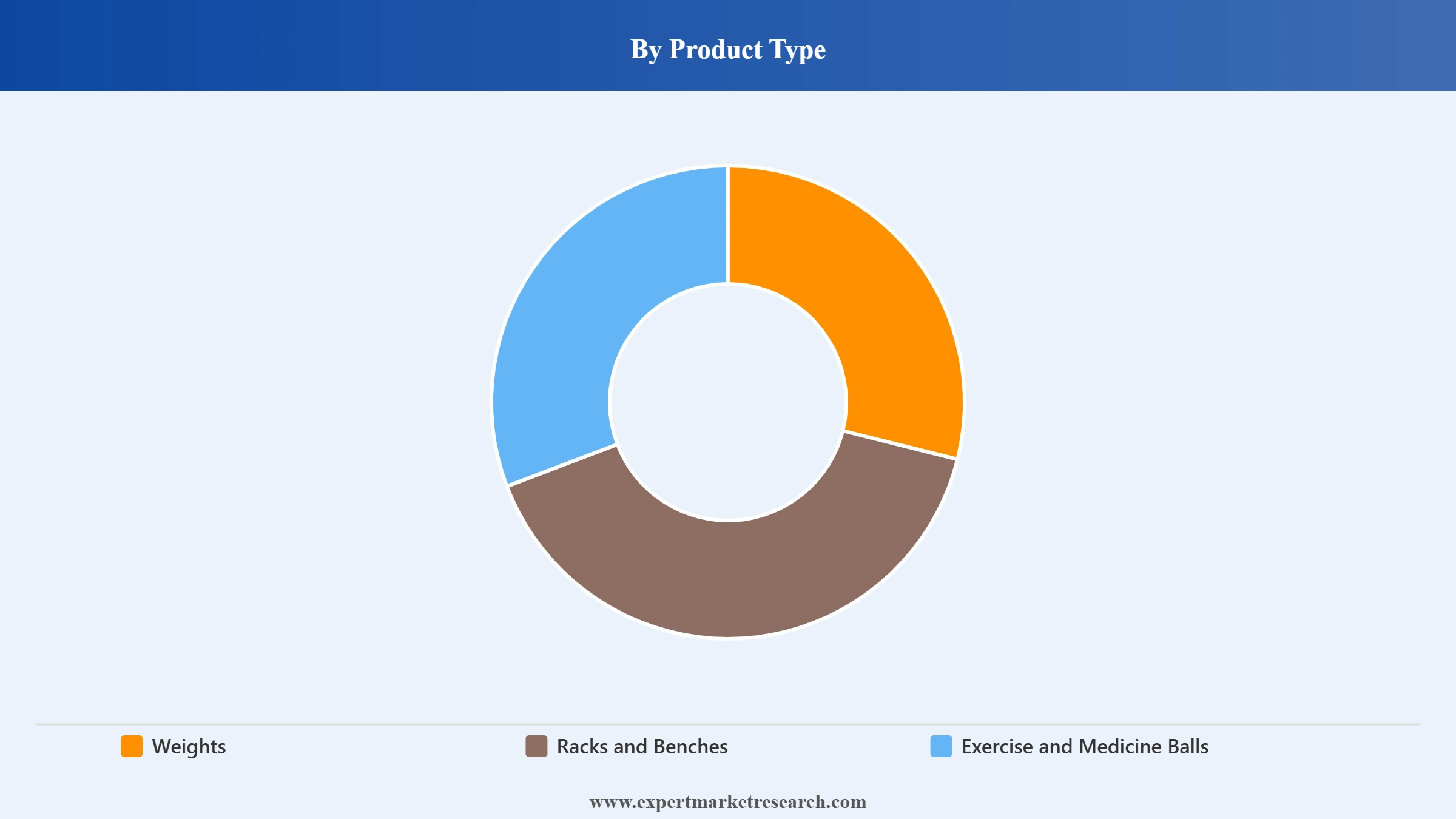
By product type, weights dominate the market due to their fundamental, low-cost role in strength training routines
Weights account for the largest share of the strength training equipment market by product type, reflecting their low-cost role in strength training routines across both commercial gyms and residential settings. Continued demand for compact, stackable weight systems reinforces this position, a dynamic underscored in May 2026 when Eleiko was appointed Official Weightlifting and Para Powerlifting Equipment Provider for the Glasgow 2026 Commonwealth Games, supplying competition bars, plates, platforms, and benches across two competition arenas and more than 50 warm-up stations.
Read more about this report - REQUEST FREE SAMPLE COPY IN PDF
Racks and benches are the fastest-growing product type as consumers and gym operators invest in structured strength training setups, including power racks and adjustable benches, supporting progressive resistance training programs in gyms and homes. Reflecting this momentum, Rogue Fitness confirmed in November 2025 that it had begun construction on a manufacturing campus expansion in Columbus, Ohio, that will bring its facility to nearly one million square feet, adding capacity to supply racks, rigs, and benches to commercial and home users.
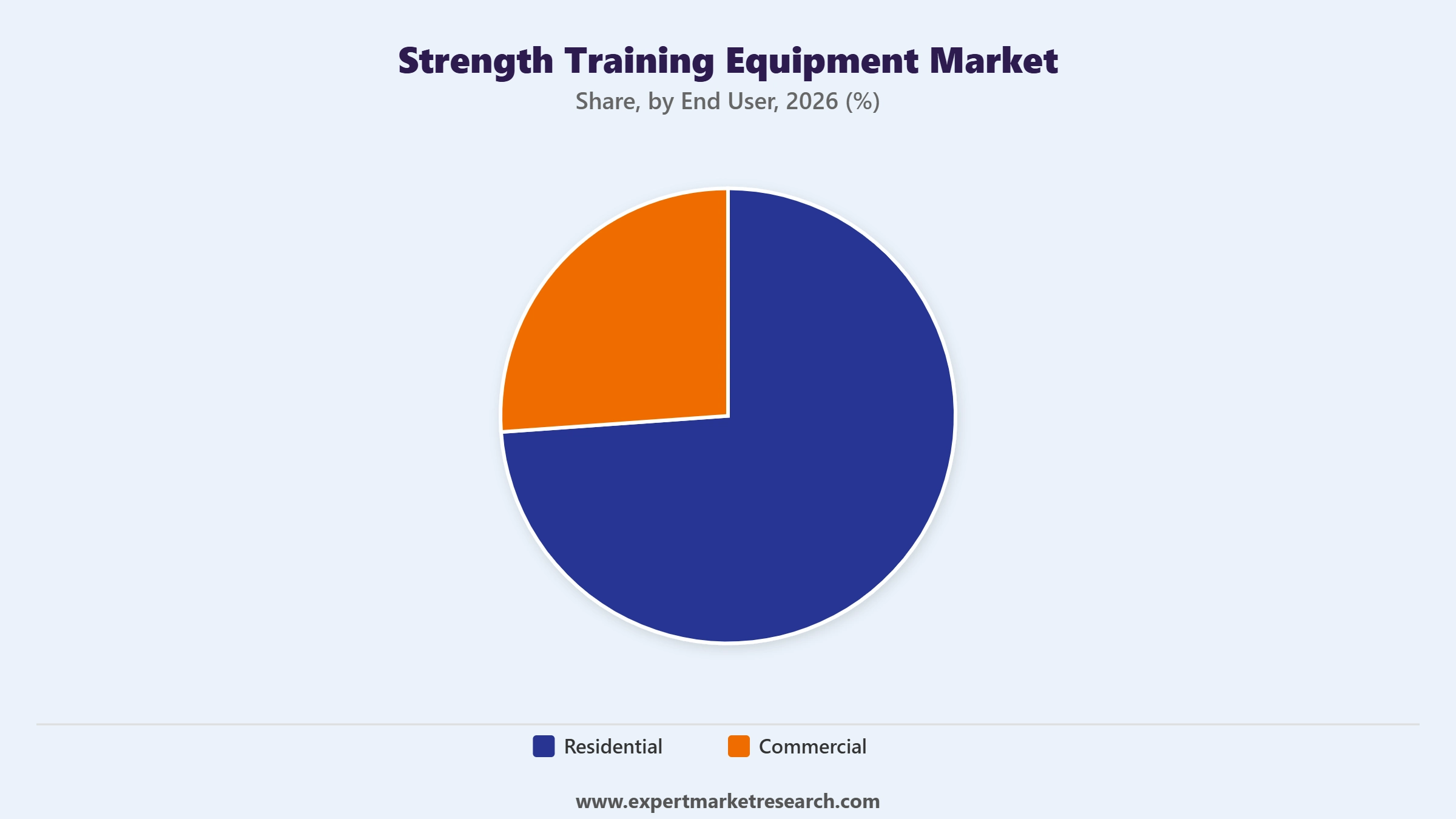
By end user, commercial gyms and fitness centers lead the market due to sustained investment in durable, high-volume strength training equipment
The commercial segment remains the dominant end user within the strength training equipment market, particularly across gyms, health clubs, and fitness centers investing in durable, high-volume equipment to support member retention and overall facility differentiation. In March 2026, Peloton and its Precor subsidiary debuted a joint Commercial Business Unit at the HFA show, pairing Precor's heavy-use equipment engineering with Peloton's connected workout content and showcasing new strength machines and an updated Glutebuilder selectorized line alongside a gym-ready bike and treadmill.
Read more about this report - REQUEST FREE SAMPLE COPY IN PDF
The residential segment is the fastest-growing end user as consumers increasingly invest in compact, space-efficient home gym equipment to support convenient, at-home strength training routines without sacrificing workout variety or intensity. Illustrating this trend, AEKE announced in July 2026 that its S1 Pro Full-Body AI Home Gym raised US$5,866,348 from 1,885 backers during a 39-day Kickstarter campaign, with AEKE stating that its system folds to about 3.2 square feet and replaces the functionality of more than 23 traditional gym machines.
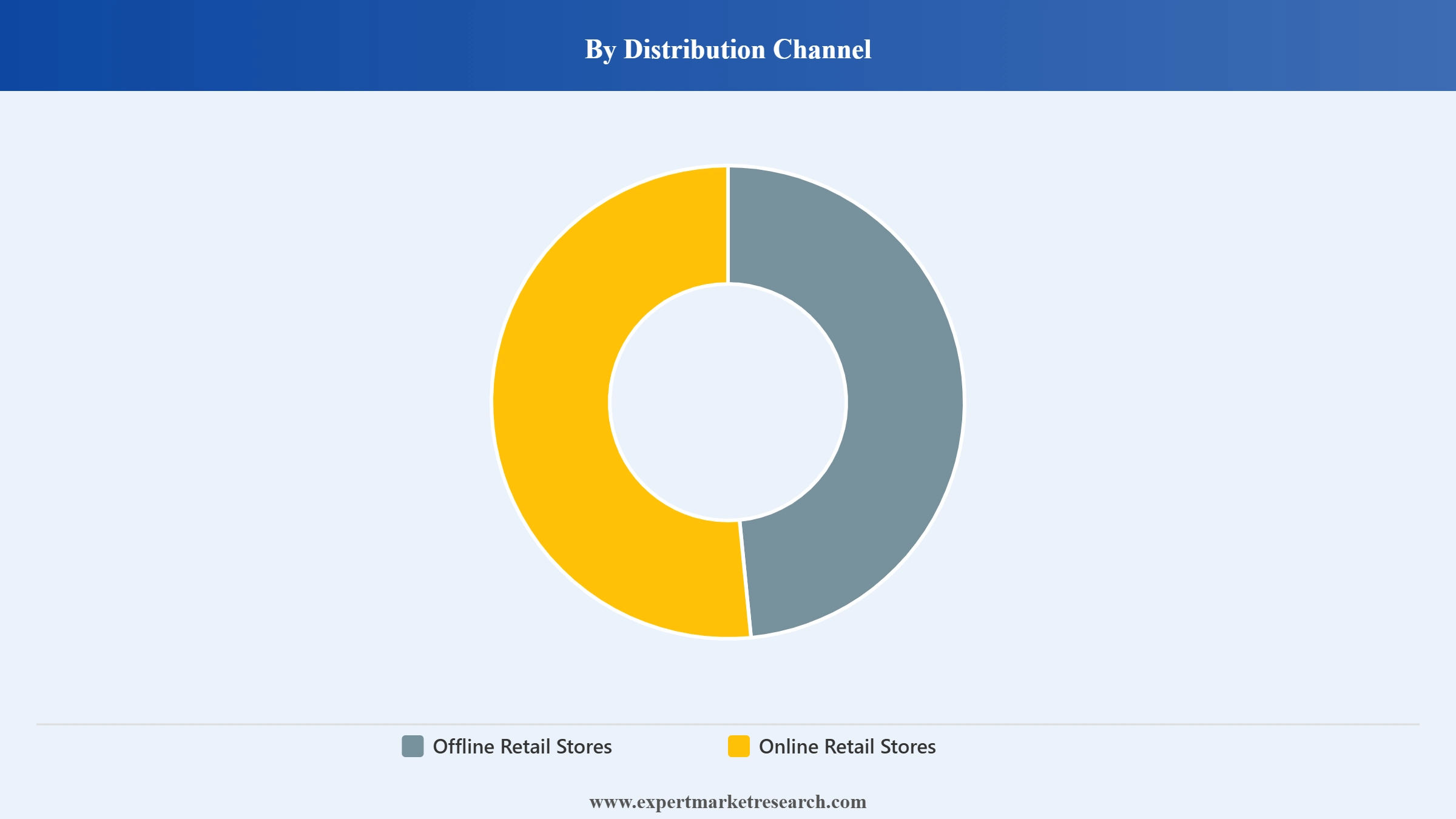
By distribution channel, offline retail stores lead the market due to consumer preference for in-person product trials
Offline retail stores account for the largest share of the strength training equipment market by distribution channel, as consumers continue to value in-person product trials and expert guidance for larger equipment purchases that are costly to return. Reinforcing this importance, REP Fitness announced in January 2026 the opening of its UK headquarters in Gloucester, including a 6,200-square-foot showroom described as one of Britain's largest dedicated strength equipment showrooms, after reporting over $130 million in 2024 sales and 30% year-on-year growth.
Read more about this report - REQUEST FREE SAMPLE COPY IN PDF
Online retail stores are the fastest-growing distribution channel as consumers increasingly purchase compact, home-use strength training equipment through e-commerce platforms offering wider product selection and more competitive pricing than physical stores can typically match. Highlighting this shift, UK supplier Northern Gym Equipment reported in September 2026 that its online sales through Decathlon's marketplace had surged more than 350% in the partnership's first year, expanding its listings to over 300 products and becoming one of Decathlon's top-selling home fitness partner brands.
North America dominates the market due to extensive gym and fitness club infrastructure and strong consumer spending
North America dominates the strength training equipment market, supported by extensive gym and fitness club infrastructure, strong consumer spending on premium fitness equipment, and a well-established base of commercial equipment manufacturers headquartered across the United States and Canada that continue to expand distribution networks. Reflecting this scale, EoS Fitness reported in July 2026 that it had opened nine new gyms across Arizona, California, Florida, and Texas during April to June 2026, taking its network to more than 225 U.S. gyms and completing ten retrofits with EoS Smart Strength Equipment powered by EGYM.
Read more about this report - REQUEST FREE SAMPLE COPY IN PDF
Asia Pacific is the fastest-growing region as rising disposable incomes, expanding gym infrastructure, and growing health consciousness drive above-average demand for strength training equipment across the region's developed and emerging markets alike, from established hubs to newer, fast-growing entrants across South and Southeast Asia. Underscoring this trajectory, Hyrox's founder and CEO said in August 2026 that India, where a Mumbai event in September 2026 was expected to draw roughly 15,000 athletes, could grow into one of Hyrox's three largest global markets alongside the US and China.
|
CAGR 2026-2035 - Market by |
Region |
|
North America |
5.1% |
|
Europe |
4.8% |
|
Asia Pacific |
8.2% |
|
Latin America |
6.0% |
|
Middle East and Africa |
5.6% |
The global market features a moderately consolidated competitive structure led by established strength training market players, namely commercial fitness equipment manufacturers with strong brand recognition, extensive distribution networks, and deep engineering expertise across strength training product categories.
Leading strength training market companies are focusing on product innovation, digital connectivity, AI-driven personalization, and strategic partnerships with fitness events and competitions to strengthen brand visibility and capture demand across both residential and commercial segments.
Life Fitness, headquartered in Rosemont, Illinois, United States, and founded in 1977, is a global leader in commercial fitness equipment, manufacturing strength and cardiovascular training machines under the Life Fitness and Hammer Strength brands for gyms, health clubs, and corporate wellness facilities worldwide. The company maintains an extensive global service and distribution network supporting large-scale commercial installations across multiple continents.
Founded in 1983 and headquartered in Cesena, Italy, Technogym is a premium manufacturer of connected fitness equipment, known for its design-forward strength and cardiovascular products used across luxury gyms, hotels, and residential settings globally. The company pairs its equipment with a proprietary digital ecosystem that delivers personalized workout content and performance tracking to premium and commercial customers alike.
Nautilus, Inc., founded in 1986 and headquartered in Vancouver, Washington, United States, designs and markets home fitness equipment under the Bowflex and Schwinn brands, with a focus on adjustable strength training systems and connected cardio products for residential consumers. The company emphasizes compact, space-saving product engineering aimed at capturing continued growth in the home fitness segment.
Johnson Health Tech, headquartered in Taichung, Taiwan, and founded in 1975, is a multinational fitness equipment manufacturer whose brands include Matrix Fitness, Horizon Fitness, and Vision Fitness, serving both commercial and residential strength and cardiovascular training markets. Its multi-brand strategy allows the company to address distinct price tiers and customer segments across global commercial and consumer channels.
Other key players in the market report include True Fitness Technology, Inc., Precor Incorporated, Rogue Fitness, iFIT Health & Fitness Inc., and Decathlon SE, among others.
*Please note that this is only a partial list; the complete list of key players is available in the full report. Additionally, the list of key players can be customized to better suit your needs.*
Explore the latest trends shaping the strength training equipment market 2026-2035 with our in-depth report. Gain strategic insights to support your business decisions. Get in touch with our analysts today.


Upto 15% Off
USD
$2499 $2249
$3999 $3599
$4999 $4249
$5999 $5099


*While we strive to always give you current and accurate information, the numbers depicted on the website are indicative and may differ from the actual numbers in the main report. At Expert Market Research, we aim to bring you the latest insights and trends in the market. Using our analyses and forecasts, stakeholders can understand the market dynamics, navigate challenges, and capitalize on opportunities to make data-driven strategic decisions.*
In 2025, the strength training equipment market reached an approximate value of USD 12.96 Billion.
The market is projected to grow at a CAGR of 6.56% between 2026 and 2035.
The key players in the market include Life Fitness, Technogym S.p.A., Nautilus, Inc., Johnson Health Tech Co., Ltd., True Fitness Technology, Inc., Precor Incorporated, Rogue Fitness, iFIT Health & Fitness Inc., and Decathlon SE, among others.
Leading manufacturers are pursuing product innovation, digital connectivity integration, AI-driven personalization, and strategic partnerships with fitness events to differentiate their offerings and capture demand across residential and commercial segments.
Key challenges include intense price-based competition among mass-market manufacturers, rising raw material and logistics costs, and the need for continuous product innovation to keep pace with evolving digital fitness technology expectations.
Explore our key highlights of the report and gain a concise overview of key findings, trends, and actionable insights that will empower your strategic decisions.
|
Report Features |
Details |
|
Base Year |
2025 |
|
Historical Period |
2019-2025 |
|
Forecast Period |
2026-2035 |
|
Scope of the Report |
Historical and Forecast Trends, Industry Drivers and Constraints, Historical and Forecast Market Analysis by Segment:
|
|
Breakup by Product Type |
|
|
Breakup by End User |
|
|
Breakup by Distribution Channel |
|
|
Breakup by Region |
|
|
Market Dynamics |
|
|
Competitive Landscape |
|
|
Companies Covered |
|
Datasheet
One User
USD 2,499
USD 2,249
tax inclusive*
Single User License
One User
USD 3,999
USD 3,599
tax inclusive*
Five User License
Five User
USD 4,999
USD 4,249
tax inclusive*
Corporate License
Unlimited Users
USD 5,999
USD 5,099
tax inclusive*
*Please note that the prices mentioned below are starting prices for each bundle type. Kindly contact our team for further details.*
Flash Bundle
Small Business Bundle
Growth Bundle
Enterprise Bundle
*Please note that the prices mentioned below are starting prices for each bundle type. Kindly contact our team for further details.*
Flash Bundle
Number of Reports: 3
20%
tax inclusive*
Small Business Bundle
Number of Reports: 5
25%
tax inclusive*
Growth Bundle
Number of Reports: 8
30%
tax inclusive*
Enterprise Bundle
Number of Reports: 10
35%
tax inclusive*
How To Order

Select License Type
Choose the right license for your needs and access rights.

Click on ‘Buy Now’
Add the report to your cart with one click and proceed to register.

Select Mode of Payment
Choose a payment option for a secure checkout. You will be redirected accordingly.
Strategic Solutions for Informed Decision-Making
Gain insights to stay ahead and seize opportunities.

Get insights & trends for a competitive edge.

Track prices with detailed trend reports.

Analyse trade data for supply chain insights.

Leverage cost reports for smart savings

Enhance supply chain with partnerships.

Connect For More Information
Our expert team of analysts will offer full support and resolve any queries regarding the report, before and after the purchase.
Our expert team of analysts will offer full support and resolve any queries regarding the report, before and after the purchase.
We employ meticulous research methods, blending advanced analytics and expert insights to deliver accurate, actionable industry intelligence, staying ahead of competitors.
Our skilled analysts offer unparalleled competitive advantage with detailed insights on current and emerging markets, ensuring your strategic edge.
We offer an in-depth yet simplified presentation of industry insights and analysis to meet your specific requirements effectively.




