

Consumer Insights
Uncover trends and behaviors shaping consumer choices today
Procurement Insights
Optimize your sourcing strategy with key market data
Industry Stats
Stay ahead with the latest trends and market analysis.
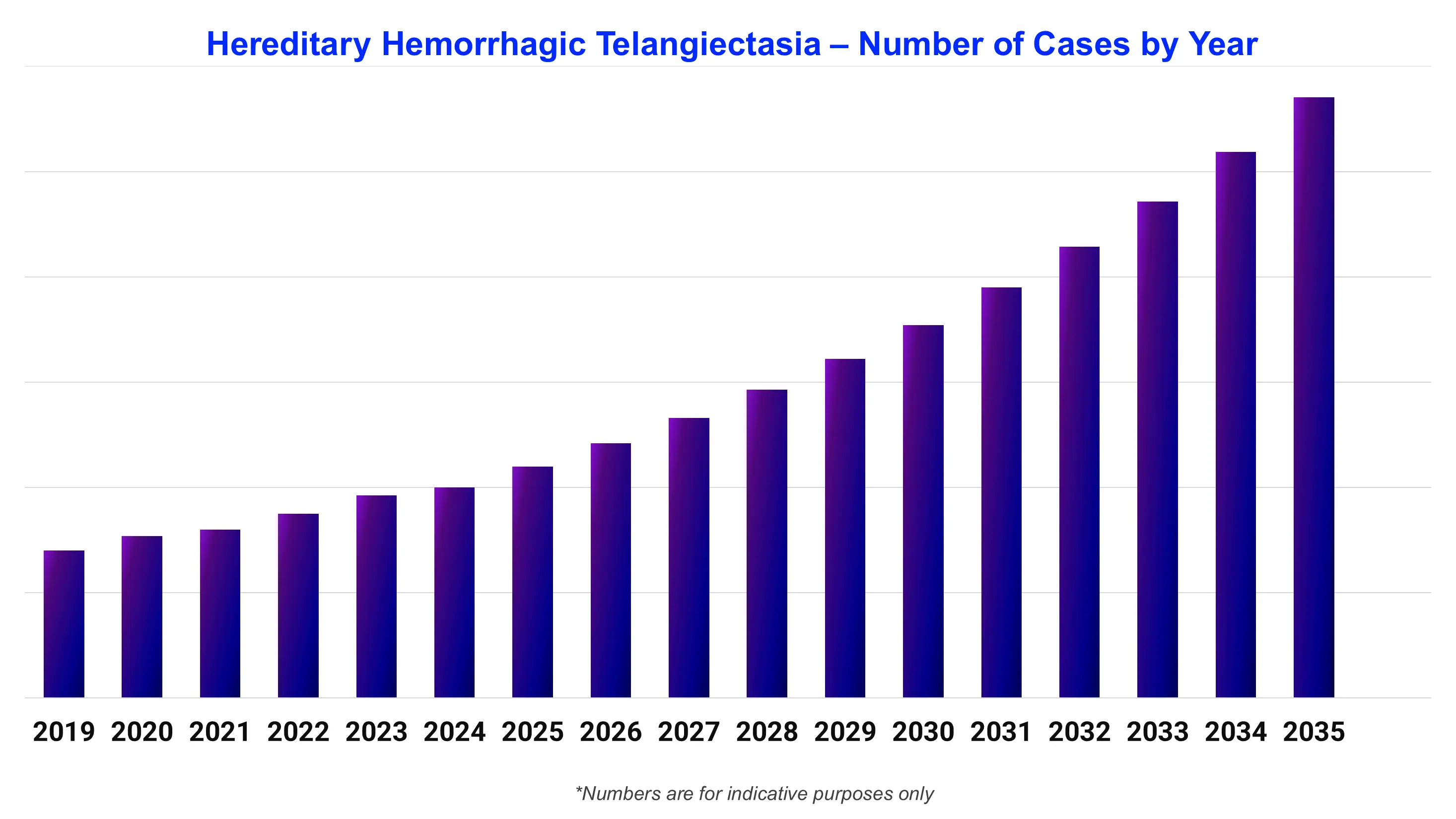
Hereditary hemorrhagic telangiectasia (HHT), also known as Osler-Weber-Rendu syndrome, is an autosomal dominant vascular dysplasia characterized by mucocutaneous telangiectases and visceral arteriovenous malformations (AVMs). The United States has the most comprehensive contemporary HHT registry evidence. The 2026 CHORUS registry reported its first 600 confirmed HHT participants across 15 U.S. HHT Centers of Excellence. According to Hereditary Hemorrhagic Telangiectasia Epidemiology Forecast by Expert Market Research (EMR), HHT is substantially underdiagnosed because manifestations are age-dependent and may initially be limited to recurrent epistaxis.
Base Year
Historical Period
Forecast Period
Read more about this report - REQUEST FREE SAMPLE COPY IN PDF
Expert Market Research's “Hereditary Hemorrhagic Telangiectasia Epidemiology Forecast Report 2026-2035” offers comprehensive information on the prevalence and demographics of Hereditary Hemorrhagic Telangiectasia. It projects the future incidence and prevalence rates of Hereditary Hemorrhagic Telangiectasia cases across various populations. The study covers age, gender, and type as major determinants of the Hereditary Hemorrhagic Telangiectasia population. The report highlights patterns in the prevalence of Hereditary Hemorrhagic Telangiectasia over time and projects future trends based on multiple variables.
The report provides a comprehensive overview of the disease, as well as historical and projected data on the epidemiology of Hereditary Hemorrhagic Telangiectasia in the 8 major markets.
Regions Covered
Hereditary hemorrhagic telangiectasia (HHT), also known as Osler-Weber-Rendu syndrome, is an autosomal dominant vascular dysplasia characterized by mucocutaneous telangiectases and visceral arteriovenous malformations (AVMs). Recurrent spontaneous epistaxis is the most common clinical manifestation, while gastrointestinal bleeding, iron deficiency and anemia represent major sources of chronic morbidity. Pulmonary, cerebral and hepatic AVMs can produce serious complications including hypoxaemia, ischemic stroke, cerebral abscess, intracranial hemorrhage, high-output cardiac failure and pulmonary hypertension. HHT is caused predominantly by pathogenic variants affecting the BMP/TGF-β signaling pathway, particularly ACVRL1 and ENG, with SMAD4 causing the HHT–juvenile polyposis overlap syndrome and rare GDF2-related phenotypes.
|
Parameter |
Insight |
|
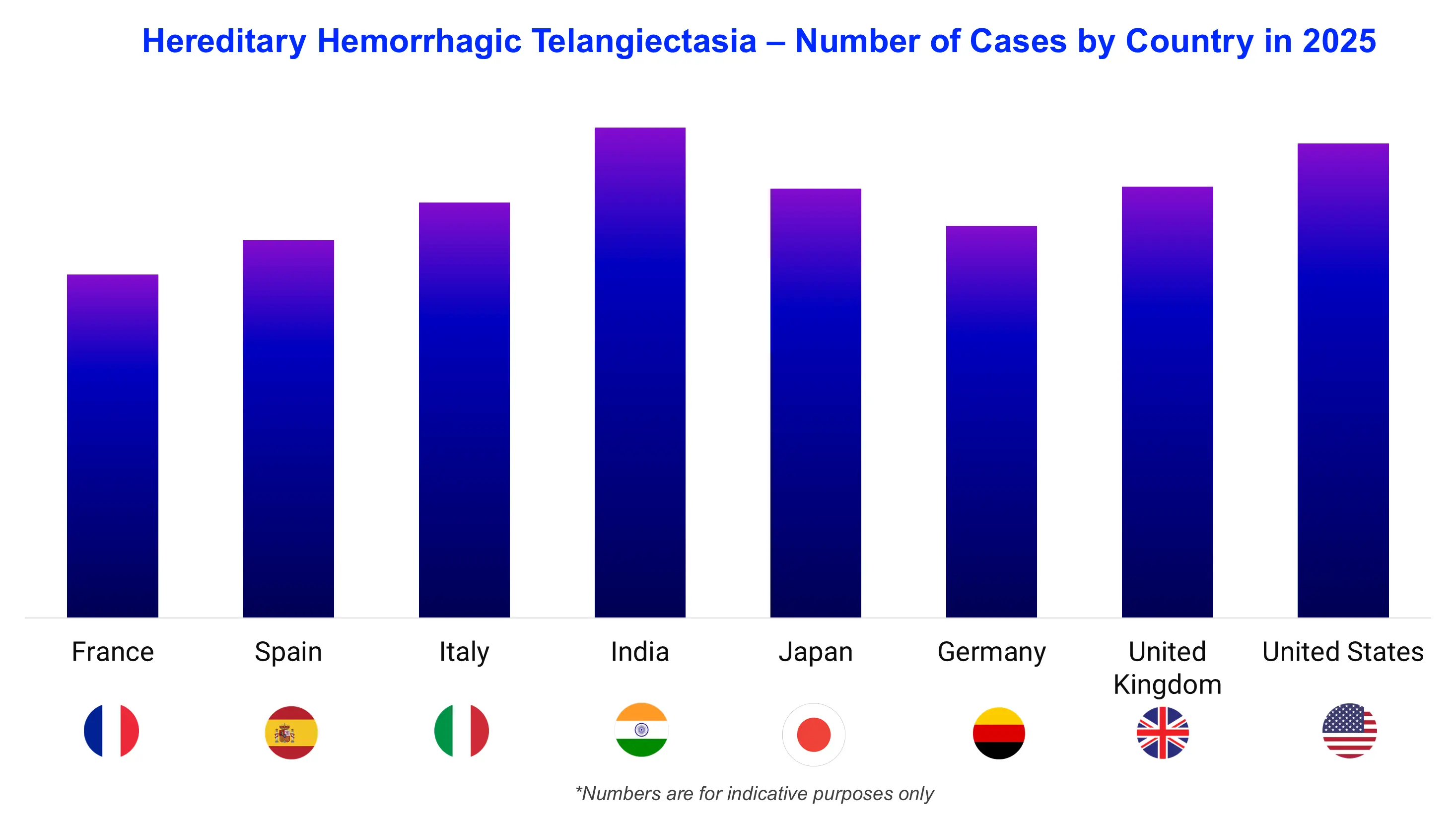
Largest Patient Pool |
United States |
|
Fastest Growing Country |
Italy |
|
High-Risk Population |
Individuals with recurrent spontaneous epistaxis, mucocutaneous telangiectases, a first-degree relative with HHT, unexplained iron-deficiency anemia, or visceral AVMs. Children of an affected parent have a 50% inherited risk when the familial pathogenic variant is known. |
|
Key Diagnostic Method |
Diagnosis is based on the Curaçao clinical criteria—recurrent epistaxis, mucocutaneous telangiectases, visceral AVMs, and a first-degree affected relative—with three or more criteria establishing definite HHT. Molecular testing of ACVRL1, ENG and SMAD4, usually through a multigene panel, is particularly valuable for familial diagnosis and screening of asymptomatic relatives. |
|
Major Risk Factor |
A heterozygous pathogenic variant in ACVRL1 or ENG accounts for the great majority of genetically resolved cases. SMAD4 causes the HHT–juvenile polyposis overlap syndrome, while rare GDF2 variants produce HHT-like vascular disease. |
|
Major gap in the market |
Major gaps include delayed diagnosis, inadequate screening of at-risk relatives, incomplete detection of pulmonary/cerebral/hepatic AVMs, chronic iron deficiency, inconsistent bleeding assessment, and the absence of an approved disease-modifying systemic therapy. |
The Hereditary Hemorrhagic Telangiectasia epidemiology division offers information on the patient pool from history to the present as well as the projected trend for each of the 8 major markets. Expert Market Research provides both current and predicted trends for the Hereditary Hemorrhagic Telangiectasia epidemiology scenario by examining a wide range of studies. Additionally, the report covers the diagnosed patient pool for Hereditary Hemorrhagic Telangiectasia and their trends. The data is broken down into specific categories, such as total prevalent cases in males and females, and total diagnosed cases across different age groups and patient pools.
|
Epidemiology Segment |
Key Insights |
|
Diagnosed Prevalent Cases of the Disease |
Clinically diagnosed prevalence is conventionally approximately 1 in 5,000. Contemporary genomic analyses suggest substantially higher underlying genetic prevalence: 2.1-11.9 per 5,000 in one 2025 gnomAD analysis and 1.753-2.555 per 5,000 for pathogenic/likely pathogenic variants in a separate large-scale analysis. These estimates should not be treated as equivalent clinical prevalence figures. |
|
Gender-Specific Cases of the Disease |
HHT affects both sexes and is inherited autosomally. In the 2026 CHORUS cohort, 60% of 600 participants were female. A 2023–2024 Italian multicenter cohort similarly contained 56.5% women among 605 respondents. These cohort distributions do not demonstrate a biological female predominance. |
|
Age-Specific Cases of the Disease |
Manifestations increase with age. CHORUS reported that most participants developed typical HHT manifestations by age 13 years, but 63% were not diagnosed until mid-to-late adulthood. Epistaxis commonly precedes visceral complications and may occur years before definitive diagnosis. |
|
Ethnicity-Wise Cases of the Disease |
HHT occurs across ethnic and geographic populations. Contemporary genomic analyses found similar genetic prevalence estimates across analyzed ancestries, while clinical literature documents founder variants in several geographically distinct populations. No robust 8MM ethnicity-specific prevalence estimates were identified. |
|
Mortality and Survival Analysis of the Disease |
Contemporary population-level survival estimates remain limited. HHT is associated with reduced survival through cumulative bleeding, anemia, AVM-related neurological complications, pulmonary hemorrhage, high-output cardiac failure and thromboembolic disease. In CHORUS, intracranial hemorrhage occurred in 3%, heart failure in 7%, and pulmonary hypertension in 7%, underscoring clinically important non-epistaxis morbidity. |
|
Disease Type |
Prevalence |
|
HHT Type 1 (ENG-Related HHT) |
HHT caused by a heterozygous pathogenic variant in ENG, encoding endoglin. Current GeneReviews data attribute approximately 44% of genetically resolved HHT to ENG. HHT1 is particularly associated with pulmonary AVMs, although substantial phenotypic overlap exists with other HHT genotypes. |
|
HHT Type 2 (ACVRL1-Related HHT) |
HHT caused by a heterozygous pathogenic variant in ACVRL1, encoding activin receptor-like kinase 1. Current GeneReviews data attribute approximately 52% of genetically resolved HHT to ACVRL1. Pulmonary hypertension is particularly associated with ACVRL1-related disease. |
Read more about this report - REQUEST FREE SAMPLE COPY IN PDF
The Hereditary Hemorrhagic Telangiectasia epidemiology data and findings for the United States, Germany, Spain, Italy, France, the United Kingdom, Japan, and India are also provided in the epidemiology section.
|
Country |
Key Insights |
|
United States |
The 2026 CHORUS prospective registry enrolled its first 600 confirmed HHT patients across 15 U.S. HHT Centers of Excellence. Median age was 53 years, 60% were female, 95% had recurrent epistaxis, 30% chronic gastrointestinal bleeding, and 68% iron deficiency and/or anemia. The registry found a major diagnostic delay: 63% were not diagnosed until mid-to-late adulthood. |
|
Germany |
Germany participates in European HHT expert-center networks, including the VASCERN HHT working group, but available registry material does not yet provide a defensible national patient count. |
|
France |
France is a major European HHT reference-center country, with the HHT National Reference Center at Hospices Civils de Lyon and participation in VASCERN. The 2025 Nature Reviews Disease Primers review was coordinated through French and European HHT reference centers, but no contemporary national French prevalence estimate was identified. |
|
Italy |
A multicenter Italian HHT survey analyzed 605 patients, with mean age 54 years and 56.5% female. Epistaxis occurred in 96.0%, hepatic vascular malformations in 41.7%, pulmonary AVMs in 35.6%, gastrointestinal AVMs in 19.7%, and brain AVMs in 11.6%. Among 260 genetically characterized patients, ACVRL1 accounted for 65.4%, ENG 33.5%, and SMAD4 1.2%. A 2025 Italian pediatric study further evaluated genotype-phenotype variability among genetically confirmed affected children and parents. |
|
Spain |
A 2023 population-based study from Valencia identified 200 HHT cases in its regional rare-disease information system and estimated prevalence at 39.6 per million, but the underlying cases were from 2010–2019 and therefore should be treated as historical surveillance evidence rather than a current 2023–2026 prevalence estimate. |
|
United Kingdom |
The UK participates in European HHT expert-center and research networks, while Imperial College London is a major international HHT research center. The previously reported UK diagnosed prevalence of approximately 1 in 9,400 originated from older primary-care data and should not be substituted for a contemporary 2023–2026 national estimate. |
|
Japan |
Japan has longstanding population and genetic evidence demonstrating that HHT is not restricted to European populations. A 2024 molecular study analyzed 12 Japanese patients from 11 families, identifying 11 distinct ENG or ACVRL1 variants and functionally confirming several previously uncertain variants. A 2025 Japanese study also demonstrated the utility of long-read sequencing for resolving genetically diagnosed HHT cases, supporting improved molecular ascertainment. |
|
India |
A 2026 JIPMER series of five unrelated Indian patients identified telangiectasias and visceral AVMs as common manifestations; clinical exome sequencing found pathogenic ACVRL1 variants in two patients and novel ENG variants in two, while one patient was not genetically tested. A 2025 AIIMS Nagpur report also highlighted the diagnostic appearance of HHT in skin of color. No national Indian prevalence estimate was identified. |
The principal epidemiological gap is the discrepancy between clinically recognized disease and underlying genetic prevalence. The conventional prevalence of approximately 1 in 5,000 already makes HHT considerably more common than many other inherited vascular disorders, but the 2025 genomic estimates suggest that clinically recognized cases may represent only a fraction of the genetically susceptible population. The disparity is consistent with the long diagnostic interval demonstrated prospectively by CHORUS and reinforces the importance of cascade testing and structured screening of first-degree relatives. A second major gap is incomplete characterization of organ-specific complications. Pulmonary AVMs can permit paradoxical embolization and cause ischemic stroke or cerebral abscess; hepatic AVMs can produce high-output cardiac failure; and cerebral vascular malformations can cause hemorrhage or neurological morbidity.
Management of HHT is directed toward prevention of AVM-related complications, control of mucosal and gastrointestinal bleeding, correction of iron deficiency, and screening of genetically at-risk relatives. Epistaxis is generally managed with humidification, topical therapies and local interventions when necessary, while significant nasal bleeding may require laser treatment, sclerotherapy, surgical approaches or other specialist procedures. Iron deficiency should be actively identified and treated even when hemoglobin remains normal because chronic blood loss is common. Pulmonary AVMs are screened for and, when appropriate, treated by transcatheter embolization to reduce the risks of paradoxical embolic stroke and cerebral abscess.


Upto 15% Off
USD
$2699 $2429
$4299 $3869
$5799 $4949
$6999 $5949


*While we strive to always give you current and accurate information, the numbers depicted on the website are indicative and may differ from the actual numbers in the main report. At Expert Market Research, we aim to bring you the latest insights and trends in the market. Using our analyses and forecasts, stakeholders can understand the market dynamics, navigate challenges, and capitalize on opportunities to make data-driven strategic decisions.*
Explore our key highlights of the report and gain a concise overview of key findings, trends, and actionable insights that will empower your strategic decisions.
|
Report Features |
Details |
|
Base Year |
2025 |
|
Historical Period |
2019-2025 |
|
Forecast Period |
2026-2035 |
|
Epidemiology Statistics Provided |
|
|
Segmentation Provided |
|
|
Geographies Covered |
|
Datasheet
One User
USD 2,699
USD 2,429
tax inclusive*
Single User License
One User
USD 4,299
USD 3,869
tax inclusive*
Five User License
Five User
USD 5,799
USD 4,949
tax inclusive*
Corporate License
Unlimited Users
USD 6,999
USD 5,949
tax inclusive*
*Please note that the prices mentioned below are starting prices for each bundle type. Kindly contact our team for further details.*
Flash Bundle
Small Business Bundle
Growth Bundle
Enterprise Bundle
*Please note that the prices mentioned below are starting prices for each bundle type. Kindly contact our team for further details.*
Flash Bundle
Number of Reports: 3
20%
tax inclusive*
Small Business Bundle
Number of Reports: 5
25%
tax inclusive*
Growth Bundle
Number of Reports: 8
30%
tax inclusive*
Enterprise Bundle
Number of Reports: 10
35%
tax inclusive*
How To Order

Select License Type
Choose the right license for your needs and access rights.

Click on ‘Buy Now’
Add the report to your cart with one click and proceed to register.

Select Mode of Payment
Choose a payment option for a secure checkout. You will be redirected accordingly.
Strategic Solutions for Informed Decision-Making
Gain insights to stay ahead and seize opportunities.

Get insights & trends for a competitive edge.

Track prices with detailed trend reports.

Analyse trade data for supply chain insights.

Leverage cost reports for smart savings

Enhance supply chain with partnerships.

Connect For More Information
Our expert team of analysts will offer full support and resolve any queries regarding the report, before and after the purchase.
Our expert team of analysts will offer full support and resolve any queries regarding the report, before and after the purchase.
We employ meticulous research methods, blending advanced analytics and expert insights to deliver accurate, actionable industry intelligence, staying ahead of competitors.
Our skilled analysts offer unparalleled competitive advantage with detailed insights on current and emerging markets, ensuring your strategic edge.
We offer an in-depth yet simplified presentation of industry insights and analysis to meet your specific requirements effectively.




