

Consumer Insights
Uncover trends and behaviors shaping consumer choices today
Procurement Insights
Optimize your sourcing strategy with key market data
Industry Stats
Stay ahead with the latest trends and market analysis.
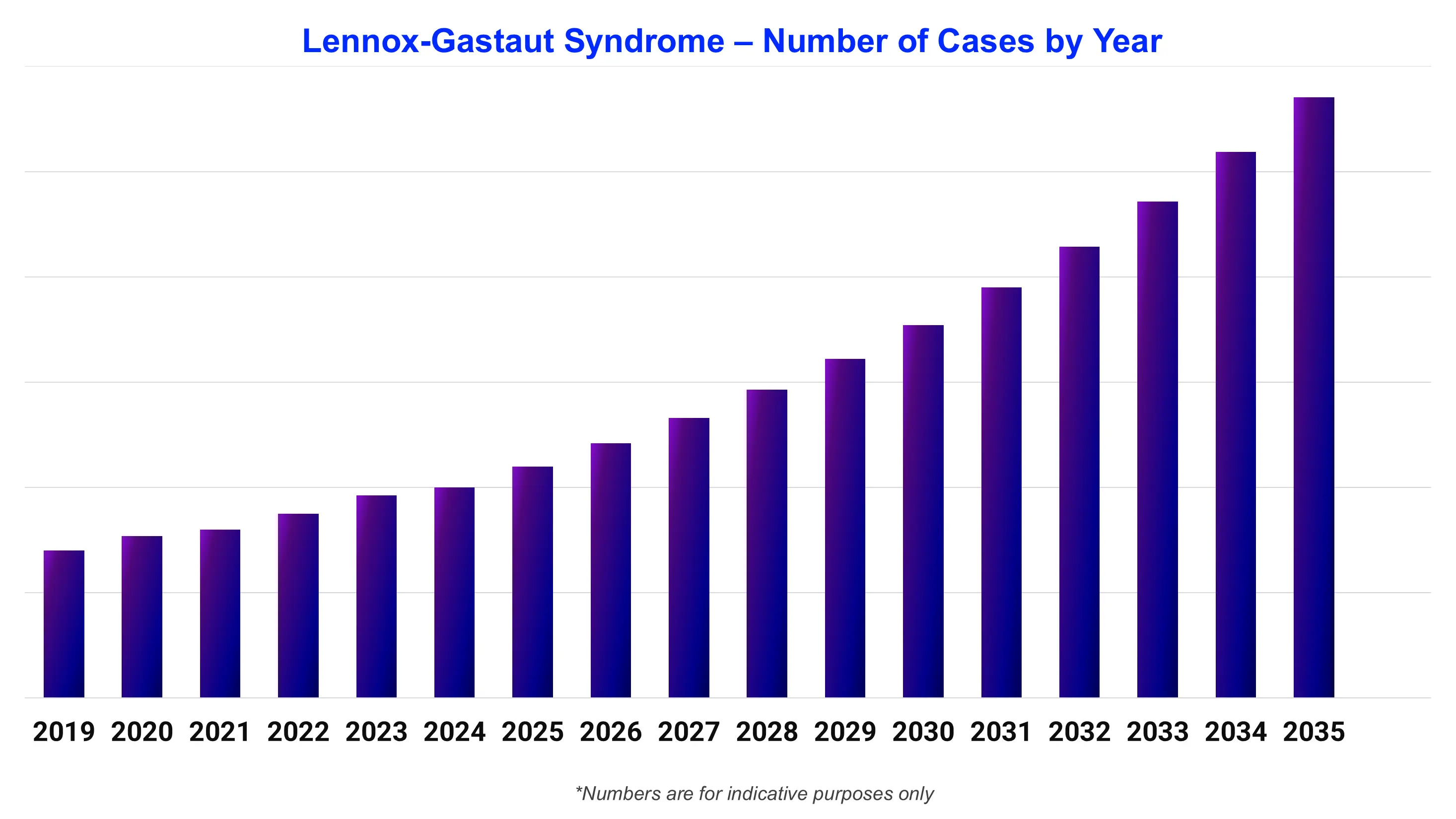
Lennox-Gastaut syndrome (LGS) is a severe, childhood-onset epileptic encephalopathy characterized by multiple seizure types and developmental impairment. According to Rare Disease Advisor, global prevalence ranges from 1 to 5 cases per 10,000 people, with an estimated 1 million individuals affected worldwide. According to Expert Market Research’s Lennox-Gastaut syndrome epidemiology forecast, disease trends are evaluated across key markets.
Base Year
Historical Period
Forecast Period
Read more about this report - REQUEST FREE SAMPLE COPY IN PDF
Expert Market Research's “Lennox-Gastaut Syndrome Epidemiology Forecast Report 2026-2035” offers comprehensive information on the prevalence and demographics of Lennox-Gastaut syndrome. It projects the future incidence and prevalence rates of Lennox-Gastaut syndrome cases across various populations. The study covers age, gender, and type as major determinants of the Lennox-Gastaut syndrome population. The report highlights patterns in the prevalence of Lennox-Gastaut syndrome over time and projects future trends based on multiple variables.
The report provides a comprehensive overview of the disease, as well as historical and projected data on the epidemiology of Lennox-Gastaut syndrome in the 8 major markets.
Regions Covered
Lennox-Gastaut syndrome (LGS) is a rare, severe form of childhood-onset epilepsy characterized by multiple seizure types, cognitive impairment, and distinctive electroencephalogram (EEG) abnormalities. It typically begins between 3 and 5 years of age and may develop due to structural brain abnormalities, genetic conditions, brain infections, or injuries. In some cases, the underlying cause remains unknown. LGS is classified as a developmental and epileptic encephalopathy rather than distinct disease subtypes. Its complex presentation and treatment-resistant seizures make long-term neurological care essential.
|
Parameter |
Insight |
|
Largest Patient Pool |
United States |
|
Fastest Growing Region |
India |
|
High-Risk Population |
Children with developmental and neurological disorders, particularly those with early-onset epilepsy or structural brain abnormalities. |
|
Key Diagnostic Method |
Electroencephalography (EEG), supported by clinical seizure assessment, medical history, and brain imaging when indicated. |
|
Major Risk Factor |
Underlying neurological abnormalities, genetic conditions, brain injuries, and infections; some cases have no identifiable cause. |
|
Major gap in the market |
Delayed diagnosis, limited access to epilepsy specialists, and inadequate seizure control despite available treatments. |
The Lennox-Gastaut syndrome epidemiology division offers information on the patient pool from history to the present as well as the projected trend for each of the 8 major markets. Expert Market Research provides both current and predicted trends for the Lennox-Gastaut syndrome epidemiology scenario by examining a wide range of studies. Additionally, the report covers the diagnosed patient pool for Lennox-Gastaut syndrome and their trends. The data is broken down into specific categories, such as total prevalent cases in males and females, and total diagnosed cases across different age groups and patient pools.
|
Epidemiology Segment |
Key Insights |
|
Diagnosed Prevalent Cases of the Disease |
According to Rare Disease Advisor, the global prevalence of Lennox–Gastaut syndrome (LGS) ranges from 1 to 5 cases per 10,000 people, affecting an estimated 1 million individuals worldwide. LGS accounts for approximately 1%–2% of epilepsy cases and 2%–5% of childhood epilepsy cases. |
|
Gender-Specific Cases of the Disease |
According to Nizami et al. (2024), males accounted for 62.6% of 1,167 patients included in a systematic review of LGS. |
|
Age-Specific Cases of the Disease |
According to Rare Disease Advisor, LGS typically begins between 2 and 5 years of age, with most children diagnosed before age 6. The supplied literature also reports seizure onset between 1 and 8 years, highlighting the predominantly childhood-onset distribution of the syndrome. |
|
Ethnicity-Wise Cases of the Disease |
According to the information provided by Rare Disease Advisor, studies have not established a specific racial or ethnic predisposition to Lennox–Gastaut syndrome. The condition has been reported across racial and ethnic groups, without a confirmed ethnicity-specific prevalence pattern in the supplied evidence. |
|
Mortality and Survival Analysis of the Disease |
According to Rare Disease Advisor, the overall mortality rate among individuals with LGS is approximately 5%. A German 10-year study reported a mortality rate of 10.01% among individuals with LGS, compared with 0.01% among age- and sex-matched individuals from the general population. |
|
Disease Type |
Prevalence |
|
Symptomatic (Secondary) LGS |
Symptomatic LGS is associated with identifiable underlying causes, including structural brain abnormalities, brain malformations, infections, birth asphyxia, and head injuries. The supplied information indicates that structural abnormalities account for a substantial proportion of cases, making symptomatic LGS the more prominent category in the reported etiological data. |
|
Cryptogenic (Idiopathic) LGS |
Cryptogenic or idiopathic LGS refers to cases in which the underlying cause remains unknown. This is a lesser proportion of cases. |
Read more about this report - REQUEST FREE SAMPLE COPY IN PDF
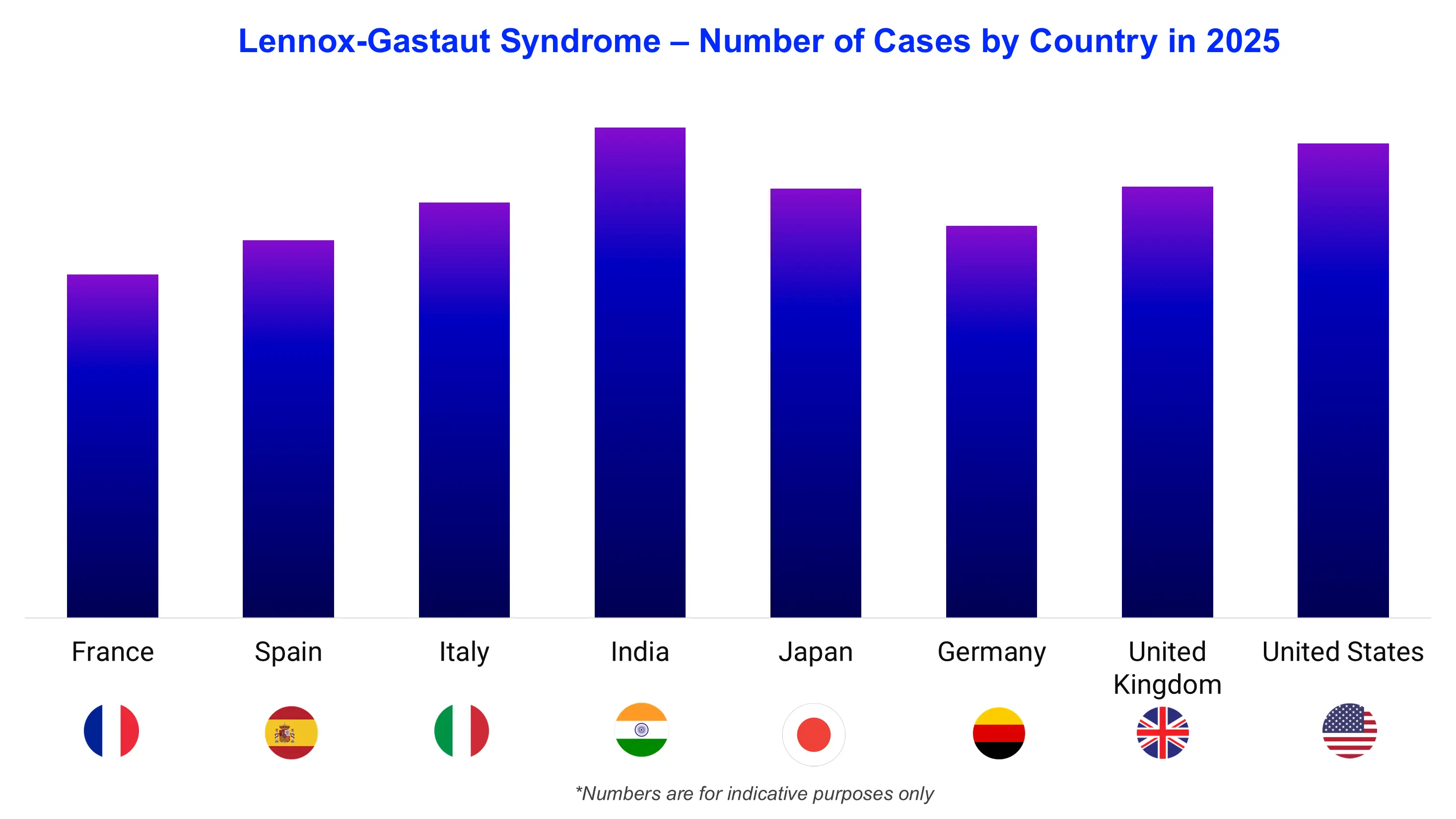
The Lennox-Gastaut syndrome epidemiology data and findings for the United States, Germany, Spain, Italy, France, the United Kingdom, Japan, and India are also provided in the epidemiology section.
|
Country |
Key Insights |
|
United States |
According to Strzelczyk et al. (2023), the prevalence of LGS in the United States ranges from 13.0 to 60.8 cases per 100,000 people. Rare Disease Advisor estimates up to 47,800 cases nationally and reports approximately 200 childhood diagnoses annually, based on an initial incidence rate of 0.7% among children diagnosed with epilepsy. |
|
Germany |
According to Strzelczyk et al. (2021), the prevalence of LGS in Germany is 39.2 cases per 100,000 people. A 10-year study cited by Rare Disease Advisor reported a mortality rate of 10.01% among individuals with LGS, compared with 0.01% among age- and sex-matched individuals from the general population. |
|
France |
The prevalence of Lennox–Gastaut syndrome in France is influenced by access to specialist epilepsy services, the recognition of evolving childhood epilepsy syndromes, and differences in diagnostic practices across healthcare settings. |
|
Italy |
In Italy, the identification of the disease is shaped by access to pediatric neurology services, referral patterns to specialized epilepsy centers, and the recognition of cases evolving from other childhood epilepsy syndromes. |
|
Spain |
In Spain, the reported burden of Lennox–Gastaut syndrome is influenced by regional differences in access to specialist care, diagnostic practices, and the identification of patients with complex childhood epilepsy. |
|
United Kingdom |
According to Chin et al. (2021), LGS prevalence in the United Kingdom was 4.2 cases per 100,000 people. Rare Disease Advisor also reports a primary care prevalence of approximately 0.578 cases per 10,000 patients, including 74 confirmed and 106 probable cases in the reported study. |
|
Japan |
In Japan, the recognition of Lennox–Gastaut syndrome may be influenced by pediatric epilepsy screening, access to specialized neurological assessment, and the identification of cases as childhood epilepsy syndromes evolve over time. |
|
India |
According to Kalra et al. (2002), LGS accounted for 16% of infantile epileptic encephalopathy cases among patients attending a pediatric neurology clinic in India. This finding reflects a specific clinical cohort and should not be interpreted as a national prevalence estimate for India. |
Lennox-Gastaut syndrome presents opportunities to improve early diagnosis, treatment access, and long-term disease management across the United States, Germany, France, Italy, Spain, the United Kingdom, Japan, and India. A major unmet need is the timely identification of patients with drug-resistant seizures, supported by electroencephalography, specialist assessment, and appropriate genetic testing. Another opportunity involves expanding access to newer antiseizure medications, dietary therapies, and neuromodulation or surgical interventions for eligible patients. However, limited country-specific epidemiological data and differences in healthcare access may complicate patient population estimates and regional market assessments.
Lennox-Gastaut syndrome treatment focuses on reducing seizure frequency, minimizing injury, and improving quality of life. Commonly used antiseizure medications include valproate, clobazam, lamotrigine, rufinamide, and topiramate. Cannabidiol and fenfluramine are additional options for eligible patients. For individuals whose seizures remain uncontrolled, treatment may include a ketogenic diet, vagus nerve stimulation, or corpus callosotomy. Medication selection depends on seizure types, age, comorbidities, and tolerability. Regular neurological diagnostics and individualized care plans are important for managing this chronic condition.


Upto 15% Off
USD
$2699 $2429
$4299 $3869
$5799 $4949
$6999 $5949


*While we strive to always give you current and accurate information, the numbers depicted on the website are indicative and may differ from the actual numbers in the main report. At Expert Market Research, we aim to bring you the latest insights and trends in the market. Using our analyses and forecasts, stakeholders can understand the market dynamics, navigate challenges, and capitalize on opportunities to make data-driven strategic decisions.*
Explore our key highlights of the report and gain a concise overview of key findings, trends, and actionable insights that will empower your strategic decisions.
|
Report Features |
Details |
|
Base Year |
2025 |
|
Historical Period |
2019-2025 |
|
Forecast Period |
2026-2035 |
|
Epidemiology Statistics Provided |
|
|
Segmentation Provided |
|
|
Geographies Covered |
|
Datasheet
One User
USD 2,699
USD 2,429
tax inclusive*
Single User License
One User
USD 4,299
USD 3,869
tax inclusive*
Five User License
Five User
USD 5,799
USD 4,949
tax inclusive*
Corporate License
Unlimited Users
USD 6,999
USD 5,949
tax inclusive*
*Please note that the prices mentioned below are starting prices for each bundle type. Kindly contact our team for further details.*
Flash Bundle
Small Business Bundle
Growth Bundle
Enterprise Bundle
*Please note that the prices mentioned below are starting prices for each bundle type. Kindly contact our team for further details.*
Flash Bundle
Number of Reports: 3
20%
tax inclusive*
Small Business Bundle
Number of Reports: 5
25%
tax inclusive*
Growth Bundle
Number of Reports: 8
30%
tax inclusive*
Enterprise Bundle
Number of Reports: 10
35%
tax inclusive*
How To Order

Select License Type
Choose the right license for your needs and access rights.

Click on ‘Buy Now’
Add the report to your cart with one click and proceed to register.

Select Mode of Payment
Choose a payment option for a secure checkout. You will be redirected accordingly.
Strategic Solutions for Informed Decision-Making
Gain insights to stay ahead and seize opportunities.

Get insights & trends for a competitive edge.

Track prices with detailed trend reports.

Analyse trade data for supply chain insights.

Leverage cost reports for smart savings

Enhance supply chain with partnerships.

Connect For More Information
Our expert team of analysts will offer full support and resolve any queries regarding the report, before and after the purchase.
Our expert team of analysts will offer full support and resolve any queries regarding the report, before and after the purchase.
We employ meticulous research methods, blending advanced analytics and expert insights to deliver accurate, actionable industry intelligence, staying ahead of competitors.
Our skilled analysts offer unparalleled competitive advantage with detailed insights on current and emerging markets, ensuring your strategic edge.
We offer an in-depth yet simplified presentation of industry insights and analysis to meet your specific requirements effectively.




