

Consumer Insights
Uncover trends and behaviors shaping consumer choices today
Procurement Insights
Optimize your sourcing strategy with key market data
Industry Stats
Stay ahead with the latest trends and market analysis.
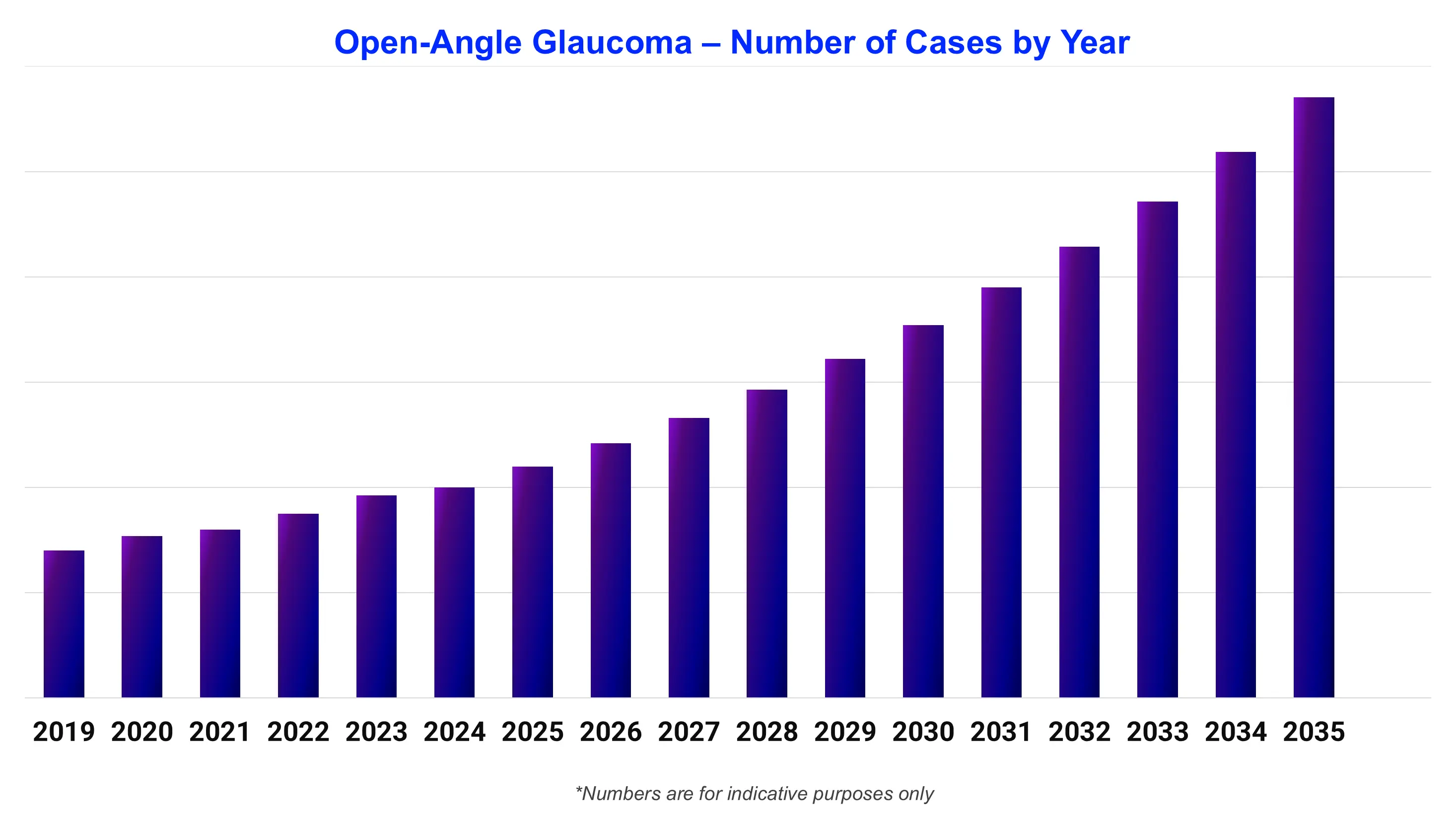
Open-angle glaucoma is a progressive eye disease that damages the optic nerve, often associated with elevated intraocular pressure. As per the Glaucoma Research Foundation, approximately 80 million people worldwide had glaucoma in 2020, including about 60 million with open-angle glaucoma. According to the open-angle glaucoma epidemiology forecast by Expert Market Research, the optic nerve remains central to disease assessment and progression.
Base Year
Historical Period
Forecast Period
Read more about this report - Request a Free Sample
Expert Market Research's “Open-Angle Glaucoma Epidemiology Forecast Report 2026-2035” offers comprehensive information on the prevalence and demographics of open-angle glaucoma. It projects the future incidence and prevalence rates of open-angle glaucoma cases across various populations. The study covers age, gender, and type as major determinants of the open-angle glaucoma population. The report highlights patterns in the prevalence of open-angle glaucoma over time and projects future trends based on multiple variables.
The report provides a comprehensive overview of the disease, as well as historical and projected data on the epidemiology of open-angle glaucoma in the 8 major markets.
Regions Covered
Open-angle glaucoma is a chronic, progressive optic neuropathy characterized by damage to the optic nerve and corresponding visual field loss, typically with an anatomically open anterior chamber angle. The disease commonly develops when aqueous humor drainage through the trabecular meshwork becomes impaired, resulting in elevated or dysregulated intraocular pressure and progressive retinal ganglion cell loss. The principal types include primary open-angle glaucoma (POAG), the most common form, and secondary open-angle glaucoma, which may result from conditions such as pseudoexfoliation, pigment dispersion, trauma, inflammation, or corticosteroid exposure.
|
Parameter |
Insight |
|
Largest Patient Pool |
United States |
|
Fastest Growing Country |
India |
|
High-Risk Population |
Older adults, particularly those aged 60 years and older |
|
Key Diagnostic Method |
Comprehensive ophthalmic examination |
|
Major Risk Factor |
Older age |
|
Major gap in the market |
Underdiagnosis and delayed detection |
The open-angle glaucoma epidemiology division offers information on the patient pool from history to the present as well as the projected trend for each of the 8 major markets. Expert Market Research provides both current and predicted trends for the open-angle glaucoma epidemiology scenario by examining a wide range of studies. Additionally, the report covers the diagnosed patient pool for open-angle glaucoma and their trends. The data is broken down into specific categories, such as total prevalent cases in males and females, and total diagnosed cases across different age groups and patient pools.
|
Epidemiology Segment |
Key Insights |
|
Diagnosed Prevalent Cases of the Disease |
As per Glaucoma Research Foundation (2020), approximately 80 million people worldwide had glaucoma, including around 60 million with open-angle glaucoma, indicating a substantial global disease burden. |
|
Gender-Specific Cases of the Disease |
According to European Glaucoma Society (2025), male sex was associated with higher glaucoma prevalence in European population-based studies. The analysis included 55,415 adults aged 40 years and older. |
|
Age-Specific Cases of the Disease |
According to European Glaucoma Society (2025), glaucoma prevalence increases with age. In Europe, older age was significantly associated with higher prevalence, while younger individuals had a greater proportion of undiagnosed disease. |
|
Ethnicity-Wise Cases of the Disease |
According to BrightFocus Foundation, primary open-angle glaucoma affects African Americans at younger ages and is approximately three to four times more common than among people of European ancestry. Hispanic prevalence was intermediate. |
|
Mortality and Survival Analysis of the Disease |
Long-term outcomes are primarily associated with the progression of vision loss and the extent of optic nerve damage, with disease progression potentially affecting visual function and quality of life. |
|
Disease Type |
Prevalence |
|
Primary Open-Angle Glaucoma (POAG) |
According to Selvaraj Jerrome et al. (2026), the pooled prevalence of primary open-angle glaucoma in India was 2.07%. Prevalence varied according to age, gender, geographic zone, habitation, and diagnostic criteria. |
|
Normal-Tension Glaucoma (NTG) |
Normal-tension glaucoma is identified as a subtype of open-angle glaucoma in the provided information. The supplied epidemiological data do not provide a prevalence value for this subtype. |
|
Pigmentary Glaucoma |
Pigmentary glaucoma is identified as a secondary open-angle subtype in the provided information. The supplied epidemiological data do not provide a prevalence value for this subtype. |
|
Pseudoexfoliation Glaucoma |
According to Selvaraj Jerrome et al. (2026), pseudoexfoliation glaucoma was included with secondary glaucoma, with a combined pooled prevalence of 0.29% in India. |
Read more about this report - Request a Free Sample
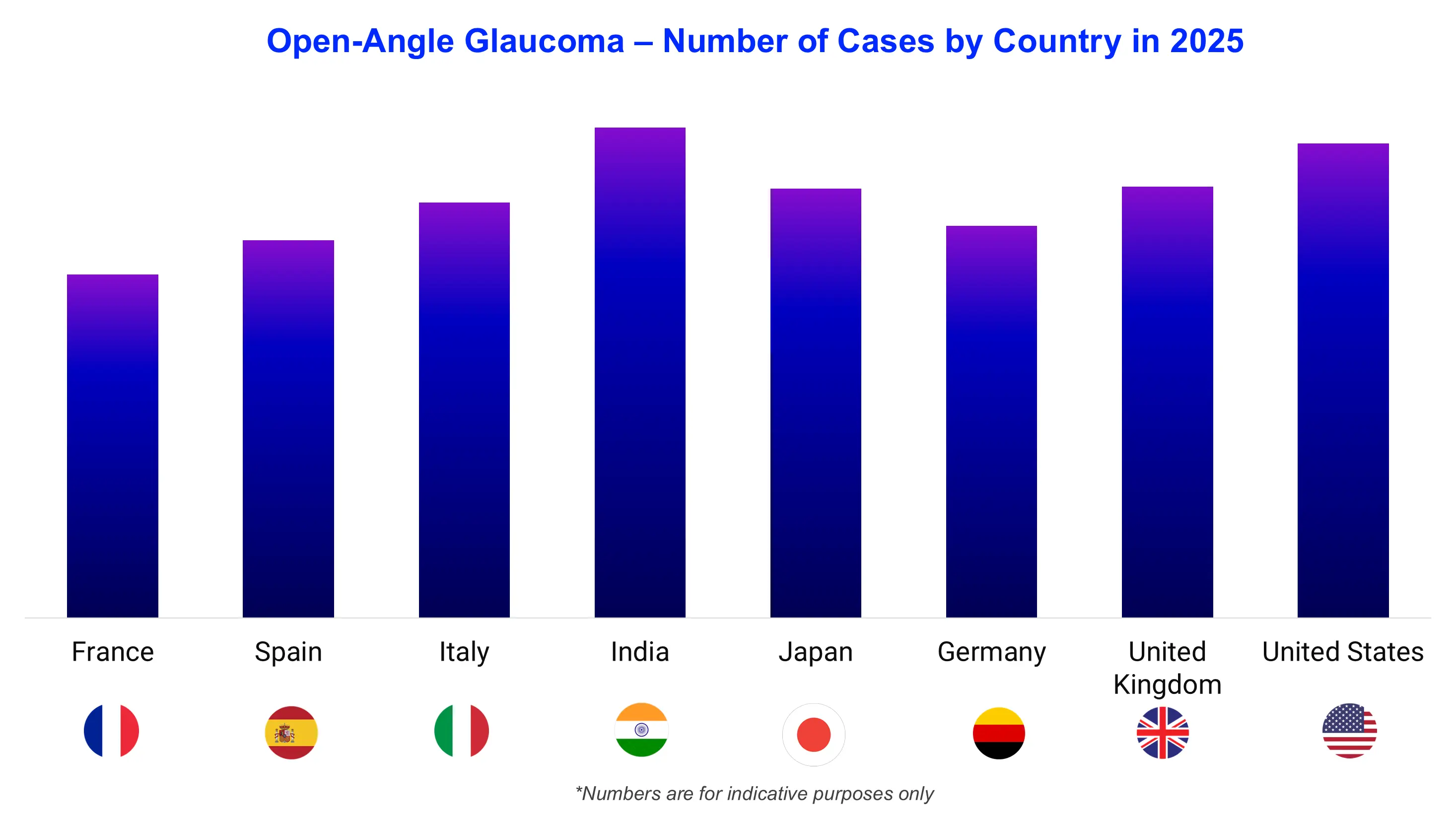
The open-angle glaucoma epidemiology data and findings for the United States, Germany, Spain, Italy, France, the United Kingdom, Japan, and India are also provided in the epidemiology section.
|
Country |
Key Insights |
|
United States |
According to Glaucoma Research Foundation (2020), approximately 60 million of the estimated 80 million people worldwide with glaucoma were affected by open-angle glaucoma. The provided information also indicates younger onset among African Americans. |
|
Germany |
According to Tienan Qi et al. (2025), open-angle glaucoma prevalence increased with age in Germany, from approximately 0.4% among people aged 40–44 years to 10% among those older than 90 years. |
|
France |
According to European Glaucoma Society, the European glaucoma burden is associated with increasing age, and primary open-angle glaucoma represents a substantial component of the overall disease burden. |
|
Italy |
As per European Glaucoma Society, glaucoma prevalence in European populations increases with age. The European analysis also identified a substantial proportion of previously undiagnosed cases, particularly among younger participants. |
|
Spain |
According to European Glaucoma Society, glaucoma prevalence varies across European populations and increases with age. The analysis also identified a substantial burden of previously undiagnosed glaucoma. |
|
United Kingdom |
As per European Glaucoma Society, glaucoma prevalence increases with age among European adults aged 40 years and older. More than half of identified cases in the European analysis had been previously undiagnosed. |
|
Japan |
In Japan, age is an important epidemiological factor for glaucoma, with prevalence increasing with advancing age in the reported populations. |
|
India |
According to Selvaraj Jerrome et al. (2026), pooled glaucoma prevalence in India was 3.23%, including 2.07% for primary open-angle glaucoma. Prevalence varied by age, gender, geographic zone, habitation, and diagnostic criteria. |
The regional open-angle glaucoma landscape continues to face a substantial early-detection gap, particularly because glaucoma can progress with limited symptoms before irreversible visual impairment becomes apparent. Recent European evidence indicates that more than half of glaucoma cases may remain undiagnosed, underscoring the need for broader population risk assessment and timely ophthalmic evaluation. Aging populations across the United States, Europe, Japan, and India are expected to increase the underlying disease burden. Opportunities include expanded screening of high-risk populations, improved access to comprehensive eye examinations, earlier diagnosis, and greater use of technologies that support optic nerve and visual field assessment.
Open-angle glaucoma treatment aims to slow or prevent further optic nerve damage and preserve visual function, primarily by lowering intraocular pressure. First-line management commonly involves topical medications, including prostaglandin analogs, beta-blockers, alpha-adrenergic agonists, and carbonic anhydrase inhibitors. Selective laser trabeculoplasty may be used as an initial or adjunctive treatment. For patients with inadequate control or progressive disease, surgical device approaches such as minimally invasive glaucoma surgery, trabeculectomy, or glaucoma drainage devices may be considered. Intraocular pressure reduction remains the central therapeutic objective throughout disease management.


Upto 15% Off
USD
$2699 $2429
$4299 $3869
$5799 $4949
$6999 $5949


*While we strive to always give you current and accurate information, the numbers depicted on the website are indicative and may differ from the actual numbers in the main report. At Expert Market Research, we aim to bring you the latest insights and trends in the market. Using our analyses and forecasts, stakeholders can understand the market dynamics, navigate challenges, and capitalize on opportunities to make data-driven strategic decisions.*
Explore our key highlights of the report and gain a concise overview of key findings, trends, and actionable insights that will empower your strategic decisions.
|
Report Features |
Details |
|
Base Year |
2025 |
|
Historical Period |
2019-2025 |
|
Forecast Period |
2026-2035 |
|
Epidemiology Statistics Provided |
|
|
Segmentation Provided |
|
|
Geographies Covered |
|
Datasheet
One User
USD 2,699
USD 2,429
tax inclusive*
Single User License
One User
USD 4,299
USD 3,869
tax inclusive*
Five User License
Five User
USD 5,799
USD 4,949
tax inclusive*
Corporate License
Unlimited Users
USD 6,999
USD 5,949
tax inclusive*
*Please note that the prices mentioned below are starting prices for each bundle type. Kindly contact our team for further details.*
Flash Bundle
Small Business Bundle
Growth Bundle
Enterprise Bundle
*Please note that the prices mentioned below are starting prices for each bundle type. Kindly contact our team for further details.*
Flash Bundle
Number of Reports: 3
20%
tax inclusive*
Small Business Bundle
Number of Reports: 5
25%
tax inclusive*
Growth Bundle
Number of Reports: 8
30%
tax inclusive*
Enterprise Bundle
Number of Reports: 10
35%
tax inclusive*
How To Order

Select License Type
Choose the right license for your needs and access rights.

Click on ‘Buy Now’
Add the report to your cart with one click and proceed to register.

Select Mode of Payment
Choose a payment option for a secure checkout. You will be redirected accordingly.
Strategic Solutions for Informed Decision-Making
Gain insights to stay ahead and seize opportunities.

Get insights & trends for a competitive edge.

Track prices with detailed trend reports.

Analyse trade data for supply chain insights.

Leverage cost reports for smart savings

Enhance supply chain with partnerships.

Connect For More Information
Our expert team of analysts will offer full support and resolve any queries regarding the report, before and after the purchase.
Our expert team of analysts will offer full support and resolve any queries regarding the report, before and after the purchase.
We employ meticulous research methods, blending advanced analytics and expert insights to deliver accurate, actionable industry intelligence, staying ahead of competitors.
Our skilled analysts offer unparalleled competitive advantage with detailed insights on current and emerging markets, ensuring your strategic edge.
We offer an in-depth yet simplified presentation of industry insights and analysis to meet your specific requirements effectively.




