

Consumer Insights
Uncover trends and behaviors shaping consumer choices today
Procurement Insights
Optimize your sourcing strategy with key market data
Industry Stats
Stay ahead with the latest trends and market analysis.
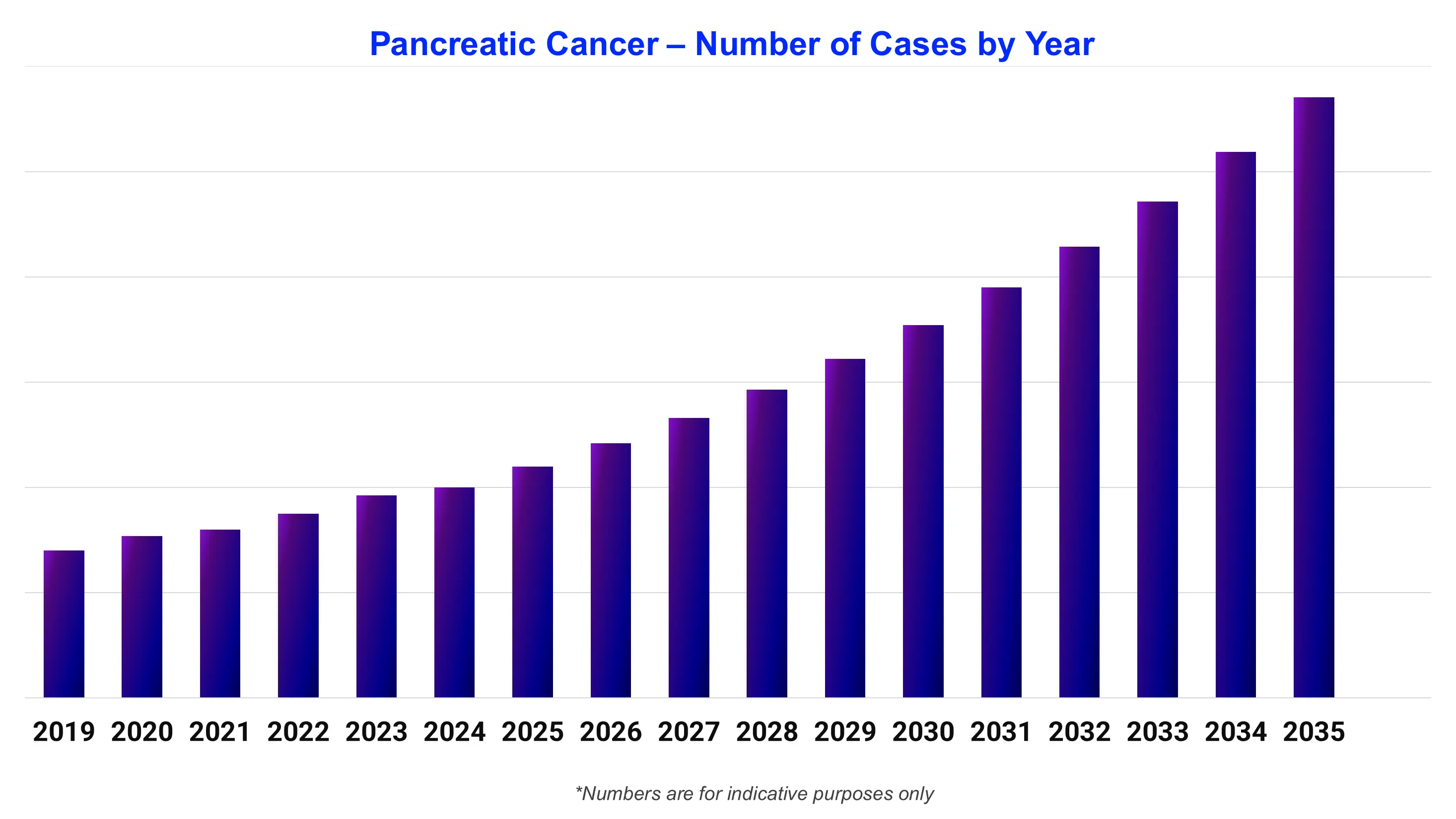
Pancreatic cancer is a malignant disease arising from pancreatic cells and remains a major global health burden. According to Freddie Bray et al. (2024), approximately 511,000 new cases and 467,000 deaths occurred worldwide in 2022, accounting for almost 5% of global cancer deaths. According to the pancreatic cancer epidemiology forecast by Expert Market Research, its burden remains significant.
Base Year
Historical Period
Forecast Period
Read more about this report - REQUEST FREE SAMPLE COPY IN PDF
Expert Market Research's “Pancreatic Cancer Epidemiology Forecast Report 2026-2035” offers comprehensive information on the prevalence and demographics of pancreatic cancer. It projects the future incidence and prevalence rates of pancreatic cancer cases across various populations. The study covers age, gender, and type as major determinants of the pancreatic cancer population. The report highlights patterns in the prevalence of pancreatic cancer over time and projects future trends based on multiple variables.
The report provides a comprehensive overview of the disease, as well as historical and projected data on the epidemiology of pancreatic cancer in the 8 major markets.
Regions Covered
Pancreatic cancer is a malignant disease that develops when abnormal cells in the pancreas grow uncontrollably and form tumors. It most commonly originates in the exocrine cells, particularly the ducts, and is therefore predominantly classified as pancreatic ductal adenocarcinoma. Less common types include pancreatic neuroendocrine tumors, which arise from hormone-producing cells. Risk factors include increasing age, cigarette smoking, obesity, chronic pancreatitis, diabetes, and certain inherited genetic syndromes. Because early disease may cause few or nonspecific symptoms, pancreatic adenocarcinoma is frequently diagnosed at an advanced stage.
|
Parameter |
Insight |
|
Largest Patient Pool |
United States |
|
Fastest Growing Country |
India |
|
High-Risk Population |
Older adults, smokers, and individuals with chronic pancreatitis or a family history of pancreatic cancer |
|
Key Diagnostic Method |
Contrast-enhanced computed tomography (CT) |
|
Major Risk Factor |
Cigarette smoking |
|
Major gap in the market |
Late diagnosis and limited detection of early-stage disease |
The pancreatic cancer epidemiology division offers information on the patient pool from history to the present as well as the projected trend for each of the 8 major markets. Expert Market Research provides both current and predicted trends for the pancreatic cancer epidemiology scenario by examining a wide range of studies. Additionally, the report covers the diagnosed patient pool for pancreatic cancer and their trends. The data is broken down into specific categories, such as total prevalent cases in males and females, and total diagnosed cases across different age groups and patient pools.
|
Epidemiology Segment |
Key Insights |
|
Diagnosed Prevalent Cases of the Disease |
According to Freddie Bray et al. (2024), there were approximately 511,000 new cases of pancreatic cancer globally in 2022. Pancreatic cancer incidence is particularly high in Europe, North America, and Australia/New Zealand, while rates are approximately four times higher in countries with higher versus lower Human Development Index levels. |
|
Gender-Specific Cases of the Disease |
According to Xiao Li et al. (2025), 273,617 of 508,532 global incident cases in 2021 were among males, representing 53.8% of cases. Kun Huang et al. (2025) similarly reported higher global pancreatic cancer prevalence and incidence among males, particularly at older ages. |
|
Age-Specific Cases of the Disease |
As per Kun Huang et al. (2025), pancreatic cancer prevalence and incidence increase with age, with incidence increasing sharply after age 65 and reaching the highest rates among individuals older than 75 years. According to Xiao Li et al. (2025), incident cases and deaths peaked at ages 70–74 years. |
|
Ethnicity-Wise Cases of the Disease |
Pancreatic cancer prevalence and incidence can vary across ethnic populations because of differences in genetic susceptibility, demographic characteristics, lifestyle patterns, obesity, diabetes, smoking, alcohol consumption, and access to healthcare services. Differences in screening, diagnosis, and healthcare utilization may also influence observed disease burden across populations. |
|
Mortality and Survival Analysis of the Disease |
According to Freddie Bray et al. (2024), pancreatic cancer caused approximately 467,000 deaths globally in 2022, accounting for almost 5% of all cancer deaths worldwide. Xiao Li et al. (2025) reported 505,752 deaths in 2021, while the five-year relative survival rate in the United States remains 13%. |
|
Disease Type |
Prevalence |
|
Exocrine Tumors |
Exocrine tumors account for major share of pancreatic cancer cases and include pancreatic ductal adenocarcinoma, acinar cell carcinoma, adenosquamous carcinoma, and colloid carcinoma. |
|
Neuroendocrine Tumors / PNETs |
Neuroendocrine tumors account for lesser share of pancreatic cancer cases and originate from hormone-producing islet cells of the pancreas. |
Read more about this report - REQUEST FREE SAMPLE COPY IN PDF
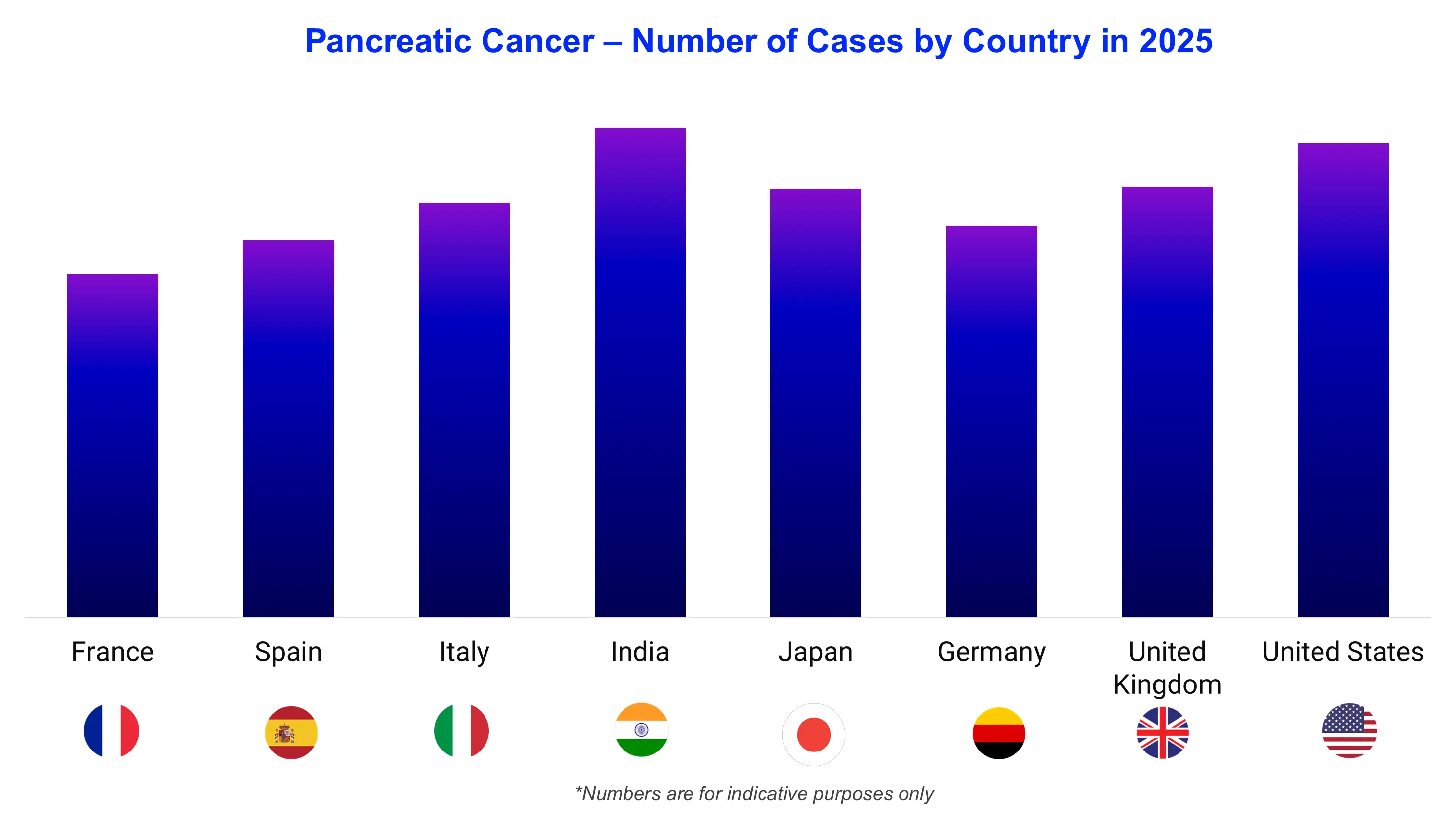
The Pancreatic Cancer epidemiology data and findings for the United States, Germany, Spain, Italy, France, the United Kingdom, Japan, and India are also provided in the epidemiology section.
|
Country |
Key Insights |
|
United States |
According to American Cancer Society (2026), approximately 67,530 people are estimated to be diagnosed with pancreatic cancer in the United States in 2026, including 35,190 men and 32,340 women. Approximately 52,740 deaths are projected, including 27,230 men and 25,510 women. The average lifetime risk is approximately 1 in 56 for men and 1 in 60 for women. According to The Pancreatic Cancer Action Network (2026), the five-year relative survival rate remains 13%. |
|
Germany |
According to Marko Damm et al. (2025), the lifetime risk of developing pancreatic cancer in Germany is approximately 1.9%. The incidence of pancreatic cancer is expected to continue increasing in Western countries, contributing to its growing epidemiological and mortality burden. |
|
France |
The pancreatic cancer burden in France is influenced by an aging population and established risk factors such as smoking, obesity, diabetes, and heavy alcohol consumption. Increasing life expectancy may contribute to the number of cases because pancreatic cancer occurs predominantly at older ages. Changes in population-level exposure to modifiable risk factors, together with improvements in cancer detection and diagnosis, can also influence observed incidence and prevalence. |
|
Italy |
According to OECD, between 2012 and 2020, Italy's premature years of potential life lost rate from pancreatic cancer increased by 4%. Pancreatic cancer was the only high-incidence cancer site in the assessment that had not recorded a decline in mortality during the preceding decade. A slight increase in incidence was also reported among Italians aged 50–69 years. |
|
Spain |
According to Centro Nacional de Investigaciones Oncológicas, more than 10,300 pancreatic cancer cases are diagnosed annually in Spain. The five-year survival rate after diagnosis is less than 10%, indicating a substantial mortality burden associated with pancreatic cancer in the country. |
|
United Kingdom |
According to Birmingham HPB Clinic, pancreatic cancer accounts for approximately 3% of all cancers in the United Kingdom but approximately 7% of cancer-related deaths. The risk increases with age, with most pancreatic cancer cases occurring among people older than 60 years. |
|
Japan |
According to Servier, Japan reported 47,627 new pancreatic cancer cases and 43,265 deaths in 2022. Pancreatic cancer was the fourth leading cause of cancer death in Japan. Diagnosed cases are projected to increase at an annual growth rate of 1.50%, with population aging and changes in dietary habits identified as contributing factors. |
|
India |
According to Mohd Haris Jamal et al. (2025), pancreatic cancer has an annual incidence of approximately 10,860 new cases in India, representing 1.03% of all malignancies. The number of cases was reported to increase from 10,969 in 2015 to 11,655 in 2020. Mizoram had the highest age-adjusted incidence rates, while the northeastern region had the largest overall number of cases. |
The regional pancreatic cancer landscape faces substantial unmet needs because symptoms are often nonspecific and there is no recommended population-wide screening strategy for individuals at average risk. Consequently, many patients are diagnosed after the disease has become locally advanced or metastatic, limiting curative treatment options. Opportunities exist to improve risk-based surveillance for high-risk populations, strengthen access to specialized diagnostic imaging and molecular testing, and accelerate biomarker-based detection approaches. Expanding access to multidisciplinary pancreatic cancer care and precision treatment could further address disparities across the United States, European countries, Japan, India, and the United Kingdom.
Pancreatic cancer treatment depends on tumor location, disease stage, resectability, overall health, and whether the cancer has spread. Surgical resection, including the Whipple procedure, distal pancreatectomy, or total pancreatectomy, may provide potentially curative treatment for selected patients with localized disease. Systemic chemotherapy is commonly used for resectable, borderline resectable, locally advanced, and metastatic disease. Radiation therapy may be used in selected settings, particularly for locally advanced tumors. Targeted therapy and immunotherapy may benefit patients with specific molecular alterations or biomarkers. Systemic anticancer therapy therefore remains an important component of treatment.
Pancreatic Cancer Pipeline Analysis Report
Advanced Pancreatic Cancer Pipeline Analysis Report


Upto 15% Off
USD
$2699 $2429
$4299 $3869
$5799 $4949
$6999 $5949


*While we strive to always give you current and accurate information, the numbers depicted on the website are indicative and may differ from the actual numbers in the main report. At Expert Market Research, we aim to bring you the latest insights and trends in the market. Using our analyses and forecasts, stakeholders can understand the market dynamics, navigate challenges, and capitalize on opportunities to make data-driven strategic decisions.*
Explore our key highlights of the report and gain a concise overview of key findings, trends, and actionable insights that will empower your strategic decisions.
|
Report Features |
Details |
|
Base Year |
2025 |
|
Historical Period |
2019-2025 |
|
Forecast Period |
2026-2035 |
|
Epidemiology Statistics Provided |
|
|
Segmentation Provided |
|
|
Geographies Covered |
|
Datasheet
One User
USD 2,699
USD 2,429
tax inclusive*
Single User License
One User
USD 4,299
USD 3,869
tax inclusive*
Five User License
Five User
USD 5,799
USD 4,949
tax inclusive*
Corporate License
Unlimited Users
USD 6,999
USD 5,949
tax inclusive*
*Please note that the prices mentioned below are starting prices for each bundle type. Kindly contact our team for further details.*
Flash Bundle
Small Business Bundle
Growth Bundle
Enterprise Bundle
*Please note that the prices mentioned below are starting prices for each bundle type. Kindly contact our team for further details.*
Flash Bundle
Number of Reports: 3
20%
tax inclusive*
Small Business Bundle
Number of Reports: 5
25%
tax inclusive*
Growth Bundle
Number of Reports: 8
30%
tax inclusive*
Enterprise Bundle
Number of Reports: 10
35%
tax inclusive*
How To Order

Select License Type
Choose the right license for your needs and access rights.

Click on ‘Buy Now’
Add the report to your cart with one click and proceed to register.

Select Mode of Payment
Choose a payment option for a secure checkout. You will be redirected accordingly.
Strategic Solutions for Informed Decision-Making
Gain insights to stay ahead and seize opportunities.

Get insights & trends for a competitive edge.

Track prices with detailed trend reports.

Analyse trade data for supply chain insights.

Leverage cost reports for smart savings

Enhance supply chain with partnerships.

Connect For More Information
Our expert team of analysts will offer full support and resolve any queries regarding the report, before and after the purchase.
Our expert team of analysts will offer full support and resolve any queries regarding the report, before and after the purchase.
We employ meticulous research methods, blending advanced analytics and expert insights to deliver accurate, actionable industry intelligence, staying ahead of competitors.
Our skilled analysts offer unparalleled competitive advantage with detailed insights on current and emerging markets, ensuring your strategic edge.
We offer an in-depth yet simplified presentation of industry insights and analysis to meet your specific requirements effectively.




