

Consumer Insights
Uncover trends and behaviors shaping consumer choices today
Procurement Insights
Optimize your sourcing strategy with key market data
Industry Stats
Stay ahead with the latest trends and market analysis.
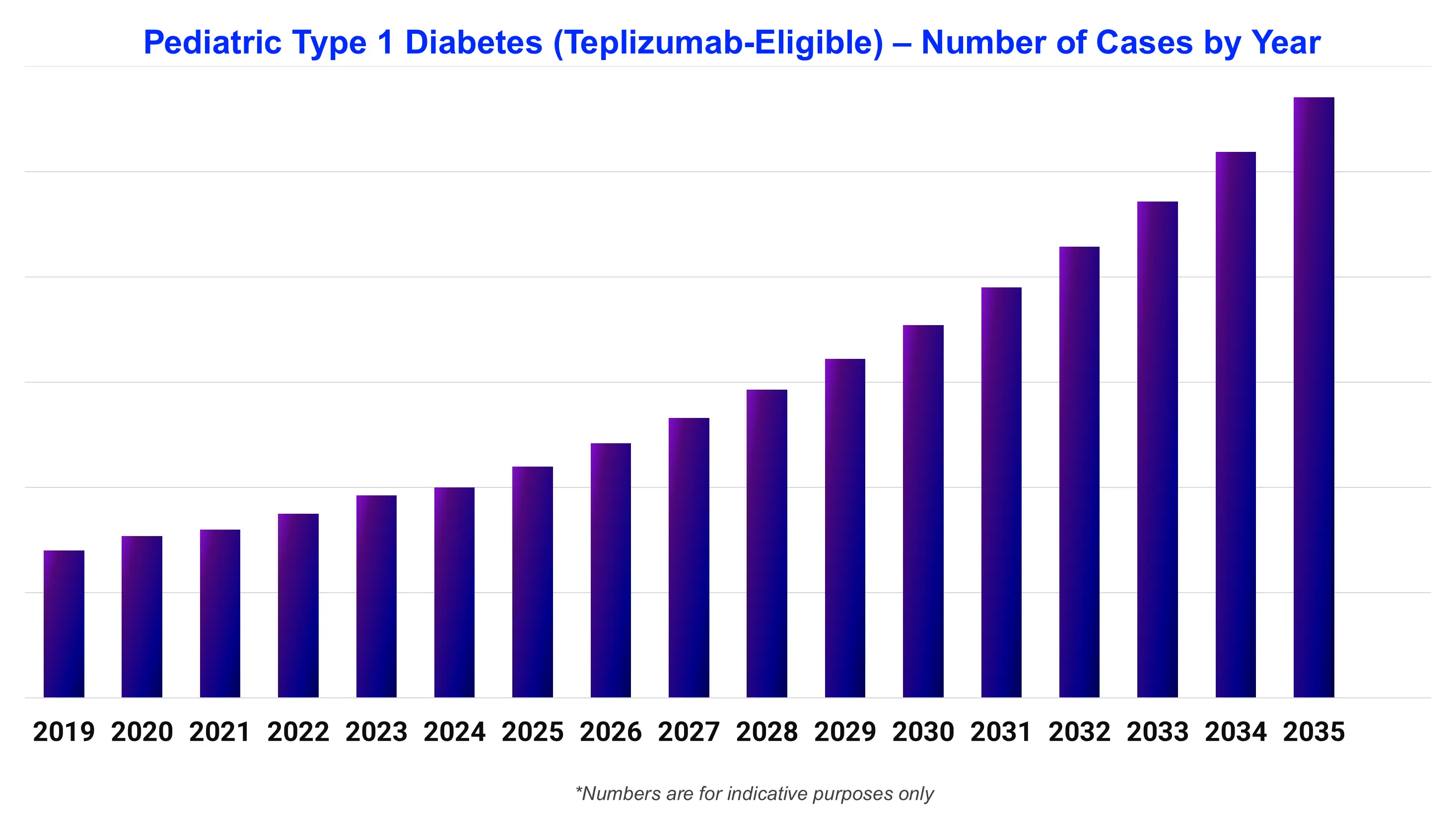
Pediatric Type 1 Diabetes (T1D) is an autoimmune disease in which immune-mediated destruction of pancreatic beta cells progresses through identifiable biological stages before symptomatic diabetes develops. The IDF estimates approximately 197,000 people aged 0-19 years living with T1D in 2024. A 2026 national incidence/prevalence analysis estimated 196,778 prevalent pediatric T1D cases under 20 years and an incidence rate of 24.0 per 100,000. According to Pediatric Type 1 Diabetes (Teplizumab-Eligible) Epidemiology Forecast by Expert Market Research (EMR), the global pediatric T1D population is substantial but is not equivalent to the teplizumab-eligible population.
Base Year
Historical Period
Forecast Period
Read more about this report - Request a Free Sample
Expert Market Research's “Pediatric Type 1 Diabetes (Teplizumab-Eligible) Epidemiology Forecast Report 2026-2035” offers comprehensive information on the prevalence and demographics of Pediatric Type 1 Diabetes (Teplizumab-Eligible). It projects the future incidence and prevalence rates of Pediatric Type 1 Diabetes (Teplizumab-Eligible) cases across various populations. The study covers age, gender, and type as major determinants of the Pediatric Type 1 Diabetes (Teplizumab-Eligible) population. The report highlights patterns in the prevalence of Pediatric Type 1 Diabetes (Teplizumab-Eligible) over time and projects future trends based on multiple variables.
The report provides a comprehensive overview of the disease, as well as historical and projected data on the epidemiology of Pediatric Type 1 Diabetes (Teplizumab-Eligible) in the 8 major markets.
Regions Covered
Pediatric Type 1 Diabetes (T1D) is an autoimmune disease in which immune-mediated destruction of pancreatic beta cells progresses through identifiable biological stages before symptomatic diabetes develops. Under the current staging framework, Stage 1 is defined by persistent positivity for two or more islet autoantibodies with normoglycemia, while Stage 2 comprises multiple islet autoantibodies together with dysglycemia but without overt hyperglycemia. Stage 3 is clinical T1D with diagnostic hyperglycemia. Stage 2 is therefore established T1D rather than merely a population “at risk,” and approximately 75% of children with Stage 2 T1D progress to Stage 3 within five years, with lifetime progression approaching 100%.
|
Parameter |
Insight |
|
Largest Patient Pool |
India |
|
Fastest Growing Country |
United States |
|
High-Risk Population |
Children with multiple confirmed islet autoantibodies, particularly those with dysglycemia; children with a first-degree relative with T1D are an important screening population. |
|
Key Diagnostic Method |
Islet autoantibody testing followed by metabolic staging using OGTT and/or HbA1c and fasting glucose; Stage 2 requires multiple autoantibodies plus dysglycemia without overt Stage 3 hyperglycemia. |
|
Major Risk Factor |
Genetic susceptibility, particularly HLA-associated autoimmunity, together with environmental factors that influence initiation and progression of beta-cell autoimmunity. |
|
Major gap in the market |
Limited population-wide screening means many children reach Stage 3 before Stage 2 is recognized, restricting identification of candidates for disease-modifying intervention. |
The Pediatric Type 1 Diabetes (Teplizumab-Eligible) epidemiology division offers information on the patient pool from history to the present as well as the projected trend for each of the 8 major markets. Expert Market Research provides both current and predicted trends for the Pediatric Type 1 Diabetes (Teplizumab-Eligible) epidemiology scenario by examining a wide range of studies. Additionally, the report covers the diagnosed patient pool for Pediatric Type 1 Diabetes (Teplizumab-Eligible) and their trends. The data is broken down into specific categories, such as total prevalent cases in males and females, and total diagnosed cases across different age groups and patient pools.
|
Epidemiology Segment |
Key Insights |
|
Diagnosed Prevalent Cases of the Disease |
The 2024 IDF estimate is 1.81 million people aged 0–19 years living with T1D globally. Within the 8MM, India is estimated at approximately 301,000 and the United States at approximately 197,000. These are all pediatric T1D cases and do not represent the Stage 2 teplizumab-eligible population. |
|
Gender-Specific Cases of the Disease |
Pediatric T1D generally shows relatively small sex differences compared with the much larger geographic variation in incidence. The 2024 global registry meta-analysis found no significant overall gender difference in pediatric T1D incidence. German registry data show higher incidence among boys than girls in children and adolescents. |
|
Age-Specific Cases of the Disease |
T1D incidence generally increases through childhood and peaks in later childhood or early adolescence in many populations. German 2022 registry data showed the highest incidence among children aged approximately 3-13 years. In the 2024-2025 Bavarian screening programme, early-stage T1D was identified through childhood screening, demonstrating that Stage 1 and Stage 2 disease can be detected before clinical diagnosis. |
|
Ethnicity-Wise Cases of the Disease |
No harmonized ethnicity-specific Stage 2 dataset exists across the 8MM. Genetic susceptibility, particularly HLA variation, contributes to geographic and ethnic differences in T1D incidence. Indian pediatric cohorts also demonstrate a distinct autoantibody distribution compared with cohorts of predominantly European ancestry. |
|
Mortality and Survival Analysis of the Disease |
Mortality is not an appropriate primary endpoint for Stage 2 T1D because the clinical objective is prevention or delay of progression to Stage 3. In Stage 2, the principal outcome is progression to symptomatic diabetes. ISPAD estimates that approximately 75% of children with Stage 2 T1D progress to Stage 3 within five years, with near-universal lifetime progression. |
Read more about this report - Request a Free Sample
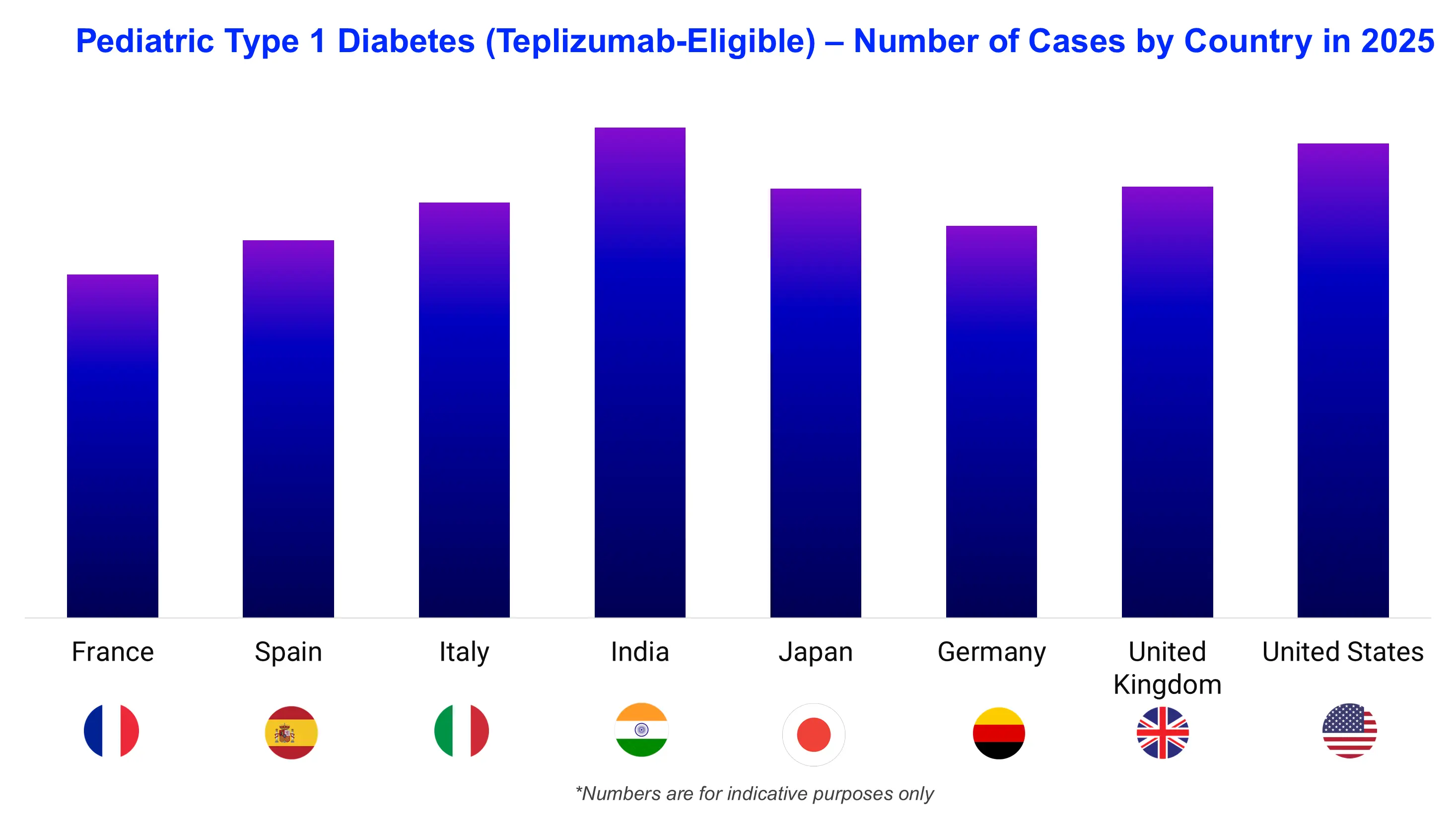
The Pediatric Type 1 Diabetes (Teplizumab-Eligible) epidemiology data and findings for the United States, Germany, Spain, Italy, France, the United Kingdom, Japan, and India are also provided in the epidemiology section.
|
Country |
Key Insights |
|
United States |
The IDF estimates approximately 197,000 people aged 0-19 years living with T1D in 2024. A 2026 national incidence/prevalence analysis estimated 196,778 prevalent pediatric T1D cases under 20 years and an incidence rate of 24.0 per 100,000. The U.S. is currently the most mature 8MM market for teplizumab because Stage 2 T1D screening, TrialNet and regulatory access are established. |
|
Germany |
Germany has one of the most developed population-based early-T1D screening infrastructures. RKI estimated 4,727 new T1D cases among children and adolescents aged 0–17 years in 2022, with an incidence of 33.2 per 100,000 person-years. The contemporary Bavarian screening programme enrolled 211,464 children through June 2025, providing an important evidence base for Stage 1/Stage 2 identification. |
|
France |
The IDF estimates approximately 26,424 people aged 0-19 years living with T1D in 2024. France has developed formal expert recommendations for screening first-degree relatives aged 2-45 years for early-stage T1D using multiple islet autoantibodies. A population-level national Stage 2 prevalence estimate has not been established, making the identifiable teplizumab-eligible pool dependent largely on familial and emerging screening pathways. |
|
Italy |
Italy has established regional pediatric diabetes registries and population-based incidence research. A 2023 analysis of two regional registries documented a long-term pediatric T1D incidence increase, with standardized incidence reaching approximately 26.6 per 100,000 in 2021. Contemporary national Stage 2 prevalence is not yet available, so regional incidence should not be converted into a national teplizumab-eligible population. |
|
Spain |
The IDF estimates approximately 18,661 people aged 0-19 years living with T1D in 2024. Spain has established pediatric diabetes surveillance and participation in international early-T1D research, but a nationally representative Stage 2 pediatric prevalence estimate has not been identified. Consequently, the total pediatric T1D population should not be treated as the teplizumab-eligible population. |
|
United Kingdom |
The IDF estimates approximately 41,000 people aged 0-19 years living with T1D in the UK in 2024. The National Pediatric Diabetes Audit reported that T1D incidence in England and Wales decreased from 31.1 per 100,000 in 2022/23 to 27.6 per 100,000 in 2023/24. MHRA approved teplizumab for Stage 2 T1D in August 2025, and NICE recommended NHS use in June 2026 for children aged 8 years and older and adults. NICE estimates approximately 1,100 people initially eligible for treatment, falling to approximately 820 annually from year 3; these figures include adults and are therefore not a pediatric-only estimate. |
|
Japan |
Japan has a relatively low pediatric T1D incidence compared with Northern European populations. A recent prefectural study found an overall childhood incidence of approximately 3.9 per 100,000 person-years in Oita during 1999-2021, with a significant long-term increase. Japan does not have a comprehensive national Stage 2 pediatric screening programme comparable with Bavaria's Fr1da system, and a national teplizumab-eligible Stage 2 population estimate is not currently established. |
|
India |
India has the largest estimated pediatric T1D population among the 8MM, with approximately 301,000 people aged 0-19 years living with T1D in 2024 according to IDF. However, national Stage 2 surveillance is limited. The ICMR Youth Onset Diabetes Registry provides an important clinical infrastructure, while contemporary Indian research shows that approximately 15% of children with newly diagnosed T1D in one multicenter North Indian cohort were negative for GAD65, IA-2 and ZnT8 antibodies, underscoring the heterogeneity of autoimmune markers in Indian children. |
The principal epidemiological gap is that pediatric T1D prevalence is considerably better characterized than Stage 2 T1D. Existing national diabetes registries generally begin at clinical diagnosis, whereas teplizumab requires identification before Stage 3 disease. Consequently, a large proportion of the theoretical treatment population is not visible in routine diabetes registries. The absence of universal islet-autoantibody screening is therefore a major determinant of the currently identifiable treatment pool. Familial screening provides the most established route to identifying Stage 2 disease because first-degree relatives of people with T1D have substantially increased genetic and autoimmune risk.
Management of pediatric Stage 2 T1D has historically consisted primarily of metabolic surveillance, education and preparation for clinical progression. The emergence of teplizumab introduces a disease-modifying treatment option intended to delay progression from Stage 2 to Stage 3 rather than simply treating hyperglycemia after clinical diagnosis. The pivotal TN-10 randomized trial enrolled 76 people aged 8-49 years with Stage 2 T1D. A single 14-day course of teplizumab resulted in a median time to Stage 3 diagnosis of approximately 49.5 months compared with 24.9 months with placebo, with a hazard ratio of 0.41.


Upto 15% Off
USD
$2699 $2429
$4299 $3869
$5799 $4949
$6999 $5949


*While we strive to always give you current and accurate information, the numbers depicted on the website are indicative and may differ from the actual numbers in the main report. At Expert Market Research, we aim to bring you the latest insights and trends in the market. Using our analyses and forecasts, stakeholders can understand the market dynamics, navigate challenges, and capitalize on opportunities to make data-driven strategic decisions.*
Explore our key highlights of the report and gain a concise overview of key findings, trends, and actionable insights that will empower your strategic decisions.
|
Report Features |
Details |
|
Base Year |
2025 |
|
Historical Period |
2019-2025 |
|
Forecast Period |
2026-2035 |
|
Epidemiology Statistics Provided |
|
|
Segmentation Provided |
|
|
Geographies Covered |
|
Datasheet
One User
USD 2,699
USD 2,429
tax inclusive*
Single User License
One User
USD 4,299
USD 3,869
tax inclusive*
Five User License
Five User
USD 5,799
USD 4,949
tax inclusive*
Corporate License
Unlimited Users
USD 6,999
USD 5,949
tax inclusive*
*Please note that the prices mentioned below are starting prices for each bundle type. Kindly contact our team for further details.*
Flash Bundle
Small Business Bundle
Growth Bundle
Enterprise Bundle
*Please note that the prices mentioned below are starting prices for each bundle type. Kindly contact our team for further details.*
Flash Bundle
Number of Reports: 3
20%
tax inclusive*
Small Business Bundle
Number of Reports: 5
25%
tax inclusive*
Growth Bundle
Number of Reports: 8
30%
tax inclusive*
Enterprise Bundle
Number of Reports: 10
35%
tax inclusive*
How To Order

Select License Type
Choose the right license for your needs and access rights.

Click on ‘Buy Now’
Add the report to your cart with one click and proceed to register.

Select Mode of Payment
Choose a payment option for a secure checkout. You will be redirected accordingly.
Strategic Solutions for Informed Decision-Making
Gain insights to stay ahead and seize opportunities.

Get insights & trends for a competitive edge.

Track prices with detailed trend reports.

Analyse trade data for supply chain insights.

Leverage cost reports for smart savings

Enhance supply chain with partnerships.

Connect For More Information
Our expert team of analysts will offer full support and resolve any queries regarding the report, before and after the purchase.
Our expert team of analysts will offer full support and resolve any queries regarding the report, before and after the purchase.
We employ meticulous research methods, blending advanced analytics and expert insights to deliver accurate, actionable industry intelligence, staying ahead of competitors.
Our skilled analysts offer unparalleled competitive advantage with detailed insights on current and emerging markets, ensuring your strategic edge.
We offer an in-depth yet simplified presentation of industry insights and analysis to meet your specific requirements effectively.




