

Consumer Insights
Uncover trends and behaviors shaping consumer choices today
Procurement Insights
Optimize your sourcing strategy with key market data
Industry Stats
Stay ahead with the latest trends and market analysis.
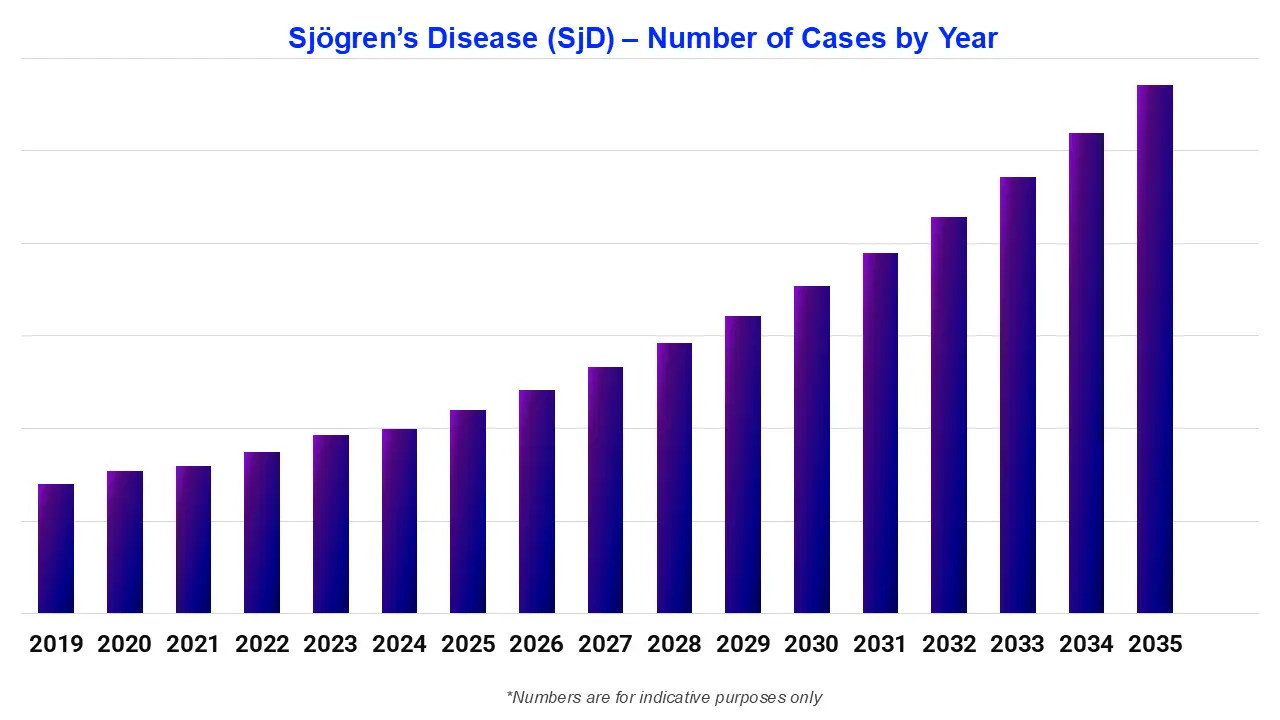
Sjögren’s Disease (SjD) is a chronic systemic autoimmune disorder characterized primarily by immune-mediated dysfunction and destruction of the lacrimal and salivary glands, producing persistent ocular and oral dryness. A 2024 umbrella review estimated Sjögren’s prevalence at approximately 60–70 per 100,000 and annual incidence at 6.92 per 100,000, while emphasizing variation among systematic reviews. A 2024 French national claims study identified 23,848 patients with primary SjD and 14,809 with SjD associated with another autoimmune disease in its national database analysis. According to Sjögren’s Disease (SjD) Epidemiology Forecast by Expert Market Research (EMR), assessment therefore requires distinction between physician-diagnosed, clinically confirmed, primary, and secondary SjD populations.
Base Year
Historical Period
Forecast Period
Read more about this report - Request a Free Sample
Expert Market Research's “Sjögren’s Disease (SjD) Epidemiology Forecast Report 2026-2035” offers comprehensive information on the prevalence and demographics of Sjögren’s Disease (SjD). It projects the future incidence and prevalence rates of Sjögren’s Disease (SjD) cases across various populations. The study covers age, gender, and type as major determinants of the Sjögren’s Disease (SjD) population. The report highlights patterns in the prevalence of Sjögren’s Disease (SjD) over time and projects future trends based on multiple variables.
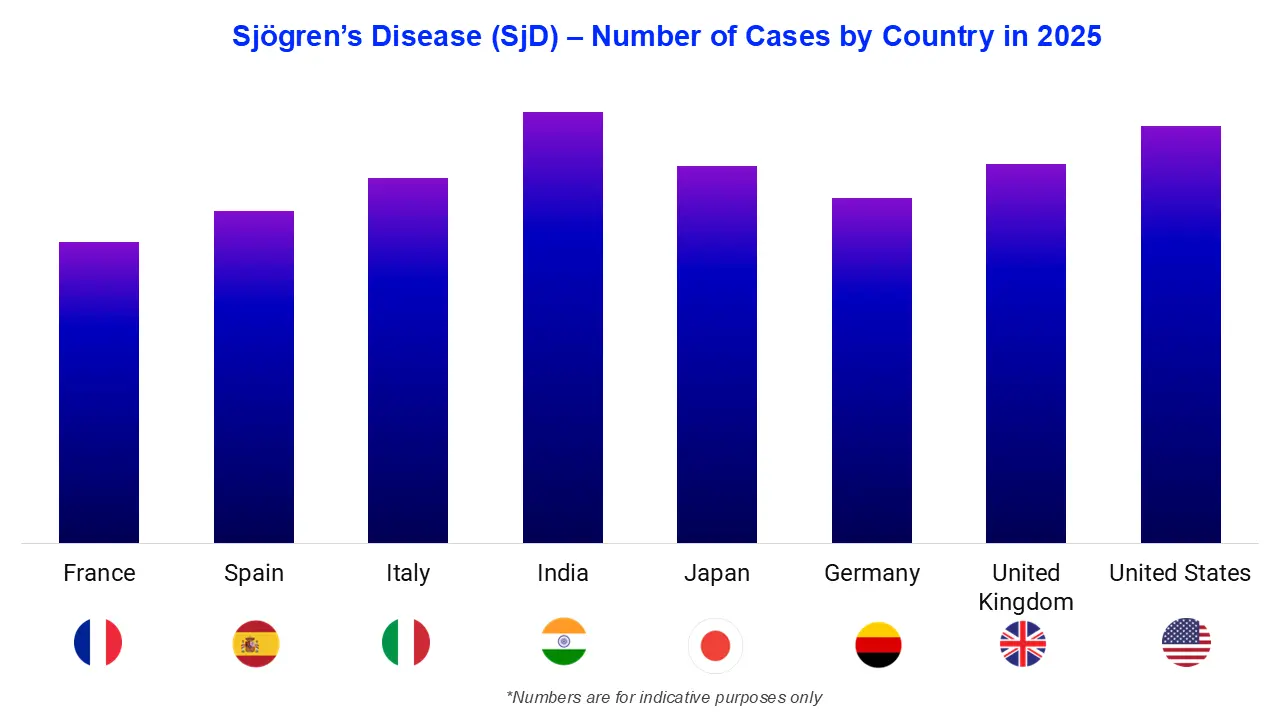
The report provides a comprehensive overview of the disease, as well as historical and projected data on the epidemiology of Sjögren’s Disease (SjD) in the 8 major markets.
Regions Covered
Sjögren’s Disease (SjD) is a chronic systemic autoimmune disorder characterized primarily by immune-mediated dysfunction and destruction of the lacrimal and salivary glands, producing persistent ocular and oral dryness. The disease can also cause fatigue, arthralgia, neuropathy, pulmonary, renal, vascular, and other systemic manifestations. Sjögren’s Disease results from complex interactions among genetic susceptibility, innate and adaptive immune activation, B-cell hyperactivity, autoantibody production, and environmental factors. Anti-Ro/SSA antibodies and objective evidence of glandular dysfunction are central to contemporary classification, while minor salivary-gland biopsy provides important diagnostic support in seronegative or diagnostically uncertain patients. Although sicca symptoms dominate clinical presentation, systemic disease can involve the lungs, kidneys, peripheral nervous system, joints, skin, and hematological system.
|
Parameter |
Insight |
|
Largest Patient Pool |
United States |
|
Fastest Growing Region |
Japan |
|
High-Risk Population |
Women, particularly those in middle and older age groups, constitute the principal diagnosed population. Patients with other autoimmune connective-tissue diseases, including rheumatoid arthritis and systemic lupus erythematosus, are also at increased risk of SjD. Individuals with anti-Ro/SSA antibodies and systemic autoimmune activity represent an important clinically enriched population. |
|
Key Diagnostic Method |
Diagnosis relies on a combination of sicca symptoms, objective ocular and oral testing, anti-Ro/SSA antibody assessment, and, when appropriate, minor salivary-gland biopsy. The 2016 ACR/EULAR classification framework gives particular diagnostic weight to anti-Ro/SSA positivity and salivary-gland histopathology, supported by objective measures of glandular dysfunction. |
|
Major Risk Factor |
Female sex and autoimmune susceptibility are the principal epidemiological associations. Genetic predisposition, immune dysregulation, coexisting autoimmune disease, and environmental or infectious triggers may contribute. Chronic hepatitis C is associated with SjD, although infection-associated sicca must be distinguished from primary autoimmune SjD during diagnosis. |
|
Major gap in the market |
Major gaps include delayed diagnosis, heterogeneous application of classification criteria, limited objective testing outside specialist centers, inadequate systematic assessment of extraglandular disease, and limited disease-modifying treatment options for systemic SjD. Diagnostic uncertainty is particularly important because clinically diagnosed prevalence substantially exceeds clinically confirmed prevalence in some contemporary datasets. |
The Sjögren’s Disease (SjD) epidemiology division offers information on the patient pool from history to the present as well as the projected trend for each of the 8 major markets. Expert Market Research provides both current and predicted trends for the Sjögren’s Disease (SjD) epidemiology scenario by examining a wide range of studies. Additionally, the report covers the diagnosed patient pool for Sjögren’s Disease (SjD) and their trends. The data is broken down into specific categories, such as total prevalent cases in males and females, and total diagnosed cases across different age groups and patient pools.
|
Epidemiology Segment |
Key Insights |
|
Diagnosed Prevalent Cases of the Disease |
A 2024 umbrella review estimated Sjögren’s prevalence at approximately 60-70 per 100,000 and annual incidence at 6.92 per 100,000, while emphasizing variation among systematic reviews. A 2024 French national claims study identified 23,848 patients with primary SjD and 14,809 with SjD associated with another autoimmune disease in its national database analysis. A U.S. commercial-insurance analysis reported diagnosed SjD prevalence increasing from 195.95 per 100,000 in 2019 to 259.20 per 100,000 in 2023. |
|
Gender-Specific Cases of the Disease |
SjD has a pronounced female predominance. The 2024 French national claims study reported women representing approximately 90-91% of primary SjD and 92–93% of SjD associated with another autoimmune disease. A 2026 German review estimates that women are affected approximately ten times more often than men. The magnitude of female predominance varies somewhat according to whether primary, secondary, or clinically confirmed disease is evaluated. |
|
Age-Specific Cases of the Disease |
SjD may develop at any age but is predominantly diagnosed during middle and later adulthood. The 2023 systematic literature review found the highest incidence in individuals aged ≥65 years and the highest prevalence in those aged ≥75 years. Contemporary clinical reviews generally describe symptom onset and diagnosis as concentrated around the fifth to seventh decades, although pediatric and young-adult disease occurs and may be under-recognized. |
|
Ethnicity-Wise Cases of the Disease |
Reliable ethnicity-specific population estimates remain limited. The epidemiological literature shows substantial geographic and methodological heterogeneity, preventing robust global comparisons. Contemporary U.S. data from Alaska Native and American Indian populations reported age-adjusted SjD prevalence of 199 per 100,000 adults, including 129 per 100,000 for primary SjD and 70 per 100,000 for secondary SjD, demonstrating that substantial disease occurs in Indigenous populations. |
|
Mortality and Survival Analysis of the Disease |
SjD is associated with a modest but measurable increase in mortality at the population level. A 2024 umbrella review reported pooled standardized mortality ratios of approximately 1.38-1.48. A 2025 prospective SjD cohort of 314 patients followed for a median of 9.5 years reported a standardized mortality ratio of 1.7, corresponding to approximately 70% higher mortality than expected in the matched general population. Systemic organ disease and lymphoproliferative complications contribute to adverse outcomes. |
|
Disease Type |
Prevalence |
|
Primary Sjögren’s Disease |
Primary Sjögren’s Disease occurs independently of another established systemic autoimmune connective-tissue disease and represents the principal epidemiological phenotype studied in contemporary literature. Reported prevalence varies substantially according to diagnostic criteria, ranging from approximately 60-70 per 100,000 in recent umbrella-review estimates to higher values in claims-based datasets. The phenotype includes both glandular symptoms and variable systemic manifestations. |
|
Secondary or Associated Sjögren’s Disease |
SjD may occur alongside another systemic autoimmune disease, particularly rheumatoid arthritis or systemic lupus erythematosus. Contemporary French national claims data separately identified 14,809 patients with SjD associated with another autoimmune disorder, compared with 23,848 patients classified as primary SjD. Associated disease therefore represents a clinically important population, although prevalence depends strongly on the definition and underlying autoimmune cohort. |
Read more about this report - Request a Free Sample
The Sjögren’s Disease (SjD) epidemiology data and findings for the United States, Germany, Spain, Italy, France, the United Kingdom, Japan, and India are also provided in the epidemiology section.
|
Country |
Key Insights |
|
United States |
Contemporary U.S. commercial-insurance data showed diagnosed SjD prevalence increasing from 195.95 per 100,000 in 2019 to 259.20 per 100,000 in 2023. Prevalence was higher among women and concentrated in the 45-64 and ≥65-year age groups. A separate 2025 study of Alaska Native and American Indian adults reported age-adjusted SjD prevalence of 199 per 100,000, including 129 per 100,000 for primary SjD. |
|
Germany |
A 2026 German review estimates SjD prevalence at approximately 7 per 10,000 population, or about 70 per 100,000, with women affected approximately ten times more often than men. Earlier German systematic evidence reported a substantially wider 0.07-0.77% range for SjD/sicca syndrome because of heterogeneous routine-data definitions. Contemporary German authors emphasize the need for improved objective classification and epidemiological surveillance. |
|
France |
A national French claims analysis published in 2024 identified 23,848 primary SjD and 14,809 SjD-associated autoimmune disease cases. During the analyzed national period, estimated primary SjD prevalence ranged from 23 to 32 per 100,000 and associated SjD from 16 to 20 per 100,000, with women accounting for approximately 90-93% of identified cases. The investigators noted substantial clinical and economic burden. |
|
Italy |
No contemporary nationwide population-based SjD prevalence estimate with sufficiently standardized case ascertainment was identified in the 2023-2026 literature reviewed. Italian centers contribute substantially to European SjD cohorts and systemic-disease research, but available studies are predominantly specialist or regional cohorts. Consequently, national Italian prevalence should not be inferred from individual rheumatology-center series. |
|
Spain |
Contemporary nationwide SjD surveillance remains limited. A population-based Spanish study reported primary SjD prevalence of 0.25% in adults, but that study predates the requested 2023-2026 evidence window and is therefore not used as a current estimate here. Recent epidemiological reviews continue to identify substantial heterogeneity between Spanish and other European estimates, largely related to classification and ascertainment methods. |
|
United Kingdom |
A large UK population-based cohort study of 22 million individuals, published in 2023, found that Sjögren’s syndrome was among the autoimmune diseases showing the largest increases in incidence over the study period, with an incidence rate ratio of 2.09 (95% CI: 1.84–2.37). More recent English population-level research published in 2025 found that SjD incidence remained relatively stable during 2012–2023, while SjD had the lowest age-standardized mortality rate among the connective-tissue diseases evaluated. |
|
Japan |
Recent Japanese evidence has strengthened the available epidemiological picture. A nationwide study using Japan’s National Database of Designated Intractable Diseases analyzed 7,444 patients with primary SjD and clinically significant systemic disease activity, demonstrating a substantial contemporary patient population and marked heterogeneity in disease severity. In addition, the 2024 systematic literature review confirms considerable variability in reported Sjögren’s epidemiology across countries and diagnostic definitions. |
|
India |
Contemporary national prevalence data remain insufficient. Indian studies continue to document clinically important systemic SjD, including renal disease. A recent North Indian multicenter study of patients with renal involvement reported 38 cases, 94.7% female, with mean age 41.4 years; 63% had eGFR below 60 mL/min/1.73 m². These findings demonstrate substantial organ morbidity but cannot be extrapolated to national SjD prevalence. |
Sjögren’s Disease continues to have a substantial epidemiological measurement gap because reported prevalence varies according to whether investigators identify physician-diagnosed disease, clinically confirmed disease, primary SjD, secondary SjD, or broader sicca populations. This distinction is particularly important in contemporary U.S. data, where physician-diagnosed primary SjD prevalence was estimated at 10.55 per 10,000 in 2024, compared with only 1.98 per 10,000 for clinically confirmed cases. The difference indicates potential overdiagnosis in some datasets as well as under-recognition in others. Diagnostic delays, limited access to objective ocular and salivary testing, inconsistent biopsy use, and incomplete assessment of systemic manifestations remain important epidemiological gaps.
Management of Sjögren’s Disease is directed toward controlling glandular symptoms, preventing tissue damage, identifying systemic complications, and treating active extraglandular disease. The 2024 British Society for Rheumatology guideline emphasizes preservation, replacement, and stimulation of secretions together with prevention of glandular damage and suppression of systemic disease activity. Artificial tears, saliva substitutes, topical therapies, hydration, dental prevention, and stimulation of residual gland function remain central for sicca symptoms. Systemic manifestations may require glucocorticoids, conventional immunosuppressive agents, or biologic therapy according to the affected organ and severity. Recent clinical research has increasingly focused on B-cell-directed approaches, including ianalumab and telitacicept, FcRn inhibitors such as nipocalimab and efgartigimod, CD40/CD40L blockade, and kinase inhibitors. Emerging trials have reported improvements in systemic disease activity, but SjD still lacks a broadly established disease-modifying therapy applicable across the heterogeneous patient population.
Autoimmune Pulmonary Alveolar Proteinosis Epidemiology Forecast


Upto 15% Off
USD
$2699 $2429
$4299 $3869
$5799 $4949
$6999 $5949


*While we strive to always give you current and accurate information, the numbers depicted on the website are indicative and may differ from the actual numbers in the main report. At Expert Market Research, we aim to bring you the latest insights and trends in the market. Using our analyses and forecasts, stakeholders can understand the market dynamics, navigate challenges, and capitalize on opportunities to make data-driven strategic decisions.*
Explore our key highlights of the report and gain a concise overview of key findings, trends, and actionable insights that will empower your strategic decisions.
|
Report Features |
Details |
|
Base Year |
2025 |
|
Historical Period |
2019-2025 |
|
Forecast Period |
2026-2035 |
|
Epidemiology Statistics Provided |
|
|
Segmentation Provided |
|
|
Geographies Covered |
|
Datasheet
One User
USD 2,699
USD 2,429
tax inclusive*
Single User License
One User
USD 4,299
USD 3,869
tax inclusive*
Five User License
Five User
USD 5,799
USD 4,949
tax inclusive*
Corporate License
Unlimited Users
USD 6,999
USD 5,949
tax inclusive*
*Please note that the prices mentioned below are starting prices for each bundle type. Kindly contact our team for further details.*
Flash Bundle
Small Business Bundle
Growth Bundle
Enterprise Bundle
*Please note that the prices mentioned below are starting prices for each bundle type. Kindly contact our team for further details.*
Flash Bundle
Number of Reports: 3
20%
tax inclusive*
Small Business Bundle
Number of Reports: 5
25%
tax inclusive*
Growth Bundle
Number of Reports: 8
30%
tax inclusive*
Enterprise Bundle
Number of Reports: 10
35%
tax inclusive*
How To Order

Select License Type
Choose the right license for your needs and access rights.

Click on ‘Buy Now’
Add the report to your cart with one click and proceed to register.

Select Mode of Payment
Choose a payment option for a secure checkout. You will be redirected accordingly.
Strategic Solutions for Informed Decision-Making
Gain insights to stay ahead and seize opportunities.

Get insights & trends for a competitive edge.

Track prices with detailed trend reports.

Analyse trade data for supply chain insights.

Leverage cost reports for smart savings

Enhance supply chain with partnerships.

Connect For More Information
Our expert team of analysts will offer full support and resolve any queries regarding the report, before and after the purchase.
Our expert team of analysts will offer full support and resolve any queries regarding the report, before and after the purchase.
We employ meticulous research methods, blending advanced analytics and expert insights to deliver accurate, actionable industry intelligence, staying ahead of competitors.
Our skilled analysts offer unparalleled competitive advantage with detailed insights on current and emerging markets, ensuring your strategic edge.
We offer an in-depth yet simplified presentation of industry insights and analysis to meet your specific requirements effectively.




