Can Abaca-Based Ropes and Cordage Reshape the Marine and Industrial Rope Market?
Ropes made of natural-fiber have been in use for a long time, but most of the traditional fibers have been replaced by synthetic materials (nylon, polypropylene) for the last few decades because of their lower price and longer life. As environmental sustainability is now a global concern and there is a great demand for biodegradable products, the abaca fiber is coming back as a powerful option, mainly for marine ropes, fishing nets, industrial cordage and other products that are exposed to the sea.
What Makes Abaca Suitable for Cordage and Marine Use?
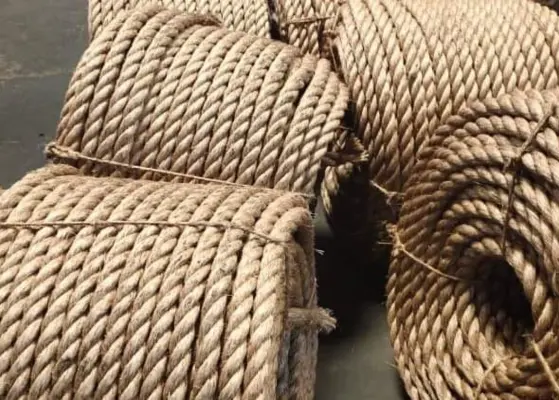
Abaca fiber, which is obtained from the leaf sheaths of the plant stalk, is impressive with its tensile strength, it is pliable, does not rot in the sea, and is long-lasting.
Owing to these features, abaca has been the among the most suitable materials for making ropes, cords, nets, and marine cordage, ropes of old vessels to fishing nets. Being a natural one, its resistance to saltwater is an advantage in the ocean where UV and wear are the reasons for the decay of synthetic ropes.
Besides that, abaca is a natural and biodegradable fiber. Thus, the rope made of abaca will give the environment a few advantages, in contrast to plastic ropes which are a source of pollution. Abaca ropes are biodegradable, thus their impact on the environment will be less in the long run, which is particularly true for fishing nets or ropes that are lost at sea.
Real-World Use & Potential: Marine, Fishing, Industrial Ropes
Abaca fiber can be the solution to the problem of the demand for environmentally friendly cordage as well as marine-grade ropes in the different sectors. It has been implied by industry insiders that abaca’s ability to resist saltwater and its strength make it a material that can be utilized not only in the past but also in the future for industrial and maritime sectors.
Due to stricter environmental regulations and rising ecological consciousness, shipbuilders, fishing companies, and rope manufacturers are progressively more inclined to go back to natural fibers such as abaca, particularly in cases where biodegradability, environmental impact, and renewable sourcing are of primary concern. Moreover, for use in the interior such as farming, landscaping, building, and decorative purposes, abaca twine and cordage will be strong enough to attract consumers’ attention because they are biodegradable and have a natural appearance.
Why Abaca Cordage Is Not Yet Mainstream Again?
Despite inherent advantages, abaca cordage faces several obstacles in re-emergence:
- Cost & consistency: Ropes made of natural-fiber, such as abaca, are usually priced higher than their synthetic counterparts which are mass-produced. Also, the quality of the fiber and its performance may change depending on the condition of the growth, harvesting, and processing stages. If the source of the industrial or marine application requires a high level of trust, then this uncertainty can act as a deterrent.
- Durability under heavy load and long-term marine exposure: Abaca is resistant to saltwater, however, in general, synthetic fibers are better than natural ones when it comes to long-term resilience, less stretching, resistance to UV, and load-bearing capacity, especially under harsh conditions in industries or the open sea.
- Supply constraints: There is only a limited amount of good-quality abaca fiber available globally and most of it is in a few places. As the need for cordage or marine ropes grows, it becomes more and more difficult to maintain the supply of fibers having the required qualities, like strength, and saltwater resistance.
- Competition from synthetics: Synthetic ropes are relatively cheap, easy to standardize, can be found almost everywhere, and have been used for decades, thus it is very difficult to replace them, especially in cost-sensitive or high-demand industries.
What Does This Means for Future of Marine & Industrial Ropes?
Considering global tendencies, the rise of environmental awareness, the imposition of bans or limitations on plastic pollution and ghost fishing nets, and the consumer or industry demand for eco-friendly materials, there is a definite space for abaca-based cordage and ropes. Abaca ropes present a sustainable alternative that may help the fishing industry, aquaculture, coastal communities, and clean-marine businesses reduce the pollution caused by the loss or discarding of nets and ropes made of synthetic materials.
Relying on a good ecological background, natural aesthetic, and biodegradability, industries or hobbyists, for example., landscaping, agriculture, garden design, and sustainable construction, may find abaca cordage and twine attractive as the "right" substitutes for synthetic rope.
Abaca could play an important role in the international natural-fiber cordage market, thus solving both environmental and business problems, if the supply is good, the quality standards are high, and the processing and quality-assurance investments are made by manufacturers.
For a full analysis of global abaca fiber supply & demand across sectors, refer to the Abaca Fibre Market
Toward a Greener Future: Reclaiming Natural-Fiber Cordage
As the world reconsiders synthetic materials, abaca fiber offers a time-tested natural alternative, strong, salt-resistant and biodegradable. For marine, fishing, landscaping, and sustainable-design industries, revisiting abaca-based ropes could help reduce plastic dependence, support rural fiber economies, and contribute to environmental stewardship.
With growing awareness and improving supply chains, abaca cordage and marine ropes might well reclaim their place in the global rope market, offering durability, sustainability and natural heritage in one.









Share