Could Abaca Fiber Be the Next Large-Scale Trend of Sustainable Home Décor and Handicrafts?
With the global shift to eco-friendly living, natural fibers, like abaca, are gradually regaining popularity in home décor and design. Abaca, which was traditionally used for ropes and coarse textiles, is turning into a trendy material for eco-friendly home décor in the sectors like rugs, lampshades, baskets, wall coverings, and artisanal crafts.
Why Abaca Works Well for Home Décor?
The reason for using abaca fiber in home décor is its flawless combination of natural texture, strength, and eco-friendliness. Abaca is a leaf fiber, which is taken from the sheath of the plant stalk, then processed (cleaned, dried and woven) resulting in a durable, biodegradable material with a natural shine and earthy color.
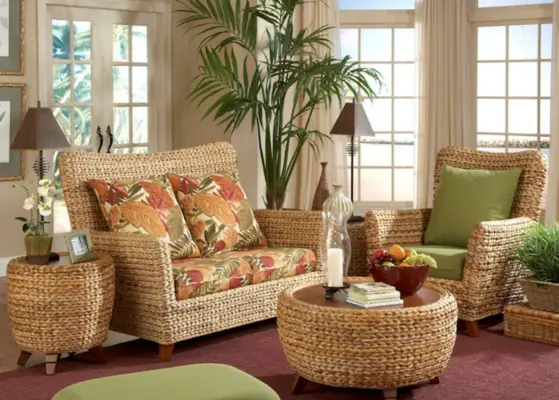
As a result of its strength, abaca can be woven by skilled workers into rugs, mats, baskets, wall art, lamp covers, and furniture accents that look good while being structurally sound. This is the reason why abaca is a very potent candidate for substitution of synthetic materials or traditional wood-pulp fabrics in home décor. In addition to that, the beauty of abaca lies in its slightly rough texture, neutral colors, and handmade look, which blends perfectly with the latest home interiors trends such as boho-chic, eco-minimalism, tropical or rustic style. For consumers who are after sustainable, ethical, and durable décor, the abaca-based pieces are the great winners in terms of both aesthetic and utility.
Real-World Adoption: Designers, Artisans & Brands
Several manufacturers of furniture and handicrafts have already incorporated abaca fiber in their product lines. For instance, one home décor brand describes abaca rugs as "handwoven braided abaca rugs" aiming at their longevity, eco-friendliness, and natural fiber composition. These rugs are presented as durable, environmentally-friendly alternatives to synthetic carpets and are targeted towards customers who are committed to a sustainable lifestyle.
Also, abaca fabric, sometimes called "sinamay", made from abaca leaf stalks, is a versatile material for lampshades, placemats, wall-coverings, and decorative baskets. One company states that abaca twine ("higot") and sinamay fabric are "perfect as a binding or weaving material against a tougher frame," thus allowing the production of lamps, baskets, or furniture covers with a natural look. A typical example is TADECO Home, a Philippine design and home-decor company famous for its partnership with abaca artisans. The company often employs abaca twine (higot) and sinamay fabric as binding and weaving materials on wood or metal frames for making lampshades, storage baskets, and furniture coverings. Their products demonstrate how the strength and translucency of abaca can be used to create the durable core of a structure while giving the finished pieces a warm, natural look.
Interior-design websites that advocate for the use of natural materials include abaca among the primary fibers used in home décor for making rugs, wall-hangings, woven baskets, and even decorative elements for chairs or lighting. According to these sources, abaca distinguishes itself by being resistant to salt water, long-lasting, and having a unique texture, which are its advantages over many other natural fibers.
Sustainability and Environmental Benefits
One of the major reasons for the increased use of abaca in home décor is its environmental profile. Abaca is a natural, renewable fiber, and hence products made from abaca are biodegradable, unlike many synthetic alternatives.
As the world becomes more and more aware of the problems with plastic usage, waste generation, and carbon footprints, abaca-based decor becomes the best option in terms of a more sustainable life cycle-from growing with low chemical input to processing to disposal which is biodegradable and compostable. Its long fiber structure provides the products with the necessary strength without the need for a synthetic reinforcement, and at the same time, its natural textures attract those who are willing to pay more for a premium home. The artisans and brand owners are also beneficiaries of a supply chain that is traceable and supports the livelihoods of people in rural areas and community-based farming.
Besides that, the use of abaca helps the economy of traditional natural fiber and the rural communities where abaca is grown, which in most cases are small-scale farmers and artisans (especially in the producing countries). This socio-economic aspect adds up to the sustainability argument for abaca décor and harmonizes with customers who are concerned about the ethical supply chain.
Challenges and Considerations for Wider Adoption
Nonetheless, there are several barriers that hinder the adoption of abaca décor products on a large scale despite their benefits. First of all, like other natural fibers, the quality and consistency of these fibers can vary in terms of strength, texture, and color depending on the conditions of growth, harvesting, and processing. For home decoration, specifically rugs or woven furniture, this may result in variations in the appearance, texture, or durability of the product.
Secondly, the issue of price and processing, as opposed to cheap synthetic materials that have been mass-produced, the making of abaca décor products is quite complicated as it involves manual weaving, the work of an artisan, and the production of a high-quality product, all of which increase the production costs. As a result, abaca products usually tend to be more costly, thus, on the one hand, their market is limited to the niches and upper-class consumers, and on the other, the rate of adoption is low.
Thirdly, supply chain and scale issues. Abaca is mostly cultivated in a few areas. The increase in demand for home décor denotes that besides ensuring a stable supply, the problem of over-exploitation arises as well. Too much dependence on a few geographic zones may result in price volatility or supply restrictions.
Lastly, consumer perception makes a difference. Although sustainability is getting more and more recognition, the majority of consumers still put the factors of price, convenience, and appearance first. To make a large number of people shift from synthetic or wood-derived décor to abaca, which has a rustic aesthetic and is a natural product, the use of marketing, education, and probably design innovation will be necessary.
Implications for the Home Décor Industry
Abaca is a fiber that is very likely to become one of the staples of the eco-friendly interior design and home décor industry as people's awareness of the importance of sustainability, ethical sourcing, and natural materials keeps growing.
Among designers and artisans, those who, for example, care about environmental aspects, the quality of the work, and the uniqueness of the final product, will probably find abaca very appealing. For the customers seeking characterful, long-lasting décor, rugs, wall coverings, baskets, and lighting made of abaca, are a good-sounding proposition.
If those engaged in the supply chain can ensure a reliable and ethical supply of raw materials, and if the scale gets better so that the costs are reduced, then abaca-based décor may be the way out of the artisanal circles of the niche market and into the mainstream of sustainable home-design markets.
For insights on global abaca fiber demand, supply, and applications, refer to the Abaca Fibre Market
Integrating Design, Sustainability & Function
Home décor of tomorrow could be materials that are sustainable and, at the same time, have the qualities of being durable, artistic, and ecologically sound. One of such materials is Abaca fiber with its natural texture, strength, biodegradability, and rich cultural history, it is a clear front-runner.
More designers taking interest in the potential of the material, and more consumers demanding interiors that are eco-friendly. And to this, abaca fiber stands as the top choice for the manufacturers globally.











Share