Biometric and Cardless ATM Solutions Improving Banking Security
The Shift Toward Safer ATM Transactions
ATM cards and PINs are getting biometric and cardless additions. The approaches that banks are taking to have secure transactions include fingerprint, facial recognition, and access via mobile. Such technologies reduce the chances of stealing cards, skimming, and fraud. Banking has become quick and secure, and clients will be able to transact business without having to carry a physical card.
Cardless ATM systems are based on mobile applications that create one-time passwords or a scan on QR code that can be used to authorize a withdrawal or a deposit. This enables customers to use their accounts with little chance of being stolen. Biometric authentication will provide an extra layer of protection, so that only the account holder will be able to use the ATM. The majority of banks record the growing levels of customer satisfaction and the increased number of ATMs used with the features.
How Biometric ATMs Work?
Biometric ATMs identify users by their physical characteristics, i.e., fingerprints or face. The customers put their biometrics with the bank, which connects them to their accounts. Upon the transaction being triggered, the ATM reads the biometric data and matches it to that saved in the machine. The transaction is authorized by the machine upon confirmation.
This will remove the use of PINs or physical cards that are easily lost or stolen. It also narrows the chances of fraud in the ATMs. Most banks have added extra layers of security protection, like one-time codes or mobile notifications to alert consumers of the transactions. In cities and semi-urban regions, biometric ATM is introduced to offer an alternative to the conventional ATM.
Cardless Transactions Making Banking More Convenient
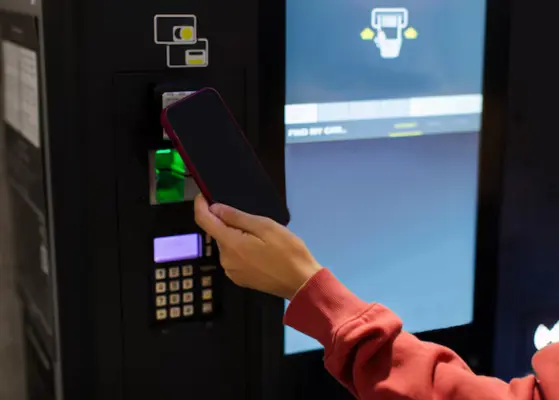
Cardless ATM is becoming popular in the world. Customers may make withdrawals or deposits through the bank's mobile application of the bank or online banking. The application creates a temporary code or QR scan, which the ATM deciphers and uses to carry out the transaction. This will get rid of the necessity of a physical card and reliance on PINs.
The system also avoids the use of PINs or physical cards and makes the system less prone to fraud or unauthorized access. Other security components, including one-time codes or notifications on the mobile devices, inform the customers every time a transaction happens. The introduction of biometric ATM is an alternative to the traditional ATM in urban and semi-urban locations to make things easier.
Cardless ATMs are particularly convenient in the case of those customers who can forget their cards, travel a lot, or use internet banking. They make it easier when issuing or maintaining physical cards, which are not easily done in certain areas. The authentication of transactions is secured and efficient as it is connected with mobile devices by banks. Cardless ATMs also minimize the risks of operation in case of lost or stolen cards, as well as enhance the overall banking process.
Strengthening Security and Reducing Fraud
Security is a major issue of concern in banks. Biometric and cardless ATM are also used to curb skimming, shoulder surfing, and card theft. Banks supplement such technologies with machine learning and artificial intelligence to identify dangerous actions in real-time. Suspicious transactions are automatically detected, and alerts and notifications are sent out instantly.
Most ATMs have cameras, motion detectors, and tamper-detecting systems to curb fraud. Banks are developing a more secure and trusted environment by incorporating the use of biometric and cardless technology. Improved security systems build more confidence in the customers to use the ATM.
Raise Adoption by Region
Developed countries are not the only ones that have embraced the use of cardless and biometric ATMs. These are modern technologies being deployed in the emerging markets to enhance financial inclusion and security. Asian, Middle East and Latin American banks are increasing the number of ATMs with such characteristics.
There is also the implementation of cardless and biometric ATM in rural regions with little banking services. The adoption of digital solutions and biometrics in the cities further increases access. This expansion enables banks to operate with a large number of customers in a safe and effective way. These technologies have a high likelihood of adoption following the demands of consumers to have convenient, secure, and reliable banking services.
Check out the full report for detailed insights on the Global ATM Market.
Shaping the Future of ATM Banking
Biometric and cardless payments are changing the way people spend their money. They bring more security, convenience, and trust to the customers and the banks. It is also more efficient and safer, with transactions being faster with fewer physical cards and PINs. Technology is changing, and these ATMs are becoming the norm in most parts of the world. The use of biometric and cardless access is one of the strategic moves towards safer, more convenient, and customer-friendly banking.











Share