How Brake Shims Improve Noise and Vibration Control in Vehicles?
Noise and vibration control features are now a major part of vehicle design. As engines become quieter and the overall vehicle ride more comfortable, even the smallest sounds from the brakes may lead to drivers disliking them. Brake shims are quite important in this respect. They are one of the main parts that help to lower noise, vibration, and harshness in the braking system, and thus the rides are smoother and more comfortable.
Understanding Noise and Vibration in Braking Systems
Braking noise results when the friction between the brake pads and rotor generates vibrations that are then conducted through the caliper and suspension parts. Such vibrations may sound like squealing, grinding, or rattling, particularly when lightly braking or going slowly. The magnitude of vibration depends on brake pressure, heat, and the materials involved in the brake system.
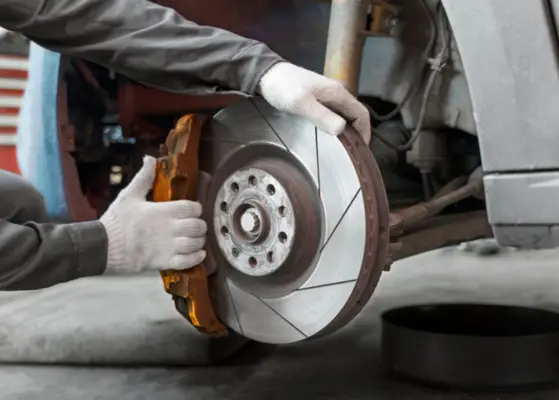
Basically, these vibrations go straight into the vehicle cabin if there are no proper damping methods. This is the reason why brake shims are very important. Being located between the brake pad and caliper, shims serve as a layer that absorbs and scatters the vibration energy so that it does not go through the whole brake system. As customers keep demanding silent and sophisticated vehicles, dealing with brake noise has become a matter of equal weight with ensuring braking power.
How Brake Shims Reduce Noise and Harshness?
Brake shims serve mainly as vibration dampers. They break the vibration chain between the brake pad and the caliper, thus reducing resonance and limiting sound generation. Shims prevent the amplification of noise that would otherwise reach the cabin by absorbing micro vibrations during braking. Contemporary brake shims are designed to keep uniform contact pressure while still being flexible enough to absorb vibration. This compromise enables them to be efficient in all sorts of driving conditions, such as frequent stop-and-go traffic and extended braking cycles. Besides controlling vibration, brake shims also work to stabilize the brake pad, thus avoiding uneven movement that could be the source of noise. The stabilization thus achieved helps in smooth braking, and it also improves the overall reliability of the system.
Importance of Multi-Layer Shim Design
Single-layer shims can only reduce noise to a very limited degree and are becoming less suitable for new cars. Double-layer or multi-layer brake shims have become the norm, mainly since they offer much better damping capabilities. These shims are made from several layers of materials, which are each effective in controlling vibrations of a particular frequency.
The various layers of the shim each offer different services, such as providing a strong foundation, absorbing the vibration, or acting as a heat insulator. With the aid of this multi-layer structure, brake shims can respond to variations in braking power and heat changes without any drop in their performance. The introduction of multilayer brake shim designs has greatly enhanced the overall comfort of braking. This is especially the case for vehicles with a low noise level as a main feature, where the use of multilayer designs has also resulted in longer brake pad service life due to less vibration, which caused irregular wear.
Impact of Brake Shims on Driving Comfort
Driving comfort depends on more factors than just the ride quality and the interior design. How a vehicle brakes has a big influence on the driver's impression of the vehicle's refinement or smoothness. Even if the braking performance is okay, sudden noises or vibrations during braking can make the driver feel that the whole mechanism is unstable.
Brake shims help to achieve a more responsive brake pedal together with the quietness of the full system, which, in turn, leads to a driver's self-assurance. Shims also reduce the vibration that is relayed to the brake pedal, thus ensuring that the braking response remains steady. This is particularly true for city driving, where one is constantly on the brakes. As the focus of automobiles shifts more towards comfort and a luxurious driving experience, the significance of brake shims in controlling the noise level and thereby the acoustic comfort grows very substantially.
Relevance in Modern and Electric Vehicles
Brake shims have become increasingly important as vehicles have changed. Cars that run on electricity or batteries make little noise from the engine and thus, make the noise of the brakes more noticeable. So, the focus is more on perfecting the brake systems and reducing the noise caused by them.
Regenerative braking systems change the way the brakes are normally used, which results in the friction brakes being used less. If vibration control is not enough, that may cause the brakes to make noise when the pedal is pressed again. Brake shims allow for the noise level to be kept at the same level even when braking dynamics change. As car designs change, brake shims need to be there to help make braking still quiet and smooth for different kinds of powertrains.
Discover deeper insights into braking system components and performance trends in the Automotive Brake Shims Market Report.
Why Noise Control Defines Brake System Quality
Noise and vibration control is increasingly considered a primary factor in the design of braking systems, rather than being just a secondary consideration. It has become one of the most influential factors determining the quality of vehicles and the satisfaction of customers. Brake shims are a straightforward but highly effective way of dealing with the problem of vibration in brake assemblies.
Brake shims play a big part in the reduction of noise, increase comfort, and extend the life of the parts by mitigating the vibration energy and keeping the brake components in a stable position. With the ever-increasing demands on the automotive industry, brake shims will play a vital role in vehicle design and engineering in the future to provide smooth and quiet braking performance.











Share