Product Innovation Around Composite Decking Materials
The outdoor construction materials market dynamics are gradually evolving. Composite decking has stopped being regarded as a second choice after wood. Manufacturers and suppliers now see these products as the core of their long-term outdoor flooring plans. Consumer demand is influenced by factors such as durability, lifecycle cost pressure, and increasingly stringent performance standards in both residential and commercial construction. Large-scale material manufacturers are stepping up to the challenge by marketing composite decking more as an engineered solution rather than a decorative option. The change can be spotted in product launches, plant investments, and supply agreements signed over the past few years. In March 2024, MoistureShield announced the launch of its Stratos line of composite enhanced PVC decking, a key innovation in outdoor flooring.
Performance-Driven Product Development
Composite decking manufacturers are heavily investing in material science. Initially, the composite boards were facing problems such as heat retention, fading, and surface cracking. These problems prevented the boards from being used in the humid regions and high-traffic commercial settings. However, recent product launches showcase a completely different approach. Companies are now investing in capped composite technologies, better polymer blends, and higher wood fiber consistency.
Several suppliers in North America have allocated R&D spend to focus on UV resistance and moisture control. Product datasheets are now focusing on fade warranties that last up to several years. Slip resistance ratings are also being given more consideration, especially for hospitality and public space applications.
This performance focus trend is changing buyer perception. Composite decking is increasingly specified for mixed-use developments and resort projects where lifecycle cost matters more than upfront pricing. Contractors are showing preference for boards that reduce callbacks and surface treatments.
Capacity Expansion and Vertical Control
Beyond upgrading to higher-quality materials, manufacturers are expanding production capacity closer to demand centers. Several composite decking suppliers announced new extrusion lines to shorten lead times and improve supply reliability. The purpose of these investments is also to reduce the risk from volatile exposure concerning the logistics operations. Vertical integration is also becoming increasingly evident.
Certain manufacturers are locking in plastic recycled feedstock through long-term supplier contracts. Others are purchasing smaller compounding companies to focus more on input quality. This move not only gives the company good profit margin stability but also supports the sustainability target that is in line with the commercial customers purchasing motives.
Supply reliability being a decisive factor in material selection. Developers look for partners who can maintain a level of consistent production throughout the multi-phase projects. Composite decking suppliers are thus shifting their focus to material partners for the long haul.
Sustainability as a Commercial Lever
Sustainability is no longer treated as a branding exercise in composite decking. It is increasingly tied to procurement requirements. Many commercial projects now mandate recycled content thresholds and environmental declarations. Composite decking fits this framework better than treated wood in many cases.
Manufacturers are actively publishing Environmental Product Declarations and lifecycle assessments. Some leading suppliers claim recycled content levels exceeding a significant percentage in select product lines. These claims are being audited more closely by institutional buyers and certification authorities.
Sustainability messaging has thus shifted toward performance stability. Suppliers are becoming more careful when it comes to marketing their products’ environmental benefits. They are highlighting reduced replacement cycles and lower chemical use. This approach resonates more strongly with B2B buyers who must balance ESG targets with operational risk.
Pricing Strategy and Value Positioning
Composite decking pricing has traditionally been a barrier for mass adoption. While premium lines remain expensive, mid-tier composite boards are becoming more competitive with hardwood alternatives. Manufacturers are achieving this through scale efficiencies and simplified product portfolios.
Moreover, fewer color variations and standardized board profiles are helping suppliers to maintain lower production costs. These savings are being passed selectively to commercial clients through volume contracts. The goal is to lock in long-term supply relationships.
This pricing discipline is reshaping distributor behavior. Building material distributors are dedicating more showroom space to composite decking systems. They view these products as higher margin and lower risk compared to traditional lumber. This shift supports wider market penetration over time.
Competitive Differentiation Through System Offerings
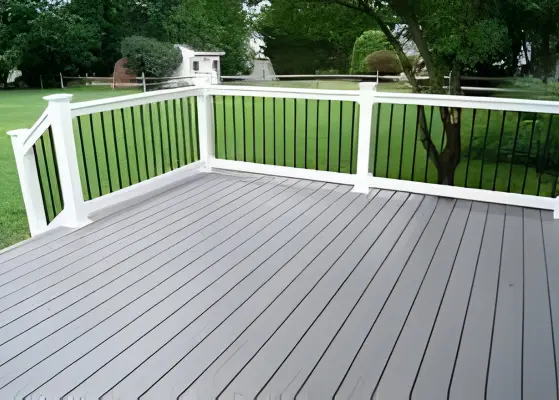
Manufacturers are bundling boards with fastening solutions, railing systems, and drainage components. This strategy increases average order value while reducing installation errors. Product launches now emphasize compatibility and ease of installation. Hidden fastening systems are being refined to cut labor time. This is a key selling point for contractors facing workforce shortages.
For developers, system compatibility reduces coordination risk. This dynamic strengthens supplier influence during the specification phase. Composite decking producers are leveraging this by engaging earlier in project planning cycles.
For insights on supplier strategies, pricing, and competition in outdoor surfaces, check out the Outdoor Flooring Market Report.
Outlook for Product Strategy Evolution
Composite decking materials are redefining specification standards. Manufacturers are focused on deeper market penetration rather than rapid diversification. Future investments are expected to target heat mitigation and color stability further. There is also growing interest in modular decking solutions for rapid installation. These developments align with broader construction efficiency trends. Composite decking suppliers’ strategies reflect confidence in sustained demand from outdoor living, hospitality expansion, and urban redevelopment projects.











Share