Porcelain Tiles for Outdoor Use in Modern Outdoor Flooring Systems
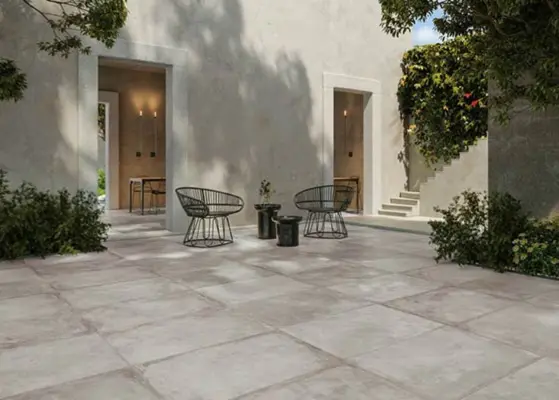
Porcelain tiles made for outdoor use are rapidly gaining popularity as an ideal option for exterior flooring specifications. Porcelain, which was once only used indoors, has now become a performance-driven flooring solution for patios, terraces, and heavily trafficked public areas. The main reason for this change is the improvement in manufacturing techniques combined with the changing expectations from developers and contractors.
Outdoor porcelain tiles are no longer seen only as an extension of indoor product lines by tile manufacturers. It has become a separate segment with its own technical standards and areas of investment. Commercial buyers are gradually turning to porcelain even in situations where stone or concrete have traditionally been the materials of choice. This development is leading to a restructuring of product portfolios in the global outdoor flooring supply chain. For example, Lioli Ceramica offers two new porcelain slabs, namely Vincent Pietra and Statuario under its brand TechnoSLAB.
Manufacturing Advances Driving Outdoor Adoption
Outdoor porcelain tiles now perform better due to higher firing temperatures and tighter raw material control. As a result, manufacturers are producing denser tiles with significantly lower water absorption. Many outdoor porcelain tiles samples can be found to possess the level of water absorption less than 0.5%. Such a level of performance is significant for frost resistance and overall product durability.
Slip resistance has also become a central design focus area. Tile suppliers are offering textured finishes that meet higher slip rating requirements without compromising appearance. Hospitality developers and municipal buyers are driving this demand as safety compliance is no longer optional in outdoor specifications.
Product Positioning Against Traditional Materials
Porcelain tile manufacturers are positioning outdoor products as a balance between stone and composite materials owing to porcelain's consistency and maintenance predictability. Porcelain, unlike natural stone, does not have significantly different colors or structures. Such consistency is attractive to developers who are running phased projects.
Manufacturers also indicate that the product has gained popularity in mixed-use construction activities. Porcelain tiles are being demanded for the shared outdoor areas where the look and durability of the material have to be combined. The rise of this trend becomes most obvious in urban renewal projects where the efficient use of space is important.
Supply Chain Expansion and Regional Capacity
Manufacturers of tiles are ramping up the capacity of regional manufacturing facilities, boosting the outdoor porcelain demand. Several new production lines have come into operation in North America as well as in parts of Southeast Asia. These capital investments are mainly directed at being able to shorten the delivery times and thus these have improved the supply reliability for the sizeable contracts. In addition to that, local production has also become a measure that helps to reduce the risks of trade and the volatility of freight costs.
Sustainability and Compliance Considerations
Sustainability expectations are influencing porcelain tile development. Manufacturers are reducing energy intensity per unit produced through kiln efficiency upgrades. Some producers report notable energy savings in construction modernization activities. These improvements support environmental disclosures required by commercial buyers.
Recycled content is also being introduced into select outdoor porcelain lines. While levels remain modest compared to composite materials, tile producers are responding to green building certification requirements.
Environmental documentation is increasingly becoming a part of sales discussions. Suppliers that provide clear lifecycle data gain an advantage during specification. This transparency helps procurement teams justify material selection internally.
Pricing Strategy and Competitive Economics
Outdoor porcelain tiles are typically priced above standard ceramic tiles but below premium natural stone. Manufacturers are careful to protect this positioning. Rather than engaging in price competition, they focus on value stability and specification depth.
Bulk pricing programs are becoming more common for commercial buyers. These programs offer cost predictability across multi-phase developments. Fixed pricing agreements reduce risk for both suppliers and developers.
For deeper insight into material competition, supplier strategies, and demand trends, refer to the Outdoor Flooring Market Report.
Strategic Outlook for Porcelain Tile Manufacturers
Porcelain tiles for outdoor use are no longer positioned as a niche solution. Manufacturers are integrating them into core growth strategies. Product development is becoming more disciplined with fewer experimental designs and stronger performance guarantees.
Future innovation is expected to focus on thermal comfort and surface cooling. Heat mitigation is emerging as a concern in outdoor environments. Tile producers are already testing lighter pigments and reflective glazes.
For B2B buyers, outdoor porcelain offers a balance of control and durability. Manufacturers that continue to invest in performance validation and supply reliability are anticipated to strengthen their role in outdoor flooring specifications.










Share