Fire Resistant Glass Redefining Design Flexibility in Modern Commercial Architecture
Commercial architecture has dramatically changed in the last decade. Buildings need to be open, transparent, and flexible yet must meet stringent fire safety regulations. Fire-resistant glass has become a crucial material that enables architects to fulfill both requirements without compromise. This glass category was once limited to stairways or emergency exits, but it is now integrated into prominent, functional areas of modern buildings.
This change has obligated glass manufacturers and suppliers to reconsider product design. Fire resistance is no longer sufficient as developers want materials that meet codes while supporting spatial openness, natural light flow, and tenant experience.
Expanding Use Across High-Rise and Mixed-Use Projects
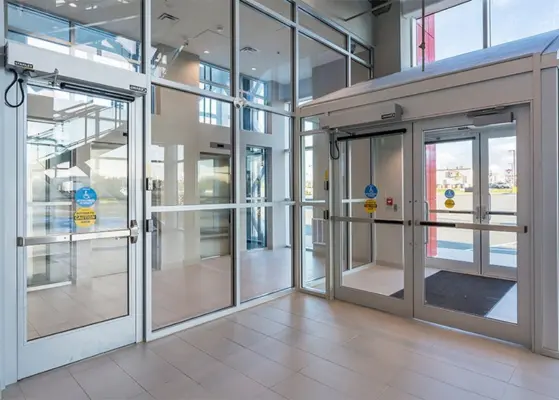
High-rise commercial buildings rely on compartmentalization to slow the spread of fire, a strategy that traditionally resulted in enclosed spaces with little or no visibility. The introduction of fire-resistant glass has changed this, allowing effective fire separation without sacrificing openness or natural light.
Large office developments in major global cities such as New York, London, and Singapore increasingly include fire resistant glass in their internal partitions and elevator lobbies. Such applications enable the penetration of natural light while meeting fire resistance standards. Schott and AGC manufacturers are developing fire resistant glass that is suitable for high-rise buildings in which minimal movement and high thermal stresses exist.
Healthcare and Institutional Design Driving Demand
Hospitals and healthcare facilities have become major adopters of fire-resistant glass. These buildings require strict fire safety compliance while maintaining visibility for patient monitoring and infection control. Solid walls limit supervision and increase operational risk.
Fire resistant glass is increasingly used in corridors, nurse stations, and treatment room partitions. Manufacturers have responded by developing glazing techniques that meet fire resistance requirements while offering acoustic control and impact safety. This multi-performance approach is attractive to hospital planners who want to reduce material complexity.
For suppliers, healthcare projects offer long-term stability. These developments are often publicly funded and follow rigorous procurement processes. Products with proven performance records and repeat certifications gain preference, especially when refurbishment cycles begin. For example, in July 2025, AMC Hospital became the largest healthcare facility in the Netherlands that has upgraded to Pyroguard fire safety glass, replacing over 10,000m² of out-dated wired glass.
Balancing Aesthetics and Code Compliance
Architectural firms are under pressure to deliver visually distinctive buildings while adhering to strict safety frameworks. Fire resistant glass supports this balance by allowing transparency in areas previously limited to opaque materials.
Modern fire rated glazing now comes with improved clarity and minimal color distortion. This has encouraged its use in atriums, reception areas, and internal staircases. Manufacturers are also collaborating closely with facade engineers to ensure compatibility with slim framing systems. Suppliers are also refining edge stability and interlayer technology to meet both design and compliance needs.
Evacuation Routes and Public Safety Zones
Fire-resistant glass has become important in evacuation designs. The stairway escape routes as well as the refuge areas need materials that can withstand fire conditions. This will provide easy visibility even in the event of a fire.
The need for fire-resisting glass in evacuation routes in large public assembly buildings, such as airport terminals, shopping centers, and convention halls, is on the rise. This is due to the higher performance demands in situations involving prolonged fire exposure. To meet these demands, companies like Vetrotech are developing a range of glass products resistant to combat prolonged fires.
Design-Led Product Differentiation Among Suppliers
Most of the fire-resistant glass suppliers face competition in regard to design flexibility. Companies that provide customized products, curved glass panels, or even integrated framing systems are becoming popular among consumers. Architects find it convenient to work with suppliers that can provide designs adapted to complex layouts.
The result is greater investment in processing power and digital design capability. A number of manufacturers are supplying BIM-compatible product information, making it easier to specify and approve products. These initiatives help to engage early with architects and consultants.
Retrofitting Older Commercial Buildings
Retrofitting has emerged as one of the most significant growth factors for the fire-resistant glass market. The majority of older commercial buildings do not meet the existing fire code standards. Using fire-rated glass in lieu of solid walls fulfills upgrade needs without compromising usable space or natural light.
Explore the Fire Resistant Glass (FRG) Market Report for insights on supplier strategies and architectural trends.
Architectural Influence on Market Direction
Fire resistant glass has become an essential component of modern commercial architecture. Its role extends beyond safety into spatial planning, occupant experience, and long-term asset value. As building codes tighten and design expectations rise, the market is expected to favor suppliers that combine compliance expertise with architectural sensitivity.











Share