Changing Tile Design Preferences in German Residential Renovation Projects
Germany’s ceramic tiles industry is being reshaped by how homeowners renovate existing spaces. Residential renovation has become the steady demand engine, and design preferences are gaining more momentum than pure price sensitivity. For tile manufacturers, this shift directly affects product development cycles and capital investment decisions.
A significant portion of Germany’s housing stock dates back several decades. Rather than relocating, homeowners are investing in kitchen, bathroom, and living space renovations to extend property life and improve comfort. Buyers prioritize long service life, restrained design, and materials that integrate well with energy-efficient interiors. This favors manufacturers that understand renovation-driven demand patterns over those focused on short-term design cycles.
Neutral Color Palettes Replace High-Contrast Finishes
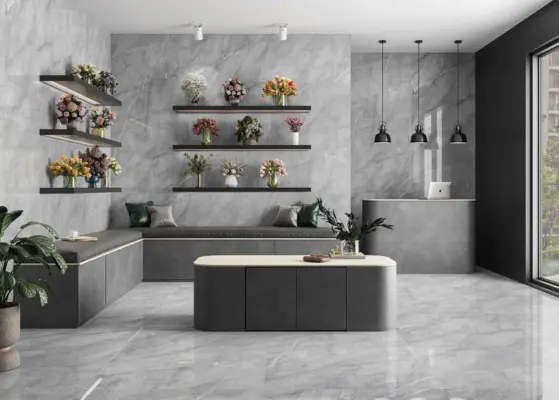
The most noticeable change in renovation-led demand is the shift toward neutral and natural tones. Flashy whites, heavy gloss surfaces, and decorative patterns are losing ground as homeowners replace them with warm grey, stone-inspired beige, or concrete-style finishes, seamlessly blending with modern furniture and lighting schemes.
Tile manufacturers serving the German market have responded to this trend by expanding matte-finish collections with subtle variation in texture. These products require more advanced glazing and digital printing control, which raises production complexity but also supports stronger profit margins. Renovation buyers also want surfaces that age well and do not dictate future interior changes. This preference explains why understated designs are outperforming visually bold alternatives across residential showrooms. In March 2024, Gruppo Romani announced the introduction of its innovative Smart Tiles designed to interface seamlessly with the latest home automation systems.
Large-Format Tiles in High Demand
The use of large-format tiles has now transcended office interior design and high-end projects. Currently, German home remodelers favor the tiles in most home renovation projects in open plan living and kitchen design concepts due to their aesthetic benefit of eliminating grout lines between tiles to create a seamless design effect that expands the space without making any changes to its architecture.
Companies are investing in machinery capable of manufacturing large and thin slabs of material that will not shift or move during the installation process. Players are developing ways to address renovator concerns, with a focus on how to offer material with visual impact without the renovator noticing the difference.
Wooden Tiles Retain Strong Replacement Demand
Wooden tiles remain a steady category in the renovation sector in Germany despite having to compete with other flooring options like vinyl and laminate flooring owing to their functionality. Homeowners find wood-effect tiles to be an excellent choice when they prefer aesthetic look with water-resistance.
Features such as slip resistance, texture, and durability have become highly desirable. In renovation purchases, functionality in regard to durability, particularly for multi-generational families, is highly prioritized. Tile manufacturers explaining these functional performances have been experiencing regular repeat business with renovation distributors.
Sustainability Influences Design
Sustainability has moved beyond certification labels and into the core of product design decisions. German renovation buyers increasingly seek clarity regarding how tiles are produced. This pressure is shaping both manufacturing processes and aesthetic choices.
Several manufacturers catering to the German market have reduced firing temperatures and increased recycled ceramic content in new collections. Design teams play an important role in these initiatives with design choices that promote natural materials and earthy color schemes, thereby stressing environmental branding in an implicit manner.
Bathrooms Remain the Highest-Value Renovation Category
Bathrooms remain a key category accelerating demand in the German market that not only accounts for a high consumption of ceramic tiles. The category witnesses a shift away from designer mosaics to more extensive tiles and complete floor-and-wall solutions that ensure a plain look.
Companies respond to these changes by bundling product ranges in a way which simplifies specification. With coordinated ceramic tile systems in place, contractors and retailers face fewer specification decisions, which shortens project timelines and lifts average order values. Apart from appearance, technical performance now carries equal momentum. Anti-slip surfaces, antibacterial glazes, and compatibility with concealed drainage systems are built into product design rather than treated as optional upgrades.
For a detailed analysis of competitive strategies and demand drivers, refer to the Germany Ceramic Tiles Market Report
What This Means for Tile Manufacturers?
Design-driven renovation demand requires a different strategy from volume-led construction markets. Manufacturers must balance visual relevance with technical reliability and consistent availability. Short renovation timelines leave little room for product delays or quality variation. This trend, therefore, favors suppliers with flexible production lines and stable logistics.
Companies that treat design as an ongoing process rather than seasonal refresh are better positioned. Frequent but controlled updates allow manufacturers to respond to shifting preferences without overextending inventories. For distributors and installers, partnerships with such suppliers reduce project risk and support repeat business.











Share